Pulmonary patient compliance among different types of inhaler dosage forms in Mohakhali, Dhaka
A project submitted By
Rafia Islam Rithin ID: 15146037
A thesis submitted to the Department of Pharmacy In partial fulfillment of the requirements for the degree of
Bachelor of Pharmacy (Hons.)
© 2020. Brac University All rights reserved.
Department of Pharmacy Brac University
February, 2020
Declaration
It is hereby declared that
1. The thesis submitted is my own original work while completing degree at Brac University.
2. The thesis does not contain material previously published or written by a third party, except where this is appropriately cited through full and accurate referencing.
3. The thesis does not contain material which has been accepted, or submitted, for any other degree or diploma at a university or other institution.
4. I have acknowledged all main sources of help.
Student’s Full Name & Signature:
Rafia Islam Rithin
ID: 15146037
Approval
The thesis/project titled “Pulmonary Patient Compliance among different types of Inhaler dosage forms”
submitted by Rafia Islam Rithin (15146037) of spring’2020, has been accepted as satisfactory in partial fulfillment of the requirement for the degree of Bachelor of Pharmacy (Hons.) on 02/03/2020
Examining Committee:
Supervisor: _______________________________
Dr. AfrinaAfrose
Assistant Professor, Department of Pharmacy, Brac University
Program Coordinator: _______________________________
Dr. Hasina Yasmin
Associate Professor, Department of Pharmacy, Brac University
Departmental Head: _______________________________
Dr. Eva Rahman Kabir, Professor, Chairperson
Department of Pharmacy, Brac University
Ethics Statement
No harm to any animal was done on this survey. All the surveys were collected from individuals with their full consent and willingness.
Abstract
This study was designed in such a way so that it can focuses on patient education and also compliance on using different types of inhaler. There are mainly three types of inhaler can be found in the market but in Bangladesh availability of DPI is very rare.150 patients were selected for the survey who are using different types of inhaler for a certain duration. Data were placed into excel file and pie charts were created for showing different variables percentage and no DPI user was found. Patients are using MDI and nebulizer more. In terms of cost effectiveness MDI is more preferable than nebulizer. In Bangladesh most of the pulmonary patients are suffering from asthma and women are suffering from pulmonary disease. Many patients are very much confused about their inhaler type and also some of the patients are not aware about their disease. So, it can be said patient education on using inhaler properly is important to control the pulmonary disease and pharmacist should counsel the patient properly so that they can use inhaler by themselves properly for future management of pulmonary disease.
Keywords:
Pulmonary; COPD; Asthma;Inhaler; MDI; DPI; Nebulizer.Dedication
Dedicated to my parents, siblings, my friend Tanzim Khan who helped me a lot during the study and also my supervisor Dr. Afrina Afrose.
Acknowledgement
This project would not have been completed without the support of the people who are recognized here.
First and foremost, I would like to express my gratitude and appreciation to my most respected supervisor Dr. Afrina Afrose, Assistant Professor, Department of Pharmacy, Brac University. I would like to thank her for the constant support, direction and encouragement towards this project which allowed me to complete my work. Her linguistic skill helped me to build up my capacity of expressing thoughts in an ordered manner.
Then I would like to express my deepest gratefulness and honor to Professor Dr. Eva Rahman Kabir, Chairperson and Professor, Department of Pharmacy, Brac University, for giving me the opportunity to work in this project.
After that, I am grateful to my respected faculty Dr. Sharmind Neelotpol, Associate Professor, Deartment of Pharmacy, Brac University, for her constant inspiring words during I did her class.
I am thankful to her for her direction about project work, making documents in a proper manner and last but not the least for her constant motivation for being a good human being.
I am also grateful to my friend, Tanzim Khan, a student of Department of Pharmacy, Brac University, for his direction and help during the collection of data.
Last but not least, I would like to thank my family for being with me and supporting me to work harder in every phase of life. Without their prayer and unconditional love, I would not come this far.
Table of Contents
Declaration ... 02
Approval ... ...03
Ethics Statement ... 04
Abstract ... 05
Dedication ... 06
Acknowledgement ... 07
Table of Contents ... 08
List of Tables ... 10
List of Figures... 11
List of Acronyms ... 13
Chapter 1 : Introduction ... 14
1.1 Background ... 14
1.2 Research gap... 15
1.3 Aims and objectives………...18
1.4 Rationale……….18
Chapter 2 Literature review ... 19
2.1 History of Inhaler………...19
2.2 COPD and Asthma……….23
2.4 Types of Inhaler………..28
2.4.1 Components of Inhaler………29
Chapter 3 Methodology ... 33
3.1 Research Design……….33
3.2 Determination of sample size……….34
3.3 Development of the sample size………...35
3.4 Validity testing of questionnaire ………...35
3.5 Selecting the participants ………...35
3.6 Data Collection and completion of the study……….36
3.7 Data analysis………...36
Chapter 4 Results and Discussion ... 37
4.1 Results ... 37
4.2 Discussion………..46
Chapter 5 Conclusion………48
References... 49
List of Tables
Table 1: Factors that affect components of inhaler. ... 29 Table2: Percentage of the acquired variables………..43
List of Figures
Figure 1: Oldest therapeutic aerosol ... 19
Figure 2:Mudge Inhaler (drawing and real one). ... 20
Figure 3: Dr. Nelson’s Inhaler………...21
Figure 4: Sales-Giron and his portable nebulizer……….22
Figure 5: A drawing of the first MDI………...23
Figure 6: Major respiratory organs………...28
Figure 7: Structures of a typical Inhaler………...29
Figure 8: Flowchart of Research Design……….34
Figure 9: Pie chart for age range of the patients.………37
Figure 10: Pie chart for patient’s gender……….37
Figure 11: Pie chart for patients’ knowledge on available dosage form of pulmonary drugs……….38
Figure 12: Pie chart for disease name………...38
Figure 13: Pie chart for drugs name used by the patients……….39
Figure 14: Pie chart for inhalation technique of the patients………39
Figure15: Pie chart for duration of taking the current medication for the patients………..40
Figure 16: Pie chart for time of taking the medication in a day………...40
Figure 17: Pie chart on difficulties regarding the device or drug………41 Figure 18: Pie chart for the difficulties faced by the patients………..41 Figure 19: Pie chart for the percentage of satisfied patients with the efficacy of current dosage form………42 Figure 20: Pie chart on the percentage of recommendation of patients regarding current inhalation system……….42
Figure 21: Pie chart about cost effectiveness of the drugs recommended by the patients………..43
List of Acronyms
COPD Chronic Obstructive Pulmonary Disease MDI Metered Dose Inhaler
DPI Dry Powder Inhaler
pMDI Pressurized Metered Dose Inhaler AQI Air Quality Index
GATS Global Adult Tobacco Survey
FEV1 forced expiratory volume in one second HFA
Hydrofluro Alkane
HFC Hydrofluro Carbon CFC Chlorofluro Carbon
Chapter-1 Introduction 1.1 Background
It is a matter of concern that according to the Air Quality Index (AQI) Dhaka gets 556; which refers that the air quality of Dhaka is ‘extremely unhealthy’. Around 1, 22,400 people in Bangladesh die because of air pollution which is the key point of causing Pulmonary diseases (“Respiratory diseases skyrocketing in Bangladesh | The Daily Star,” 2018).
If patient feel unbearable chest pain and cannot breathe properly then it will cause the worsen situation. Mainly inhaler is recommended for this situation. Inhaled drug therapy; which is used for the pulmonary diseases caused by clotting, scarring, or inflammation of the blood vessels which blocks the lungs so that it cannot take oxygen and release carbon dioxide. Inhaler is also known as pump, puffer or allergy spray. It is a medical device which directly goes to lungs, quickly relax the muscle which opens the airways widely and patient can then easily breathe.
However, international strategy documents refer bronchodilators (beta-2 agonists, anti-muscarinic agents) such as-albeuterol, levalbuterol, ipratropium and anti-inflammatory drugs (corticosteroids) such as- Fluticasone, Budesonide, Prednisolone for any stage of these diseases. In contrast, some other oral treatment like- theophylline, and also some combined drugs such as glycopyrrolate / formoterol. In comparison to these medication inhaler is the most convenient to use as it directly deliver the active substance to the targeted site and also it deliver the drug by minimizing the adverse side effect with the lower dose but rapid onset of action (Dolovich & Dhand, 2011).
On the other hand, nebulizer works by aerosol technology where buffered saline and similar types of components are used as vehicle. Within the container of a conventional air-driven nebulizer is a Small unit that produces droplets inside the flask. The walls of the flask act as a baffle removing large droplets from the mist. The large droplets run down the wall and drop back into the reservoir, leaving a mist of Small droplets that can penetrate into the lung. A current of air or oxygen carries the fine mist through the large outlet tube of the nebulizer (Carl & Brook, 1985).
Generally, pulmonologist refers different types of inhaler to the patient not only by focusing on the API but also give a little focus on the features of the inhaler device. There are mainly three types of Inhaler. They are:
1. Metered Dose Inhaler (MDI): it is a medication where dose of medications are put into a pressurized canister with a mouthpiece. It can be of two types:
Manually actuated pressurized metered dose inhalers
Breath actuated pressurized metered dose inhaler.
2. Dry powder inhaler: It is mainly multi dosed.
3. Nebulizer: this inhaler is for the people who are not able to take the MDI and DPI. Mainly this medication is for the children and older people. In case of nebulizer, the medicine is converted into very fine mist which be taken by using face mask.
1.2 Research Gap
In Bangladesh maximum numbers of people take inhaler due to Chronic Obstructive Pulmonary disease (COPD) and asthma. Both of the COPD and asthma are chronic inflammatory pulmonary diseases. Chronic Obstructive Pulmonary Disease (COPD) can be defined as chronic, irreversible and debilitating disease, characterized by persistent airflow limitation that is usually progressive
and caused by an increased inflammatory response in the airways and the lung to noxious particles or gases. Symptoms includes: tightness of chest, continuous coughing, and excessive problem in breathing (Santos TM, 2018). On the other hand, asthma is a condition where patient’s airway will be blocked and swelling and production of excessive mucus will occur. Symptoms of asthma include: breathing problem, tightness of chest, patient may face trouble in sleeping due to chest pain, coughing (“Asthma: Causes, Symptoms, Diagnosis, Treatment,” 2018). On the contrary, COPD is eight times more deadly than asthma (“Respiratory diseases skyrocketing in Bangladesh
| The Daily Star,” 2018).
There are some distinguishable factors which can differentiate COPD and asthma, among many factors one of the main factors is airflow for asthma patient is reversible wearers minimal or no reversibility is observed in case of COPD. COPD is mainly of types which are:
1. Chronic bronchitis and 2. Emphysema.
Chronic bronchitis includes coughing and Emphysema is related to damaging the lungs. However, the unfortunate thing is management of these diseases is not in the level where it needs to be in.
There are mainly of two types of control for asthma which includes:
Symptom control and
Management of future risk of adverse outcomes.
COPD mostly occur due to smoking tobacco which affects the airway and systemic inflammation.
In addition, according to Global Adult Tobacco Survey (GATS) in 2017 among 37.8 million adult
people of Bangladesh 46.0% male and 25.2% female are using tobacco; for which people in this region are at high risk of COPD and for asthma smoking is not the main factor (Santos TM, 2018).
In case of taking Inhaler, patient needs to be aware about the using methods. If one cannot take it by him or herself; they should take help from others who is expert on it. That is why patient education is necessary in case of taking Inhaler. Patient should follow every instruction to take the inhalers correctly. If a patient fails to take the inhaler correctly; it will not give the right dose of medicine. In contrast, it can increase the risk of side effects.However, it is very unfortunate that most of the patient in Bangladesh does not know how to use inhaler properly. The reason might include variety of Inhaler such as: nebulizers, pressurized metered-dose inhalers (pMDIs), dry powder inhalers (DPIs). In addition, patients are still suffering as the inhaler is no taking properly for which it cannot reach the site of action.
In Bangladesh, studies on pulmonary diseases are very limited. Many studies had been conducted on methodology which is conducted by the hospital, area where studies are needed, sample size of pulmonary diseases from 2000. But research on medication which is most convenient to the patients is very less.
1.3 Aims and Objectives
The main objective of the study is-
1. To identify the most popular dosage for pulmonary disease among the patients of different age.
2. To find out effective solutions to increase the patients concerns and education to take inhaler when it needs
3. To find out the acceptance of DPI among the patients.
1.3 Rationale
In Bangladesh, thousands of people are using inhaler as a medication of pulmonary disease. After the research has been done people who are still unaware about various type of inhaler will get to know about it and will be benefited. Moreover, the rate of suffering will decrease.
Moreover, this study will help the people to increase their education on using inhaler and also these will help the health professionals to ensure the proper care and education to the patient so that it could increase the patients’ knowledge about using inhaler.
Finally, acceptance of DPI among the patient will be observed as in Bangladesh usage of DPI is still not as popular as MDI and nebulizer. So, this study will provide a data showing the result about the percentage of usage of DPI.
Chapter-2
Literature Review 2.1 History of Inhaler
From the ancient period of time the Egyptians used to take vapors and inhalation through inhalation technique. Around the year of 1554 BC this technique was discovered in the Assassif district of the Theban necropolis. Black henbane (Hyoscyamusniger) plants (a leafy flowering plant popular in the Europe and northern Africa) were placed onto hot bricks. After that, a jar was placed onto the stone which has a hole over the herbs and vapor was formed. Patients who were facing trouble
to breath used to inhale the fume through a stalk of reed which was placed into the hole (Stein &
Thiel, 2017).
Figure1: Oldest therapeutic aerosol (Stein & Thiel, 2017).
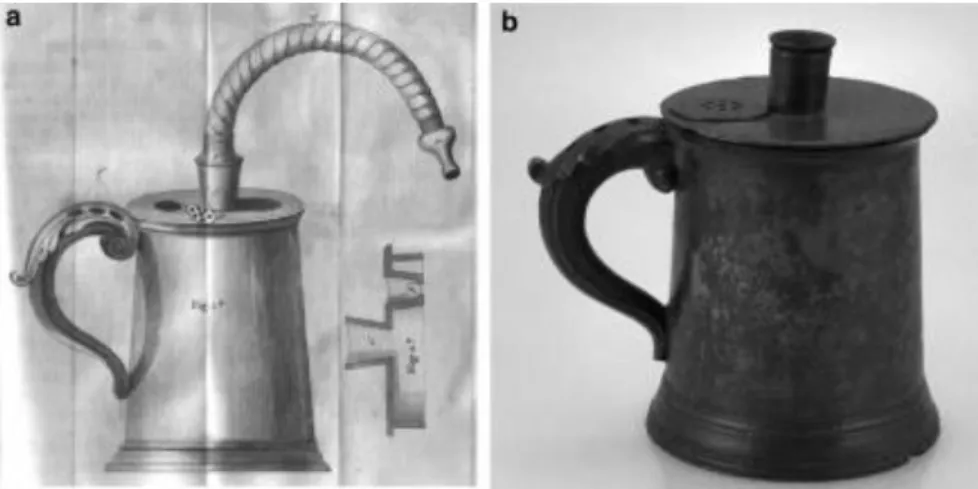
‘Mudge inhaler’ which is known as the first inhaler was created by the English physician and astronomer John Mudge in the year of 1778.In 1778, English physician and astronomer John Mudge created the first inhaler, which was called the ‘Mudge inhaler’.
This inhaler was for the treatment of “catarrhous cough”, which is a cough with a lot of mucus.
The inhaler, based on pewter tankard, allowed patients to breathe in a vapor of opium. Users would pour water into the tank, close the lid and breathe in the vapor through a flexible tube inserted into an opening in the inhaler cover (Williams, 2018)
The mudge inhaler was designed in such a way so that a patient can inhale this for about 20 to 30 minutes by its 5 to 6inch long tube which is adjusted with an adapter. This adapter is attached with a cover on the top of lid of a pewter tank having a volume of about one pint. Air could form bubble
through warm liquid by the holes which was placed in the handle. Patients were able to breathe and were comfortable to place their lips on the mouthpiece as like as modern nebulizers (Stein &
Thiel, 2017).
Figure2: Mudge Inhaler (drawing and real one) (Stein & Thiel, 2017).
After the first inhaler was invented, in 1800s, Dr. Nelson used a ceramic pot as an inhaler containing plant or chemical (“Who invented inhaler | Use Inhalers,” 2012)
Figure 3: Dr. Nelson’s Inhaler (“Who invented inhaler | Use Inhalers,” 2012)
After the invention of Dr. Nelson, in the early 1860s, Dr. siegle developed a steam spray inhaler which offered an effective atomization of liquid medication and by this invention nebulizer therapy was began (“Who invented inhaler | Use Inhalers,” 2012).
Dr. siegle used stem instead of air. There were many similar designed inhaler designs but none of them were as simple in design and easy to use. So, it can be said that, Dr. seigle produced the first self-powered, steam powdered nebulizer (“1864: Seigle and Adams steam powered Inhaler,”
2014).
The first nebulizer was mainly created in 1858 by a French inventor named Dr. Sales-Girons. This nebulizer was unique in that way that it had a pedal that worked like a bicycle pump, and a mist was created which was to be inhaled when the pulled up air was pressurized through an atomizer (“Asthma History: 1856: Sales-Giron invents first nebulizer,” 2016).
Figure 4: Sales-Giron and his portable nebulizer (“Asthma History: 1856: Sales-Giron invents first nebulizer,” 2016)
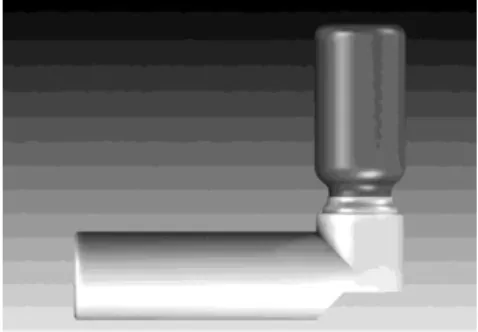
In April of 1955, a young girl named Susie Maison was displeased with her squeeze bulb nebulizer that she used to treat her asthma and asked her father, George Maison, MD, President of Riker Laboratories, the question, “Daddy, why can't they put my asthma medicine in a spray-can like they do hair spray?” This simple question further leads to the development of an important new therapy, the MDI. After that incident, Riker Laboratories started clinical trial on MDI which was made of the solutions of isoproterenol and epinephrine. This formulations contained mixture of Freon 12™ and Freon 114™ with 35% w/w ethanol (Stein & Thiel, 2017).
Figure5: A drawing of the first MDI (Stein & Thiel, 2017).
2.2 COPD and asthma
Asthma and COPD are the most common respiratory disorder for which people are using inhaler mostly. Around 300 million people in the world are suffering from asthma and around 10% of the world adult population whose age is above 40 is suffering from COPD (Capstick& Clifton, 2012).
COPD is a progressive infection in the lungs which disrupts the lungs tissue. In this disease airways in the lungs becomes small.
Causes:
1. Tobacco: both the active and passive smoker is at high risk.
2. Certain materials: Miners and textile workers are at high risk to get COPD 3. Air pollution
4. Genetic factors (Prerna, 2019).
The Stages of COPD:
1. Stage 1- this is mild COPD with a FEV1 (forced expiratory volume in one second) about 80 percent or more of normal.
2. Stage 2- It includes moderate COPD with a FEV1 between 50 and 80 percent of normal.
3. Stage 3- This stage includes severe emphysema with a FEV1 between 30 and 50 percent of normal.
4. Stage 4- Stage 4 or very severe or End-Stage COPD with a lower FEV1 than Stage 3, or people with low blood oxygen levels and a Stage 3 FEV1 (“Stages of COPD: Mild through End-Stage COPD | Lung Institute,” 2018)
Treatments:
1. Inhaler and medications: help to breathe easily
2. Stopping the habit of smoking.
3. Surgery or transplantation of lungs: This treatment is only for few patients who are facing an extreme problem for breathing (“Chronic obstructive pulmonary disease (COPD) - Treatment - NHS,” 2019).
On the other hand, asthma is a long-term condition of lungs which narrowed down the airways and cause inflammation.
Causes:
1. Tobacco 2. Air pollution
3. Change in temperature or humidity 4. Medications such as- aspirin
5. Strong emotions such as- anxiety, happiness, crying or stress (“What Causes Asthma?,”
2018) Symptoms:
1. Inflammation in the airway 2. Irritability
3. Obstruction in the airway (“Asthma Symptoms and Signs,” 2018)
Types:
1. Mild intermittent asthma: It includes very less symptoms which occur for less than twice a week.
2. Mild persistent asthma: This symptom occurs for three to six times a week. This attack might affect activities.
3. Moderate persistent asthma: Symptoms occurs for three to six times a week. This might affect activities.
4. Severe persistent asthma: Frequently occurs for a long time for which patient have to limit their activities.(“Types of Asthma,” 2018)
Treatments:
1. Inhaled corticosteroids: Common inhaled corticosteroids include: Beclomethesone (QVAR), Budesonide (Pulmicort), Fluticasone (Flovent)
2. Long-acting beta-agonists: Frequently used long-acting beta agonists include: Formoterol (Foradil), Salmeterol (Serevent)
3. Combination inhaler:These treatments includes- Budesonide and formoterol (Symbicort), Fluticasone and salmeterol (Advair Diskus), Fluticasone and vilanterol (Breo), Mometasone and formoterol (Dulera)
4. Short-acting beta-agonists: Examples include: Albuterol (Accuneb, ProAir, Proventil, Ventolin), Levalbuterol (Xopenex HFA)
However, many other medications such as anticholinergics, biologics, and various corticosteroids are also used in the treatment of asthma (“Asthma Treatments: Inhalers, Nebulizers, and Medications,” 2018).
2.3 Respiratory Tract
From gas exchange to supply the necessary air which needs to breathe, respiratory tracts help to take oxygen from the air and also to release the carbon di oxide. Human respiratory tract is mainly divided into two parts (“Respiratory System Anatomy, Diagram & Function | Healthline,” 2015).
They are-
1. Upper respiratory tract: Upper respiratory tract consists of –
Nasal cavity: It is a sticky membrane located inside the nose. Main function of nasal cavity is to traps the dust particles with the help of cilia (tiny hairs inside the nose) and removes them by sneezing.
Sinuses: This is an organ where these air-filled spaces alongside the nose help make the skull lighter.
Pharynx: it helps to pass the air and food. The pharynx also plays a role in speech.
2. Larynx: The larynx is important for human speech (“Respiratory System Anatomy, Diagram & Function | Healthline,” 2015).
3. Lower respiratory tract: Composed of the trachea, the lungs, and all segments of the bronchial tree (including the alveoli), the organs of the lower respiratory tract are located inside the chest cavity.
Trachea: Main airway to the lungs. Located below to the larynx.
Lungs: Largest organ of the body is created by the lungs together. It is responsible for providing oxygen to capillaries and takeout carbon dioxide.
Bronchi: The bronchi branch from the trachea into each lung and create the network of intricate passages that supply the lungs with air.
Diaphragm: The diaphragm is the main respiratory muscle that contracts and relaxes to allow air into the lungs (“Respiratory System Anatomy, Diagram & Function | Healthline,”
2015).
Functionally, the respiratory system can be divided into a conducting zone and a respiratory zone.
The conducting zone of the respiratory system includes the organs and structures not directly involved in gas exchange. The gas exchange occurs in the respiratory zone (OpenStax, 2013).
Figure 6: Major respiratory organs (OpenStax, 2013).
Varieties of inhalers are currently available as a medication for pulmonary disease. Based on a variety of designs inhalers can be classified into three major types. They are-
1. Metered Dose Inhaler (MDI) 2. Dry powder Inhaler (DPI) 3. Nebulizer.
3.4.1 Components of Inhaler
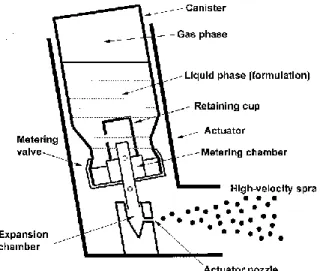
The most common type of inhaler is Pressurized meter dose inhaler (pMDI). It contains mainly of: container, valve, actuator, propellants and drug formulations.
Figure 7: Structures of a typical Inhaler (Newman, 2005).
Components
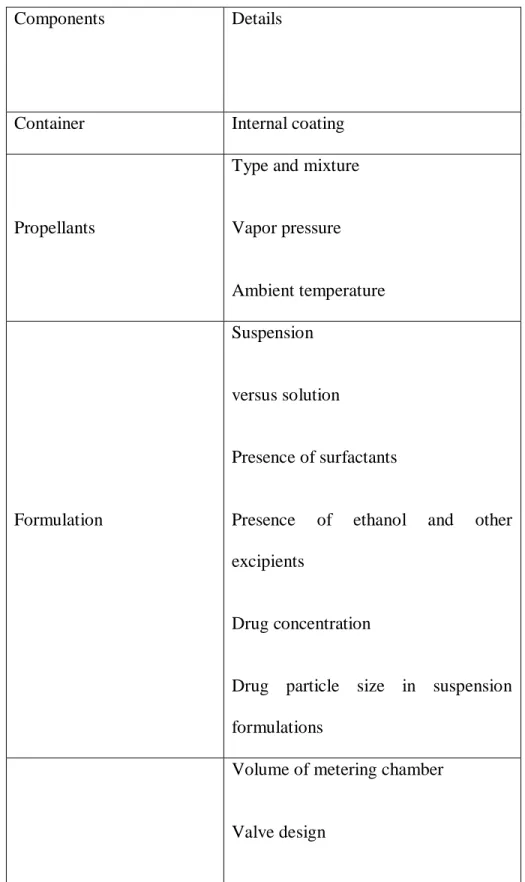
Components can be affected by several factors. Such as-
Table 1: Factors that affect components of inhaler (Newman, 2005).
Components Details
Container Internal coating
Propellants
Type and mixture Vapor pressure Ambient temperature
Formulation
Suspension versus solution
Presence of surfactants
Presence of ethanol and other excipients
Drug concentration
Drug particle size in suspension formulations
Volume of metering chamber Valve design
Metering valve Elastomers
Time since last actuation Orientation during storage
Actuator
Expansion chamber size and shape Nozzle diameter
Nozzle path length
Mouthpiece length and shape
Breath-actuation/breath coordination Spray velocity modification
Spacer attachments
Container
Requirement for being the container of inhaler is to be:
1. Robust 2. Inert
3. Thermolabile
As aluminum is lighter than glass also it is more compact, less fragile and light proof currently it is being mostly used. Stainless steel was used before using glass and aluminum (Newman, 2005).
Propellants
Propellants in pMDIs are liquefied compressed gases which exist in the environment in gaseous state but liquid in compressed form. Criteria for being a propellant for inhaler is-
1. Non-toxic
2. Non-inflammable
3. Compatible with drugs formulated either as suspension or solutions 4. To have appropriate boiling points and density
CFC was previously used as propellants. But it creates damage to the ozone (O3). By considering this issue HFA replaced CFC. Although, HFC is also a ‘greenhouse gas’ but their contribution to global warming is very less (Newman, 2005).
Drug Formulations
Drugs in the pMDI are present in the inhaler as solution or suspension. As CFCs are non-polar so suspensions are widely used so that drugs having low solubility and good stability can be achieved.
On the contrary, sometimes surfactants are used to reduce solubility (Newman, 2005).
Metering valve
The metering valve on the container is the most crucial part of pMDI which has a volume of 25L to 100L (Newman, 2005).
Actuator
Canister is fitted into a plastic actuator. Aerosol particle size is determined by the nozzle diameter which ranges 0.14mm and 0.6 mm. Aerosol particle size varies with nozzle diameter (Newman, 2005).
Chapter-3 Methodology
3.1 Research Design
This study was designed to develop a statistic on patient compliance on using different types of inhaler consists of different types of drugs in Dhaka city through questionnaire. The purpose of this study was designed by researching different journal, online research. The rationale of this research was to develop an idea and building knowledge on various types of inhaler mostly
Validity testing of questionnaire
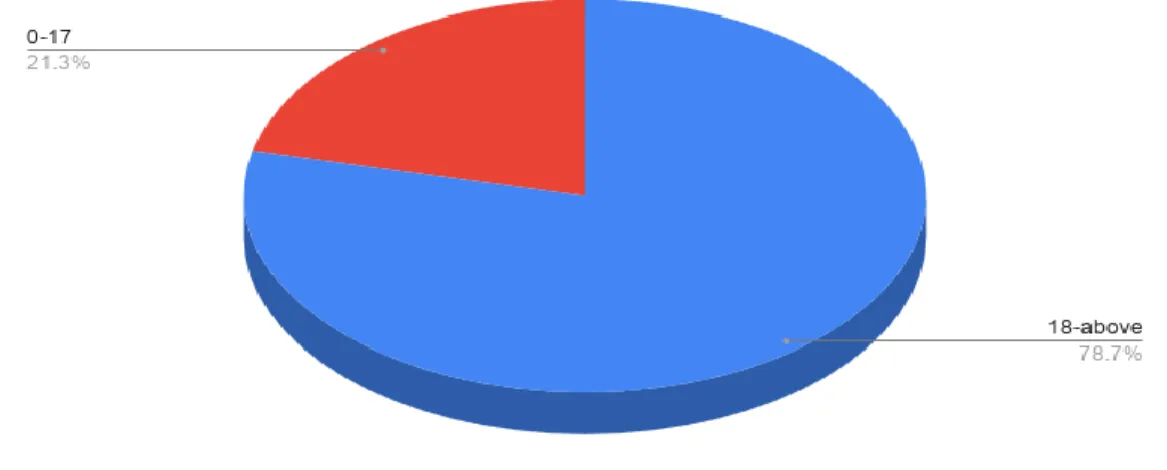
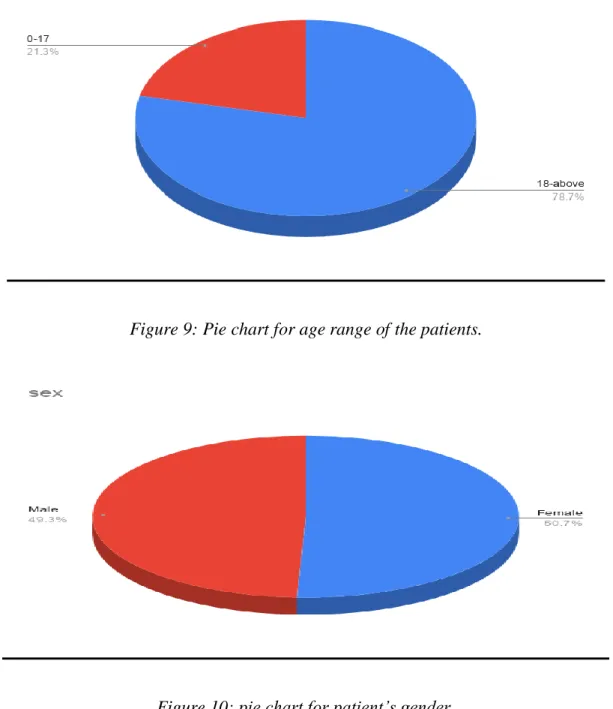
available and used also cost effective in this city. There are many articles on inhaler, history of inhaler, inhaler for specific disease but no research has been done on patient compliance in using different types of inhaler to judge the effectiveness of different types of inhaler according to the use of drugs and costs. The participants of this study were selected normally from different hospitals where pulmonary diseases like COPD, asthma, pneumonia are being treated. The range of the participants was from 0 to above 18. Total participants were 150 whereas 76 were female and 74 were male. Among the patients 32 were in between 0 to 17 and 118 were from 18 to above.
At first, participants who satisfied the criteria of this study were selected and every one gave their consent to contribute to this research study.
3.2 Determination of sample size
Literature Review Development of the questionnaire
Figure 8: Flowchart of Research Design.
Selecting participants
Agreemen
ts of the N
Rejection Yes
Proceed
Fill out the questionnaire
Data collection
Analysis of data
Result
3.3Development of the sample size
The questionnaire was developed in such a way so that it can reach the goal of the study. Before making the question, discussion was done with an expert. The survey included the inquiries about patient’s age, gender, duration of the disease, duration of the disease, name of the drug, duration of taking the drug, cost effectiveness etc.The questionnaire was absolutely understandable and the inquiries were straightforward and significant to the patients.
3.4 Validity testing of questionnaire
A simple and understandable questionnaire is important to get the exact result. The questionnaire was made in such a way so that it could be easy and understandable to the members who have participated in the survey. The questionnaire was reviewed by the instructor to ensure the validity of the questions to be asked.
3.5 Selecting the participants
The participants were selected in such a way who is suffering from pulmonary disease and was interested to participate in the survey. Ethical permission was taken from them.
3.6 Data Collection and completion of the study
The survey was completed by collected the data from random 150 patients who satisfied the criteria to complete the study.
Data analysis was done by placing the data in excel file and pie chart was made for some individual data
Chapter-4
Results and discussion
4.1 Results
Figure 9: Pie chart for age range of the patients.
Figure 10: pie chart for patient’s gender.
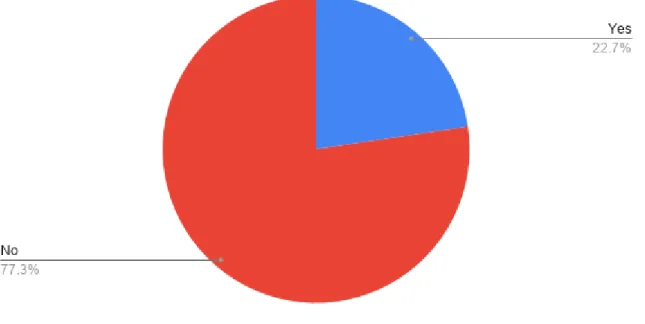
Figure 11: Pie chart for patients’ knowledge on available dosage form of pulmonary drugs.
Figure 12: pie chart for disease name.
Figure 13: pie chart for drugs name used by the patients.
Figure 15: pie chart for duration of taking the current medication for the patients.
Figure 16: pie chart for time of taking the medication in a day.
Figure 17: pie chart on difficulties regarding the device or drug.
Figure 18: pie chart for the difficulties faced by the patients.
Figure 19: pie chart for the percentage of satisfied patients with the efficacy of current dosage form.
Figure 20: pie chart on the percentage of recommendation of patients regarding current inhalation system.
Figure 21: Pie chart about cost effectiveness of the drugs recommended by the patients.
The percentage of individuals is given on table no-02. During the research was done 150 people were participated on the study. Most of the patient were female and used MDI mostly. From the study we can see that most of the patients are suffering from asthma.
Table 2: Percentages of the acquired variables.
Variable Parameters/range Percentage (%)
Age 0-17
18- above
21.3 78.7
Sex Male 49.3
Have knowledge on pulmonary dosage form
available in the market
Yes No
22.7 77.3
Name of the disease Asthma
COPD Pneumonia
66.0 24.0 10.0
Inhalation technique MDI
Nebulizer
70.7 29.3
Drugs that is taken by the patient
Salbutamol sulphate Saltonil solution
Bexitrol Iprasol Sulprex Budesonide Salmeterol + Fluticasone
Propionate Salmeterol Xinafoate
32.7 3.3 7.3 13.3 15.3 8.0 13.3
6.7
Duration of taking the medication
<6months 6-12months
>12months
32.7 16.7 50.7
Times of taking medication in a day
When it is necessary Once
Twice Thrice
11.8 27.5 23.5 37.3 Have any difficulties
regarding the drug or device?
Yes No
8.0 92.0
If there are any difficulties, what is that?
Waste of medication while using it.
Taking the inhaler properly Cannot pump accurately
75.0 18.8 6.3
Satisfaction with the efficacy of the current
medication
Yes No
98.0 2.0
Do you want to change anything in the current
inhalation system?
Yes No
0.7 99.3
Satisfaction with the cost effectiveness
MDI Nebulizer
86.7 13.3
From this table it has been shown that 70.7% patients are using MDI, and 29.3% are using
using DPI. These statistics clearly shows the acceptance of the inhalation device among the patient and from the survey it can be said the acceptance of MDI is more than the nebulizer and also acceptance of DPI could not be found.
On the other hand, patient satisfaction with the current medication system according to cost effectiveness most of the patient (86.7%) prefer MDI and rest of them (13.3%) prefer nebulizer.
However, satisfaction with the efficacy of their current inhalation system is very high (98%) and most of the patient (99.3%) does not want to change anything in their current medication system.
4.2 Discussion
The aim of the survey was to find out the acceptance of DPI among the pulmonary patient and also was to find out the most popular form of drugs for the pulmonary disease. From the collected data we can say that MDI is more popular and more accepted form of inhalation technique for the pulmonary patient. On the contrary, acceptance of DPI in Mohakhali is very less as among 151 patients no one is using DPI. Among 150patients’ maximum number is using Salbutamol sulphate (32.7%). And also, it should be noted maximum number of patients are satisfied with the efficacy of the current drug (98.0%) and most of them does not feel any difficulties while they are taking the drugs (92.0%)
Another aim of that study was to find out effective solutions to increase the patients concerns and education to take inhaler when it needs. This survey shows us that around 92% can take medication by themselves and rest of the 8% are feeling difficulties in taking medication properly or it is being wasted or they cannot actuate the pump properly. Among the patients who are using inhaler in a daily basis, mostly are using thrice times in a day (37.3%).
From the research we also have also found that, women are more suffering from pulmonary disease (50.7%) and among all the patients most of them are suffering from asthma (66.0%), COPD (24.0%), pneumonia (10.0%).
This survey shows us that patients are suffering from different pulmonary disease for a long time or some are suffering for less than 6months. More people are being attacked by the pulmonary disease due to air pollution, smoking and so on. Pharmacists should educate patients by proper counseling about what to do what not to do and also the prevention method of pulmonary disease.
Chapter-5 Conclusion
Patient compliance with the pulmonary drugs is very necessary as the drug would not affect to the body if it is not taking properly or not in proper amount. Patient education needs to be increased specially for the women as women are getting more affected. To reduce the percentage of pulmonary disease smoking rate among the people should reduce also people should be more
pharmacists should educate patients properly also patients should follow every step that needs to be followed. However, number of data collection was 150, which is very less in number. Number of pulmonary patients in Mohakhali is not as less as the number of data was collected. Some patients are not aware about their disease; some were not willing to attend the survey, so a satisfactory number of data could not be collected. Although very less amount of research is done on patient compliance among different types of inhaler is done, so further research can be done on this along with a better formulations with the highest efficacy and less side effects can be done That is how may be “pulmonary patient compliance among different types of inhaler dosage forms” can be achieved.
References:
1864: Seigle and Adams steam powered Inhaler. (2014, March 4). Retrieved March 3, 2020, from http://hardluckasthma.blogspot.com/2014/03/1864-seigle-and-adams-steam-powered.html Asthma Symptoms and Signs. (2018). Retrieved March 3, 2020, from
https://www.webmd.com/asthma/asthma-symptoms#1
Asthma Treatments: Inhalers, Nebulizers, and Medications. (2018). Retrieved March 3, 2020, from https://www.webmd.com/asthma/asthma-treatments#1
Capstick, T. G. D., & Clifton, I. J. (2012, February). Inhaler technique and training in people with chronic obstructive pulmonary disease and asthma. Expert Review of Respiratory Medicine, Vol. 6, pp. 91–103. https://doi.org/10.1586/ers.11.89
Carl, B., & Brook, S. (1985). United States patent钻石打标专利. Geothermics, 14(4), 595–599.
https://doi.org/10.1016/0375-6505(85)90011-2
Chronic obstructive pulmonary disease (COPD) - Treatment - NHS. (2019, September 20).
Retrieved March 3, 2020, from https://www.nhs.uk/conditions/chronic-obstructive- pulmonary-disease-copd/treatment/
Dolovich, M. B., & Dhand, R. (2011, March 19). Aerosol drug delivery: Developments in device design and clinical use. The Lancet, Vol. 377, pp. 1032–1045. https://doi.org/10.1016/S0140- 6736(10)60926-9
Newman, S. P. (2005). Principles of metered-dose inhaler design. Respiratory Care, 50(9), 1177–
1188.
OpenStax. (2013, March 6). 22.1 Organs and Structures of the Respiratory System. OpenStax.
Prerna. (2019). 10 Symptoms of COPD - Facty Health. Retrieved March 3, 2020, from https://facty.com/conditions/copd/10-symptoms-of-copd/
Respiratory diseases skyrocketing in Bangladesh | The Daily Star. (2018). Retrieved March 3, 2020, from https://www.thedailystar.net/health/respiratory-diseases-skyrocketing- bangladesh-1565779
Respiratory System Anatomy, Diagram & Function | Healthline. (2015). Retrieved March 3, 2020,
Santos TM, M. (2018). Inflammation, Autoimmunity and Exacerbations: A Promising Area for New Studies in COPD. Chronic Obstructive Pulmonary Disease: Open Access, 03(01).
https://doi.org/10.21767/2572-5548.100030
Stages of COPD: Mild through End-Stage COPD | Lung Institute. (2018). Retrieved March 3, 2020, from https://lunginstitute.com/blog/stages-of-copd-mild-through-end-stage/
Stein, S. W., & Thiel, C. G. (2017, February 1). The History of Therapeutic Aerosols: A Chronological Review. Journal of Aerosol Medicine and Pulmonary Drug Delivery, Vol. 30, pp. 20–41. https://doi.org/10.1089/jamp.2016.1297
Types of Asthma. (2018). Retrieved March 3, 2020, from https://www.webmd.com/asthma/types- asthma#1
What Causes Asthma? (2018). Retrieved March 3, 2020, from https://www.webmd.com/asthma/asthma-triggers#1
Who invented inhaler | Use Inhalers. (2012). Retrieved March 3, 2020, from https://use- inhalers.com/who-invented-inhaler
Williams, K. (2018, January 29). How Inhalers Have Evolved, One Breath at a Time. Retrieved March 3, 2020, from https://www.everydayhealth.com/lung-respiratory/asthma/look-history- asthma-inhalers/