Enhancing Cross-Cultural Training Efficacy
on Expatriate Adjustment through Emotional Intelligence
and Social Capital*
Ely Susanto
Department of Public Policy and Management (DPPM), Faculty of Social and Political Sciences, Universitas Gadjah Mada, Yogyakarta, Indonesia
Rokhima Rostiani
Department of Management, Faculty of Economics and Business, Universitas Gadjah Mada, Yogyakarta, Indonesia
Gadjah Mada International Journal of Business
Vol. 14, No. 2 (May - August 2012): 123 - 138
Abstract: Cross cultural training is widely believed to make a positive contribution to expatriate adjust-ment. In practice, however, it is very costly and sometimes ineffective for expatriates. Therefore, there is a growing importance placed on increasing the cost effectiveness or enhancing the efficacy of cross-cultural training by functioning individual expatriate’s social capital and emotional intelligence as moderat-ing variables towards expatriate’s adjustment and performance. To do so we blend ideas drawn from social capital theory and emotional intelligence to develop the structure that underlies the logic of this paper. Thus, this paper uses social capital and emotional intelligence theories to enrich extant literature on expatriate adjustment
Abstrak: Pelatihan lintas budaya telah dipercaya memberikan kontribusi positif bagi proses penyesuaian ekspatriat. Meskipun demikian, dalam prakteknya, pelatihan tersebut sangat mahal dan terkadang tidak efektif. Oleh karena itu, penting untuk meningkatkan efektivitas biaya atau pencapaian pelatihan lintas budaya dengan memfungsikan modal sosial dan kepintaran emosi ekspatriat sebagai variabel pemoderasi antara penyesuaian ekspatriat dan kinerjanya. Penulis menggabungkan beberapa ide dari teori modal sosial dan kepintaran emosional untuk membangun sebuah kerangka sebagai dasar tulisan ini. Oleh karena itu, tulisan ini menggunakan teori modal sosial dan teori kepintaran emosional untuk memperkaya literatur mengenai penyesuaian ekspatriat.
Keywords: cross-cultural training; emotional intelligence; expatriate adjustment; social capital
Introduction
Globalization has reconfigured the land-scape of business in the world and has forced companies to change their strategies (Scul-lion 1991). Globalization has not only in-duced distortion in geographical boundaries but it has also created a new business arena which is characterized by stiff competition (Takeuchi et al. 2005). On the other hand, globalization also has opened the door for the international market and inspires companies to engage in the internationalization process (Ronen 1989; Scullion 1991) in order to seize international market opportunities. As a re-sult of these phenomena, expatriates are in-creasingly becoming important human re-source for multinational companies (MNCs) (Scullion 1991; Takeuchi et al. 2005). It is indicated by the increase in the number of expatriates (Gupta and Govindarajan 2000; Van Vianen et al. 2004). For example, United States has about 3.3 million expatriates around the world (Shepard 1997).
Although expatriates are increasingly becoming “key persons” for MNCs, the pro-cess of assigning an expatriate abroad is not a simple matter (Shaffer et al. 2001; Shaffer et al. 2006). How to select expatriates who have abilities to adjust in the new environ-ment becomes one important issue of the work force management at MNCs. The at-tention of MNCs toward the adjustment of expatriates is attributable to many factors. First, from the expatriates’ perspective, the success in the adjustment process and the ability to meet the assigned duration can el-evate their self-esteem, self-confidence and status among co-workers (Mendenhall and
Oddou 1985; Tung 1987). Second, it
contrib-utes to the increase of company’s cost effec-tiveness because assigning expatriates abroad
is very expensive (Aycan 1997). Third, the
success of expatriate adjustment will influ-ence expatriate performance (Forster 1997). Therefore, the success of expatriate adjust-ment in the foreign country is very essential for expatriates as well as companies. Addi-tionally, the need to identify factors that sup-port expatriates’ success in the adjustment process is important as it helps companies in selecting expatriates who have capabilities to adjust to the new environment successfully.
Many scholars have investigated the antecedents of expatriate and process adjust-ment (e.g. Andreason 2003; Aycan 1997; Bhaskar et al. 2005; Black and Gregersen 1991; Black et al. 1991; Shaffer et al. 1999; Takeuchi et al. 2002). However, those articles have not investigated the role of emotional intelligence and social capital as important factors that influence the success of expatri-ate adjustment. At the same time, there is still little research that uses social capital and emotional intelligence as moderating vari-ables on the expatriate adjustment literature. Taking the above factors on expatriate adjustment into consideration is important
for a number of reasons. First, it has been
the flow of knowledge between expatriate candidates and incumbent expatriates as well as host people so that candidates have the opportunity to accumulate a more compre-hensive cross-cultural knowledge.
Second, emotional intelligence may facili-tate people to better use the initial cross-cul-tural knowledge they acquire in training dur-ing the adjustment process (Black and Gregersen 1991; Caligiuri and Tarique 2006) thereby accelerating its use.
Third, it may not make sense if cross-cultural training has the same effect on expa-triate adjustment across people. The effects may vary depending on personal abilities such as emotional intelligence and networking de-velopment abilities. The magnitude of an expatriate’s personal emotional intelligence and social capital may influence the magni-tude of the relationship between cross-cul-tural training and expatriate adjustment.
Discussing this issue will provide a clearer direction on the linkages among the constructs which should generate advantages for relevant parties. For managers, the impli-cation is that the findings will help managers to provide ideas in selecting appropriate ex-patriates with the ability to adjust success-fully, which in turn enables them to finish their assigned duration. In addition, this paper will provide managers with clearer ideas on the role of social capital and emotional intelli-gence in facilitating adjustment of expatri-ates.
The presentation of this paper will be as follows. The first section presents the theo-retical background, which includes defini-tions of expatriate adjustment, cross-cultural training, social capital and emotional intelli-gence. Section two discusses proposition
de-velopment, and section three, presents the conclusion and suggestions for future re-search.
Theoretical Background
Expatriate Adjustment
The term expatriates refers to “employ-ees of business organizations, who are sent overseas on a temporary basis to complete a time-based task or accomplish an organiza-tional goal.” (Harrison et al. 2004: 203). Ad-justment is “a state whereby changes occur in the individual in a direction of increased fit and reduced conflict between the environ-mental demands and the individual attitudi-nal and behavioral inclinations (Aycan 1997, p. 436).
working as expatriates or with the host coun-try people. The main premise of this thesis is that, with the nature of conflict being given, expatriates have limited time to achieve ad-justment while on assignment. Within that limited duration, expatriates are expected to achieve adjustment at a fast rate. This bar-rier for adjustment should be reduced as early as possible to ensure that the process does not affect their performance. By having good emotional intelligence and good quality net-works with incumbent expatriates as well as host country people (HCNs), expatriates are expected to hasten their adjustment.
Expatriate adjustment consists of three dimensions: adjustment to work (job require-ments), adjustment to interacting with indi-viduals in the foreign country, and general adjustment to the foreign culture (Shaffer et al. 1999). Those dimensions are similar to psychological adjustment, socio-cultural ad-justment, and work adjustment (Aycan 1997). The term psychological adjustment re-fers to “emotional satisfaction” (Ward and Kennedy 1993, p.222) and is gauged from the ability to “maintaining good mental health or psychological well-being” (Aycan 1997: 436). Meanwhile, the term social-cultural adjust-ment refers to be in tune with the culture in the country where an expatriate is working (Ward and Kennedy 1993: 222). Another scholar defines social-cultural adjustment as the degree of effectiveness in the commu-nity and it deals with “non-work situations” (Aycan 1997). Finally, the term work adjust-ment can be referred to as “the ability that produces behaviors of which can result in good performance of required task and hav-ing positive attitudes towards the new work role” (Aycan 1997: 436).
Understanding the importance of expa-triate adjustment in a new environment, it is crucial for managers to provide better prepa-ration program to enhance expatriate perfor-mance. One widely used program for such adjustment is cross-cultural training con-ducted prior to departing to other countries.
Cross-Cultural Training
Cross-cultural training can be defined as “the educative process used to improve intercultural learning via the development of the cognitive, affective, and behavioral com-petencies needed for successful interaction in diverse cultures” (Littrell et al. 2006: 356; Morris and Robie 2001). Cognitive compe-tencies may deal with the rationality in mak-ing decisions while affective competencies may pertain to the abilities to handle emo-tion during performing interacemo-tion with other people. Behavior competencies may represent the abilities of people in managing relation-ship with other people (Waxin and Pannacio 2005).
Emotional Intelligence
Emotional intelligence has been stud-ied for years, pioneered by the work of Thorndike in 1920 (Wong and Law 2002). He proposes a social intelligence theory from which emotional intelligence can be traced (Guastello and Guastello 2003; Hedlund and Sternberg 2000; Landy 2005; Matthews, Rob-erts, and Zeidner 2003). He defines social intelligence as “the ability to perceive one’s own and others’ internal states, motives and behaviors and to act toward them optimally on the basis of that information” (Landy 2005: 414; Mayer and Salovey 1993: 435). Another scholar, Gardner (1983), proposes a multiple intelligences concept of which one of those multiple intelligences is social intel-ligence (Wong and Law 2002).
Another recognition of the concept of emotional intelligence is driven with the pub-lication of Salovey and Mayer’s article on emotional intelligence in 1990 (Ashkanasy and Daus 2005), which was popularized by Daniel Goleman (Fox and Spector 2000; Ogilvie and Carsky 2002). At the beginning, Mayer and Salovey described emotional in-telligence as a two-part approach; general processing of emotional information and skills involved in such processing (Mayer and Geher 1996; Salovey and Mayer 1990). Later, Mayer and Salovey (1997) define emotional intelligence as “the capacity to reason about emotions, and of emotions to enhance think-ing. It includes the abilities to accurately per-ceive emotions, to access and generate emo-tions so as to assist thought, to understand emotions and emotional knowledge, and to reflectively regulate emotions so as to pro-mote emotional and intellectual growth” (Mayer and Salovey 1997: 197; Mayer et al. 2004).
A wide variety of emotional intelligence research has been conducted to assess the relationship between emotional intelligence and other related variables such as emotional intelligence and job performance as well as team performance (Druskat and Wolff 2001; Goleman 1998; Huy 1999; Jordan et al. 2002; Jordan and Troth 2004; Mayer et al. 2000; Wong and Law 2002); emotional intelligence and transformational leadership (Mandell and Pherwani 2003); emotional intelligence and the “attitude toward organizational change” (Vakola et al. 2004: 88). However, only few studies have investigated emotional intelli-gence in the context of expatriates. One ex-ample is study conducted by Gabel et al. (2006) who found that emotional intelligence can positively contribute to expatriate adjust-ment.
Social Capital
Regarding the benefits, Moran (2005) argues that there are differences of opinion among scholars with respect to the way so-cial capital generates benefits. Some scholars propose that it is important to have weak ties (Burt 1997; Granovetter 1973), which will produce rich information because of getting un-redundant information (Burt 1997; Granovetter 1973; Moran 2005). Another scholar proposes “closure of network” (Coleman 1988: 105). The closure of net-works will produce benefits in terms of re-peated ideas (Moran 2005). In addition, the closure of network will be beneficial in terms of the norms that facilitate individuals in the network to share voluntary information with one another (Coleman 1988).
In line with those notions, other schol-ars contend that social capital represents three important elements: structural dimension, relational dimension and cognitive dimension (Nahapiet and Ghosal 1998). They further explain that the structural dimension of so-cial capital indicates the number of networks in an organization whereas the relational di-mension indicates the “quality” of the net-works. The term cognitive dimension refers to “those resources providing shared repre-sentations, interpretations, and systems of meaning among parties” (Nahapiet and Ghosal 1998: 244).
Finally, as a form of capital, social capi-tal is valuable for individuals since it fertil-izes the trustworthiness among individuals (Coleman 1988). As a result, it can eliminate the obstacles that can hamper communica-tion and accelerate the flow of informacommunica-tion (Thompson 2005). In addition, the degree to which social capital exists also determines the degree to which individuals maintain relation-ships with one another (Kostova and Roth 2003).
Empirical studies show that social capi-tal generates benefits at the individual level. For example Thompson (2005) found the positive effect of social capital on proactive personality in achieving better performance. Burt (1997) found that social capital gener-ates benefits in terms of early promotion and higher compensation, while Granovetter (1973) found it to positively influence infor-mation about jobs that someone obtains from his or her relations. However, even though social capital has been used extensively in different fields, there is little that has ad-dressed the issue of benefits of social capital on the expatriate adjustment.
Conceptual Model and
Proposition Development
The complexity of business environ-ments in a country demands that a new expa-triate have good preparation in order to achieve successful adjustment. This is be-cause the success of the adjustment process is closely associated with the completion of the assigned duration. To do so, two meth-ods may be taken into consideration: formal and informal. Formal means new expatriates need to improve abilities that reside within themselves through joining cross-cultural or emotional intelligence training.
can use to obtain cross-cultural knowledge through informal relationships with their col-leagues who are working as expatriates in such countries or from host people.
It may be stated explicitly that a good combination between informal and formal approaches may produce a potential power to facilitate new expatriates to succeed in the adjustment. In other words, an expatriate with high emotional intelligence has more knowl-edge about such countries in term of its cul-ture which is obtained from training (formal) and from colleagues (informal). Those steps may help expatriates succeed in the adjust-ment process. The following section will dis-cuss new factors, which may be useful but have not been given sufficient attention in previous studies on expatriate adjustment.
Cross-cultural training, social
capital and expatriate adjustment
It has been widely recognized that cross-cultural training plays an important role in helping expatriates to adjust successfully in a new environment with different culture (Caligiuri and Tarique 2006; Morris and Robie
2001). Expatriates who have joined cross-cultural training in the home country have the initial knowledge about how to live in new environments with different cultures (Caligiuri and Tarique 2006). This initial knowledge is an important facet for expatri-ates as a source to assimilate and change their attitudes and behavior in a new environment. Cross-cultural training is designed to equip expatriates with the specific knowledge about how to live in the different culture suc-cessfully, for example communication skill, daily life such as climate, food, housing, and job skills (Caligiuri et al. 2001; Selmer 2005). With such knowledge, expatriates may be able to solve the problems which arise from unfa-miliar events in their daily life as well as in their workplace (Caligiuri et al. 2001).
Expatriates who have the initial knowl-edge may be better in the “learning process” (Black and Gregersen 1991; Caligiuri et al. 2001; Caligiuri and Tarique 2006) and it may help expatriates make decisions quickly when problems arise. Cross-cultural knowledge leads expatriates to interact properly and com-municate fluently with the host people
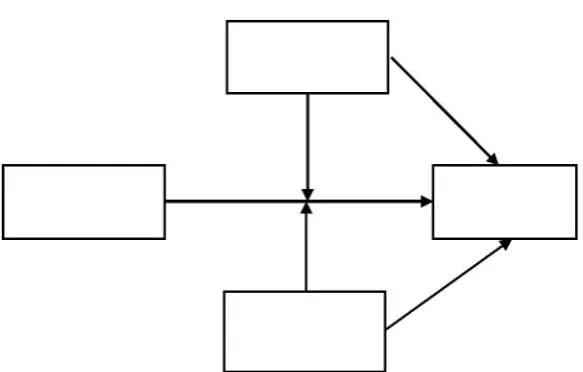
with-Figure 1. Proposed Framework
Expatriate Adjustment Cross culture
training
Emotional intelligence
out feeling scared to hurt the host culture. Expatriates may be able to confidently inter-act with HCNs. Expatriates also may feel at ease since they have gained sufficient initial knowledge to be familiar with the jobs, which will speed up the adjustment process. Em-pirically, one study made by Waxin and Panaccio (2005) underscored the importance of cross-cultural training for expatriates, es-pecially in the adjustment process. Based on the above discussion, a proposition is devel-oped:
P1a: Cross-cultural training will positively associ-ate with the expatriassoci-ate’s adjustment in the new country
As mentioned before, time barrier and emergency needs sometimes act as obstacles for MNCs to hold cross-cultural training to-ward their expatriates (Tung 1982; Dowling et al. 1999). On the other hand, cross-cul-tural knowledge is very important for expa-triates to facilitate the adjustment process (Waxin and Panaccio 2005). Therefore, find-ing another way to solve this problem may be necessary for MNCs to equip expatriates with cross-cultural knowledge. In this paper, an informal way for developing networks among expatriate candidates and incumbents expatriates, as well as host country people, is recommended as a course of action in order to facilitate getting cross-cultural knowledge. An informal approach itself represents the ways that expatriates can obtain cross-cultural knowledge through informal relationships with their colleagues who are working as ex-patriates in such countries and with host people. In this study, social capital theory is used to frame and justify that idea.
According to Lengnick-Hall and Lengnick-Hall (2006), “social capital enables role versatility in individuals and units, allow-ing them to be both senders and recipients
of knowledge and reducing barriers to effec-tive knowledge flow” (p. 481). Departing from this idea, it may be stated that the pres-ence of high social capital of expatriate can-didates with incumbent expatriates as well as with HCNs may facilitate them to transfer cross-cultural knowledge of such countries. In addition, good social capital is likely to let foreign colleagues provide assistance to ex-patriate candidates. Before departing to a host country, a candidate may interact by internet or phone to ask what he or she should pre-pare for the new environment. A massive use of internet cuts down communication time among people that are living a distance away. Similar to the internet, the use of phone not only can cut down communication time but also can attach more psychological relation-ships to people because they can talk in per-son. Those mechanisms may make the in-creased of knowledge flow efficacy as rec-ommended by Hall and Lengnick-Hall (2006) above. With an effective know-ledge flow, expatriate candidates may be able to accumulate more knowledge from incum-bent expatriates as well as from HCNs inde-pendently and informally. As a result know-ledgeable expatriates, who have obtained their knowledge in informal ways, may be able to prepare well before departing to or during assignments in the host country and so mak-ing a success of the adjustment.
information (Kostova and Roth 2003). The reciprocal relationship produced by high so-cial capital that exists between expatriate can-didates and incumbent expatriates may ex-pedite the information flows from incumbent expatriates as well as HCNs to expatriate can-didates respectively. It is because the inside of reciprocal relationship not only involves cognitive relations among people but also involves emotional relations that can more fasten that relationship itself. Therefore, when it happens, expatriates (incumbents or can-didates) are willing to share what they have with one another. Then, expatriates can ac-cess information from incumbents anytime.
The quality and speed of information may also depend on the number of networks (structural dimensions); the quality of net-works (relational dimensions) and the spirit as a member of one company (cognitive di-mension). Larger networks will enrich the information because of un-redundant infor-mation (Burt 1997; Granovetter 1973; Moran 2005). The quality of networks will create the norm that facilitates individuals in the networks to voluntarily share information with one another (Coleman 1988). As a re-sult, it can fasten the flow of information. Finally, the spirit as a member of one com-pany can attach more psychological relations that may produce the responsible feeling to help one another. It can also fasten the flow of information.
On the other hand, the presence of so-cial capital is also expected to strengthen the relationship between cross-cultural training and the success of the adjustment process. It means that the presence of high social capi-tal may enrich accumulated knowledge ob-tained from the cross-cultural training. Ap-plied logic provided by Nahapiet and Ghosal (1998) may be able to explain the logic
be-the quality and speed of information may depend on the number of networks (struc-tural dimensions); the quality of networks (relational dimensions) and the spirit as a member of one company (cognitive dimen-sion).
The larger the networks, the richer the information will be, is based on the idea de-veloped by the work of Granovetter in 1973 on the strength of weak ties. He explains the importance of weak ties in a structure and its advantage regarding un-redundant infor-mation (Burt 1997; Moran 2005). Moreover, Burt (1997) reinforces that idea by stating that additive information is possible to exist from dissimilar contacts rather than from similar contacts. On the other hand, the higher the quality of networks, the faster the flow of information based on Coleman’s (1988) work cited by Moran (2005). He ar-gues that “closure of networks” will create the norm that facilitates individuals in the networks to voluntarily share information to one another (Coleman 1988).
degree of spirit to represent their company, he or she may have more complete know-ledge compared to other expatriates that have low levels of these dimensions. Therefore, an expatriate who gains knowledge from train-ing, added by cross-cultural knowledge infor-mally received from incumbent expatriates as well as HCNs through informal relationships will have more comprehensive cross-cultural knowledge so that it may bring success in the adjustment. Based on those discussions, two propositions are developed:
P1b: Social capital will directly, and positively as-sociate with the expatriate adjustment. P1c: Social capital will positively moderate the
re-lationship between cross-cultural training and the expatriate adjustment in such a way that the relationship is stronger for those higher, rather than lower in social capital
Emotional Intelligence and
Expatriate Adjustment
Findings from a wide variety of emo-tional intelligence research have shown a positive influence of emotional intelligence on individual performance as well as team performance (Druskat and Wolff 2001; Goleman 1998; Huy 1999; Jordan et al. 2002; Jordan and Troth 2004; Mayer et al. 2000; Wong and Law 2002); emotional intelligence and transformational leadership Mandell and Pherwani (2003); emotional intelligence and the attitude toward organizational change (Vakola et al. 2004). Based on those ideas, emotional intelligence may be contribute positively toward successful adjustment of expatriates.
The logic here is that the adjustment process involves psychological adjustment (Aycan 1997; Ward and Kennedy 1993). As part of the adjustment process, psychologi-cal adjustment will be pertinent to
psycho-logical problems such as stress, anxiety, or fatigue or disruption, poor mental health (Hechanova et al. 2003). In addition, a new environment in which an expatriate lives gen-erates psychological pressures because con-ditions or the way things occur may be dif-ferent from what expatriates face in their home countries. That pressure may produce psychological ailments such as stress, anxi-ety, or fatigue or disruption. When those oc-cur, emotional conflict will ensue. Accord-ing to Glinow et al. (2004) the term emo-tional conflict refers to “negative emotion such as frustration, irritation, even anger” (p. 578). Therefore, it may be stated that suc-cess in psychological adjustment may reduce psychological problems.
On the other hand, emotional intelli-gence may also function as a moderating vari-able on the relationship between cross-cul-tural training and expatriate adjustment. Ex-patriates whose emotional intelligence may enable them to optimally use their tural knowledge obtained from the cross-cul-tural training in their home country during the adjustment process. In addition, emotional intelligence may facilitate expatriates to use a better initial cross-cultural knowledge in “the learning process” of adjustment (Black and Gregersen 1991; Caligiuri et al. 2001; Caligiuri and Tarique 2006). Expatriates with emotional intelligence may enable them to recall easily the initial knowledge that is stored in their memory whenever they face problems during the adjustment process. It can occur through optimizing the work of the cogni-tive process. Therefore, it may be stated con-clusively that the efficacy of cross-cultural training on supporting expatriate adjustment is moderated by the presence of emotional intelligence. Based on those discussions, two propositions are developed
P2a: Emotional intelligence will positively associ-ate with the expatriassoci-ate adjustment
P2b: Emotional intelligence will moderate the rela-tionship between cross-cultural training and the expatriate adjustment in such a way that the relationship is stronger for those higher, rather than lower in emotional intelligence
Conclusion and Research
Agenda
The objective of this paper is to explore the role of social capital and emotional intel-ligence as moderating variables on the rela-tionship between cross-cultural training and expatriate adjustment. The paper is based on
environment in a country requires new expa-triates to have a good preparation if they are to adjust successfully to their new assign-ments. To achieve that, this study recom-mends two different methods that may be taken into consideration: formal and infor-mal. The formal method can be achieved through undergoing training in cross-cultural and emotional intelligence, while the mal method should involve harnessing infor-mal relationships with their colleagues or HCNs’s people. A good combination between formal (cross-cultural training as well as emo-tional intelligence training) and informal ap-proaches should produce sufficient facilita-tion for expatriate candidates to achieve suc-cess in adjustment to their new environment. In other words, equipped with high emotional intelligence, cross-cultural knowledge, quality and large of networks, and the spirit as a member of a company, new expatriate should be able to adjust easily and quickly to the new assignment.
nections between expatriate incumbents and expatriate candidates a process which should lead to cross-cultural knowledge transfer among them.
Regarding future research, several direc-tions can be suggested. First, social capital is beneficial to firms as well as expatriates, therefore investigating the way a firm devel-ops an environment to fertilize the social
capi-tal is suggested. In that case, a qualitative approach is recommended. Secondly, as emo-tional intelligence is also a critical factor in the expatriate adjustment process, conduct-ing a comparison of the impact of low and high emotional intelligence on the adjustment process should be another direction for re-search in future. For that study, an experiment study is recommended.
References
Andreason, W. A. 2003. Expatriate adjustment to foreign assignments. International Journal of Commerce and Management 13 (1): 42.
Ashkanasy, N. M., and C. S. Daus. 2005. Rumors of the death of emotional intelligence in organizational behavior are vastly exaggerated [Electronic Version]. Journal of Organizational Behavior 26: 441–452. Retrieved 17-08-2006 from www.interscience.wiley.com.
Aycan, Z. 1997. Expatriate adjustment as a multifaceted phenomenon: Individual and organizational level predictors. International Journal of Human Resource Management 8: 433-456.
Bar-On, R. 1997. Emotional Quotient Inventory.Technical Manual. Toronto: Multi-Health Systems.
Bhaskar, S. P., D. A. Harrison, M. A. Shaffer, and D. M. Luk. 2005. Input-based and time-based models of international adjustment: Meta-analytic evidence and theoretical extensions. Academy of Manage-ment Journal, 48(2), 257-281.
Black, J., and M. Mendenhall. 1990. Cross-cultural training effectiveness: A review and a theoretical frame-work for future research. Academy of Management Review 15 (1): 113- 136.
Black, J. S., and H. B. Gregersen. 1991. Antecedents to cross-culture adjustment for expatriate in pacific rim assignment. Human Relations 44: 497-515.
Black, J. S., M. Mendenhall, and G. Oddou. 1991. Toward a comprehensive model of in-ternational adjustment: an integration of multiple theoretical perspectives,. Academy of Management Review, 16(2), 291-317.
Burt, R. S. 1997. The sontingent value of social capital. Administrative Science Quarterly 42 (3): 339-365. Caligiuri, P., J. Phillips, M. Lazarova, I. Tarique, and P. Burgi. 2001. The theory of met expectations
applied to expatriate adjustment: the role of crosscultural training. International Journal of Human Resource management 12 (3): 357–372.
Caligiuri, P., and I. Tarique. 2006. International assignee selection and cross-cultural training and develop-ment. In G. K. Stahl, and I. Bjorkman (Eds.), Handbook of Research into International Human Resource Management. London: Edward Elgar.
Dowling, P. J., D. E. Welch, and R. S. Schuler. 1999. International Human Resource Management: Managing People in a Multinational Context. Cincinnati: South-Western College Publishing.
Druskat, V. U., and S. B. Wolff. 2001. Building the emotional intelligence of groups. Harvard Business Review: 81-90
Fischer, H. M., and T. G. Pollock. 2004. Effects of social capital and power on surviving transforma-tional change: The case of initial Public Offering. Academy of Management Journal 47 (4): 463-481. Forster, N. 1997. The persistent myth of high expatriate failure rates: A reappraisal. International Journal of
Human Resources Management 8 (4): 414-433.
Fox, S., and E. P. Spector. 2000. Relations of emotional intelligence, practical intelligence, general intelli-gence, and trait affectivity with interview outcomes: It’s not all just ‘G’. Journal of Organizational Behavior 21 (2): 203.
Gabel, R. S., S. L. Dolan, and J. L. Cerdin. 2006. Emotional intelligence as predictor of cultural adjust-ment for success in global assignadjust-ments. Career Developadjust-ment International 10 (5): 375-395.
Gardner, H. 1983. Frames of Mind: The Theory of Multiple Intelligences. New York: Basic Books.
Glinow, M. A. V., Shapiro, D. L., and Brett, J. M. (2004). Can we talk, and should we? Managing Emo-tional Conflict in Multicultural Teams. Academy of Management Review, 29( 4), 578-592.
Goleman, D. 1998. Working with Emotional Intelligence. New York: Bantam.
Granovetter, M. 1973. The strength of weak ties 6. American Journal of Sociology 6: 1360–1380.
Guastello, D. D., and S. J. Guastello. 2003. Androgyny, gender role behavior, and emotional intelligence among college student and their parents. Sex Roles 49 (11/12): 663.
Gupta, A. K., and V. Govindarajan. 2000. Knowledge flows within multinational corporations. Strategic Management Journal 21: 473-496.
Harrison, D. A., M. A. Shaffer, and P. Bhaskar-Shrinivas. 2004. Going places: Roads more and less traveled in research on expatriate experiences. In J. J. Martocchio (Ed.), Research in Personnel and Human Resources Management 23: 199-247. Boston: Elsevier Ltd.
Hechanova, R., T. A. Beehr, and N. D. Christiansen. 2003. Antecedents and consequences of employees’adjustment to overseas assignment: A meta-analytic review. Applied Psychology 52: 213-236.
Hedlund, J., and R. J. Sternberg. 2000. Too many intelligences? Integrating social, emotional, and practical intelligence. In R. Bar-On and J. D. A. Parker (Ed.), Handbook of Emotional Intelligence. San Fransisco: Jossey-Bass.
Huy, Q. N. 1999. Emotional capability, emotional intelligence, and radical change. Academy of Management Executive 24: 325-345.
Jehn, K., A. 1997. A qualitative analysis of conflict types and dimensions in organizational groups. Ad-ministrative Science Quarterly 42 (3): 530.
Jordan, P. J., N. M. Ashkanasy, C. E. J. Hartel and G. S. Hooper. 2002. Workgroup emotionalintelligence scale development and relationship to team process effectiveness and goal focus. Human Resource Management Review 12: 195-214.
Kostova, T., and K. Roth. 2003. Social capital in multinational corporations and a micro-macro model of its formation. Academy of Management Review 28 (2): 297-317.
Landy, J. F. 2005. Some historical and scientific issues related to research on emotional intelligence [Elec-tronic Version]. Journal of Organizational Behavior 26: 411–424. Retrieved 17-08-2005 from www.interscience.wiley.com.
Lengnick-Hall, M., and C. Lengnick-Hall. 2006. International human resource management research and social network/social capital theory. In Bjorkman and G. Stahl (Eds.), Handbook of Research into International HRM. London: Edward Elgar.
Lievens, F., M. M. Harris, E. Van Keer, and C. Bisqueret. 2003. Predicting cross-cultural training perfor-mance: The validity of personality, cognitive ability, and dimensions measured by an assessment center and a behavior description interview. Journal of Applied Psychology 88 (3476-489.): 476-489. Lin, N. 2001. Social Capital: A Theory of Social Structure and Action. New York: Cambridge University Press. Littrell, L. N., E. Salas, K. P. Hess, M. Paley, and S. Riedel. 2006. Expatriate preparation: A critical analysis
of 25 years of cross cultural training research. Human Resource Development Review 5: 355-388. Mandell, B., and S. Pherwani. 2003. Relationship between emotional intelligence and transformational
leadership style: A gender comparison. Journal of Business and Psychology 17 (3): 387.
Matthews, G., D. R. Roberts, and M. Zeidner. 2003. Development of emotional intelligence: A skeptical - but not dismissive – perspective. Human Development 46 (2-3): 109.
Mayer, D. J., R. D. Caruso and P. Salovey. 2000. Emotional intelligence meets traditional standards for intelligence. Intelligence 27 (4): 267-298.
Mayer, J., and G. Geher. 1996. Emotional intelligence and the identification of emotion. Intelligence 22: 89-113.
Mayer, J. D., and P. Salovey. 1993. The intelligence of emotional intelligence. Intelligence 17: 432-442. Mayer, J. D., and P. Salovey. 1997. What is emotional intelligence? In P. Salovey and D. Sluyter (Ed.),
Emotional Development and Emotional Intelligence: Implications for Educators: 3-31. New York: Basic Books. Mayer, J. D., P. Salovey, and D. R. Caruso. 2004. Emotional intelligence: Theory, findings, and implication.
Psychology Inquiry 15 (3): 197-215.
Mendenhall, M., and G. Oddou. 1985. The dimensions of expatriate acculturation: A review. Academy of Management Review 10 .(1): 39-47.
Moran, P. 2005. Structural vs. relational embeddedness: Social capital. Strategic Management Journal 26: 1129-1151.
Morris, M. A., and C. Robie. 2001. A meta-analysis of the effects of cross-cultural training on expatriate performance and adjustment. International Journal of Training and Development 5 (2): 112-126. Nahapiet, J., and S. Ghosal. 1998. Social capital, intelectual capital, and the organizational advantage.
Academy of Management Review 23 (2): 242-266.
Ogilvie, R. J., and L. M. Carsky. 2002. Building emotional intelligence in negotiations. International Journal of Conflict Management 13 (4): 381.
Olsen, J. E. 2007. Expat success through positive contact: Facilitating host country nationals’ support for expatriates. A Paper Presented at the Academy of Management Conference, Philadelphia, USA. Portes, A. 1998. A Social capital: Its origins and applications in modern sociology. Annual Review of Sociology
Ronen, S. 1989. Training the international assignment in. In I. Goldstein (Ed.), Training and Career Develop-ment. San Francisco, CA: Jossey-Bass.
Salovey, P., and J. D. Mayer. 1990. Emotional Intelligence [Electronic Version]. Retrieved 20-09-2005 from www.unh.edu/emotional_intelligence.
Scullion, H. 1991. Why companies prefer to use expatriates. Personnel Management 23 (11): 32-35.
Selmer, J. 2005. Cross-cultural training and expatriate adjustment in China: Western joint venture manag-ers. Personnel Review 34 (1): 68-84.
Shaffer, M. A., D. A. Harrison, and K. M. Gilley. 1999. Dimensions, determinants, and differences in the expatriate adjustment process. Journal of International Business Studies 30 (3): 557-581.
Shaffer, M. A., D. A. Harrison, K. M. Gilley, and D. M. Luk. 2001. Struggling for balance amid turbulence on international assignments - work/family conflict, support and commitment. Journal of Manage-ment 27: 99-121.
Shaffer, M. A., D. A. Harrison, H. Gregersen, J. S. Black and L. A. Erzandi. 2006. You can take it with you: Individual differences and expatriate effectiveness. Journal of Applied Psychology 91 (1 ): 109-125. Shepard, S. 1997. Managing Cross-Cultural Transitions: A Handbook for Corporations, Employees, and Their
Fami-lies. Aletheia, NY: Bayside.
Takeuchi, R., Y. Seokhwa, and J. E. A. Russell. 2002. Antecedents and consequences of the perceived adjustment of Japanese expatriates in the USA. International Journal of Human Resource Management 13: 1224-1244.
Takeuchi, R., M. Wang, and S. Marinova. 2005. Antecedents and consequences of psychological work-place strain during expatriation: a cross-sectional and longitudinal investigation. Personnel psychology 58: 925-948.
Thompson, J. A. 2005. Proactive personality and job performance: A social capital perspective. Journal of Applied Psychology 90 (5): 1011-1017.
Tung, R. 1982. Selection and training procedures of United States, European, and Japanese multination-als. California Management Review 25 (1): 57-71.
Tung, R. L. 1987. Expatriate assignments: Enhancing success and minimizing failure. Academy of Manage-ment Executive 1 (2): 117-126.
Uzzi, B. 1996. The sources and consequences of embeddedness for the economic performance of organizations. American Sociological Review 61: 674-698.
Vakola, M., I. Tsausis, and I. Nikolaou. 2004. The role of emotional intelligence and personality variables on attitudes toward organizational change. Journal of Managerial Psychology 19 (1/2): 88.
Van Vianen, A. E. M., A. L. Kristof-Brown, and E. C. Johnson. 2004. Fitting in surface- and deep-level cultural differences and expatriates’ adjustment. Academy of Management Journal 47: 697-709. Ward, C., and A. Kennedy. 1993. Where’s the “culture” in cross culture transtition? Comparative studies
of sojourner adjusment. Journal of Cross Culture Psychology 24: 221-249.
Waxin, M.-F., and A. Panaccio. 2005. Cross-cultural training to facilitate expatriate adjustment: it works. Personner Review 34 (1): 51-67.