Informasi Dokumen
- Penulis:
- Philip Kotler
- Gary Armstrong
- Mata Pelajaran: Marketing
- Topik: Principles Of Marketing
- Tipe: Textbook
- Tahun: 1999
- Kota: Upper Saddle River
Ringkasan Dokumen
I. Chapter 1: Marketing in a Changing World: Satisfying Human Needs
This chapter lays the groundwork for understanding marketing's fundamental concepts. It begins by defining marketing itself, moving beyond simple selling to encompass the identification and fulfillment of consumer needs and wants. Key concepts such as needs, wants, demands, products, services, value, satisfaction, and quality are thoroughly explored, emphasizing their interconnectedness in creating successful marketing strategies. The chapter also introduces various marketing management philosophies, including the production, product, selling, marketing, and societal marketing concepts. Comparing these differing approaches highlights the evolution of marketing thought and the increasing emphasis on customer focus and social responsibility. The inclusion of real-world examples and case studies, such as the Nike case, further strengthens the pedagogical value by illustrating how these concepts manifest in practice. Finally, the chapter addresses the major challenges facing modern marketers, including the growth of non-profit marketing, rapid globalization, and the need for greater ethics and social responsibility.
1.1 Defining Marketing and its Core Concepts
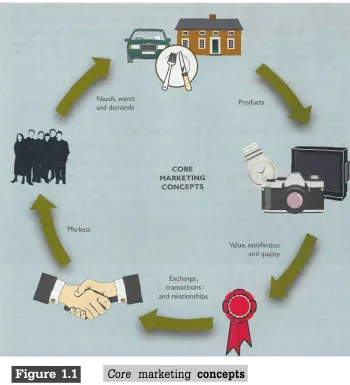
This section provides a comprehensive definition of marketing, moving beyond the traditional focus on selling to encompass a broader understanding of understanding and fulfilling customer needs. It introduces key terms like needs, wants, and demands, clarifying the distinctions and interrelationships between them. The concepts of products and services are analyzed in detail, along with the crucial roles of value, satisfaction, and quality in establishing and maintaining successful customer relationships. The discussion expands to cover exchange, transactions, and relationships, highlighting the dynamic interplay between businesses and consumers.
1.2 Marketing Management Philosophies and Demand Management
Here, the chapter delves into the different marketing management philosophies, comparing and contrasting the production, product, selling, marketing, and societal marketing concepts. The evolution of marketing thought is traced, showing a shift from production-centric to customer-centric approaches. The significance of demand management is highlighted, stressing the strategic importance of understanding and influencing market demand to optimize business outcomes. The creation of customer value and satisfaction is presented as the ultimate goal, illustrating how organizations can achieve this through effective marketing strategies. The Nike preview case serves as an excellent illustration of these principles in action.
1.3 Marketing Challenges in the 21st Century
This section examines contemporary marketing challenges, such as the growth of non-profit marketing, the impact of information technology, rapid globalization, economic shifts, and the increasing demand for ethical and socially responsible marketing practices. Analyzing these challenges provides students with a forward-looking perspective on the evolving landscape of marketing and the adaptability required for success. The discussion also emphasizes the importance of adapting marketing strategies to diverse cultural contexts and economic realities, thereby creating a global perspective for the students.
II. Chapter 2: Marketing and Society: Social Responsibility and Marketing Ethics
This chapter explores the societal impact of marketing activities and the ethical considerations involved. It addresses social criticisms of marketing, examining its influence on both individual consumers and society as a whole, including potential negative impacts. The role of consumerism and environmentalism in shaping marketing practices is discussed, along with public and business initiatives towards more responsible marketing. A significant focus is placed on defining marketing ethics and establishing principles for public policy regarding marketing activities. The chapter argues for a balanced approach, where ethical considerations are integrated into marketing strategies to build trust and foster sustainable relationships with consumers and other stakeholders. The Nestle case study serves as a potent example of the challenges and responsibilities involved in navigating the complex interplay between marketing activities and societal expectations.
2.1 Social Criticisms and Marketing's Impact
This section critically examines the social and ethical aspects of marketing, exploring various criticisms leveled against marketing practices. It analyzes marketing's impact on individual consumers, focusing on potential issues such as manipulative advertising, consumer debt, and unhealthy consumption patterns. The broader societal impact is also examined, considering how marketing influences cultural values, environmental sustainability, and economic inequality. The section also explores how marketing activities can impact other businesses, leading to competitive tensions and potential market distortions.
2.2 Consumerism, Environmentalism, and Public Regulation
This section delves into the influence of consumerism and environmentalism as powerful forces shaping ethical marketing practices. It examines the role of consumer activism and environmental movements in influencing public policy and business decisions. The chapter explores various public actions designed to regulate marketing activities, aiming to protect consumer rights and promote social responsibility. The discussion highlights the tension between business interests and societal concerns, showcasing the importance of responsible marketing strategies in maintaining public trust and achieving long-term sustainability.
2.3 Socially Responsible Marketing, Ethics, and Public Policy Principles
This section focuses on the development of socially responsible marketing practices and the ethical considerations guiding marketing decision-making. The concepts of enlightened marketing and marketing ethics are defined and analyzed, emphasizing their crucial role in fostering positive relationships with consumers and other stakeholders. The chapter outlines key principles for public policy in the marketing domain, focusing on consumer and producer freedom, mitigating potential harm, meeting basic needs, economic efficiency, fostering innovation, consumer education, and consumer protection. These principles aim to balance individual liberties with the need for responsible marketing practices that benefit both businesses and society.
III. Chapter 3: Strategic Marketing Planning
This chapter provides a comprehensive overview of the strategic marketing planning process. It begins by defining strategic planning and outlining its key stages, emphasizing the iterative nature of the process. The importance of establishing a clear mission statement and deriving strategic objectives from it is discussed. A detailed explanation of strategic audit and SWOT analysis is provided, along with a review of portfolio management techniques for evaluating and prioritizing business units. The chapter then explores the development of growth strategies and emphasizes the role of marketing within the overall strategic planning framework. The marketing process is further broken down into developing the marketing mix and implementing a marketing plan, all of which are necessary for achieving a company’s stated objectives. The Levi’s preview case showcases these steps in action, illustrating how strategic planning leads to effective marketing outcomes.
3.1 Overview of Strategic Planning and the Planning Process
This section lays out the foundational elements of strategic planning, providing a step-by-step explanation of the planning process. It highlights the importance of defining the organization's mission and translating it into concrete strategic objectives. The section also emphasizes the integration of various business functions within the strategic planning framework, emphasizing the role of marketing in aligning organizational resources and capabilities with market opportunities.
3.2 Strategic Audit, SWOT Analysis, and Portfolio Management
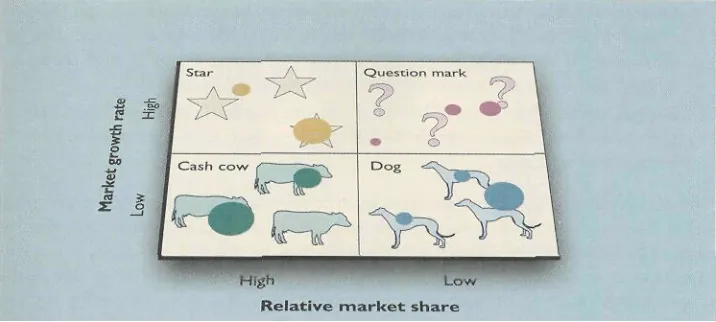
Here, the chapter explains the processes of conducting a strategic audit and performing a SWOT analysis, identifying both internal strengths and weaknesses, as well as external opportunities and threats. The application of portfolio management techniques such as the Boston Consulting Group (BCG) matrix is explained, detailing how these models aid in evaluating the performance of different business units and prioritizing resource allocation. The chapter also delves into the development of growth strategies, examining various options for expanding market share and achieving sustainable growth.
3.3 Marketing's Role in Strategic Planning and the Marketing Plan
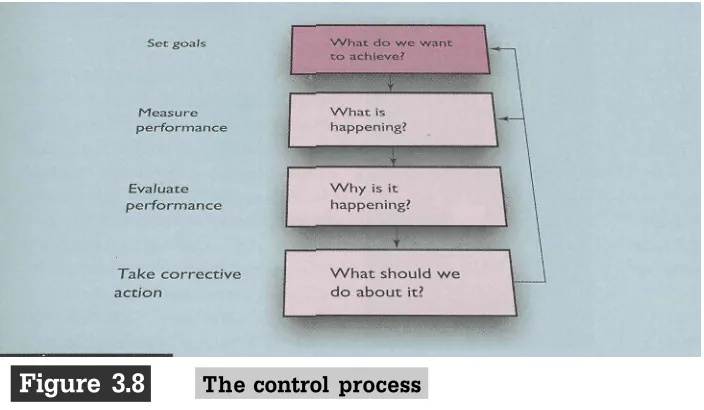
This section focuses on the specific role of marketing within the broader context of strategic planning. It emphasizes marketing's involvement in identifying target markets, developing marketing strategies, and implementing marketing plans. The chapter explores the marketing process in detail, breaking it down into actionable steps, and emphasizing the importance of a well-defined marketing mix (product, price, place, promotion). The chapter concludes with a detailed explanation of the components of a comprehensive marketing plan, highlighting the importance of executive summaries, marketing audits, objectives, strategies, and control mechanisms.