RICKETTSIALES AND CHLAMYDIALES Gram-negative
Obligate intracellular parasites
Rickettsia insect vector
Chlamydia sexually transmitted
MYCOPLASMA no rigid wall - soft skin triple layered membrane
KRT-2010 3
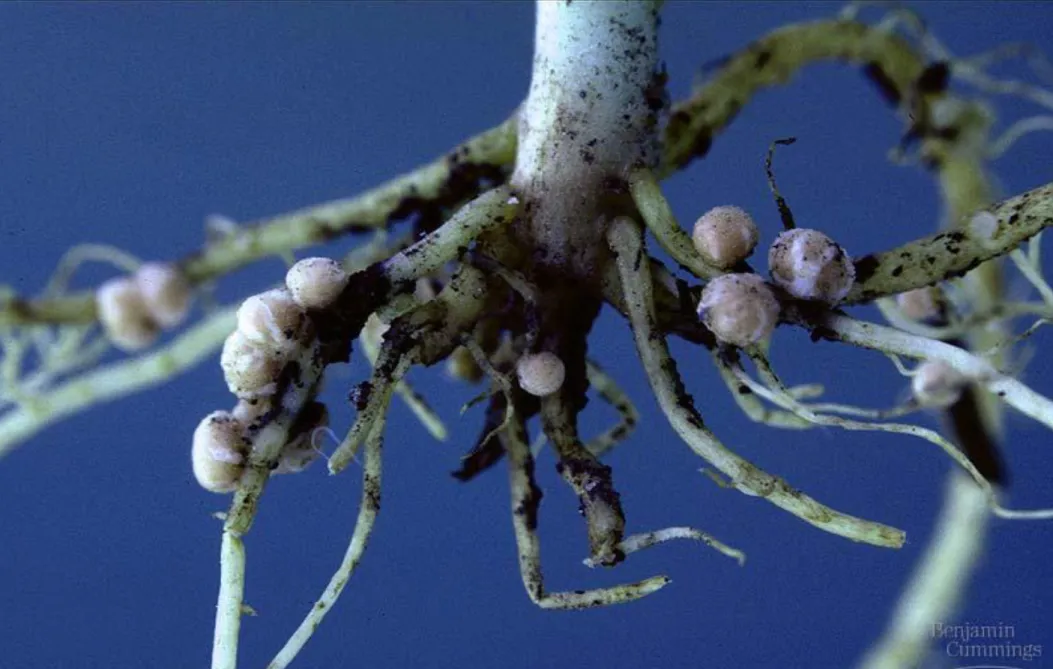
Rhizobium are symbiotic bacteria in root nodules
Rhizobium fix
nitrogen ( N
2)
into ammonium
Rhizobium and
plants are
species specific
Legumes are crops
with
Root nodules –
Viruses
Viruses are the tiniest of the microorganisms
Viruses
cannot reproduce without taking over a host
cell
There is still discussion as to whether they are
really living things
Algae
Algae
• Algae are a type of protist that usually
live in water and can produce their own
food.
Some algae can be large, others are
microscopic
Characteristics
• Range in size from microscopic to single celled
organisms to large seaweed
• Autotrophic
• Form the reproductive structures – gametangia or
gamete chambers
• Aquatic and have flagella at some point in life
• Often contain
pyrenoids,
organelles that synthesis
and store starch
STRUCTURE
• Thallus (haploid)
• Four types of algae
–Unicellular
–Colonial
IDENTIFY THE TYPE OF ALGAE
CLASSIFICATION OF ALGAE
• SEVEN PHYLUM/DIVISION BASED ON:
– COLOR
– TYPE OF CHLOROPHYLL
– FOOD-STORAGE SUBSTANCE – CELL WALL COMPOSITION
• PHYLUM/DIVISION:
1. CYANOPHYTA MONERA
2. CHRYSOPHYTA PROTISTA Unicellular Eukaryote 3. PYRROPHYTA PROTISTA Unicellular Eukaryote 4. EUGLENOPHYTA
Algae can be
Red
Brown
Yellow
Or Green
KRT-2010 17Algae are important to the
ocean’s ecosystem
They provide food for
Fish
Whales
Protozoans
Protazoans are microsopic
organisms that usually live in
water
Movement
Protozoans move through
their environment in different
ways
Cilia
Cilia are hair like structures
that wave back an forth
moving the protozoan back
and forth
A 3-d
Image of
Flagela
A tail like structure that
propels and can capture prey
Psudopods
Little “ feet” that move and pull
Microorganisms
Require food, air and a way to dispose of
waste
Are found everywhere
REPRODUCTION
MOST REPRODUCE BOTH SEXUALLY AND ASEXUALLY
– Most sexual reproduction is triggered by environmental stress – Asexual Reproduction • Mitosis – Sexual Reproduction • Meiosis • Zoospores
Reproduction in Multicellular Algae
• Oedogonium reproduction
– Antheridium-release flagellated sperm that swim to the
oogonium
– Oogonium-houses the zygote which is a diploid spore
• The spore undergoes meiosis and produces 4 haploid zoospores. One of the four cells becomes a rootlike holdfast the others divide and
become a new filament.
KRT-2010 27
Spirogyra reproduce sexually by
conjugation
Ulva Reproduces by Alternation of
Generations
• Two distinct
multicellular
phases-one is haploid and the
other is diploid
– Gametophyte is haploid – Sporophyte is diploid
KRT-2010 31
Algae mempunyai bermacam-macam bentuk
tubuh:
Bentuk uniseluler: bentuk uniseluler yang
berflagela dan yang tidak berflagela.
Bentuk multiseluler
Reproduksi
Vegetatif: fragmentasi, pembelahan sel,
pembentukan hormogonia.
Aseksual: pembentukan mitospora, zoospora,
aplanospora, hipnospora, stadium pamela.
Seksual: isogami, heterogami yang terdiri dari
Protists – Unicellular eukaryotes
• More complicated than any prokaryotes
• Membrane-enclosed
nucleus containing multiple chromosomes
• Organelles characteristic of eukaryotes
• Eukaryotic flagella and cilia • Classified into 5 kingdoms
Protozoa – Protists that ingest their food
• Giardia – flagellate that lives in the human intestine and can cause cramps and diarrhea
• Trypanosoma – live in the blood stream of vertebrate animals cause African sleeping sickness • Amoebas – large group use
pseudopodia to ingest food
• Plasmodium – feeds on red blood cells and causes malaria
Algae – photosynthetic protists
• Dinoflagellate blooms can cause red tide
• Diatoms are unicellular and very abundant in freshwater and marine environments. Important food source for marine animals
• Green algae – cells resemble biflagellated gametes of many
multicellular algae and some plants, have cellulose cell walls, use starch to
Divisio :Chrysophyta
(Termasuk Protista)
KRT-2010 35
Ciri-ciri :
- Bersifat uniselular, dinding sel terdiri atas pektin yang lunak
- Selnya berinti, kromatofora mengandung klorofil a,
karotin, santofil dan suatu karotenoid yang menyerupai fikosantin.
- Sebagian besar bersifat autotrof, kecuali yang tidak berwarna : heterotrof.
- Tempat hidup : air laut dan air tawar (sering melekat pada tumbuhan air).
Phylum Euglenophyta
• 1000 species of
Euglenoids
• Have both plantlike and
animal-like
characteristics
• Fresh water
Phylum Chlorophyta
• Green algae
• 7000 diverse species
• Biologist reason that green algae give rise to
land plants.
• Both green algae and land plants have
chlorophyll a and B as well as carotenoids and
store food as starch
• Both have walls made of cellulose
Divisio: Chlorophyta
Ganggang Hijau
Ciri-ciri
1. Pigmen, khlorofil a dan b, serta karoten. Khlorofil terdapat dalam jumlah yang banyak sehingga ganggang ini berwarna hijau
2. Hasil fotosintesis berupa amilum dan tersimpan dalam khloroplas. 3. Khloroplas berjumlah satu atau lebih; berbentuk mangkuk, bintang,
lensa, bulat, pita, spiral
4. Sel mempunyai 2 atau 4 flagela sama panjang. 5. Dinding sel mengandung selulose.
6. Perkembangbiakan: aseksual dengan Zoospora dan seksual dengan anisogami
Phylum Phaeophyta
• 1500 species of Brown algae
• Mostly marine and include seaweed and kelp
• All are multicellular and large (often reaching lengths of 147 feet)
• Individual alga may grow to a length of 100m with a holdfast, stipe and blade
• Used in cosmetics and most ice creams
Divisio: Phaeophyta
Ganggang Coklat
Ciri-ciri
-Tubuh selalu berupa talus yang multiseluler yang berbentuk filamen, lembaran atau menyerupai
semak/pohon yang dapat mencapai beberapa puluh meter, terutama jenis-jenis yang hidup di lautan daerah beriklim dingin.
- Bersel banyak dan berwarna pirang (fikosantin)
- Kromatofora mengandung klorofil a, karotin, xantofil, dan fikosantin.
Phylum Rhodophyta
• 4000 species of
RED Algae
• Most are marine
• Smaller than brown algae and are often found
at a depth of 200 meters.
• Contain chlorophyll a and C as well as
phycobilins which are important in absorbing
light that can penetrate deep into the water
• Have cells coated in carageenan which is used
in cosmetics, gelatin capsules and some
cheeses
Divisio: Rhodophyta
(Ganggang Merah)
Ciri-ciri
1. Sel mempunyai dinding yang terdiri dari selulose . Rhodophyceae tidak pernah menghasilkan sel-sel berflagela.
2. Pigmen Khlorofil: terdiri dari khlorofil a, karotenoid, fikoeritrin dan fikosianin yang sering disebut pigmen aksesoris.
-karoten Pigmen-pigmen tersebut terdapat dalam kloroplas 3. Cadangan makanan berupa tepung floride (hasil polimerase
dari glukosa) dan terdapat diluar khloroplas.
Other Phylum Representatives
KRT-2010 43
Diatoms – used in detergents,
paint removers, toothpaste Dinoflagellates – red tides
Important in the formation of petroleum products
Seaweeds are a multicellular marine algae
• Lack true stems, leaves, roots and internal tubes that transport nutrients and water in most plants • Brown algae, red algae,
and multicellular green algae may be members of 3 separate kingdoms
Fungi (jamur, cendawan)
Ciri-ciri:
• Tidak berklorofil : tidak berfotosintesis
• Tubuhnya mempunyai benang-benang hifa
• Perkembangbiakan : vegetatif : dengan spora,
generatif, dengan isogami, anisogami, oogami,
gametangiogami dan somatogami
• Hidup secara heterotrof sebagai saprofit atau parasit
• Jarang hidup di air, kebanyakan di daratan.
Funguslike Protist
KRT-2010 47
Cellular slime molds
• Have both
unicellular and
multicellular
life stages
Plasmodial Slime Molds
Plasmodial slime molds
• Common everywhere there is moist and decaying
matter
• Large and branching, but not multicellular. The
weblike form increases the surface area to contact food water and oxygen
• When food is is scarce it addapts the reproductive structures at the bottom
Water Molds
THERE’S FUNGUS AMONG US
• Look into the eye.
• Look deep into the eye.
That's a bunch of fungus.
• That is a bit surprising. We had always heard
about mold in the shower or mold on the
bread.
. Mold is actually a type of fungus.
• It has a shape called a zygote to be exact.
While yeasts are single celled fungi, molds are
multicellular fungi
• Bread takes one kind of fungus (yeast) to
make it rise.
• If you leave the bread out, another type of
fungus comes in (bread mold) to break it
Let's look at Club Fungi
Mushrooms!
So what is a mushroom exactly?
It is bunches of strands living underground
called hyphae (pronounced hi-fah). Those
strands are the basic fungus in action,
decomposing leaves, or rotting bark on the
ground.
When it's time to reproduce, they develop
a stalk and cap,the mushroom that you see
popping out of the ground.
• It's only one part of the fungus. On
the bottom of that cap are a set of
gills that have little clubs with fungus
ZYGOTES
We already talked a little about mold. That is
only one example of the Zygote Fungi.
These have hyphae-like mushrooms but they
reproduce in a different way. When it's time to
make more fungi, they create a stalk and
release something called zygospores (thus the
name zygote).
• When your bread gets old and green or black,
you are seeing a type of zygote fungus in
action. If you wait long enough, you will see
the stalks develop and the zygotes released.
SINGLE CELLS
• Now lets look at Sac Fungi, simple, single
celled fungi.
Fungi
• Heterotrophic – they cannot make their own food
molecules
• Some like mycorrhizae absorb essential minerals from the soil needed by plants
• About 80% of plant disease is caused by fungi which are parasites
Fungi absorb food after digesting it
outside their bodies
• Secrete powerful enzymes that digest their food externally then absorb the nutrient molecules
• Multicellular except yeast
• Mycelium is a feeding network of hyphae • Mushroom is just the above ground
reproductive structure of a much more extensive underground mycelium
• Not celllulose cell walls, but chitin which is a polymer of a nitrogen-containing sugar
• No flagellated cells in their life cycle
Lichens – fungi living mutualistically with
photosynthetic organisms
• The mutualistic merger is so complete they are actually named as a species
• Gives the two organisms the ability to survive in habitats that are inhospitable to
either alone
• Can tolerate severe cold, withstand severe drought but sensitive to air
pollutants
Mycorrhizae are symbiotic / mutual fungi on roots
Mycorrhizae:a) increase surface area of roots b) produce antibiotics to ward off
competing plants
c) Are specie specific to plants d) Helped plants evolve on land e) Seeds exposed to fungi spores
grow better
,
KRT-2010 67
I am not mold ! I am not rotting you!
I am Mycorrhizae, I am a fun guy
Fungi have enormous ecological impact
• Decomposers and recyclers of organic matter
• Used to ripen cheese • Yeasts used in baking,
brewing and winemaking • Produce antibiotics
• As well as the mutualistic partners in mycorrhizae and lichens
Some fungi are beneficial.
• Sugars are broken down in an environment
without oxygen. It's called anaerobic
fermentation. And voila, alcohol. Even though
they are single celled, you may find them in
colonies. They reproduce very quickly and
hang out together. It takes a lot of them
(because they are so small) to get a lot of
work done
Parasitic fungi
• Corn smut, Dutch elm disease and botrytis • Some of the fungi that
attach food crops are toxic to humans
• LSD is from the toxin in ergots in grain crops
• Mycosis – fungal infection (ringworm, athlete’s foot, vaginal yeast infections)