DOI: 10.2478/10004-1254-63-2012-2201 Review
THE MARGIN OF EXPOSURE TO FORMALDEHYDE
IN ALCOHOLIC BEVERAGES
Yulia B MONAKHOVA1,2, Julien A JENDRAL2, and Dirk W LACHENMEIER2
Department of Chemistry, Saratov State University, Saratov, Russia1, Chemisches und Veterinäruntersuchungsamt
(CVUA) Karlsruhe, Karlsruhe, Germany2
Received in January 2012 CrossChecked in June 2012
Accepted in June 2012
Formaldehyde has been classifi ed as carcinogenic to humans (WHO IARC group 1). It causes leukaemia and nasopharyngeal cancer, and was described to regularly occur in alcoholic beverages. However, its risk associated with consumption of alcohol has not been systematically studied, so this study will provide the fi rst risk assessment of formaldehyde for consumers of alcoholic beverages.
Human dietary intake of formaldehyde via alcoholic beverages in the European Union was estimated based on WHO alcohol consumption data and literature on formaldehyde contents of different beverage groups (beer, wine, spirits, and unrecorded alcohol). The risk assessment was conducted using the margin of exposure (MOE) approach with benchmark doses (BMD) for 10 % effect obtained from dose-response modelling of animal experiments.
For tumours in male rats, a BMD of 30 mg kg-1 body weight per day and a “BMD lower confi dence limit”
(BMDL) of 23 mg kg-1 d-1 were calculated from available long-term animal experiments. The average
human exposure to formaldehyde from alcoholic beverages was estimated at 8·10-5 mg kg-1 d-1. Comparing
the human exposure with BMDL, the resulting MOE was above 200,000 for average scenarios. Even in the worst-case scenarios, the MOE was never below 10,000, which is considered to be the threshold for public health concerns.
The risk assessment shows that the cancer risk from formaldehyde to the alcohol-consuming population is negligible and the priority for risk management (e.g. to reduce the contamination) is very low. The major risk in alcoholic beverages derives from ethanol and acetaldehyde.
KEY WORDS: alcohol, alcohol consumption, aldehydes, cancer, risk assessment
Formaldehyde (methanal, CH2O, CAS # 50-00-0)
is a colourless substance, which is widely present in foods, industry, and in the environment (1, 2) and may also be endogenously produced in humans and animals (3). The industrial use includes mainly the production of various types of resin, the use as intermediate in the manufacture of industrial chemicals, and the direct use in aqueous solutions (formalin) as a disinfectant and preservative (1-3). Epidemiological studies have demonstrated a causal relationship between formaldehyde and cancer in humans (3). Causality is
indicated by consistent fi ndings of increased risks of nasopharyngeal cancer, sinonasal cancer, and myeloid leukaemia among individuals with high exposure to formaldehyde. The fi ndings are based on case-control studies of industrial workers and other professional groups in inhalatory contact with formaldehyde such as pathologists, funeral directors or embalmers (3). Biological mechanisms associated with formaldehyde-induced cancer are not completely understood, but potential carcinogenic modes of actions for formaldehyde include DNA reactivity (covalent
binding), gene mutation, chromosomal breakage, aneuploidy, and epigenetic effects (3). However, the biological plausibility of an association between formaldehyde exposure and leukaemia was questioned, because formaldehyde is rapidly metabolised, and it would not be expected to enter the systemic circulation (3). No studies in humans are available for the oral route of exposure, but animal feeding experiments have demonstrated that formaldehyde may also be carcinogenic after ingestion (4, 5).
The hazard of formaldehyde has been confi rmed by the International Agency for Research on Cancer (IARC), which found sufficient evidence for the carcinogenicity of formaldehyde both for humans and experimental animals. The IARC cancer classifi cation was upgraded in 2006 and formaldehyde was assigned to group 1 (“carcinogenic to humans”) with clear evidence for cancer in humans (5, 6).
Formaldehyde is a natural constituent in a variety of fruits, vegetables, meat, milk products, and fi sh (1). Feron et al. (1) estimated that the formaldehyde intake from food ranges between 1.5 mg and 14 mg per person per day, which may already reach the reference
dose (RfD) for chronic oral exposure of 0.2 mg kg-1
d-1 (approximately 12 mg d-1 for a 60-kg adult)
postulated by the US Environmental Protection Agency (EPA) (7). Relatively high concentrations of formaldehyde were found in alcoholic beverages; for
example, in sugar cane spirits (mean 4.13 mg L-1,
maximum 10.90 mg L-1) (8) and rum (mean 2.42 mg
L-1, maximum 10.07 mg L-1) (9). In our on-going
investigation of the composition and global public health impact of alcoholic beverages, including unrecorded alcohol (10), we have also detected high formaldehyde concentrations in a number of products (11). Thus, the natural occurrence of formaldehyde from methanol oxidation in alcohol products, together with contamination from other sources (e.g. the usage of containing or formaldehyde-releasing disinfectants), could therefore be a potential problem on a worldwide scale.
In contrast to other constituents of alcoholic beverages (e.g. methanol, higher alcohols, acetaldehyde or ethyl carbamate), for which excellent risk assessments are available in the literature (12-15), we found a major knowledge gap regarding information about the potential public health impact of formaldehyde, resulting in an inability to adequately ascertain the risk for consumers of the alcoholic beverages researched. In this study, applying the harmonised approach of the European Food Safety
Authority (EFSA) (16), we present for the fi rst time, a quantitative risk assessment for formaldehyde in alcoholic beverages.
METHODS
Data on formaldehyde were obtained by a computer-assisted literature search. Searches were carried out in the following databases: PubMed, Toxnet, and ChemIDplus (US National Library of Medicine, Bethesda, MD), Web of Science (Thomson Scientifi c, Philadelphia, PA), and IPCS/INCHEM (International Programme on Chemical Safety/ Chemical Safety Information from Intergovernmental Organizations, WHO, Geneva, Switzerland). We specifi cally aimed to identify long-term animal studies that would be usable for dose-response modelling as well as studies on the occurrence of formaldehyde in alcoholic beverages.
Analysis was conducted according to the harmonised approach of EFSA (16) and similar to our previous acetaldehyde cancer risk assessment (14). This includes an approach known as the margin of exposure (MOE). MOE is defi ned as the ratio between the benchmark dose (BMD) and the estimated human intake of the same compound. MOE can be used to compare the health risk of different compounds and prioritise risk management actions. By defi nition, the lower the MOE, the larger the risk for humans; generally a value under 10,000 is used to defi ne public health risks (16). The benchmark dose (BMD), derived from animal data by mathematical modelling within the observed range of experimental data, was used as a reference point. To obtain MOE, the Benchmark Dose Lower Confi dence Limit (BMDL) for a 10 % effect was taken (MOE = BMDL / Exposure). BMDL is an estimate of the lowest dose that is 95 % certain to cause no more than a 10 % effect (e.g. cancer incidence) in rodents. The BMD and BMDL values were calculated using the US EPA’s BMDS 2.2 software (available at the US Environmental Protection Agency website: http://www.epa.gov/ncea/bmds/ index.html).
RESULTS
Toxicity of orally ingested formaldehyde in animal studies
There is adequate evidence for the carcinogenicity of formaldehyde in animal experimental studies (6).
Several studies have proved that long-term inhalation exposure to formaldehyde causes both benign and malignant nasal tumours in male and female rats (17-19). As the focus on the specifi c effects of orally administered formaldehyde is relatively new, there are not many studies on this subject. The following two are considered to be the most signifi cant ones: Soffriti et al. (4) conducted a long-term study of rat groups exposed to formaldehyde that resulted in a carcinogenic effect; Til et al. (20) observed severe damage to the gastric mucosa, renal papillary necrosis, and irregular mucosal thickening in the forestomach and/or glandular stomach in rats given top doses of formaldehyde. These studies are discussed in more detail in the section “dose response analysis”.
Besides these two pivotal studies, some further studies were identifi ed. In the paper of Tobe et al. (21), groups of 20 male and 20 female Wistar rats were given formaldehyde in their drinking water at four concentrations (0.50, 0.10, 0.02, and 0) % for 24 months. Various non-neoplastic lesions, erosions, and ulcers were found both in the forestomach and glandular stomach mostly in the 0.50 % group. There were no signifi cant differences in the incidence of any tumours among groups of both sexes. Based on their results, the no observable effect level of formaldehyde
was 0.02 % in drinking water (10 mg kg-1 d-1). Another
valuable oral study is that of Takahasi et al. (22), in which Wistar rats were given formaldehyde during a 32-week period at a single concentration level (0.5 %
- about 300 mg kg-1 bw per day). Due to the single
dose level and/or limited number of animals, these studies were not included in our dose-response-modelling. However, it is important to mention that although no tumours were observed, papillomas in the forestomach and non-neoplastic changes in glandular stomach were reported (22). The fi nding suggests that formaldehyde could exert pre-carcinogenic activity in the rat glandular stomach. Long-term or lifetime studies above certain concentration threshold are necessary for detecting tumours (4).
Dose-response analysis
There is no adequate human study available for a dose-response analysis. From the animal experiments mentioned above, two long-term studies of the oral route of exposure to formaldehyde appear to be suitable for dose-response modelling.
Til et al. (20) examined the oral toxicity of formaldehyde in rats in a two-year drinking-water
study at dose levels of (0, 1.2, 15, and 82) mg kg-1 d-1
for males and (0, 1.8, 21, and 109) mg kg d for
females. The study did not provide any evidence of carcinogenicity of formaldehyde after oral consumption. Thickening and raising of the limiting ridge of the forestomach, irregular mucosal thickenings, histopathological gastric changes (papillary epithelial hyperplasia, hyperkeratosis, focal ulceration, and focal chronic atrophic gastritis) were observed mostly in the high-dose group. In a more recent 104-week study of carcinogenicity by Soffritti et al. (4), male and female Sprague-Dawley rats were given drinking water containing formaldehyde at concentrations of
about (0, 1, 5, 10, 51, 102, and 153) mg kg-1 d-1 [own
calculations based on formaldehyde concentrations in drinking water (0, 10, 50, 100, 500, 1000, and
1500) mg L-1 and data about average body weight and
drinking volume]. Treatment with formaldehyde resulted in an increase in total malignant tumours and showed specifi c carcinogenic effects on various organs and tissues.
Due to the lower number of animal subjects and smaller doses, Til et al. (20) provided only limited applicable evidence for dose-response assessments, especially as carcinogenic effects were not detectable. However, we modelled this study for comparison purposes, as irregular thickenings in the forestomach and glandular stomach, chronic atrophic gastritis, and histopathological changes (papillary epithelial hyperplasia accompanied by hyperkeratosis) could be pre-carcinogenic lesions. A large number of oncological lesions of the intestine and the stomach were detected in the study of Soffritti et al. (4), especially at the highest doses (which were higher than the ones used in Til et al. (20)). The study by Soffritti et al. (4) is, therefore, the only study adequately designed to be used for a dose-response assessment of carcinogenic effects of orally administered formaldehyde.
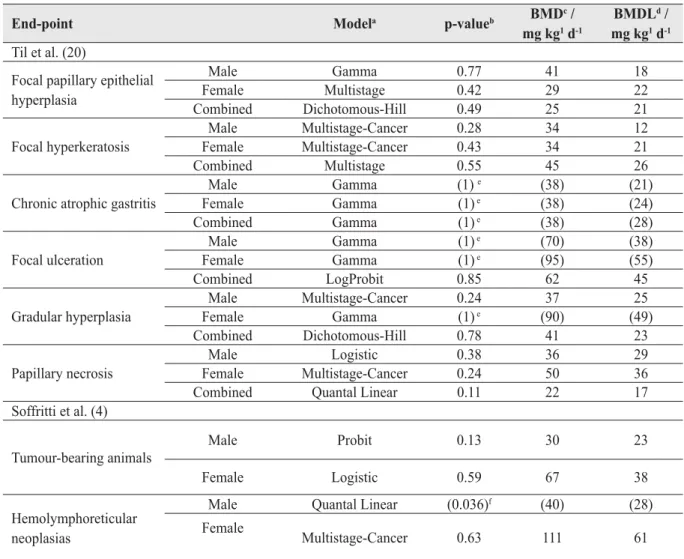
The best-fi tting models for different end-points are listed in Table 1. It can be seen that the values for different end-points calculated from the Til et al. (20) study are consistent: the BMD and BMDL values are
in the range of (22 to 50) mg kg-1 d-1 and (12 to
45) mg kg-1 d-1, respectively. Regarding the Soffritti
et al. data (4), signifi cant models were reached for both sexes when the total number of tumour-bearing animals was modelled. An adequate model for hemolymphoreticular neoplasias (females) was also observed (Table 1). Overall, BMDs and BMDLs of models from both studies (4, 20) are in the same order of magnitude, which is indicative of an overall adequacy of the calculated values, as even between
Table 1 Summary of own dose response modelling results for formaldehyde in different animal experiments conducted by Til et al. (20) and Soffritti et al. (4)
End-point Modela p-valueb BMD c /
mg kg1 d-1
BMDLd /
mg kg1 d-1 Til et al. (20)
Focal papillary epithelial hyperplasia Male Gamma 0.77 41 18 Female Multistage 0.42 29 22 Combined Dichotomous-Hill 0.49 25 21 Focal hyperkeratosis Male Multistage-Cancer 0.28 34 12 Female Multistage-Cancer 0.43 34 21 Combined Multistage 0.55 45 26
Chronic atrophic gastritis
Male Gamma (1) e (38) (21) Female Gamma (1) e (38) (24) Combined Gamma (1) e (38) (28) Focal ulceration Male Gamma (1) e (70) (38) Female Gamma (1) e (95) (55) Combined LogProbit 0.85 62 45 Gradular hyperplasia Male Multistage-Cancer 0.24 37 25 Female Gamma (1) e (90) (49) Combined Dichotomous-Hill 0.78 41 23 Papillary necrosis Male Logistic 0.38 36 29 Female Multistage-Cancer 0.24 50 36
Combined Quantal Linear 0.11 22 17
Soffritti et al. (4) Tumour-bearing animals Male Probit 0.13 30 23 Female Logistic 0.59 67 38 Hemolymphoreticular neoplasias
Male Quantal Linear (0.036)f (40) (28)
Female
Multistage-Cancer 0.63 111 61
a Data from best-fi tting models selected with BMDS 2.2-software according to US EPA criteria are presented b A p-value greater than 0.1 indicates that the model fi ts the data (p-value 1.0 = perfect fi t).
c BMD: benchmark dose for a 10% incidence of health effect d BMDL: lower one-sided confi dence limit of the BMD
e Only the highest dose-level exhibited effects. No clear dose-response established. Values are shown in brackets for
information
f Not signifi cant dose-response. Values are shown in brackets for information
different models differences up to factors of fi ve are accepted as typical and would allow for an averaging of the values (23). To be conservative, we decided to take the model for male tumour-bearing animals with
a BMD of 30 mg kg-1 d-1 and a BMDL of 23 mg
kg-1 d-1 for our further calculations (Figure 1). Notably,
these values are expectedly smaller than what we calculated for acetaldehyde from the same Soffritti et a l . ( 4 ) s t u d y ( B M D = 11 4 m g k g- 1 d- 1 a n d
BMDL=56 mg kg-1 d-1) (14). This is consistent with
previous assumptions that the toxicity of aldehydes decreases with chain length (24).
Exposure assessment
In this study we used the EFSA guidelines (16), which recommend that risk assessments provide different exposure scenarios (e.g. for entire, or specifi c groups of populations) along with their inherent uncertainties. Other than the mean and median, intakes from highly exposed individuals (due to high consumption of average contaminated foods or to average consumption of highly contaminated foods)
should be considered as represented by the 90th, 95th,
97.5th, and 99th percentiles.
To provide estimates on the dietary intake of formaldehyde, data on the consumption of alcoholic
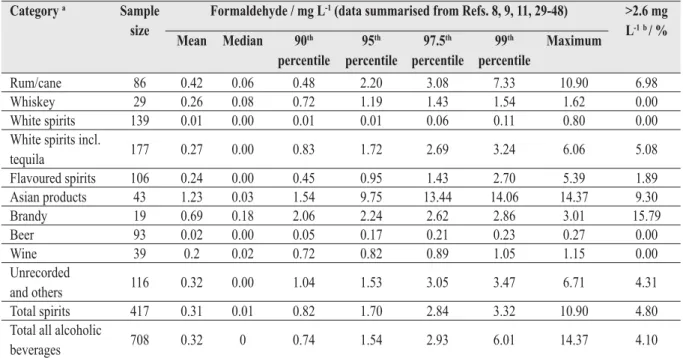
Table 2 Formaldehyde concentration in alcoholic beverages
Category a Sample
size
Formaldehyde / mg L-1 (data summarised from Refs. 8, 9, 11, 29-48) >2.6 mg
L-1b / % Mean Median 90th percentile 95th percentile 97.5th percentile 99th percentile Maximum Rum/cane 86 0.42 0.06 0.48 2.20 3.08 7.33 10.90 6.98 Whiskey 29 0.26 0.08 0.72 1.19 1.43 1.54 1.62 0.00 White spirits 139 0.01 0.00 0.01 0.01 0.06 0.11 0.80 0.00
White spirits incl.
tequila 177 0.27 0.00 0.83 1.72 2.69 3.24 6.06 5.08 Flavoured spirits 106 0.24 0.00 0.45 0.95 1.43 2.70 5.39 1.89 Asian products 43 1.23 0.03 1.54 9.75 13.44 14.06 14.37 9.30 Brandy 19 0.69 0.18 2.06 2.24 2.62 2.86 3.01 15.79 Beer 93 0.02 0.00 0.05 0.17 0.21 0.23 0.27 0.00 Wine 39 0.2 0.02 0.72 0.82 0.89 1.05 1.15 0.00 Unrecorded and others 116 0.32 0.00 1.04 1.53 3.05 3.47 6.71 4.31 Total spirits 417 0.31 0.01 0.82 1.70 2.84 3.32 10.90 4.80
Total all alcoholic
beverages 708 0.32 0 0.74 1.54 2.93 6.01 14.37 4.10
a The categories were chosen based on available consumption data (see Lachenmeier et al. (14) for details) b A tolerable concentration of 2.6 mg L-1 was suggested by WHO IPCS (2) based on non-cancer endpoints
0.1 0.2 0.3 0.4 0.5 0.6 0.7 0.8 0.9 0 20 40 60 80 100 120 140 F rac ti on A ff e c ted BMDL BMD Dose [mg/kg bw/day] Probit
Figure 1 Benchmark dose modelling for oral formaldehyde administration with male tumour-bearing animals as endpoint. Probit model with 0.95 confi dence level. BMD: benchmark dose for a 10 % incidence of health effect; BMDL: lower one-side confi dence limit of the BMD. Original data from Soffritti et al. (4).
beverages and their content of formaldehyde is needed. Currently, there are not enough systematic data on formaldehyde content of alcoholic beverages or indeed of most foods in general. Although formaldehyde is a natural component of a variety of foodstuffs (1), with the highest concentrations in fruits (25), vegetables
(25), and fi sh (26-28), monitoring has generally been sporadic and inconsistent.
Nevertheless, there are some studies where the actual formaldehyde content in different alcoholic beverages was determined (8, 9, 11, 29-48). The investigation of alcoholic beverages for formaldehyde Dose / mg kg-1 d-1
content started as early as in 1983 with the measurement of a limited number (n=9) of beer samples (29). From then, formaldehyde has also been detected in wine, spirits, and unrecorded alcohol. However, most of the studies evaluated only a limited number of samples. Up to now, the only study on a large sample of alcoholic beverages was provided by Jendral et al. (n=488) (11). The formaldehyde concentrations of the corresponding beverage groups for all mentioned studies are summarised in Table 2. Mean concentrations of formaldehyde in a variety of alcoholic beverages
ranged from 0.01 mg L-1 in white spirits to 0.69 mg L-1
in brandies. The highest concentrations were typically
detected in spirits from Asia (mean 1.23 mg L-1).
Annual consumption of different types of alcoholic beverages for the population older than 15 can be easily obtained from the WHO databases. This can be done for most countries around the world. However, as studies about formaldehyde concentrations in alcoholic beverages other than European-style beverages are unavailable (especially the knowledge about Asian beverages is based on only very few analytical results), we decided to limit the whole population dietary intake estimate to the European Union (EU). The formaldehyde exposure due to alcoholic beverage consumption was calculated from Table 2 combined with values of annual per capita consumption of alcoholic beverages in the EU (see Lachenmeier et al. (14) for details on annual consumption of different beverage groups). Table 3 summarises the exposure for different scenarios.
Risk characterisation
The exposure data from Table 3 was used to characterise the risk using the margin of exposure (MOE) calculated from BMDL (Table 4). MOEs can be used by risk managers for setting priorities; small MOE represents a higher risk and vice versa. In general, an MOE of 10,000 or higher, if based on a BMDL from an animal study, would be considered a low public health concern and subsequently a low priority for risk management actions (16). In the case of formaldehyde, MOEs were in all scenarios above this 10,000 threshold, demonstrating that, in general, formaldehyde in alcoholic beverages appears not to be a public health concern.
This evaluation is in line with previous risk assessments that have considered only non-cancer end-points. For example, the WHO IPCS (2) has established a tolerable concentration (TC) of 2.6 mg
L-1 in ingested products based on the experiments of
Til et al. (20). In this respect, some brandies, rum, and Asian spirits are problematic, as these products can contain formaldehyde concentrations above the
threshold of 2.6 mg L-1 (see Table 2). However, a 60
kg person would need to daily consume 0.8 L of
alcohol at 14.37 mg L-1 (the highest concentration
found in alcoholic beverages so far) (11) to exceed
the US EPA RfD of 0.2 mg kg-1 d-1 (7), which is
extremely unlikely even in this worst-case scenario. None of our population-based exposure estimations exceed the US EPA RfD.
Table 3 Population-based exposure scenarios for the European Union. The table shows the formaldehyde exposure due to all types of alcoholic beverages (beer, wine, spirits, unrecorded) calculated as mg kg-1 d-1 (calculated for a 60 kg
person)
Formaldehyde exposure / mg kg-1 d-1
Exposure scenarios for different formaldehyde concentrations in the beverages Mean Median 90 th percentile 95th percentile 97.5th percentile 99th percentile
Exposure scenarios for different amounts of alcoholic beverage consumption in Europe
Mean 8.0E-05 7.8E-06 2.6E-04 3.6E-04 4.3E-04 5.3E-04
Median 5.3E-05 4.9E-06 1.7E-04 2.4E-04 2.9E-04 3.5E-04
90th
percentile 1.7E-04 1.7E-05 5.5E-04 7.7E-04 9.2E-04 1.1E-03
95th
percentile 2.0E-04 2.1E-05 6.5E-04 9.1E-04 1.1E-03 1.3E-03
97.5th
percentile 2.5E-04 2.5E-05 7.7E-04 1.1E-03 1.3E-03 1.6E-03
99th
DISCUSSION
In contrast to the risk assessment of another carcinogenic aldehyde - acetaldehyde - for which a c o n s i d e r a b l y l a g e r d a t a b a s e a b o u t h u m a n carcinogenicity and genetic epidemiology exists (14, 49), our formaldehyde assessment contains several limitations:
1. The assessment is based on only one oral animal study where formaldehyde showed specific carcinogenic effects on various tissues and organs. Some problems with the modelling of these data existed. In particular, the modelling of the data was complicated, as the background levels were relatively high. In addition, the incidence of certain carcinomas was increased in the treated groups, but the statistical power was insuffi cient to allow the modelling of any specifi c cancer site besides hemolymphoreticular neoplasias in females (see also (14) about discussion of the same problems in dose-response modelling of acetaldehyde). Additionally, there are no other estimates for BMDL and BMD values in the literature. However, as the values obtained for different end-points corresponded well to each other and also to non-cancer endpoints from another study, we believe that the chosen BMDL value is certainly in the right order of magnitude and could be used for quantitative risk assessment.
2. The second important limitation is the fact that we assumed a uniform distribution of formaldehyde in the whole body. However, the tissues that are in
direct contact with an alcoholic beverage are exposed at considerably higher levels than other organs. For example, the risk for gastrointestinal tract cancer could be higher, as stomach and intestine lesions have been reported in the animal experiments (4). On the other hand, some recent research has suggested that formaldehyde might enter the systemic circulation of humans exposed to formaldehyde (3), which would justify the application of this assumption to provide a conservative assessment until the mechanism of action has been fully elucidated.
3. The whole population evaluation may under-estimate the risk for heavy drinkers and the risk for drinkers that drink predominantly formaldehyde-rich beverages.
Besides alcoholic beverages, humans could be exposed to formaldehyde from other sources. However, the current data only allow rough estimations. Formaldehyde appears in almost all common foods at
(1 to 100) mg kg-1 (1) and adult dietary intake is
estimated in the range from (1.5 to 14) mg per person
per day [(0.022 to 0.23) mg kg-1 d-1] (1). Drinking
water is expected to contain less than 0.1 mg L-1 (2),
resulting in a daily intake of less than 0.2 mg per
person (0.003 mg kg-1 d-1) (2). The endogenous levels
in human blood were estimated at about 2 mg L-1 to
3 mg L-1 (6). However, all of these estimates are
comparably old and possibly outdated (due to regulatory changes and inadequate analytical methodologies in older studies). Migration of formaldehyde monomers from tableware was pointed
Table 4 Margin of exposure (MOE) for formaldehyde in different exposure scenarios. Calculated with BMDL of 23 mg kg d (MOE = BMDL / exposure)
MOE
Exposure scenarios for different formaldehyde concentrations in the beverages Mean Median 90 th percentile 95th percentile 97.5th percentile 99th percentile
Exposure scenarios for different amounts of alcoholic beverage consumption in Europe Mean 287,500 2,948,718 88,462 63,889 53,488 43,396 Median 433,962 4,693,878 135,294 95,833 79,310 65,714 90th percentile 135,294 1,352,941 41,818 29,870 25,000 20,909 95th percentile 115,000 1,095,238 35,385 25,275 20,909 17,692 97.5th percentile 92,000 920,000 29,870 20,909 17,692 14,375 99th percentile 82,143 821,429 26,437 19,167 15,333 12,778
out as a further source of food contamination with formaldehyde (50-52). This migration was estimated
at ppm (mg kg-1) levels.
An important source of formaldehyde intake is cigarette smoke (2). Formaldehyde levels in mainstream smoke were reported at 45 μg to 283 μg per cigarette (2, 53). This equals a maximum exposure of
0.094 mg kg-1 d-1 for a 60 kg person smoking 20
cigarettes per day.
Compared with these other exposures, the average
exposure via alcoholic beverages of 8·10-5 mg kg-1 d-1
appears to be negligible. Nevertheless, data on cumulative formaldehyde exposure (especially for foods and beverages) are sparse and should be updated in the future.
CONCLUSIONS
The overall conclusion is that the occurrence of trace levels of formaldehyde in alcoholic beverages does not constitute an additional cancer risk for humans. Our data showed that even in worst-case
scenarios, the exposure (0.0018 mg kg-1 d-1) is lower
than thresholds of toxicity (if a threshold-based mechanism is assumed for this carcinogen, which is still a matter of debate) (54).
Our calculation has revealed that formaldehyde in alcoholic beverages shows MOEs in a magnitude that is not considered a high priority for regulatory measures. For other compounds of alcoholic beverages, such as acetaldehyde or ethyl carbamate, MOEs have been found in considerably lower ranges (below 1000) according to EFSA and Lachenmeier et al. (14, 15). The major risk, however, certainly comes from ethanol with a MOE of 1 or even smaller (55). Ethanol was also identifi ed as the most important carcinogen in alcoholic beverages in a comparative quantitative assessment of 15 carcinogenic compounds (56). This study fully confirms this finding and suggests prioritising general alcohol policy measures over more specifi c measures such as mitigative efforts to reduce the content of trace contaminants such as formaldehyde.
Confl icts of interest statement
All authors declare that they have no direct fi nancial interest in the subject matter or materials discussed that could inappropriately infl uence the manuscript.
REFERENCES
1. Feron VJ, Til HP, de Vrijer F, Woutersen RA, Cassee FR, van Bladeren PJ. Aldehydes: occurrence, carcinogenic potential, mechanism of action and risk assessment. Mutat Res 1991;259:363-85.
2. Wotld Health Organization (WHO). Formaldehyde. Concise international chemical assessment document 40. Geneva: WHO; 2002.
3. National Toxicology Program (NTP). Final report on carcinogens background document for formaldehyde. Rep Carcinog Backgr Doc 2010;(10-5981):i-512.
4. Soffritti M, Belpoggi F, Lambertin L, Lauriola M, Padovani M, Maltoni C. Results of long-term experimental studies on the carcinogenicity of formaldehyde and acetaldehyde in rats. Ann N Y Acad Sci 2002;982:87-105.
5. Baan R, Grosse Y, Straif K, Secretan B, El Ghissassi F, Bouvard V, Benbrahim-Tallaa L, Guha N, Freeman C, Galichet L, Cogliano V; WHO International Agency for Research on Cancer Monograph Working Group. A review of human carcinogens - Part F: chemical agents and related occupations. Lancet Oncol 2009;10:1143-4.
6. Wotld Health Organization (WHO). Formaldehyde, 2-butoxyethanol and 1-tert-butoxypropan-2-ol. IARC Monographs on the Evaluation of Carcinogenic Risks to Humans. Vol. 88. Geneva: WHO; 2006.
7. US Environmental Protection Ageny (US EPA). Formaldehyde (CASRN 50-00-0). Integrated Risk Information System. Document 0419. Washington (DC): US EPA; 1998. 8. Penteado JCP, Sobral AC, Masini JC. Evaluation of
monolithic columns for determination of formaldehyde and acetaldehyde in sugar cane spirits by high-performance liquid chromatography. Anal Lett 2008;41:1674-81.
9. Sampaio OM, Reche RV, Franco DW. Chemical profi le of rums as a function of their origin. The use of chemometric techniques for their identification. J Agric Food Chem 2008;56:1661-8.
10. Lachenmeier DW, Schoeberl K, Kanteres F, Kuballa T, Sohnius E-M, Rehm J. Is contaminated unrecorded alcohol a health problem in the Europeab Union? A review of existing and methodological outline for future sdudies. Addiction 2011;106(Suppl 1):20-30.
11. Jendral JA, Monakhova YB, Lachenmeier DW. Formaldehyde in alcoholic beverages: large chemical survey using purpald screening followed by chromotropic Acid spectrophotometry with multivariate curve resolution. Int J Anal Chem 2011;2011:1-11.
12. Paine AJ, Dayan AD. Defi ning a tolerable concentration of methanol in alcoholic drinks. Hum Exp Toxicol 2001;20:563-8.
13. Lachenmeier DW, Haupt S, Schulz K. Defi ning maximum levels of higher alcohols in alcoholic beverages and surrogate alcohol products. Regul Toxicol Pharmacol 2008;50:313-21.
14. Lachenmeier DW, Kanteres F, Rehm J. Carcinogenicity of acetaldehyde in alcoholic beverages: risk assessment outside ethanol metabolism. Addiction 2009;104:533-50.
15. EFSA. Ethyl carbamate and hydrocyanic acid in food and beverages. EFSA J 2007;551:1-44.
16. European Food Safety Authority (EFSA). Opinion of the Scientifi c Committee on a request from EFSA related to a harmonised approach for risk assessment of substances which
are both genotoxic and carcinogenic. EFSA J 2005;282:1-31.
17. Kerns WD, Pavkov KL, Donofrio DJ, Gralla EJ, Swenberg JA. Carcinogenicity of formaldehyde in rats and mice after long-term inhalation exposure. Cancer Res 1983;43:4382-92.
18. Monticello TM, Swenberg JA, Gross EA, Leininger JR, Kimbell JS, Seilkop S, Starr TB, Gibson JE, Morgan KT. Correlation of regional and nonlinear formaldehyde-induced nasal cancer with proliferating populations of cells. Cancer Res 1996;56:1012-22.
19. Kamata E, Nakadate M, Uchida O, Ogawa Y, Suzuki S, Kaneko T, Saito M, Kurokawa Y. Results of a 28-month chronic inhalation toxicity study of formaldehyde in male Fisher-344 rats. J Toxicol Sci 1997;22:239-54.
20. Til HP, Woutersen RA, Feron VJ, Hollanders VHM, Falke HE, Clary JJ. 2-Year drinking-water study of formaldehyde in rats. Food Chem Toxicol 1989;27:77-87.
21. Tobe M, Naito K, Kurokawa Y. Chronic toxicity study on formaldehyde administered orally to rats. Toxicology 1989;56:79-86.
22. Takahashi M, Hasegawa R, Furukawa F, Toyoda K, Sato H, Hayashi Y. Effects of ethanol, potassium metabisulfite, formaldehyde and hydrogen-peroxide on gastric carcinogenesis in rats after initiation with N-methyl-N’-nitro-N-nitrosoguanidine. Jpn J Cancer Res 1986;77:118-24. 23. US Environmental Protection Agency (US EPA). The use of
the benchmark dose approach in health risk assessment. EPA/630/R-94/007. Washington (DC): US EPA; 1995. 24. Skog E. A toxicological investigation of lower aliphatic
aldehydes. I. Toxicity of formaldehyde, acetaldehyde, propionaldehyde and butyraldehyde; as well as acrolein and crotonaldehyde. Acta Pharmacol Toxicol 1950;6:299-318. 25. Trezl L, Csiba A, Juhasz S, Szentgyorgyi M, Lombai G,
Hullan L. Endogenous formaldehyde level of foods and its biological significance. Z Lebensm Unters Forsch A 1997;205:300-4.
26. Cui X, Fang G, Jiang L, Wang S. Kinetic spectrophotometric method for rapid determination of trace formaldehyde in foods. Anal Chim Acta 2007;590:253-9.
27. Wang S, Cui X, Fang G. Rapid determination of formaldehyde and sulfur dioxide in food products and Chinese herbals. Food Chem 2007;103:1487-93.
28. Bianchi F, Careri M, Musci M, Mangia A. Fish and food safety: Determination of formaldehyde in 12 fi sh species by SPME extraction and GC-MS analysis. Food Chem 2007;100:1049-53.
29. Lawrence JF, Iyengar JR. The determination of formaldehyde i n b e e r a n d s o f t d r i n k s b y H P L C o f t h e 2 , 4 -dinitrophenylhydrazone derivative. Int J Environ Anal Chem 1983;15:47-52.
30. de Oliveira EA, de Andrade JB. Simultaneous determination of formaldehyde and acetaldehyde and their respective hydroxyalkylsulfonic acids by HPLC. Quimica Nova 1994;17:13-6.
31. de Andrade JB, Reis JN, Rebouças MV, Pinheiro HLC, Andrade MV. Determination of formaldehyde and acetaldehyde in drinking water and alcoholic beverages by high performance liquid chromatography (HPLC). Quimica Anal 1996;15:144-7.
32. Nascimento RF, Marques JC, Neto BSL, De Keukeleire D, Franco DW. Qualitative and quantitative high-performance
liquid chromatographic analysis of aldehydes in Brazilian sugar cane spirits and other distilled alcoholic beverages. J Chromatogr A 1997;782:13-23.
33. Ebeler SE, Spaulding RS. Characterization and measurement of aldehydes in wine. In: Waterhouse AL, Ebeler SE, editors. Chemistry of wine flavor. Washington (DC): American Chemical Society; 1998. p. 166-79.
34. Lau MN, Ebeler JD, Ebeler SE. Gas chromatographic analysis of aldehydes in alcoholic beverages using a cysteamine derivatization procedure. Am J Enol Vitic 1999;50:324-33. 35. Wardencki W, Sowinski P, Curylo J. Evaluation of headspace
solid-phase microextraction for the analysis of volatile carbonyl compounds in spirits and alcoholic beverages. J Chromatogr A 2003;984:89-96.
36. Burini G, Coli R. Determination of formaldehyde in spirits by high-performance liquid chromatography with diode-array detection after derivatization. Anal Chim Acta 2004;511:155-8.
37. Curylo J, Wardencki W. HS-SPME-CGC-PID determination of aldehydes in rectifi ed spirits and vodkas after derivatisation with 2,4,6-trichlorophenylhydrazine (TCPH). Chem Anal (Warsaw) 2005;50:735-48.
38. Anonymous. Chinese brewing industry defend use of formaldehyde. Modern Brewery Age 2005 July 18. 39. Rodríquez DM, Wrobel K, Wrobel K. Determination of
aldehydes in tequila by high-performance liquid chromatography with 2,4-dinitrophenylhydrazine derivatization. Eur Food Res Technol 2005;221:798-802. 40. Sowinski P, Wardencki W, Partyka M. Development and
evaluation of headspace gas chromatography method for the analysis of carbonyl compounds in spirits and vodkas. Anal Chim Acta 2005;539:17-22.
41. Curylo J, Wardencki W. Application of single drop extraction (SDE) gas chromatography method for the determination of carbonyl compounds in spirits and vodkas. Anal Lett 2006;39:2629-42.
42. Park YS, Lee YJ, Lee KT. Analysis of formaldehyde and acetaldehyde in alcoholic beverage. J Korean Soc Food Sci Nutr 2006;35:1412-9.
43. Wu QJ, Lin H, Fan W, Dong JJ, Chen HL. Investigation into benzene, trihalomethanes and formaldehyde in Chinese lager beers. J Inst Brew 2006;112:291-4.
44. de Oliveira FS, Sousa ET, de Andrade JB. A sensitive fl ow analysis system for the fl uorimetric determination of low levels of formaldehyde in alcoholic beverages. Talanta 2007;73:561-6.
45. Miyakawa H, Fujinuma K, Kamata K. Determination of formaldehyde in beer. Ann Rep Tokyo Metropol Inst Public Health 2007;58:185-8.
46. Elias RJ, Laurie VF, Ebeler SE, Wong JW, Waterhouse AL. Analysis of selected carbonyl oxidation products in wine by liquid chromatography with diode array detection. Anal Chim Acta 2008;626:104-10.
47. Zhao XQ, Zhang ZQ. Microwave-assisted on-line derivatization for sensitive flow injection fluorometric determination of formaldehyde in some foods. Talanta 2009;80:242-5.
48. Zhao XQ, Zhang ZQ. Rapid and sensitive determination of formaldehyde in some beverages and foods by fl ow-injection fl uorimetric analysis. Int J Food Sci Technol 2009;44:216-21.
49. International Agency for Research on Cancer (IARC). Acetaldehyde. IARC Monographs on the Evaluation of Carcinogenic Risks to Humans. Vol. 71. Lyon: IARC; 1999.
50. Lund K, Petersen J. Migration of formaldehyde and melamine monomers from kitchen- and tableware made of melamine plastic. Food Addit Contam 2006;23:948-55.
51. Bradley EL, Boughtfl ower V, Smith TL, Speck DR, Castle L. Survey of the migration of melamine and formaldehyde from melamine food contact articles available on the UK market. Food Addit Contam 2005;22:597-606.
52. Ishiwata H, Inoue T, Tanimura A. Migration of melamine and formaldehyde from tableware made of melamine resin. Food Addit Contam 1986;3:63-70.
53. Wong JW, Ngim KK, Shibamoto T, Mabury SA, Eiserich JP, Yeo HCH. Determination of formaldehyde in cigarette smoke. J Chem Educ 1997;74:1100-3.
54. Appel K, Bernauer U, Herbst U, Madle S, Schulte A, Richter-Reichhelm H, Gundert-Remy, U. Kann für Formaldehyd eine “sichere” Konzentration abgeleitet werden? - Analyse der Daten zur krebserzeugenden Wirkung [Can a “safe” concentration be established for formaldehyde? - Analysis of carcinogenicity data, in German]. Forsch Prax 2006;11:347-61.
55. Lachenmeier DW, Kanteres F, Rehm J. Epidemiology-based risk assessment using the benchmark dose/margin of exposure approach: the example of ethanol and liver cirrhosis. Int J Epidemiol 2011;40:210-8.
56. Lachenmeier DW, Przybylski MC, Rehm J. Comparative risk assessment of carcinogens in alcoholic beverages using the margin of exposure approach. Int J Cancer 2012, DOI: 10.1002/ijc.27553.
Sažetak
GRANICA IZLAGANJA FORMALDEHIDU U ALKOHOLNIM PIĆIMA
Formaldehid je kancerogen za ljude te je klasifi ciran u skupinu 1 prema WHO IARC-u. Uzrokuje leukemiju i nazofaringealni karcinom, a navodi se i kao redoviti sastojak alkoholnih pića. Međutim, rizik od izlaganja formaldehidu konzumacijom alkoholnih pića nije sustavno istražen pa će ovo istraživanje pružiti prvu takvu procjenu rizika. Količina formaldehida koju ljudi unose alkoholnim pićima u Europskoj je uniji procijenjena temeljem podataka Svjetske zdravstvene organizacije o konzumaciji alkohola i literature o sadržaju formaldehida u različitim skupinama alkoholnih pića (pivo, vino, jaka alkoholna pića i neregistrirani alkohol). Procjena rizika obavljena je korištenjem pristupa granice izlaganja (eng. margin of exposure,
MOE) i graničnih doza (eng. benchmark doses, BMD) za 10 %-tni učinak koji se postiže modeliranjem
odnosa doza-odgovor u ispitivanjima provedenima na životinjama. BMD od 30 mg kg-1 tjelesne težine na
dan i BMD s nižom granicom pouzdanosti (BMDL) od 23 mg kg-1 d-1 izračunati su za tumore kod mužjaka
štakora temeljem raspoloživih dugotrajnih ispitivanja provedenih na životinjama. Prosječno izlaganje ljudi formaldehidu u alkoholnim pićima procijenjeno je na 8·10-5 mg kg-1 d-1. U usporedbi s BMDL vrijednošću
krajnji MOE je iznosio više od 200.000 u prosječnim situacijama. Čak i u najlošijim situacijama MOE nije nikada bio niži od 10.000, što se smatra graničnom vrijednošću za zdravlje ljudi. Procjena rizika pokazuje da je rizik od nastanka karcinoma uslijed izlaganja formaldehidu iz alkoholnih pića zanemariv te da je prioritet upravljanja rizikom u takvim slučajevima (npr. kako bi se smanjila kontaminacija) vrlo nizak. Najveći rizik proizlazi iz etanola i acetaldehida koji se također nalaze u alkoholnim pićima.
KLJUČNE RIJEČI: alkohol, aldehidi, karcinom, konzumacija alkohola, procjena rizika
CORRESPONDING AUTHOR: Dirk W Lachenmeier, PhD
Chemisches und Veterinäruntersuchungsamt (CVUA) Karlsruhe, Weissenburger Strasse 3, D-76187 Karlsruhe, Germany