© 2001 Kluwer Academic Publishers. Printed in the Netherlands. 13
Effect of long-term application of sewage sludge to a grazed grass pasture
on organic carbon and nutrients of a clay soil in Zimbabwe
J. Nyamangara & J. Mzezewa
Chemistry and Soil Research Institute, P.O. Box CY 550, Causeway, Harare, Zimbabwe e-mail: [email protected]
Received 20 May 1999; accepted in revised form 4 January 2000
Key words: long-term application, sewage sludge, soil nutrients
Abstract
A study was conducted to assess the nutrient status of a Zimbabwean vlei clay soil grown to a Kikuyu (Pennisetum
clandestinum Chiov.) grass pasture which had been amended with sewage sludge for 19 years. There was a
significant (P <0.05) accumulation of organic C, mineral N, resin extractable P, and exchangeable K, Ca, Mg and Na in the top soil horizon. Organic C increased from 2.5 to 8.7% and 1.8 to 4.5% in the 0–5- and 5–10-cm horizons, respectively. Addition of sewage sludge resulted in a 19- and 57-fold increase in extractable P in the 0–5-5–10-cm soil horizons, respectively. Exchangeable Na significantly (P<0.05) increased from 0.88 to 4.10 cmol/kg and from 1.04 to 3.06 cmol/kg in the 0–5- and 5–10-cm horizons, respectively. It was concluded that sewage sludge is a valuable source of nutrients and also provides an opportunity to increase soil organic matter.
Introduction
Sewage sludge has been applied to agricultural land for centuries (Follet et al., 1981). In the European Community (EC) it is estimated that 29% of sewage sludge produced annually is used in agriculture (John-son & Corcelle, 1989). In the UK the proportion is 40% (450 000 tonnes dry solids) (Nyamangara, 1993). In Zimbabwe the use of sewage sludge and/or efflu-ent is limited to municipal farms and a few peri-urban farms.
Typical sewage sludge may contain 3% N, 2.2% P and 0.3% K (Ott & Forster, 1977). Sewage sludge contains significant amounts of N, P, S, Ca and or-ganic matter. Nitrogen mineralisation rates of 50% in the first year and 30% in the second year have been reported in soils amended with sewage sludge (Cripps et al., 1992). In anaerobically digested sewage sludge, up to 70% of the N may be in the liquid frac-tion (Department of the Environment, UK, 1989) and therefore there is no initial period of N immobilisa-tion as in other organic fertilisers (Murwira, 1994). Phosphorus availability can be as high as 50% in the
year of sewage sludge application (Department of the Environment, UK, 1989). The high organic matter content of sewage sludge improves the soil physical environment.
The heavy metal content of sewage sludge, espe-cially from industrial areas, limits its application to agricultural soils. These metals are bioavailable but are not leachable by rain water (Follet et al., 1981; Williams et al., 1980). Zinc, Cu and Ni are phyto-toxic above certain thresholds. Cadmium accumulates in certain crops to levels deleterious to the consumer (Leeper, 1978: Sommers & Barbarick, 1986). Sewage sludge may also contain pathogenic microorganisms which are a health risk to humans, animals and plants. However, modern sewage sludge treatment, e.g., irradiation, reduces the number of pathogens to significantly low levels.
Table 1. Chemical Composition of Sewage Sludge and Effluent from Crowborough Sewage Works, City of Harare
Parameter Effluent Sludge (mg kg−1) (%)
Total Kjeldal N 50 0.20
NH3 30 0.06
Orthophosphate 4 0.15 Total Alkalinity 250 0.30
pH 7.5 7.3
to a Kikuyu (Pennisetum clandestinum Chiov.) grass pasture which had been fertilised with sewage sludge for the past 19 years.
Methods and materials
Soil sampling and preparation
Soil samples were collected from Crowborough Farm where sewage sludge and effluent have been used to fertilise Kikuyu grass for slaughter stock. The aver-age composition of sewaver-age sludge and effluent used to amend the soils is shown in Table 1.
In this study a site which had been amended with sewage sludge for 19 years was selected. The aver-age annual sewaver-age application rate over the 19 years was 44 mg ha−1 year−1 (Nyamangara & Mzezewa,
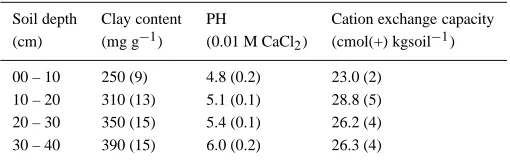
1999). An undisturbed site on the other side of the fence was used as a control. Selected properties of the studied soil are shown in Table 2. Five replicate pits were dug on each of the sites and soil samples taken at the following depths; 0–5, 5–10, 10–15, 15–20, 20– 30 and 30–40 cm. Clods were broken down by hand and identifiable stones and plant debris removed. The samples were air dried under the shade before being passed through a 2–mm sieve. For organic C and resin extractable P, the soil was ground to pass through a 0.05-mm sieve before analysis.
Soil pH and texture
A 15-g soil sample was weighed into a 200-ml honey jar to which 75 ml 0.1 M CaCl2 were added. The
mixture was shaken using a mechanical shaker for 30 min and pH was determined using a digital pH meter (Model: Orion 701). The pH meter was calibrated us-ing pH 4 and 7 buffer solutions. Mechanical analysis was done according to the method by McLean (1982).
Nitrogen
(a) Initial extractable mineral N
The KCl-extractable N (NO3−+NH4+) method was
used to measure available N (Keeney & Nelson, 1982). A 10-g soil sample was weighed into a 100-ml Erlen-meyer flask to which 50 ml of 1 M KCl were added. The flask contents were shaken intermittently (every 10 min) for 30 min before being filtered through a 12.5-cm diameter Whatman No. 2 filter paper. The first 10 ml of the filtrate was discarded. A 5-ml aliquot of the filtrate was transferred into a 100-ml distilla-tion flask to which 0.1 g sodium hydroxide and 0.05 g Devarda’s alloy were added. The flask contents were steam distilled and a 50-ml distillate was collected in 5 ml of 0.02 M hydrochloric acid. Nessler’s reagent was used to develop colour. The colour intensity was read on the Spectronic 20 (Model: Cecil CE 2010) to give the initial N concentration. Although extractable mineral N constitutes a small proportion of total soil N, it gives a direct measurement of readily available N which can either be taken up by plants, or be lost through leaching or gaseous emissions.
(b) Extractable mineral N after incubation
A 10-g soil sample, brought to field capacity using 0.1% mono-calcium phosphate, was incubated for 2 weeks at 35◦C before analysis using the method as for initial N. Extractable mineral N after incubation has been reported to provide a good index of nitro-gen likely to be available for crop use under field conditions during the subsequent growing season in Zimbabwe (Saunder et al., 1957).
Anion resin extractable P
Table 2. Some chemical properties (standard error) of the control soil Soil depth Clay content PH Cation exchange capacity (cm) (mg g−1) (0.01 M CaCl
2) (cmol(+) kgsoil−1)
00 – 10 250 (9) 4.8 (0.2) 23.0 (2) 10 – 20 310 (13) 5.1 (0.1) 28.8 (5) 20 – 30 350 (15) 5.4 (0.1) 26.2 (4) 30 – 40 390 (15) 6.0 (0.2) 26.3 (4)
was read after 10 min using a Spectronic 20 (Model Cecil CE 2010).
Organic carbon
Organic C was determined using the Wakely–Black procedure (Nelson & Sommers, 1982). Although this procedure has been reported to give variable recovery of organic C (Nelson & Sommers, 1982) it is widely used in Zimbabwe where soil organic C content in most soils is less than 1% (Mugwira et al., 1992). A 0.5-g sample of air dried soil, ground to pass through a 0.05-mm sieve, was weighed into a 350-ml flask. A 5-ml aliquot of 166 mM potassium dichromate and 10 ml concentrated sulphuric acid were added to the soil. The suspension was swirled and left to stand for 30 min. A 25-ml aliquot of distilled water was then added to the suspension before it was transferred into a 50-ml centrifuge tube. The suspension was centrifuged for 15 min at 2000 rpm and carbon was determined as absorbance of the supernatant solution in a 10-mm optical cell at 600 nm wavelength.
Exchangeable bases
A 10-g soil sample was shaken for 1 h in 100 ml of acid normal ammonium acetate before filtration. For Ca and mg determination, a 50-ml aliquot of 0.5 g SnCl2was added to 10 ml of the filtrate and the
solu-tion diluted to the 100-ml mark. Calcium and Mg were determined by atomic absorption spectrophotometry (Model Varian AA-1275). Potassium and Na were de-termined directly from the filtrate by atomic emission spectrophotometry (Model Varian AA-1275).
Results
There was a highly significant (P<0.001) main treat-ment effect on organic matter, incubated N, resin P, and exchangeable Ca and Mg. There was also a
significant (P<0.05) main treatment effect on initial N, exchangeable K and exchangeable Na. Soil depth had a significant (P<0.05) effect on the above soil properties. There was a strong interaction (P<0.001) between the main treatments and soil depth.
Organic C, KCl-extractable N and resin P
There was a general increase in organic C in the top 20 cm of the soil profile treated with sewage sludge compared to the control (Table 3). The highest in-crease of 248% was observed in the 0–5-cm horizon, and thereafter the difference between the treatments decreased. The accumulation of organic C in the top-soil horizons was attributed to the relative immobility of organic C in the clayey soil.
The increase in initial N, an estimate of the im-mediately plant available N, in the sewage sludge treatment was only significant (P<0.05) in the 0–5-cm horizon when compared with the control. The increase in incubated N in the sewage sludge treatment was significant (P<0.05) in all but the 30–40-cm hori-zon when compared with the control. Organic C was highly correlated to initial N (r2= 0.92) and incubated N (r2= 0.83).
There was a massive increase in resin P in the 0– 5-cm (19- fold) and 5–10-cm (57-fold) horizons of the sewage sludge treatment when compared with the con-trol (Table 3). Thereafter, the difference between the treatments drastically decreased and was not signific-ant (P<0.05) in the 30–40-cm horizon.
Exchangeable bases
Table 3. Effect of sewage sludge application on organic C, initial N, Incubated N and resin P at different soil depths Soil depth Organic C (mg g−1) Initial N (mg kg−1) Incubated N (mg kg−1) Resin P (mg kg−1)
(cm) Control Sludge Control Sludge Control Sludge Control Sludge
0 – 5 25.0 86.9 25 51 79 102 4 76
5 – 10 17.6 45.2 21 22 37 94 2 114
10 – 15 11.6 22.6 11 12 19 48 2 29
15 – 20 9.2 16.4 24 9 16 39 2 8
20 – 30 8.2 10.2 10 11 11 39 0.4 4
30 – 40 8.2 10.2 10 16 21 22 1 2
SEM 1.1 0.4 1.7 1.5
LSD (P<0.05) 3.2 1.1 4.9 4.8
C.V. (%) 11.2 4.6 8.6 9.4
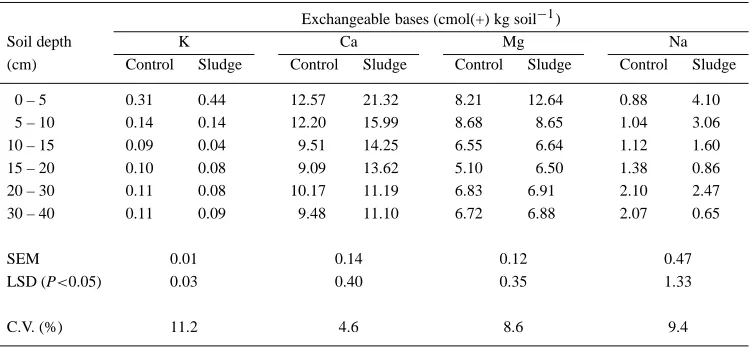
Table 4. Effect of sewage sludge application on exchangeable bases at different soil depths Exchangeable bases (cmol(+) kg soil−1)
Soil depth K Ca Mg Na
(cm) Control Sludge Control Sludge Control Sludge Control Sludge
0 – 5 0.31 0.44 12.57 21.32 8.21 12.64 0.88 4.10
5 – 10 0.14 0.14 12.20 15.99 8.68 8.65 1.04 3.06
10 – 15 0.09 0.04 9.51 14.25 6.55 6.64 1.12 1.60
15 – 20 0.10 0.08 9.09 13.62 5.10 6.50 1.38 0.86
20 – 30 0.11 0.08 10.17 11.19 6.83 6.91 2.10 2.47
30 – 40 0.11 0.09 9.48 11.10 6.72 6.88 2.07 0.65
SEM 0.01 0.14 0.12 0.47
LSD (P<0.05) 0.03 0.40 0.35 1.33
C.V. (%) 11.2 4.6 8.6 9.4
horizon. Exchangeable Na significantly (P<0.05) in-creased from 0.88 to 4.10 cmol/kg and from 1.04 to 3.06 cmol/kg in the 0–5- and 5–10-cm horizons, respectively.
Discussion and conclusions
Organic matter is arguably the most important com-ponent of soils influencing nutrient storage and turnover, water-holding capacity, soil structure, soil stability, vulnerability to erosion, and soil biota and di-versity (Bullock and Burton, 1996). In certain tropical farming systems organic matter mineralisation may be the major source of nutrients (Woomer et al., 1994). Therefore, any practice that can overcome a decline
in soil organic matter is an important component in the development of sustainable agriculture. Large in-creases in organic C due to addition of sewage sludge have also been reported elsewhere. In a study on the reclamation of minespoils, Seaker & Sopper (1988) reported a 3-fold increase in organic C on sludge-amended sites compared to fertiliser-sludge-amended sites, where organic C in sludge-amended sites ranged from 3 to 7% while the controls averaged 0.93%. Boyle & Paul (1989) reported larger and more stable organic C pools in a sewage sludge-amended soil compared to the control.
sludge treatments. Mineral N after incubation has been shown to be highly correlated with crop yields in most Zimbabwean soils (Saunder & Grant, 1962; Saunder et al., 1957).
The accumulation of P in the top soil horizons was expected since P is highly immobile in the soil due to clay and organic matter fixation (Jenkinson, 1988). Dutch & Wolstenholme (1994) also reported the ac-cumulation of P in the top soil (0–7.5cm) 7 years after the addition of sewage sludge (250 kg P/ha) to a heath-land prior to planting Sitka spruce (Picea sitchensis (Bong.) Carr). However, accumulation of P in the top soil can result in an artificial deficiency during dry periods when the top soil is dry and plants have to derive their nutrients from the sub soil. At Crowbor-ough farm the sewage sludge, which has a high water content (95–98%), is applied frequently (every week) and, therefore, the top soil is kept moist most of the time.
Phosphorus is the most limiting nutrient to aquatic growth in most water bodies. Although P accumula-tion was highest in the 0–10-cm horizon, accumulaaccumula-tion was still significant (P<0.05) in the 10–30-cm hori-zon, indicating some degree of movement. Resin P constitutes a small fraction of total P, and therefore the accumulation of total P was expected to be higher since the other soil P fractions are less mobile. The ob-served P movement may be attributed to high sewage sludge loading rates over a long period. Phosphorus movement down to 1.6 m has been reported elsewhere (Iskandar & Syers, 1980; Schalscha et al., 1979) and was attributed to a low sorption capacity of the soil and excessive sludge loading rates. However, the risk of water pollution through P movement at the studied site is low since the soil is relatively high in clay and is deep (>90 cm). However, the risk of water pollution through runoff is relatively higher.
The studied site is close to Marimba river which ultimately feeds into Lake Chivero, City of Harare’s main water source. The application of high water content sewage sludge, or during the rainy season, may pose a water pollution hazard through run-off and therefore close monitoring is necessary. Petrovic (1990) reported that slope and rainfall intensity (or irrigation) were the major factors influencing nutri-ent loss through runoff. The same author, however, noted that turf grass ecosystems result in soils with high infiltration capacity and consequently runoff is lowered.
The observed Ca movement down the soil profile was not expected since the element is relatively
im-mobile. Generally, Na related problems occur when the exchangeable sodium percentage is greater than 9% (Nyamapfene, 1991), but clay dispersion and movement has been reported at lower exchangeable sodium values in Zimbabwean sandy soils (Purves, 1974).
References
Boyle M and Paul EA (1989) Carbon and nitrogen mineralisation kinetics in soil previously amended with sewage sludge. Soil Sci Soc Am J 53: 99–103
Bullock P and Burton RGO (1996) Organic matter levels and trends in the soils of England and Wales. Soil Use Mgmt 12: 103–104 Cripps RW, Winfrey SK and Reagan JL (1992) Effects of sewage
sludge application method on corn production. Commun Soil Sci and Plant Anal 23: 1705–1715
Department of the Environment (1989) Code of practice for agricul-tural use of sewage sludge. London, UK
Dutch J and Wolstenholme R (1994) The effects of sewage sludge application to a heathland site prior to planting with Sitka spruce. For Ecol Mgmt 66: 151–163
Follet RH, Murphy LS and Donahue RL (1981) Fertilizers and soil amendments. New Yersey: Prentice-Hall
Iskandar IK and Syers JK (1980) Effectiveness of land application of phosphorus removal from municipal waste water at Manteca, California. J Environ Qual 9: 616–621
Jenkinson DS (1988) Soil organic matter and its dynamics. In: Wild (ed) Russel’s soil conditions and plant growth, 11th edn, pp 564– 607. Essex, UK: Longmann Ltd.
Johnson SP and Corcelle G (1989) The environmental policy of the European Communities. Int Environ Law Policy Ser, pp 181–184 Keeney DR and Nelson (1982) Nitrogen-inorganic forms. In: Page AL et al. (eds) Methods of soil analysis, Part 2. Agronomy No. 9, pp 643-698. Madison, WI: American Society of Agronomy Leeper GW (1978) Managing the heavy metals on the land. Pollut
Eng Technol 6: 46–53
McLean EO (1982) Soil pH and lime requirement. In: Page AL et al. (eds) Methods of soil analysis, Part 2. Agronomy No. 9, pp 199–223. Madison, WI: American Society of Agronomy Mugwira LM Mukurumbira LM Butai PC and Mandiringana OT
(1992) Soil of the small-scale farming areas of Zimbabwe and their management. In: Whingwiri EE, Rukuni M, Mashingaidze K and Matanyaire CM (eds) Small-scale agriculture in Zimb-abwe, pp 7–20. Harare: Rockwood Publishers
Murwira HK (1994) Synchrony relationships of nitrogen release and plant uptake in a Zimbabwean sandy soil amended with manure and fertiliser. African Crop Sci J 2: 69–77
Nelson DW and Sommers LE (1982) Total carbon, organic carbon, and organic matter. In: Page AL (ed) Methods of soil analysis, Part 2, Chemical and microbiological properties, pp 539–594. Madison, WI: American Society of Agronomy Inc./Soil Science Society of America Inc
Nyamangara J (1993) Sequential extraction and bioavailability of Zn, Cu, Cd, Cr and Pb from an agricultural soil amended with sewage sludge. University of Aberdeen, UK: Unpublished MSc thesis.
Nyamapfene K (1991) Soils of Zimbabwe. Harare, Zimbabwe: Soils of Zimbabwe
Olsen SR and Sommers LE (1982) Phosphorus. In: Page AL (ed) Methods of soil analysis, Part 2, Chemical and microbiological properties, pp 403–427. Madison, WI: American Society of Agronomy Inc./Soil Science Society of America Inc
Ott SL and Forster DL (1977) Economic analysis of recycling sewage sludge on agricultural land. In: Loehr RC (ed) Food, fer-tilizer and agricultural residues. Proceedings of the 1977 Cornell agricultural waste management conference, pp 403–430. Ann Arbor NY: Ann Arbor Science Publishers Inc
Petrovic AM (1990) The fate of nitrogenous fertilisers applied to turf grass. J Environ Qual 19: 1–14
Purves WD (1974) A detailed investigation into the genesis of gran-ite derived soils. University of Zimbabwe: Unpublished DPhil thesis
Schalscha EB, Vergara I, Schirado T and Morales M (1979) Nitrate movement in a Chilean agricultural area irrigated with untreated sewage water. J Environ Qual 8: 27–30
Seaker EM and Sopper WE (1988) Municipal sludge for minespoil reclamation: II. Effects on organic matter. J Environ Qual 17: 598–602
Saunder DH and Grant PM (1962) Rate of mineralisation of organic matter in cultivated Rhodesian soils, pp 235–239. New Zealand: International Soil Science Conference. International Society of Soil Science
Saunder DH, Ellis BS and Hall A (1957) Estimation of available nitrogen for advisory purposes in Southern Rhodesia. J Soil Sci 8: 301–312
Sommers LE and Barbarick KA (1986) Constraints to land applica-tion of sewage sludge. In: Utilisaapplica-tion, treatment and disposal of waste on land. Proceedings of a workshop held in Chicago, 6–7 December, 1985
Williams DE, Vlamis J, Pukite AH and Corey JE (1980) Trace element accumulation, movement and distribution in the soil pro-file from massive applications of sewage sludge. Soil Sci 129: 119–132