(IJSBAR)
I SSN 2 3 0 7 - 4 5 3 1 (Print & Online)
http://gssrr.org/index.php?journal=JournalOfBasicAndApplied
---
Financial Crime and Its Implications on Banks
Performance in Nigeria: A General Appraisal
Ikhu-Omorege
Sunday
a, Enimola
Henry Bamidele
b*
a,b
Department of Accountancy, Federal Polytechnic, p.m.b 420 Offa, Kwara State, +234, Nigeria. a
Email: [email protected] b
Email: [email protected]
Abstract
In recent years, the volume and frequency of financial crime in Nigerian banks have been on the increase with
obvious effects on performance. This paper therefore examines the implications of financial crime on bank
performance in Nigeria. After the analysis of the manifestations and implications of financial crime on bank
performance, the paper concludes with recommendations in dealing with financial crime. Prominent of these
recommendations include the need for the creation of the corruption ‘hotline’ where the public can call to
complain or report fraud cases and the trials of the serving and non-serving political and public office-holders to
serve as deterrents to others. There is also need to train and retrain management and staff of Nigerian banks in
fraud prevention and control.
Keywords: Banks Performance; Financial Crime; Nigeria.
1. Introduction
Traditionally, the role of banks whether in a developed or developing economy, consists of financial
intermediation, provision of an efficient payments system and serving as conduit for the implementation of
monetary policies.
---
* Corresponding author.
It has been postulated that if these functions are efficiently carried out, the economy would be able to mobilize
meaningful level of savings and channel these funds in an efficient and effective manner to ensure that no viable
project is frustrated due to lack of funds. Banks in Nigeria perform a variety of tasks and responsibilities not
only for transformation agenda but also to enable it to function in an effective manner. These tasks and
responsibilities are distributed among teams, which are assigned to fulfil their duties in a specific organisation.
All designated tasks are equally important in Nigerian Banks, thus, making all employees and staff crucial to the
operations of the bank. One of the crucial functions in these organizations is the process of auditing especially in
the cases of fraud and irregularities [1].
In recent years, the volume and frequency of financial crime in Nigerian banks have been on the increase with
obvious effects on performance. The growing scope and scale of financial crime in the banking industry is not
surprising, given the rising profile of the country as a corrupt and fraudulent nation. In view of the insatiable
search for money in Nigeria, big time fraud is on the increase and the banks lose huge amount running into
billions of naira to fraudsters. Fraud has been the precipitating factor affecting bank performance and leading to
distress.
There is no doubt that financial crime has resulted in wide spread distress in banks in Nigeria in the past and
present. It has jeopardized industrial growth as most banks have already gone under due to distress. In Nigeria,
fraud contributed significantly to the failure of the 36 banks in liquidation, [3]. Fraud is one of the serious
financial crimes being perpetrated in our banking industry today. Frauds result in huge financial losses to banks
and their customers, the depletion of shareholders’ funds and banks capital base as well as loss of confidence in
the sector. Fraud is therefore of special concern to the regulatory authorities who are saddled with the
responsibility of ensuring the safety and soundness of the entire banking system. It is against this background,
that this study examines the implications of financial crime on bank performance in Nigeria.
1.1 Concept of Financial Crime
There is no precise legal definition of financial crime, just as there is no single offence that can be called
financial crime. Literally, some people see financial crime as the crime of deceiving in order to get money or
goods illegally. Financial crime is a crime against property, involving the unlawful conversion of the ownership
of property (belonging to one person) to one's own personal use and benefit [10]. Financial crimes may involve
additional criminal acts, such as computer crime, elder abuse, burglary, armed robbery, and even violent crime
such as robbery or murder. Financial crimes may be carried out by individuals, corporations, or by organized
crime groups. Victims may include individuals, corporations, governments, and entire economies.
Financial crime as a concept has multifarious connotations. However, it is usually taken to have elements
including an intentional and unlawful misrepresentation, which cause prejudice, most often misappropriation,
which is the removal of cash or assets to which the fraudster is not entitled as well as false accounting in which
records and numbers reported are falsified to give and create false impression [8].
The incidence of financial crime in the Nigerian banking system should be of serious concern to all
stakeholders. The numbers of ATM card holders continue to grow daily as result of e-payment awareness and
deployment of more than 3,000 ATM cash points by Nigerian banks across the country, activities of card
fraudsters appear to be on the increase. Majority of Nigerian banks, notably United Bank for Africa, warned
ATM card users nationwide against disclosing their ATM card details to a second party as a result of fraudsters
who are said to be on the prowl [9]. Some ATM Frauds in a paper titled “ATM Fraud and Security” [6]. The
following Techniques were outlined:
In an effort to obtain actual cards, criminals have used a variety of card trapping devices comprised of slim
mechanical devices, often encased in a plastic transparent film, inserted into the card reader throat. Hooks are
attached to the probes preventing the card from being returned to the consumer at the end of the transaction.
When the ATM terminal user shows concern due to the captured card, the criminal, usually in close proximity
of the ATM, will offer support, suggesting the user enter the PIN again, so that he or she is able to view the
entry and remember the PIN. After the consumer leaves the area, believing their card to have been captured by
the ATM, the criminal will then use a probe (fishing device) to extract the card. Having viewed the customers
PIN and now having the card in hand, the criminal can easily withdraw money from the unsuspecting user’s
account [7].
Another method of accessing a consumer’s account information is to skim the information off of the card.
Skimming is the most frequently used method of illegally obtaining card track data. “Skimmers” are devices
used by criminals to capture the data stored in the magnetic strip of the card. Reading and deciphering the
information on the magnetic stripes of the card can be accomplished through the application of small card
readers in close proximity to, or on top of, the actual card reader input slot, so it is able to read and record the
information stored on the magnetic track of the card. The device is then removed, allowing the downloading of
the recorded data.
PIN Fraud: This can take the following forms: Shoulder Surfing is the act of direct observation, watching what
number that person taps onto the keypad. The criminal usually positions himself in close but not direct
proximity to the ATM to covertly watch as the ATM user enters their PIN. Sometimes miniature video cameras
that are easily obtained might be installed discretely on the fascia or somewhere close to the PIN Pad, to record
the PIN entry information.
A fake PIN pad is placed over the original keypad. This overlay captures the PIN data and stores the information
into its memory. The fake PIN pad is then removed, and recorded PINs are downloaded. Fake PIN pads can be
almost identical in appearance and size as the original. An additional type of overlay that is more difficult to
detect is a ‘thin’ overlay that is transparent to the consumer. This method used in conjunction with card data
theft provides the criminal with the information needed to access an unsuspecting consumer’s account.
The phenomenon of financial crime has outrageous implications on bank performance in Nigeria. Financial
crime in the banks leads to loss of confidence in business, insolvency or winding up business, bankruptcy,
among banks in Nigeria created significant effect. This event may result to business failure or worst
bankruptcy. Aside from this, fraud & irregularities could also have significant effect to capital market, capital
structure, Efficiency Market Hypothesis and credit ratings.
ATM fraud is not the sole problem of banks alone [7]. It is a big threat and it requires a coordinated and
cooperative action on the part of the bank, customers and the law enforcement machinery. The ATM frauds not
only cause financial loss to banks but they also undermine customers' confidence in the use of ATMs. This
would deter a greater use of ATM for monetary transactions. The location of ATM is a high determinant to
fraud carried out at ATM point [6]. ATM within the banking premises is more secure than ATMs outside the
bank premises. The major form of ATM fraud is PIN theft which is carried out by various means like
skimming, shoulder surfing, camera, key pad recorder etc. Fraudulent practices have led to the fall of so many
banks in time past. In 2005, there was total of 1,229 reported cases of bank fraud. This shows an increase in the
level of fraud in 2004 which recorded 1,175 cases of bank frauds.
In Nigeria, fraud contributed significantly to the failure of the 36 banks in liquidation, [8]. Fraud is one of the
serious economic crimes being perpetrated in our banking industry today. Frauds result in huge financial losses
to banks and their customers, the depletion of shareholders funds and banks capital base as well as loss of
confidence in the sector.
1.3 Management of Financial Crime in Nigeria
In accordance to fraud and irregularities on banks performance in Nigeria, auditing and financial evaluation are
crucial since it reflect on how their respective administrators manage the flow of their income, assets and
transactions. For this reasons, banks in Nigeria should hire several experts to do the auditing and financial
evaluations. Aside from hiring accountants and auditors that will work for them internally, they also need to
seek help of other experts to avoid biasness and also in order reveal the genuine stability of the entity being
audited [6]. [1], these people are called independent auditors expert or sometimes called external auditors.
Basically, external auditors/accountants are audit experts who perform an audit on the financial statements of a
government, company, individual, or any other legal entity [3]. As stated previously, these people are working
independently to present an unbiased and independent evaluation on such entities. In comparison to internal
auditors, external auditors’ primary responsibility is assessing the risk management practices and strategy,
management and governance processes of an entity. These experts are usually does not express any opinion on
the entity's financial statements, they just evaluate and never do such recommendations. Similar to internal
auditors, independent auditors are considered by the public service sector and other organisations to take a look
at financial statement to confirm they are free of errors and obvious misstatements [1].
It has been reported that an audit is an evaluation of an organization, system, process, project or product, which
involves the independent and fair assessment of the financial statements of the organization. Knowledgeable,
independent, and objective individual or group of individuals, known as auditors or accountants, makes a report
of financial information, and to present an evaluation of a specific company or an internal control of a particular
business system, for these systems must comply with the generally accepted standards laid down by national
governing bodies for regulation [9].
In accordance to the impact on control environment and internal controls within Banks in Nigeria, the
independent auditor has a number of affirmative responsibilities. According to [8], firstly, the independent
auditor must be precise in strategies to find out and report the bank's genuine financial position. Secondly, as a
representative for the public, the independent auditor must stay independent of the management of the bank. The
independent auditor owes the independence duty to the shareholders of the bank, the public and the board of
directors. Thirdly, the independent auditor must completely reveal all material features of the financial
condition of the bank. The independent auditor’s duty of disclosure requires them to reject an improper
engagement, report cheating, and place a caution on statements pertaining to the ability and liquidity of the
company to continue as a going concern.
In independent auditor experts’ affirmative duty to discover irregularities and material errors, including fraud,
the independent auditor fulfils a function that the public considers the independent auditor's most significant role
[7]. Fraud does not become visible on the face of bank's records, but frequently signs of it will likely be in the
form of irregularities, and, hence, the auditor can only divulge fraud by closely examining irregularities
[4]. Whereas the Statements of Auditing Standards (SAS) according to [1] assets the independent auditor's clear
liability to identify management fraud, that same SAS does not oblige the auditor to guarantee the accuracy of
the firm's financial statements.
The experiences of failed banks in Nigeria, and other nations, have called for the reinforcement of internal audit
and the strengthening of the controls system in the Nigerian banks. This becomes relevant, given the fact that
the banking institution is critical to the survival of any economy. Findings reveal that an effective internal audit
functions reduces overheads, identify ways to improve efficiency and minimize exposure to possible losses.
2. Materials and Method
The information used for the research was extracted from both primary and secondary sources. Data were
derived basically from previous researchers and analyses of scholars, government documents, newspapers,
magazines as well as journals that are related to the subject. Again, Data on commercial banks in Nigeria and
Nigerian Deposit Insurance Corporation (NDIC) Annual Report were also reviewed for this paper because the
banking sector controls over 60% of assets and liabilities of the whole Nigerian financial system. In addition, a
total of 150 questionnaire structured into two sections were distributed to a cross section of 30 respondents (staff
and customers) from 5 selected banks (United Bank for Africa Plc., Skye Bank Plc., Guarantee Trust Bank Plc.,
Diamond Bank Plc., and Fidelity Bank Plc.) in Ilorin Kwara State. Out this number, one hundred and twenty
(120) questionnaires were returned and found useful for analysis. In analyzing the data collected in the course of
3. Results
For the purpose of clarification and easy understanding of the analysis, it is presented in two sections. The first
section presents the personal data of the respondents; the second part examines the responses concerning
Financial Crime and its implications on banks performance in Nigeria.
In analyzing the data collected from the field, the simple percentage was used covering the model of the study
both independent and dependent variables like Financial Crime and its implications on banks performance.
Section 1
Table 1: Distribution of Respondents by Sex
Sex Frequency Percentage
The table 1 above depicts that 72 (60%) of the respondents are males while 48 (40%) are females. The
differential percentage is a reflection of sex distribution in the banking sector.
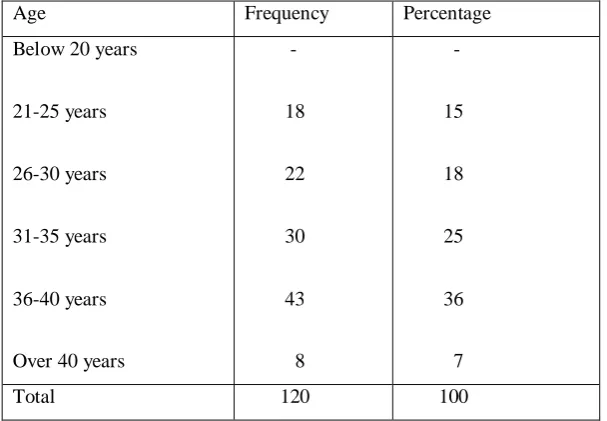
Table 2: Distribution of Respondents by Age
Age Frequency Percentage
From the above table 2, 18 (15%) of the respondents fall between 21 - 25 years. 22 (18%) fall between the age
brackets of 26 – 30 years. 30 (25%) of the respondents were between 31- 35 years, majority of the respondents
representing 43 (36%) are between 36-40 years while the remaining 8 (7%) respondents were over 40 years.
From this analysis, one can infer that the majority of the workers fall between the age of maturity, efficiency and
able bodies groups.
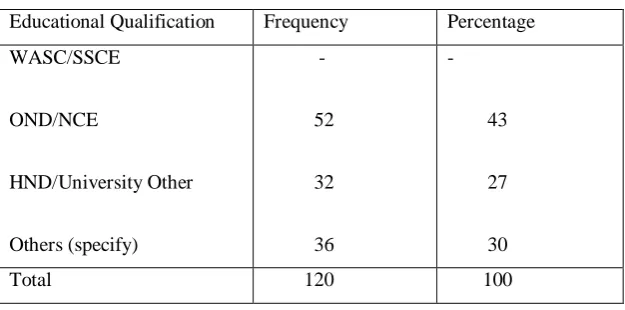
Table 3: Distribution of Respondents by Educational Qualification
Educational Qualification Frequency Percentage
WASC/SSCE
Source: Researcher’s Survey (July, 2014)
From the above table 3, the majority of the respondents obtained OND/NCE (43%). 32 (27%) of the respondents
were with Higher National Diploma while 36 (30%) of the respondents were having other qualifications like
MBA, ICAN and CIBN.
Table 4: Distribution of Respondents by monthly Salary
Monthly Income Frequency Percentage
Less than N85,000
Source: Researcher’s Survey (July, 2014)
The above table 4 shows that overwhelming majority of the respondents 54 (45%) earn between N86,000 to
N100,000 as monthly salary. From this analysis, one can infer that majority of the workers earn little compared
Table 5: Distribution of Respondents by Marital Status
Marital status Frequency Percentage
Single
Source: Researcher’s Survey (July, 2014)
From the above table 5, majority of our respondents 72 (60%) were married. Those that were single constituted
25 (21%) while those that were separated and divorced weighted 8 (7%) and 12 (10%) respectively. It would be
inferred that majority of the workforce in the banks are responsible people and have many things at stake to
protect.
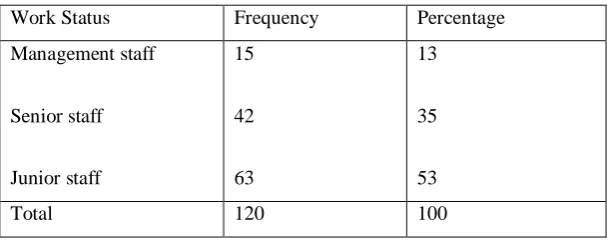
Table 6: Distribution of Respondents by Work Status
Work Status Frequency Percentage
Source: Researcher’s Survey, (July, 2014)
The table 6 above depicts that overwhelming majority of the respondents 63 (53%) were junior staff in the bank.
15 (13%) respondents were management staff while 42 (35%) of the respondents were senior staff. This shows
in essence that most of the work in the banks is carried out by the junior staff in almost all the departments with
senior and management staff carrying out the administrative duties.
Section 2
This part of the study deals with the presentation of specific variables, which are related to the study. In order to
derive the much - needed information on Financial Crime and its implications on banks performance in Nigeria,
Table 7: Respondents Opinion on whether there is increase in financial crime in the Banks in the recent times
Source: Researcher’s Survey (July, 2014) The table 7 above shows that majority of the respondents, 102 (85%) respondents were of the view that there is increase in financial crime in the in recent times while 18 (15%) respondents thought otherwise. Table 8: Respondents Opinion on whether there has been insider’s connivance Responses Frequency Percentage Yes Source: Researcher’s Survey (July, 2014) The table 8 above shows that majority of our respondents 112 (93%) respondents were of the view that there must be an inside connivance before a financial crime can be committed while 8 (7%) respondents thought otherwise. From this distribution, one can infer that inside connivance has assisted the crime in a great deal. Table 9: Respondents Opinion on whether Banks operations involve outsiders apart from the employees. E.g. Providers of internet services? Responses Frequency Percentage Strongly agree
The table 9 above shows that 12 (10%) respondents strongly agreed that Banks operations involve outsiders
apart from the employees. The majority of the respondents 68 (57%) respondents agreed. 21 (18%) respondents
disagreed. 13 (11%) respondents strongly disagreed while 6 (5%) respondents were neutral.
Table 10: Respondents Opinion on whether there is an implication of financial crime on the bank?
Responses Frequency Percentage
Yes
No
83
37
69
31
Total 120 100
Source: Researcher’s Survey (July, 2014)
The table 10 above shows that majority of our respondents 83 (69%) respondents were of the view that there is
an implication of financial crime on the bank while 37 (31%) respondents thought otherwise.
Table 11: Respondents Opinion on whether financial crime can cause the distress of a bank?
Responses Frequency Percentage
Yes
No
78
42
65
35
Total 120 100
Source: Researcher’s Survey (July, 2014)
3.1 Findings
It was found out in this research work that, the volume and frequency of financial crime in Nigerian banks have
been on the increase with obvious negative effects on their performance. This is also linked to the connivance,
corrupt and fraudulent nature of the operators and the society
Apart from the above, it was also discovered that Banks in Nigeria perform a variety of tasks and
responsibilities not only for transformation agenda but also to enable it to function in an effective manner and
unfriendly environment thus, making all employees, staff and the general public crucial to the operations of the
bank.
It was also observed that most Banks in Nigeria are having problems or in wide spread distress as a result of
financial crimes which has jeopardized the industrial growth as most banks have already gone under due to
4. Conclusion
Attempt in this paper has examined the implications of financial crime on bank performance in Nigeria as can be
found in relevant literature. Issues bordering on financial crime were reviewed. On each issue, many pertinent
positions emerged.
5. Recommendations
Based on the findings, the following recommendations, which will be very useful to the management of banks in
controlling financial crime are preferred. Firstly, financial crime can be reduced by complying effectively with
the policy measures which the government, monetary and supervisory authorities designed to curb the menace in
Nigeria.
Secondly, there is need for the creation of the corruption ‘hotline’ where the public can call to complain or
report fraud cases and the trials of the serving and non-serving political and public office-holders to serve as
deterrents to others.
There is also need to train and retrain management and staff of Nigerian banks in fraud prevention and control.
Such training should include a comprehensive review of legal and regulatory guidelines for confidentiality, as
well as the various approaches to detecting common fraud schemes used to steal money. Besides, there is need
to establish cash reward for persons who report and produce evidence of fraud incidence. It is our submission
that the Nigeria nation cannot make progress with the cancer of fraud corroding its banking sector.
Finally, the measures to control financial crime should include checking of cashiers, call-over, reconciliation
and balancing of accounts at branches, periodical submission of statement of accounts, stock taking of security
items and cash in the vaults and inspection by bank inspectors.
Acknowledgement
My Acknowledgement goes to the maker of heaven and earth, and the author of the materials that was used for
this paper.
References
[1] D. Arter ‘’Quality Audits for Improved Performance,’’ ASQ Quality Press; 3 Edition . 2011.
[2] Audit Encyclopedia.com, viewed 16 March 2011, www.encyclopedia.com/topic/auditing.aspx.
[3] E.D. Cameron. ‘’Report of the Independent Auditor on an Efficiency Audit of the Auditor-General's Office
under the Audit Act 1901,’’ 5 March, AGPS, Canberra 1982.
[4] F. Harvey. “Detecting and Investigating Fraud in the Public Sector”, AIC Public Sector Auditing
[5] A. S. Hornby. ‘’Oxford Advanced Learner’s Dictionary of Current English’’. Oxford: Sally Wehmeier 2000.
[6] R. Jones & M. Pendlebury ‘’Public Sector Accounting, Financial Times/Division of Pearson Education.
2000 pp.288. 5th Edition.
[7] C.T. Monaghan,) “Comprehensive Auditing for Efficiency in Selected Addresses on Public Sector Auditing’’.
1989 5, AAO, Canberra.
[8] G. A. Ogunleye, “Fraud in the Banking Sector: The Unmanaged Distress Risk” Journal of Economic Crime
(2001). Pp. 106-126.
[9] T. S. Power Walsh & P. O’Meara Financial Management: an Irish Text 2001. Gill and McMillan, Dublin.
[10] Wikipedia. The Free Encyclopedia, http://en.wikipedia.org/wiki/Financial_crimes 2011