Organization. Bangkok: UNESCO Bangkok, 2006. viii + 254 p.
1. Higher education 2. Higher education reforms 3. Higher education institutions 4. Access to higher education 5. Public higher education 6. Private higher education 7. South-East Asia
ISBN 92-9223-084-0 ©UNESCO 2006 Published by
the UNESCO Asia and Pacific Regional Bureau for Education 920 Sukhumvit Road, Prakanong
Bangkok 10110, Thailand
Printed in Thailand
South-East Asian countries share many commonalities, yet their political, cultural, socio-economic and environmental conditions are also rich in diversity. Likewise, higher education in the region stems from different historical backgrounds and has undergone various kinds of challenges and various stages of development. The rapid expansion of student enrolment, the knowledge explosion, advances in information and communication technology, globalization, economic restructuring, and financial constraints have all contributed to higher education reforms in these countries and resulted in varied outcomes. Based on a sense of “unity in diversity,” many higher education policy makers and practitioners in the region believe that their higher education systems can benefit from closer cooperation and exchange of lessons learned.
To facilitate and enhance this process of sharing and learning, UNESCO Bangkok and SEAMEO RIHED carried out a joint research study and seminar on “A Situational Analysis of Higher Education Reforms in South-East Asian Countries” in 2005. This collaboration reflects UNESCO Bangkok’s commitment to support educational development in the region, and SEAMEO RIHED’s dedication to foster higher education cooperation and development among South-East Asian countries. The research used case studies from eight countries (Cambodia, Indonesia, Lao PDR, Malaysia, Philippines, Singapore, Thailand and Viet Nam) to provide an in-depth analysis of their higher education systems. The respective national researchers addressed several issues, including higher education reform, access and diversification; governance and management of higher education institutions; faculty and academic programmes; research capacities; private higher education; the internationalization of higher education; accreditation and quality assurance; and challenges for the future.
organizers, authors, participants and other collaborators for their hard work in producing this book, which we hope will be used by many others in their efforts to develop and improve higher education systems in this region and beyond.
Sheldon Shaeffer Director
UNESCO Bangkok
Asia and Pacific Regional Bureau for Education
Supachai Yavaprabhas Director
SEAMEO
1. Higher Education in South-East Asia: An Overview Molly N.N. Lee and Stephen Healy
2. Cambodia Chealy Chet 3. Indonesia
Nizam 4. Lao PDR
Khamphone Xay Som Phou 5. Malaysia
Morshidi Sirat 6. The Philippines
Andrew Gonzalez FSC 7. Singapore
Jason Tan 8. Thailand
Varaporn Bovornsiri 9. Viet Nam
Ngo Doan Dai About the Authors
1
13
35
69
101
137
159
187
219
Table 1: Expansion of higher education as measured by gross enrolment ratios (%) Table 2: Distribution of higher education institutions by parent ministry and agency Table 3: The Quality Undergraduate (QUE) funding project
Table 4: Gender distribution by type of programme
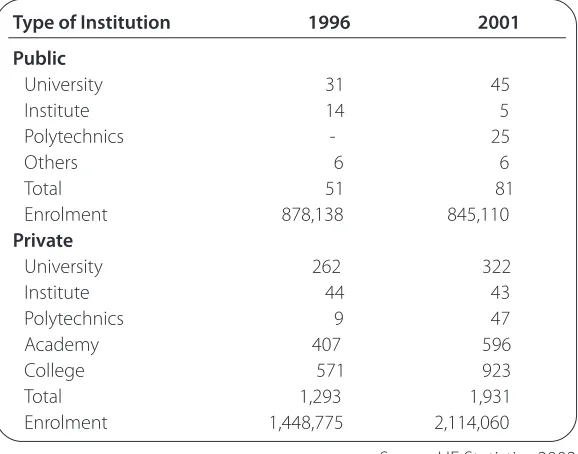
Table 5: Development of higher education institutions, 1996 - 2001 Table 6: Statistics of the Open University (Universitas Terbuka – UT) Table 7: Study programmes and new intake in public universities by fields of study
Table 8: Distribution of staff with PhD, 2000
Table 9: Distribution of students in public and private institutes Table 10: Enrolment for academic years from 1996-1997 to 2004-2005 in NUOL
Table 11: Student graduates from academic year 1996-1997 to 2003-2004 Table 12: Student enrolment for academic years 1996-1997 to 2004-2005 in private colleges
Table 13: Student enrolment for academic years from 1996-1997 to 2004-2005 in teacher training colleges
Table 14: Student graduates for academic years from 1996-1997 to 2004-2005 in teacher training colleges
Table 15: Higher education students classified by institutions in charge, 2000 to 2005
Table 16: Upper secondary school leavers, 2001-2005
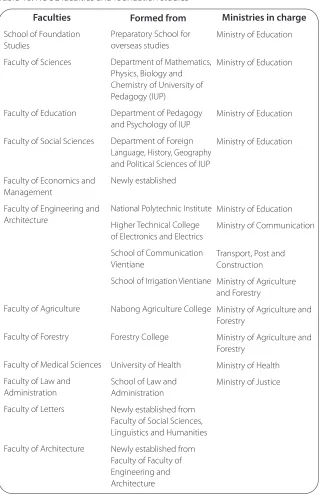
Table 17: Programme levels available in higher education in Lao PDR Table 18: NUOL faculties and foundation studies
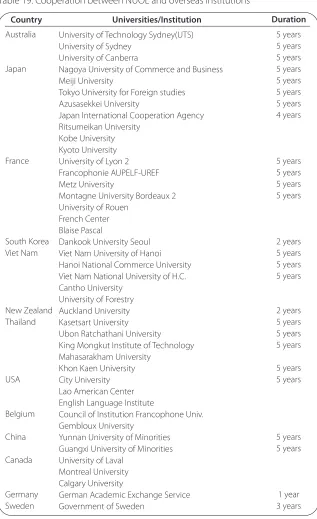
Table 19: Cooperation between NUOL and overseas institutions Table 20: International Students in the period of years 2000 to 2005 Table 21: Objectives and strategies for higher education development Table 22: Enrolment in public higher educational institutions, 2000-2005 Table 23: Enrolment in private higher educational institutions, 1998-2005
4 20 40 45 46 47 48
57 62 75
75 76
76
77
77
Table 24: Faculties and academic programmes at the undergraduate level in public higher educational institutions, 2004
Table 25: Survey of research and development in Malaysia, 2004 Table 26: Public higher educational institutions: research grant from Intensification of Research in Priority Areas (IRPA), 2004
Table 27: International students and academic staff in public higher educational institutions, 2003/2004
Table 28: Top ten private colleges with international students, 2001 Table 29: Enrolment by region and institutional type, 2003-2004
Table 30: Enrolment by programme level and gender (public and private), 2003-2004
Table 31: Graduates by discipline group (public and private), 2003-2004 Table 32: Number of foreign students per academic year in the Philippines Table 33: Private higher education institutions granted autonomy by the Commission on Higher Education
Table 34: Private higher education institutions granted deregulated status by the Commission on Higher Education
Table 35: Highest educational qualifications and gender of faculty staff (public and private), 2003-2004
Table 36: Higher education enrolments, 1960-2000
Table 37: Student enrolment in higher education institutions, 1999-2003 Table 38: Components of the central university admission in 2006-2008 Table 39: New enrolments in higher education institutions, 2003 Table 40: Total enrolments in higher education institutions, 2003 Table 41: Number of graduates in higher education institutions, 2002 Table 42: Government research budget allocated to Commission on Higher Education, public universities and institutes, and public autonomous universities, 2005
Table 43: Number of international students by institution
115
118 119
124
125 140 141
142 146 148
150
154
177 189 191 197 197 198 202
Table 44: Number of international students by nationality
Table 45: Students studying abroad and in Thailand under the supervision of the Civil Service Commission (CSC), Thailand as of April 1, 2005
Table 46: Number of Institutions and percentages of external quality assessment by level of education as of June 1, 2005
Table 47: Public expenditure on education and training (US$ millions) Table 48: Newly established higher education institutions in three zones Table 49: Student enrolment at tertiary institutions by year and
programme level
Table 50: Student enrolment of different kinds of higher education institutions
List of Figures
Figure 1: Distribution of private establishment by year Figure 2: Higher education expansion in Indonesia, 1975-2003 Figure 3: Flow of students from elementary to higher education Figure 4: Disparity of access to education
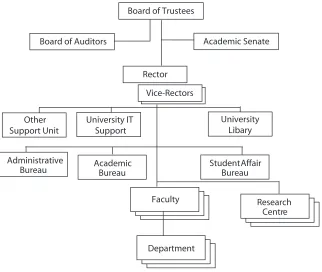
Figure 5: Typical organization structure of a legal entity university Figure 6: Comparison between the number of new in-country and overseas PhD graduates
Figure 7: Academic Staff in Public Higher Educational Institutions: By Gender 2000-2004
Figure 8: Academic Staff in Private Higher Educational Institutions: By Gender 2001-2004
List of Diagram
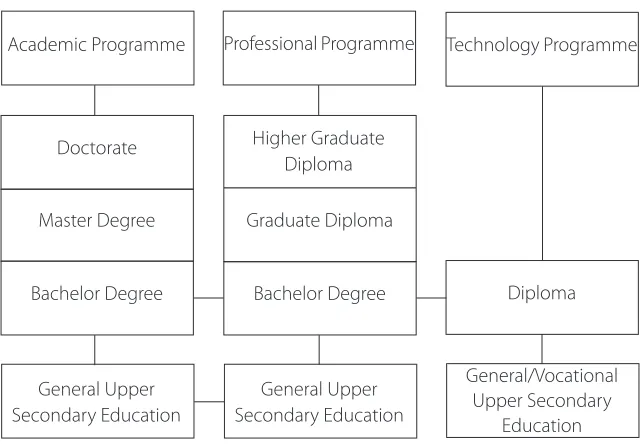
Diagram 1: Pathways to higher education in Malaysia
26 36 43 44 54 57
121
121
106 207 208
213
229 231 233
HIGHER EDUCATION IN SOUTH-EAST ASIA:
AN OVERVIEW
Molly N. N. Lee Stephen Healy
INTRODUCTION
South-East Asia is a region of vast developmental diversity, from wealthy Singapore to the much poorer Greater Mekong Sub-region countries. This continuum provides a great opportunity for analyses of many themes and issues, for lessons learned to be shared across borders and for mutual cooperation to enhance the presence of South-East Asia within the global community.
Higher education is one area where people aspire to advance themselves. In South-East Asia, it started from different historical backgrounds and has undergone various stages of development. Similar to the situation in other parts of the world, it has, and still is, facing numerous challenges, including increasing student enrolments, knowledge and information overload, economic restructuring and financial constraints. Amidst such challenges, and changes, there is general consensus within the South-East Asian higher education community that closer cooperation is beneficial and, indeed, necessary to produce highly qualified graduates who can contribute to sustainable development and increase their competitiveness throughout the world. For constructive and productive cooperation, policy makers and practitioners must be well-informed about higher education development and trends in other countries so that they can convert such information into useful policies and practices within the confines of their national needs and circumstances.
• Higher education reforms • Access to higher education • Diversification of higher education • University governance and management • Restructuring of faculties and academic progress • Developing research capacities
• Change to the academic profession
• Roles and function of private higher education • Internationalization of higher education • Accreditation and quality assurance • Challenges and future developments
The reports analyze the challenges facing higher education in the region, and reveal an interplay between global higher education trends and national (and regional) needs and developments. This overview highlights some of the more significant trends and explores how they are being responded to in each case.
An Overview of Higher Education in South-East Asia
The analyses in the case study countries illustrate that higher education is greatly influenced by the countries’ historical past, nation-building efforts, and current global trends. The differences in the region are significant, but also deceiving. At a superficial level, they range from geographical size, economic wealth, political ideologies, and educational traditions. For example, Singapore is an island state compared to Indonesia, which has a huge population and large geographical area. Singapore, Malaysia and Thailand are newly industrialized countries, whereas Cambodia, Lao PDR and Viet Nam are countries in transition (e.g. from an agricul-tural economy to an industrialized economy). All the countries except Thailand have a colonial history, and their education systems are very much influenced by this colonial heritage.
Despite the diversity in the region, the higher education systems in South-East Asia face similar problems and challenges. All these systems have budgets to balance, standards to maintain, faculties to satisfy, and social demands to meet. Furthermore, all countries are united by facing similar domestic challenges that are increasingly influenced, distorted and determined by developments at the global level. One of the key developments in this regard has been the increasing growth of transnational education and cross-border exchange, as documented below and in the country papers.
Massification of Higher Education
One of the key and recurring developments and trends in higher education reform is the need to increase the overall access for university-age students. “Massification of higher education” reflects the global trend of improving higher education opportunities for all, and transforming higher education systems from being elitist to ensuring mass participation across different social, income and geographical groups. These massification programmes seek to serve student/ professional groups who may not have the educational opportunities to under-take initial or further study and professional development at higher levels.
All the case studies experience greater participation in higher education and all reveal increasing numbers of students in higher education. Some countries have achieved significant increases in participation rates, and have also tackled social exclusion agendas, e.g. Malaysia. However, further challenges exist in matching increased provision with quality and in balancing the interests of the different suppliers of higher education as the private sector plays an increasing role.
An ever escalating demand for higher education brought about by population growth is augmented by the democratization of secondary education and the growing affluence of many countries in the region. At the individual level, higher education is perceived as an avenue for social mobility. At the national level, it is seen as a key instrument for human capital development to sustain economic growth as well as being a means to restructure society and to promote national unity. In addition, many countries stress the importance of higher education insti-tutions in maintaining the countries’ national competitiveness in a globalized knowledge economy, e.g. Thailand, Singapore and Malaysia.
develop-ment and participation that can be broken down into three groups: those with ratios of 30 percent and above (Singapore, Thailand and Philippines), between 10-30 percent (Malaysia, Indonesia, Brunei and Viet Nam) and below 10 percent (Myanmar, Cambodia and Lao PDR).
Table 1: Expansion of higher education as measured by gross enrolment ratios (%)
2000 higher education sector that is differentiated by the type and variety of higher education institutions. Various types of higher education institutions with their respective missions or purposes to cater to the different needs of the diverse groups of students have emerged. This diversification, whether by funding or programme, has been central to how countries in the region have been able to expand and respond (or not as the case may be) to social and economic demands for higher education.
Open and distance learning universities and regional universities have been established in many countries to make higher education more accessible to people, especially working adults and those in remote rural areas. This process has been crucial in widening participation and access to higher education in all countries in the region. The papers on Indonesia and Thailand provide particular detail on these processes and experiences.
Most countries have public and private universities, while Viet Nam has semi-public universities and Malaysia has universities owned by public corporations. Malaysia has university colleges (with limited number of faculties) and Thailand has Rajabhat universities (which used to be teacher training colleges). Several countries have community colleges, but Viet Nam has people-founded universities and colleges. Quite a number of countries, e.g. Malaysia and Viet Nam, have branch campuses from foreign universities.
A trend towards increased transnational education has also been noted, with Malaysia identified as one of the most developed and experienced in the region. Many countries in the region remain importers of cross-border education from advanced countries like Australia, UK and USA, but increasingly there are intra-regional cross-border activities as shown by the Malaysian and Singaporean pro-vider activities in Thailand and Viet Nam.
Internationalization of Higher Education
Over the course of the last ten years, mobility of students and academics around the world has become commonplace. Student flows among countries in the re-gion and beyond continue to rise. There are increasing efforts to match student mobility with support programmes for students and academics from countries that will benefit from the educational and cultural experience of overseas study and professional development programmes.
Worldwide growth of transnational education and the increasing development of foreign branch campuses have also revealed a trend whereby the educational values associated with higher education in developed countries such as USA, UK and Australia can be exported to give access to a new generation of students who may not be able to afford or obtain the scholarships necessary for overseas study.
the institution providing the education is based (the home country). This situation requires that national boundaries be crossed by information about the education, and by staff and/or education materials (GATE 1997).
Many countries in this region, such as Malaysia, Thailand and Viet Nam, are importers of transnational education from Australia and UK. This trend is forecast to grow: for example, the UK alone expects the demand for UK-sourced transnational education in Malaysia and Singapore to grow from 67,000 students in 2003 to 271,000 by 2020 (British Council 2005).
In importing transnational education on the one hand, countries such as Malaysia, Thailand and Singapore have also become exporters on the other by providing educational services to students from neighbouring countries and in setting up institutions across borders.
All three countries have national objectives to become educational hubs in the region. This strategy is most developed in Malaysia and Singapore, where active government support and incentives have been given to overseas providers to set up branch campuses in their countries, e.g. Nottingham University in Malaysia and the University of New South Wales in Singapore.
Internationalization not only includes international student mobility, but also mobility of academic staff, educational programmes and institutions. The UNESCO Convention of Studies, Diplomas and Degrees in Higher Education in Asia and the Pacific formulated in 1984 anticipated this trend and the need for accompanying support and recognition measures. The Convention aims to promote greater cooperation to support the educational development for students, researchers, academics and professionals through the mutual recognition of studies, diploma and degrees in higher education in the Asia-Pacific region. At the heart of the Convention is the creation of conditions to facilitate greater and smoother mobility for educational and cultural exchange. To date, 20 countries have ratified the Convention, reflecting the growing commitment and trend for internationali-zation and cross-border exchange of students and academics to support economic, social and educational development.
Nevertheless, not all cross-border activities are for commercial purposes. Interna-tional development aid from more developed countries has supported countries such as Lao PDR and Cambodia in student fellowship and academic staff devel-opment programmes as part of wider strategic initiatives to develop the capacity of the higher education systems. Clearly the General Agreement on the Trades of Services (GATS) will have a direct impact and influence on the higher education policies and developments in the region.
Marketization of Higher Education
The rapid expansion of higher education and the rising unit cost has caused tremendous financial strain on many governments. The result has been the urgent need to seek other sources of funding and to restructure their higher education systems. The restructuring of higher education in many countries has involved the privatization of higher education, corporatization of public universities, implementation of student fees and formation of strategic partnerships between the public and private sectors in the provision of higher education. This has also led to the establishment of foreign providers through transnational education either as a market response or via pro-active government policy measures.
The drive of market forces in higher education has also led to more entrepre-neurial universities which are seeking additional and new sources of funding through either traditional and/or innovative services. Thus, increasingly universities are aiming to market their teaching, research and other knowledge-based services, together with maximizing the commercial value of their physical assets, setting up commercial enterprises of their own, or joint ventures with the business sector.
The development of private higher education has helped expand enrolments in many countries. Private higher education institutions in the Philippines and Indo-nesia outnumber public providers and have been absorbing the growing demands and expectations of higher education from society. While private provision has been a long tradition in these two countries, it is a relatively recent development in Malaysia, Singapore, Cambodia and Viet Nam.
in Viet Nam. Private provision also fosters the opportunity to diversify curriculum and instruction, e.g. in Malaysia, the language of instruction in the private sector is English instead of Malay, or it may lead to foreign degrees instead of a local degree; in the Philippines there are sectarian providers in the private sector which may have strong religious influence as well.
The papers present a number of policy issues for governments, such as determining the role of the state in the provision of higher education, the relationship between private providers and governments, and issues linked to monitoring mechanisms, accreditation of courses and quality assurance. Several countries like Malaysia, Thailand, and Cambodia have passed private higher education institution acts to regulate the provision of private higher education in their countries.
Institutional Restructuring
The growing internationalization and commercialization of higher education has significant implications for how higher education institutions are organized. The forces behind the continued drive towards autonomy and accountability stem from several factors:
• As higher education systems expand, they become more bureaucratic and regulated to ensure consistency in the management of higher education systems in the process. They also become more complex, creating a variety of institutions with different missions and scattered in different geographical locations, making it increasingly difficult for central management. Thus, a more decentralized management is needed to cope with these challenges. • In adopting a neo-liberal ideology, many governments are reducing their public and social expenditure, which has resulted in drastic budget cuts in state funding to universities. To overcome these budgetary constraints, universities need to seek alternative sources of funding, and they are being given freedom to generate their own revenues through engagements in different kinds of market-related activities.
• As universities find themselves operating in a more competitive and market-oriented environment, they need to be flexible and able to respond quickly to market signals and pressures. Therefore, many academic leaders have started searching for ways to make their institutions more entrepre-neurial and autonomous.
with the quality of education they provide. Thus, universities are increasingly subjected to external pressures to achieve greater accountability for their performances, and encouraged to develop systems for self-evaluation and assessment.
The country studies have demonstrated a broad array of approaches in the restructuring of higher education institutions, and their experiences serve to high-light areas for sharing lessons learned and collaboration on what is clearly a common and global issue.
Trading Autonomy for Accountability
The relationship between higher education institutions and the state is largely dependent on the issue of autonomy and accountability. The global experience has revealed that the state and higher education institutions are constantly engaged in redefining their interactions and relationships, with governments demanding more accountability and the higher education institutions insisting on more autonomy. A significant global trend is an increase in institutional autonomy in return for more accountability. This trend can be seen in the South-East Asian region with the corporatization of public universities in Malaysia and Singapore, the establishment of autonomous universities in Indonesia and Thailand, and the prevalence of charter universities in the Philippines. Institutional restructuring has led to many changes in university governance and management.
Assuring the quality of education provision is a fundamental aspect of gaining and maintaining the credibility of programmes, institutions and national systems of higher education worldwide. The same is true in South-East Asia, and quality assurance is one of the prime concerns. Indonesia, Philippines and Malaysia have already set up quality assurance mechanisms to monitor their higher education institutions, and Cambodia and Lao PDR are in the process of setting up their own quality assurance and accreditation bodies.
Academic Restructuring and Strengthening Research Capacities
areas in Singapore (which has set up ten specialized research institutes for life science and information technology), the introduction of credit systems in Viet Nam and Cambodia, or the establishment of new departments for interdiscipli-nary and multi-discipliinterdiscipli-nary studies in Thailand.
Many countries in this region do not have very conducive environments for research, and in some countries there is hardly any research activity as a result of heavy teaching loads, lack of research funds, and lack of qualified researchers. In many instances, the academics are so poorly paid that they have to take on a second job. However, in the more developed countries like Singapore, Malaysia and Thailand, there have been significant scientific research contributions in areas such as marine biology, forestry, tropical medicine and agricultural crops such as rubber, cocoa, oil palm and rice.
Examples of innovative approaches to strengthen research capacities in universities in this region include the move towards setting up research universities in Malaysia, the setting up of specialized research institutes in Singapore, and the introduc-tion of competitive research grants in Indonesia.
Changing Academic Profession
The global and local trends in higher education highlighted above present a number of challenges for the academics in higher education institutions. The changing external and internal environment places new professional demand and context on these academics, as highlighted below:
• Subjected to more rules and regulations: The emphasis on accountability has required academics to be subject to tighter fiscal control, to increase productivity, and to be governed by more rules and regulations as well as rigorous assessment procedures.
• Pressure to raise funds: The development of the corporate culture into higher education institutions has required academics to behave like entrepreneurs and to market their expertise, services and research findings.
• Limited academic freedom: Academic freedom in some countries remains limited with restrictions on what can be researched and what the academic community can relay to the public.
Each country has its own particular challenges, ranging from the more advanced systems in Singapore (where academics are increasingly imported), to Thailand (where a traditional civil service status is now being transformed), to Laos and Cambodia (where more academic development and training is required).
Future Developments and Challenges
Future trends in the development of higher education in South-East Asia and other parts of the world will become progressively similar. They will include continuing expansion, the need to seek different sources of funding, and the growing diversity of higher education institutions. More calls for institutional autonomy, financial diversification and quality control in higher education will be made, as will demands from different social groups for access. Greater pressure will be exerted for relevance and flexibility in curriculum development, and for adaptability to changes in the society as a whole and in the workplace, in particular.
Universities throughout the world, including those in South-East Asia, will no longer be the sole producer and disseminator of knowledge amid the emergence of multiple competitors such as corporate universities, research institutes, industrial laboratories, think tanks and various kinds of consultancies. Greater cross-border provision through transnational education expansion and the concentration of research expertise and funding will ensure that this area will continue to be of interest and concern to higher education providers and policy makers.
Universities have a role to play in promoting inclusive multiculturalism and universal values. This has become even more significant given the greater polari-zation of communities and religions around the region and the world. Student and academic mobility and exchange can serve to share a greater sense of cross-cultural understanding and tolerance.
REFERENCES
British Council. (2005) Vision 2020: Forecasting international student mobility – a UK perspective. British Council Publications.
CAMBODIA
Chealy ChetOVERVIEW OF HIGHER EDUCATION DEVELOPMENTS
Background
Unlike many developing countries during the 1970s, Cambodia did not experi-ence an increase in the quality and quantity of higher education but, rather, an unprecedented loss of human resources. Even before the advent of the Khmer Rouge, it is estimated that 500,000 people were killed and perhaps half of Cambodia’s educational facilities were destroyed in the bombing and fighting between 1970-1975 (Duggan 1997).
Following 1980, Cambodia made some gains in primary education with assistance from the former Soviet bloc. Nevertheless, higher education benefited little from this effort, and the embargo against assistance to Cambodia by the United Nations from 1979-1989 prevented many other countries from giving direct assistance to Cambodia. Thus, the present weakness of the higher education system in Cambodia is the result initially of the genocide of 1975-1979, followed by the long-lasting civil war, conflicting political ideologies, social unrest, and uncoordinated economic reforms. Some efforts have been made by the Royal Government and citizens of Cambodia to re-develop the educational system, but a lack of human and financial resources has made it a hard journey back to parity with other countries in the region. This analysis presents the existing reality of higher education in Cambodia and, to some extent, explains the reasons that both created and now sustain this reality.
Higher Education Reform and Developments
States and Australia, laid out the foundations for how to make some of these changes, but it was issued at a time of intense political confrontation in Cambodia, and relatively limited steps were taken to implement the recommendations of the report. Some of the recommendations remain valid whilst others are no longer meaningful.
Modern higher education in Cambodia is a relatively recent development (Chamnan and Ford 2004). The first modern university, the Royal University of Phnom Penh, was established in 1960. Until the mid-1990s, the state remained the only provider of higher education in the country under a tuition-free system. The situation began to change as a result of the shift towards a more market and skills-based economy. Charging fees to generate income in higher education institutions was first permitted in 1997. A significant number of private institutions have been established since then, and public institutions have also introduced fee-paying courses which have attracted students (O’Brien 2004).
The political platform of the third mandate of the Royal Government sets forth a common national vision and mission statement as well as embodying the will of the Government (Hun Sen 2004). To achieve this national vision, the Royal Government launched “The Rectangular Strategy” for growth, full employment, equity and efficiency in Cambodia. The Rectangular Strategy is exemplified through the visual representation of an integrated structure of interlocking rectangles, each signifying a development goal. Of particular note, rectangle four of the strategy focuses on capacity-building and human resource development where clearly there is an important role for higher education services1.
The current pro-poor policy of the Royal Government has created a more favour-able environment for the Cambodian labour force. Entrance into the World Trade Organization in 2004 has created expanding market opportunities, while private participation in the higher education sector aims to create skills and knowledge which will serve the changing labour market of the country. However, there is a risk of the private sector focusing on the short-term and neglecting the long-term needs of the country. There are many examples around the world where some professions needed for social and national development are neglected in order to serve what are often short-lived global market forces. Additionally, rapid expansion of higher education without sufficient quality assurance systems in place can lead
to the creation of institutions of dubious quality weakening the whole system. Cambodia is currently exposed to both of these dangers.
The Royal Government’s policy at the macro level has created a new develop-ment and managedevelop-ment atmosphere for the higher education sector in Cambo-dia. Starting from a system with significant fragmentation in policy and programme coordination shortly after the collapse of Khmer Rouge regime in 1979, the Royal Government has put in place several regulatory reforms to direct the mushroom-ing growth of higher education toward a more manageable process which will better serve the needs of the nation. However, some donor agencies and higher education consultants are concerned that unplanned changes within the sector are producing more graduates than the economy can absorb and that graduate skills are not matched to the needs of the country (O’Brien 2004). The present reality is further complicated by a lack of clarity about who is directing reform and in what areas. As a result, inevitable misunderstandings occur among the various players in higher education, and universities get caught in the middle. It is hoped that this is a transition period and the new education law, due for passage in 2006, will clarify responsibilities.
The basic landscape for current Cambodian higher education is a mixture of three stages of higher education evolution, namely: institutional build-up, system integration, and reform and massification. This is a result of the economic policies driving the transition to a market economy, significant growth in the demand for higher education and ambiguities on higher education regulation and operations.
Access to Higher Education
Even though statistics gathered by the Department of Higher Education show a number of remarkable achievements, the accuracy and reliability of the numbers related to student enrolment in the higher education system still need improve-ment. Estimates suggest that the total enrolment in academic year 2003-2004 was around 55,000 students. Yet, Sloper (2004) points out several factors that may help to explain or compound apparent statistical discrepancies in higher educa-tion enrolment.
1.A student may concurrently undertake two or more degrees full time. This is possible because the low quality of many programmes does not require the student to do much research or reading outside of class time, or undertake significant laboratory work in the case of science degrees. In 2004, the estimate of duplicate/parallel enrolments was between 9,000 and 11,000. To resolve this issue, the Ministry of Education, Youth and Sport is considering the establishment of a central admission unit as an affiliation of the Department of Higher Education. Expansion of quality assurance efforts will also improve the quality of the programmes, ensuring that higher education programmes can and do meet international standards for credits, assessment procedures and graduation requirements. 2.Some scholarship and fee-paying programmes are operated in parallel by public higher education institutions. One person who represents two enrolments may be both a scholarship and a fee-paying student. Most often, a student combines a fee-paying English language course and a free subject course, such as chemistry. It is worth mentioning here that some Cambodian public higher education institutions introduced fee-paying programmes as commercial arms to earn additional income. There is limited government support for public higher education institutions except for the very low government salaries, so for books, materials, add-on salaries as incentives for good teachers, reasonable office staff and capital and recurrent maintenance, the higher education institutions have to look elsewhere. Plans in 2005 included block grants for public higher education institutions which serve the public need by preparing teachers/ medical workers, sociologists, psychologists, and others (Education Strategic Plan 2006-2010). This financial help will relieve some of the burden of cost recovery for the public schools and enable them to train and retain high quality staff.
4.One estimate is that about 20,000 higher education enrolments are in business management, computing and related studies. Programmes and subjects available in Cambodia are mainly demand-led and tend to focus on perceived earning capacity of the degree and are as a result narrow in subject provision.
HIGHER EDUCATION REFORMS AND REGULATIONS
Reform Efforts
In response to the economic and political shift which took place in the early 1990s, Cambodia has undertaken significant transformations in its tertiary education system, including changing the pattern of financing and governance, growing institutional differentiation, creating evaluation and accreditation mechanisms, curriculum reform, and technological innovations.
Finance is a very significant issue, especially for public institutions. As a result of the low salaries and no direct government support for non-salary items for higher education institutions, decisions have to be made between moving into full-cost sharing by students as recommended by Zhang (1997) or clarifying and increas-ing government subsidies. To make these decisions, leaders of institutions need to be well-prepared and capable in a number of areas. These include the ability to expand partnerships with domestic and international institutions, training and financial incentives for faculty, expanding fund-bearing research projects, convincing the Government of its needs and creating programmes that students will be willing to pay for. At present, there is no application process or public criteria for leadership posts in public institutions. Changing governance and finance may remedy some of these gaps and provide the incentives for the necessary leadership requirements for higher education institutions to be developed.
Within the last decade, some higher education regulations have been passed and, when fully implemented, may prove to be instruments for effective and efficient development and management of the higher education sector in Cambodia. These regulations include:
• Royal Decree on Accreditation of Higher Education • Sub-decree on University Establishment
• decision on a required programme of foundation study at all degree-granting higher education institutions
• decision on credit and credit transfer system • draft of the new education law
• draft of the establishment of public higher education institutions as public administrative institutions
This sequence of regulatory reforms clearly attempts to move Cambodian higher education towards the level of quality needed by the new labour market, as well as bringing Cambodia into some parity with regional and international standards. This systemic regulation and improvement of quality is taking place at the same time as enormous institutional expansion and massification, with new universities being established in the capital and major regional centres. These developments make the enforcement of regulation both challenging and complex.
A new body that has emerged as a consequence of the recent reform is the Accreditation Council of Cambodia (ACC). The Ministry of Education, Youth and Sport in its draft educational law also advocates the establishment of a National Council for Education. If the law is passed, a new organizational body well establish the hierarchy of educational management at four levels, namely national, central (ministerial), provincial (including town and district), and local school levels.
The Current Regulatory Picture
Under the current regulation, the Royal Government has distinguished a university from other types of higher education institutions based on the rule that a university is required to have the following minimum characteristics2:
1.Offering multi-disciplinary fields of study from bachelor degree onward, with several faculties
2.Offering a foundation study programme
3.Offering teaching and research activities using modern methodologies 4.Having sufficient teaching staff with competency and experience 5.Having adequate library, laboratory, materials and other facilities to carry
out teaching-learning and research
6.Having space and classrooms compliant with pedagogical norms 7.Having three mandatory faculties, namely i) Arts, Humanities and Language;
ii) Mathematics and Science; iii) Social Science, and at least 2 additional faculties
Although some steps toward system integration have begun, Cambodian higher education at a glance reveals it to be relatively fragmented. There are no less than nine government ministries and agencies providing higher education services in the country. These ministries and agencies are:
1.Ministry of Education, Youth and Sport
2.Ministry of Labour and Technical Vocational Education and Training 3.Ministry of Health
4.Ministry of Agriculture, Forestry and Fisheries 5.Ministry of Culture and Fine Arts
6.Ministry of Economy and Finance 7.Ministry of Religious Affairs 8.Ministry of National Defence 9.Office of the Council of Ministers
All the above-mentioned parent ministries and agencies offer various types of higher education services, starting from post-secondary education to doctoral programmes. Table 2 presents all parent ministries and the number of higher education institutions under their supervision, with more details being provided in Appendix 1.
2
Ministry of Education, Youth and Sport
Ministry of Labour and Technical Vocational Education and Training
Ministry of Health
Ministry of Agriculture, Forestry and Fishery Ministry of Culture and Fine Arts
Ministry of Economy and Finance Ministry of Religious Affairs Ministry of National Defence Office of the Council of Ministers Total
Table 2: Distribution of higher education institutions by parent ministry and agency
Parent Ministry/Agency No. of Institutions Public Private
It is also observed that there are two different but inter-related streams within the current system. The first stream is the academic stream, which is mainly under the guidance of the Ministry of Education, Youth and Sport. The other is the profes-sional stream, which is under the leadership and responsibility of the newly established Ministry of Labour and Technical Vocational Education and Training. Operational scope, roles and functions of the two ministries need to be clarified due to the desire of the new Ministry of Labour and Technical Vocational Educa-tion and Training to provide higher educaEduca-tion services.
The Ministry of Labour and Technical and Vocational Education and Training was established in 2004 as a major development response to the growing demand for a skilled labour force in Cambodia. This stream is more flexible and responsive to the demands of the labour market than the academic stream. Higher education institutions under this vocational stream are excluded from this study. Before the establishment of this ministry, technical and vocational education and training was a part of the assignment of the Ministry of Education, Youth and Sport. The growing role and scope of technical and vocational education and training in the Cambodian economy encouraged the Government to expand it into a separate ministry.
qualitative perspective. Cambodia needs to expand the higher education system, but it cannot afford to increase the number of low-quality and single-focus training schools which call themselves universities. Thus, the Ministry of Education, Youth and Sport, as well as the ACC, will look at quality assurance as the next step in higher education reform.
ISSUES IN HIGHER EDUCATION
Types of Institutions, Delivery Mode and Capacity
There are 51 higher education institutions in Cambodia. These institutions basi-cally fall into three categories:
• The first category is the academy. These institutions are given an assignment to carry out research and fulfill a think tank role for the nation. There is only one academy in Cambodia, the Royal Academy of Cambodia (RAC), which is an affiliate of the Office of the Council of Ministers. Although the Academy was created for research, the RAC provides advanced degree programmes. The training available at the RAC aims to form qualified research teams of various specializations for the RAC itself. Training programmes range from master to doctoral degrees. To date, there has been no evaluation of this institution.
• The second category is university3. Twenty-six institutions operating in Cambodia at the time of this research are universities. Eight of them are government funded. The remaining 18 are privately funded. Five of the public universities are under the supervision of the Ministry of Education, Youth and Sport. Each of the remaining three universities is under three different government ministries: Ministry of Agriculture, Forestry and Fishery; Ministry of Health; and Ministry of Culture and Fine Arts. All of the private universities are under the supervision of the Ministry of Education, Youth and Sport (see Appendix 1).
• The last category is an institute or independent school. It mainly carries out training in a particular field but does not offer a wide range of research or training in multi-disciplinary subjects. Twenty-four higher education institutions in Cambodia are institutes or independent schools. Twelve are publicly funded while the other twelve are privately run and funded. The public institutions are under the supervision of six government ministries. Of these,
3
four institutes are under the Ministry of Labour and Technical Vocational Education and Training; two are under the Ministry of Education, Youth and Sport; two under the Ministry of Agriculture, Forestry and Fishery; two under the Ministry of National Defence; one under the Ministry of Economy and Finance; and one under the Ministry of Religious Affairs. All the private ones are under the supervision of the Ministry of Education, Youth and Sport (see Appendix 1 for details).
With few exceptions, all types of higher education institutions in Cambodia provide traditional face-to-face delivery. All Cambodian higher education institutions are conventional, with either limited or no virtual learning services. Distance education is only an emerging concept and is not in practice in Cambodia, although a few institutions are beginning to explore the possibility of providing these educational services. However, the number of Cambodian students taking distance learning programmes offered by foreign providers is increasing rapidly because foreign advanced degrees are perceived to have greater value than those acquired domestically.
Changes in University Governance and Management
The quality of education and the effectiveness/efficiency of a higher education institution partly depend on its management mechanisms. An on-going argument concerning university governance and management in Cambodia revolves around the degree of autonomy possessed by each university. In recent years, a number of changes in university governance and management have been observed in Cambodia, some for the better and others not so useful. An example of a positive change is the decision by the Government to create public higher educational institutions as public administrative institutions giving them higher levels of autonomy. An example of a less positive change is the method of management and staff appointments – generally these appointments are made by the Govern-ment without open application, evaluation of competencies and input from the institution in question.
1.Royal University of Fine Arts 2.University of Health Science 3.Royal University of Agriculture
With this status, a university has more authority to manage itself under the direction of a governing board rather than under direct supervision of a parent ministry.
Currently the Ministry of Education, Youth and Sport is preparing to grant PAI status to several universities under its supervision. This move is clearly a positive step towards greater autonomy at the institutional level. Universities to be granted PAI status in the near future are likely to be Royal University of Law and Economics and National University of Management. These institutions will then be required to select governing boards and make their own decisions regarding academic and financial matters, something quite new to Cambodian education.
Despite the positive moves towards a higher degree of freedom in administrative-related matters as described above, higher education institutions in Cambodia are mandated to carry out training and research only. Pich (1998) points out that, in general, degrees are conferred by institutions and approved and signed by the Ministry of Education, Youth and Sport4. At the time of writing, no university diploma in Cambodia is valid without the signature and stamp of its parent ministry. Delegation of authority to higher education institutions to confer degrees to their students without the signature from the ministry on the diplomas is still under debate in Cambodian higher education. The stamp of approval, which reflects and reinforces the hierarchical culture prevalent in Cambodia, has been hard to change.
Restructuring Programmes and Faculties
The Royal Government of Cambodia has been undertaking massive reform in education to better match educational programmes with labour market demand. With regard to higher education, one observes several changes as a result of programme restructuring. First is the introduction of Foundation Year Study as a significant step in academic programme reform of Cambodian higher education. Commencing from academic year 2005-2006, all undergraduate students have to take a foundation year programme. The programme attempts to give students a broad knowledge base of the four major fields of study, namely (i) art and humanity;
4
(ii) mathematics and science; (iii) social science and (iv) foreign languages. According to unpublished data available from the ACC, almost all higher education institutions in the academic stream are willing and ready to offer the foundation studies programme to their first-year students as evidenced by the submission of the curriculum of Foundation Year Study for approval by the Committee. Almost all higher education institutions have complied with the law and the programmes began in September of 2005.
Second is the implementation of a credit and credit transfer system in the Cam-bodian higher education system. The previous year-based system has now been replaced by an academic credit system to facilitate student mobility amongst academic institutions and to help part-time students in accumulating credit units. Even though designing the regulations on credit and credit transfer has been completed, the lack of capacity and understanding of the concept amongst higher education institutes has slowed implementation. Supporting guidelines, training and coordination need to be developed, and schools need to collaborate closely for the credit transfer system to be effective and benefit the students.
Strengthening Research Capacities
Research is still in the dark ages for Cambodian higher education. The government budget allocated for research activities in public higher education institutions is generally non-existent. Research activities in some major universities such as the Royal University of Phnom Penh, the Royal University of Fine Arts, and the Royal University of Agriculture are possible only through assistance from foreign donors and partners, while they are practically absent in private higher education institu-tions. However, few private higher education institutions have diversified their services by providing consultancy in certain fields.
and libraries are only a relatively new addition to some urban and semi-urban schools.
Yet, despite the weakness of research at the university level, the Ministry of Educa-tion, Youth and Sport shows some desire to move ahead with research develop-ment by establishing two research departdevelop-ments: the Scientific Research Departdevelop-ment and the Pedagogical Research Department, which are both coordinated at the ministerial level. Although these two departments have very limited scope and capacity, their existence shows significant recognition of the importance of stimu-lating research activity by Cambodian policy makers. However, achievement in doing research is still limited and needs much improvement. The same situation is found in other ministries that are responsible for tertiary education. Those that undertake research have it done at the ministerial level and with great assistance from foreign counterparts.
Role of Private Higher Education Institutions
Norton University was inaugurated in 1997. Private higher education institutions were totally absent from Cambodia until the advent of a new government policy in favour of private participation in economic development, private higher edu-cation institutions have increased dramatically and are now the major providers of higher education in the country. Sloper (2004) indicates that in 2004 some 83 percent of total higher education enrolment is through private and fee-paying programmes.
Amongst the 51 higher education institutions in Cambodia, 21 are public and the remaining 30 are private. In addition to Norton University, some other early private investments in higher education include the Institute of Management Science in 1998 (formerly Washington DC Institute, Battambang); the Institute of Technology and Management; and the International Institute of Cambodia established in 1999.
one of the major weaknesses is the distribution of higher educational services within the country. Amongst all higher education institutions established by 2004, only one public university was located outside Phnom Penh, the capital city of Cambodia.
Quality Assurance
In March 2003, Royal Decree No. NS/RKT 03/03/129 visualizes on improvement of the quality of higher education through establishing the ACC. According to the Decree, it is mandatory that all higher education institutions, local and foreign, operating in Cambodia obtain accreditation status from the ACC in order to con-fer degrees. The official establishment of the ACC is a new feature in the land-scape of Cambodian higher education. To assure the quality of higher education, Cambodia will practice institutional accreditation by looking at nine areas that are believed to be major quality indicators at institutional level. These aspects, com-monly known in Cambodia as the quality standards, are:
1.Mission
2.Governing structure, management and planning 3.Academic programme
Figure 1: Distribution of private establishment by year
1
2 2
1
8 8
5
2
0 1 2 3 4 5 6 7 8 9
1997 1998 1999 2000 2001 2002 2003 2004 2005 2006 Year of Establishment
4.Teaching staff
5.Students and student services 6.Learning resources
7.Physical facilities
8.Financial management and planning 9.Dissemination of information
It is worth noting that ACC, the central player in guaranteeing quality assurance, is younger than most of the Cambodian higher education institutions. It is generally accepted that without greater commitment from all stakeholders, it will be hard for the embryonic ACC to carry out its mandatory duties in assuring and monitoring the quality of higher education throughout the country. Within the early years of its existence, the ACC gained both technical and financial support from the following foreign countries and international agencies:
1.India: National Assessment and Accreditation Council (NAAC)
2. Thailand: Commission on Higher Education and Office of National Education Standard and Quality Assurance (ONESQA)
3.Malaysia: Ministry of Higher Education, National Accreditation Board (LAN) 4.America: Fulbright Senior Specialist Programme
5.Asia Pacific Quality Network (APQN) 6.The World Bank
7.Japanese International Cooperation Agency (JICA)
INTERNATIONALIZATION OF HIGHER EDUCATION
Academic Mobility
universi-ties5, but also through connections made across the globe in the form of exchange scholars, project partnering, research sharing and conferences in the region and elsewhere.
However, hosting foreign students is one of the more under-developed areas in Cambodia’s higher education sector. According to statistics given by the Ministry of Education, Youth and Sport, there were only 51 foreign students studying in Cambodia in 2003-2004. All of them are enrolled in Khmer language courses (Cam-bodian official language). The students were from Viet Nam, Lao PDR, Japan, Korea, and Italy.
International exchange of various kinds takes place in the Cambodian higher education sector. Student and staff exchange are the main types of cross-border higher education. However, some branch campuses of foreign providers and twin-ning programmes are begintwin-ning to be established with leading higher education institutions in academic cooperation with foreign universities include Royal University of Phnom Penh, Royal University of Law and Economics, National University of Management, and the Institute of Economics and Finance. It should be noted that foreign providers are subjected to the same accreditation regula-tions that apply to local instituregula-tions.
Recognition of Academic and Professional Qualifications
Cambodian higher education has strong mutual academic recognition with former socialist states. In 1988, the country signed a protocol with the government of the former Soviet Union concerning the recognition and equivalence of degrees, diplomas and certificates granted by institutions of both countries. Similar protocols of recognition and equivalence of degrees, diplomas, and certificates were signed in 1989 between the Government of Cambodia and the Governments of Lao PDR and Viet Nam. Cambodia is a signatory of the UNESCO Regional Convention on the Recognition of Studies, Diplomas and Degrees in Higher Education in Asia and the Pacific (SEAMEO RIHED 1998). Recent changes in Cambodian social, economic and political life demand that Cambodia be a part of larger organiza-tions and adhere strictly to the laws governing these instituorganiza-tions, e.g. the World Trade Organization. Many laws are passed in Cambodia, but implementation and adherence are complex and challenging in a country where legal and judicial reform is constantly developing.
5
CHALLENGES AND PROSPECTS
Cambodian higher education, despite the tremendous amount of effort made by the nation, still needs further improvement to be known and recognized regionally and internationally. As mentioned earlier, Cambodian higher education has gone through different ideologies, including French, Russian, Vietnamese and most recently Western. It is hard for a young system to stand on its own with a national identity while human and financial resources remain insufficient.
The central debate here is whether the system can respond to the needs of students and society and also satisfy the dramatic changes in the labour market. Chamnan and Ford (2004) suggested a conceptual framework consisting of five institutional factors through which we can analyze the situation in Cambodia’s higher education system, namely:
1.Clarity of goals
2.Sufficiency of understanding and acceptance of the needs for reform 3.The fact that teachers are products of the system in which they work and
in which change is being made
4.The degree of professional engagement of teachers leading to knowledge and practices being taught
5.The degree of teacher effectiveness and adaptability
REFERENCES
Ahrens, L. and Kemmerer, F. (2002) “Higher Education Development,” Cambodia Development Review, Vol. 6, Issue 1.
Altbach, P. and Peterson, P. eds. (1999) “Higher Education in the 21st Century: Global challenge, national response,” IIE Research Report No. 29. Annapolis, MD: International Institute of Education.
Altbach, P. and Umakoshi, T. eds. (2004) Asian Universities: Historical perspectives and contemporary challenges. Baltimore: Johns Hopkins University Press.
Ayres, D. (2000) Anatomy of a Crisis: Education, development and the state in Cambodia, 1953-1998. Honolulu: University of Hawaii Press.
Bollag, B. (2003) “Improving Tertiary Education in Sub-Saharan Africa: Things that work!” Report of Regional Training in Accra, Ghana, September 22-25, 2003. Washington, D.C.: IBRD/World Bank.
Coyne, G. (1995) “Education and Socio-political Transitions in Asia: The case of the University of Phnom Penh,” in Denham, P. ed. (1997) Higher Education in Cambodia. Canberra: University of Canberra.
Denham, P. ed. (1997) Higher Education in Cambodia. Canberra: University of Canberra.
Duggan, S. J. (1997) “The Role of International Organizations in the Financing of Higher Education in Cambodia,” Higher Education 34. Netherlands: Kluwer Academic Publishers.
Hun, S. (2004) Rectangular Strategy for Growth, Employment, Equity and Efficiency. Phnom Penh, Council of Ministers Office.
Lenn, M. P. (2004) Strengthening World Bank Support for Quality Assurance and Accreditation in Higher Education in South Asia and the Pacific. Washington, D.C.: World Bank.
Macpherson, J. (1996) Recommendations for a National Higher Education Commission. National Higher Education Task Force. Cambodia.
Mukhopadhaya, P. (2003) “Trends in Income Enhancing and Quality Enhancing Education Policies in the Development Stages in Singapore,” International Journal of Educational Development, No. 23, Pergamon.
O’Brien, N. (2004) Challenges to Higher Education in Cambodia. Master’s thesis. Ireland.
O’Mahony, M. (1999) Beyond Transition: Higher education reform in Cambodia. Master’s thesis, Ireland.
SEAMEO RIHED (1998) Handbook on Diplomas, Degrees and Other Certificates in Higher Education in Asia and the Pacific. Bangkok: SEAMEO RIHED.
Sloper, D. (2004) Consultant Overview Report of Technical Assistance to Higher Education Section of Education Strategic Pan. Phnom Penh.
Sophoan, P. (undated) Higher Education in Cambodia: Vision and Action.
Tikal, J. B. (1994) Financing Education in Cambodia, Report for Asian Development Bank, Phnom Penh.
UNESCO. (1994) Rebuilding Quality Education and Training in Cambodia. Approved by National Education Seminar, Phnom Penh.
UNESCO. (1995) Policy Paper for Change and Development in Higher Education. UNESCO, Paris.
UNESCO. (1997) Role of Higher Education in Promoting Education for All. UNESCO, Bangkok.
World Bank Group (2002) Constructing Knowledge Societies: New challenges for tertiary education. Washington, D.C.: The World Bank.
World Bank. (2000) Higher Education in Developing Countries: Peril and promise. Washington, D.C.: The World Bank.
Appendix 1: Name, type of higher education institution and parent ministry
Royal University of Fine Arts Royal University of Law and Economics
Office of the Council of Ministers
Ministry of Education, Youth and Sport Ministry of Education, Youth and Sport Ministry of Education, Youth and Sport Ministry of Education, Youth and Sport Ministry of Education, Youth and Sport Ministry of Education, Youth and Sport
Ministry of Education, Youth and Sport
Ministry of Education, Youth and Sport Ministry of Education, Youth and Sport Ministry of Education, Youth and Sport Ministry of Education, Youth and Sport Ministry of Education, Youth and Sport Ministry of Education, Youth and Sport
Ministry of Education, Youth and Sport Ministry of Education, Youth and Sport Ministry of Education, Youth and Sport
Ministry of Agriculture, Forestry and Fisheries
Ministry of Culture and Fine Arts Ministry of Education, Youth and Sport
Ministry of Education, Youth and Sport
Ministry of Education, Youth and Sport Ministry of Education, Youth and Sport Ministry of Health
Ministry of Education, Youth and Sport
No.
Institute/Independent School and Faculty (Alphabetically ordered) 1.
Ministry of Education, Youth and Sport Ministry of Religious Affaires
Ministry of Education, Youth and Sport Ministry of Economy and Finance
Ministry of National Defence Ministry of Education, Youth and Sport
Ministry of Education, Youth and Sport
Ministry of Education, Youth and Sport Ministry of Education, Youth and Sport
Ministry of Education, Youth and Sport Ministry of Education, Youth and Sport
Ministry of Education, Youth and Sport
Ministry of Education, Youth and Sport Ministry of National Defence Ministry of Agriculture, Forestry and Fisheries
Ministry of Agriculture, Forestry and Fisheries
INDONESIA
NizamTHE NEED FOR HIGHER EDUCATION REFORMS
A Brief History
The history of the Indonesian higher education system started from the late 19th Century when the first institution of higher education was established by the Dutch colonial government as part of an ethnic policy to train indigenous doctors. Before the Second World War, there were only around 200 students enrolled in these universities, thus serving the elite segment of the society.
After independence in 1945, public and private universities were established as a reflection of the spirit of independence. Several professional schools (engineering and sciences in Bandung, agriculture in Bogor, and medicine in Surabaya) were consolidated under Balai Perguruan Tinggi in Jakarta. Just after independence, private universities were established as a manifestation of public participation. Among them were Universitas Islam Indonesia (1945) in Yogyakarta and Universitas Nasional (1949) in Jakarta. Driven by the blossoming spirit of nationalism, the first national public university, Universitas Gadjah Mada, was established in Yogyakarta in 1949 from a merger of private institutes. In 1950, Universitas Indonesia was established, followed by other universities outside Jakarta. Universitas Airlangga was established in Surabaya (1954), Universitas Hasanuddin in Makassar (1956), Bandung Institute Technology (1959), and Bogor Agricultural University (1963). During the 1950s, nine new universities and three teacher training colleges (IKIP) were established to serve the increasing demand for qualified school teachers. This history illustrates that private higher education institutes pre-date public institutions and that they were key to the development of Indonesia’s higher edu-cation system since independence.
In the 1960s, the political aspiration of having at least one public university in each province was achieved. No less than 23 new universities, institutes, and teacher training colleges were established during that period, which more or less covered the 26 provinces of Indonesia. The first education law (UU 15/1961) provided the basis for private participation in higher education, allowing the establishment of new private schools. If prior to independence universities were for the elite, the national constitution and a series of education laws (UU 15/1961, UU 30/1990, and UU 20/2003) shifted them towards providing education on a mass and populist scale.
During the period of high economic growth in Indonesia, fuelled by an oil-price boom during the late 1970s to the early 1980s, Indonesian higher education expanded rapidly. The system grew from serving just around 200,000 students in 1975 to 2.5 million students by 1995 (Figure 2). There are now more than 3.5 million students enrolled in more than 2,300 higher education institutions consisting of 86 public and some 2,200 private universities and institutes. The gross enrolment ratio has increased rapidly from just 2 percent in 1975 to more than 13 percent in 2004. The rapid expansion was driven by economic growth and the international trend towards mass participation in higher education.
Figure 2: Higher education expansion in Indonesia, 1975-2003
4,000,000 3,500,000
3,000,000 2,500,000
2,000,000 1,500,000 1,000,000
500,000 0
1975 1985 1995 2003