This is an earlier version of the manuscript published as:
Karam, C.M. (2011). Good Organizational Soldiers: Conflict-Related Stress Predicts Organizational Citizenship Behavior, International Journal of Conflict Management, 22:3, 300-319.
Good organizational soldiers:
Abstract
Purpose: The purpose of this study is to examine employee behavior in times of conflict. We
examine the relationship between employee conflict-related stress and engagement in
organizational citizenship behavior. We further explore cohesiveness as a potential
cross-level moderator of this relationship.
Design: Survey data was collected as part of a larger study examining organizational citizenship
in the Middle East. During data collection armed conflict broke out in Lebanon. A
total of 553 employees working in 62 workgroups participated. Hierarchical liner
modeling was used to test the hypotheses.
Findings: Contrary to previous research, employees engaged in more OCB when they
experienced greater amounts of stress. This relationship is more pronounced in
cohesive groups than in non-cohesive groups
Research implications: The results extend our understanding of the stress-OCB relationship
within the context of conflict. Furthermore, these findings bring to light the
tremendous importance of paying attention to context and the nested-nature of human
behavior.
Practical implications: This study highlights that even under armed conflict; employees
continue to work and are willing to put in extra effort at work to help coworkers and
the organization in general.
Social implications: The results suggest that extraordinary times call for extraordinary efforts
and that employee often meet this challenge through their engagement in behaviors
that will contribute positively to the social-psychological environment of the
workplace.
Originality/value: The paper provides a unique examination of employee behavior in times of
conflict. It is a rare instance of fieldwork in conflict zones and it adds to the paucity of
research within the Middle East
1.
Introduction
The study of stressors within the management literature has most often focused on those
which are work- or job-related (e.g., Beehr
et al.,
2000; Gupta and Beehr, 1979; Spector
et al.
,
1988), paying little attention to the influence of extraorganizational stressors (i.e., unexpected
external events that trigger unfavorable affective and behavioral reactions - Bhagat, 1983;
Hendrix
et al.,
1994; Hochwarter
et al.,
2008). Although there are some researchers who have
begun to examine the link between forms of extraorganizational stressors and employee behavior
(e.g., Byron and Peterson, 2002; Matteson and Ivancevich, 1979), these have largely been done
within the context of disaster research (e.g., Hurrican Katrina; September 11
th). Little research
effort has focused on the subjective experience of conflict-related stressors and its impact on
employee behavior. Interestingly, however, this paucity of research is not proportional to our
unfortunate global reality. With a rising number of conflict and conflict-prone clusters around the
world (Gleditsch, 2002; Jamali and Mirshak, 2008; Polkinghom and Byrne, 2001), such research
may be an essential and fruitful area for research.
There are plenty of examples of conflicts in recent history spanning from acute conflicts
(e.g., intermittent civil unrest, violent anti-government protests) to those that are more sustained
(e.g., civil war, war between nations). Indeed, the constant threat of violence, sniper shootings
bombing, artillery fire, and other horrific particulars of conflicts are part of the day-to-day
realities within which millions of employees work, continue to report to work and engage in job
responsibilities. If one were able to peek inside these businesses, what would be observed? How
does the conflict shape employee behavior?
East, make this region an ideal context within which to examine these types of questions. More
specifically for the current study, we examine employee subjective experiences of
conflict-related stressors within the context of conflict within the Republic of Lebanon. Data was
collected from 553 employees who continued to go to work during the 34-day military conflict
which occurred in July of 2006 between Hezbollah paramilitary factions and Israeli Defense
Forces. More specifically, we are interested in exploring how the subjective experiences of
conflict-related stressors during this conflict shape particular forms of employee behavior;
namely Organizational Citizenship Behavior or OCB (Organ, 1988, 1997). Our central research
question is:
What is the relationship between employee subjective experience of conflict-related
stressors and engagement in organizational citizenship behavior?
Furthermore, we examine this
relationship within the context of group-level cohesiveness.
2.
Literature review
2.1 Organizational citizenship behaviors
Three decades ago Organ and his colleagues (i.e., Bateman and Organ, 1983; Smith
et al.,
1983) coined the term organizational citizenship behavior to refer to
employee behavior that
contributes to the broader organizational, social, and psychological environment in the work
context. These behaviors tend not to be perceived as inrole or as part of an employee’s job and
al.,
2009). Irrespective of the exact dimension of OCB, this type of employee behavior has been
a popular topic for researchers and managers largely due to its link to the enhancement of both
employee and organizational performance measures (Podsakoff and Mackenzie, 1997).
Much of the work on OCB to date has focused on empirically demonstrating the link
between OCB and its consequences at both the employee and organizational levels (see
Podsakoff
et al.,
2009 for a review). In addition to this, much work has also been done on
examining the antecedents of OCB and has included variables such as: employee attitudes,
dispositional variables, role perceptions, demographics, and more (see Podsakoff
et al.
, 2000 for
a review). Research using stress as an antecedent of employee OCB is of particular relevance for
the current study and will be explicated in the next section.
2.2 Subjective experiences of stressors and its relationship to employee behavior
Employee subjective experiences of stressors at work have been a popular topic for over a
century (Beehr
et al.,
2000; Edwards,
et al.,
2007; Fay and Sonnentag, 2002; Tidd and Friedman,
2002). Numerous studies have demonstrated that various forms of stressors impact employee
performance (see Gilboa
et al.,
2008; Tubre and Collins, 2000 for a metaanalysis).
A review of
the general stressor-performance literature suggests that employee perception, appraisal, and
response to stressors often lead to either: (1) an increase in negative employee behaviors (e.g.,
turnover, absenteeism, accidents- Spector, 2008) or (2) a decrease in positive performance (see
Chang
et al.
, 2007 for a summary and meta-analysis as well as Cropanzano
et al.,
2003; Hockey
and Hamilton, 1983; Jamal, 1984, 1985; Kahneman, 1973; Lambert
et al.,
2008; LePine
et al.
,
2005).
This negative relationship seems to hold for a number of stressors including: role
family spillover; and finally
acute stressors
(e.g. natural disasters, homicide within the
workplace). It is this last category that is particularly important for the current study as it is
within this category that our key antecedent variable - conflict-related stressors - would fall.
Research on the subjective response to the acute stressors within the workplace also
suggests a general negative effect (e.g., Harvey and Haines, 2005; Sugden and Katchmar, 2005).
Byron and Peterson (2002), for example, examine the impact of an acute stressor (i.e., subjective
experience of the September 11th attacks) on employee behavior. Their results suggest that the
perceived stress was positively related to absenteeism. Is this sort of relationship also expected
between the subjective experience of conflict-related stressors and employee behaviors? More
specifically, what is the expected relationship between an employee’s subjective experience of
conflict-related stressors and his/her engagement in OCB?
2.3
Subjective experience of conflict-related stressors and OCB
conclude that “most authors agree that the primary psychological effects of [conflict] are to
create feelings of stress” (p. 505) which elicits various behavioral responses.
The subject experiences of conflict-related stressors can manifest in various spheres of
peoples’ lives including the home and workplace (Warr, 1987). For example,
conflict-related
stress-home
may derive from a number of occurrences including death or injury of a loved one;
anxious or scared children; destruction of personal property; and/or financial insecurity.
Furthermore, c
onflict-related stress-work
may derive from pressure to be at work despite
bombings; pressure to keep things running despite conflict-related shortages; and/or generalized
uneasiness of colleagues at work. The suggestion we are making is therefore that individuals can
experience conflict-related stress from home (CRS-H) as well as conflict-related stress from
work
(CRS-W). The influence that these stressors have on employee performance of OCB is our
main focus.
On the other hand however, there is some anecdotal evidence to suggest that in times of
conflict, individuals generally behave in prosocial ways (Perry and Lindell, 2003). In the context
of work this may suggest that employees may engage in OCB. In the section that follows we
briefly propose some theoretical mechanisms by which conflict-related stress increases employee
engagement in OCB.
3.
Theoretical mechanism for central hypotheses
There are a number of theoretical mechanisms that suggest a positive link between
conflict-related stress and OCB. First, at the most simplest level, anecdotal evidence suggests
that there is an increase in spontaneous acts of helping by strangers and mere acquaintances in
times of conflict (Helsloot and Ruitenberg, 2004; Perry and Lindell, 2003). Second, social
scientists have proposed that in conflict (when under threat); people tend to react by sticking
together (Brown, 2000; Levy, 1989; Munster and Staal, 2006). Similarly, Dahrendorf (1964)
suggested that conflict generates attitudes and behaviors that create internal cohesion. This
behavioral phenomenon has been referred to as the
conflict-cohesion hypothesis
(e.g., Boulding,
1962; Coser 1956; Mack and Snyder, 1957; Simmel 1955) and has been supported in empirical
studies (e.g., Markides and Cohn, 1982).
Bettenhausen, 1990; Kidwell
et al.,
1997). This therefore suggests, contrary to most stress-OCB
relationships, a positive relationship between conflict-related stress and OCB.
Third and finally, drawing from Hobfoll’s (1989; 2001) Conservation of Resource
Theory, further support for a potentially positive relationship between the conflict-related stress
and OCB may be suggested. This theory centers on the basic principle that employees strive to
obtain, retain, foster, and protect resources (Hobfoll, 1989). Resources are entities that have
intrinsic or instrumental value, including objects (e.g. owning a house) conditions (e.g. being part
of a supportive social group, being employed), personal resources (e.g. having necessary
knowledge, skills and abilities), and energy resources (e.g., level or engagement, Hobfoll, 1989).
In times of conflict, individuals often experience a heightened threat of resource loss as well as a
heightened level of actual loss of resources (Hobfoll, 2001). For example, in conflict, threat and
loss may occur in terms of: the tools necessary for work (e.g., supplies, access to internet,
electricity, running water, colleagues, customers, etc.), personal health and safety, family health
and safety, in group security, financial and employment stability, feeling control over one’s own
life, feeling that life is peaceful, as well as many others.
As a result of the threat and the undermining of resources both at work and at home,
employees may experience conflict-related stress. This therefore will lead employees to
experience conflict-related stress. This conflict-related stress may in turn lead employees to
adopt various coping strategies in an attempt to compensate for the loss or threat of loss
environment with the possibility of stability within the workplace. This substitution is of central
importance in this study as it sets the stage for an increase in employee engagement in OCB.
Attainment of workplace stability is sought as a replacement for the lost stability in the
external environment. In order to attain this stability an employee would likely become more
focused on fostering and protecting the functionality of, as well as the social harmony within, the
organization for which he/she works. To this end therefore employees would likely engage in
OCB. Following this logic therefore, I propose the following hypothesis:
Hypothesis 1
Conflict-Related Stress-Home will be positively related to the performance of
Organizational Citizenship Behavior by individual employees.
Hypothesis 2
Conflict-Related Stress-Work will be positively related to the performance of
Organizational Citizenship Behavior by individual employees.
4.
Contextualizing the central relationship within cohesive groups
Organizational and group context often is a powerful shaper of employee performance
(Rousseau and Fries, 2006). The within group characteristics create situational opportunities and
constraints (Johns, 2001) that may serve to moderate the hypothesized relationships described
above. It is important for researchers to attempt to examine management and employee related
phenomena from a cross-level or contextualized viewpoint (Louis
et al.,
2004; Rempel and
Fischer,
1997). Of particular interest for the current study is the contextual group-level variable
of
Cohesiveness
.
Conservation of resource theory suggests further that one should not overlook the
significance of context as an important factor in the stress process. A person’s experience of
stress is primarily situated in a social context (Hobfoll, 1988). In general, for employees the
social context is the workgroup and therefore his/her experience of Conflict-Related Stress at
Work will be influenced by the characteristics of and dynamics within the group.
Application of the conservation of resource theory to explore the influence of work-group
characteristics on employee behavior may be a promising area for theoretical development. In
fact, this theory is useful in helping to explain influences of group characteristics on employee
behaviors in general. Hobfoll (2001) indicated that it is essential to consider the self not in a
vacuum but rather the “self-nested in family-nested in tribe” (354). This suggests that workgroup
characteristics and dynamics may serve to buffer or exacerbate the spillover from the conflict
thereby influences employee behavior. Following this logic therefore it is hypothesized that:
Hypothesis 3
The level of cohesiveness will moderate the relationship between individual level
conflict-related stress-work and the performance of OCB by individual
employees such that the more cohesive a workgroup the more likely an employee
scoring high on conflict-related stress-work will engage in OCB.
Hypothesis 4
The level of cohesiveness will moderate the relationship between individual level
conflict-related stress-home and the performance of OCB by individual employees
such that the more cohesive a workgroup the more likely an employee scoring
high on conflict-related stress-home will engage in OCB.
The complete cross-level model to be tested in this study is depicted in Figure 1.
5.
Specific research context
war took place in Lebanon from 1975 until the early 1990s destroying much of its infrastructure
and resulting in large scale emigration of its population to other countries (InfoPro, 2006).
However, the period of time just before the conflict of interest for this study (between 1993 and
2006) was a generally a prosperous time of re-building and economic growth for the country.
In July 2006 a military conflict began in Lebanon and lasted 34-days. This conflict resulted
in large scale destruction of the country’s infrastructure, an air and naval blockade, the death of
over one thousand civilians, and displacement of approximately one million Lebanese (Amnesty
International, 2006; Lebanon Higher Relief Council, 2007). The economic and financial situation
of the country was also drastically affected by this conflict. Lebanon witnessed a doubling in
unemployment mainly in the service industry, and the physical destruction of around 150
medium sized businesses, 67 of which are restaurants (Hourani and Sensenig-Dabbous, 2007).
6.
Method
6.1
Participants
The sample consisted of 553 employees working in 62 workgroups drawn from the
Lebanese food service sector. The number of employees in each group ranged from four to 22
employees. The majority of the participants were between the ages of 18-30 (83.9%). Most of the
participants were male (71.6%), spoke Arabic as a first language (96.4%), attended or completed
an undergraduate degree (64.2%). The sample for this study was drawn from four of the five
Lebanese provinces with 36.9% of employees living in, and 38.5% of employees working in,
urban areas.
6.2
Procedure
outbreak of the 2006 war instigated the collection of data concerning organizational citizenship
behavior in the context of armed conflict. The questionnaire was hand delivered to the
participants at work during working hours and was available in the English and Arabic.
Translation-back translation was done by professional translators. All participants chose to
complete the Arabic translation.
6.3
Measures
6.3.1
Organizational Citizenship Behavior
.The specific OCB items used for this
study: (1) were derived from examples commonly cited in cross-cultural literature and (2) were
designed to include conflict related stems. The following four items derived from Williams and
Anderson (1991): “To what extent was your attendance at work above the norm despite the
bombing, the terror, and the difficulty traveling?”; “To what extent did you give advance notice
when unable to come to work?”; “To what extent did you help others who had been absent and
returned to work?”; as well as “To what extent did you take the time to listen to co-workers’
problems and worries?” After reading the following instructions: “
Beginning in early July of
2006, Israel attacked Lebanon. During this 33-day war many employees were attending work.
The following questions are designed to try to gain a better insight about your experience during
that period of time in order to provide contextual information for this study
” participants were
asked to rate each of the four items on a 5-point Likert-type scale ranging from
to a very small
extent
(1) to
a great extent
(5). The Cronbach's alpha for this scale was 0.73.
your stress at work?; To what extent did the events of the war interfere with your work-related
activities and responsibilities?; and To what extent did you feel that your employment situation
was in jeopardy due to the Israeli attacks on Lebanon during the war? For CRS-H these items
were: To what extent did you feel personally threatened or distressed by the Israeli attacks on
Lebanon during the war?; To what extent did the war cause you feelings of personal
uncertainty?; and To what extent did the war affect you personally? Employees were asked to
make their ratings on a Likert-type scale ranging from
to a very small extent
(1) to
a great extent
(5) for each item.
Further statistics were estimated to assess the factorability of the overall six-item Scale.
A two-factor solution was theoretically expected and the factorability tests were significant
(KMO = 0.87 and
χ
2 =994.35,
df
= 15, p < 0.000). This therefore provides strong support
concerning the appropriateness of conducting a factor analysis on these data.
From the output of
the principle components analysis (two factors specified), it appeared that a two factor solution
was appropriate accounting for 70.2% of the variance. To attain and examine simple structure, a
principle components analysis (two factors specified) with oblimin oblique rotation was
conducted. This rotation was utilized because CRS-W and CRS-H are expected to be correlated.
Examination of the pattern matrix revealed that all of the items loaded on their expected factor
(loadings > O.56) with no significant cross-loadings. Therefore, the expected factor structure of
Conflict-Related Stress was confirmed. Finally, the reliability estimate for the three items
6.3.3
Cohesiveness. Measures of cohesiveness were collected from each employee
in all 62 workgroups. The specific items used to measure cohesiveness were adapted from
O’Reilly and Caldwell (1985) as well as Dobbins and Zaccaro (1986), and have been used in
previous research on the Organizational Citizenship Phenomenon or related constructs (e.g.,
George and Bettenhausen, 1990; Kidwell
et al.,
1997). The items were slightly modified so that
the referent for all items was also at the group level. Sample items include: “Sample items
include: “The employees in this group get along well together” and “The employees in this group
really stick together.” Therefore, all participants were asked to rate the level of cohesiveness in
their group
as a whole.
Five items were used to measure cohesiveness. All ratings by employees
were done on a 5-point Likert-type scale. The Cronbach's alpha for this scale was 0.77.
7.
Analysis issues and technique
7.1
Common method bias
Due to the fact that the data for the predictor, criterion, and moderation variables were
collected from the same respondent, concern about common method variance is raised.
Mackenzie
et al.
(2003) suggest that common method variance is problematic because the
variance is attributable to the measurement method rather than to the constructs the measures
represent. This therefore can cause systematic measurement errors that either increase or
decrease the observed relationships between constructs (Chang
et al.
, 2010). One method of
checking for such error is Harman’s single factor test (see Anderson and Bateman, 1997).
two factors (two dimensions of OCB); the next five items loading on the third factor
(cohesiveness) and the final factor populated with all six stress items. The eigen values for the
first ten OCB items ranged from 0.48-0.81; for cohesiveness the range was between 0.55-0.71,
and for conflict-related stress the range was between 0.84-1.11). These results suggest that
common method bias was not an issue with this data set. If a single factor had emerged then
common method bias would have been more of a concern.
7.2
Hierarchical linear modeling
The main analysis technique for this study was Hierarchical Linear Modeling (HLM:
Byrk and Radenbush, 1992). HLM was used to test the proposed relationships because this study
proposes a series of hypotheses at different levels of analysis (individual or group): lower-level
direct (Hypotheses 1 and 2) and cross-level moderation (Hypothesis 3 and 4) relationships. All
level-1 predictors were rescaled using grand-mean centering (Hofmann, 1997). The choice of
centering for the final model (cross-level moderation) is explicated in the results section.
8.
RESULTS
8.1
Means, standard deviations, and intercorrelations
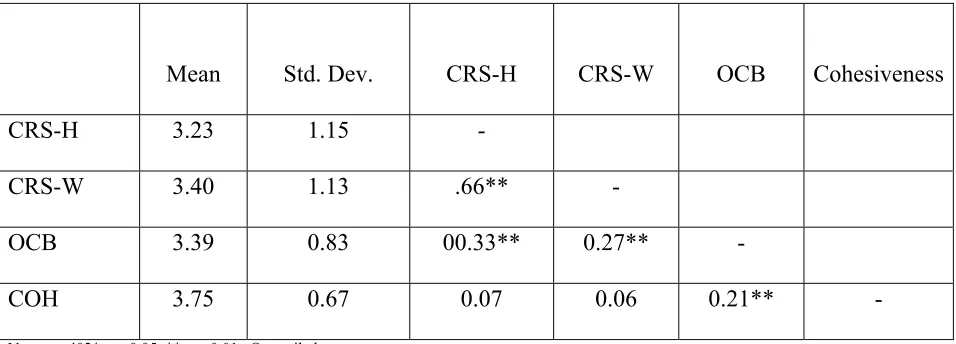
Table 1 provides the means, standard deviations, and intercorrelations for the variables
included in the HLM analysis.
8.2
Justification of aggregation: cohesiveness
good support for the emergence of cohesiveness in the different groups with 44 of the 62 groups
having an rWG(j) ranging from 0.07 - 0.96. Klein
et al.
(2000) suggests that an rWG(j) 0.70 or
higher can be used to demonstrate emergence. Furthermore the concerning the between-group
differences, the omnibus ICC(2) and ICC(1) indices were calculated across all 62 groups where
the ICC(2) was equal to 0.63 (marginally significant) and the ICC(1) index was 0.16, where
F
(61, 486) = 2.67 was significant at the 0.01 level. However, due to the unequal number of
respondents in the groups, an adjusted ‘
n
’ was used in the calculation of the sum of squares upon
which the
F
-test is based (see Bliese and Halverson, 1998). Furthermore, in considering
measures of practical significance, ICC(1) is similar to omega square save that the independent
variable is “random” (Barnette, 2001) as is the case in this study. In line with this therefore,
ICC(1) can be used as an inferential statistic that assesses effect size. Following the
recommendations of Ukoummunne e
t al
. (1999) the measure of effect size for ICC(1) for
Cohesiveness was 2.27 which is above a value of 2.0 suggesting support for aggregation to the
group level (Muthen and Satorra, 1995).
8.3
Hypothesis testing using HLM
8.3.1
Testing conflict-related stress and OCB
8.3.2
Testing crosslevel moderation of cohesiveness
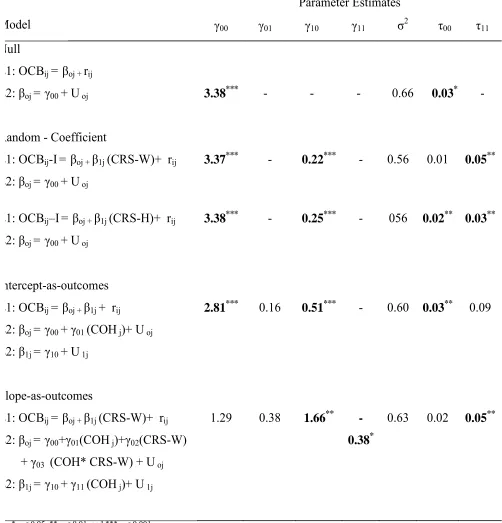
Initial estimations (
null model
) in HLM indicates that there is systematic between group
variance in OCB whereby the interclass correlation coefficient (ICC) suggests that approximately
4.2% (0.029/[0.663+0.029]) of the total variance in OCB lies between groups and that this is
statistically significant (
00 = 0.029,χ
2[43] = 58.59,
p
=
0.05). The significance of this interclass
correlation coefficient (ICC(1)) is the first requirement for testing the cross-level moderating
effects hypothesized.
In addition to the interclass correlation coefficient (ICC(1)), and before testing for
cross-level moderation, I also examined whether there remains systematic cross-level 2 variance that could
potentially be explained by the addition of cohesiveness as a group-level predictor. The results of
this analysis suggest that the variance in the level 2 intercept residual parameter (
00) issignificant and therefore significant residual variance across groups remains to be explained (
00= 0.03,
χ
2(42) = 68.47,
p
<
0.01). Furthermore, as a final step in examining the preconditions, I
examined the variance estimates for the predictors’ slope parameters (
11). Based on this, I foundthat these variance estimates (
11) were significant for the relationships of interest: CRS-W andOCB (
11 = 0.055,χ
2[42] = 69.12,
p
<
0.002) and
CRS-H
and OCB
(
11 = 0.031,χ
2[43] = 74.61,
p
<
0.003). This suggests therefore that the final precondition for testing the cross-level
moderation relationships has been met.
3 and 4). Following the recommendation of Hofmann
et al
. (2000), group mean centering was
utilized for the individual level predictors.
In these final models, I found that the parameter estimates were significant for only one
of the two cross-level moderation relationships hypothesized. That is, the cross-level moderation
of cohesiveness on the relationship between CRS-W and OCB (
11 = -0.38,se
= 0.15,
t
(42) =
-2.46,
p <
0.05) was found to be significant. To check the direction of this significant cross-level
interaction, the individual relationships for high- and low-cohesion were plotted using the
procedure recommended by Aiken and West (1991) and outlined by Choi (2006, see Figure 2).
Here two separate regression analyseis were conducted on individuals who belonged to:
(1) cohesive groups (i.e., 1 SD above the mean and then (2) less cohesive groups (i.e., 1 SD
below the mean). Examination of the regression lines reveals, in general, a positive relationship:
that group members exhibit more OCB when they experience higher levels of CRS-W. This
relationship, however, is more pronounced in cohesive groups than in less cohesive groups. This
therefore suggests that stress due to the conflict is more likely to enhance engagement in OCB in
cohesive groups than in non-cohesive groups. An indication of the strength of this moderation
can be estimated with the calculation of R
2which indicated that cohesion accounts for 36.6% of
the variance in the relationship between CRS-W
and OCB.
9.
Discussion
conflict-prone regions are increasingly becoming a context for multinational corporation to conduct
business (Jamali and Misjhrik, 2009). Conflict as a context of business and organizational
behavior, in particular, has been neglected for representation in the empirical literature, yet as
noted in the introduction conflicts and are widespread. The key contributions, therefore, that this
study makes to the organizational literature is that: (1) it is a rare instance of research examining
employee behavior in times of conflict; (2) it suggest and supports a counterintuitive relationship
between stress and employee engagement in OCB; (3) it suggests, within the framework of
conservation of resource theory, the resource substitution of “stability” for “instability”; and (4)
it adds to the paucity of research on OCB in the Middle East.
9.1
Conflict-related stress and OCB
The findings from this research, although in support of the predicted hypotheses, are not
what would be expected based on the literature linking stressors to OCB or other forms of
positive employee behavior. Our results suggest that in times of conflict, employees are more
likely to engage in OCB. This seems to be the case not just for employees who experience
conflict-related stress derived from work but also those who experience stress from home
Previous research on the relationship between stress and citizenship would have suggested
otherwise. This brings to light the tremendous importance of paying attention to context and the
nested-nature of human behavior (Hobfoll, 2001; Johns, 2006, Rousseau and Fried, 2005).
For example, theoretically both dimensions of Williams and Anderson’s (1994) model of
citizenship behaviors (i.e., OCB-O and OCB-I) contribute to promoting or reestablishing a stable
social and psychological work environment. That is, those OCBs directed and the organization
(i.e., OCB-O) may serve well to protect against further organizational-level resource loss. For
example, when, during times of conflict, an employee may attempt to protect against further
organizational- level resource loss by attending work above the norm (triple shifts, extra
uncompensated hours) despite airstrikes and resultant threat to safety and difficulty traveling.
Furthermore, those OCBs directed at other people (i.e., OCB-I) in times of conflict may serve
well to promote social harmony and social support within the workplace and therefore may serve
to replenish depleted
resource reservoirs
. For example, helping others as well as listening to
co-worker problems and worries may restore and build up entire resource reservoirs (Hobfoll,
2002). Ultimately, it would seem that extraordinary times call for extraordinary caring and that
employees often meet this challenge through their engagement in behaviors that will contribute
positively to the social-psychological environment of the workplace.
9.2
Limitations
Furthermore, males were overrepresented in the sample (71.6%) which does not reflect the
general working population in Lebanon. Finally, 83.9% of the sample was between the ages of
18 and 30 and therefore this age group may have been overrepresented in the sample. Issues
regarding the generalizability of findings to other conflict areas are also important to consider.
Although the variables comprising the conflict are frequently experienced by people living under
such duress in any country, Lebanon is nonetheless a specific socio-cultural context with unique
considerations. Therefore, the results may not be generalizable to conflict areas.
Further research in times of conflict in the area of organizational behavior is direly
needed in order to fill the apparent research gap. This will also provide a basis to further
understand the unique forms of proactive engagement of employees even in conflict zones. One
point of caution in pursuing this research line further, is that researchers need to consider the line
between voluntarily citizenship behaviors and behaviors that are exhibited so as to ensure
continuity of employment. In times of economic and socio-political instability, engagement in
OCB may be more a matter of fearing job loss or fearing organizational closure than it is a matter
of voluntary citizenship.
10.
References
Amnesty International. (2006). “Israel/Lebanon under fire: Hizbullah’s attacks on northern
Israel”, available at: http://web.amnesty.org/library/index/engmde020252006 (accessed
July 2, 2007).
Anderson, L.M. and Bateman, T. S. (1997). “Cynicism in the workplace: Some causes and
effects”.
Journal of Organizational Behavior
, Vol. 18, No.5, pp. 449-469.
Barnard, C.I. (1938). The functions of the executive. Cambridge, MA: Harvard University Press.
Bateman, T.S. and Organ, D.W. (1983). “Job satisfaction and the good soldier: The relationship
Beehr, T.A., Jex, S.M., Stacy, B.A. and Murray, M.A. (2000). “Work stressors and coworker
support as predictors of individual strain and job performance”.
Journal of
Organizational Behavior
, Vol. 21, pp.391-405.
Bhagat, R.S. (1983).” Effects of stressful life events on individual performance effectiveness and
work adjustment processes within organizational settings: a research model.”
Academy of
Management Review
, Vol. 8, pp. 660-671.
Bliese, P. D. and Halverson (1998). “Group size measures of group-level properties: an
examination of eta-squared and ICC values”.
Journal of Management,
Vol.
24, pp.
157-172.
Borman, W.C., and Motowidlo, S.J. (1993).” Expanding the criterion domain to include elements
if contextual performance”. In N. Schmitt, W. C., Borman, and Associates (Eds.),
Personnel Selection in Organizations
, (pp. 71 – 98). San Francisco, CA: Jossey-Bass.
Bryk, A. S., and Raudenbush, S. W. (1992). “
Hierarchical Linear Models”.
Newbury Park, CA:
Sage.
Byron, K. and Peterson, S. (2002). “The impact of a large-scale traumatic event on individual
and organizational outcomes: Exploring employee and company reactions to September
11, 2001”.
Journal of Organizational Behavior
, Vol. 23, pp. 895-910.
Chang, C.H., Johnson, R.E. and Yang, L.Q. (2007). “Emotional strain and organizational
citizenship behaviors: A meta-analytic review”. Work
&
Stress, Vol. 21, pp. 312-332.
Chang, S.J., van Witteloostuijn, A., and Eden, L. (2010). “From the Editors: Common method
variance in international business research”.
Journal of International Business Studies
,
Vol. 41, pp. 178–184.
Cropanzano, R., Rupp, D.E., and Byrne, Z.S. (2003).”The relationship of emotional exhaustion
to work attitudes, job performance, and organizational citizenship behaviors.”
Journal of
Applied Psychology,
Vol. 88, pp. 160–169.
Edwards, J.A., Cockerton, T., and Guppy, A. (2007). “A longitudinal study examining the
influence of work and non-work stressors upon well-being: A multi-group analysis.”
International Journal of Stress Management
, Vol. 14, pp. 294-311.
Fay, D. and Sonnentag, S. (2002).”Rethinking the effects of stressors: “A longitudinal study on
personal initiative.”
Journal of Occupational Health Psychology,
Vol. 7, pp. 221-234.
Gilboa, S., Shirom, A., Fried, Y., and Cooper, C. (2008). “A meta-analysis of work demand
Gleditsch, K.S. (2002). “All International Politics is Local: The Diffusion of Conflict,
Integration, and Democratization.” Ann Arbor, MI: University of Michigan Press
Gupta, N. and Beehr, T.A. (1979). “Job stress and employee behaviors“.
Organizational
Behavior and Human Performance
, Vol. 23, pp.373-387.
Harvey, S.,Haines III, V.Y. (2005). “Employer Treatment of Employees During a Community
Crisis: The Role of Procedural and Distributive Justice“. Journal of Business and
Psychology, 20(1), 53-68, DOI: 10.1007/s10869-005-6983-z
Hendrix, W., Spencer, B., and Gibson, G. (1994). “Organizational and extraorganizational
factors affecting stress, employee well-being, and absenteeism for males and females“.
Journal of Business & Psychology, Vol. 9, pp.103-128.
Hobfoll, S. E. (1989). “Conservation of Resources: A new attempt at conceptualizing stress“.
American Psychologist,
Vol. 44, No.51, pp. 3-524.
Hobfoll, S. E. (2001). “The influence of culture, community and the nested-self in the stress
process: Advancing Conservation of Resources theory“.
Journal of Applied Psychology,
Vol. 50, pp.337-396.
Hochwarter,W., Perrewé, P., Meurs, J., and Kacmar, C. (2007). “The interactive effects of
work-induced guilt and ability to manage resources on job and life satisfaction“. Journal of
Occupational Health Psychology, Vol. 12, pp. 125-135.
Hockey, G.R.J., and Hamilton, P. (1983) The cognitive patterning of stress. In: G.R.J. Hockey
(Ed.). Stress and fatigue in human performance. (pp. 57-76 ) New York: Wiley.
Hourani, G., and Sensenig-Dabbous, E. (2007). “
Insecurity, migration and return: The case of
Lebanon following the Summer 2006 War
“.
CARIM Research Reports
No.2007-01,
RSCAS, European University Institute.
InfoPro Center for Economic Information (2006). “
Economic Impact of the July 06 War and
Steps Towards Recovery
“, available at:
http://www.hrw.org/reports/2007/lebanon0907/lebanon0907sumandrec (accessed July 2,
2007).
Jamal, M. (1984). “Job stress and job performance controversy: An empirical assessment“.
Organizational Behavior and Human Performance, Vol. 33, pp.1–21.
Jamal, M. (1985). “Relationship of job stress to performance: A study of managers and blue
collar workers“. Human Relations, Vol. 38, pp.409–424.
James, L. R. (1982). “Aggregation bias in estimates of perceptual agreement”.
Journal of
Applied Psychology,
Vole. 67, pp. 219-229.
James, L. R., Demaree, R.J., and Wolf, G. (1984). “Estimating within-group interrater reliability
with and without response bias”.
Journal of Applied Psychology,
Vol. 78, pp. 306-309.
Johns, G. 2001. “In Praise of Context”.
Journal of Organizational Behavior
, Vol. 22, pp. 31-42.
James, L. R. (1982). “Aggregation bias in estimates of perceptual agreement”.
Journal of
Applied Psychology,
Vol. 67, pp. 219-229.
James, L. R., Demaree, R.J., and Wolf, G. (1984). Estimating within-group interrater reliability
with and without response bias.
Journal of Applied Psychology,
Vol. 78, pp. 306-309.
Schacter, S. N., Ellertson, K., McBride, K., and Gregory, D. (1951). “An Experimental Study of
Cohesiveness and Productivity”.
Human Relations,
Vol. 4, pp. 229-238
Kidwell, R. E. Mossholder, K. W., and Bennett, N. (1997). “Cohesiveness and organizational
citizenship behavior: a multilevel analysis using work groups and individuals”.
Journal
of Management,
Vol. 23, pp. 775-793.
Kahneman, D. (1973). “Attention and effort”. Englewood Cliffs, NJ: Prentice-Hall.
Katz, D., and Kahn, R. L. (1978). “The social psychology of organizations“. New York: Wiley.
Klein, K. J., Bliese, P. D., Kozlowski, S. W. J., Dansereau, F., Gavin, M. B., Griffin, M. A., et
al., (2000). Multilevel analytic techniques: Commonalities, differences, and continuing
questions. In K. J. Klein and S.W.J. Kozlowski (Eds.),
Multilevel
Theory, Research and
Methods in Organizations.
Foundations, Extensions, and New Directions
, (pp. 512–553).
San Francisco: Jossey-Bass.
Lambert, E., Hogan, N. and Griffin, M.L. (2008).” Being the good soldier: Organizational
citizenship behavior and commitment among correctional staff”.
Criminal Justice and
Behavior
, Vol. 35, No. 1, pp. 56-68.
LePine, J. A., Podsakoff, N.P., and LePine, M.A. (2005). “A meta-analytic test of the challenge
stressor-hindrance stressor framework: An explanation for inconsistent relationships
among stressors and performance”.
Academy of Management Journal
, Vol. 48, pp.
764-775.
Louis, W. R., Taylor, D.M., Neil, T. (2004) "Cost-benefit analyses for your group and yourself:
the rationality of decision-making in conflict”
International Journal of Conflict
Management
, Vol. 15, No. 2, pp.110 – 143.
Matteson, M. T., and Ivancevich, J. M. (1979). “Organizational stressors and heart disease: a
research model“.
Academy of Management Review
, Vol. 4, pp.347-357.
Organ, D. W. (1988). “
Organizational citizenship behavior: The good soldier syndrome
“.
Lexington, MA: D. C. Heath and Company.
Organ, D. W. (1997). “Organizational citizenship behavior: It’s construct clean-up time“.
Human
Performance,
Vol. 10, pp.85-97.
Perry, R. W. (1983), “Environmental Hazards and Psychopathology: Linking Natural Disasters
with Mental Health“,
Environmental Management
, Vol. 7, pp.543-552.
Perry, R. W., and Lindell, M. K. (2003). Understanding citizen response to disasters with
implications for terrorism.
Journal of Contingencies and Crisis Management,
Vol. 11,
49-60.
Podsakoff, P. M., and MacKenzie, S. B. (1997). “The impact of organizational citizenship
behavior on organizational performance: A review and suggestions for future research“.
Human Performance, Vol. 10, pp. 133–151.
Podsakoff, P.M., MacKenzie, S.M., Lee, J., and Podsakoff, N.P. (2003). “Common method
variance in behavioral research: A critical review of the literature and recommended
remedies”. Journal of Applied Psychology, Vol. 88, pp. 879-903.
Podsakoff, P. M., Mackenzie, S. B., Paine, J. B., and Bachrach, D. G. (2000). “Organizational
citizenship behavior: critical review of the theoretical and empirical literature and
suggestions for future research“.
Journal of Management,
Vol.
26
, pp.513-563.
Podsakoff, N., Whiting, S., Podsakoff, P., and Blume, B. (2009). “Individual- and
organizational-level consequences of organizational citizenship behaviors: A
meta-analysis“.
Journal of Applied Psychology,
Vol. 94, No.1, pp. 122-141.
Rempel, M. W., and Fisher, R. J. (1997) "Perceived threat, cohesion, and group problem solving
in intergroup conflict”
International Journal of Conflict Management
, Vol. 8, No. 3,
pp.216 – 234.
Rosen, C. C., Chang, C.-H., Djurdjevic, E., and Eatough, E. M. (2010). Occupational stressors
and performance: An updated review and recommendations. In P. L. Perrewé and D. C.
Ganster (Eds.), Research in occupational stress and wellbeing: New developments in
theoretical and conceptual approaches to job stress (Vol. 8, pp. 1-60). Bingley, UK:
Emerald Group Publishing.
Rousseau, D.M. and Fried, Y. (2001). “Location, location, location: Contextualizing
organizational research”.
Journal
of Organizational Behavior
, Vol. 22, pp. 1-13.
Smith, C. A., Organ, D. W. and Near, J.P. (1983). “Organizational citizenship behavior: Its
nature and antecedents“.
Journal of Applied Psychology
, Vol. 68, pp. 653-663.
Sobel, M. E. (1982). “Asymptotic intervals for indirect effects in structural equations models“. In
S. Leinhart (Ed.),
Sociological methodology
, pp. 290-312.
Spector, P. E. (2008).
Industrial/Organizational Psychology: Research and Practice
(5th ed.).
New York: Wiley.
Spector, P. E., Dwyer, D. J., and Jex, S. M. (1988). “Relation of job stressors to affective, health,
and performanceoutcomes: A comparison of multiple data sources“.
Journal of Applied
Psychology
, Vol. 73, pp.11-19.
Staw, B. M., Sandelands, D. E., and Dutton, J. E. (1983). “Threat-rigidity effects in
organizational behavior: A multi-level analysis“.
Administrative Science Quarterly
, Vol.
26, pp. 501-52.
Sugden, B.W, and Katchmar R. (2005). “Bioterrorism and its aftermath: dealing individually
and organizationally with the emotional reactions to an anthrax attac“k.
International
Journal of Emergency Mental Health,
Vol. 7, No. 3, pp. 203-11.
Tidd, S.T. and Friedman, R.A. (2002) "Conflict style and coping with role conflict: an extension
of the uncertainty model of work stress”.
International Journal of Conflict Management
,
Vol. 13 No. 3, pp.236 – 257.
Tubre, T., and Collins, J. (2000). “Jackson and Schuler (1985) revisited: A meta-analysis of the
relationships between role ambiguity, role conflict, and job performance“. Journal of
Management, Vol. 26, No. 1, pp. 155–169.
Warr, P. B. (1990). “The measurement of well-being and other aspects of mental health“.
Journal of Occupational Psychology
, Vol. 63, pp. 193-210.
Table 1.
Means, Standard Deviations, and Intercorrelations for Variables
Note. n= 402* p <0.05, ** p <0.01 One-tailed tests.