Biology Page 375 IDENTIFICATION OF ENTOMOPATHOGENIC ON Crosidolomia binotalis
[ZELLER] (LEPIDOPTERA : PHYRALIDAE) USING 16S RNA GENE
Rantje Lilly Worang1, Mokosuli Yermia Semuel1,2*
1 Department of Biology, Faculty Mathematics and Natural Science, State University of Manado, Minahasa, Indonesia.
2Laboratory Bioactivity and Molecular Biology, Faculty Mathematic and Natural Science, State University of Manado, Minahasa , Indonesia
Abstract
The aims of this reserach were to isolating and to identifying bacteria entomopathogenic on caterpillar pests in cabbage. The study was conducted in three phases. The first stage isolation of bacteria from cabbage caterpillar pests, the second stage of microscopic characterization of bacterial isolates and the third phase molecular identification of bacteria isolates using 16S RNA gene. The results were obtained five bacterial isolates of caterpillar pests in cabbage which 4 isolates shaped cocus, three isolates of gram positive and gram negative two isolates. All of isolates were able to degrade D-glucose. Isolates were translucent white color, white yellowish and brownish white. Generally isolates are not motile dan growth in the media to the surface. Results of DNA extraction and amplification of 16S RNA gene, showing the purity and concentration of DNA is good, confirmed by electrophoresis, amplicons formed band at 1500 bp according to the characteristics of the 16 S RNA gene.
Keywords: entomopathogenic, cabbage caterpillar, 16S RNA gene
1. Introduction
North Sulawesi has two regional centers of cultivation of horticultural crops namely Tomohon town and District Modoinding South Minahasa District. Vegetable plants of the genus Brassicaseae such as cabbage, broccoli, cauliflower, mustard greens and turnip are the main vegetable crops are cultivated because it has a high economic value. The vegetable crops in addition to meeting local demand in North Sulawesi also exported to Singapore among others. This led to the cultivation of vegetables of the genus Brassicasea done by farmers nevertheless mainly armyworm pest (Crocidolomia binotalis) and caterpillars Plutella xylostella Plutella become major problems faced by farmers. Both types of pest attack can damage the plant to 100% when not carried out effective controls (Elstein et. Al. 2005; Hashim et. Al., 2009) .
Biology Page 376 The concept of biological control is currently being developed for chemical control is mostly done over the long term this would lower the carrying capacity of the environment to agriculture. Chemical insecticides in various research reports damage the soil structure because besides kill insect pests also kill soil microflora act as biofertiliser and break the cycle of soil nutrient involving microorganisms. Besides, synthetic insecticides also leave residues on agricultural products that can accumulate on the leaves of vegetables, tubers, stems bungga and later consumed by humans. Accumulation of residues on plant parts which are then consumed by humans will experience the process of bioaccumulation in the long term to stimulate and initiate various degenerative diseases, especially cancer and mental retardation in children. This led to many developed countries are beginning to use chemical insecticides to increase production began to shift in the concept of biological control.
By knowing the pests that attack plants, indirectly that it can also appropriate species of entomopathogenic fungi to control measures, because every species of entomopathogenic fungi have a specific host. Fungus Metarhizium anisopliae, for example, is known to infect several species of insects of the order Coleoptera, Lepidoptera, Homoptera, Hemiptera, and Isoptera. (Sosa-Gomex et. Al., 2003; Butt et. Al., 1994, Rao et al., 2006; Sauche et al. 2000; Nakinga et al. 1996; Strack 2003). But M. anisopliae most effective when used to control pests of the order Isoptera (Strack 2003). This is because the relationship between the behavior of the insect host with the effectiveness of entomopathogenic fungi. The phenomenon shown by the test results of re-infection. Of the several species of entomopathogenic fungi obtained from armyworm Spodoptera litura and Helicoverpa armigera, the most effective fungus rileyi Nomuraea controlling S. litura with mortality reaching 100% (Prayogo et al. 2005). The fungus is reported is one potential biological agents to control pests of the order Lepidoptera, though also able to infect insects from other orders (Indrayani 2011; Hashim, 2005).
Until now, information utilization entomopathogenic fungi in Indonesia more specifically in North Sulawesi is still very little. Entomopathogenic bacterial identification is required as the basis for further studies that test the pathogenicity and biopesticide formulations. There are many methods of identification of bacteria but the selected molecular identification method that has a higher accuracy than the biochemical and morphological identification method only. Bacterial identification methods are widely recommended is the analysis of bacterial DNA through the reading of the nucleotide sequence of nitrogenous bases making up the gene 16S rDNA fragments bacteria. Judging from several considerations, this method is considered better than the phenotypic analysis method. The first consideration is the 16S rDNA gene of almost all species of bacteria have been determined sequence of nitrogenous bases that can be used as guidelines if found new species [12]. The second consideration is the base sequence of 16S rDNA gene nitrogen has a lower intraspecific diversity than other protein-coding genes, as well as the nature of 16S rDNA fragments were sustainable (Thoyibatun and Son, 2012).
Biology Page 377 2. Materials and Methods
The tools used in this study include: bottle samples, loops, silkworm breeding box test and toxicity test, stereomicroscope Carl Zeis with Camera, 3D hirox Microscope KH-8700, QiaExel, master cycler eppendorf, tips, eppendorf vial, centrifuse eppendorf, glass objects, laminar air flow, autoclave, centrifuge, heater, analytical balance, etc. petri dish. Materials used include alcohol 70%, nutrient media broth (Merck), media nutrient agar (Oxoid), media dextro potato agar (Merck), peptone, kit DNeasy Blood & Tissue Kit (QIAGEN), label, leaf cabbage, C. binotalis, P. xylostella etc.
2.1. Isolation of Bacteria from Caterpillar.
Entomopathogenic bacteria isolation was performed using smear technique (Worang and Mokosuli, 2010). Caterpillar body part injured NA applied directly to the media (nutrient agar). Media Inkubasikan for 2 x 24 hours at room temperature. Most Bacterial isolates were grown further in the analysis of the characteristics of isolates among other forms of growth isolates, form colonies, the ability to reduce glucose and gram staining. Other isolates using a sub-culture in nutrient broth media were prepared for analysis of DNA 16S RNA gene. Most bacterial culture in nutrient broth media prepared for pathogenicity in vitro test on larvae in cabbage.
2.2. DNA Extraction and Amplification of 16S RNA Gene
DNA extraction from pure cultures of bacteria derived bacterial isolates from caterpillar pests in cabbage in Nutrient Broth media. A total of 3 ml bacterial culture in log phase are taken and stored in vials of 1.5 ml eppendorf then extracted with protocol according to DNA kit innuPREP DNA Micro Kit, Germany with modifications. DNA is extracted and analyzed purity and konsenterasinya use nanospektrofotometer. The analysis showed the purity of the extracted DNA was 1.8 at a concentration of 65 ug / ml It shows the process of DNA extraction optimum running so that it can proceed at this stage with metdoe PCR amplification.
DNA sample amplification reaction performed in 0.2 ml PCR tubes. At each PCR reaction tube was added RBC Taq (5 units / ml) as much as 0:25 mL, 10 x Taq buffer (containing Mg 2+) by 5 mL, 4 mL dNTP 2.5mm total, universal primers 63F
(5'-CAGGCCTAACACATGCAAGTC-3 ') and 1387R universal primer
(5'-GGGCGGWGTGTACAAGGC-3 ') of each 1:25 mL (20 pmol) and 1:25 mL (20 pmol), extract the genome as much as 2.5 mL (100 ng) and plus ddH2O until the volume becomes 50 mL. PCR products were taken and stored at 4 ° C for further examined using electrophoresis qiaexel.
3. Result and Discussion
3.1. Isolation of Entomopathogenic Bacteria
Biology Page 378 Figure 1. caterpillar pests in cabbage as a source of bacterial isolates
Figure 2. A. isolates of the fungus on PDA and B. Bacterial isolates the media NA
Bacterial cell morphology were observed in bacterial isolates include cell shape, Gram staining, spore staining and motility of bacteria. Microscope observation of the shape and structure of cells, is the most important stage in the characterization of bacteria. Of the five isolates, the bacteria obtained entirely cocci
Figure 3. Morphology Bacterial Colonies Entomopathogenic isolate from Cabbage caterpillar pests, observed with 3-D Mikroksop hirox KH-8700.
Biology Page 379 Table 1. Characteristics of Bacterial Isolates of C. binotalis of Rurukan Tomohon
No Isolate
Characteristic Form of
Colonies Colour of Colonies Gram Stain Motility D-glukosa
1 Isolate C1 cocus White translucent + - +
2 Isolate C2 cocus Yellow + - +
3 Isolate C3 cocus White brownish + - +
4 Isolate C4 td White translucent - + +
5 Isolate C5 cocus White translucent yellowish
_ - +
Spore staining results showed that the five isolates of bacteria do not form spores. It can be seen as forms of all isolates cells are cocci. According Fardiaz (1992), generally bacteria spore-forming rod shape. Bacterial spores are heat-resistant structures and chemicals. Spores formed by certain bacteria to overcome the unfavorable environment. Spores are formed in the cell so often referred to as endospores. In bacterial cells there is only one spore. This spore does not work for reproduction. Examples are the spore-forming bacterium Bacillus, Clostridium, Thermoactinomyces and Sporosarcina (Lay 1994). The test results of cell shape and gram staining bacterial isolates can be seen in Figure 5.
The result of bacterial movement (motility), it appears that all five isolates of bacteria from non motile. It can be seen from the growth that does not spread on agar soft NA (Figure 3). Because of the shape of the cell isolates cocci and non motile, it can be said that the five isolates has no flagellum. This is supported by the opinion Pelczar and Chan (1986) which states that not all bacteria have a flagellum, many species of Bacillus and Spirilum have it, but rarely found in cocci. Flagellum is one of the main structures outside the bacterial cells that cause movement (motility) in bacterial cells. The test results of bacterial motility can be seen in Figure 4.
Figure 4. Isolate bacteria on nutrient media broth used for DNA extraction. Notes: a: isolates 1, b: isolate 2, c: isolates 3, d: isolates 4, e: isolates 5
3.2. Amplification of the gene 16 S RNA
Biology Page 380
A B
Figure 5. A. Master Cycler for amplification (PCR) and the PCR conditions were applied B.
3.3. Electrophoresis
Amplicon PCR amplicons next-gen 16S RNA visualized using electrophoresis techniques Qiaxel Aautomatic Qiaxel kit DNA Electrophoresis with Screning Kit (Qiagen).
Figure 6. Qiaxel Aautomatic electrophoresis (Qiagen)
Selection of 16 S RNA genes for the purpose of identification of the organism is based on several reasons. By functional and evolutionary homologue gene has properties of a variety of different organisms, the primordial molecules with structures and sequence nucleotides are very conservative, very much in the cell, big enough to allow a statistical test their differences with one another. The results of gel electrophoresis of 16S-rRNA gene amplification are presented in the following.
Figure 7. Isolate electrophoresis chromatogram entomopathogenic Col. Dai plant pests. Description: M = DNA marker, I = isolates, C = control
Biology Page 381 In the chromatogram image 16 S RNA isolates formed band at 1500 bp this shows that the primers used to amplify the gene can have 16 S RNA. Evident band formed thus the migration process went well.Bacterial identification methods are widely recommended is the analysis of bacterial DNA through the reading of the nucleotide sequence of nitrogenous bases making up the gene 16S rDNA fragments bacteria. Judging from several considerations, this method is considered better than the phenotypic analysis method. The first consideration is the 16S rDNA gene of almost all species of bacteria have been determined sequence of nitrogenous bases that can be used as guidelines if found new species. The second consideration is the base sequence of 16S rDNA gene nitrogen has a lower intraspecific diversity than other protein-coding genes, as well as the nature of 16S rDNA fragments were sustainable. To obtain the base sequence or sequences should be in sequencing PCR products. Product sequencing will be used for the analysis of kinship / phylogeny isolates obtained compared with the existing data in the NCBI or other molecular data center.
4. Conclusion
From the results of this study concluded that: 1. Found 5 isolates of caterpillar pests in cabbage which shaped Cocus 4 isolates, 3 isolates of gram + and two isolates of gram -, all isolates were able to degrade D-Glucose. Color white isolates seeds, white yellowish and brownish white. Generally isolates are not motile. Growth in the media to the surface. 2. The results of DNA extraction and amplification of gene 16 S RNA, indicating the purity and concentration of DNA is good, confirmed by electrophoresis, amplicons formed a band at 1500 bp according to the characteristics of the 16 S RNA gene.
Acknowledgements
Presented thanks to the Research Institute of the State University of Manado which has funded this research through the application of science and technology research skim in 2014.
References
Artama,. W.T. 2000. P olymerase Chain Reaction (PCR/ RAPD). IUC for Biotechnology. Gadjah Mada University. Yogyakarta. p 139
Aris M. 2011. Identifikasi, Patogenisitas Bakteri Dan Pemanfaatan Gen 16s-Rrna Untuk Deteksi Penyakit Ice-Ice Pada Budidaya Rumput Laut (Kappaphycus alvarezii) [Identificaiton, Pathogenicity of Bacteria and Utilization 16S-rRNA gene for Disease Detection Ice-Ice on Seaweed Cultivation (Kappaphycus alvarezii)]. Post Graduate School, Bogor Institute of Agriculture. [Bahasa Indonesia] [Thesis]
Butt, T,M., Ibrahim, L., Ball, B.W., Clark, S.J. 1994. Pathogenicity of Entomopathogous Fungi Metarhizium anisopliae and beauveria bassiana against crucifer pests and honey bee. Biocontrol Sci. Technol. 4: 207 – 214.
Chikwenhere, G.P., Susan, V. 2001. Potential Effects of Beauveria bassiana (Balsmo) Vuillemin on Neochetina bruchi Hustache (Coleoptera: Curculionidae), a Biological Control Agent of Water Hyacinth. Biol. Contr. (21): 105 – 110.
Biology Page 382 Hasyim, A., Azwana. 2003. Patogenisitas Isolat Beveria bassiana Dalam Mengendalikan Hama Penggerek Bonggol Pisang, Cosmopolites sordidus Germar [Pathogenicity of Isolates Beberia bassiana in Borer Pest Control Tuber Bananas Cosmopolites Sordidus Germar]. Jurnal Horti. 13(2): 120 – 130. [Bahasa Indonesia]
Hasyim, A. 2006. Evaluasi Bahan Carrier dalam Pemanfaatan Jamur Entomopatogen, Beauveria bassiana (Balsamo) Vuillemin Untuk Mengendalikan Hama Penggerek Bonggol Pisang, Cosmopolites sordidus Germar [Evaluation of the Carrier Material Utilization of Entomopathogenic Fungus, Beauveri bassiana (Balsamo) Vuillemin for Controlling Pests Banana Tuber Borer, Cosmopoliter sordidus Gemar]. Jurnal Horti. 16(3) :190 -198. [Bahasa Indonesia]
Hasyim, A., Yasir, H., dan Azwana. 2005. Seleksi Substrat Untuk Perbanyakan Beauveria bassiana (Balsamo) Vuillemin dan Infektifitasnya Terhadap Hama Penggerek Bonggol Pisang, Cosmopolites sordidus Germar (Coleoptera: curculionidae) [Substrates Selection for Beauveria bassiana (Balsamo) Vuillemin Propagation and Its Infectivities Against Pests Banana tuber borer, Cosmopolites sordidus Germar (Coleoptera curculionidae). Jurnal Horti. 15. No.2:116 -123. [Bahasa Indonesia] Gundannavar, K.P., S. Lingappa, R.S. Giraddi. 2005. Dose mortality response between
Helicoverpa armigera (Hubner) and mycoins ecticide Nomuraea rileyi (Farlow) Samson. Karnataka J. Agric. Sci. 18(1): 141-143.
Indrayani. I. 2011 Potensi jamur entomopatogen Nomuraea rileyi (farlow) samson untuk pengendalian Helicoverpa armigera Hubner pada kapas [Potential of entomopathogenic Nomuraea rileyi (Farlow) Samson fungi for Control of Helicoverpa armigera Hubner on Cotton]. Perspektif vol. 10 no. 1 /juni 2011. Hlm 11 – 21. [Bahasa Indonesia]
Iqtiat, I.I., Al-Masri, M.I., Barakat, R.M. 2009. The potential of native Palestinian Nomuraea rileyi isolates in the biocontrol of corn earworm Helicoverpa (Heliothis) armigera. Agricultural Sciences 36(2): 43- 46.
Ihara, F., Katsuhiko, Y., Norio, K., Koji, M. And Takeru, S. 2001. Screening of Entomopathogenic Fungi Against The brown-winged green Bug, Plautia stali Scott (Hemiptera: Pentatomidae). App. Entomol. Zool. 36 (4): 495 – 500.
Junianto, Y.D, dan Sulistyowati, E. 1994. Virulence of Several B. bassiana Bals. Vuill. Isolates on Coffee Berry Borer (Hypothenemus hampei Ferr.) Under Various Relative Humidities. Pelita Perkebunan 10(2) : 81 – 86.
Korlina, E., Mahfud, M.C., Rachmawati, D., Sarwono, Fatimah, S. 2008. Pengkajian Efektifitas Cendawan Beauveria bassiana Terhadap Perkembangan Hama dan Penyakit Tanaman Krisan [Effectiveness Assessment of fungus Beuaveria bassiana Against Development of Pest and Diseases of Crysanthemum Plant].Proceedings of the Seminar on Information and Farmer Empowerment Through Agricultural Technology KP. Mojosari 16 Juli 2008. Collaboration of BPTP East Java, Agriculture Faculty Brawijaya University, Agricultural Department Province, Bappeda. [Bahasa Indonesia]
Biology Page 383 Nankinga, C. M., Ongenga-Latigo, W. M. 1996. Effect of Method of Aplication on The Effectiveness of Beauveria bassiana and Metarhizium anisopliae to the Banana Weevil, Cosmopolites sordidus Germar. African J. Plant Protection. 6: 12 – 21. Nault, B.A., Taylor, A.G., Urwiler, M., Rabaey, T., Hutchinson, W.D. 2004. Neonicotinoid
seed treatments for managing potato leafhopper infestations in snapbean. Crop Protection 23: 147-154.
Nankinga, C. M., Ongenga-latigo, W. M., Allard, G. B., Ogwang, J. 1994. Studies on The Potential of Beauveria bassiana For The Control of The Banana Weevil Cosmopolites sordidus Germar in Uganda. Afrian Crop Sci. J. 1:300-302.
Nankinga, C. M., Ongenga-latigo, W. M., Allard, G. B., Ogwang, J. 1996. Pathogenicity of Indigenous Isolat of Beauveria bassiana Against The Banana Weevil, Cosmopolites sordidus Germar. African J. Plant Protection. 6: 1 – 11.
Prayogo, Y., Tengkano, W., Marwoto. 2005. Prospek Cendawan Entomopatogen Metarhizium anisopliae Untuk Mengendalikan Ulat Grayak Spodoptera litura Pada Kedelai [Prospect of Entomopathogenic Fungi Metarhizium anisopliae for Armyworm Spodoptera litura Controlling in Soybeans]. Jurnal Litbang Pertanian. 24 (1) : 19 – 26. [Bahasa Indonesia].
Rachappa, V., Lingappa, S. 2007. Seasonality of Nomuraea rileyi (Farlow) Samson in northern transitional belt of Karnataka. Annals of Plant Protection Sciences 15(1), p. 1 (abstract).
Rao, C.U.M, K., Devi,U., Khan, P. A. A. 2006. Effect of combination treatment with entomopathogenic fungi Beauveria bassiana and Nomuraea rileyi (Hypocreales) on Spodoptera litura (Lepidoptera: Noctuidae). Biocontrol Science and Technology 16(3): 221-232.
Rychlic W. 1995. Selection of primer for polymerase chain reaction. Mol biotechnol 3:129-134.
Sauche, H., Dori, F., Schumutterer. 2000. Biological and integrated control of Plutella xyolostella L. and C. pavonana in Brassica crops in Papua New Guienea. Biol. Control Sci. and Technol. 10 (5) : 595 – 606.
Sosa-Gomez, D.R., K.E. Delpin, F. Moscardi, Nozaki, M.D.H. 2003. The impact of fungicides on Nomuraea rileyi (Farlow) Samson epizootics and on population of Anticarsia gemmatalis Hubner (Lepidoptera: Noctuidae) on soybean. Neotropical Entomology 32(2): 287-291.
Strack, B. h. 2003. Biological Control of Termites by The Fungal Entomopathogen Metarhizium anisopliae. http://www. Utoronto.ca/forest/termite/metani- 1 htm (20 Desember 2003). 8 hal. (Online article)
Tang, L.C., Hou, R.F. 2003. Potential application of the entomopathogenic fungus, Nomuraea rileyi, for control of the corn earworm, Helicoverpa armigera. Entomologia Experimentalis Applicata 88: 25-30.
Biology Page 385 PHYTOCHEMICALS, TOXICITY, AND ANTIHYPERLIPIDEMIC ACTIVITY OF
SEVERAL MEDICINAL PLANTS FROM SOUTH MINAHASA
Rudi Alexander Repi1,2*, Mokosuli Yermia Semuel1,2
1Department of Biology, Faculty of Mathematics and Natural Sciences, State University of Manado, Minahasa, Indonesia
2Laboratorium of Bioactivity and Molecular Biology, Faculty of Mathematics and Natural Sciences, State University of Manado, Minahasa, Indonesia
*labbiomolunima @gmail.com
Abstract
A research has been done to develop antihyperlipidemic phytopharmacological ethnomedicinal plants from South Minahasa. The research aimed to know the combination effect of plant extracts to mice lipid profile. The research consisted of four steps, the first step was the identification of the plants, the second was the extraction and phytochemicals analysis based on Harborne and Chromatography methods. The third was Brine Shrimp Lethality Tests (BSLT) to know the toxicity of the extracts based on Mc Lauglin method. The fourth step was the examination of antihyperlipidemic activity of treatment I which was the combination of avocado and gedi leaves extract and treatment II (avocado and selada darat leaves extract). The result showed that treatment I possesed weak antihyperlipidemic effect (p<0,005) while treatment II had significant antihyperlipidemic activity that reduced triacylgliseride and LDL but incerased HDL in mice. Phytochemicals analysis of the extracts showed that the plants consisted of flavonoids (flavonol myrisetin, keemferol, quarsetin), saponins, tanins and steroids. The LC50 of BSLT was 300 µg/ml in avocado, 535 µg/ml in gedi and 424 µg/ml in selada
darat leaves extracts respectively.
Key words : antihyperlipidemic, plant extracts, gedi leaf, selada darat leaf, avocado leaf
1. Introduction
Utilization of plant part such as root, stem, bark, leaf, flower and fruit as medicine sources for various diseases (ethnomedicine) have been passed off from generation to generation in Indonesia. The development of ethnomedical treatment in Indonesia is the result of the very high biodiversity of flora and fauna in this country. Indonesia is geographically an archipelago, consists of various tribes and hence has also many kind of ethnomedical techniques.
The wealth of ethnomedicine technique is a potential that should be developed in order to
enhance people’s prosperity. A lot of modern drugs derived from plants initially invented through the traditional usage. Utilizations of traditional medicine are usually preferred to keep the body healthy (preventive effort) despite there are also usages for curing purpose. Some instance of plant-source medicines i.e. anti-cancer (padophyllatoxin, vincristine, vinblastin, and taxol), anti-malaria (quinine and artemisin), congestive heart failure (digoxin) and fever drugs (aspirin). Specifically for anti-cancer drugs, NCI (National Cancer Institute) had done screening for about 114,000 plant extracts from 1960 to 1982 and had found about 35,000 plant samples that have anti-cancer activity. In 1991, about 28,000 plant samples from around the world had collected because of having anti-cancer activity. About 62% from 87 kinds of anti-cancer drugs emanating from natural sources (Cragg, 1993).
From year to year the researches of chemical substance from plant and its derivative keep on
Biology Page 386 begin to concern to develop medicine from plant. Tropical countries become the source of pharmaceutical vital raw material. Along with recommendation in medical world[?] which directing to the disease prevention and curing using natural material and the success of Asian countries to evolve traditional medicine such as China and Korea. Less than 1% of tropical plants had been examined to be developed become a medicine. About 25% of modern drugs obtained from tropical plants (Kong et al, 2003).
The development of traditional medicine to be the form of phytopharmaceutical preparat or as a raw material of pharmaceutical industries can increase the economical value of medicine plants that still being left to grow naturally or have not been cultivated intensively yet. The
restrictiveness of Indonesian traditional medicine now is there’s only a few scientific
researches about phytochemical profile, the biochemical activity that support the comprehension about how the medicine works in human body so that it deserves to be developed. Whereas the development of traditional medicine is promising enough in order to increase the economic level of people which ethnomedically using various kind of traditional medicine material in a region.
It is very regrettably if the research and development of Indonesian traditional medicine was mostly done in other country that has such firm pharmaceutical fundament. Eventually, the patent right of the utilization of plants bioactive substance which actually come from Indonesia be possessed by another country. Therefore, phytochemical researches and activity examination is very useful in order to develop medicinal plant become a pharmaceutical product.
Potential medicinal plants group researched and developed become a phytopharmaceutical product is medicinal plants that have antihyperlipidemia property. Diseases of hyperlipidemia category such as hypercholesterolemia can cause various diseases like diabetes and coronary heart disease which according to the World Health Organization and American Heart
Association is still the most world’s deadly disease nowadays.
One of the effects from the change of dietary habit of Indonesian people that begun to liking the fast food is the increase of cholesterol level in blood, called hypercholesterolemia or hyperlipidemia (Purwanto A., 2003). Specifically for Minahasan people who love sort of fatty foods especially animal fat, hyperlipidemia case in Minahasa regency is sufficiently high. In the last few years, however, national case of hyperlipidemia shows excelsior prevalent.
Hypercholesterolemia sufferer incidence is getting higher marked by the increasing number of stroke, hypertension and coronary heart disease incident nowadays, where hypercholesterolemia become the tightly relevant factor with those sicknesses.
High intensity consumption of animal fat by Minahasan people causes a lot of hyperlipidemia case in this area since long ago. In consequence, they have ethnomedical culture to cure this disease that has been inherited from generation to generation. Those utilizations of medicinal plants are empirically effective to cure various diseases caused by hyperlipidemia. This becomes a potential that must be researched so it can be developed into the form of phytopharmaceutical preparat, which is beside can be useful for body fitness, can also enhance the economical value of those plants.
Biology Page 387 2. Materials and Methods
2.1. Materials
Samples that used in this research were leaves, stems and roots of medicinal plants collected from South Minahasa district, which were used ethnomedically as antihiperlipidemic drugs by the local community. Those were in wet and dry (10% water content) samples.
Book of plants definition was used to conduct plant inventory, extraction was carried out by using several organic solvents such as: ethanol, chloroform, hexane, free ion water. Reagents for phytochemicals analysis such as: Dragendorff, Mayer’s and Wagner. Artemia salina Leach was taken from Balai Benih Ikan Tateli for Brine Shrimp Lethality Test (BSLT). There were five weeks Sprague-Dawley female albino rats (Ratus novergicus) with 100-150 g BW as well as high cholesterol feed/pellets with compositions of 1% cholesterol, 5 % yolk, 10% goat fats, 1 % coconut oil used for in vivo hyperlipidemic test.
2.2. Methods
2.2.1. Inventory of Antihyperlipidemic Ethnomedical Plants from Minahasa
This reseach was conducted under several steps. Starting from stocktaking the medicinal plants from the local community at South Minahasa. As soon as the inventory was done then subsequently proceeded to identification of the plants, especially for the unknown ones were book of determination applied.
2.2.2. Extraction
All of the ethnomedically plant samples were cleaned up, both wet and dry ones, then blended to be flour form and subjected to 100 mesh sieve. Extraction was done by maceration 50 g of each sample to organic solvents e.g. 70% ethanol, chloroform:water, and water (v/v) for 24 hour while once shaken. Afterwards, filtered using Buchner filter paper to get the supernatans. The supernatans was evaporated using rotavapor to yield the crude extracts.
2.2.3. Phytochemical Analysis
Phytochemical analysis was conducted under Harborne method (1996).
2.2.4. Toxicity Test
To examine the toxicity of crude extracts, Brine Shrimp legality Test (BSLT) was applied.
2.2.5. Antioxidant Test
Antioxidant activity was carried out based on DPPH method.
2.2.6. In vivo Antihyperlipidemic Test
Biology Page 388 Figure 1. Hyperlipidemic animal test treatment scheme.
3. Result and Discussion
3.1. Inventory of Antihyperlipidemic Medicinal Plants in South Minahasa.
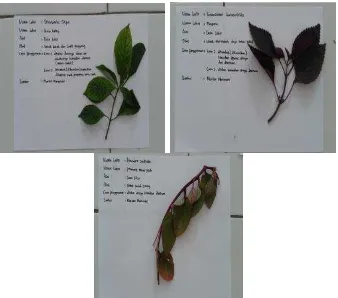
The result of community medicinal plant usage was gained by examining the questionnaire, (attachment 1). It was indicated the level of public trust as a source of medicinal plants by 65%. Public trust level was measured by several community activities parameters e.g. 1). Planting medicinal plants in the garden 2). Prefering of medicinal plants usage than synthetic or prescribed drugs when first exposed to certain diseases 3). Storing plant parts (roots, stems, leaves, flowers) as simplicity to process into drug 4. Knowing types and efficacy of medicinal plants from generation to gerneration (Fyhrquist, 2007). In general, the method of processing plant part as a source of medicine in community was done by boiling it with a certain ratio for example five leaves in one liter of water. Medicinal plants most widely used as an anti-cholesterol drug / antihiperlipidemia is avocado leaves, gedi leaves and selada darat (Figure 2).
15 male albino test rats
Negative control group
(3 rats)
Experimental group I (3 rats)
Experimental group II (3 rats)
Regular feeding up for
2 weeks
Extract feeding up Treatment I
Extract feeding up Treatment II Feeding up with high cholesterol diet (1 % cholesterol, 5 % yolk, 10%
goat fats, 1 % palm oil), also drinking up for 2 weeks
Total cholesterol check up at day 15, 18 hour fasting prior to check up
Lipid profile check up at day 14 and day 30
Biology Page 389 Figure 2. Antihyperlipidemic medicinal plants usage in precentage
The abovementioned plants had been used for antihyperlipidemic drugs by the community from generation to generation besides, Sirsak leaves and hibiscus (Table 1). The use of plant extracts was done after recognising cholesterol increasing symptoms by paramedics or clinic doctor. The usage usually takes 1 up to 2 weeks followed by blood cholesterol level check up at the clinic or hospital. Based on the questionnaire, it was revealed that avocado and selada darat leaves extract could reduce cholesterol. Empirically, avocado leaves extract lower down LDL and total cholesterol, while selada darat extract could only reduce triasilgliserol but not LDL, significantly.
Table 1. List of Plants used as antihyperlipidemic drugs in South Minahasa No Plant Name Local Name Latin Name Plant part usage 1 Avocado Alpokat Artocharpus integra Leaf
2 Selada Darat Selada Darat Leaf and stem
3 Sirsak Sursak Annona muricata Leaf
4 Hibiscus Kembang Sepatu Hibiscus rosasinensis Flower
5 Gedi Gedi Leaf
No Plant Simplicia Extract Phytochemicals group Method
1 Avocado Aquades Flavonoid ++
Alkaloid + Tannin + Steroid +
Harborne (1996)
2 Selada darat leaf and stem Aquades Flavonoid +++ Saponin +
*Rf value was taken from the average of 7 times repeat
Biology Page 390 Figure 3. Struktur Flavonol Kaemferol, Mirisetin dan Kuersetin
3.2. Thin Layer Chromatography
This method is a basic method to determine the initial information component of the compounds contained in plant botanicals derived from the general South Minahasa. TLC with the stationary phase silica gel F254 (brand) and the mobile phase n-butanol: acetic acid: water (BAA) (4: 1: 5). Other materials used are appear FeCl3 as reagents for detection of group polyphenol compounds, SbCl3 Section for the detection of Saponin, Dragendorf to detect compounds alkaloids, anisaldehyde sulfuric acid to detect the presence of terpenoid compounds including essential oils, Sitroborat to detect the presence or absence of flavonoid compounds.
TLC examination results showed that the ethanol extract of avocado leaves, leaf gedi, hibiscus leaves contain compounds called polyphenols, which is indicated by the formation of patches of gray and gray-black on the HRF 4; 20; 43 and 79 after being sprayed with FeCl3.
3.3. Toxicity
Brine Shrimp Lethality Test (BST) is a toxicity test method used for bioactive compounds from natural products. This method can be used as a bioassay-guided fractionation of natural materials, because it is easy, fast, cheap and quite reproducible. Some bioactive compounds that have been isolated and monitored activities by BST show a correlation to a specific test anticancer (Harmita, 2008)
BSLT an initial toxicity tests are commonly used in drug screening of plant simplisia. The test results BSLT few bulbs of plants used for antihiperlipidemia activity analysis showed variation of LC50. (Table 4).
Table 4. Comparison LC50 plant extracts
Extracts LC50 BSLT
(ppm) Fitokimia
Alvocado leaf 300 F, A, St, T**
Gedi leaf 535 S, F**
Selada Darat (Batang dan Daun) 424 F, S**
**) A=alkaloid, F=flavonoid, S=saponin, St = steroid, T=tanin
The LC50 value were shown above 200 ppm. According to Meyer (1982) if the vallue was above 200 ppm, it was relatively not have high cytotoxicity. Therefore the extracts of Avocado, Selada darat, Gedi leaves can be safely consumed without cytotoxicity risks.
3.4. In vivo Antihiperlipidemic Activity
Biology Page 391 Figure 4. Blood Lipid Profile of Rats 2 Weeks After Treatment (Treatment I: extract of leaves of avocado
: gedi water (1: 1); treatment II: water extract of avocado : lettuce leaf land (1: 1))
Figure 5. Blood Lipid Profile of Rats 1 Month After Treatment (Treatment I: extract of leaves of avocado : gedi water (1: 1); Treatment II: water extract of avocado : lettuce leaf land (1: 1))
Egg yolk and animal fats are a source of animal fat and cholesterol, while sucrose is a disaccharide that will break down into glucose in the body. Animal fat used is lard. Glucose in addition to acting as a source of energy in adipose tissue and liver, will also be converted into fat, partly in triglycerides. Lipid profile measurement is trigliseraldehida, LDL, HDL and total cholesterol was done two stages, two weeks after treatment and one month after treatment.
Measurements were taken at two weeks after treatment the results obtained with an average content of trigliseraldehida control mice 149 mg / dL, treatment I: 82 mg / dL and treatment III 82.67 mg / dL. Group or the untreated control mice had a higher content of triasilgliserida nearly half compared with the treatment I and treatment II. For the average LDL control groups of mice were 83.33 mg / dL greater than the treatment I: 75 mg / dL and treatment II: 65.33 mg / dL. HDL while the average for the control rats 63.33 mg / dL is equal to the second treatment but contain higher HDL treatment I are: 64 mg / dL.
Biology Page 392 Measurements made after one month of treatment obtained an average yield trigliseraldehida content of control mice group 158.67 mg / dL higher than the treatment I 83.67 mg / dL and treatment II 77.33 mg / dL. For the average content of LDL group of control mice (86.33 mg / dL) had a higher content of the treatment I (72 mg / dL), but treatment II is lower than the first treatment is 60 mg / dL. As for the average content of HDL treatment II (74.67 mg / dL) higher compared to the treatment I (64.33 mg / dL) and control 59.67 mg / dL.
Lipid profiling analysis for triacylgliseride (TAG), LDL and HDL was conducted using variance analysis at p> 0.05. Ttreatment I and II showed significant influence on the content of TAG, LDL and HDL in mice. Treatment II gave a very significant effect.
The plant extracts significantly influenced blood lipid profile of rats. Triacylgliseride is a form of fat that consists of 3 fatty acids bound to glycerol. Triacylglycerols can be obtained from food or formed de novo in the body. Many people with heart diseases have a high content of TAG. LDL is often called bad cholesterol because high levels in the blood will lead to the formation of atheromatous plaques in blood vessel walls that can clog blood vessels. HDL is a cholesterol ester which helps remove fats from the body by binding to fat and bring it into the bloodstream to the liver to be overhauled. The high content of HDL lowers the risk of heart disease or stroke. The results of this research showed an increasing trend of HDL in treatment II, it indicated that treatment II could increase HDL content of rat blood.
Table 5. Categories of LDL, HDL and triglycerides in humans
LDL Triasilgliserida HDL
cholesterol LDL
category Triasilgliserida category Cholesterol HDL category
> 100 Optimal > 150 Normal 60 and over 60 Optimal; help
Hipolipidemia activity exhibited by the extracts both in treatment I and II treatment might be caused by the content of flavonoids, saponins and tannins contained in the plant water extracts. Polyphenols in VCO can prevent LDL oxidation in vitro (Enig 2006). Grilled fish consumption contained with Kesturi (Citroportunella microcarpo) juice at a concentration of 5 to 10 ml / 300 grams can reduce levels of total cholesterol and LDL and otherwise improve HDL levels in the blood of white rats (Mege and Rompas, 2008). Jati Belanda (Gazump umifolia Lamk) and Damar contained alkaloids, flavonoids, saponins, tannins, also reported to lower LDL levels and to stimulate HDL increase. Tempuyung (Sonchus arvensis L.) leaves
also contained flavonoids, polyphenols, α-lactucerol, β-lactucerol, mannitol, inositol, and potassium that can decrease LDL level (Research and Department of Health, 2007).
4. Conclusion and Suggestion
4.1. Conclusion
Biology Page 393 tannins and steroids. The chromatography analysis showed that avocado leaf extract, selada darat and gedi contained polyphenols while the results based on a paper chromatographyRf value compared to the references revealed the existence of flavonoids, a group of flavonols: mirisetin, Quercetin and keemferol as well as biflavonil group: kayaflavon. The toxicity test showed LC50> 250 ppm to be relatively safe for consumption.
4.2. Suggestion
Further investigation on the exact active compounds in the plant extracts both tested in vivo and in vitro would be necessary in order to develop phytopharmacological antihiperlipidemic medicinal plants native to South Minahasa.
Acknowledgement
The authors thanked to DP2M Dikti through the Research Department of the State University of Manado for the financial support by the National Strategic Grants Batch I 2009.
References
[AHA] American Heart Association. 2008. Hyperlipidemia. http://www.americanheart.org/ [May 8, 2008]
[ACS] Advanced Cardiac Specialist. 2008. High cholesterol - hyperlipidemia. http://www.advancedcardiac.com/hyperlipidemia.htm#Overview [May 8, 2008].
Djide MN, 2006. The effect of lactic acid bacteria culture hipokolesterolemia In Seyfert against white mice. J. Science & Technology. (6) 1: 13-18
Faraouq, 2003. Extracts as one of the development of traditional forms of medicine. Proceedings of the National Seminar on Medicinal Plants XXIII Indonesia, Jakarta. It 45-52
Gardner CD, Lawson LD, Block E. 2007. Effect of raw garlic vs commercial garlic supplements on plasma lipid concentrations in adults with moderate hypercholesterolemia: a randomized clinical trial. Arch Intern Med 167: 346
Handayani, L., Suharmiati. 2000. Meracik obat secara tradisional. Pusat Penelitian dan Pengembangan Pelayanan dan teknologi Kesehatan. Jakarta..
Hens-Heldt, 2005. Plant biochemistry. Levier Academic Press. USA.
[LIPI] Lembaga Ilmu Pengetahun Indonesia. 2007. Kerangka acuan kompetitif, sub program pegembangan bahan baku obat berbasis biodiversitas Indonesia. LIPI, Jakarta.
Muhizi, 2002. The extraction, purification and evaluation of compounds from the leaves of Leonotis Leonor for anticonvulsant activity. [Thesis]. Department of Chemistry. University of the Western Cape.
Murray RK, Granner DK, Mayes PA, Rodwell VW. 2003. Harper's Illustrated Biochemistry 21st edition Lange Medical Books / McGraw-Hill
Kong JM, Goh NK, Chia LS and TF. 2003. Recent advances in traditional plant drugs and orchids. Acta Pharmacy Sin. 24 (1) c 7-21.
Biology Page 394 Kramer FB, and Sheen WJ, 2006. Hormone-sensitive Lipase Knockouts. Review of Nutrition
and Metabolism.
Nelson DL, Cox MM.2005. Lehninger Principles of Biochemistry 4th edition. W.H. Freeman and Company. New York.
Purwanto A, 2003. Efek gizi tempe terhadap hiperlipidemia pasien rawat jalan Di RSUD Prof Dr Margono Soekarjo Purwokerto. Badan Penelitian dan Pengembangan Kesehatan Depkes RI.
Rosenson RS. 2007. High cholesterol and lipids (hyperlipidemia). http://www.uptodate.com/patients/content/topic.do?topicKey=hrt_dis/7390 [May 8, 2008
Vissers MN, Zock PL, Meijer GW and Katan MB. 2000. Effect of plant sterols from rice bran oil and triterpene alcohols from peanut concentrations oil on serum lipoproteins in humans. Am J Clin Nutr. (72): 1510-5.
Biology Page 395 IMPACT OF BOTANICAL INSECTICIDES DERIVED FROM Pangium edule Reinw.,
AND Annona muricata L. EXTRACTS ON THE DIAMONDBACK MOTH, Plutella xylostella L.
Ernest H. Sakul1*
1Department of Biology, Faculty of Mathematics and Natural Sciences, Manado State University, Minahasa, Indonesia
Abstract
Insecticidal properties of fractioned extracts from Pangium edule Reinw seed and Annona muricata seed against Plutella xylostella larvae were investigated in the laboratory. The study was initiated to investigate the possibility of using botanical pesticides to control P.xylostella, a serious cosmopolitan pest of crucifer plants. The study aims to determine the most effective concentration and the most active extract; to evaluate the different extract concentrations on the treated larvae; and to characterize the phytochemical contents of the most effective extracts fraction.
The study was an experiment initiated by test of phytochemical screening test in order to discover the presence of secondary metabolites in the extracts. It was followed by the test of mortality of the diamondback moth larvae. Furthermore, the extracts hexane fraction and etanol fraction, were conducted with completely randomized design; The LC50 values were determined following probit
analysis, the data were treated in the software programme IBM Statistic SPSS 20.
Results showed that n-hexane fraction is the most effective againts larvae (LC50-48h = 12,71 mg/L) from
P.edule seed extract, (LC50-48h = 50,81 mg/L) from A.muricata seed extract. Larva mortality was
highest using 1000 ppm n-hexane fraction (96,6%) derived from P.edule seed extract, (93,3%) derived from A.muricata seed extract. The ethanol fraction tested positive for alkaloid, saponins, flavonoids, terpenoids, phenol and tannins.
N-hexane fraction of P.edule seed extract, and A.muricata seed extract are an effective botanical insecticides exhibiting larvicidal and antifeedant properties against P.xylostella thus it can be alternative to synthethic insecticides. Results indicate that these botanical insecticides have good possibilities for control of P.xylostella. Further work is necessary to evaluate and characterize the active components of the extract fractions and its efficacy in the field.
Keywords : Botanical insecticides, Pangium edule, Annona muricata, Phytochemical screening, Plutella xylostella.
1. Introduction
Botanical insecticides represent one alternative to synthetic insecticides due to the negative effects of the latter, i.e. pest resistance, secondary pest outbreaks and effects on the environment and non-target organisms. Intensive use of synthetic insecticides to control insect pests had lead to many problems such as pest resistance and surgence, effects on non-target organisms, human exposure and environmental impacts. The negative effects have provided the impetus dor the development of alternatives including botancial insecticides. Botanical insecticides developed from plant extracts are less persistent in the environment and are often safer than synthetic chemicals. Botanical insecticides is an agent and a part of biological control process (Abalos, 2013; Sakul,et al, 2012).
Biological control is the cornerstone of any sustainable pest management strategy and an essential component of integrated pest management. Biological control is defined as the
Biology Page 396 secondary metabolites in maintaning another organism’s (the pest) density at an average lower than would occur in their absence (Charleston, 2004; Leatemia, 2003).
Integrated pest management (IPM) attempts to integrate the available pest control methods to
achieve a farmer’s most effective, economical and sustainable combination for a particular local situation. Emphasis is placed on biological control, host plant resistance, cultural control and other non-polluting methods. Successful IPM programs produce many benefits, including : 1) lower production costs compared with conventional pest control strategies with a high input to synthetic pesticides, 2) reduced environtment pollution, particularly improvement of soil and water quality, 3) reduced farmer and consumer risks from pesticide poisoning and related hazards, and 4) ecological sustainability by conserving natural enemy species, biodiversity and genetic diversity (Lim et al. 1997; Charleston, 2004).
The plant kingdom is by far the most efficient ‘factory’ of chemical compounds, synthesising many products that are used in the defence against herbivores. The insecticidal secondary metabolites from one plant species can be applied to other plant species to provide protection for this second plant. Extract prepared from plant (botanical pesticides) have a variety of properties including insecticidal activity, repellence to pests, antifeedant effects, insect growth regulation, toxicity to nematodes, mites and other agricultural pests, also antifungal, antiviral and antibacterial properties against pathogens (Boeke et al.,2001 in Charleston, 2004). The steps involved in the development of botanical insecticides from plant extracts begin with screening of candidates for deleterious effects on insects followed by standardization of promising extracts via bioassay (Leatemia,2003).
The diamondback moth, Plutella xylostella Linnaeus (Lepidoptera: Plutellidae), is one of the most important insect pest of Brassicaceae in the world. This species also a cosmopolitan insect pest of cruciferous plants and can be especially destructive. Adult female moths lays their eggs on the underside of leaves. The larvae hatch and feed on the parenchyma, leaving the cuticle intact, but as the plant grows the cuticle tears resulting in a characteristics holey appearance on the surface of the leaf.
There are four larval instars before pupation occurs, and at 250C the life cycle from egg to adult emergence takes approximately 24 days. The first-instar larvae mine in the spongy mesophyl tissue, whereas older larvae feed from the lower leaf surface and usually consume all tissue except the wax layer on the upper surface, thus creating the a window in the leaf (Vanlaldiki,H.et al., 2013; Trindade,R.C.P. et al.,2011; Abbasipour,H. et al., 2010; Charleston,D.S. et al.,2004).
Plutella xylostella is the insect pests which is cosmopolitantly distributed in. Its attacks could damage vegetables resulting in loss of quantitative and qualitative. To overcome these problems need to develop a means of pest control, which are effective but enviromental friendly. North Sulawesi has a lot of plants, which is potentially developed as a source of botanical insecticides. Pangi plant (Pangium edule Reinw.) is a plant species which potentially developed and effective against several types of insect pest, but testing by using crude extract can give varies results depending on the type of extract used, the test insects and environment factors. Part of body from Pangi plant as such as leaves, bark of the stem, roots, and seed have a potentially as a botanical insecticides (Sakul, et al., 2012; Salaki,et al.,2012).
Biology Page 397 are also valued as insecticides. For example, the powdered seeds and leaf juices of Annona spp are used to kill head and body mosquitoes (Trindade, et al, 2011; Leatemia,2003).
Insecticidal properties of fractioned extracts from P.edule Reinw. seed and A. muricata Linn. seed against P. xylostella larvae were investigated in the laboratory. The study was initiated to investigate the possibility of using botanical pesticides to control P.xylostella, a serious cosmopolitan pest of crucifer plants. The study aims to determine the most effective concentration and the most active extract; to evaluate the different extract concentrations on the treated larvae; and to characterize the phytochemical contents of the most effective extracts fraction.
The study was an experiment initiated by test of phytochemical screening test in order to discover the presence of secondary metabolites in the extracts. It was followed by the test of mortality of the diamondback moth larvae. Toxicity of the extracts was assesed using leaf dip (leaf disc) bioassay.
2. Materials and Methods
2.1. Insect Rearing and Seedlings of Cabbage Plants
P.xylostella population (larval stage), was collected from cauliflower crops of Tonsealama village at the North of Tondano, Minahasa, North Sulawesi, Indonesia. For egg laying, leaves of cauliflower, Brassica juncea L. (Brassicaceae) were used and eggs were transfered to leaves of mentioned plant to continue their development. Insect stock was maintaned in a controlled environment at 25 ± 20C and 65 ± 5% relative humidity (RH). For this research, larval stage from P.xylostella was used the third instar larvae (age of larva is 7-12 days).
Seed of cabbage plants, B. juncea L. (Brassicaceae) were germinated in expanded polystyrene trays containing a mixture composition consist of soils, organic fertilizer, and coconut fibre, 2 : 1 : 1) and maintained for 35 days in the greenhouse. Seedlings of cabbage plants were transplanted into polibag and planted in black plastic bags in a green house (28 ± 50C). To protect the plants against insect damage they were placed within a tent-loke construction made from fine netting (mesh size <1 mm). The plants were fertilised when planted, and regularly watered.
2.2. Plant material
Specimen P.edule Reinw. seeds and A.muricata L. seeds were collected from a garden Tonsealama village at the North of Tondano, Minahasa, North Sulawesi, Indonesia. The seeds were harvested and collected from trees at a height of about 3.5 m – 6.5 m, and placed in green house (28 ± 50C) to dry; after which they were then crushed into a crude material and stored in an airtight container until use.
2.3. Preparation of plant extract with n-hexane fraction and ethanol fraction
Biology Page 398 After that sediment of P.edule and A.muricata seed collected in erlenmeyer flask, this sediment were extracted again by maceration process (stage 2) in 800 ml of n-hexane at room temperature for 1 days (1 x 24 h) and after that we collected the second filtrate. The next process is collected again the sediment of P.edule and A.muricata seed in erlenmeyer flask, were extracted again by maceration process (stage 3) in 500 ml of n-hexane at room temperature for 1 days (1 x 24 h) and after that we collected the third filtrate.
The filtrate of n-hexane fraction and filtrate of ethanol fraction were filtered by using the Whatmann Filter Paper and Buchener Funnel, and after that the filtrates were concentrated to dryness by a rotary evaporator under low pressured and temperature of rotary evaporator in 400C. Seed extract was stored in labelled bottle at refrigerator 40C until required for bioassay. If water remained in the concentrated crude extract, the material was store in a vacuum dessicator over silica gel.
2.4. Bioassay
A leaf dipping bioassay method Qin et al 2004 can be used to assess contact toxicity. A commond assay used to assess contact as well as stomach toxicity of a compound in older larva is a lead dip bioassay. In this assay, a leaf or leaf disc is dipped in a solution of the extract being tested or dipped in the solvent alone (=control). Test insects are fed these discs and mortality recorded.
Cabbage leaves were washed with distilled water and dried for about 2 hour. Four concentrations 50 ppm, 100 ppm, 500 ppm and 1000 ppm of the seed n-hexane extract and four concentrations 50 ppm, 100 ppm, 500 ppm and 1000 ppm of the seed ethanol extract, both of specimen (P.edule Reinw. and A.muricata L.) were prepared. Cabbage leaves disks (10cm diameter) were cut with a scalpel blade from fully expanded cabbage leave grown in a green house. The disks were dipped for 30 seconds in the test solutions extract and air dried. After air-drying at the room temperature, leaves disks were then placed in a plastic cup (15-20 cm in diameter, 5-7 cm in depth). Ten third instar larvae were starved for 2 hour and then released into the plastic cup for each treatment. Both of specimen P.edule Reinw. and A.muricata L. treatments (four concentrations 50 ppm, 100 ppm, 500 ppm and 1000 ppm) were replicated three times. The cups were placed in a growth chamber at 25 ± 20C and 65 ± 5% relative humidity (RH). Mortalities were recorded 48 hour after treatment. Larvae were considered dead if they did not move when prodded with fine brush. Live larvae were transferred to untreated fresh cabbage leaves to continue their growth and development. The cabbage leaves were replaced with fresh ones when needed.
2.5. Statistical analysis
LC50-48h data values were determined following probit analysis and experimental data were subjected to one way ANOVA at 0.05 significance level using SPSS IBM-Software Ver.20. Means were then compared by Least Significance Different (LSD/BNT).
3. Result and Discussion
Biology Page 401 Test of phytochemical screening test in order to discover the presence of secondary metabolites in the extracts. And the result is the ethanol fraction tested positive for alkaloid, saponins, flavonoids, terpenoids, phenol and tannins.
4. Conclusion
n-hexane fraction of P.edule seed extract, and A.muricata seed extract are an effective botanical insecticides exhibiting larvicidal and antifeedant properties against P.xylostella thus it can be alternative to synthethic insecticides. Results indicate that these botanical insecticides have good possibilities for control of P.xylostella. Further work is necessary to evaluate and characterize the active components of the extract fractions and its efficacy in the field.
References
Abalos, N.N., and N.D. Noble., 2013. Ovicidal and larvicidal effects of Goldtree, Tabebuia donnei-smithii Rose,1982 (Schropholariales : Bignoniaceae) Extracts On Diamondback Moth, Plutella xylostella Linnaeus,1758 (Lepidoptera : Plutellidae). Proceedings of the International Conference Biodiversity and Integrated Pest Management. Sintesa Peninsula Hotel Manado, North Sulawesi, Indonesia July 4-7,2013. Hosted by Sam Ratulangi University (UNSRAT), US-AID, IPM Innovation Lab, Virginis Tech and Clemson University, United States Of America.
Abbasipour,H., M.Mahmoudvand., F.Rastegar, & M.Basij., 2010. Insecticidal activity of Peganum harmala seed extract against the diamond back moth, Plutella xylostella. Department of Plant Protection, Faculty of Agricultural Sciences, Shahed University, Theran, Iran Bulletin of Insectology 63 (2): 259-263. ISSN 1721-8861.
Charleston, D.S., R.Kifr, L.E.M Vet & M. Dicke., 2004. Behavioural Respons of The Diamondback Moth To Botanical Pesticides Derived From Melia azedarach and Azadirachta indica. Chapter 3 From PhD Thesis Integrating Biological Control And Botanical Pesticides For Management Of Plutella xylostella. Experimental Plant Sciences (EPS) Faculty, Wageningen University, Netherland ISBN: 90-8504-040-X.
Leatemia,J.A. 2003. Laboratory Evaluation Of Crude Seed Extracts Of Annona squamosa Via Bioassay. Chapter 3 From PhD Thesis Development Of A Botanical Insecticide From Ambon And Surrounding Areas (Indonesia) For Local Use; The University Of British Columbia.
Lim, G.S., A. Sivapragasam, and W.H. Loke. 1997. Crucifer insect pest problems; trends, issues and management strategies. In: Sivapragasam, A., Loke, W.H.Hussan,A.K & Lim,G.S [Eds] The Management of diamondback and other crucifer pests. Proceedings of the third international workshop, Kuala Lumpur, Malaysia, 1996. Malaysian Agricultural Research and Development Institute (MARDI).
Qin, W.Q., Z.Q. Peng, and B.Ling. 2004. Oviposition deterring and anti feeding effect of extracts of 20 tropical plants on diamondback moth (Plutella xylostella). Chinese Journal of Tropical Crops. 1 : 49-53.
Biology Page 402 Salaki C.L., E.Paendong., & J. Pelealu. 2012. Biopesticide of Pangi Leaf Extract (Pangium sp.) Against Plutella xylostella Insects in North Sulawesi. Eugenia Agricultural Journal, Vol 18. No.3, December 2012. Sam Ratulangi University, Manado, Indonesia, pp 171-177.
Trindade,R.C.P., J..D.S Luna., M.R.F De Lima., P.P Da Silva, & A.E.G.Santana., 2011.. Larvicidal activity and seasonal of Annona muricata (Annonaceae) extract on Plutella xylostella (Lepidoptera : Plutellidae). Centro de Clencias Agrarias-CECA, Universidade Federal de Alagoas,Brazil. Revista Colombiana de Entomologia Journal. 37 (2): 223-227.
Biology Page 403 ACTIVITIES OF FISH INTESTINE AMYLASE
AFTER VARIOUS STORAGE PERIODS AND TEMPERATURES
Nur Kuswanti1*, Nur Qomariyah1, Erlix Rakhmad Purnama1
1Department of Biology, Faculty of Mathematics and Science, State University of Surabaya, Surabaya, Indonesia
Abstract
Amylase is one of important enzymes produced by animals for digesting complex carbohydrates to be simpler ones. This concept is important to be studied by undergraduate students of animal physiology class. This research aims to identify the activity of intestine amylase of 5 species of fish including Oreochromis mossambicus, Oreochromis niloticus, Cyprinus carpio, Clarias batrachus and Pangasius pangasius after various storage periods and temperatures. The results will be useful for determining the fish that are suitable as sources of amylase relating with storage periods and temperatures in practical work of animal physiology class. The data were gained through examining enzyme activities using benedict reagent. They were analyzed qualitatifely and descriptively based on the appearance of colors in the range between blue and very dark green representing the levels of amylase content. Based on the data gained, greens appear after day 4 of storage. The levels of green differ with fish species, storage periods and temperatures. The dark and very dark greens tend to appear in Oreochromis niloticus and Oreochromis mossambicus of intestine extracts on day 4 of storage, at 15, 25 and 35oC of
storages. In conclussion, amylase activities differ with species of fish, storages periods and temperatures. The enzyme tends to be active after day 4 of storage. Specifically, it is most active in Oreochromis niloticus and Oreochromis mossambicus intestine extracts, just after day 4 and at 15, 25 and 35oC of storages.
Keywords: amylase, storage period, storage temperature, and fish.
1. Introduction
For mastering concepts of animal physiology subject matter, especially digestive system of animals, enzyme is one of basic concepts that relates to a wide range of physiological processes that should be understood by students. In practical work, the digestive enzymes are examined from fish intestine to show their function in chemical digestion.
Previously, the intestine of Cyprinus carpio is used as a source of digestive them. Based on the results of practical work during the last two semesters, the work of the enzymes was getting weaker.It can be caused by many factors. Some authors wrote that enzyme activity is influenced by type of food (Simon, 2009; Hidalgo, et al., 1999; Sabapathy & Theo, 1993). German (2014), supported that fishes with relatively broad diets can modulate digestive enzyme activities in response to changes in dietary composition.
Food digestion is a process of simplifying complex food molecules to be some simpler ones (Moyes & Schulte, 2006). The food should be broken down, so that it results some smaller molecules that can be absorbed by the wall of small intestine (Kardong, 2002).
Biology Page 404 contained in commercial diets in order for reducing costs. Mostly, the animals get this compound in the form of polysaccharide, as starch.
This complex compound should be digested to be sugars as energy sources through a hydrolysis reaction (Bhilave et al., 2013) by breaking 1,4’-a-glycocidic bound (Steffens, 1989 & Hepher 1990) in Handayani (2006). Krogdahl et al., (2005) explained that polysaccharides are broken down by a- and b-endoglucosidases whereas di- and oligo-saccharides are hydrolyzed by various brush border enzymes into their constituent monosaccharides.
At the first step of starch digestion, amylase plays an important role to breaks starch down into some maltose and glucose (Steffens 1989 & Hepher 1990) in Handayani (2006). Some studies identified the enzyme in the form of alpha-amylases (Hidalgo et al. 1999 & Al-Tameemi, et al., 2010).
Enzyme secretion is influenced by many factors, such as kinds of food and time (Stevens & Hume, 2004; Xu et al., 2003; & Bhilave et al., 2013). Feeding habit shows relate to the capability to digest a wide range of food (Fernández et al., 2001) in Castro et al. (2012). Some studies show that temperature storage influence the activity level of enzymes (Thongprajukaew et al., 2010).
Based on the circumstance and explanation above, it is important to observe amylase activities of intestine of some fish species to get some alternatives of enzyme sources.
2. Materials and Methods
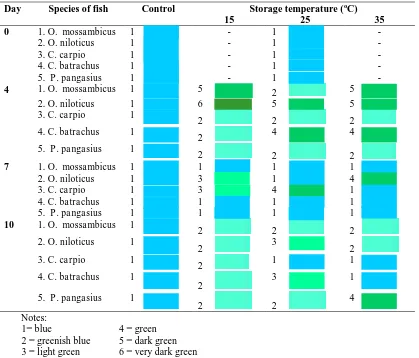
The data gained were the amylase activities of 5 species of fish examined from their intestine extracts that were stored at 15 C, 25C and 35oC during 4, 7 and 10 days. The intestines were got from 5 species of fish with 160 – 200 ounces of body weight. The intestines used were got by cutting digestive tract just after ventriculus. After being cut longitudinally and washed in aquadest, they were crushed in 20 ml of 50% of glycerin. Then, 5 drops of toluene were added into the solution. The extracts resulted were kept in a closed dark bottle and stored at 15oC, 25oC, and 35oC for 4, 7 and 10 days in dark chambers. The amylase activities were examined after 0, 4, 7 and 10 days of storage. In each period, after filtering the extract, the amylase activities were examined using benedict reagen for getting the level the enzyme qualitatively using color resulted, i.e. blue, greenish blue, light green, green, dark green and very dark green, representing the level of amylase contents from zero until the highest identified. The data gained were analyzed qualitatively and descriptivelly.
3. Result and Discussion
Biology Page 405 The table shows that amylase activities are different among 5 fish species indicated by different colors. Chakrabart et al. (1995) suggest that the production of amylase is family-specific. It may relate to anatomical and functional differences of the gastrointestinal tract and associated organs (Krogdahl et al., 2005). The development of digestive organ structure is followed by the development of digestive enzyme and the change of feeding habit (Handayani, 2006). Reddy and Benarjee (2015) identified groups of fish based on types of food, carnivorous and omnivorous. The fish have different structure of histology and histochemistry.
Table 1. Amylase Activities in Various Temperatures and Period of Storages of 5 Fish Species
Notes: herbivorous, omnivorous and carnivorous. Some authors determine that Oreochromis mosambicus (Doupe et al., 2010) and Oreochromis niloticus (Getachew, 2006) are herbivorous. Therefore Al-Tameemi (2010) wrote that Cyprinus carpio is an omnivorous or plant oriented omnivorous (Smith, 1980). In addition, catfish or Clarias batrachus is an animal oriented omnivorous (Smith, 1980) or omnivorous (Reddy & Benarjee 2015 ), however, Devi & Mishra (2013) mention that the animals are carnivorous. The last (Pangasius pangasius) is grouped as carnivorous (Dey et al., 2015).
Table 1 shows that the dark green and very dark green colours tend to appear in many samples of Oreochromis mossambicus and Oreochromis niloticus extract, followed by Cyprinus carpio’s, Clarias batracus’s, then Pangasius pangasius’s. It means that the amylase activities tend to dominate in the intestine of the first two species. As discussed that the two animals
are herbivorous, so that it makes a sense that the amylase activities are higher than others’.
Day Species of fish Control Storage temperature (oC)