Full Length Research Paper
Impact of degradation processes on physical and
chemical properties of soils in Delta State of the Niger
Delta
Ohwoghere Asuma, Oghenero
Department of Geology, Delta state University, Abraka, Delta State, Nigeria. E-mail: [email protected]. Tel: 07051403616.
Accepted 9 February, 2012
A comparative analysis of the impact of three forms of soil degradations (bush burning, erosion and oil spillage) on soils from selected towns in Delta State of the Niger Delta, was carried out on soil samples collected from six soil profiles dug to depth of 0 to 200 cm to soils affected and unaffected by the three soil degradation forms. The analysis revealed the soil matrix pH (pHKCl) to vary from 3.7 to 5.2 and the soil matrix water (pHH2O) is from 4.4 to 6.2.The exchangeable bases of acidity concentration are higher than those of exchangeable bases and generally the chemical characteristics of the soils are below the critical levels required for soils needed for agricultural purposes. Bush burning has caused a depletion in the values of carbon by 37%, organic matter by 35.5%, nitrogen by 48.8%, pH by 1.3%, silts by 30%, and coarse sand by 13.04%, but it increased the values of sodium by 9.5%, potassium 52.9%, calcium 42.2% magnesium 31.8%, phosphorus 34%, lead 19.6%, iron 19.6%, nickel 0, 54%, vanadium 27.3%, clay 16.6% and fine sand 29.1%. Water erosion is responsible for decreasing the values of carbon by 64.2%, organic matter by 64.1%, nitrogen by 63.6%, sodium by 26%, potassium by 28%, calcium by 50%, magnesium by 32%, phosphorus by 36%, clay by 6.45%, silts by 14.2% and fine sand by 31.17%. In addition, erosion has the pH of the soil increased by 21.6%, lead by 16.4% and coarse sand by 18.54%. Oil spillage was responsible for extremely high increase in the amount of organic matter and related elements - carbon and nitrogen. It caused an increased in the amount of carbon by 478%, organic matter by 479%, nitrogen by 327%, potassium by 127%, calcium by 111%, sodium by 127%, phosphorus by 72%, lead by 44%, nickel by 11.7%, vanadium by 60.7%, pH by 4.8%, silt by 66.6% and coarse sand by 21%, while magnesium, clay and fine sand were decreased by 77%, 15% and 10.29 respectively. Finally, the paper concludes that other forms of soil degradation such as bush burning and water erosion are also capable of causing degradation to an alarming rate just like oil spillage and should be taken seriously. Efforts should be directed just as it is in oil spillage, to ensure the prevention of indiscriminate bush burning through the raising of awareness among rural dwellers and water erosion control habits should be cultivated.
Key words: Soil degradation, impact, soil fertility, oil spillage, bush burning and water erosion.
INTRODUCTION
The physical, chemical and biological processes are causes of soil degradation (Lal, 1994). Destruction of soil structures, leaching, soil crusting, soil compaction, water erosion, desertification and pollution of the environment are some of the physical soil degradation processes. The chemical processes include acidification, leaching, salinization, cation exchange capacity reduction and
decreasing soil fertility. The biological process causing land degradation is decrease in the total biomass, carbon as well as soil biogenity and biodiversity.
problem of soil degradation has been in existence for as long as settled agriculture, and its impact on human welfare and global environment are now higher than in the past. In the past, the flourished of any civilization has direct relationship with the fertility of soils. So, as the fertility of the soil decreases so the cultures and civilization that depend on it. Evidence emanating from archeological studies has shown that soil degradation has lead to the extinction of the Harappen civilization in Western Indian, Mesopotamia in West Asia, the ancient kingdom of Babylon in Far East and the Mayan culture in Central American (Olson, 1981). argues that Soil damage is a global threat on the basis of the adverse effects it has on biomass productivity and environment quality, and it should therefore be taken seriously (Pimentel et al., 1995; Dregne and Chou, 1994). The other thought believes that soil is one of the factors of production and if soil degradation is a severe issue, why market forces have not taken care of it? The supporter of this thought, argues that land manager (farmers) as land users will not allowed to degrade to the degree of affecting profit (Crosson,1997). The later school of thought may have thought in this line because of the use of fertilizers, but forgetting that fertilizers themselves are also responsible for environmental degradation and this may also be restricted to the developed countries, but not the developing countries where farmers are peasant and poor, and at such could not afford fertilizer to improve the fertility of soils.
Soil degradation is actually the decline in the quality of land and its utility. It occurs in various ways such as soil leaching, exposure of plant and tree roots, soil sealing and silt accumulation in lowland areas and waterlogging of soil, soil compaction, gully and inter-rill erosion (Lal, 1988).Other causes of soil damage include the indiscriminate disposal of industrial effluents and municipal wastes on soil land, bush burning and oil spillage. It has been estimated that one sixth of the world soils have already been damaged by water and wind erosion (UNEP, 1986). In addition another report has it that over 3.5 million tones of soil are lost annually in Nigeria to land degradation (Onyegoche, 1980).
In south central Nigeria, about 2.3 million tones of soil are lost annually and this has caused a great reduction in agricultural yield (Dike, 1995). In July, 2005, about and agrarian region within the Niger Delta. The land use
pattern in the state is subdivided into agricultural and industrial purposes. The agricultural activities of the people include cultivation of cassava, corn, and plantain, cash crops like rubber, palm trees and fish farming people engage in subsistence agriculture. Industrial land use includes sand mining for building and road construction and host to oil installations. The activities of oil prospecting and production companies and other forms of degradation are responsible for the deficiency in soil nutrients availability, which often lead to low agricultural productivities in the state.
All studies regarding soil damages in the state are often restricted to oil spillage, gas flaring and other related forms of soil damages caused by the oil industry. This no doubt has resulted in the neglect of other forms of soil damage like water erosion and bush burning which are also responsible for environmental degradation in the Niger delta. The aim of this study therefore, is to analyze comparatively, the degree and extent of impact of soil degradation processes: oil spillage, water erosion and bush burning, with a view of quantifying the severity of each and ascertaining the extent of impact on the physical and chemical quality of soils in selected areas in Delta state.
MATERIALS AND METHODS
The study areas are located across three selected towns in Delta state that have been affected by different forms of land degradation that are distinctively different from one another. The areas include: Ovu, which is affected by bush burning as farming is the main
Uzere into soil affected and unaffected by oil spillage on 12th, July 2003; at Agbor into soil damaged (gentle slope) and undamaged by water erosion on 10th of August 2006 . Soil samples were taken from specific interval ranging from 0 to 200 cm (Tables 1 to 3). A total of 30 samples were collected from six locations, bagged, labeled and subsequently taken to the department of soil science’s laboratory, University of Nigeria, Nsukka for physical and chemical analysis. spectrophotometer Varian AAA 200 after calibration with standard prepared in the acetate ammonium solution.
Soil reaction - pH of the active acidity (pHH2O) and reserve acidity (pHKCl) of soil samples were determined by mixing a solution of 0.1 M potassium chloride with distilled water and soil in the proportion of 1:2:5 using Beckman zeromatic pH meter (Peech, 1965) after (Bremner,1965), nitrogenous organic matter is mineralized by 98% hot concentrated sulphate acid (H2SO4), the carbon and hydrogen are released to the state of dioxide, carbon and water. The nitrogen transform into ammonium fixed by H2SO4. Exchangeable bases were determined by the method of (Jackson, 1958) and exchangeable acidity by the titrimetric method using potassium chloride solution (McLean, 1965). Soil cation exchange capacity was determined by the ammonium acetate method (Jackson, 1958).
Available phosphorous was determined in accordance with the method prescribed by Bray and Kurtz (1945).The impact of soil samples analyzed. Texture ranges from fine through medium to coarse grained soils (sandy, loamy, sand and sandy loamy soils).This is an indication of soil property derived from parent materials or the geologic processes that contributed to their formation. These soils are similar to those derived from unconsolidated coastal plain sand or sandstone, deltaic plain, Sombreiro and meander belt of the Delta (Akamigbo and Asadu, 1986).These soils are also characterized by relatively low quantity of silt and clay contents. The low content of silt and clay reflects subjection of the soils to some degree of leaching, water erosion and the source of the parent materials (Akamigbo, 1984; Sanchez, 1976).
The pH of the soil and that of its solution tends to affect the ability of the soil to either retain or release chemical properties of soil. Unlike water, soil has two pH values; the pH of the soil matrix known as (pHKCl) and that of the
soil water matrix (pHH2O). The (pHKCl) is often regarded as
the pH of the soil because it takes into account all the physical and chemical characteristics (McBean and Rovers, 1998). Consequently the pHKCl is used in this
study as the pH of the soil. The pHKCl of both undamaged
and damaged soils ranges from 3.6 to 5.2; this makes the soils to be acidic.
Both the pH of soil matrix water (pHH2O) and the soil
matrix (pHKCl) are lower than that suggested by Odu et al.
(1985) as a standard for the purpose of agriculture (Table 3). The acidic nature is adduced to the leaching of the elements that are responsible for the bases by heavy rainfall that often characterized the areas during the wet season.
The chemical properties of the soil are lower than the critical levels required for soils needed for agricultural use as suggested by Odu et al. (1985).This suggests that the soils are generally poor and cannot be regarded as fertile soils. The reason for unfavorable chemical properties may be probably due to the geology and the local parent material as demonstrated by Enwezor et al. (1981). Also the organic carbon and nitrogen content in soil are relatively low except in the soil damaged by petroleum. The low organic carbon and nitrogen content is attributable to increase mineralization of the soil elements by temperature, leaching and burning in accordance with the findings of Sims (1990).
The analysis also revealed low exchangeable cation content. The inherent properties of the soil derived from the local parent material may be the reason for this. This is in accordance with Akamigbo (1990); Akamigbo and Asadu (1986), who demonstrated that the exchangeable cation and the acidity of soils are greatly controlled bythe parent material from which the soils are derived. Heavy rainfall that characterized the areas may have promoted high level of leaching, which is probably responsible for the low exchangeable cation observed. Leaching has contributed to the removal of the more mobile elements responsible for the alkalinity of the soil leaving behind those that are less mobile. This phenomenon has resulted in soil rich in aluminum (Al+++) and hydrogen (H+) cations, which are responsible for the acidity of soils. In addition, the apparent cation exchange capacity (ACEC) and the effective exchangeable capacity (ECEC) are also low (Appendix). Soils of this kind are what King and Juo (1981) called low activity clay (LAC) soils. Akamigbo and Igwe (1990) called this type of soils that are low in ACEC and ECEC as soil which are made of the 1:1 lattice clay minerals (kaolinites), which is normal property of lateritic
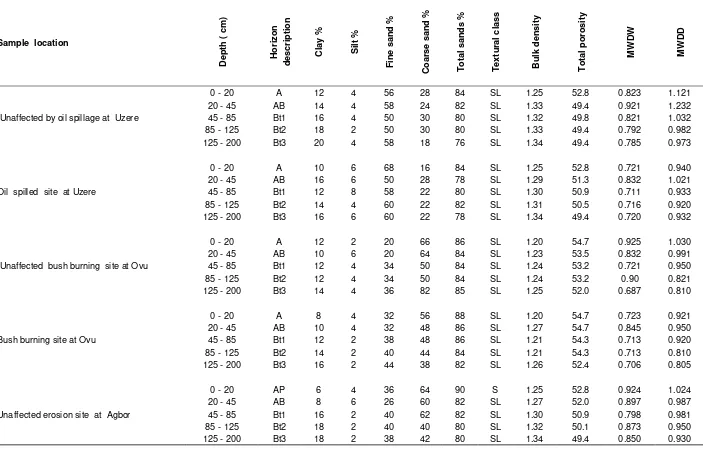
Table 1. Physical properties of soil in the study areas of Uzere, Ovu and Agbor.
Unaffected by oil spillage at Uzere
0 - 20 A 12 4 56 28 84 SL 1.25 52.8 0.823 1.121
Unaffected bush burning site at Ovu
0 - 20 A 12 2 20 66 86 SL 1.20 54.7 0.925 1.030
Unaffected erosion site at Agbor
0 - 20 AP 6 4 36 64 90 S 1.25 52.8 0.924 1.024
20 - 45 AB 8 6 26 60 82 SL 1.27 52.0 0.897 0.987
45 - 85 Bt1 16 2 40 62 82 SL 1.30 50.9 0.798 0.981
85 - 125 Bt2 18 2 40 40 80 SL 1.32 50.1 0.873 0.950
Table 1. Contd.
Erosion site at Agbor
0 - 20 AP 6 3 5 56 91 S 1.25 52.8 0.821 0.936
20 - 45 AB 12 3 33 56 88 SL 1.26 52.4 0.802 0.912
45 - 85 Bt1 14 2 30 52 82 SL 1.29 51.3 0.798 0.891
85 - 125 Bt2 14 2 30 50 80 SL 1.32 50.1 0.789 0.901
125 - 200 Bt3 16 2 30 50 80 SL 1.34 49.4 0.780 0.891
SL = Sandy loamy, S = sand, MWDW = mean weight diameter of wet aggregate, MWDD =mean weight diameter of dry aggregate.
Table 2. Favorable nutrient supply of agricultural soils (Odu et al., 1985).
Elements Critical values
Organic matter 2 6%
Carbon 1.513%
Nitrogen 0.15%
Available phosphorous 15 ppm
Calcium 2.6 Me/100 g
Potassium 0.20 Me/100 g
Magnesium 0.40 Me/100 g
pH 6.5 - 7.5
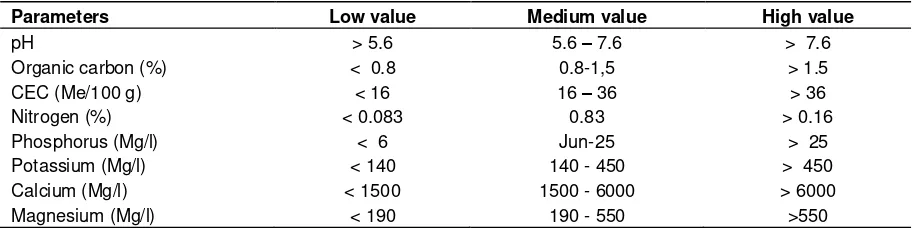
Table 3. Criteria for classification of soil property status (FAO Soil Bulletin 48).
Parameters Low value Medium value High value
pH > 5.6 5.6 – 7.6 > 7.6
Organic carbon (%) < 0.8 0.8-1,5 > 1.5
CEC (Me/100 g) < 16 16 – 36 > 36
Nitrogen (%) < 0.083 0.83 > 0.16
Phosphorus (Mg/l) < 6 Jun-25 > 25
Potassium (Mg/l) < 140 140 - 450 > 450
Calcium (Mg/l) < 1500 1500 - 6000 > 6000
Magnesium (Mg/l) < 190 190 - 550 >550
The soil content in terms of plant available phosphorus (Appendix) is low compared to that suggested by (FAO, 1988) showed in Table 3.
One of the reasons is that the soils have been affected by high degree of weathering, as suggested by Enwezor et al. (1977), but the other
one is so known “acidic fixation” of phosphorus
(P) in soils with low pHKCl enriched by Al+++ ions
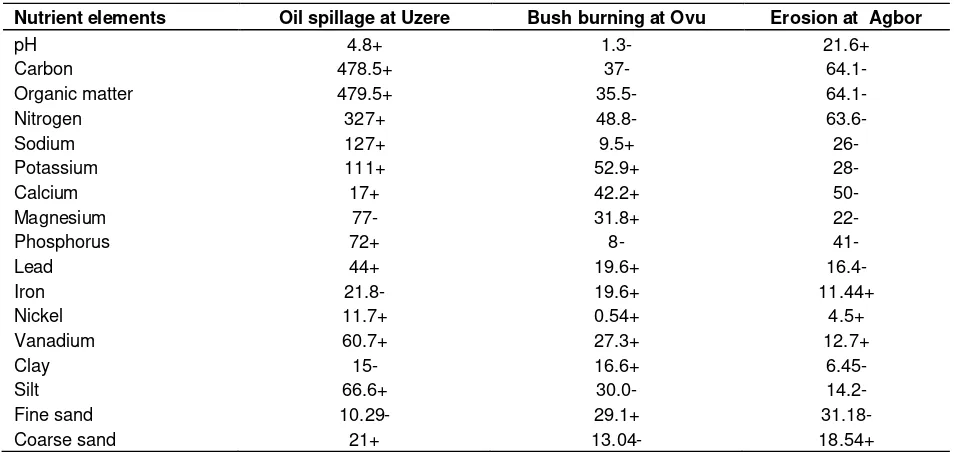
Table 4. Comparison of the impacts of three forms of soil degradation processes on soil physical and chemical properties.
Nutrient elements Oil spillage at Uzere Bush burning at Ovu Erosion at Agbor
pH 4.8+ 1.3- 21.6+
Carbon 478.5+ 37- 64.1-
Organic matter 479.5+ 35.5- 64.1-
Nitrogen 327+ 48.8- 63.6-
Sodium 127+ 9.5+ 26-
Potassium 111+ 52.9+ 28-
Calcium 17+ 42.2+ 50-
Magnesium 77- 31.8+ 22-
Phosphorus 72+ 8- 41-
Lead 44+ 19.6+ 16.4-
Iron 21.8- 19.6+ 11.44+
Nickel 11.7+ 0.54+ 4.5+
Vanadium 60.7+ 27.3+ 12.7+
Clay 15- 16.6+ 6.45-
Silt 66.6+ 30.0- 14.2-
Fine sand 10.29- 29.1+ 31.18-
Coarse sand 21+ 13.04- 18.54+
+ = addition, - = removal.
also forms insoluble inorganic complexes of iron and calcium as the soil becomes more acidic and consequently, it is increasingly unavailable to plants as result of its solubility. In addition phosphorus of organic materials is often released by process of mineralization involving soil organisms, which is a major characteristic of tropical soils and this process is often very rapid in soils with high moisture content, temperature and in well-drained similar to those of study areas.
The concentration of heavy metals in soils analyzed (Fe, Ni, V, and Pb) is shown in Appendix. The high acidity (pHKCl value that range from 3.7 to 5.2) nature of the soils
investigated favourable for the concentration of heavy metals in soil. This is in accordance with the observation of Pilchard et al. (2003); Teixeira et al. (2010), they demonstrated that heavy metals have the tendency to accumulate in the surface of soil horizons rich in organic matter in acid medium with pH < 6.The heavy metals detected in the analysis may have been originated from decomposition of organic matter, they occurred in association with organic matter in the undamaged soil or they may have been formed from same geochemical processes with organic matter.
It is observed however, that the value of the concentration of heavy metals is less compared to the concentration given by Aubert and Pinta (1977), which is the tolerable or critical level for agricultural purposes. According to them the critical level is total content (extracted in aqua regia); lead 100 to 400 mg/kg, 50 to 100 mg/kg for vanadium and 100 mg/kg for nickel and 20,000 to 60,000 mg/kg for iron.
The impact of land degradation forms on the soil
Three soil degradation processes; oil spillage, bush burning and water erosion are prevalent in the study areas and the degree of impacts in terms of percentage of the undamaged soils is presented in Table 4.The burning of agricultural residue has contributed to the loss of the fertility of soil. Burning of bush tends to increase the temperature of the top three inches of the topsoil to such a degree that carbon and nitrogen equilibrium in the soil is destabilized. Consequently, carbon dioxide is lost to the atmosphere, nitrogen is converted to nitrate and fauna and bacteria are killed. In order to ascertain the impact of bush burning on the soil, result of analysis of damaged and undegraded soils was compared. It was observed that bush burning has caused a reduction in the values of carbon by 37%, organic matter by 35.5%, nitrogen by 48.8%, pH by 1.3%, silts by 30%, and coarse sand by 13.04%. Conversely, increase was recorded in the following soil elements; the values of sodium content was increased by 9.5%, potassium 52.9%, calcium 42.2% magnesium 31.8%, phosphorus 34%, lead 19.6%, iron 19.6%, nickel,0,54%, vanadium 27.3%, clay 16.6% and fine sand 29.1%. The increment recorded in calcium,
magnesium, sodium, potassium and available
Water erosion as a form of soil damage and land degradation is often responsible for decline and increase in the availability of minerals required for the productivity of agricultural produces as presented in Table 4.The analysis of the soils, both damaged and undamaged revealed that erosion is responsible for the reduction of values of carbon content by 64.2%, organic matter by 64.1%, nitrogen by 63.6%, sodium by 26%, potassium by 28%, calcium by 50%, magnesium by 32%, phosphorus by 36%, clay by 6.45%, silts by 14.2% and fine sand by 31.17%.The reduction by water erosion is adduced to soil particles and nutrients erosion as well as leaching as nutrients will be leached from the root zone especially in the study areas with high level of rainfall.
Oil spillage like other forms of land degradation has drastic effect on the soil but with greater degree of impact when compared to the other, the result of which is shown in Table 4 and Appendix. The analysis of the soil sample showed that oil spillage was responsible for astronomical increase in the amount of organic matter and related elements such as carbon and nitrogen. It caused an increased in the amount of carbon by 478%, organic matter by 479%, nitrogen by 327%, potassium by 127%, calcium by 111%, sodium by 127%, phosphorus by 72%, lead by 44%, nickel by 11.7%, vanadium by 60.7%, pH by 4.8%, silt by 66.6% and coarse sand by 21%, while magnesium, clay and fine sand were decreased by 77%, 15% and 10.295 respectively. The increment observed is attributable to the natural components of petroleum, which is organic in nature that is derived from the biodegradation of plant materials and microorganisms. The organic nature of petroleum is reflected by the high quantity of organic matter released into to the soil form its spillage. The outcome of the analysis is similar to the findings of Odu (1978); Abii and Nwosu (2009). With this finding, it is tempting to say oil spillage tends to enhance the quality of the soil on the basis of the organic matter added to it, but this is not so, as crude oil blocks the pore spaces of soils, thereby preventing the aeration of the soil needed for plant growth and organisms. In addition increase in coarseness of the sand will tend to promote the flow of crude oil from the top horizon to deeper horizon. This is supported by the decrease of heavy metals with depths observed in the study (Appendix), as the only way this can happened is by vertical flow of the crude oil to soil horizon below.
Conclusion
It has been established in the study that other processes
of soil damages and land degradation such as bush burning and erosion are also capable of causing degradation to an alarming rate just like oil spillage. As a matter of necessity action should be take to curb the indiscriminate bush burning prevalent in Delta state due to its degrading effects on the soil’s nutrient availability. Erosion control measures such as mulching and planting of cover crops in farm land should be encouraged.
It has been ascertained in the study that bush burning and erosion have negative affects on the organic matter content, carbon and nitrogen, with water erosion responsible for greater degree of reduction. While bush burning is capable of causing the increase in the amount of exchangeable cations observed in the study, erosion on the other hand is responsible for the reduction of these soil elements. A different scenario is observed with oil spillage, which has the highest degree of addition of organic matters, carbon, nitrogen, heavy metals, and the exchangeable cations except magnesium to the soil it degrades. This is not equivalent to improvement in the soil fertility by it due blocking of pore spaces in the soil, thus eliminating aeration and causing the death of soil microorganisms.
It has been observed in the analysis that bush burning was responsible for reduction of pH, while water erosion and oil spillage have increased the pH, with erosion causing the greatest increase. By increasing the pH of the soil erosion and oil spillage invariably contribute to the enrichment of the soil with exchangeable bases and depletion of exchangeable acidity.
The soils analyzed in the study are acidic just like other lateritic soils of rain forest origin. The acidic nature of the soil tends to promote the accumulation of heavy metals in soil horizons rich in organic matters.
The tendency of any soil to retain soil water depends to a large extent on the fine – colloidal soil particles such as clay and organic matter. Oil spillage and water erosion reduced the ability of the soils to retain water as they are responsible for the decrease in clay content as observed in the study. Conversely bush burning enhances the water retentive capacity of the soil as it has caused an increase in the content of clay and fine sand. While oil spillage and water erosion promotes the infiltration capacity, bush burning tend to impairs it.
REFERENCES
Abii TG, Nwosu PC (2009). The effect of oil spillage on the soil of element in Rivers State of the Niger Delta area of Nigeria. Res. J. Environ. Sci., 3: 316-320.
Akamigbo FOR (1984). The Accuracy of Field Texture in Humid Tropical Environment. Soil Surv. Land Eval., 493: 63-70.
Akamigbo FOR, Asadu CLA (1986).The influence of toposequence on soil parameters in selected areas of Anambra state. South-South Eastern Nigeria. J. Sci., 6: 35-46.
Akamigbo FOR, Igwe CA (1990). Physical and chemical characteristics of four Gullies soil Location in Anambra state, Nigeria. Nig. Agric. J., 7: 37-48.
science, oxford New York: Elsevier scientific Publishing Company Amsterdam, p. 324.
Barrow CJ (1992). Land degradation: New York: Cambridge University press, p. 295.
Bašić F, Šalinović I, Bašić I, Kisić I, Mesić M, Kelkeyeleh A
(2003). Soil erosion caused by different tillage systems in the Ethiopian Highlands. Proceedings of 16. ISTRO Triennial Conference
– Soil Management for Sustainability, CD, Brisbane, pp. 64-69. Bray RH, Kurtz LT (1945). Determination of Total organic and available
forms of phosphorus in soils. Soil Sci., 95: 39-43.
Bremner JM (1965).Total nitrogen. In CA, Black et al (eds), Methods of soil analysis, Part 11, Samen. Soc. Agwu, 9: 1194-1178.
Crosson PR (1997). The On- Farm Economic cost of Erosion, In: Methods for assessment of land degradation (ed ) R. Lal, W.E.H. Blum, C. Valentine and B.A. Stwart, Boca,Raton.
Dike MC (1995). Effective Method of soil erosion control in farmland. Trop. Agric., pp. 202-240.
Dregne HE, Chou NT (1994). Global desertification, dimension and costs. In: Degradation and restoration of Arid land (ed) H.E Dregne, Lubbock Texas Technical University, pp. 249-282.
Enwezor WO (1977). Predicting Responses to phosphorus application for soil of South Eastern Nigeria. Soil Sci., 123: 110-116.
Enwezor WO, Udo EJ, Sobulo RA (1981). Fertility status and productivity of acid sand, In acid sand of south Eastern Nigeria, Soil Sci., 123: 110-116.
FAO (1988). Micro and Macro Nutrient status, Bulletin 48.
Jackson ML (1958). Soil chemical analysis: An Advance course, University of Wisconsin, U.S.A.
King AB, Juo ASR (1981). Retention and leaching of nutrients in limited Ultisol under cropping, soil science. Soc. Am. Proc., 41: 761-787. Lal R (1988). Soil Erosion by Water and Wind Problem Properties, In R.
Lal (ed) Soil Erosion Research Methods. Soil Water Conserv. Soc. Am. Ankeny, I.A., pp. 1-6.
Lal R (1994). Tillage effects on soil degradation, soil resilience, soil quality and sustainability. Soil Till. Res., 27: 1-8.
Lal R, Stewart BA (1990). Land degradation: A global problem. In R. Lal and B.A Stewart advances in soil science 11. New York: spring-Verleg Inc., pp. 1-10.
Levine JS (1991). Global biomass burning, Cambridge: the M.T. press. p. 569.
Mathieu C, Pieltain F (2003). Analyse chrimque des sols: Methods choisies. Tech. & Doc Lavoisier, Paris, p. 408.
McBean EA, Rovers FA (1998). Procedures for Analysis of Environmental Monitoring data and Risk Assessment. Prentice Hall PTR, New Jersey, 7458: 313.
Mclean EO (1965). Aluminum. In C.A. Black et al (ed) Methods of Soil Analysis, part 11. 1st ed. Am. Soc. Agric. Monogr., 9: 986-994.
Nwajei FN (1993). An Atlas for Delta State of Nigeria. Macmillan, Nigeria, pp. 60-61.
Odu CTI (1978). Fermentation, characteristic and biochemical reactions of organisms isolated from oil polluted soils, environmental pollution, Univ. Ibadan, Nig., 15: 271-276.
Odu CTI, Esuruoso ON, Oguwale JA (1985). Environmental study of Nigeria Agip oil Company Operational Areas. Nigeria Agip Oil Company Ltd Lagos.
Ohwoghere- Asuma O, Akpokodje O, Juwah H (2005). Integration of Nigeriasat-1 and Internet Technology in Automatic Detection of oil spillage. Int. J. Sci. Technol. Res. 2.N., 1(2); 160-166.
Olson GW (1981). Archaeology: Lesson on future soil use. J. Soil Water Conserv., 36: 261-264.
Onyegoche SC (1980). Field inspection report during tours: In efficient use of Nigeria resources (ed) FDLR, pp. 104-106.
Peech M (1965). Hydrogen in activity. In C.A Black (ed). Am. Soc. Agric., 9: 914-926.
Pilchard A, Bisson M, Hulot C, Lefevre JP, Magaud H, Oberson G, Morin AD, Pepin G (2003). Fiche de donnees toxicologique et environnementales des substances chimques: Plom et ses derives INERIS-DRC-01-25590-ETSC-Ap/Sd N000df257_version2.doc, p.
Reyment RA (1965). Aspect of the geology of Nigeria. Ibadan University Press, p. 145.
Sanchez PA (1976). Properties and Management of Soils of the Tropics. New York, Wiley, 618: 42.
Short KC, Stauble AJ (1965). Outline of the geology of the Niger delta. Bull. AAPG., 51: 761-779.
Sims GK (1990). Biological degradation of soil. Adv. Soil Sci., 11: 289-330.
Teixeira RS, Cambier P, Dias RD, Pinese JPP, Jaulin-Soubelet A (2010). Mobility of potentially harmful metals in latosols impacted by the municipal solid waste deposit of Londreina, Brazil. Appl. Geochem., 25: 1-15.
APPENDIX
Table 1. Chemical properties of soil not affected by oil spillage in Uzere.
Depth (cm)
pH Organic matter (%) Exchangeable bases (Meg/100 g) Exchangeable acidity (Meg/100 g) Heavy metals (mg/kg)
KCl H2O c O.M N Na+ K+ Ca2+ Mg2+ ACEC ECEC Al3+ H+ P(mg/kg) EA Pb2+ Fe2+ Ni2+ V+
0 - 20 4.1 5.1 0.64 1.1 0.056 0.05 0.04 .03 0.3 5 4.3 2.8 0.8 2.0 3.6 7.25 38.0 180.1 6.11 20- 45 4.8 5.4 0.28 0.48 0.015 0.04 0.03 1.4 0.7 5 4.6 2.0 0.4 1.4 2.4 5.33 40.0 175.2 5.60 45- 85 4.2 5.6 0.16 0.28 0.012 0.04 0.03 0.9 0.8 5 4.2 1.6 0.8 1.4 2.4 1.5 18 33.5 3.20 85-125 4.5 5.3 0.13 0.22 0.015 0.03 0.04 o.5 1.2 6 4.4 1.9 0.7 1.3 2.6 1.0 9.3 25.o 2.10
125-200 4.4 5.4 0.10 0.17 0.013 0.03 0.04 0.4 0.5 5 3.6 2.0 0.6 1.4 2.6 0.0 8.2 10 1.80
Table 2. Chemical properties of soil affected by oil spillage at Uzere.
Depth (cm)
pH Organic matter (%) Exchangeable bases (Meg/100 g) Exchangeable acidity (Meg/100 g) Heavy metals (mg/kg)
KCl H2O C O.M N Na+ K+ Ca2+ Mg2+ ACEC ECEC Al3+ H+ P(mg/kg) EA Pb2+ Fe2+ Ni2+ V+
0-20 4.7 5.8 1.40 2.40 0.096 0.10 0.12 0.40 0.10 6 3.3 1.8 0.8 3.4 2.6 1.6 31 2043 17.3 20-45 4.6 5.6 1.84 3.16 0.999 0.10 0.14 1.5 0.20 5 4.1 1.4 0.8 2.0 2.2 3.56 30 1932 11.2 45-85 4.5 5.6 1.74 2.96 0.099 0.09 0.08 1.5 0.20 5 4.1 1.4 0.8 2.0 2.2 1.2 20.2 55.2 2.3 85-125 4.5 5.7 1.32 2.28 0.095 0.06 0.02 0.40 0.20 4 2.6 1.3 0.6 2.5 1.9 1.05 5.2 15.7 1.1 125-200 4.6 5.5 1.30 2.24 0.090 0.06 0.02 0.40 0.10 3 2.6 1.4 0.7 3.0 2.1 0 2.5 5.3 1.07
Table 3. Chemical properties of soil not affected by bush burning at Ovu.
Depth (cm)
PH Organic matter (%) Exchangeable bases (Meg/100 g) Exchangeable acidity (Meg/100 g) Heavy metals (mg/kg)
KCl H20 c O.M N Na+ K+ Ca2+ Mg2+ ACEC ECEC Al3+ H+ P mg/kg) EA Pb2+ Fe2+ Ni2+ V+
Table 4. Chemical properties of soil affected by bush burning at Ovu.
Depth (cm)
pH Organic matter (%) Exchangeable bases (Meg/100 g) Exchangeable acidity (Meg/100 g) Heavy metals (ppm)
KCl H2O c O.M N Na+ K+ Ca2+ Mg2+ ACEC ECEC Al3+ H+ EA P mg/kg) Pb2+ Fe2+ Ni2+ V+
0 - 20 3.7 4.4 0.81 1.33 0.76 0.04 0.04 0.30 0.20 3 3.00 2.0 0.4 2.4 1.4 3.56 30 175.5 8.66 20 - 45 3.7 4.5 0.28 0.48 0.81 0.04 0.03 0.50 0.40 5 3.40 2.0 0.4 2.4 1.4 7.4 31 194.3 12.7 45 - 85 3.7 4.7 0.36 0.62 0.18 0.05 0.02 0.90 0.80 3 4.2 2.0 0.4 2.4 1.4 0.0 0.0 0.00 0.0 85 - 125 3.8 4.6 0.28 0.48 0.10 0.03 0.04 0.80 0.80 3 4.1 1.8 0.6 2.4 1.3 0.0 0.0 0.00 0.0 125 - 200 3.6 4.4 0.24 0.41 0.009 0.03 0.03 0.70 0.70 3 3.8 1.9 0.4 2.3 1.4 0.0 0.0 0.00 9.17
Table 5. Chemical properties of soil not affected by water erosion at Agbor.
Depth (cm)
pH Organic matter (%) Exchangeable bases (Meg/100 g) Exchangeable acidity (Meg/100 g) Heavy metals (mg/kg)
KCl H2O C O.M N Na+ K+ Ca2+ Mg2+ ACEC ECEC Al3+ H+ P Mg/kg EA Pb2+ Fe2+ Ni2+ V+
0 - 20 4.7 5.4 1.28 2.20 0.096 0.04 0.6 1.0 0.20 4.0 4.0 2.8 0.4 5.0 2.3 5.33 177 177.3 6.62 20 - 45 3.9 5.0 0.52 0.90 0.049 0.04 0.6 1.1 0.40 3.5 4.1 2.8 0.4 2.0 3.2 5.33 28 177.9 0.00 45 - 85 3.8 4.8 0.56 0.96 0.049 0.09 0.8 1.1 0.10 3.6 3.6 1.0 2.8 1.8 6.0 0.00 0.00 0.00 0.00 85 - 125 3.8 4.9 0.52 0.90 0.046 0.08 0.7 1.0 0.10 3.2 2.9 1.7 0.5 1.7 2.2 0.00 0.00 0.00 0.00 125 - 200 3.7 4.8 0.50 0.86 0.046 0.07 0.8 0.8 0.10 3.0 2.8 1.8 0.4 1.8 2.2 0.00 0.00 0.00 0.00
Table 6. Chemical properties of soil affected by water erosion at Agbor.
Depth (cm)
pH Organic matter (%) Exchangeable bases (Meg/100 g) Exchangeable acidity (Meg/100 g) Heavy metals (mg/kg)
KCl H2O C O.M N Na+ K+ Ca2+ Mg2+ ACEC ECEC Al3+ H+ P(mg/kg) EA Pb2+ Fe2+ Ni2+ V+