
Many studies show that the presence of weeds changes the chemistry and fertility of the soil environment. This book discusses these types of soil chemical and fertility properties among several tropical weeds studied mainly in Lampung Province, Indonesia.
Effects of C and N on Soil Enzymatic Activities, 103
The Release of Potassium from Soil Minerals, 113
The Release of Potassium from Soil Organic Matters, 119
The Effects of Soil pH on Soil Potassium Release, 120
The Effects of Weeds on Soil Potassium Release, 124
The Chemistry of Heavy Metals in Soils, 138
Effects of Weed Management, 146
Effects of Forest Conversion, 148
The Chemistry of Soils under Weed Management, 156
The Availabilities of Plant Nutrients under Weed Management,
The Uses of Effective Weeds, 158
Abdul Kadir Salam and Nanik Sriyani - 2019 Soil chemistry and fertility under tropical weeds 1.
Introduction
- The General Chemistry of Soils 1.2 Weed Effects on the Chemistry and Fertility of Soils
- The General Chemistry of Soils
- The reverse reaction is usually conducted by application of S. Acidifying the soil using S may increase H + ion concentration that may fill the soil negative
- Weed Effects on the Chemistry and Fertility of Soils
- Scope of The Chemistry and Fertility of Soils under Tropical Weeds
Abdul Kadir Salam and Nanik Sriyani – 2019 The Chemistry and Fertility of Soils under Tropical Weeds 3. The released Ca, Mg, K and Zn increased with the decrease in soil pH from 7 to 4 buffered by a resin method (Table 1.3). The experimental relationships between Cd, Cu and Zn solubility with soil pH1).

Key Questions
What is the significance of adsorption/desorption reactions and ion exchange in the soil environment. What is the significance of adsorption/desorption reaction and ion exchange in the soil environment.
The Soil – Weed Interrelationships
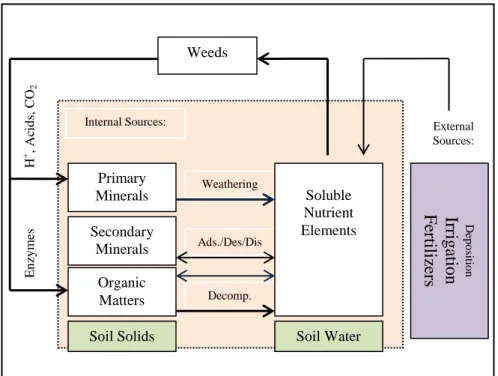
- The Soil – Water – Nutrient – Weed Relationships 2.2 The Release of Nutrient Elements from Soil Minerals and Organic
- The Soil – Water – Nutrient – Weed Relationships
- The Release of Nutrient Elements from Soil Minerals and Organic Matters
- HPO 4 ) 3 + 2 e - 2 + + 3 HPO 4
- The Effects of Weeds on Nutrient Element Release from Soil Minerals and Organic Matters
Most of the nutrient elements in the soil environment are contained in the soil solids. Explain how the soil organic matter decomposes and releases nutrients into the soil environment.
The Important Facts about Tropical Weeds
- The Concept of Weeds 3.2 Weeds as Pioneer Vegetation
- The Concept of Weeds
- Weeds as Pioneer Vegetation
- General Effects of Tropical Weeds on the Soil Environment
- Methods of Weed Control
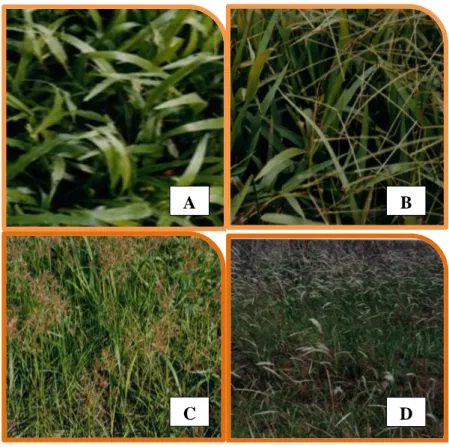
The production of high biomass can enable the use of weeds to improve soil fertility. How does the presence of weeds directly or indirectly pollute the soil and water environment.
Effects of Forest Conversion
- Effects on Weeds and Other Vegetation 4.2 Effects on Soil Enzymatic Activities
- Effects on Weeds and Other Vegetation
- The Effects on Soil Enzymatic Activities
- No Vegetation (Control)
- Grass (Paspalum conjugatum)
- Natural Vegetation
- Effects on Soil Chemistry and Fertility
- Pineapple Plantation
It has been reported that differences in dominant vegetation significantly affect soil chemistry and soil fertility. The increase in soil organic C and total N accordingly increased the enzymatic activities in the soil, as shown in Table 4.5 (Salam, 1996; Salam et al., 2001). Explain the lifespan of soil enzymes in relation to proteases found in the soil environment.
Explain the effect of the existence of weeds in coffee plantation on the soil enzymatic activities.

Effects of Tropical Weeds on Soil pH and Enzymatic Activities
- Effects on Soil pH 5.2 Effects of Alang-Alang
- Effects on Soil pH
- Effects of Alang-Alang
- Effects on Soil Enzymatic Activities
Increased H+ concentration in soil water will acidify soils and lower soil pH. -thermal soil cultivation with cassava (Mannihot utilisima) was also reported to lower soil pH (Salam et al., 1999b). Soil pH is shown to decrease with increasing amounts of urea treatments.
Explain the chemical transformation of the lime material in the soil environment to increase soil pH.
Effects of Tropical Weeds on Soil Carbon, Phosphorus, Nitrogen, and
Nutrient Cycles 6.2 Effects of Land-Use Conversion
Abdul Kadir Salam and Nanik Sriyani – 2019 Soil Chemistry and Fertility under Tropical Weeds 87. Organic C, N, P and S are released into the soil environment by two mechanisms, through direct and indirect mechanisms. Second, organic C, N, P and S can be improved indirectly through the decomposition of weed parts such as dead roots and shoots.
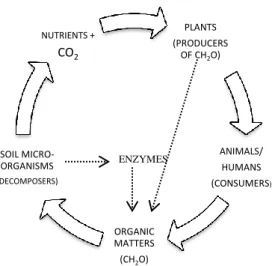
The hydrocarbon formed by photosynthesis by weeds can undergo a reverse reaction, so-called decomposition, which can produce more stable organic matter containing C and CO2, which can react with water to form HCO3- and also inorganic N, P and S .
Nutrient Cycles
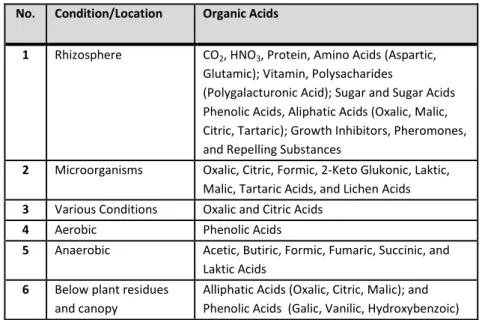
Therefore, soil microorganisms become one of the most important factors in soil management for agriculture and the environment. Some of the soil enzymes are also directly involved in the release of important nutrients such as N, P and S. Carbon is released in the form of CO2 as organic matter containing N, P or S decays accelerated by their respective presence. enzyme, i.e.
The released P into the soil environment will then eventually be reabsorbed by plant roots and reused to produce new organic P.
Effects of Land-Use Conversion
The lower the bulk density of soils indicates the more porous the soils are and the easier it is for water or O2 to diffuse into the soil system. This pattern clearly shows the acceleration of nutrient cycles in the soil environment after deforestation. A large part of C and N leaks from the soil environment in the form of CO2, NO3-.
In addition, the sources of C and N also decrease due to the changes in the dominant vegetation.
Effects of Weed Management
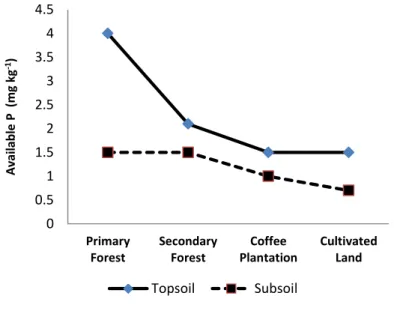
All these elements in the primeval forest were preserved with minimal disturbance and high inputs of litter and organic matter from the remains of various vegetation, while those in agricultural land were degraded due to soil cultivation and low inputs of organic matter. In general, organic matter and C are well conserved under minimal tillage, but are drastically reduced in soils with conventional tillage (Klein et al.
1998c) also show that acid phosphatase activities were higher in minimally tilled or no-tilled soils than in intensively tilled soils (Table 6.6).
Effects of Continuous Cropping
1999b) observe the change in soil C, total N and available P under cassava plantation grown for the periods of 0, 1-5 and 5-10 years in Gunung Batin Central Lampung Indonesia (Fig. 6.5). Compared to the content in the adjacent groves that were never planted with cassava, the content of C and N in soil planted with cassava for 1-5 years was 47 and 39%, respectively, and much lower in soil planted with cassava is for 5-10 years, about 30 and 31%, respectively for C and N. The pattern of the changes in soil pH, organic C, Total N, and available P under continuous cropping was also observed in sugarcane and pineapple plantation in Central Lampung (Table 6.7).
Abdul Kadir Salam and Nanik Sriyani - 2019 Soil Chemistry and Fertility under Tropical Weeds 103.

Effects of C and N on Soil enzymatic Activities
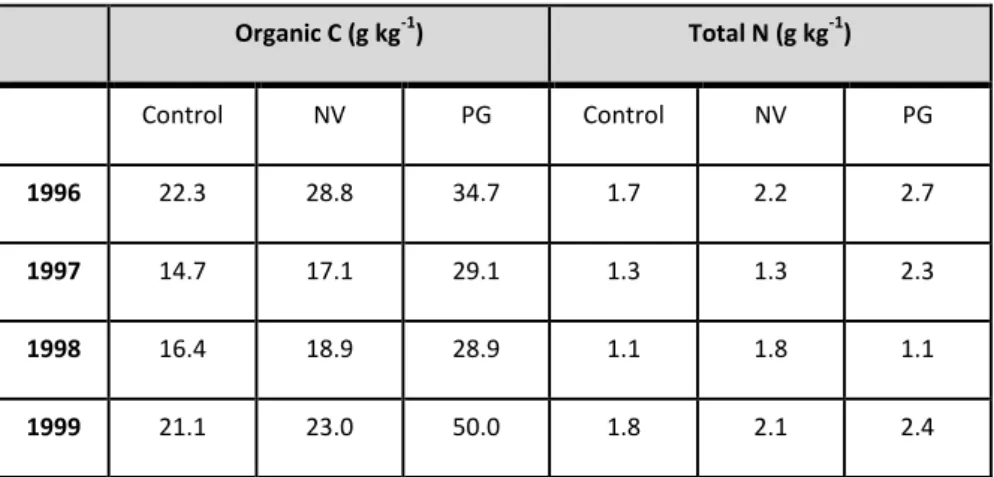
Increasing soil organic C or organic matter content increases soil enzyme activity. Correlation coefficients between soil organic C and enzyme activities in Lampung Middle Terrace areas*. Therefore, it is evident that the addition of organic C to the soil system can increase soil enzyme activities.
Explain the relationships between the enzymatic activities in the soil and the organic C and total N content in the soil.
Effects of Tropical Weeds on Soil Potassium
The Release of Potassium from Soil Minerals 7.2 The Release of Potassium from Soil Organic Matters
Abdul Kadir Salam and Nanik Sriyani – 2019 The Chemistry and Fertility of Soils under Tropical Weeds 113. This suggests that any chemical reactions that can lower soil pH can in turn drive the release of K from soil minerals. Any factors that can support these living things can promote the increase in soil enzymatic activities and the release of K into the soil environment.
Weeds with high RST, such as Arachis pintoi, can cause more intense K release from K sources in the soil environment (Ontia, 2018; Salam et al., 2019).
The Release of Potassium from Soil Minerals
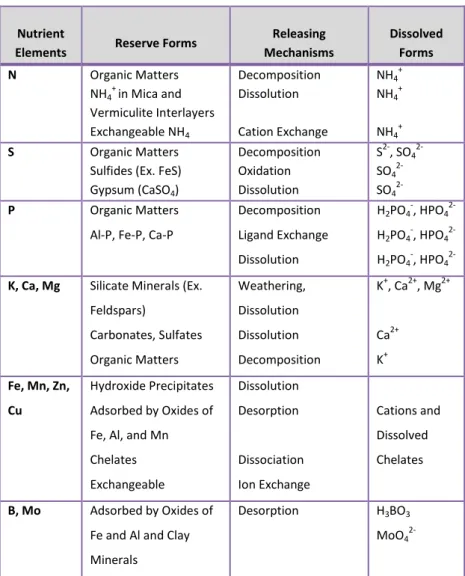
Plant nutrients are released as free ions into the soil solution through several mechanisms (Table 7.1) controlled by several factors listed below. Therefore, the release of exchangeable K is easily enhanced by lowering the soil pH, increasing the competition concentration. cations, and decreasing the soil solution concentration of K+. This means that the weathering process can be improved by wetting the soil sample and/or by lowering the soil pH and/or by eliminating K+ (and also Al3+ and Si(OH)4).
Under various controlling factors, these springs experience weathering and decomposition processes that release K+ into the soil solution.
The Release of Potassium from Organic Matters
Abdul Kadir Salam and Nanik Sriyani – 2019 The chemistry and fertility of soils under tropical weeds 119. The second possibility is that this soluble K is leached from the soil body by seeping water and moved to the subsoil. In a closed soil environment, in the absence of root absorption and leaching, the solution K is likely to be adsorbed by the soil exchange sites and becomes adsorbed K or exchangeable K.
In this case, the release of K from the decomposition of soil organic matter can be measured by the soil exchangeable K.
The Effects of Soil pH on Soil Potassium Release
Salam (2019) suggests that this logic in general may be used to control the chemical weathering of minerals in the soil environment. For example, increasing the concentration of H+ or lowering the pH of the soil is the most interesting. Hydrogen ions are consumed during the process and then the structural cations are released into the soil solution.
During the weathering of mica, H+ ions from the soil solution can displace K+ in the mica.
![Fig. 7.3. Increasing the rate of nutrient release from soil minerals by increasing [H + ]](https://thumb-ap.123doks.com/thumbv2/123dok/11381941.0/135.892.272.618.399.725/fig-increasing-rate-nutrient-release-soil-minerals-increasing.webp)
The Effects of Weeds on Soil Potassium Release
Therefore, there must be a dynamic interrelationship between the changes in soil pH and the changes in the soil exchangeable K. Abdul Kadir Salam and Nanik Sriyani - 2019 The Chemistry and Fertility of Soils under Tropical Weeds 129 . increased the soil exchangeable K. However, the uptake of K by these weeds was more intensive than by A. pintoi. Explain the relationship between the availability of K and their chemical forms in the soil system.
Explain the fate of the K released during the decomposition of organic matter in the soil-water system.

Effects of Tropical Weeds on Heavy Metals
- The Chemistry of Heavy Metals in Soils 8.2 Effects of Weed Management
- The Chemistry of Heavy Metals in Soils
- The increase in the soil enzymatic activities may also indirectly enhance the heavy metal adsorption. The acceleration of organic matter decomposition by soil
- Effects of Weed Management
- Effects of Forest Conversion
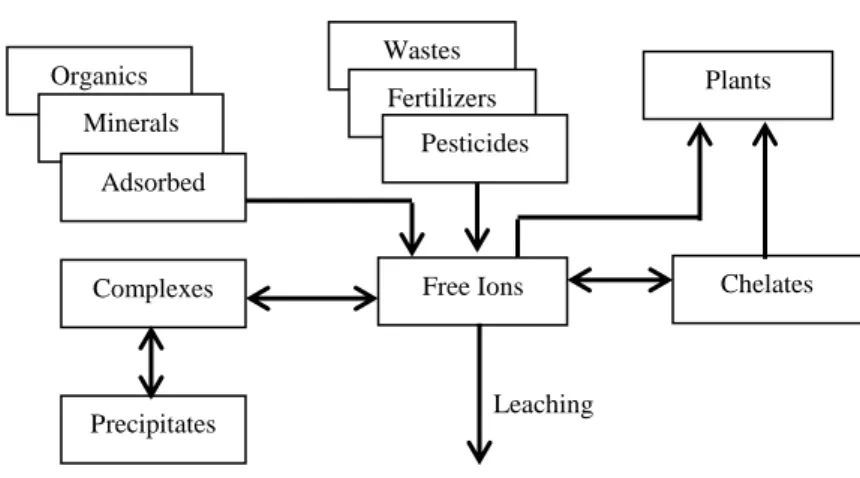
Relationships between forms of heavy metals in the terrestrial environment (Adapted from Salam, 1997a; Salam, 2017). Explain the different forms of heavy metals in the earth's water system and their relationships. Explain the effects of pH on the concentrations of various forms of heavy metals in the soil system.
Explain the effects of CEC on the concentrations of various forms of heavy metals in the Earth system.
Closing Remarks
- The Chemistry of Soils under Weed Management 9.2 The Availabilities of Plant Nutrients under Weed Management
- The Chemistry of Soils under Weed Management
- The Availabilities of Plant Nutrients under Weed Management
- The Use of Effective Weeds
Increasing organic C through weed residues can increase soil organic C and soil moisture content and maintain soil temperature. Physical soil characteristics that are affected may include soil moisture content and soil temperature. Enhancement of soil enzymatic activities by weed roots, microorganisms, and mesoorganisms can accelerate the decomposition of organic residues in the soil environment.
Increasing soil CEC can increase the weathering of soil minerals and the decomposition of organic matter.
Abdul Kadir Salam and Nanik Sriyani – 2019 The chemistry and fertility of soils under tropical weeds 161. Abdul Kadir Salam and Nanik Sriyani – 2019 The chemistry and fertility of soils under tropical weeds 163. Abdul Kadir Salam and Nanik Sriyani – 2019 The chemistry and fertility of soils under tropical weeds 165.
Abdul Kadir Salam and Nanik Sriyani – 2019 Soil Chemistry and Fertility under Tropical Weeds 167.
Glossary
Abdul Kadir Salam and Nanik Sriyani – 2019 Chemistry and Fertility of Soils Under Tropical Weeds 175. Abdul Kadir Salam and Nanik Sriyani – 2019 Chemistry and Fertility of Soils Under Tropical Weeds 177. Abdul Kadir Salam and Nanik Sriyani 2019 of Soils Under 179 tropical weeds.
Abdul Kadir Salam and Nanik Sriyani – 2019 The chemistry and fertility of soil under tropical weeds 181.
Subject Index
Abdul Kadir Salam and Nanik Sriyani - 2019 Soil Chemistry and Fertility under Tropical Weeds 183. Abdul Kadir Salam and Nanik Sriyani - 2019 Soil Chemistry and Fertility under Tropical Weeds 185. Abdul Kadir Salam and Nanik Sriyani - 2019 Soil Chemistry and Fertility under Tropical Weeds 187 .
Biography of The Author