CIHUATAN AND THE SOUTHERN MESOAMERICAN PERIPHERY Research in EI Salvador and the Southern Mesoamerican Periphery The Postclassic Period. Cultural history of the Paraiso or Central Basin A commentary on the chronology in the postclassical The Chronology of Cihuatan.
PREFACE AND ACKNOWLEDGEMENTS
However, since we were not able to analyze all the excavated materials in the field and only a limited part of the collections could be exported for study purposes, this aim was not fully met. Rather, it is a modest addition to the cumulative process of better understanding this country and its position on the southern periphery of the Mesoamericans.
Acknowledgements
Lesley Nicholls, in conjunction with the Trust Officers of the University of Calgary's Comptroller's office, expedited the rather complicated disbursement of grant funds to EI Salvador. The publication is made possible, in part, by a grant from the University of Calgary Endowment Fund.
CIHUAT AN AND THE SOUTHERN MESOAMERICAN PERIPHERY
Research in EI Salvador and the Southern Mesoamerican Periphery
In EI Salvador, Stanley Boggs, unusual in that he resided in that country and was not an expedition archaeologist, was particularly influential in crystallizing knowledge of Salvadoran archeology from the 1940s to the present day. In each case, the nature and intensity of the relationships are defined by almost unique combinations of local ecologically based evolutionary processes with variable external needs.

The Postclassic Period
The general neglect of this period is all the more incomprehensible in light of the extensive and rich documentation that exists for the Contact Period. Major disturbances occurred at the end of the Classic period in Mesoamerica and to some extent in its southern fringes.
The Language Question
Although Freidel's remarks are directed towards the peninsula, these themes resonate on the southern periphery.
The Pipil Question
We would prefer to leave open the question of the linguistic attribution of the classic Cotzumahualpan people. The brother of the ruler of Acalan (near the Gulf Coast) was in charge of the Acalan merchant barrio in Nito (in the Caribbean).
Culture History in Western EI Salvador
The Postclassic is the least understood of any of the agriculturally based periods in El Salvador. At the end of the period we encounter the documented "sea" of Pipiles in much of central and western El Salvador, enclaves of Maya speakers, and the Lenca in the east.
Culture History of the Paralso or Central Basin
Major repopulation of the basin occurred during the Middle to Late Fog6n Classic (ca. AD 400–900). Some authors explicitly emphasize the Late Classic roots of the Postclassic (Webb 1978), and there is agreement that there is overlap between the Late Classic and the Early Postclassic at least in some areas (Andrews V and Sabloff 1986; Lincoln 1986).
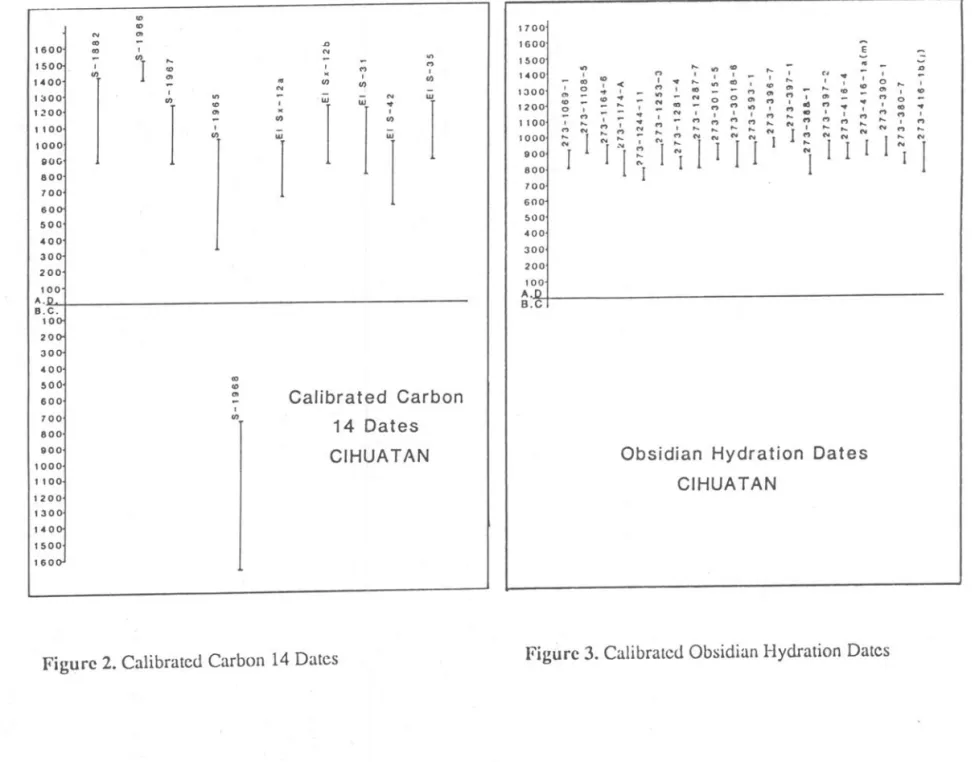
The Chronology of Cihuatfm
The results of the two dating techniques do not directly contradict the archaeological evidence that places Cihuauin in the Early Postclassic. Archaeologists working in the southern periphery have been concerned about the effects of the Classic Maya collapse on events to the south.
THE SITE OF CIHUATAN
A Spatial Overview
To the west of the central zone, the land shades topographically into gentle slopes and low hills. It forms part of the non-elite residential zone that appears to surround the central part of the site.

Development of the 1979 Research Strategies
During the latter part of the season, visibility from the ground was obscured by the fast-growing flor amarilla. A large number of cobblestones that followed the contours of the hill were considered terrace walls.

The Excavations
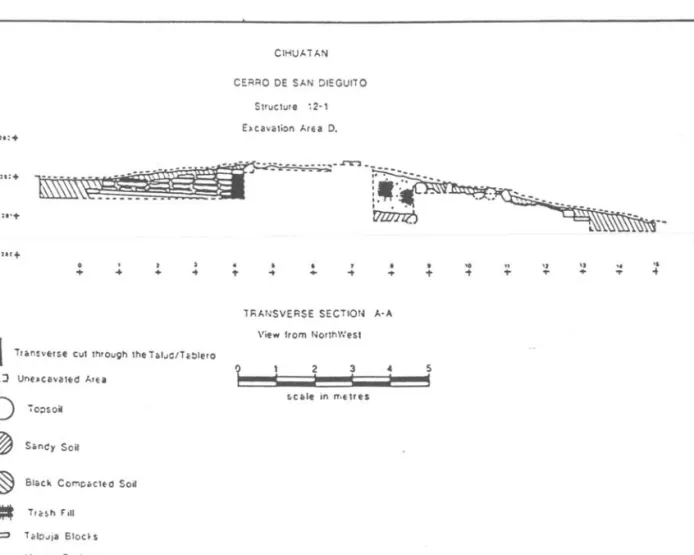
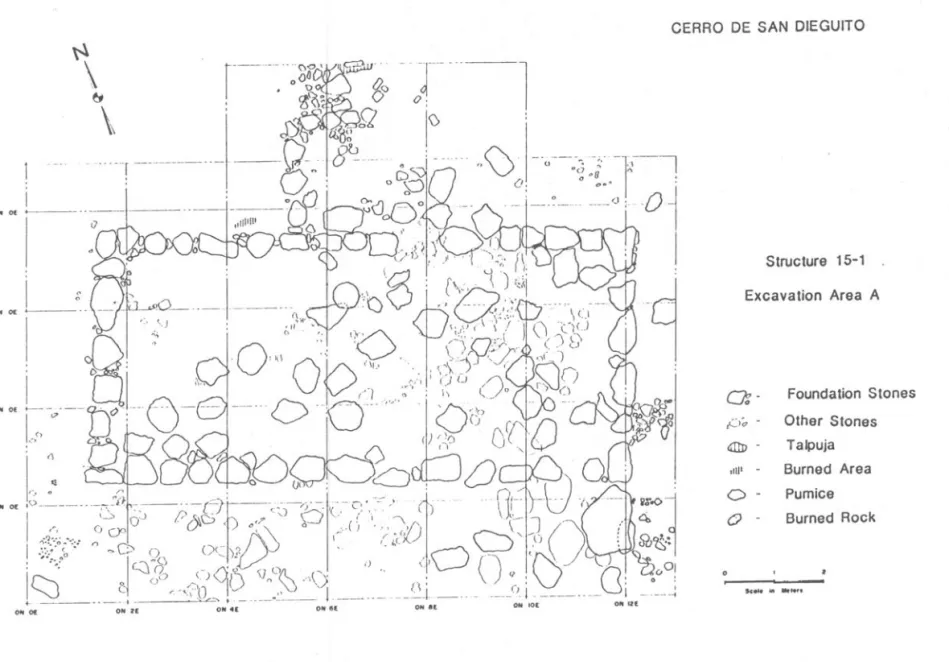
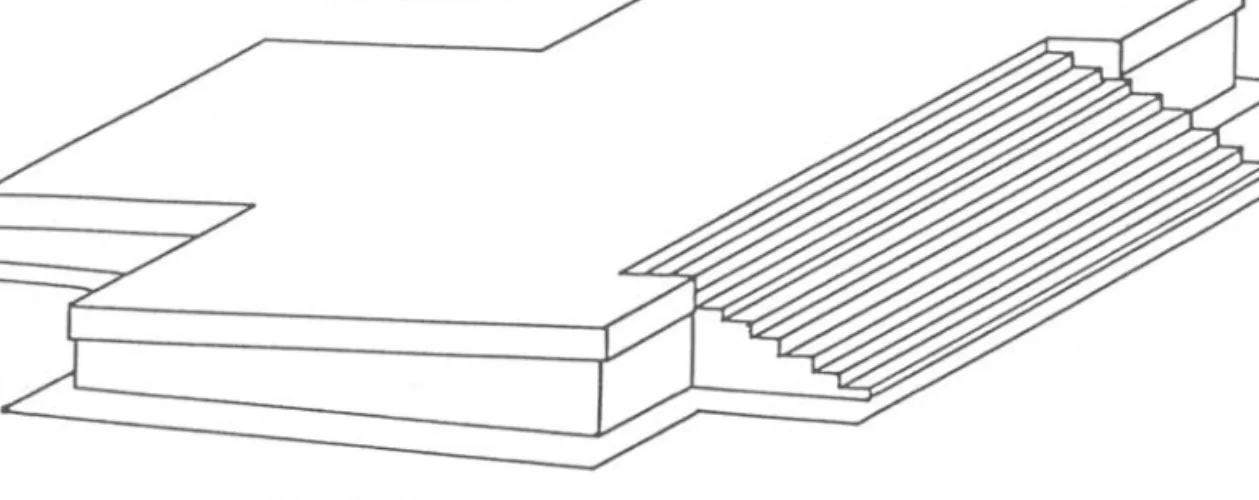
The top of structure 15-1 was badly eroded; remains of a prepared floor were found in the southwest corner of the platform. In Structure 15-2, an extension of the north wall to the west of the structure suggests a protected entrance (Figure 8).
CJCP
The top of the "furnace" was approximately 20 cm below the modern ground surface, and the bottom of the furnace was at the same level as the base of the temple, which was only a few cm away. The fact that the talpuja from the platform was used in the base of the oven - suggesting that the temple platform was exposed when the "oven" was built.
Summary
Now that the hypothesis has been rejected and we reevaluate the evidence in light of its new placement in time, we can clearly see that we chose the wrong pieces of evidence to begin with. This brief introduction to the site and the description of the 1979 fieldwork provide the basis for a discussion of artefact classes (Chapters 3, 4, 5 and 6), the ecological setting (Chapter 7) and the investigation of within-site variability ( chapter 8).
CERAMIC CLASSIFICATION
The State of the Art: A Comparison of Existing Classification Systems
Bruhns distinguishes a single Red-Slip Ware while Fowler recognizes N aguapate Coarse Red and Garcia Red ceramic groups. Garcia Red has the same paste as Tamulasco Plain and is said to be characterized by a well-polished red slip on bowls and jars.
San Dieguito Ceramics
Fondo Sellado Sherds
Pitcher Lips and Grooved Sherds
All major classification categories recognized by Fowler and Bruhns are present in San Dieguito; Differences exist in the definitions of the smaller local categories. The strength of the relationship is stronger for the more detailed shape coding than for the coarse shape coding, but is still quite weak. That category as a whole is weakened in the strength of the relationship that must be formed by the addition of bowls and pots – shapes that cut across the categories.
Cramer's V is 0.62 for coding the inner surface and 0.63 for coding the outer surface. By dividing the San Dieguito pottery data in various ways, some of the reasons for the classification problems became clear.
CERAMIC FORMS FROM SAN DIEGUITO
Vessel Forms
Seated Figure Fragments
None of the archaeological contexts outside the western ceremonial center offer any clues as to their function in a domestic context. Bowls would make up at least half of the vessels in the household, and perhaps as much as 60-70% -- a finding echoed by actual floor assemblages reported by Bruhns from other parts of the site. The contrast between the moored collections of Structure 15-1 and the Structure 12-51 sample also suggests a different distribution of tasks associated with large, stout vessels.
Most of the vessels had rim diameters between 100 mm and 260 mm, with fewer vessels in the larger and smaller ranges. Although previous ceramic analyzes do not present data in this way, it is possible to make some comparisons with other parts of the site, and this is done in Chapter 8.
RESULTS OF CERAMIC TECHNICAL ANALYSIS 109
CHAPTERS
RESULTS OF CERAMIC TECHNICAL ANALYSIS
Petrographic Analysis
Ray Diffraction
The specimens containing primary quartz previously identified in the petrographic analysis could not be distinguished from the others in the diffraction results on the basis of peak height or peak intensity. A reexamination of the corresponding thin sections for the samples showing peak intensity in the mica group reveals no microscopically identifiable mica. 450 °C (or even lower) to perhaps 600 °C, judging by the clay minerals that have not lost their structure in the analyzed samples.
In the petrographic analysis, Stout gave proportions of visible inclusions present in each thin section. In the most extreme cases, clay may have made up only 20-30% of the fabric.
STONE ARTIFACTS FROM SAN DIEGUITO
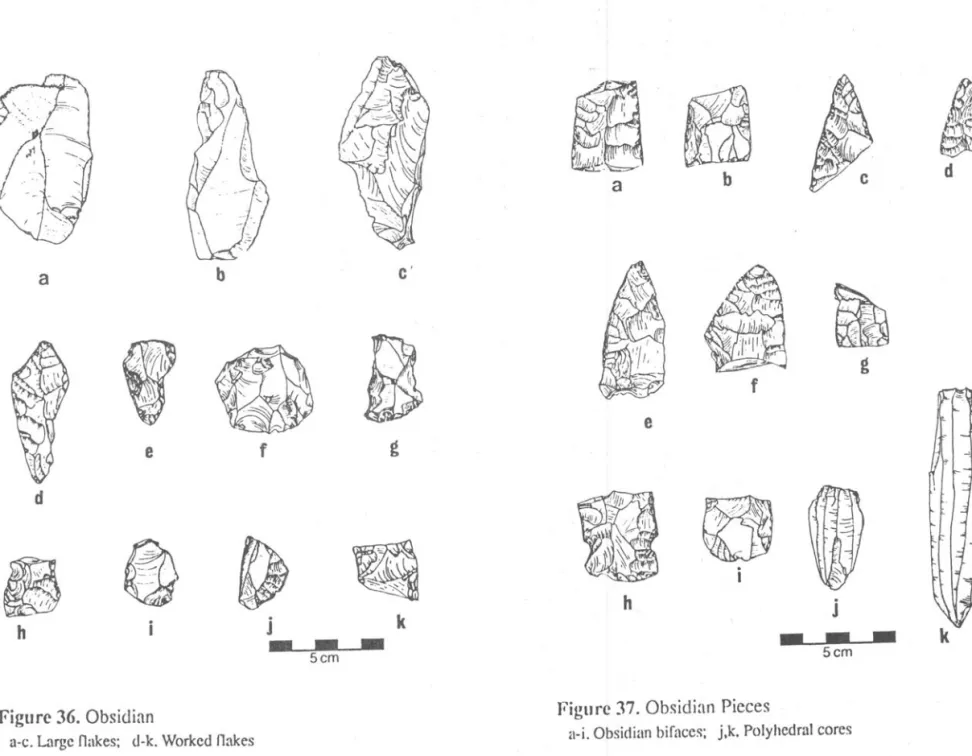
The frequency of wastage in the San Dieguito collection is much higher than that found in Fowler's earlier analysis of Cihuatan chipped stone. The incidence of manufacturing defects recorded for prismatic blades in San Dieguito is significantly higher than that noted in the previous analysis. Of the 4,859 prismatic blades in the San Dieguito collection, their parent core had unhinged prematurely.
Laterally retouched implements: Only two laterally retouched implements were found in the San Dieguito collection. A second celt was noted (but not collected) in the San Dieguito survey and recorded as Feature 148.
MAN AND ENVIRONMENT AT CIHUATAN
It is generally accepted that the first significant modification of the environment by humans accompanied the introduction of agriculture in the Preclassic (Sheets 1964:8; Fowler 1981:698). Given the greatly altered state of the vegetation, the problems of reconstructing the environment of the Parafso Basin and Cihuatan for the Postclassic period appear at first sight to be overwhelming. In 1979, plant communities were observed in a small forest remnant in a protected forest, along the banks of the Acelhuate and Ixcanal rivers, and in a number of differentially disturbed habitats.
The thin soils on the andesite hills that form the core of the site are of volcanic origin. Along the Rio Ixcanal, a narrow strip of bottomland immediately adjacent to the stream can be planted in produce or left as a band of trees representing the former forest vegetation.
Microhabitats
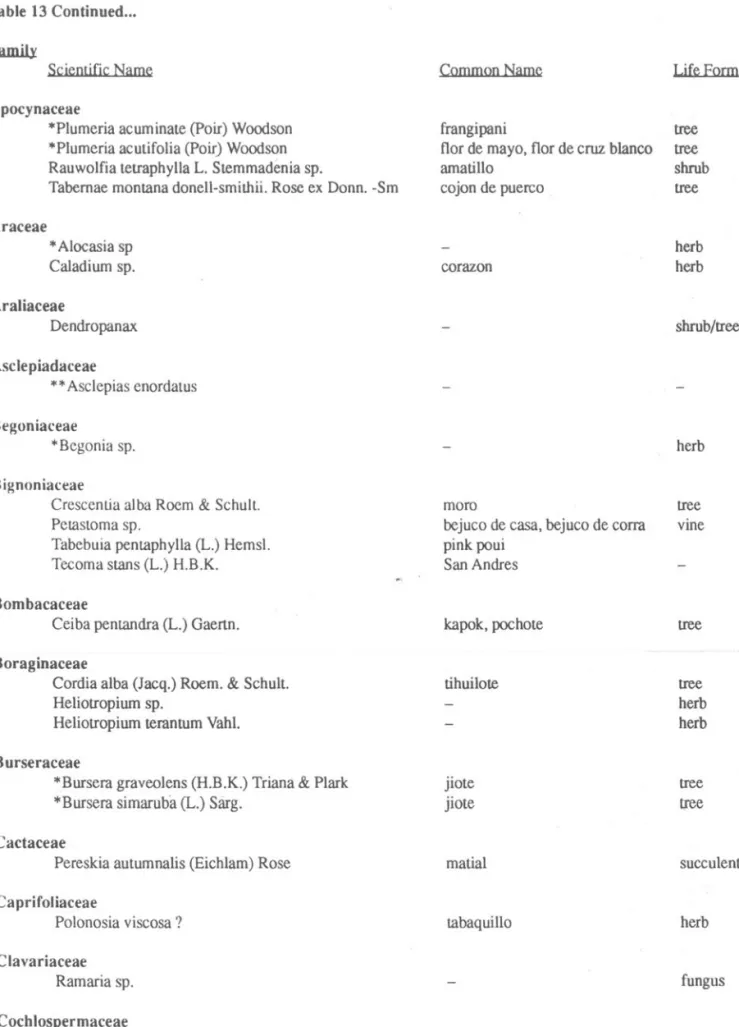
The second episode (Plate 14) was carried out at the Missouri Botanical Garden, where Van Asdall had the help of Mr. Not only would deforestation create plant communities similar to the bullock tracks on Cerro Colima, or those typical of the well-lit forest of planar areas at the present time, but it seems likely that deforestation would be selective, with other useful trees and other plants. This list is not definitive for either the Cihuatan area or the 1979 field season.
Except for species with an asterisk (*), plants are housed at the University of Arizona, Tucson in pressed or dried form. Solanaceae Piperaceae Piperaceae Bignoniaceae Polygalaceae Polygalaceae Myrtaceae Rubiaceae Rubiaceae Rubiaceae Rubiaceae Rubiaceae Apocynaceae Rubiaceae Rivina humilis L.
Subsistence and Economy
Flotation: Method and Results
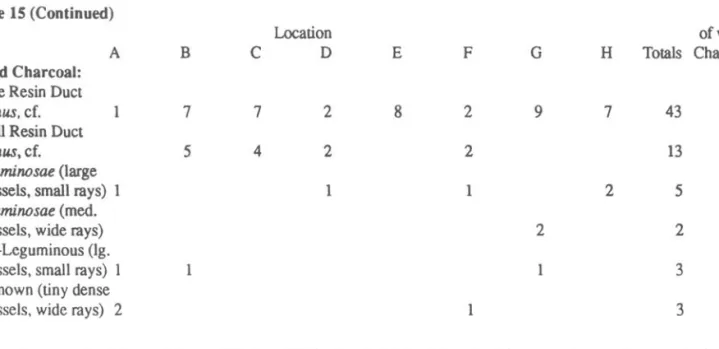
Mant (flor amarilla), Mimosa, Sida (escobilla) and the "beggar lice" or stick food (Desmoiwn), which could have been plucked from the loincloth after a hard day in the fields. Furthermore, many of San Salvador's tributary towns have been found to be double-cropped maize in the better-known Cerrato tasacion (AGI, Audiencia de Guatemala, Legajo 128). Apart from local fishing in Acelhuate, Lempa and several lakes would have been easily accessible;.
In this document, the pueblo of Tecuyluca is stated to be under the jurisdiction of the city of San Salvador. More formal information on the related industry is given in the reports of Monte Pio de Cosechos de Aiii.
A PRELIMINARY LOOK AT INTRASITE VARIABILITY
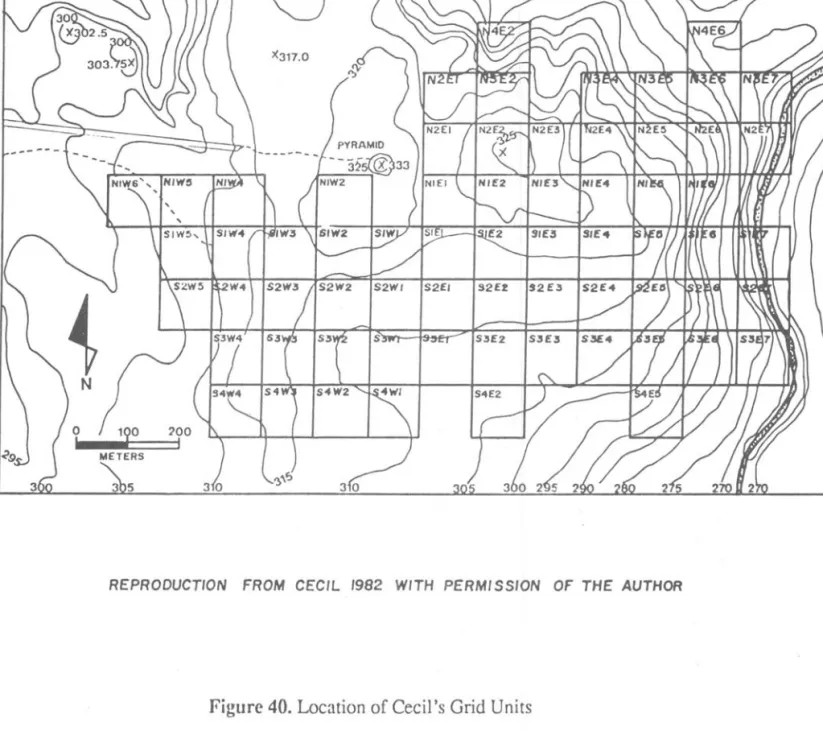
The best known part of the site is the Poniente or Western Ceremonial Center (WCC) (Plate 31). Many of the southern "walls" at level S2 of the units appear to be terrace facings. Some parts of the area immediately adjacent to centers may qualify for intermediate area status.
The two parts of the site that produced the most spindle cliffs are San Dieguito (N=29 in Structure 15-1 fill) and the NW-l/NW-3 complex. In general, the same basic ceramic classification categories occur in all parts of the site.