The eclectic theory shows that the level of entrepreneurship can be explained by distinguishing between the supply side (labor market perspective) and the demand side (product market perspective; market carrying capacity) of entrepreneurship. In short, the eclectic theory shows that there are many ways in which the level of entrepreneurship can be influenced.
FIVE STAGES
Europe recognized that the high performance of the entrepreneurial economy in Silicon Valley provided sustainable long-term performance. European policy makers agreed that – in the terminology of Audretsch and Thurik (2001) – the new entrepreneurial economy was superior to the old managerial economy.
CROSS-NATIONAL RESEARCH TEAMS
During the same period, the capital volume of the New Market increased from billion to billion. Germany was chosen because even as recently as the early 1990s the model of the Sozialmarktwirtschaft delivered welfare through static efficiency and seemed impervious to the development of an entrepreneurial economy.
ENTREPRENEURSHIP POLICY MATTERS
Each research team consisted of members from both sides of the Atlantic and was given the mandate to apply the framework provided by the Eclectic Theory to a specific country. In all the countries, entrepreneurship policy can be seen as a tool that has evolved to create jobs, and to promote international competitiveness, economic development and growth.
ACKNOWLEDGEMENT
To some extent, typical government policy roles in the four countries, as well as specific cultural and institutional environments, defy comparison. The findings in the country case chapters show that, using the framework provided by Eclectic Theory, it is up to policy makers in many highly developed economies to identify the determinants of entrepreneurship in a particular country in a particular environment. point in time.
Thurik, 2000, Capitalism and Democracy in the 21st Century: From the Managed Economy to the Entrepreneurial Economy, Journal of Evolutionary Economics. European Commission, 2000, The European Observatory for SME-Sixth report, submitted to the Directorate General for Enterprise by KPMG Consulting, EIM Business and Policy Research, and ENSR, Luxembourg.
AN ECLECTIC THEORY OF
ENTREPRENEURSHIP: POLICIES, INSTITUTIONS AND CULTURE
INTRODUCTION
The purpose of this chapter is to provide new insights into the revival of entrepreneurship in the Western world. In section 2.2 we first discuss the complex and multidimensional phenomenon of entrepreneurship and its consequences for measurement.
DEFINITIONS AND MEASUREMENT OF ENTREPRENEURSHIP
In the static perspective of self-employment and business ownership two definitions can be distinguished (EIM/ENSR, 1995). The former three countries experienced a growth in the business ownership rate in the period before 1984.
DETERMINANTS OF ENTREPRENEURSHIP
Regarding the last dimension, it can be said that entrepreneurial activity does not only take place in small firms, but that it can also be present in large organizations. Entrepreneurship does not only occur in the form of small firms, but also in the form of corporate entrepreneurship, new ideas and responsibilities implemented in existing organizations (Stopford and Baden-Fuller, 1994; Wennekers and Thurik, 1999).
A FRAMEWORK
DEMAND SIDE .1 Introduction
- Technological Development
- Globalization
- Economic Development
- Industrial Structure
Several arguments have been advanced to support a negative impact of economic growth on the level of self-employment (Carree, Van Stel, Thurik, & Wennekers, 2001). There are arguments supporting this positive impact of economic growth on the level of entrepreneurship (Carree, Van Stel, Thurik and Wennekers, 2001).
SUPPLY SIDE .1 Introduction
- Population Growth
- Population Density and Urbanization Rate
- Age Structure of the Population
- Immigration
- Participation of Women
- Income Levels and Unemployment
- Income Disparity
The age structure of the population can have both a direct and indirect impact on the level of entrepreneurship. On the other hand, at the individual level, (the risk of) unemployment is likely to have a positive effect on the level of entrepreneurship by reducing the opportunity cost of self-employment.
INDIVIDUAL DECISION MAKING .1 Introduction
- Opportunities and Individual Characteristics
- Risk-Reward Profile
A high income gap can also provide people at the other end of the income distribution with the financial means to cover the risks associated with self-employment and start a successful business. Therefore, a high interest rate is likely to deter potential entrepreneurs from starting a business due to the (high) costs and risks involved.
ACTUAL AND EQUILIBRIUM RATES .1 Actual and Equilibrium Rates
- Restoring Equilibrium
There are different views on the factors that determine the equilibrium rate of entrepreneurship (Lucas, 1978; De Wit and Van Winden, 1991). There is also some evidence that this relationship is U-shaped. 2001) cites a "Schumpetarian regime shift" as the reason for the recent reversal33 of the long-term downward trend in the equilibrium rate of entrepreneurship.
GOVERNMENT INTERVENTION .1 Introduction
- Government Policy and Small Business: Some Traditional Perspectives
- Five Types of Government Intervention Framing Entrepreneurial Activity
In particular, this recovery capacity of the market works through (the valuation of) the number and type of entrepreneurial opportunities. The government can support the development of the venture capital market by intervening in both supply and demand in the venture capital market.
- Measuring Culture
- Cultural Change
- Culture’s Consequences
For a better understanding of the concept of culture it is necessary to make a distinction between culture and personality. 1999) find a positive empirical relationship between the social value of independence and the level of entrepreneurial activity. On the other hand, uncertainty avoidance has also been shown to have a negative indirect impact on the development of the level of entrepreneurship over time.
CONCLUSIONS
The level of entrepreneurship in a given country can be explained by making a distinction between the supply side (labour market perspective) and the demand side (product market perspective; market carrying capacity) of entrepreneurship. Studies at the meso level of entrepreneurship often focus on specific market determinants of entrepreneurship, such as profit opportunities and entry and exit opportunities. At the general level, these occupational choices appear as entry and exit rates of entrepreneurship.
NOTES
42 The degree of government intervention in bankruptcy proceedings varies from country to country (EIM/ENSR, 1997; De Koning, 1998). Meyer, 1994, A longitudinal analysis of the young self-employed in Australia and the United States, Small Business Economics. Johansson, 1999, Institutional effects on the evolution of the size distribution of firms, Small Business Economics.
DETERMINANTS OF ENTREPRENEURSHIP IN FRANCE
INTRODUCTION
The purpose of this chapter is to examine the development of entrepreneurship in France and the factors that strongly influenced this development in the period 1960-1998. From a static perspective, the state of entrepreneurship in France in 1999 is discussed, while from a dynamic perspective, the development of entrepreneurship between 1960 and 1998 is discussed. It will be noted that government intervention and culture appear to be important factors influencing entrepreneurship in France, and that , that supply-side factors have little or ambiguous influence on entrepreneurship.
STATE AND DEVELOPMENTS OF ENTREPRENEURSHIP IN FRANCE
- Developments in Entrepreneurship
The development of entrepreneurship in most OECD countries can be characterized by a U-shaped trend, with entrepreneurship declining until the mid-1980s and increasing thereafter (Carree, van Stel, Thurik and Wennekers, 2001). At first glance, this U-shaped trend is not typical of the development of entrepreneurship in France. However, it is possible that entrepreneurship in France will increase in the near future and show a U-shaped development, although it will start later.
DETERMINANTS OF ENTREPRENEURSHIP .1 Introduction
- Demand Side Determinants
- Supply Side Determinants
The importance of the service sector in the economy can be determined using the number of businesses, the share of employment and value added. Overall, the impact of supply-side factors on entrepreneurship in France appears to be unclear. The effect of the French age structure on entrepreneurship is unlikely to change in the near future.
GOVERNMENT INTERVENTION .1 Introduction
- History and Current Situation of Government Intervention in France
- Government Intervention in the French Economy
Until the Fifth Plan, entrepreneurs were used to the protection of the French government when developing new products. The compensation rate refers to the level of unemployment benefits in relation to the level of the (minimum) wage. In France, the level of the minimum wage in relation to the average wage is the highest in the OECD after the Netherlands (OECD, 1994a).
CONCLUSION
These characteristics of the French internal organization can be applied to the French economy as a whole (Groenewegen, 2001). These low fertility rates reduced the share of the young to the benefit of the old. For example, a statement of actions performed in the name and on behalf of the new company must be signed.
DETERMINANTS OF ENTREPRENEURSHIP IN THE NETHERLANDS
INTRODUCTION
What factors on the supply and demand side determined entrepreneurial activity in the Netherlands. To what extent have government policies, institutions and culture played a role in the development of entrepreneurship. In Section 4.2, both static and dynamic indicators of entrepreneurship in the Netherlands are discussed to create insight into the degree of entrepreneurial activity, both from an (international) cross-sectional and a (national) longitudinal perspective.
STATE AND DEVELOPMENTS OF
ENTREPRENEURSHIP IN THE NETHERLANDS 4.2.1 State of Entrepreneurship
Developments in Entrepreneurship
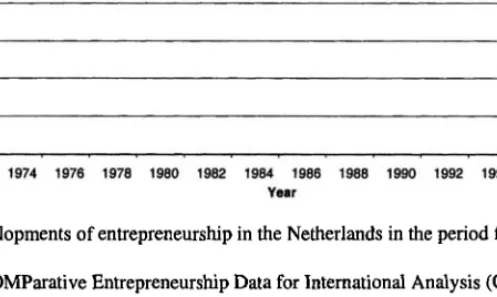
A study of the historical development of entrepreneurship in the Netherlands can lead to a better understanding of its current level. The overall increase in the number of entrepreneurs in the Netherlands in the period 1972-1998 is 38 percent. In 1997 this number represented ten percent of the total number of businesses in the Netherlands (Verhoeven and Becht, 1999).
DETERMINANTS OF ENTREPRENEURSHIP .1 Introduction
- Demand Side Determinants
- Supply Side Determinants
Formal and informal R&D collaboration is found in the Netherlands (Den Hertog and Thurik, 1993; Hulshoff and Snel, 1997). Migration flows are an important economic and social issue in the Netherlands (Rettab, Jansen and Van Ginkel, 2000). Figure 4.3 shows the development of unemployment (as a percentage of the workforce) in the Netherlands for the years 1972 to 1998.
GOVERNMENT POLICY .1 Introduction
- History of Government Intervention in the Netherlands
- Government Intervention in the Dutch Economy
- Culture
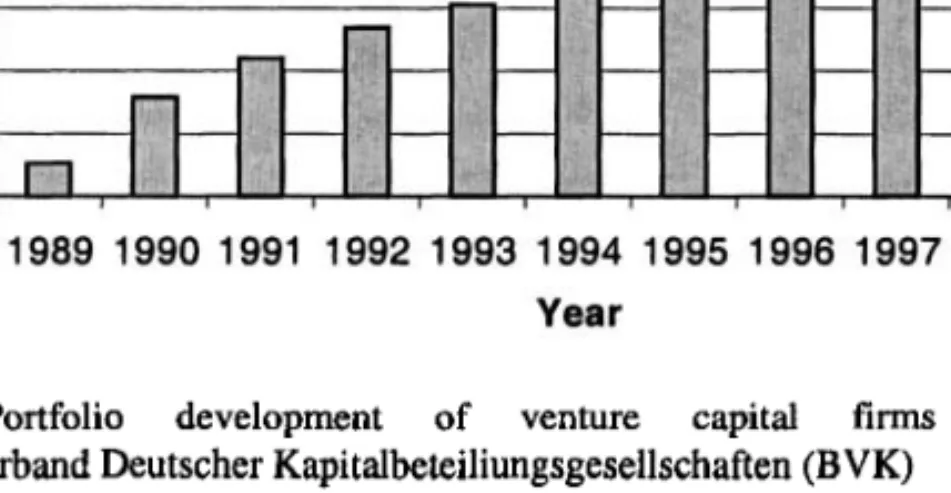
This regulation has created entry barriers that hinder the development of entrepreneurship. the Dutch government had a negative influence on the number of small businesses in the period leading up to 1980. In the Netherlands, an important bottleneck is the existence of taxes that inhibit the succession of a business. As can be seen in the last column of Table 4.5, the amount of venture capital investments made in the Netherlands relative to GDP is not far behind that of the United States.
CONCLUSION
The decline of entrepreneurship in the Netherlands for the greater part of the century was pronounced. EZ/EIM, 1998, Entrepreneurship in the Netherlands; New businesses: the key to competitiveness and growth, Zoetermeer: EIM Business and Policy Research. Nijsen (2000), Information obligations in the Dutch rule of law, EM Strategic Study B0001, Zoetermeer: EIM Business and Policy Research.
DETERMINANTS OF ENTREPRENEURSHIP IN GERMANY
INTRODUCTION
As is the case in virtually all developed countries, research into both the origins and consequences of entrepreneurship in Germany has exploded in the last decade.3 Researchers from a wide spectrum of disciplines spanning management, finance, strategy, sociology, geography and economy, has responded with a wave of new studies that shed new light on the role of entrepreneurial culture in Germany. This section takes both a cross-sectional and a longitudinal point of view, as it discusses the state of entrepreneurial culture in Germany (compared to other countries) and the development of entrepreneurship in Germany over time. In subsequent sections, the underlying factors are discussed, i.e. determinants for the development of entrepreneurship in Germany.
STATE AND DEVELOPMENT OF ENTREPRENEURSHIP IN GERMANY
- Longitudinal Perspective
If we look at the development of entrepreneurship in Germany in the period from 1972 to 1998, we can say that it has generally grown, although not steadily. Turbulence refers to the change in the number of entrepreneurs that originates from the difference between the creation and closure of businesses. Therefore, it can be argued that entrepreneurship has increased since the 1980s, both in terms of the number of business owners and the degree of turbulence in the German economy.
DETERMINANTS OF ENTREPRENEURSHIP IN GERMANY
- Introduction
- Demand Side Determinants
- Supply Side Determinants
The development of immigration in Germany in the period between 1972 and 1996 is presented in Figure 5.4. Consequently, a change in the age distribution of a country can cause the number of business owners to change. Figure 5.5 shows the development of the unemployment rate in Germany in the period from 1975 to 1996.

GOVERNMENT POLICY IN GERMANY .1 Introduction
- History of Government Intervention in Germany
- Government Intervention in the German Economy
It could be argued that the lack of dynamism in the German economy, which is a side effect of the Sozialmarktwirtschaft, has a negative effect on entrepreneurship in Germany. However, there are many exceptions in the laws of different countries (De Koning and Snijders, 1991). The relative level of the German interest rate can have significant negative consequences for doing business in Germany.