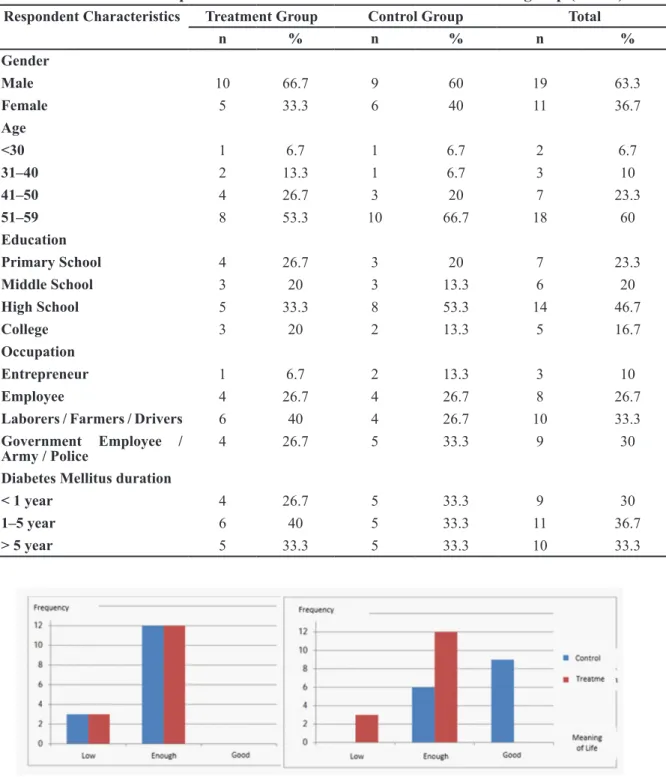
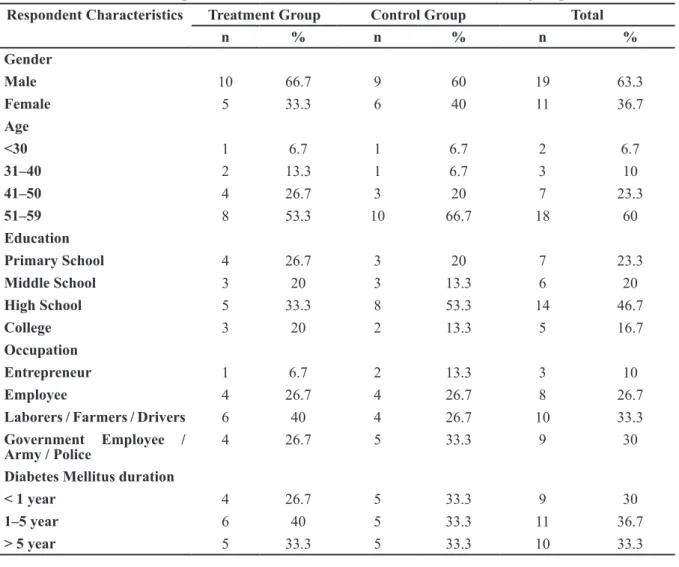
The meaning of life of the treatment group before and after the intervention has different levels of classification. In the treatment group, 11 respondents experienced an increase in the meaning of life (positive rows).
The nurses’ focus on the physical problem
The initial assessment of attention and mood strongly encourages nurses to provide alternative or complementary care that can be provided in the hospital. Nurses understand that the concept of attention and mood in stroke patients will be understood from understanding, signs and symptoms, and how to cope with the problem.
If it is not angry, just give advice to patients by motivating patients.” Four participants said that dealing with physical problems took priority over psychological problems. Yes, we always use SOPs during patient treatment, but usually for ROM, dental hygiene or something else. Theme 2: Lack of awareness to manage attention and mood.
Family participation in nursing care
Physical problems take priority, as frequent patients are hospitalized, their psychological problems disturbed by physical problems. I know if you are experiencing that we invite communication to be more focused and should be more patient.
Theme 5: lack of information about the interventions in handling attention and
Results indicate that motivational interviewing is significant for mood and reduces mortality 12 months after stroke (Watkins et al., 2011). Nurses' understanding of how to manage attention and mood after a stroke should rest with hospital nurses.
Analysis of Factor Affecting Nutrition Status on Children
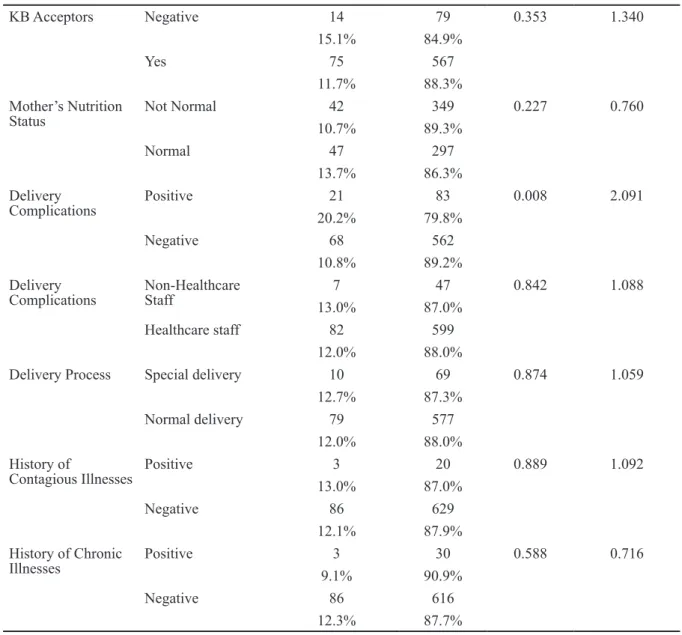
This indicates that there is a significant relationship between that variable and the child's nutritional status. The relationship between the mother's factor and the child's nutritional status can be seen from the p-value in the table.
Psychometric Evaluation of Instruments Measuring The Older Adult’s Functional Status in Indonesian
Functional status has evolved into one of the measures of patient outcome and is an important part of measuring the health status of older adults. In addition, functional status has also been included in nursing intervention outcome measures (Doran, 2011). In the last two decades, there has been considerable progress in the assessment of functional status and disability in the elderly population.
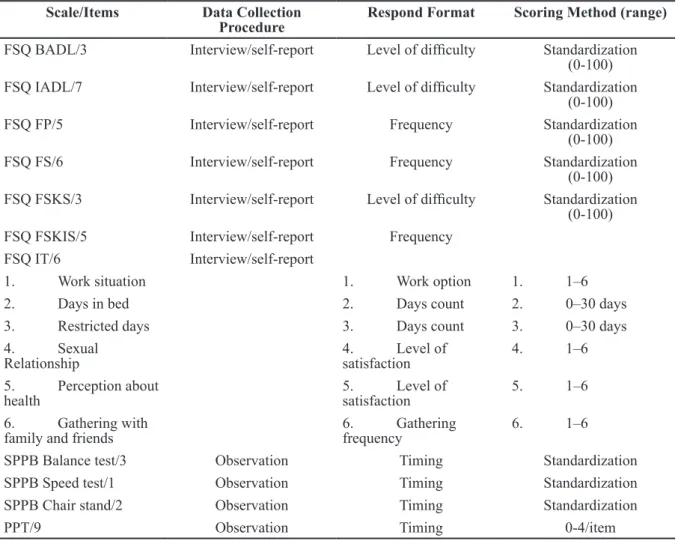
After an extensive literature search, the researchers found three commonly used instruments for measuring functional status that could be used in the older adult population: (1) Short Physical Performance Battery (SPPB) (Guralnik et al. Functional Status Questionnaire (FSQ) (Cleary & Jette, 2000; Jette et al., 1986), and (3) The Physical Performance Test (PPT) (Reuben & Siu, 1990; Sherman & Reuben, 1998). The mean and standard deviation of all instruments used measuring the functional status can be seen in table 3. The correlation between SPPB and PPT is the highest and both instruments equally measure the functional status of elderly people through observation.
The main research objective of this study is to determine which of these three instruments (FSQ, SPPB and PPT) can be used to measure the functional status of the older adult population in Indonesia, which one is most appropriate. From studies of older adults living in the community, we found that almost all instruments have the potential to be used as a standard instrument to measure the functional status of older adults living in the community, especially SPPB and PPT.
Measuring Work Fatigue on Nurses: A Comparison between Indonesian Version of Fatigue Assessment Scale (Fas) and Japanese Industrial Fatigue
Ressearch Commite (Jifrc) Fatigue Questionnaire
Measuring occupational fatigue in nurses: A comparison between Indonesian version of Fatigue Rating Scale (Fas) and Japanese Industrial Fatigue. Of the different fatigue scales, FAS and JIFRC are two questionnaires that are often used by researchers to measure work fatigue in different types of work and conditions. Chie (2014), This questionnaire contains 10 questions to reveal the general feeling of work fatigue in the past year.
The mean of the total JIFRC score was the mean in this study that the average nurse experienced work fatigue in the "medium" category. This result generally shows that the Indonesian version of FAS is reliable in measuring work fatigue in nurses. This result generally shows that the Indonesian version of JIFRC is reliable in measuring work fatigue in nurses.
Based on the comparison of the values of Cronbach alpha reliability test and Pearson correlation validity test, compared to the FAS, the JIFRC proved the validity and reliability values higher, this instrument is more recommended for measuring work fatigue for nurses. The high internal consistency and construct validity support the application of the JIFRC as an easily administered instrument to assess work fatigue among nurses in Indonesian healthcare settings.
Improving Student Nurses’ Clinical-Reasoning Skills: Implementation of a Contextualised, Guided Learning Experience
A quasi-experimental, non-equivalent control group design was used to investigate the impact of the developed educational intervention on students' accuracy, inaccuracy, and confidence in clinical reasoning. The implementation of the educational intervention took place in the Faculty of Nursing of the Catholic University of De La Salle Manado. Students' clinical reasoning was measured using two primary variables: accuracy and inaccuracy in clinical reasoning.
A significant main effect was also found for Group, F p = 0.000, with a partial eta square showing a very large effect size (η² = 0.37) (Pallant, 2013), indicating a difference in the effectiveness of the educational intervention and usual education in the field of education. students' overall accuracy in clinical reasoning. Situating knowledge through case-based learning was a key element in the design and implementation of the educational intervention. Collaboration through small group discussion was another key element of the design and implementation of the educational intervention used in this study.
This study found that the educational intervention implemented in this study showed some positive effects on students' development of clinical reasoning skills. Based on the overall results of the study, it is argued that the educational intervention had a number of positive effects in relation to facilitating students' clinical reasoning skills.
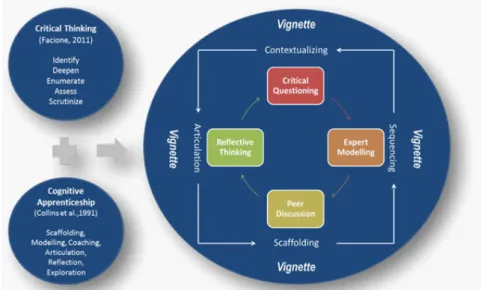
Relationship between Family Anxiety, Family Support and Quality of Life of Attention Deficit Hiperactivity Disorder (Adhd) Children
Relationship between family anxiety, family support and quality of life of attention deficit hyperactivity disorder (ADHD) Children. This study analyzed the relationship between family anxiety and family support on quality of life of children with ADHD. Based on Table 1 above shows the relationship between family anxiety and the quality of life of ADHD children with a value of p = 0.000 (p < 0.005).
Table 2 shows the correlation between family support and the quality of life for children with ADHD characterized by the value p = 0.000 (p <0.005). The results of this study are similar to studies Theule (2010), family anxiety had a significant relationship with the quality of life in children ADHD (p = 0.000). Reposted by Murray & Johnson (2006), the anxiety factor family has contributed to the quality of life of children with ADHD.
Based on these findings, it can be seen that family anxiety and family support are simultaneously related to the quality of life of children with ADHD. Studies conducted by Ostberg & Hagekull (2000) in Sweden found that anxiety about family and family support had a significant relationship with the quality of life of children with ADHD.

Factors Related To The Needs Of Parents Having School Age Thalassemic Children
Henny Suzana Mediani: Factors related to the needs of school-aged thalassemia patients. Parental needs in school-aged children with thalassemia are associated with long-term complications, blood transfusion and iron chelation (Mediani et al., 2017; Shosha, 2014). The emotional needs of parents are related to the health status of the children, the severity of the illness and the responsibility of the parents.
As a pediatric nurse practitioner, she needs to understand factors related to parental needs in order to provide appropriate interventions based on the needs of parents of school-age children with thalassemia. The findings of this study showed that the greatest needs of parents are spiritual needs. Next, gender was also identified as the factor most associated with the needs of parents of children with thalassemia in this current study.
Understanding the supportive care needs of parents of children with cancer: a local needs assessment approach. Exploring supportive care needs of parents of children with cancer: is a parent support group intervention a feasible solution?

The Effect of Combination of Buteyko Breathing Technique and Walking Exercise on Forced Peak Expiratory Flow In Adult Asthmatic Patients
The global prevalence of asthma is estimated at 334 million people of all ages (Phillips, 2014) and approximately 235 million people are living with asthma, with approximately 80% of asthma-related deaths in middle- and low-income countries (WHO, 2018). ). In 2025, it is estimated that the prevalence of asthma will increase to 400 million people worldwide (Masoli et al., 2004). Patients in the intervention group and the control group continued to receive pharmacological therapy from a physician specializing in lung diseases at the Poli Hospital Pulmonology Clinic.
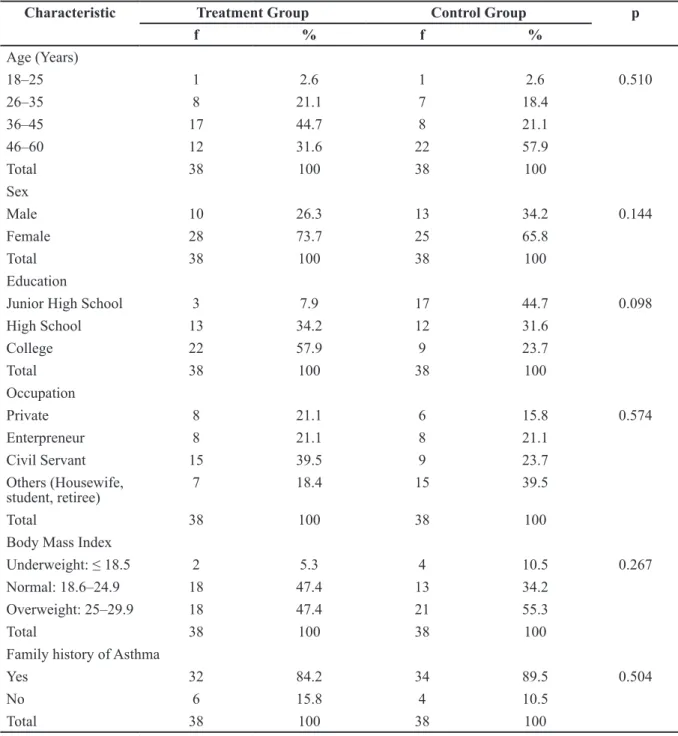
The treatment group was conducted in the Pulmonary Clinic of the Regional General Hospital of Sidoarjo Regency. The control group was conducted at the pulmonary clinic in Bangil Regional General Hospital, Pasuruan Regency. Characteristics of respondents based on family history who have asthma in the treatment group, almost all have a family history of asthma, as many as 32 respondents (84.2%) and the control group almost all have a family history of asthma.
The difference in the APEP value between the treatment group and the control group occurred in the 8th. There were differences in the FPEF values in the 8th week measurement between the treatment group and the control group.
Nurses’ Life Experiences As Persons In Charge of Mental Health Programs In Community Health Centers
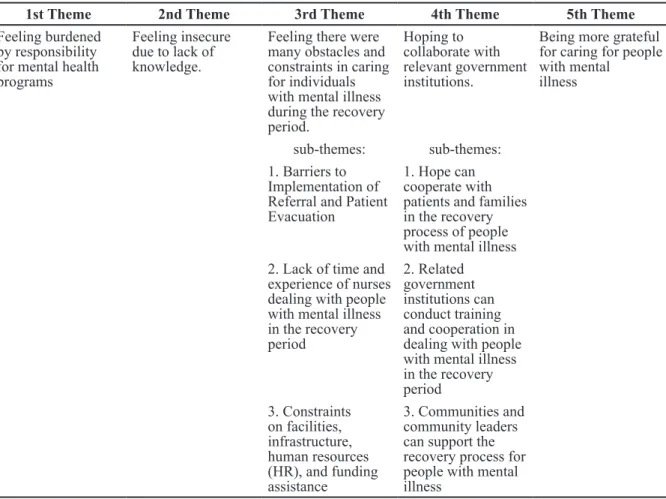
Nurses' life experiences as persons in charge of mental health programs in community health centers. In its implementation, mental health nurses play an important role in the recovery process of people with mental illness in society. Criteria for participants were as follows; the person has been in charge of the mental health program in the community health center, has experience in dealing with people with mental illness for at least six months, and has a Nursing Diploma.
Although previous studies have discussed the heavy workload, none have considered the heavy workload faced by the person in charge of the mental health program in dealing with people with mental illness during recovery in the community health center. This is to ensure that the nurses can promote, educate and advise individuals with mental illness about mental health. The success of dealing with people with mental illness during the recovery process can be carried out by refreshing about the role of mental health.
Furthermore, while building community mental health services, Widowati (2018) highlights the importance of the role of various regional actors, from the governor who makes policy to the village headman who executes it through village headman Desa Siaga Sehat Jiwa ( Healthy Soul Alert Village). Roles and functions of community mental health nurses caring for people with schizophrenia in Taiwan.