Both the range of human factors techniques and the nature of human factors explanations have expanded. Much of this book is about human factors performance, but some future forms of human factors expansion can be inferred from current observable trends.
The Early Days: Pre-World War I (Cutting Their Teeth)
The operators directly sensed the vehicle's attitude, altitude and speed and made their inputs to the control system to achieve certain desired goals. Thus, early instrumentation was devised to help the operator determine the vehicle's speed and height above the ground.
World War I (Daring Knights in Their Aerial Steeds)
In fact, two-thirds of total aviation losses were not due to engagement in combat. The failure of the airframes or engines, mid-air collisions and weather-related accidents (geographical or spatial disorientation) took a greater toll.
Barnstorming Era (The Thrill of It All)
In the higher, drier southwestern United States, some of the illuminated airway beacons were used even into the 1950s. From the endurance, the development of the early autopilots took place in the 1930s.
The World War II Era (Serious Business)
Also, radar was installed in the aircraft to navigate them to their targets when the weather prevented visual "acquisition" of the targets. Advances in communication between the ground controllers and the aircraft, as well as communication between the ground control sites, have greatly facilitated the development of the airways infrastructure and procedures to date.
Cold Weather Operations (Debons)
The Jet Era (New Horizons)
Over time, the jet age led to a reduction in the number of aircrew needed to operate aircraft. Jet passenger aircraft, on the other hand, only require a pilot, co-pilot, and in some cases a flight engineer.
The Cold War: Arctic Research
The New Technology Era (The Computer in the Cockpit)
With the help of computers and improved systems engineering, many of the jet airplanes that previously had three flight crew members eliminated the need for a flight engineer and now require only two pilots. For us, a challenge for designers is what to do with the pilot during highly automated flight (Mouloua & Koonce, 1997).
The Role of Human-Factors Research in Aviation
- Focus Levels of RDT&E
Consequently, there were numerous opportunities for the development of the science of human factors that contributed significantly to the safety and growth of aviation. This chapter offers snippets of the authors' experience in human factors practice.
Development of an Effective R&D Program
The competing needs of these two requirements are often one of the most challenging aspects of managing a human factors project, and failure to manage them effectively is often a significant factor in project failure. Further, your value to the client will increase significantly if you are aware of their hidden agendas and priorities.
Some Words of Wisdom Regarding Dealing with the Sponsor, Management, and User
Developing a Long-Term Research Strategy
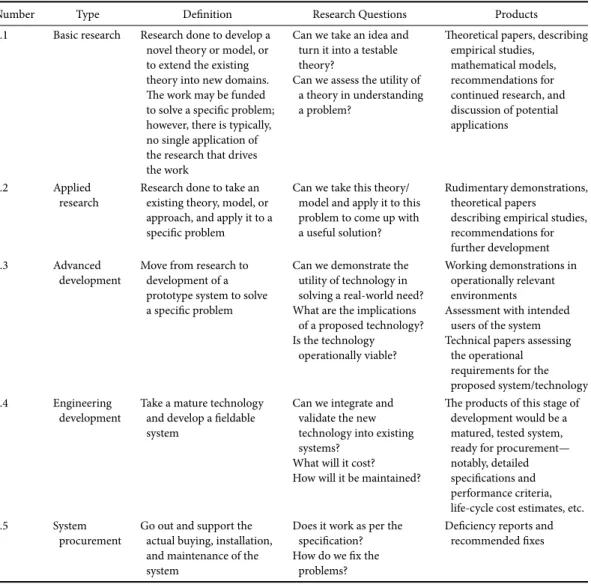
Note that lower levels of research tend to cycle faster than projects performing advanced development. Products of each level of research are found to be entering the next available cycle of more developmental research.
Critical Technology Challenges in Aviation Research
Advances in the development of aircraft structures have outstripped the operator's ability to resist the environmental forces acting upon it. With the arrival of new aircraft and future changes in air traffic control systems, we may see even higher levels of automation and complexity.
Major Funding Sources for Aviation Research
We have already seen this development in the field of air traffic control, and we will certainly witness similar efforts in other fields in the near future. It just means that as aviation human factors professionals, we need to be aware of technology gaps and know the best way to meet our customers' needs.
NASA 4. FAA
The role that the human factors field plays in aerospace research is no different from the role it plays in any research endeavor. In its infancy, human factors focused on the "knobs and dials" issues surrounding aircraft and aircraft design.
S. Air Force
Although it is beyond the scope of this chapter to review each government funding source, the following sources will be of particular interest to those conducting aviation human factors research.
S. Navy
- A Little History †
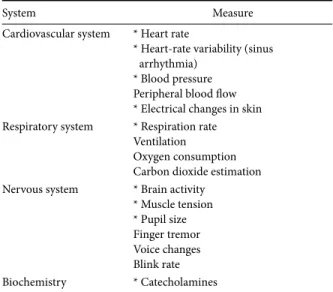
- The Distinctiveness of Aviation HF Measurement
- Major Measurement Topics
- Performance Measures and Methods
- Characteristics of Aviation HF Research
- Summary Appraisal
- Background
- Defi nitions
- Certifi cation
- Why Human Factors Certifi cation?
- Underpinnings
- When Should Human Factors Evaluation Be Conducted?
- How Should Human Factors Evaluation Be Conducted?
- Human Factors Evaluation and Statistical Tools
- Introduction to Traditional Statistical Methods
- Estimates of Population Values
- Questions of Relationships
- Questions of Group Difference
- Examples
- Surveys as an Evaluation Tool
- Statistical Methods Summary
- How Would We Know Whether the Evaluation Was Successful?
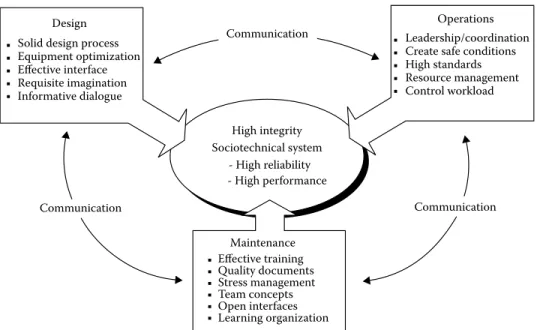
- High Integrity
- Building a High-Integrity Human Envelope
- The Right Stuff: Getting Proper Equipment
- Design: Using Requisite Imagination
- Getting the Knowledge as Well as the Hardware
- Sustaining Dialogues about Key Equipment
- Customizing the Equipment
- Managing Operations: Coordination of High-Tech Operations
- Creating Optimal Conditions
- Planning and Teamwork
- Intellectual Resource Management
- Maestros
- Communities of Good Judgment
- Organizational Culture
- Communications Flow and the Human Envelope
- Climates for Cooperation
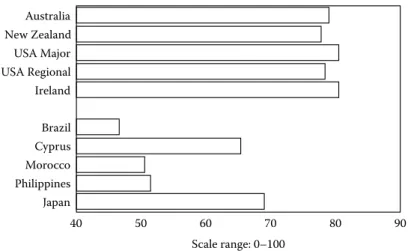
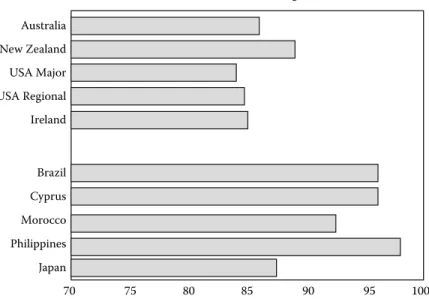
- National Differences in Work Cultures
- Maintaining Human Assets
- Training, Experience, and Work Stress
- Managing the Interfaces
- Working at the Interface
- External Pressures
- Evaluation and Learning
- Organizational Learning
- Suppression and Encapsulation
- Public Relations and Local Fixes
- Global Fix and Refl ective Inquiry
- Pop-Out Programs
- Cognition and Action
- Conclusion
A review of papers in the aviation psychology literature (see references at the end of this chapter) may suggest otherwise. Carroll responded to the Portland, Oregon, crash of 1978 by fostering an understanding of root causes and devising a comprehensive solution (K. Th omas, personal communication, October 20, 1994).
Acknowledgments
Introduction
When engineering resilience, it is proposed to emphasize the ability to adapt to changing circumstances. In this chapter, we argue that the focus on such “resilience” is not in itself sufficient.
What Is Resilience?
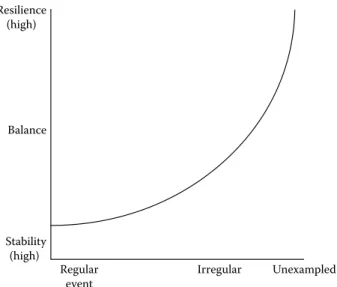
The system must therefore be designed in such a way that it can cope with large variations in the environment. Instead, we suggest that systems should be designed in such a way that resilient properties are balanced with properties designed to cope with frequent disturbances.
Balancing Resilience and Stability
Rather than trying to maintain stability in the face of irregular or unprecedented events, the system must respond by adapting to new circumstances. At the same time, we need to learn from previous events, and rules and checklists can be useful in the face of a repeat situation.
Structural versus Functional Resilience
If changes are made at the cost of eroding the ability to make new changes in the face of an unprecedented new event, then changes may be made to achieve stability in the face of a specific threat rather than to achieve resilience to threats. in general. If we also consider the costs of being resilient in this sense, then we can understand the risk that using resources to be resilient in the face of a crisis may use them up, making the system vulnerable to the next different crisis, instead to grow. system security.
Resilience against What?
In this case, resilience comes in the form of accepting the need for complete reconfiguration, and thus may not mean adaptation to the current system, but complete change for the purpose of survival rather than maintenance. Lundberg and Johansson (2006) coined the term “necessary interpretation” to describe this phenomenon, stating that if a system is to be resilient, it must have a “necessary interpretation” by actually acting on changes in the environment rather than accepting ostrich tactics. ignoring potentially dangerous situations.
The Matryoschka Problem of Designing Safe Systems
We, unlike the puppet metaphor, holes constantly appear and disappear in the layers of protection, going from the outermost puppet to the system we aim to protect. Some organizations possess interactive social characteristics that enable them to manage such complex systems exceptionally well, and the further observation that we do not know enough about either the construction or the maintenance of such behavior to be sure of its robustness in the face of Externally imposed changes in the task design or environment (Rochlin, 1999, p.
Future Directions
Additionally, some layers, such as society, may be beyond the control of a resilience engineer. Being part of the protection system, the resilience engineering effort is also subject to the Matryoschka problem, just like other protection systems.
Using the Interface, Classic HF/E
- Detecting and Discriminating
- Discriminating between Stimuli
- Absolute Judgment
- Sensory Decision Making
- Visual Integration
- Movement, Size, and Color Constancies
- Grouping Processes
- Shape Constancy
- Naming and Simple Action Choices
- Interdependence of the Functions
- Shape, Color, and Location Codes for Name and Status
- Reaction Times
- Action Execution
- Acquisition Movements
- Control or Tracking Movements
- Summary and Implications .1 Theory
- Practical Aspects
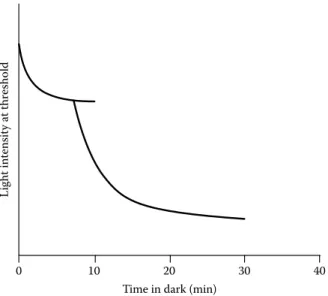
Therefore, it is not possible to make a simple statement like "the sensitivity of the eyes is ...." The sensitivity of the eyes depends on the environment (for example, the average lighting level) and the stimulus (for example, the movement, relative position or color). Another type of perceptual integration occurs when different parts of a display are grouped together and perceived as a "whole". The Gestalt psychologists first described these grouping processes in the 1920s, which can be at different levels of complexity.
Complex Tasks
- Sequences of Transforms
- Language Processing
- Written Instructions
- Language Understanding
- Inference and Diagnosis
- Diagnosis
- Working Storage
- Short-Term Memory
- The Overview in Working Storage
- The Form in Which Material Is Retained
- Some Practical Implications
- Planning, Multitasking, and Problem Solving
- Planning
- Multitasking
- Problem Solving
- Knowledge
- Knowledge and Representation
- An Optimum Format?
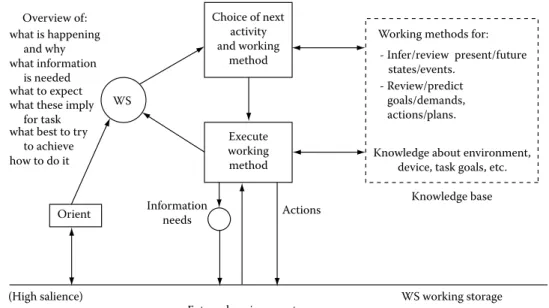
Instructions should also be written from the reader's point of view: "If you want to achieve this, do this." However, how-to books are often written the other way around: "If you do this, this will happen." The second approach requires the reader to do a lot more understanding, searching, and planning to figure out what to do. The air traffic controllers studied by Bisseret (1970) remembered the planes in pairs or threes: "There are two flying towards DIJ, one at level 180, the other below at 160," "there are two at level 150, one passed DIJ towards BRY several minutes ago, the other was due to arrive at X at 10pm," or "I have one at level 150 who is about to pass RLP and another at level 170 who is about 10 minutes behind." The planes were not remembered by their absolute positions, but relative to each other.
Mental Workload, Learning, and Errors
- Mental Workload
- Single- or Multichannel Processing
- Factors Infl uencing Processing Capacity
- Response to Overload
- Learning
- Changes within a Mode of Processing
- Learning Processes
- Some Training Implications
- Difficulties and Errors
- Discriminations
- Recodings
- Sequences
- Overview and Behavior Organization
- Use of Knowledge
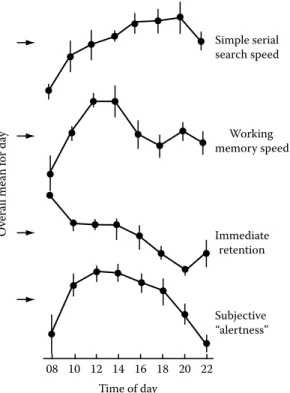
This ability can then be used to take on larger parts of the task at a time, allowing the person to learn greater regularities in the task. This section briefly presents some ways in which performance can be weaker (see, for example, Bainbridge, 1993b).
Neurotechnology-Driven Joint Cognitive Systems
- Measuring Cognitive State
- Adaptive Joint Cognitive Systems in Complex Task Domains
- Information Processing Stages
- Attention
- Working Memory
- Mental Workload
- Summary and Implications
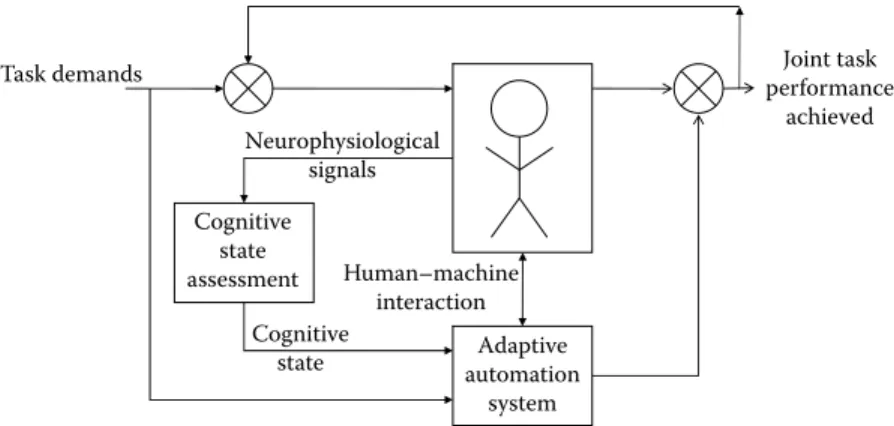
In a truly adaptive shared cognitive system, the computational system can adapt to the user's current state rather than forcing the user to adapt to the system (Schmorrow & Kruse, 2002). Adaptive shared cognitive systems change the task environment depending on the user's current state, the current tasks, and the current context.
Conclusion
- Modeling Human Behavior
- The Difficulty in HF/E
Proceedings of the 11th International Conference on Human-Computer Interaction, (HCI International 2005), Las Vegas, NV, USA: Lawrence Erlbaum. Proceedings of the 43rdAnnual Meeting of the Human Factors and Ergonomics Society, Santa Monica, CA: HFES.
Introduction
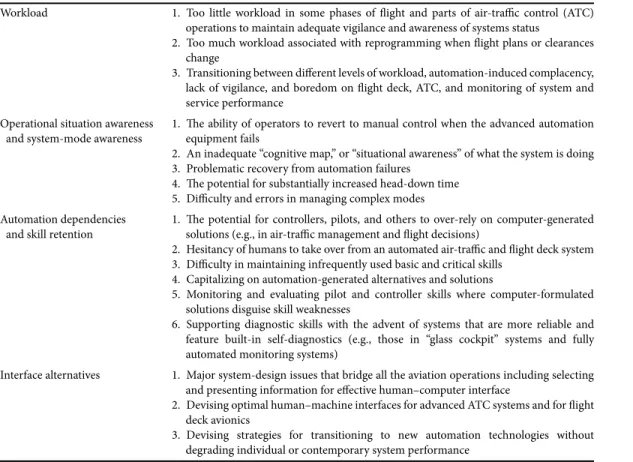
Automation Problems
At the same time, an automated engine status task had to be checked for occasional automation errors (engine failures not detected by the automation system). However, when the motor status task was under automation control, there was a marked reduction (mean = 32%) in the operator detection rate of system failures (i.e. automation errors).
What Is Automation?
Participants detected more than 75% of malfunctions on the engine status task when they performed the task manually while simultaneously performing detection or fuel management. In a separate experiment conducted in the same series, monitoring of automaticity was shown to be poor under multitask conditions, but not single-task conditions (i.e., when only the engine status task had to be performed).
Situation Awareness
Mode of Error
Automation Usage
Instead of overconfidence, the human operator cannot use the automation or ignore the automation. Parasuraman and Riley (1997) described this problem as "the neglect or underutilization of automation." Such a problem can arise when the human operator lacks confidence in the automation (Riley, 1994).
Automation Complacency
The use of automation is strongly influenced by the human operator's perceived trust in the system and the actual reliability of the system (Riley, 1994). If the automation fails, however rarely, the human operator may not be prepared to recover the system and the security of the system may be compromised.
Adaptive Automation
Abuse refers to a condition that is not under the control of the human operator, but rather a problem created by the people involved in the design and implementation of the automation, who do not consider those who will use the automation. Specifically, when human operator occupancy was 70%, there was a significant reduction in efficiency.
Training Issue in Aviation System
A more recent study by Cummings and Guerlain (2007) examined the capacity of operators to reallocate highly autonomous tasks (missiles in flight to time-sensitive targets), while maintaining performance on "other secondary tasks of varying complexity." ” They found that human performance was significantly degraded when the human operator was trying to reallocate multiple autonomous tasks. They suggested that a 70% utilization score (percentage of occupied time) would be a generalizable metric for predicting human performance in complex environments.
Automation and Aging
The ideal situation would be one where the operator could switch control of the task from manual to automated when workload conditions are high (Hilburn, et al., 1996; Parasuraman, et al., 1996). When the operator's workload is reduced, the operator can continue to perform the task in manual mode, thereby maintaining familiarity with the system and maintaining the operator's cognitive ability and basic skill level.
Pilots’ Experience and Automation
However, one problem with this approach is the dissociation between subjective workload and performance (Vincenzi & Mouloua, 1998). In the situation where the burden is assumed to be the greatest, the older subjects did not report more burden than the younger ones, even though their performance was relatively poorer.
Conclusions
Effects of short- and long-cycle adaptive function allocation on flight-related task performance. McDonald (Eds.), Aviation psychology: Training and selection, Proceedings of the 21st European Association for Aviation Psychology (EAAP) Conference (Vol. 2, pp. 347–353).