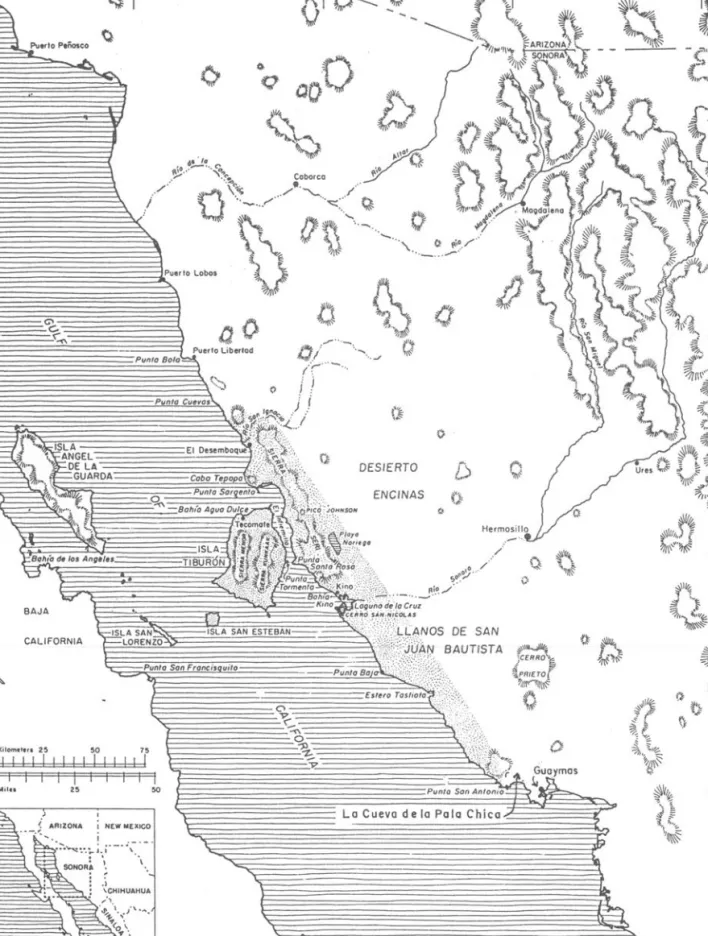
Considering the attention paid to the Series in the scientific literature and the popular press, surprisingly little has been done. Another purpose, particularly in the case of the wooden object, is to test interpretations of the use of the artefacts. La Cueva de la Pala Chica, or Pala Chica Cave in English, is named after one of the unusual artifacts in the collection, a small carved wooden ladle.
Vandalism and haphazard collection undoubtedly took a toll on the research potential of these sites in the years since.
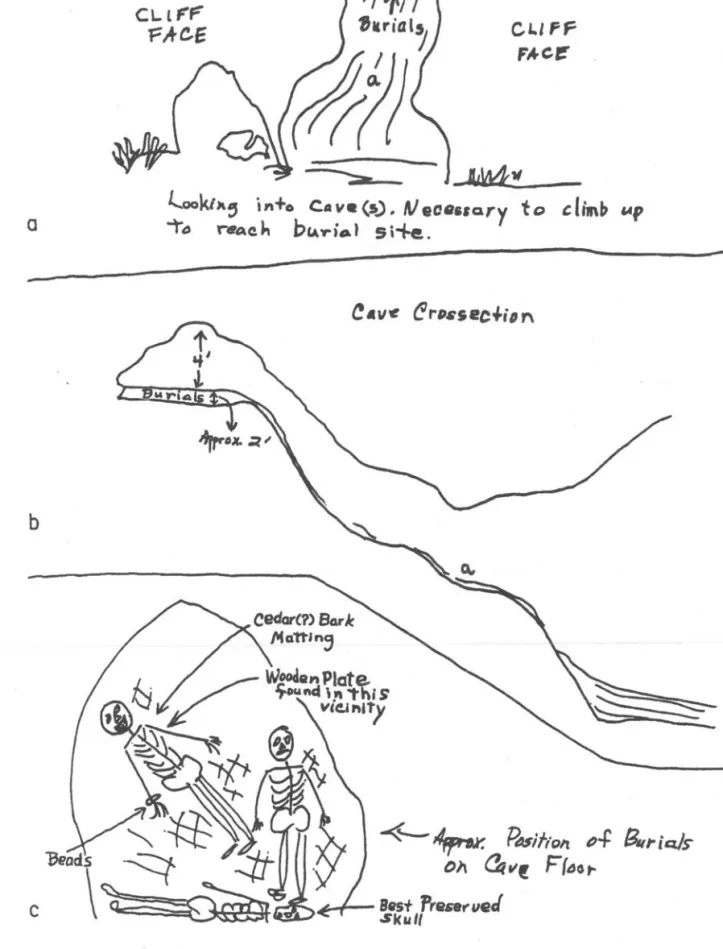
THE BURIALS
Archeology There is no archaeological evidence of cave burials anywhere in the coastal area of Sonora. Bowen reports that "at least one burial has been excavated in the Guaymas area, but details are not available." He must have heard of the burials reported here. Ethnography Neither ethnographic nor historical documents report that the use of caves as places for the burial of the dead was a common practice in the coastal regions of Sonora.
However, suitable sites were available, especially on the southern part of the coast, where rocky hills with caves were common.
SKELETAL EVIDENCE OF CULTURAL BEHAVIOR
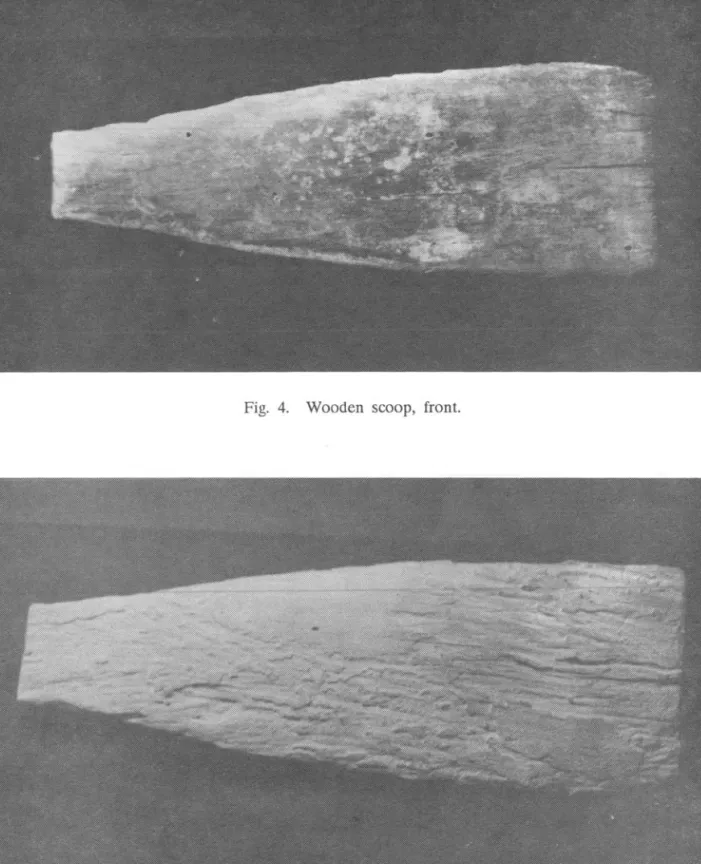
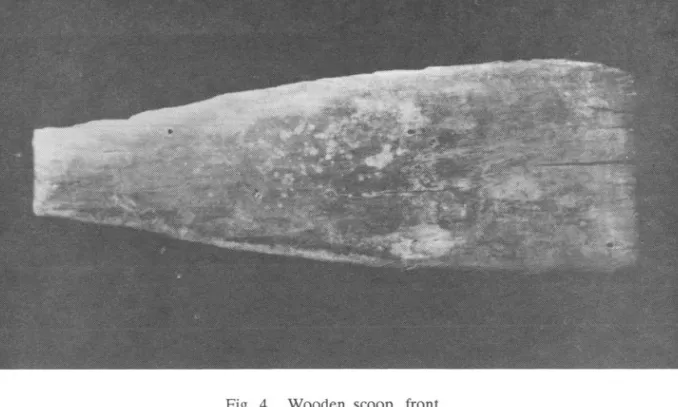
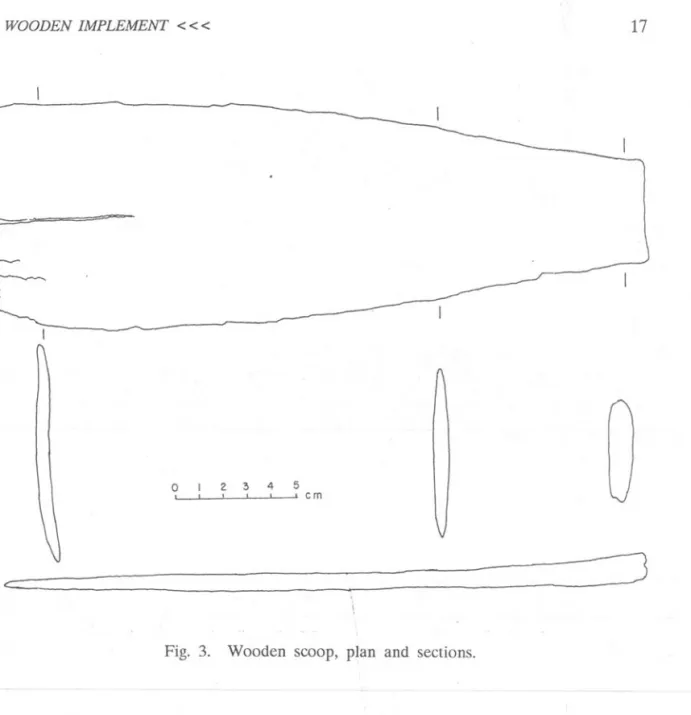
WOODEN IMPLEMENT Scoop or hand-shovel
This color delineation was also observed at the smaller end of the scoop [end view]. And neither tabla is reported to have either the grip area or the worn lower working edge of the Pala Chica Cave specimen. More formal implements were probably used in the traditional cultures of the neighboring Yaqui or Pima Bajo.
The range of variation in the types of wooden implements reported in the greater Southwest currently supports the interpretation of the Pala Chica Cave sample as a ladle, a digging tool.
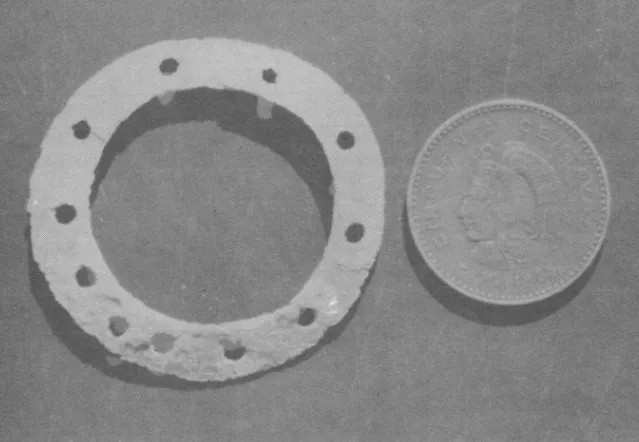
NACREOUS SHELL ORNAMENT
However, if we look at the edge of the Greater Southwest, there is one reference to specimens with both features. Other published examples of the form at southwestern locations are all much smaller in size. Other examples of the shape without the decorative holes have been found in coastal towns in California.
The original reference cited by Williams mentions the use of perforated shell pendants in 1644 in Cabo San Lucas, at the southern tip of the Baja California peninsula. Greater Southwest I have not been able to find any examples of ornamentation from the Southwest. Given the simplicity of the concept, it is surprising that Jernigan (1978) in his survey of prehistoric jewelry of the Southwest shows no examples at all.
On the southern tip of the Baja California peninsula, shell ornaments are reported to have been common. The familiar distribution of shape, decorative holes, and both features combined suggests that the ornament is unique to northwestern Mexico. But on the strength of Gilg's observation, it could at least be consistent with the early historical patterns of the Series.
The close resemblance of the form and technique of ornamentation to some California specimens can only mean that such ornaments are simple enough in concept that their occurrence anywhere would not seem surprising; what is surprising, perhaps, is their actual rarity. Without a significant number of close similarities in other aspects of culture, I see no implication of common heritage, exchange, or diffusion of ideas between the California coast and the Sonora coast.
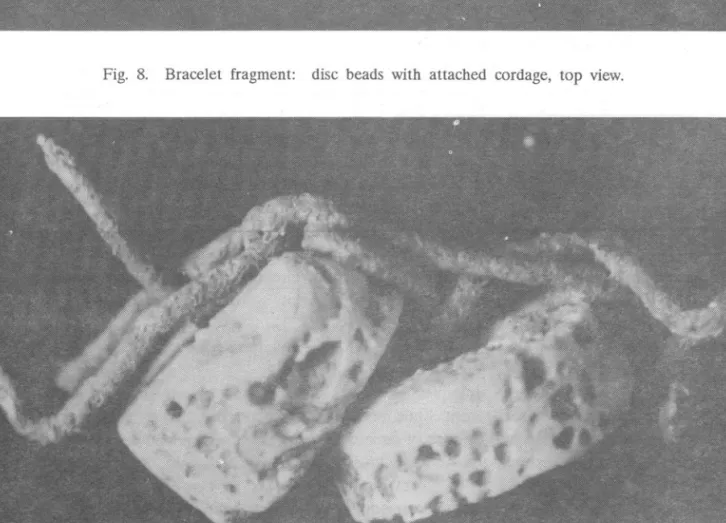
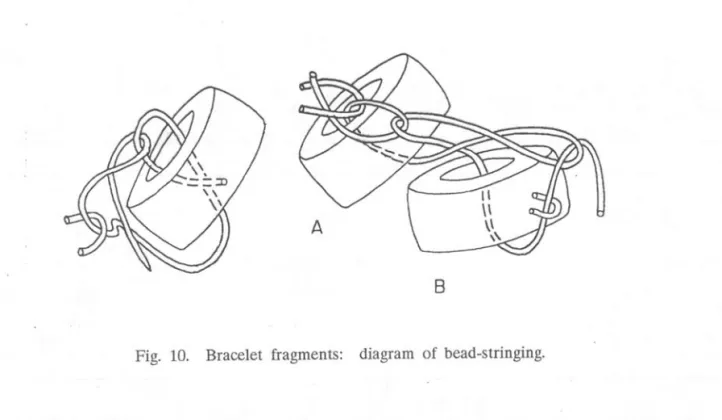
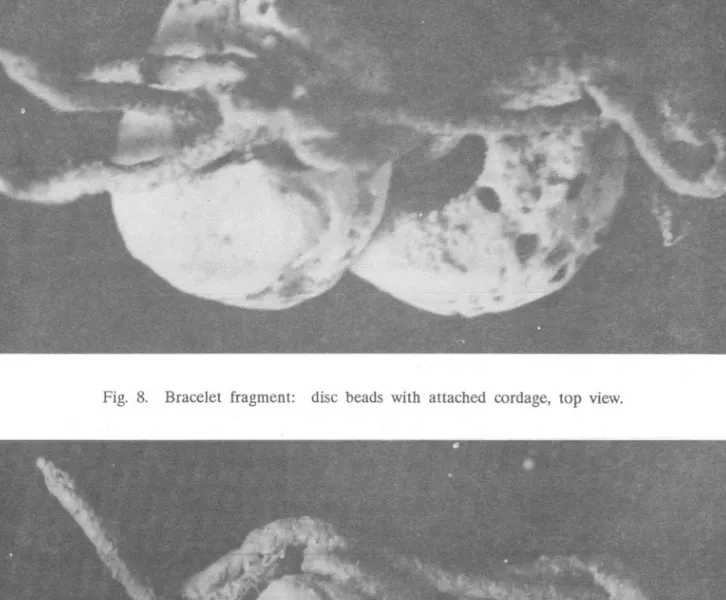
THICK DISC BEADS AND BRACELET FRAGMENTS Strung beads from bracelet
The cordage fragments in group LL (Table 2) are the most numerous and collectively the longest of all types of cordage that can be classified. It is therefore likely not only that all of these loose fragments in rope group LL originally formed the bracelet, but that the students recovered most of the fragments of the bracelet rope during brushing and sieving. It could also mean that more of the bracelet could have been intact at the time of discovery and could have been preserved if the excavators had had the right equipment and experience.
Baja California In his survey of the literature on shell use in the Baja California peninsula, Williams (1975b:2-3) provides examples of historical records of 'bracelets composed of beads made of seed, wood, pearls, mother-of-pearl, and shell. Three of the scalpel beads still retain fragments of the string, showing an unusual looping technique (described above). On some, the bead surfaces are irregular due to damage or due to the shape of the shell.
The loop technique of stringing the beads would negate any effect of the wedge shape.). Because the context of the talc beads has not been recorded, it is not known whether they were strung with the shell beads. Although other measurements are not given, using the largest bead as a scale in the photo allows some estimates.
The Pala Chica cave beads also appear to fall within the range of the few large disk beads at Snaketown from the Santa Cruz to Sacaton phases (Gladwin et al., Fig. 54,a). Although not abundant, the events mentioned here suggest that there was exchange from the Gulf of California and that more of the thick disk beads could be expected from locations on the Sonora coast.
SMALL SHELL BEADS Small disc shell bead
UNWORKED SHELL FRAGMENTS
FIBER CORDAGE
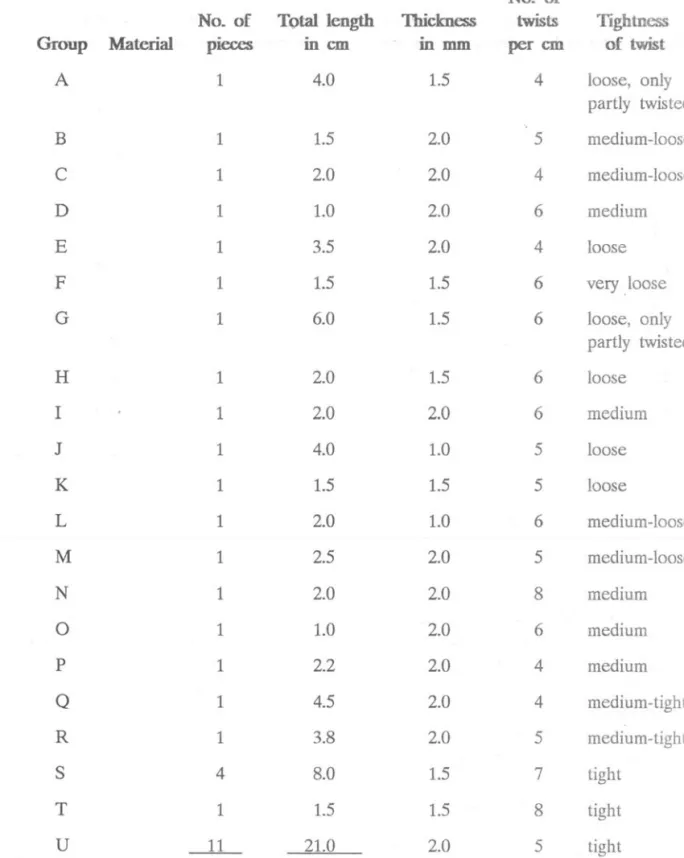
The samples were sorted according to the criteria in the tables, including the appearance of the fibers. Some of the S-strands appear to be identical to some of the Z-strands in every attribute except the direction of rotation. In terms of the number of groups (the maximum number of fragments potentially representing different cords), 21 groups (64%) are Z-strands and 12 (36%) are S-strands.
Identification of the fiber materials would have helped to test the nature of the differences between the specimens. Precisely because of their lack, there cannot be a complete and systematic study of the subject in the Great Southwest, based on published data. Baja California Most cordon descriptions are from places in the central part of the peninsula.
They appear to be part of the Comondu late prehistoric archaeological assemblage, which probably has continuity with historic Cochimf. In addition, there are descriptions of ropes from the southern part of the peninsula attributed to the Las Palmas group. Gardner Cave is in the mountainous center of the peninsula at about the same latitude as Pala Chica Cave.
Of these, the most common were 2-yarn Z-strands, which made up 50% of the specimens (44 pieces); The next most common were S-strands with 2 yarns, approximately 25% of the collection (16 pieces). However, the distinctive character of the Las Palmas cordage is not well supported by the available descriptive details.
HUMAN HAIR Hair/fiber mass [fiber not yet identified]
But the problem is that human hair ropes were mostly out of fashion at the time of the little ethnographic work that was done in northwestern Mexico, and any small bundles probably went unnoticed. I have found no evidence in any archaeological or ethnographic source for the Greater Southwest that human hair was ever mixed with vegetable fibers in rope. Baja California No comparable human hair bundles have been reported from Baja California, and human hair tufts are rare.
Foster and Findley (1982) suggest that the Pala Chica Cave human hair bundles may be remnants of hanks from a shaman's cape. Because human hair caps are among the outstanding ritual objects of the Baja California peninsula, they infer that they may be evidence of contacts or influences across the Gulf of California to the Sonora coast. The characteristics of Baja California human headdresses are known from historical descriptions as well as ethnographic work.
A small bundle of hair strands and a few hairs with a bundle of fibers from Pala Chica Cave have no structural features to indicate anything like the many long strands of hair that were used in capes, nor were there anywhere near the amount of fibers. the ropes that were needed to serve as the foundation of the cloak, as they were made in the north. Archeological specimens of small bundles of human hair similar to those from Pala Chica Cave have been frequently reported in the greater Southwest. The distribution could be so general that if the retention and reporting factors were uniform, it would be the absence of the trait, not the presence.
Nevertheless, the amount of hair cord actually found as fragments was apparently small at each archaeological site, and ethnographic accounts tend to cite rare and specific uses of human hair cord. All are very similar to the Pala Chica Cave specimen, indicating a widespread, non-diagnostic practice.
MISCELLANEOUS FIBERS AND LEA YES Split leaves [not yet identified]
Split leaves in coils or bundles are often interpreted in archaeological collections as raw material for cordage. However, with the Seri, such materials could be used for a variety of tasks without any further processing. In keeping with the Seris' pragmatic habit of using what works without undue effort, they often used 'pliable plant stems and green twigs' as lashing; This practice continued even into the 1970s, although indigenous cordage production has been lost (Schindler n.d.
When they were fresh and strong, the split leaves and bark of various species could be used in the same way. The Seri tied strips of mesquite bark into rolls for soaking in the preparation of medicine (Felger and Moser 1971: 58). According to Drucker's informants, among the Maricopa, “strips of green mesquite bark, untwisted, were often used for tying; they dried hard, like rawhide" (Drucker.
Had the records been more complete, such practices would likely have been found to be common wherever mesquite was present. The significance of the Pala Chica Cave specimens is still speculative pending the identification of the plant parts and species, but the information on Seri practices makes it at least likely that the Pala Chica Cave specimens could contain material ready to be lashed or otherwise used as raw material for cordage. making or perhaps even for basketry. They may have been placed in the cave for storage rather than as a grave offering.
CONCLUSIONS
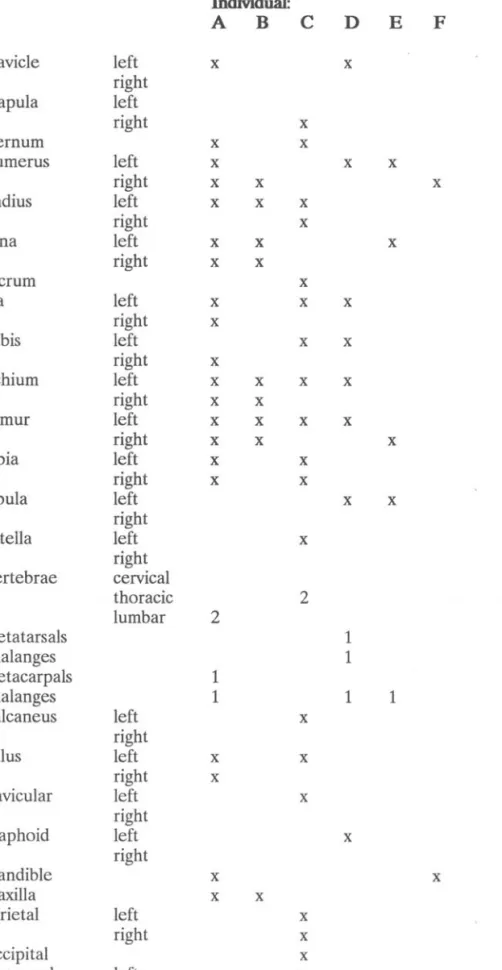
The proximal epiphyses of the left and right tibia (presumably the same was true for the distal epiphyses, but this cannot be verified because this portion of the tibia is absent). There is dehiscence of the floor of the right ear canal (the left side is absent). William Merrill (National Museum of Natural History, Smithsonian Institution) kindly checked the museum's archives on the McGee collection.