ISSN 2087-7013
Mergers and Acquisitions in Islamic Banking In Indonesia: A Study on BSI and Bank Victoria Syariah
1 Doctoral Program of Islamic Economics, Graduate School, UIN Syarif Hidayatullah Jakarta, Indonesia
Submitted: 1 February 2024; Revised: 26 March 2024; Accepted: 29 March 2024
Abstract
Mergers and acquisitions (M&A) in Islamic banking in Indonesia can be viewed from the strategic interests of each bank. This research aims to examine the patterns of M&A in Bank Syariah Indonesia (BSI) and Bank Victoria Syariah in Indonesia. It also discusses the positive and negative implications of the M&A of these two banks, as seen in the developments before and after the M&A. This research employs BOCR (Benefit, Opportunity, Cost, and Risk) analysis to assess the extent to which M&A patterns occur in the merger outcomes at BSI. It also utilizes CAMEL (Capital Asset Earnings and Liquidity) analysis to evaluate the post-acquisition banking health at Bank Victoria Syariah. The research descriptively explains the M&A conditions in these two Islamic banks in Indonesia and the impact of M&A on the banks, employees, customers, and the general public. The study results indicate that the merger of three state-owned Islamic banking companies, namely Bank Syariah Mandiri, BRI Syariah, and BNI Syariah, into BSI was carried out not only to expand the market share of Islamic banking but also due to cost considerations. At the same time, the acquisition of Bank Victoria Syariah was made due to capital needs as required by the regulator.
Keywords: acquisitions, capital, market share, mergers, M&A Impact
* Corresponding author
Muqtasid 14 (2), 2023: 185-205 http://muqtasid.iainsalatiga.ac.id DOI:http://dx.doi.org/10.18326/muqtasid.v14i2.185-205
Habibi Zaman Riawan Ahmad1*
INTRODUCTION
Merger originates from the word ‘mergere,’ which means a combination. In banking, a merger is an effort to merge several banks into one entity. The combination of two or more business entities is done by considering the proportions of each bank and assessing the balance of their strengths, resulting in a combination that serves as a shared entity, mutually reinforcing each other. The merger activities are carried out to strengthen external business activities (Cartwright & Schoenberg, 2006).
As for acquisition, it comes from the Latin word ‘acquisitio’ and the English word
‘acquisition,’ meaning to purchase or obtain something to be added to the previously owned object. The acquisition is simply understood as an activity to take control of ownership of the targeted company (PSAK No. 2, 1990).
The purpose of merger and acquisition activities in Islamic banking is to create shareholder value with the expectation of achieving a larger market share, efficiency, and the ability to enhance and expand Islamic banking operations (Tarigan, Yenewan,
& Natalie, 2017). The merger and acquisition activities can also support business operations and provide added value or synergy to the banking activities. Combining two or more banks will provide a more excellent corporate value compared to the value of each bank operating separately (Ross, 2008).
Merger and acquisition activities are also commonly abbreviated as M&A in various literature. Both are understood as a process of merging the acquirer and the target. M&A activities can be a combination of two or more banks engaging in M&A. The combination that creates a new entity or combination among banks is known as a merger, equated as bank A + bank B = bank C or bank AB. On the other hand, acquisition implies a combination of two or more banks where the acquired bank ceases to exist; for example, bank A + bank B = bank A (Ullah, Nor, & Seman, 2021).
Indonesia, as a significant market for Islamic banking in the Southeast Asian region, possesses robust financial resources and boasts the largest Muslim population among 50 countries. The country actively participates in global affairs, being a member of the G-20 group. This group represents nearly 90% of the world’s gross domestic product (GDP) and 80% of global trade. G-20 member countries also account for a substantial portion of the world’s population, comprising two- thirds worldwide. In addition, as of 2019, during the fourth quarter, the credit-to-
that financing potential still holds significant opportunities, including in the realm of Islamic banking in Indonesia (Hartanto & Fatwa, 2020).
Specifically, Islamic banks can leverage these financing opportunities by implementing strategies to enhance services and expand their funding capabilities in Indonesia. Among these strategies are mergers and acquisitions (M&A). M&A strategies can be viewed as an exit strategy for Islamic banks, aiming to enhance and broaden the scope of Islamic banking activities. Mergers and acquisitions also respond to the need for regulatory compliance within the banking sector.
The formation of Bank Syariah Indonesia (BSI) exemplifies the activity of Islamic banking mergers in Indonesia. BSI results from a merger between PT Bank Syariah Mandiri (BSM), PT Bank BRI Syariah Tbk (BRIS), and PT Bank BNI Syariah (BNIS). The Financial Services Authority (OJK) officially approved the merger of these three Islamic banks on January 27, 2021, through letter number SR-3/PB.1/2021.
As for Islamic banking acquisitions, the case of Bank Victoria Syariah is illustrative. PT. Bank Victoria Syariah obtained Operational Authorization as an Islamic bank based on the Decree of the Governor of Bank Indonesia No. 12/8/KEP.
GBI/DpG/2010, dated February 10, 2010, operated entirely as a Sharia Commercial Bank on April 1, 2010. On December 23, 2022, through BVIC and PT Victoria Investama Tbk (VICO), the transfer of shares of PT Bank Victoria Syariah (BVIS) from BVIC to VICO, amounting to 80% of the shares was completed after OJK approval for the acquisition by VICO on December 22, 2022 (divestment transaction), positively impacting the core capital increase of Bank Victoria by approximately IDR 360 Billion (Media Indonesia, 2022).
Research related to mergers in several kinds of literature can be seen from several scholarly works written by Mochlasin, Hasbullah, Muthohar, and Anwar (2023), who researched the behavior of customer transition in Islamic banking post- merger, with research findings explaining that product quality can enhance customer satisfaction and service quality can mitigate customer transition behavior. There is also the factor of Sharia compliance, which significantly influences customer satisfaction and the behavior of customer transition among Muslim depositors in Indonesia.
Furthermore, research from Indupurnahayu et al. (2022) also explains the reaction of stock prices to the merger issue of three central Islamic banks in Indonesia,
namely Bank Syariah Mandiri, BRI Syariah, and BNI Syariah becoming BSI. The research explains that stock returns and trading volume react positively after the merger announcement and are significant at the 5% alpha level.
Merger and acquisition policies are crucial options for a bank to undertake, enabling the expansion of banking business coverage beyond what is achievable without engaging in such activities. Mergers typically maintain the identity of the involved companies or result in a combination of two companies that agree to the merger. On the other hand, when managed by the acquiring company, acquisitions can lead to fundamental changes in the management and characteristics of the acquired company.
METHOD
This research is qualitative, focusing on the topics of research and information related to the evolving research on the merger of several Islamic banks in Indonesia into Bank Syariah Indonesia (BSI), as well as the case related to the acquisition of Bank Victoria Syariah. This qualitative research focuses on the evolving topics and information related to the merger of several Islamic banks in Indonesia into Bank Syariah Indonesia (BSI) and the acquisition of Bank Victoria Syariah. Data and information obtained from journals and various media sources from 2017 to 2022 are then described and analyzed to draw conclusions and arguments regarding banking mergers and acquisitions.
The ability to read market opportunities regarding mergers can also be analyzed through BOCR (Benefit, Opportunity, Cost, and Risk) (Tchangani & Peres, 2010). Furthermore, acquisition phenomena can be observed based on the facts and actual conditions of a banking institution facing challenges and market needs.
The data obtained and analyzed are then presented in a narrative form, providing insights into the patterns of mergers and acquisitions for each bank and the processes involved in banking mergers and acquisitions. It also utilizes CAMEL (Capital, Asset, Earnings, and Liquidity) analysis to evaluate the post-acquisition banking health at Bank Victoria Syariah
RESULTS AND DISCUSSION
Pattern of Merger and Acquisition in Islamic Banking in Indonesia
The general classification of mergers can be viewed through the lens of economic activities, specifically in five types: horizontal merger, vertical merger, conglomerate merger, market extension merger, and product extension merger. While these types of mergers may not directly apply to the banking sector, it is essential to discuss them beforehand to ensure that the activities are not solely portrayed from one perspective but can be examined from various angles.
Horizontal merger involves the combination of two or more companies with similar business types. The primary objective of horizontal mergers is to reduce competition or enhance efficiency by integrating production, distribution, and marketing activities. Additionally, horizontal mergers are beneficial for efficiency in research, development, and administrative facilities (Siregar & Sissah, 2021).
However, the post-merger efficiency levels need thorough analysis in certain studies, considering that the performance conditions of the companies during the merger process require time to become effective. This model of horizontal merger can also be observed in the context of banking (Hanifah & Suseno, 2022).
Vertical merger is a process where a company acquires its supplier or customer.
Practically, vertical merger activities focus on the production chain, either backward or forward, involving suppliers or customers (Tarigan, Yenewan, & Natalia, 2017).
A classic example of a vertical merger is the merger between eBay and PayPal in 2002. eBay is an online shopping and auction website, while PayPal provides money transfer services and enables online payments. Despite operating in different business domains, this merger helped eBay increase transaction volume and was a strategic decision overall.
A conglomerate merger combines several companies to produce products without direct relation to each other. The goal of this merger is to enhance the growth of the business entity. Companies engaging in conglomerate mergers diversify their business fields by entering entirely different business areas than their original ones.
Practically, conglomerate mergers are executed by exchanging shares between demerging companies.
Market extension merger operationally aims to expand market coverage.
This merger is conducted to strengthen the marketing network for the products of
each merging company. Cross-border companies often implement market extension mergers as part of their market penetration strategy. In addition to market extension mergers, there is also a type of merger viewed from the product aspect, where this merger is performed to expand each company’s product lines. This product extension merger is expected to allow each company to offer a more comprehensive range of products, reaching a broader consumer base.
In this paper, the merger activities in the economic aspect of Islamic banking fall under horizontal mergers. Vertical, conglomerate, market extension, and product extension mergers are not included in this paper’s discussion. Acquisition activities in banking can also be viewed from the perspective of the object being acquired, namely stock and asset acquisition. Stock acquisition is generally known in every acquisition activity, where a company acquires all or part of the issued shares of the target company. The control of shares by a company results in control of the management and operation. On the other hand, asset acquisition can be done by purchasing the target company’s assets, either in whole or in part. Partial asset acquisition is referred to as partial acquisition.
Theoretically, mergers and acquisitions (M&A) activities represent an essential alternative for institutional expansion (Kandil & Chowdhury, 2014). M&A theory is divided into two categories: shareholder value maximization (strategic value creation) and non-shareholder value maximization (value reduction strategy) (Weitzel & McCarthy, 2011). Activities to maximize shareholder value in M&A are explained by efficiency theory (Fama, 1976), while value reduction for shareholders is explained by factors related to management entrenchment theory (Jensen &
Meckling, 1976) and hubris theory (Roll, 1986). Other M&A theories include behavioral theory (Thaler, 2015) and neoclassical theory (Friedman, 1962) to explain merger patterns.
Furthermore, M&A agreements occur to obtain economic scope compared to achieving economies of scale. Additionally, improving the quality of the acquired bank’s portfolio is another important factor in the reasons for M&A in the banking industry (Linder & Crane, 1993).
Merger and Acquisition (M&A) of BSI and Bank Victoria Syariah
The merger of Islamic banks, as in the case of BSI, is driven by the conditions faced by Islamic banking, where the market share in the Sharia financial service
industry is relatively small, accounting for 9.90% of the national financial industry’s assets. Additionally, there is limited capital capacity, with six Sharia banks having core capital below IDR 2 Trillion out of 14 Sharia commercial banks as of December 2020. The need for skilled human resources with high competence in Islamic banking and the low cost of research and development (R&D) in Sharia product and service development are also areas of concern (Sulthoni & Mardiana, 2021). The acquisition of Bank Victoria Syariah by PT Victoria Investama Tbk (VICO) is motivated by the obligation to meet the minimum core capital of IDR 3 Trillion required by the OJK.
Considering the challenges and facts faced by Islamic banks involved in M&A, four objectives of M&A can be outlined: First, to ensure that the growth of Islamic banking can proceed more rapidly, and diversification capabilities can be achieved by leveraging resources after the merger or acquisition. Second, M&A can optimize the acquisition of banking funds. Through M&A, Islamic banks can diversify their portfolios by acquiring or merging with other banks with different business areas or regions. This allows Islamic banks to offer customers diverse products and services, increase income, and reduce dependence on specific sectors or regions.
Third, synergy and the realization of skills can be achieved by utilizing the networks obtained through mergers and acquisitions, considering the performance platform owned by each entity. M&A can help Islamic banks achieve a larger economy of scale by reducing operational costs relative to income. Through operational efficiency and infrastructure integration, Islamic banks can optimize the use of their resources and reduce inefficient costs. Fourth, liquidity is increased by obtaining more outstanding receipts than before the merger, including customers from the same banking institution.
In addition to the above objectives, operationally, the merger of three Islamic banks—Bank Syariah Mandiri, Bank BRI Syariah, and Bank BNI Syariah—that gave rise to BSI has made it the most prominent Islamic bank in Indonesia, dominating the Islamic banking market. According to BSI’s release for the fourth quarter of 2022, the total assets of BSI increased by 15% to IDR 306 Trillion. Third-party funds (DPK) also experienced a 12% increase (YoY) to IDR 261.49 Trillion. From the financing side, BSI saw a 21% increase (YoY) to IDR 208 Trillion (BSI Release).
The Islamic banks that resulted from the merger still maintain their status as publicly traded companies listed on the Indonesia Stock Exchange with the stock code BRIS. The majority shareholder of BSI is held by PT Bank Mandiri Tbk (BMRI).
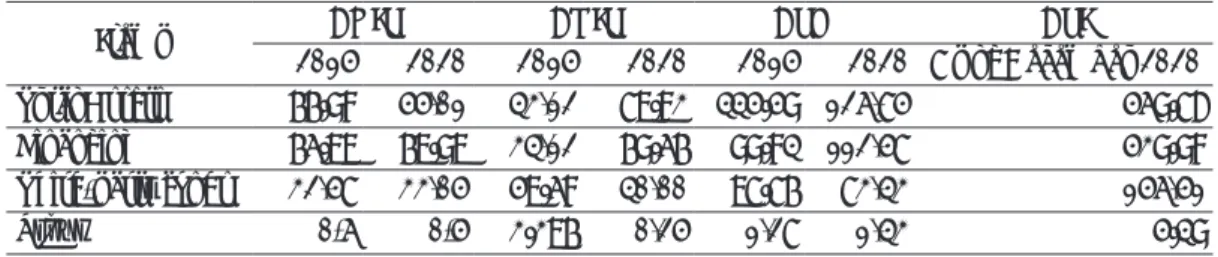
Bank Mandiri holds 51.2% of BRIS shares, PT Bank Negara Indonesia (Persero) Tbk holds 25%, BRI holds 17.4%, DPLK BRI - Sharia Stock 2%, and the public holds 4.4%. According to conservative estimates, its assets can be increased to IDR 390 Trillion, with the potential for third-party fund collection (DPK) reaching IDR 355 Trillion and financing reaching IDR 272 Trillion (Wiyono, 2021). The following compares each item before and after the merger at BSI.
Table 1. Comparative Data Before and After the Merger
Items BNIS BRIS BSM BSI
2019 2020 2019 2020 2019 2020 As of December 2020
Total Assets 44.98 55.01 43.12 57.70 112.29 126.85 239.56
Financing 43.77 47.97 34.12 49.34 99.81 112.58 209.98
Third-party funds 32.58 33.05 27.38 40.00 75.54 83.43 156.51
Profit 0,6 0,5 0.074 0.25 1.28 1.43 2.19
Source: PT BSI Tbk, Bisnis Indonesia, 2 February 2021
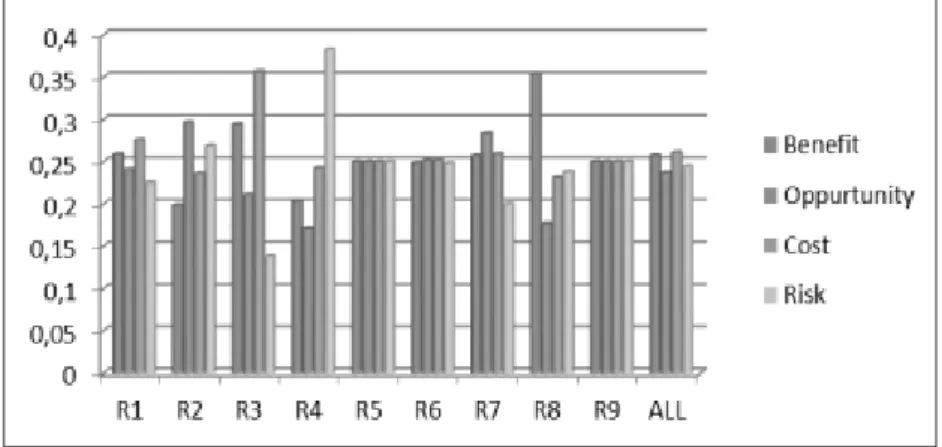
The rationale for the merger of the three state-owned enterprises (BUMN) in the banking sector can also be examined using the BOCR method (Benefit, Opportunity, Cost, and Risk). To analyze this, the author explains the findings of a study conducted by Rizal, Firdaus, and Yussof (2021), which elucidates that the merger approach places greater emphasis on the cost aspect, with a value of 0.261.
Subsequently, the benefit aspect is valued at 0.257, followed by the risk aspect at 0.244, and the opportunity aspect, which has the lowest value at 0.236.
Source: Rizal, Firdaus dan Yussof (2021)
Figure 1. Respondent Priorities on the Merger of Three State-Owned Banks into BSI.
The approach to the benefits aspect of the merger is primarily viewed in terms of market share growth, reaching a respondent-reported figure of 0.359 in the research. It is further assessed from the perspective of increasingly competitive competition (more competitive), reaching 0.345, and lastly, from the angle of strengthening capital, reaching a figure of 0.295.
The study’s perspective on opportunities is explained, stating that the merger is due to strong government support, with a value of 0.227. Furthermore, the aspiration to become one of the top ten banks globally, reaching a figure of 0.224, is highlighted. Additionally, it is undertaken to facilitate financial access, scoring 0.212. The merger is also pursued to enhance competitiveness, achieving a figure of 0.212. Lastly, the aspiration to be the most prominent Islamic bank globally has the lowest value, 0.129.
The merger analysis conducted on the cost aspect includes the highest-rated reasons, namely the reduction of employees, reaching a score of 0.347, followed by the impact of the COVID-19 pandemic, scoring 0.276. Subsequently, other reasons include low literacy at 0.191 and the suboptimal state of information technology at 0.183.
In the final analysis, approaching the risk aspect, the primary reason for the merger is the persistent limitation of human resources held by each bank, scoring 0.271. Following this, the elements of low customer understanding at 0.249, the difficulty in the merging process at 0.243, and the least risk, differing management patterns, with a score of 0.236, are considered.
Bank Victoria Syariah’s shares are acquired to fulfill the obligation of the minimum core capital amounting to IDR 3 Trillion, as required by the Financial Services Authority (OJK). Referring to the financial report for the year 2022 of Bank Victoria Syariah, the total assets of the bank as of December 31, 2022, amounted to IDR 2,1 Trillion. Regarding share ownership, the bank held shares worth IDR 1,06 Trillion as of December 31, 2022. Three entities own this amount: (1) PT Victoria Investama Tbk with IDR 850 Billion, (2) PT Bank Victoria International Tbk with IDR 210 Billion, and (3) others with a total of IDR 17 Million.
Referring to the decisions agreed upon by the shareholders during the annual general meeting of Bank Victoria Syariah on November 22, 2022, and subsequently documented in Notarial Deed No. 13 dated December 6, 2022, the shareholders agreed on two main points: First, the share purchase agreement dated September 26, 2022,
involving the acquisition of 288 Million shares of PT Bank Victoria International Tbk by PT Victoria Investama Tbk at a nominal value of IDR 1,000 per share. Second, the increase in the authorized capital from IDR 1 Trillion (1 Trillion shares) to IDR 1,4 Trillion (1,4 Trillion shares) and the issuance of new shares totaling 700 Billion shares with a nominal value of IDR 1,000 per share, of which PT Victoria Investama Tbk acquired 562 Million shares and PT Bank Victoria International Tbk acquired 138 Million shares. Here is an overview of Bank Victoria Syariah financial report.
Table 2. Balance Sheet (in Million Rupiah)
Component 2020 2021 2022
Total assets 2.296.027 1.660.849 2.110.830
Total Liabilities 537.287 69.395 255.588
Amount of Wadiah Funds and Temporary Syirkah Funds 1.5576.027 1.243.423 816.420
Total Equity 379.557 360.962 1.060.932
Source: Bank Victoria Syariah 2022 Annual Report
Table 2 explains the occurrence of an increase in assets at Bank Victoria Syariah between the years 2022 and 2021. However, the financial statement indicates that the assets in 2020 were more extensive than those of the subsequent two years.
This can be understood as the banking sector facing difficulties during those years due to the impact of the COVID-19 pandemic. Nevertheless, a significant increase in equity can be attributed to the influx of fresh funds injected through the acquisition process.
Post-Merger Impact on BSI
The merger of the three state-owned Islamic banks into BSI undoubtedly impacts the banking ecosystem. These impacts are felt by the banks undergoing the merger process and by customers, society, and the banks’ employees. Customers are affected by the merger policy, with several policies to follow for transitioning to the new system, BSI. Some impacts faced by BSI post-merger are described here.
Firstly, Management Governance Adjustment. Adjustments in governance and post-merger service management can be seen in the migration process conducted for customers. Besides being done through customer service, migration processes can also be carried out independently through digital means using the BSI Mobile application. Account migration can also be done via the 14040 call center, WhatsApp Business BSI, Aisyah live chat, and ATMs. Customers with deposits at that time can
still use them until maturity. Customers with Hajj savings who have not yet obtained a portion can still use their accounts to register for Hajj.
For customers who already have a Hajj portion, their registration status remains at the branch where they registered. Hajj payments can be made at that branch. Customers with card-based electronic money, such as e-Money, Tapcash, and Brizzi issued by the banks undergoing the merger process, can still use them without changes to the last balance or how to check balances and top up electronic money. ATM networks from each bank can still be used. Customers can also use ATMs from cooperating networks such as Prima ATM, ATM Bersama, and GPN.
Customers can also use each bank’s mobile and internet banking. Customers can also still use mobile and internet banking at their original bank. Replacement and migration processes are conducted gradually. All debit cards from the three banks and the current Hasanah Card can still be used for transactions until customers receive a new Financing Card from Bank Syariah Indonesia.
Based on a study conducted by Cholida (2022) on the account migration process from the original bank to BSI, there are several findings that customers of BRI Syariah and Bank Syariah Mandiri felt that the migration process from the original account to Bank Syariah Indonesia went smoothly and without any obstacles.
Meanwhile, BNI Syariah customers found migrating from the original account to Bank Syariah Indonesia slightly tricky. Furthermore, the same study revealed that the merger generally impacts customer trust and loyalty. Customer trust can increase when there is capability or reliability in various aspects of BSI’s performance. These performance and reliability factors become external factors in increasing customer trust and loyalty towards BSI. In light of this, BSI needs to pay attention to post- merger e-banking services, considering the emerging global challenges (El-Ebiary et al., 2019).
The second impact faced by BSI post-merger relates to customer performance.
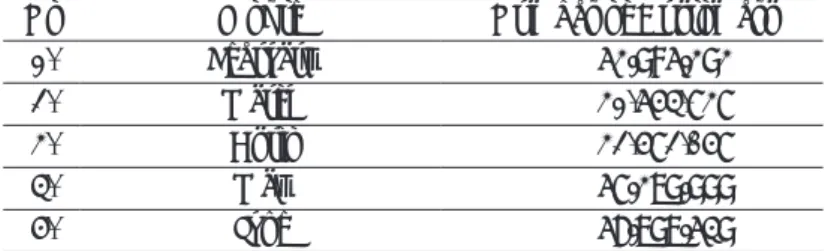
In terms of quantity, the merged customers experience a significant increase. This is due to the merging of customers between banks undergoing the merger. Overall, the number of customers per five months post-merger (as of June 2021) resulted in 36,797,319 customers. Herein is presented the increase in the number of customers post-merger.
Table 3. Number of BSI Customers Post-Merger in 2021
No Month Number of Customers
1. February 30.983.090
2. March 31.654.838
3. April 32.582.058
4. May 35.079.999
5. June 36.797.319
Source: Sharia Banking Statistics, OJK
Table 3 above illustrates an increase in customers per month following the merger in 2021. This perspective explains that public interest in Sharia banking has steadily increased over time, and this merger has positively impacted BSI Bank.
Although overall customer performance shows a positive trend post-merger in terms of increased customer numbers, BSI needs to continue to socialize the merger’s objectives to the broader community and introduce BSI’s products and operational techniques to the public so that Indonesian society’s understanding of Sharia banking can be increased by more than 8 percent.
Furthermore, the Sharia bank merger by BSI has positive effects, including coordination and governance to provide micro-financing to the broader community.
BSI inherits the robust management of BRI Syariah, which is known as a vital partner for SMEs. BSI can strengthen and maintain these achievements through more optimal enhancements with this inheritance. There are at least 2 Micro Financing Products in Bank Syariah Indonesia: 1. KUR (Micro Credit) Program and 2. BSI Micro Business. The KUR (Micro Credit) Program provided by the government is intended for micro, small, and medium enterprises that are viable and productive according to Sharia principles with murabahah, ijarah, and MMQ schemes. This program is for individuals and communities and offers three products: BSI Super Micro KUR (Micro Credit) with financing up to a maximum of IDR 10 Million, BSI Micro KUR (Micro Credit) with a ceiling of IDR 10 to 50 Million using murabahah and ijarah contracts, and BSI Small KUR (Micro Credit) with a ceiling of IDR 50 Million up to 500 Million. These three products have an equivalent margin of 6 percent.
Additionally, there is BSI Micro Business aimed at viable and productive micro, small, and medium enterprises with murabahah, Ijaroh Mumtahiyah Bi al Tamlik (IMBT), and Musyarokah Mutanaqisah (MMQ) schemes. BSI offers two products: Unsecured Micro Business with ceilings ranging from IDR 5 Million up to
IDR 25 Million without collateral and Secured Micro Business with ceilings ranging from IDR 25 Million up to IDR 200 Million, requiring collateral such as vehicle registration certificates, land certificates, land certificates, AJB/Letter C, and Cash Collateral.
The third impact of the merger relates to the number of bank employees following the merger decision. At least the total number of permanent employees in 2019 across the three banks was 18,734. This includes approximately 8,400 employees from Bank Syariah Mandiri, 4,611 from BRI Syariah, and 5,723 from BNI Syariah. Although the termination of employment due to the Sharia banking merger policy was not conducted by management, the merger process inevitably involves changes and shifts in human resource management. Conducting further studies on the reallocation process and potential employment termination would be interesting.
The underlying reasons for termination of employment can be reviewed from various perspectives, not only from the management side but also from the employees’ side, with all analyses considered. Furthermore, the distribution of women, comprising 40 percent of the total BSI employees, can also be analyzed (Bisnis.com)
Another impact of the merger on employees is the synchronization of Organizational Culture, from the pre-merger banking culture to BSI’s banking culture. Organizational culture is determined by how employees interpret the quality of the organizational culture. It serves as a benchmark that distinguishes one organization from another. Organizational culture can serve as a social adhesive in uniting members and achieving organizational goals, as reflected in BSI’s vision and mission (Kurniasari, Ni’mah, & Hana, 2022).
BSI’s vision is “Top 10 Global Islamic Bank.” Becoming one of the top 10 Sharia banks globally is no easy feat. Therefore, in achieving this vision and mission, employees must understand and perform their tasks according to their functions in each unit. Firstly, BSI needs to take steps to realize its vision, including providing access to Sharia financial solutions in Indonesia, aiming to serve more than 20 Million customers and become one of the top 5 banks based on asset ownership (over IDR 500 Trillion) and book value above IDR 50 Trillion by 2025. Secondly, it is becoming a large bank that provides the best value for shareholders, targeting to be one of Indonesia’s top 5 most profitable banks. Thirdly, becoming the preferred company and pride of the best talents in Indonesia, aiming to be a company with a substantial value that empowers society and is committed to employee development
based on a performance-based culture (Cholida, 2022)
To ensure these missions are rigorously pursued, BSI employees need to closely monitor these plans while adhering to the organizational culture established by BSI’s management. The ability of employees to adapt by performing tasks according to the roles assigned by management has earned BSI several awards, such as “Indonesia’s Most Trusted Companies” at the Corporate Governance Perception Index (CGPI) Award in 2021. The award covers 11 assessment aspects: commitment, transparency, accountability, responsibility, independence, fairness, competence, mission, leadership, collaboration, and risk.
In summary, the positive and negative impacts of the merger of three Sharia banks into BSI for customers, employees, and the general public can be further elucidated through the following table:
Table 4. Positive and Negative Impacts of the Merger
No Positive Impact Negative Impact
1. Achieved market share growth from 6.51 percent to 9.96 percent
The market share is still relatively small.
The small market share is due to people not choosing Sharia banking products.
2. There are changes in assets, deposits, and profits. Before the merger at the Sharia Bank, assets were IDR 587,041 Trillion, deposits were IDR 380,239 Trillion, and profits were IDR 780 Trillion. After the merger at the Sharia Bank, this impact was proven by changes in assets of IDR 616,198 Trillion, deposits of IDR 405,728 Trillion, and profits of IDR 4,921 Trillion.
The total Sharia banking assets at BSI are still relatively low. This is reflected in the performance of 20 Sharia business units, 14 Sharia commercial banks, and 163 Sharia BPRs.
3. There is an increase in customers after the merger
The transition process takes time, and there were findings in Ponorogo that BNI Syariah customers found it challenging to migrate from their original account to a Bank Syariah Indonesia account.
4. From an employee perspective, management does not terminate employment.
Employees from the three Sharia Banks resulting from this merger need to adjust the operational network system and adapt the new organizational culture to the vision and mission that has been set.
Acquisition at Bank Victoria Syariah and Capital Aspects
The acquisition process of Bank Victoria Syariah at the end of 2022 was carried out to obtain liquidity funds and improve banking performance. To better understand the performance of Bank Victoria Syariah from 2018 to 2022, it can be analyzed using the CAMEL method (Capital, Asset, Earnings, and Liquidity). The CAMELS method can help capture the relationship between the financial performance of Islamic banking related to risk distribution and bank stability. This method can also assess the quality of banking health (Aydemir, Atan & Guloglu, 2024).
According to Putri et al. (2023), the development of the health of Bank Victoria Syariah from 2018 to 2022 can be summarized as follows:
Table 5. Health Level of Bank Victoria Syariah in 2018 to 2022
Year Rasio Capital
%
Rasio Assets (NPF) %
Rasio Net Profit Margin (NPM) Manajemen %
Return on Asset (ROA) %
BOPO (Operational Expenditure to Operational Income)
Liquidity Analysis
(FDR)
2018 23.89 3.46 79.99 0.29 96.38 82.78
2019 21.35 2.64 2.62 0.05 99.80 80.52
2020 24.60 2.96 -5.94 0.16 97.80 74.05
2021 33.21 3.24 271.10 0.80 91.35 65.26
2022 149.68 0.82 105.62 0.33 95.05 76.49
Range 50.55 2.62 90.68 0.33 96.08 75.82
Source: Putri et al., (2023)
According to the table 5 above, the CAR position of PT is as follows: Bank Victoria Syariah (BVIS) in 2018 indicates a ratio of 23.89%, which decreased to 21.35% in 2019. From 2020 to 2022, it increased to 24.60%, 33.21%, and 149.68%, respectively. The average CAR value over the past five years is 50.55%, with the lowest value in 2019 and the highest in 2022. The increase in CAR value in 2022 can be attributed to a capital injection of IDR 700 Billion obtained from PT. Victoria Investama Tbk. (VICO) amounting to IDR 562 Billion and PT. Victoria Internasional Tbk amounting to IDR 138 Billion. The CAR ratio results reflect the health level of PT. Bank Victoria Syariah is categorized as “Very Healthy” since it has met the minimum CAR standard of 8% set by Bank Indonesia and a ratio exceeding 12%.
The non-performing financing (NPF) position, or the ratio of troubled financing, is measured as a percentage of financing borrowers fail to fulfill on time.
The NPF position of BVIS (Bank Victoria Syariah) from 2018 to 2022 remained at a level of “Fairly Healthy,” where the NPF position in 2018 reached 3.46%, decreased
to 2.64% in 2019, slightly increased to 2.96% in 2020, experienced an increase to 3.24% in 2021, while in 2022, it saw a significant decrease with an NPF position of 0.82%. Banks or investors need to calculate non-performing financing (NPF) as it can reflect payment risk. Many studies have explained that third-party funds and non-performing financing simultaneously influence murabahah financing (Arnan et al., 2019).
In the management analysis, the calculation results of the net profit margin (NPM) explain that the financial performance of BVIS management in 2018 was rated as “Fairly Healthy” with an NPM ratio of 79.99%. In 2019, the NPM ratio significantly decreased to 2.62%. In 2020, BVIS NPM ratio declined to -5.94% and was categorized as “Unhealthy.” This unhealthy NPM ratio was due to deferred tax liabilities greater than profit earnings. In 2021, BVIS NPM ratio recovered and increased to 271.10%, categorized as “Very Healthy.” This NPM condition still falls under the “Very Healthy” category in 2022, with an NPM ratio of 105.62%.
The Return on Asset (ROA) position of BVIS from 2018 to 2022 experienced fluctuation with an average ROA ratio of 0.33%. Referring to the standard set by Bank Indonesia regarding a healthy ROA ratio, which is determined to be a minimum of 1.25%, according to the table above, only the ROA position of BVIS in 2021 falls under the category of reasonably healthy, while the ROA positions in other years fall under the category of unhealthy. This condition highlights that managing BVIS assets to generate profits still needs improvement. This indicates that BVIS has not yet been able to manage its assets effectively.
Although some studies have found that the advantage of Islamic banks is not significantly impacted by credit risk due to the nature of Sharia financing, which involves risk-sharing (Hidayat, Sakti, & Al Balushi, 2021), it is still necessary for Islamic banks to conduct evaluations on findings of unhealthy ROA conditions, taking into account both internal and external factors.
Referring to the average BOPO ratio in the table above, which shows an average of 96.08%, it can be concluded that the health level of BVIS is in an unhealthy condition. According to the minimum standard for Islamic banking, it is considered very healthy when the BOPO ratio is below 94%. Meanwhile, the liquidity analysis of BVIS from 2018 to 2022 experienced several conditions. In 2018 and 2019, the conditions were deemed healthy, with FDR (Financing to Deposit Ratio) of 82.78%
and 80.52%, respectively. The BOPO ratio conditions in 2020 and 2021 experienced
a decline, with BOPO ratios of 74.05% in 2020, which concluded to be healthy, and 65.26% in 2021, falling into the less healthy category. However, the FDR of BVIS experienced an increase in 2022, reaching 76.49%, and it was concluded to be healthy.
All explanations regarding the health of BVIS mentioned above can be summarized as follows: despite BVIS showing fluctuating conditions in some measurements, it remains in the stable category, albeit within a relatively low range of improvement. The share acquisition at BVIS in 2022 has proven to aid in the capital adequacy ratio, resulting in a capital ratio of 149.68%. These financial ratios indicate that with the share acquisition, Bank Victoria Syariah is capable of meeting the regulatory requirements concerning the Core Capital Adequacy Ratio held by Islamic banking institutions.
CONCLUSION
Merger understood as an effort to combine several banks into one, is conducted by considering the proportion of each banking entity and balancing their strengths, resulting in a combined entity that mutually reinforces one another. Meanwhile, the acquisition is performed to gain control of ownership over the targeted company/
banking institution.
The merger process carried out among three Sharia banks: Bank Syariah Mandiri, BRI Syariah, and BNI Syariah, to form BSI is a horizontal merger. This merger process demonstrates an improvement in performance from both the asset and customer perspectives. It positively impacts the performance of Sharia banking at BSI. According to the BOCR (Benefit, Opportunity, Cost, and Risk) method study, the urgency of the merger in these three state-owned banks in the banking sector focuses more on the cost aspect, with a value of 0.261. Subsequently, the benefit aspect follows with a value of 0.257; the risk aspect reaches 0.244, and the opportunity aspect has the lowest value of 0.236.
The impact of the Sharia banking merger can be observed in both negative and positive effects on customers, employees, and the general public. The acquisition process of BVIS by PT Victoria Investama Tbk (VICO) is conducted to obtain additional capital as required by the OJK (Financial Services Authority). The acquisition of BVIS is due to a lack of funds to meet OJK requirements, specifically the minimum core capital of IDR 3 Trillion.
The appropriateness of the decision to acquire BVIS can be seen through an analysis of the banking health condition and to what extent its financial performance, including profit earnings, allows the bank to have sufficient financial capacity. To assess this condition, the CAMEL (Capital, Asset, Earnings, and Liquidity) method can be used to measure the decisions made. The analysis results of the CAMEL method indicate that in 2022, after the acquisition of BVIS, the financial performance of BVIS improved and is in a healthy condition.
BIBLIOGRAPHY
Arnan, S. G., Setiawati, S., Nuryaman, & Brata, I. O. D. (2019). The Third Party Fund and Non-performing Financing (NPF) Effect on Murabahah Financing in Islamic Commercial Banks in Indonesia 2015-2017. Journal of Advanced Research in Dynamical and Control Systems, 11(3), 488-496.
Aydemir, R., Atan, H. Z., & Guloglu, B. (2024). Bank-specific Factors, Market Conditions and the Riskiness of Islamic and Conventional Banks: Evidence from Recent Quantile Approaches. International Journal of Islamic and Middle Eastern Finance and Management, 17(1), 16-44. https://doi.
org/10.1108/IMEFM-11-2022-0435.
Cartwright, S., & Schoenberg, R. (2006). Thirty Years of Mergers and Acquisitions Research: Recent Advances and Future Opportunities. British Journal of Management, 17(S1), S1-S5. https://doi.org/10.1111/j.1467- 8551.2006.00475.x.
Cholida, A. Y. (2022). Respon Nasabah Terhadap Merger Tiga Bank Syariah Menjadi Bank Syariah Indonesia (BSI) di Kabupaten Ponorogo. Thesis. Magister Ekonomi Syariah IAIN Ponorogo.
El-Ebiary, Y. A. B., Al-Sammarraie, N. A., Razuky, M. H., Almandeel, S., & Alshamasi, A. (2019). The Role of Database Management System to Improve E-banking Processes - Case Study Islamic Banking. 4th International Conference on Recent Trends in Computer Science and Electronics, University of Hawaii, USA, 1-11.
Fama, E. F. (1976). Foundations of Finance: Portfolio Decisions and Securities Prices. New York : Basic Books.
Friedman, M. (1962). Capitalism and Freedom. The University of Chicago Press.
Hanifah, N., & Suseno, D. A. (2022). Analysis Efficiency of BUMN Sharia Banks After the Merger. JEJAK: Jurnal Ekonomi dan Kebijakan, 15(2), 354-367.
https://doi.org/10.15294/jejak.v15i2.38786.
Hartanto, A., & Fatwa, N. (2020) The Geostrategy of Sharia Banking Merger In Indonesia. Scientific Research Journal (SCIRJ), VIII (XII), 60-66. http://
dx.doi.org/10.31364/SCIRJ/v8.i12.2020.P1220829.
Hidayat, S. E., Sakti, M. R. P., & Al-Balushi, R. A. A. (2021). Risk, Efficiency and Financial Performance in the GCC Banking Industry: Islamic versus Conventional Banks. Journal of Islamic Accounting and Business Research, 12(4), 564-592. https://doi.org/10.1108/JIABR-05-2020-0138.
Indupurnahayu., Nurhayati, I., Endri., Marlina, A., Yudhawati, D., & Muniroh, L.
(2022). Islamic Bank Merger and Economic Crisis: Event Study Analysis.
Journal of General Management, 23(187), 65-72. https://doi.org/ 10.47750/
QAS/23.187.08.
Jensen, M. C., & Meckling, W. H. (1976). Theory of the Firm: Managerial Behavior, Agency Costs and Ownership Structure. Journal of Financial Economics, 3(4), 305-360. https://doi.org/10.1016/0304-405X(76)90026-X.
Kandil, T., & Chowdhury, D. (2014) Islamic Banks’ Mergers and Acquisitions - Impacts on Performance and Financial Crisis in the United Kingdom. The Developing Role of Islamic Banking and Finance: From Local to Global Perspectives (Contemporary Studies in Economic and Financial Analysis, Vol. 95). Leeds: Emerald Group Publishing Limited.
Linder, J. C., & Crane, D. B. (1993). Bank Mergers: Integration and Profitability.
Journal of Financial Services Research, 7, 35-55. https://doi.org/10.1007/
BF01048339.
Mochlasin., Hasbullah, N. N,. Muthohar, A. M,. & Anwar, S. (2023). Customer Switching Behavior among Indonesian Muslims: Evidence from the Merger of Indonesia’s State-owned Islamic Banks. Journal of Cogent Business &
Management, 10(3), 1-19. https://doi.org/10.1080/23311975.2023.2287781.
Putri, D. E., Sari, I., Rahmiani., Renita., & Sukmawati. (2023). Analisis Kesehatan Perbankan Syariah Menggunakan Metode CAMEL (Studi Kasus Pada Bank Victoria Syariah dan Bank Panin Dubai Syariah Tahun 2018-2022). Southeast Asia Journal of Business, Accounting, and Entrepreneurship, 1(1), 37-45.
Rizal., Firdaus, N., & Yussof, W. N. A. W. (2021). Challenges of Islamic Bank Merger in Indonesia: BOCR Approach. Imara: Jurnal Riset Ekonomi Islam, 5(2), 193-204. https://doi.org/10.31958/imara.v5i2.4687.
Roll, R. (1986). The Hubris Hypothesis of Corporate Takeovers. The Journal of Business, 59(2), 197–216.
Ross, S. A. (2008). Modern Financial Management 8th ed. Boston: McGraw-Hill.
Thaler, R. H. (2015). Misbehaving: The Making of Behavioral Economics. WW Norton & Co.
Kurniasari, P,. Ni’mah, A., & Hana, K. F. (2022). Analisis Sinkronisasi Budaya Kerja Sumber Daya Manusia Pada Bank Syariah Indonesia Setelah Merger, Jurnal Ilmu Ekonomi dan Bisnis Islam, 4(1), 31-41. https://doi.org/10.24239/jiebi.
v4i1.91.31-41.
Siregar, E. S., & Sissah. (2021). Analisis Dampak Kebijakan Merger dalam Pengembangan Bank Syariah di Indonesia. Jurnal Ekonomi Syariah, Akuntansi dan Perbankan (JESKaPe), 5(1), 16-24. https://doi.org/10.52490/
jeskape.v5i1.1136.
Sultoni, H., & Mardiana, K. (2021). Pengaruh Merger Tiga Bank Syariah BUMN terhadap Perkembangan Ekonomi Syariah di Indonesia. Eksyar: Jurnal Ekonomi Syari’ah & Bisnis Islam, 8(1), 17-40.
Tarigan, J., Yenewan, S., & Natalie, G. (2017). Merger & Akuisisi: Dari Prespektif Strategis Dan Kondisi Indonesia (Pendekatan Konsep dan Studi Kasus).
Yogyakarta: Ekuilibria.
Tchangani, A. P., & Peres, F. (2010). BOCR Framework for Decision Analysis. IFAC Proceedings Volumes (IFAC-PapersOnline), 9, 507-513. 10.3182/20100712- 3-FR-2020.00083.
Ullah, N., Nor, F. M., & Seman, J. A. (2021) Impact of Mergers and Acquisitions on Operational Performance of the Islamic Banking Sector. Journal of South Asian Studies, 9(1), 25-36. DOI:10.33687/jsas.009.01.3472.
Weitzel, U., & McCarthy, K. J. (2011). Theory and Evidence on Mergers and Acquisitions by Small and Medium Enterprises. International Journal of Entrepreneurship and Innovation Management, 14(2), 248-275. https://doi.
org/10.1504/IJEIM.2011.041734.
Wiyono, W. M. (2021) Dampak Merger 3 (Tiga) Bank Syariah BUMN Terhadap Perkembangan Ekonomi Syariah. Jurnal Cakrawala Hukum, 23(1), 66-73.
https://doi.org/10.51921/chk.v23i1.142.
Internet
https://bankvictoriasyariah.co.id/page/download/tahun-2022
https://finansial.bisnis.com/read/20220329/90/1516340/disebut-mau-akuisisi-bank- victoria-syariah-ceo-amartha-buka-suara
https://finansial.bisnis.com/read/20201013/231/1304279/bsm-bni-syariah-bri- syariah-merger begini-nasib-karyawanny
https://finansial.bisnis.com/read/20210421/231/1384411/bsi-perkuat-peran- perempuan-dalam-pengembangan -ekonomi-syariah
https://go-umkm.bankbsi.co.id/index.php/pembiayaan/21-Pembiayaan-Mikro-di- Bank-Syariah-Indonesia
https://mediaindonesia.com/ekonomi/547390/bank-victoria-syariah-dan-bank- victoria-penuhi-modal-inti-minimum#:~: text=Pada%20tanggal%2023%20 Desember%202022,transaksi%20divestasi)%20yang%20memberikan%20 dampak.
https://www.bankbsi.co.id/news-update/berita/keren-bsi-melesat-jadi-bank- terbesar-ke-6-di-indo