2775-4472
1 1 1-44 April2021
1 Bioedupat 2021, 1(1): 1-10
BIOEDUPAT:
Pattimura Journal of Biology and Learning
https://ojs3.unpatti.ac.id/index.php/bioedupat e-ISSN 2775-4472
Research Article
PjBL-HOTS learning model: Its application and effect on cognitive learning outcomes, critical thinking, and social attitudes
Aminah Launuru1,*, Dominggus Rumahlatu2, Muhammad Nur Matdoan2
1 SMA Negeri 6 Leihitu, Jl. Nanihaha, Hila 97582, Indonesia
2 Study Program of Biology Education, Faculty of Teacher Training and Education, Pattimura University, Jl. Ir. M. Putuhena, Ambon 97233, Indonesia
* corresponding author: [email protected]
Received: 17 February 2021 Revised: 12March 2021 Accepted: 21April 2021
ABSTRACT
Learning in the digital era 4.0 brings changes for teachers and students. Teachers must prepare innovative digital-based learning to improve students' higher-order thinking skills. This study aims to analyze the effect of the application of the PjBL-HOTS learning model on cognitive learning outcomes, critical thinking, and social attitudes. This type of research is a quasi-experimental research design, which uses a pretest-posttest nonequivalent group design. The study used two classes, namely class X1 as the experimental class while class X2 as the control class. The research instrument is in the form of essay questions to assess students 'cognitive learning outcomes and students critical thinking. Meanwhile, a questionnaire is used to assess students' social attitudes. The data analysis used descriptive and inferential analysis techniques. The inferential analysis used ANCOVA and ANOVA analysis with a significant level of α = 0.05. The results showed that there was an effect of the PjBL-HOTS learning model in improving students' cognitive learning outcomes, critical thinking, and social attitudes. This is because the ability to think critically is always empowered by the teacher at every stage of PjBL.
Keywords: PjBL-HOTS, cognitive, critical thinking, social attitudes To cite this article:
Launuru, A., Rumahlatu, D., & Matdoan, M. N. (2021). PjBL-HOTS learning model: Its application and effect on cognitive learning outcomes, critical thinking and social attitudes. Bioedupat: Pattimura Journal of Biology and Learning, Vol 1(1), 1-10. DOI:
https://doi.org/10.30598/bioedupatv1i1pp1-10
INTRODUCTION
Higher Order Thinking Skills (HOTS) is one of the higher-order thinking skills that need to be developed in the current era of the Industrial Revolution (RI) 4.0. According to Heong et al. (2011), through higher-order thinking, students will use thinking widely. This will make students challenged to find something new. Kusuma et al. (2017) added that HOTS requires students to be able to apply the new information they get, and then manipulate the information to find new answers. The new answers are meant to be answers that are processed through creative and innovative thoughts from students.
According to Dinni (2018), HOTS consists of the ability to connect, manipulate, and change the knowledge and experience that is already owned critically and creatively in determining decisions to solve problems in new situations.
2 Meanwhile, according to Brookhart (2010), the HOTS category includes analytical skills, evaluation, creation, logical reasoning, critical thinking, problem-solving, creativity, and creative thinking.
Several researchers have analyzed HOTS abilities in high school students. Samosir et al. (2019) conducted a study to analyze HOTS on questions given by the teacher. Research done by Istiyono et al. (2014) is also oriented towards HOTS analysis on student academic ability tests. The research shows that students' HOTS are assessed in the form of learning evaluation. However, there is no HOTS integration in biology learning. Research conducted by Widodo & Kadarwati (2013) shows that Higher Order Thinking and Problem Based Instruction learning models can be integrated into HOT-PBI and can improve student character, cognitive, and higher-order thinking skills. Tajudin et al.
(2016) also emphasized that teachers can use the HOTS learning principle by diversifying it with several learning models.
Therefore, the HOTS of these students can also be integrated into PjBL learning. The Project-Based Learning (PjBL) learning model is an innovative learning model that emphasizes the investigation process by students and produces a scientific product. Research by Rumahlatu & Sangur (2019) has shown that the application of PjBL compared to conventional learning models has been able to empower metacognitive abilities and student learning outcomes. By using the right learning model, it is hoped that Indonesia's young generation will be ready and confident to face the various challenges and changes that have occurred due to the influence of the 4.0 industrial revolution.
High school biology teachers in Ambon city have implemented many innovative cooperative learning models.
These learning models are STAD, PBL, PjBL, NHT, GI, and many other models. However, the application of learning models and HOTS integration in learning to improve students' higher-order thinking skills has not been done by high school biology teachers. Research conducted by Leiwakabessy et al. (2018) show that HOTS-based evaluations conducted by biology teachers at several schools such as SMA 1 Ambon, SMA 3 Ambon, SMA 4 Ambon, SMA Siwalima Ambon, and SMA Xaverius Ambon have been able to compile HOTS questions of 93.75 %. This means that high school biology teachers have been able to evaluate HOTS, but the application of HOTS in learning has not been done. For HOTS evaluation to be effective and efficient to empower students, teachers need to design HOTS-based learning, so that the learning and evaluation process becomes one unit. Therefore, this research is important to do to examine the application of the integration of the PjBL-HOTS learning model for empowering cognitive learning outcomes, students 'critical thinking abilities, and students' social attitudes at SMA 6 Leihitu.
METHODS Research design
This research is quasi-experimental research, which uses a pretest-posttest nonequivalent group design. The independent variables of this study are the conventional learning model (STAD) and the PjBL-HOTS learning model, while the dependent variable is the cognitive learning outcomes, critical thinking skills, and students' social attitudes.
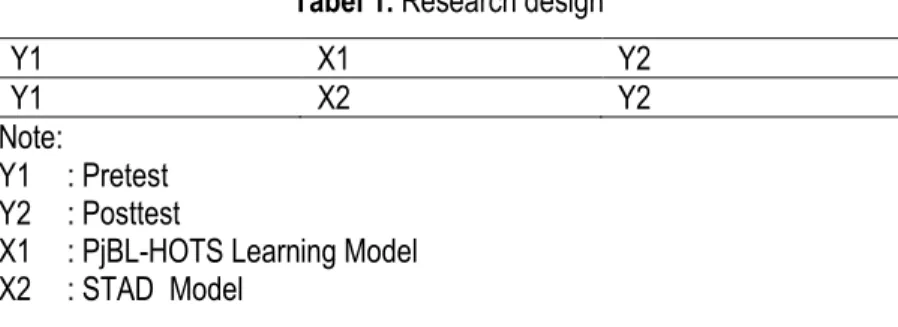
The quasi-experimental research design is shown in Table 1, as follows.
Tabel 1. Research design
Y1 X1 Y2
Y1 X2 Y2
Note:
Y1 : Pretest Y2 : Posttest
X1 : PjBL-HOTS Learning Model X2 : STAD Model
Sample of research
The populations used in this study were all students of class XI SMA 6 Leihitu. The research sample consisted of two classes, namely X1 as the experimental class which was taught using the PjBL-HOTS learning model, while class X2 was the control class which was taught using the conventional model (STAD).
Instruments and procedures
The instruments developed in this study were test questions and scoring rubrics. The items were prepared to refer to the competency standards in accordance with the provisions of the National Education Standards Agency (NESA), Indonesia. The items arranged are essay items that are used to measure students' critical thinking skills and cognitive
3 learning outcomes. The scoring rubric is a list of criteria to measure cognitive learning outcomes and critical thinking.
A questionnaire is provided for students to assess their respective social attitude skills.
The implementation of learning in each class is carried out almost simultaneously and uses different learning tools, but the assessment of the dependent variable (cognitive learning outcomes, students 'critical thinking, and students' social attitudes) remains the same. The method of data collection and grouping is as follows.
1. The pretest is given to each class before the application of the learning model. The pretest results of cognitive learning outcomes and critical thinking were used as covariates in the ANCOVA statistical analysis.
2. The learning implementation in the experimental class uses the PjBL-HOTS learning stage: (a) Planning;
critical in analyzing topics that become phenomena in society, think critically of relevant information to discuss the topic, doing the division of tasks in groups; (b) Creating; think critically in preparing the project stage, think critically in project implementation, create a product, think critically in preparing project reports;
(c) Presenting; think critically in doing a presentation. While the control class uses the STAD learning stage which is a learning model that is always used by teachers while learning the concept of the human body defense system. The steps are as follows (a) Learning preparation: students are divided into 4-6 groups, students are grouped into heterogeneous groups based on academic ability, gender, race and ethnicity; (b) Material presentation: teacher explains the learning objectives, motivates students to work together in their group, the teacher presents the material of the human body defense system; (c) Group study activities:
teacher distributes worksheets for students, the teacher guides students to discuss together; (d) Examination of group results:teacher guides students to make group presentations and asses their presentation; (e) Students work on individual test questions (Individual tests are carried out to determine the extent to which learning success has been achieved, individual tests are held on the material that has been discussed); (f) Group awards: teacher gives awards to the group that gets the highest score for the presentation phase and individual tests
3. During the learning process, students assess their social attitudes.
4. Posttest is given after the application of the learning model. The results of the posttest were used to measure students' cognitive learning outcomes and critical thinking.
Data analysis
The research data were analyzed using descriptive and inferential statistics. Descriptive statistics are used to determine the data group and the distribution of data on cognitive learning outcomes, critical thinking, and social attitudes at intervals and data classes. Inferential statistics begins with an analysis of data homogeneity and normality. The homogeneity test used the Levene test and the normality test used the Kolmogorov-Smirnov test.
Furthermore, two-way covariance analysis (ANCOVA) was used to analyze: (1) the effect of the application of learning models on student cognitive learning outcomes. (2) the effect of the application of the learning model on students' critical thinking skills. While the analysis of variance (ANOVA) was used to analyze the effect of the application of the learning model on students' social attitudes. Furthermore, if there is a difference, a further test of the post hoc least significant difference (LSD) is carried out to determine the average difference which is statistically significant. Data analysis was performed using the SPSS 18.0 program.
RESULTS AND DISCUSSION Cognitive learning outcomes
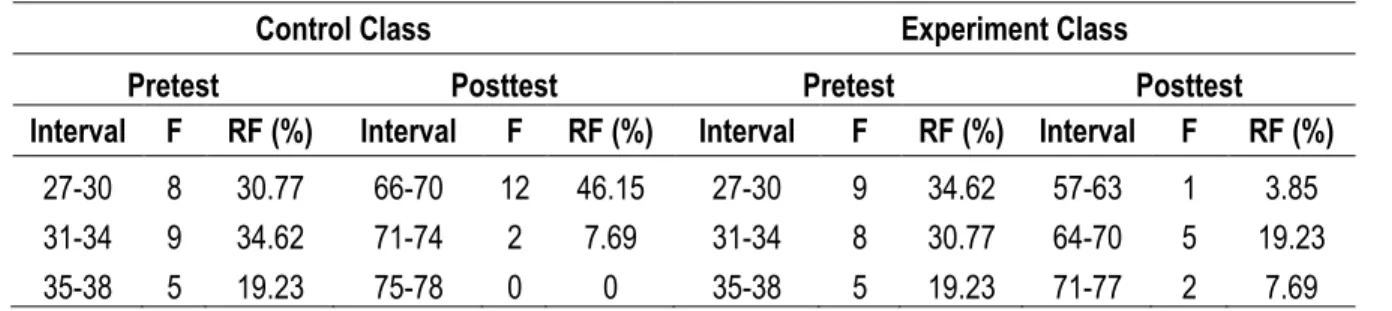
Descriptions of students' cognitive learning outcomes in the experimental and control classes are described in Table 2.
Table 2. Cognitive learning outcomes in the control and experimental class
Control Class Experiment Class
Pretest Posttest Pretest Posttest
Interval F RF (%) Interval F RF (%) Interval F RF (%) Interval F RF (%)
27-30 8 30.77 66-70 12 46.15 27-30 9 34.62 57-63 1 3.85
31-34 9 34.62 71-74 2 7.69 31-34 8 30.77 64-70 5 19.23
35-38 5 19.23 75-78 0 0 35-38 5 19.23 71-77 2 7.69
4
39-42 3 11.54 79-82 10 38.46 39-42 3 11.54 78-84 6 23.08
43-46 0 0 83-86 0 0 43-46 0 0 85-91 9 34.62
47-50 1 3.85 87-90 2 7.69 47-50 1 3.85 92-98 3 11.54
Total 26 100 Total 26 100 Total 26 100 Total 26 100
Description: F: frequency; RF: relative frequency
The distribution of scores on the initial test of 100% is in the range of 27-50 scores for the control and experimental classes, this shows that students have a low level of mastery of the body's defense system material.
Whereas in the final test 100% of students had improved scores in both the control and experimental classes. This means that there is an increase in the value between before and after students are taught using conventional learning models at SMA 6 Leihitu. Research by Narahaubun et al. (2020) also showed that before the application of the learning model, cognitive learning outcomes that revealed students' conceptual understanding of material were very low compared to after learning in both the experimental class and the control class. After going through the learning process, students' understanding of the concept of the human body's defense system has increased. Rumahlatu et al.
(2020) also explained that cognitive learning outcomes are related to students' understanding of a concept, so it is called a conceptual understanding that can be formed through the learning process.
Critical thinking
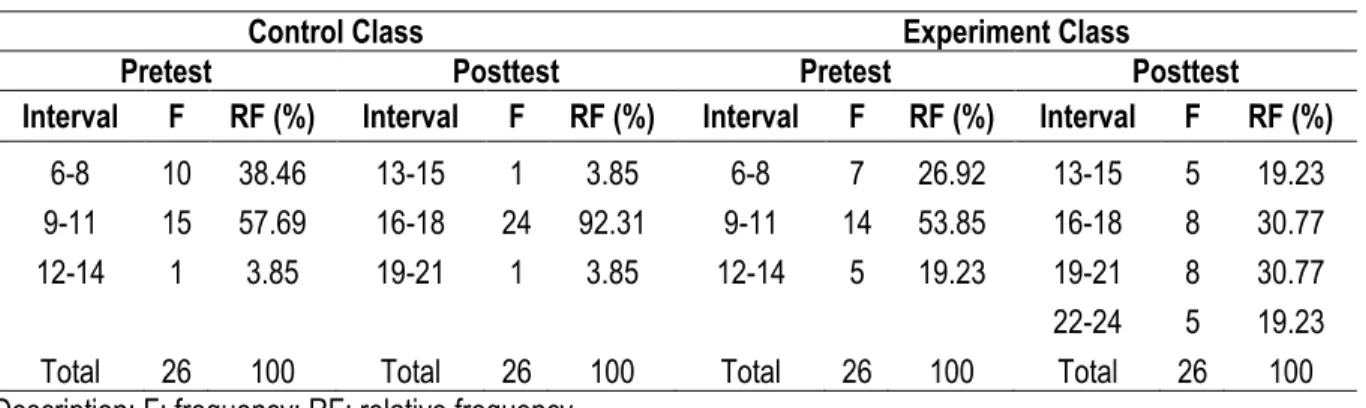
Students' critical thinking in the experimental and control classes is described in Table 3 below.
Table 3. Results of the experimental class critical thinking
Control Class Experiment Class
Pretest Posttest Pretest Posttest
Interval F RF (%) Interval F RF (%) Interval F RF (%) Interval F RF (%)
6-8 10 38.46 13-15 1 3.85 6-8 7 26.92 13-15 5 19.23
9-11 15 57.69 16-18 24 92.31 9-11 14 53.85 16-18 8 30.77
12-14 1 3.85 19-21 1 3.85 12-14 5 19.23 19-21 8 30.77
22-24 5 19.23
Total 26 100 Total 26 100 Total 26 100 Total 26 100
Description: F: frequency; RF: relative frequency
The distribution of scores on the initial critical thinking test was 100% in the range of 6-14 in both the control and experimental classes (Table 3). Meanwhile, in the final test, 100% of students 'critical thinking has succeeded in improving students' critical thinking through PjBL-HOTS learning. This means that there is an increase in the value between before and after students are taught using the PjBL-HOTS and STAD learning models at SMA Negeri 6 Leihitu. However, PjBL-HOTS learning has a higher increase compared to learning using STAD, this is shown by the percentage increase in the experimental class by 50% compared to the control class using STAD learning. According to Çimer et al. (2013), the ability to think critically is a culture that is empowered continuously in learning. The same thing was conveyed by Setiawati & Corebima (2017) the ability to think critically does not appear automatically but through guided training and practice in learning until students can use it. Through the learning stages, students' critical thinking skills can be empowered in learning.
Social attitude
The social attitudes of students in the experimental and control classes are described in Table 4 below.
Table 4. Social attitudes in the experimental and control classes
Control Class Experiment Class
Interval Frequency Relative Frequency (%) Interval Frequency Relative Frequency (%)
31-34 1 3.85 36-38 3 11.54
35-38 0 0 39-41 6 23.08
5
39-42 8 30.77 42-44 13 50
43-46 11 42.31 45-47 4 15.38
47-50 6 23.08
Total 26 100 Total 26 100
The distribution of the value of the students' social attitudes is 100% in the range of values 31-50. This means that students of SMA Negeri 6 Leihitu can show social attitudes in the learning process in both the experimental class and the control class. Social attitude is an assessment of students' social abilities during the learning process. Descriptive analysis shows that social attitudes in students can be developed in the experimental class and the control class.
The effect of PjBL_HOTS model application on cognitive learning outcomes, critical thinking and social attitudes
Prerequisite test
Prior to data analysis and hypothesis testing, the normality and homogeneity of the data were first tested. The data normality test used the One Sample Kolmogorov-Smirnov Test statistical test, and the homogeneity test of the data used the Leven's Test of Quality of Error Variances (Table 5).
Table 5. Prerequisite test
Variable Score Significant Level of Trust Score Significant Level of Trust Cognitive learning
result 3.381 .061 α=0.05 .434 .434 α=0.05
Critical thinking 2.156 .100 .593 .594
Social attitude 1.918 .172 .881 .533
The significant value of each tested variable is greater than α = 0.05. This means that the variable data come from a homogeneous population and is normally distributed.
Hypothesis testing
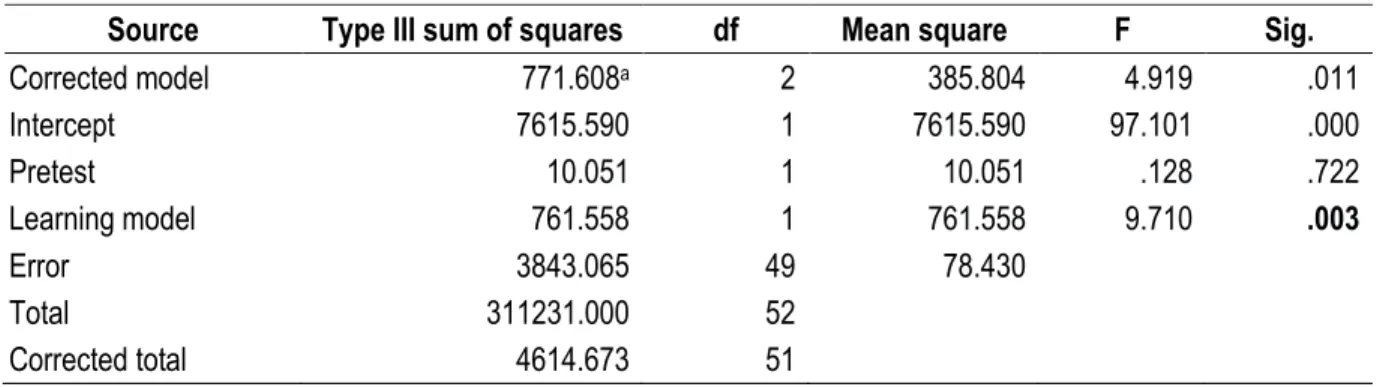
The results of hypothesis testing are used to determine the effect of the independent variables on the dependent variable. The dependent variable data shows a normal and homogeneous distribution so that it is feasible to be tested using statistical tests. ANCOVA calculation results on student cognitive learning outcomes are shown in Table 6, while further tests are shown in Table 7.
Table 6. ANCOVA cognitive learning outcomes
Source Type III sum of squares df Mean square F Sig.
Corrected model 771.608a 2 385.804 4.919 .011
Intercept 7615.590 1 7615.590 97.101 .000
Pretest 10.051 1 10.051 .128 .722
Learning model 761.558 1 761.558 9.710 .003
Error 3843.065 49 78.430
Total 311231.000 52
Corrected total 4614.673 51
Table 7. Further tests of students' cognitive abilities LSD
Learning Model Average LSD Notation
Experiment 80.6154 a
Control 72.9615 b
6 The independent variable of the learning model is significant at 0.003 <α = 0.05. Based on these results, there is an effect of the learning model on student cognitive learning outcomes (Table 6). The difference in notation between the experimental class and the control class (Table 7). This proves that students who are taught using the PjBL- HOTS learning model have better cognitive learning outcomes than students taught using conventional learning models. Research by Susilowati et al. (2013) shows that project-based learning affects student learning outcomes in the human digestive system material compared to conventional learning. After students complete their projects, students understand the content of the human body defense system material which is more in-depth so that students can better apply their knowledge in solving problems in real life. According to Insyasiska et al. (2015) in project-based learning, students experience the project as a whole themselves, starting from selecting topics, deciding on approaches, conducting experiments, drawing conclusions, and communicating the results of the project. Several studies on the PjBL learning model show that PjBL is constructivist based to shape student concepts. In this study, PjBL is combined with HOTS to become PjBL-HOTS which still reflects PjBL's constructivist to form student concepts independently.
The PjBL-HOTS stage contains a combination of project stages with critical thinking skills. At the critical stage in analyzing the topic, students are provided with the experience of finding information and reading this information to compile a project implementation plan, to project reports. At this stage students can develop cognitively by reading, taking notes, and detailing the stages of the project and report implementation. Klein et al. (2009) explain that project- based learning can empower students to pursue their knowledge. Anazifa & Hadi (2016) project-based learning also improves students' learning abilities. The two opinions above indicate that PjBL learning can empower students to understand the material they are learning independently. Meanwhile, this learning is based on the PjBL-HOTS integration which is also able to improve students' cognitive learning outcomes because there are already critical thinking stages in the project learning stage.
The next stage is critical thinking on relevant information to be used to solve problems/phenomena, division of tasks into groups, compiling work stages, implementation to product manufacturing. In each stage of project learning, critical thinking skills are continuously trained so that students become accustomed to them. According to Husnah (2017), how to improve critical thinking skills is to read critically, develop observation skills (observe), increase curiosity, and discussion. Students can practice critical thinking during reading to find information for the group division process, the preparation of project stages, and project implementation. Reading in this process is not just reading material about the body's immune system in general but reading critically, meaning that after reading students get results from reading, namely tasks to be carried out by groups, project stages for project implementation in the immune system. The same thing was also conveyed by Christina & Kristin (2017) that critical thinking is the ability to obtain information for solving a problem by finding this information from various sources. Walfajri & Harjono (2014) added that critical thinking is a person's ability to make decisions, analyze problems and overcome the problems they face. Therefore, critical thinking skills are very important to use in project learning (PjBL) to improve students' cognitive abilities. Huda & Rahman (2020) explain that students have a good cognitive way of thinking that is influenced by critical thinking habits so that it can also affect student learning achievement. Ramdani and Badriah’s (2018) research shows that there is a positive correlation between critical thinking and student learning outcomes because there is the suitability of stages in the learning model that focuses on authentic problems so that it can accommodate critical thinking and cognitive learning outcomes.
Based on this opinion, HOTS's ability to think critically in combination with the PjBL learning stages can affect cognitive learning outcomes compared to the STAD learning model commonly used by teachers. Various studies have shown that STAD can improve student cognitive learning outcomes. Hasan et al. (2016) show that STAD can improve cognitive learning outcomes in its two cycles of application. The descriptive analysis also shows that STAD can improve student learning outcomes before and after the application of the learning model. However, further tests showed a significant difference between the STAD model and the PjBL-HOTS combination in improving cognitive learning outcomes for students at SMA N 6 Leihitu.
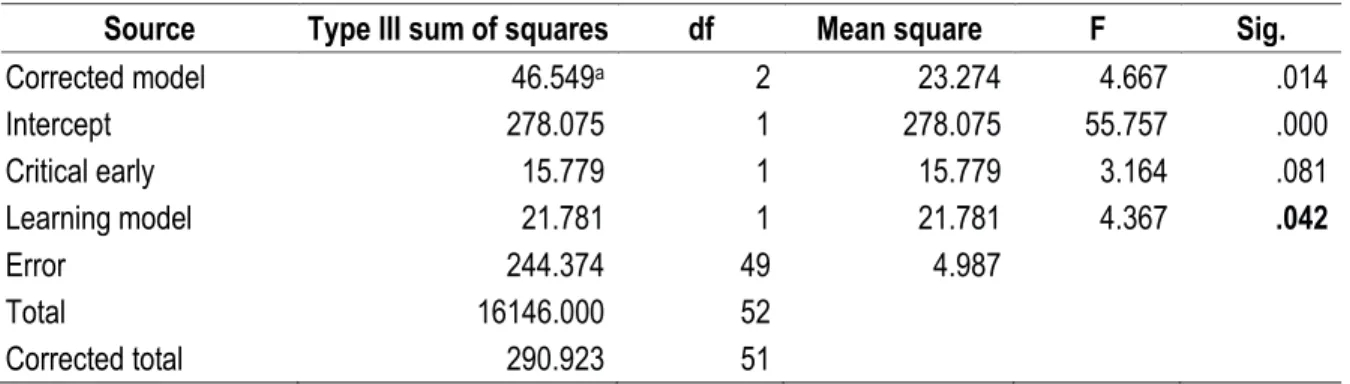
In addition to the contribution of critical thinking in the PjBL learning stages in influencing student learning outcomes, the next analysis is an analysis of the PjBL-HOTS combination in influencing critical thinking. The results of the ANCOVA calculation on students' critical thinking skills are shown in Table 8, while the LSD advanced test is shown in Table 9.
7 Table 8. ANCOVA students' critical thinking skills
Source Type III sum of squares df Mean square F Sig.
Corrected model 46.549a 2 23.274 4.667 .014
Intercept 278.075 1 278.075 55.757 .000
Critical early 15.779 1 15.779 3.164 .081
Learning model 21.781 1 21.781 4.367 .042
Error 244.374 49 4.987
Total 16146.000 52
Corrected total 290.923 51
Table 9. LSD further test of students' critical thinking skills
Learning Model Average LSD Notation
Experiment 18.2308 a
Control 16.6923 b
Inferential analysis using the ANCOVA test shows that there is an effect of the learning model on students' critical thinking 0.042 <α 0.05 (Table 8). The LSD advanced test showed that the difference in notation between the experimental class and the control class so that the PjBL-HOTS learning model applied to the experimental class was able to improve students' higher-order thinking compared to the conventional model (STAD) in the control class (Table 9). The results showed that the PjBL-HOTS learning model is a learning model that can improve students' critical thinking skills. The use of PjBL is one effective way to train students' HOTS skills (Sambite et al., 2019). HOTS is a thought process that not only memorizes but also involves deep understanding and critical analysis thinking processes (Lukitasari et al., 2018). This constructivist-based PjBL learning model is very suitable to be used to improve HOTS, especially students' critical thinking. According to Stephani (2016), critical thinking will occur when students are allowed to analyze various information then make a decision and put the decision into practice. Through critical thinking, students can identify problems, seek information, and find solutions to these problems are stages to develop critical thinking (Putri et al., 2018).
In PjBL-HOTS learning, the series of PjBL stages are always integrated with critical thinking components.
Therefore, each stage that is integrated with HOTS can improve students' critical thinking skills, compared to the STAD learning model that has been used by teachers in teaching the concept of the human body defense system.
STAD is a cooperative learning model that focuses on group discussion activities, after which a test is conducted to check understanding at the end of the lesson. However, PjBL learning integrates HOTS in every lesson to improve critical thinking skills. Several studies have shown that PjBL can increase students' HOTS. According to Fitriani et al.
(2015), there are differences in the ability to think critically in the control class and the experimental class because the stages of the learning model support the development of this critical thinking ability. Therefore, HOTS integration at the PjBL stage can also improve students' critical abilities. The same results were also conveyed by Wahid &
Karimah's (2018) study of the Creative Problem Solving (CPS) learning model which is integrated with HOTS which can empower students to increase the ability of students to think highly. The results of ANOVA calculations on students' social attitudes are shown in Table 10 below.
Table 10. ANOVA of the ability of social attitudes
Sum of Squares df Mean Square F Sig.
Between groups 27.769 1 27.769 2.193 .145
Within groups 633.000 50 12.660
Total 660.769 51
Inferential analysis using the ANOVA test shows that there is no influence of the learning model on students' social attitudes (Table 10). Social attitude is one of the important aspects that need to be presented in the learning process, especially Biology-Science. PjBL-HOTS learning and STAD (conventional) learning are also able to
8 empower students' social attitudes because students can interact with other students, as well as interact with teachers. According to Gusviani (2016), social attitudes can be raised in core activities through exploration by the teacher, it can also be raised in the final activity, namely by providing advice or motivation so that students can form individuals who have good social attitudes as provisions for life in society.
The PjBL-HOTS learning stage emphasizes interaction with groups for project planning, implementation, and presentation. According to Astalini et al. (2018), social attitudes in science learning imply that students can control themselves to achieve learning goals through understanding, experimenting, being active, and liking science learning.
The same thing was conveyed by Sanjiwana et al. (2015) so that the students 'social attitudes that are formed do not deviate from the expected aspects of social attitudes, it is the teacher's task to monitor students' social attitudes according to the learning stages. At this stage, students plan the division of tasks in groups, implement projects, make products and present them in groups to increase student cooperation. Student cooperation attitudes must be honed from childhood so that students can socialize with their friends, respect friends' opinions, and work will feel lighter when done together (Listiani & Purwanto, 2018).
According to Primandari et al. (2019) social attitudes in the form of responsibility, discipline, honesty, courtesy, group work can be trained in every lesson because students are more relaxed because it is done with peers. The PjBL-HOTS learning stages also empower responsibility, honesty and discipline, and are polite to group mates and teachers. Sukerta et al. (2014) reported that student activeness in discussion was supported by student social interaction during the learning process. Therefore, social attitudes are one of the psychological aspects of students that are very important to be nurtured and developed.
CONCLUSION
The PjBL-HOTS learning model affects students 'cognitive learning outcomes, critical thinking, and students' social attitudes. This is because the critical thinking stage is always empowered in the PjBL learning stage starting from project planning, implementation, and product presentation. Empowerment of critical thinking can affect the mastery of student cognitive learning outcomes in studying the immune system.
REFERENCES
Anazifa, R., & Hadi, R. (2016). Environmental education through project-based learning (Project-Based Learning) in biology learning. Proceedings of the Symbion of the Biology Education Study Program, FKIP, Ahmad Dahlan University, 453–462.
Astalini, Kurniawan, D., & Putri, A. (2018). Identification of the attitude of the social implications of science, interest in increasing science learning time, and interest in a career in science for junior high school students in Muaro Jambi Regency. Tarbiyah Journal: Scientific Journal of Education, 7(2), 93–108.
Brookhart, SM (2010). How to assess higher-order thinking skills in your classroom. Alexandria, Virginia USA.
Christina L. V ., & Kristin, F. (2017). The effectiveness of the group investigation (G I ) type of learning model and cooperative integrated reading and composition (CIRC) in increasing the creativity of critical thinking and social studies learning outcomes for grade 4 students. Scholaria: Journal of Education and Culture, 6 (3), 217–230.
Çimer, A., Timuçin, M., & Kokoç, M. (2013). Critical thinking level of biology classroom survey: Ctlobics. The Online Journal of New Horizons in Education, 3(1), 15–24.
Dinni, H. N. (2018). HOTS (High Order Thinking Skills) and its relation to mathematical literacy skills. Prism 1:
Proceedings of the National Mathematics Seminar, 170–176.
Fitriani, A., Indrowati, M., & Karyanto, P. (2015). Students' critical thinking skills in biology learning through the application of accelerated learning for class X SMA Negeri Karangpan and Karanganyar. Journal of Biological Education, 7(2), 56–67.
Gusviani, E. (2016). Analysis of the emergence of spiritual attitudes and social attitudes in science learning activities for grade IV SD using KTSP and the 2013 curriculum. Eduhumaniora, 7(2), 1–10.
Heong, Y. M, Othman, W., Yunos, J. B. M., Kiong, T., Hassan, R., & Mohamad, MM (2011). The level of Marzano higher-order thinking skills among technical education students. International Journal of Social Science and Humanity, 1(2), 121–125.
Huda, M., & Rahman, L. (2020). The relationship between critical thinking skills and learning outcomes of elementary school students. Journal of Character Education: Journal of Child and Character Education, 2(2), 42–47.
Husnah, M. (2017). The relationship between the level of critical thinking on student physics learning outcomes by applying the problem-based learning model. Journal of Physics and Science Learning, 1(2), 1–12.
9 Insyasiska, D., Zubaidah, S., & Susilo, H. (2015). The effect of project-based learning on learning motivation, creativity, critical thinking skills, and cognitive abilities of students in biology learning. Journal of Biological Education, 7(1), 9–21.
Istiyono, E., Mardapi, D., & Suparno, S. (2014). Development of high-level physics thinking skills test (PysTHOTS) of high school students. Journal of Educational Research and Evaluation, 18(1), 2–5.
Klein, J., Taveras, S., King, SH, Commitante, A., Bey, LC., & Stripling, B. (2009). A Guide To project-based learning in middle schools: Inspiring students to engage in deep and active learning. NYC Department of Education.
Kusuma, M., Rosidin, U., Abdurrahman., & Suyatna, A. (2017). The Development of higher-order thinking skill (HOTS) assessment instrument in physics study. Journal of Research & Method in Education, 7(1), 26–32.
Leiwakabessy, F., Hetharia, M., & Manuputty, R. (2018). Development of biological teacher capabilities in the development of test instruments based on high order thinking skills (HOTS) In high school in Ambon city that have applied 2013 Curriculum. Proceeding Book of The 3rd International Seminar on Education November 07th, 2, 76–86.
Listiani, S., & Purwanto, A. (2018). The application of a project-based learning model using used goods to improve students' scientific attitudes. Proceedings of the Seminar and National Discussion on Basic Education, 24–29.
Lukitasari, M., Handhika, J., & Murtafiah, W. (2018). Higher-order thinking skills: Using e-portfolio in project-based learning. In Journal of Physics: Conference, 983(12047), 1–7.
Narahaubun, S. S, Rehena, J. F., & Rumahlatu, D. (2020). Empowering students' critical thinking skills, information literacy, and cognitive learning outcomes through the RBL-TPS model. Indonesian Journal of Biological Education, 6 (2), 243–256. https://doi.org/10.22219/jpbi.v6i2.11456
Primandari, P., Sulasmono, B. S., & Setyaningtyas, E. (2019). The difference in the effect of the cooperative model type TGT and STAD with cheerful interactive multimedia on social attitudes and cognitive learning outcomes in thematic learning in grade 5 SD. Basicedu's Journal, 3(3), 83–91.
Putri, R. L, Dwiastuti, S., & Karyanto, P. (2018). The effect of higher-order thinking skills questions in problem-based learning model toward student's critical thinking. Proceeding Biology Education Conference, 15(1), 324–328.
Rumahlatu, D., & Sangur, K. (2019). The influence of project-based learning strategies on the metacognitive skills, concept understanding, and retention of senior high school students. Journal of Education and Learning, 13(1), 104–110.
Rumahlatu, D., Sangur, K., & Liline, S. (2020). The effect of complex instruction team product (CITP) learning model on increase student's skills. International Journal of Instruction, 13(1), 587–606. doi:
https://doi.org/10.29333/iji.2020.13138a
Said, H., Kasuba, F., & Sirajudin, N. (2016). Application of learning model student teams education division (STAD) to improve learning outcomes and activities of class VII students on the ecosystem concept at SMP Negeri 6 Bibinoi. Journal of Bioeducation, 4(2), 551–561.
Sambite, F. C, Mujasam, M., Widyaningsih, S., & Yusuf, I. (2019). Application of project-based learning based on simple teaching aids to increase the HOTS of students. Periodic Scientific Physical Education, 7(2), 141–147.
Samosir, A., Hasruddin., & Dongoran, H. (2019). Analysis of the quantity and quality of biology teacher and student questions on the excretion system material. Pelita Pendidikan Journal, 7(1), 9–15.
Sanjiwana, P. P. C. M., Pudjawan, K., & Margunayasa, IG (2015). Analysis of the Social Attitudes of Class V Students on Learning with the 2013 Curriculum. PGSD Journal, Ganesha Education University, PGSD Department, 3(1), 11–18.
Setiawati, H., & Corebima, A. (2017). Empowering critical thinking skills of the students having different academic abilities in biology learning of Senior High School through PQ4R - TPS Strategy: The International Journal of Social Sciences and Humanities Invention, 4(5), 3521–3526.
Stephani, M. R (2016). The Role of Teachers in Efforts to Increase Higher Order Thinking Through Guided-Discovery Teaching Styles in Physical Education Learning. Journal of Physical Education d 's Sport, 1(2), 34-42.
Sukerta, K., Lasmawan, I. W, & Natajaya, I. N. (2014). The influence of the cooperative learning model of the stad type on social studies learning achievement with the covariable social attitudes of fifth-grade elementary school students of Cluster III South Kuta District, Badung Regency, Bali. PENDASI: Indonesian Journal of Basic Education, 4(1), 1–11.
Susilowati, I., Iswari, R., & Sukaesih, S. (2013). The effect of project-based learning on student learning outcomes regarding the human digestive system. Journal of Biology Education, 2(1), 82–90.
Tajudin, Nor'ain, M., & Chinnappan, M. (2016). The link between higher-order thinking skills, representation, and concepts in enhancing TIMSS tasks. International Journal of Instruction, 9(2), 1–9.
10 Wahid, A. H., & Karimah, R. A. (2018). Integration of higher-order thinking skills (HOTS) with creative problem-solving
models. Modeling: Journal of the PGMI Study Program, 5(1), 82–98.
Walfajri, R., & Harjono, N. (2014). Improved critical thinking skills and thematic learning outcomes of science content through problem-based learning models for grade 5 SD. Basicedu's Journal, 3(1), 16–20.
Widodo, T., & Kadarwati, S. (2013). Higher-order thinking based on problem-solving to improve learning outcomes- oriented to character building students. Education Horizons, 2013(1), 161–171.
11 Bioedupat 2021, 1(1): 11-16
BIOEDUPAT:
Pattimura Journal of Biology and Learning
https://ojs3.unpatti.ac.id/index.php/bioedupat e-ISSN 2775-4472
Research Article
The density of Siasia (Sipunculus nodus) population based on the differences in the substrate of the sea grasses beds on the
waters of Saparua Island
Yoin Meissy Matulessy1,*, Ali Awan2, Sintje Liline2
1 Postgraduate Student of Biology Education, Pattimura University, Jl. Dr. Tamaela, Ambon, Maluku 97114, Indonesia
2 Study Program of Biology Education, Faculty of Teacher Training and Education, Pattimura University, Jl. Ir. M. Putuhena, Ambon, Maluku 97233, Indonesia
* corresponding author: [email protected]
Received: 17February 2021 Revised: 15 March 2021 Accepted: 21 April 2021
ABSTRACT
Sipuncula, a marine biota which is commonly called a peanut worm, is a marine biota that is a little "controversial". Some literature also refers to these animals as "unsegmented marine worms" or unsegmented marine worms. Siasia (Sipunculus nodus) usually lives in coastal areas, especially around seagrass beds, mangrove forests, and coral reefs. These biotas tend to inhabit the bottom of the waters, especially in the substrate, so they are categorized as infauna benthic organisms. Siasia (S. nodus) can inhabit soft and hard substrate areas. Based on its ecological function, seagrass forms associations with various kinds of marine life as food providers, shelters, and places to live, causing high diversity of marine life. The basic substrate in the form of flat stones and gravel is a good living environment for macrozoobenthos because it is rich in organic compounds so it has a big population density and diversity.The bottom of the waters in the form of sand and fine sediment is not a good living environment for benthic animals. Factors affecting density and diversity are environmental conditions, habitat, and diet. The same factors also affect the nutritional content of Siasia (S. nodus). So, it is feared that when the population density of Siasia (S. nodus) becomes high in the water there will be competition for food which will have a direct impact on the nutritional content of Siasia (S. nodus). The population density of each water is different, so it is necessary to research the population density of Siasia (S. nodus) based on differences in the substrate of the seagrass area in the waters of Saparua Island, Maluku Province, Central Maluku Regency. The highest population density value of Siasia (Sipunculus nodus) in Saparua Island waters is found in Siri-sori State and the lowest is in Paperu Country.
Keywords: Density, proximate, Sipunculus nodus To cite this article:
Matulessy, Y. M., Awan, A., Liline, S. (2021).The density of Siasia (Sipunculus nodus) population based on the differences in the substrate of the sea grasses beds on the waters of Saparua Island. Bioedupat: Pattimura Journal of Biology and Learning, Vol 1(1), 11-16.DOI: https://doi.org/10.30598/bioedupatv1i1pp11-16
INTRODUCTION
Sipuncula, a marine biota commonly called peanut worm, is a marine biota that is a little "controversial"
(Silaban & Silaban, 2019). Some literature also refers to these animals as "unsegmented marine worms" or unsegmented marine worms (Barnes, 1987; Hutching & Johnson, 2003). Taxonomically, Sipuncula is not included in the Phylum Annelida Class Polychaeta, which is a taxon where the majority of marine worms can be grouped. Sipuncula, also known as Sipunculida (Tree of a life web project, 2008), is a biota that belongs to a
12 separate phylum under Kingdom Animalia, namely Phylum Sipuncula. Thus, although it is often called a "worm"
the use of this term is still a matter of debate among scientists. The presence of Sipuncula in marine and estuary ecosystems is relatively less well known when compared to the marine worm Polychaeta.
Sipuncula is described at glance as a marine animal that looks like a worm but without segments. Its body is divided into the main body (trunk) and an introvert that can be pulled inward or behind. The ratio of the length of the two parts varies for each type. Sipuncula is a minor phylum in the large bilaterian animal group, namely a group of animals that are triploblastic, bilaterally symmetrical, and formed from three kinds of seed layers (endodermis, mesoderm, and ectoderm (Suwignyo & Sugiarti, 2005).
Kendari people generally process Siasia (Sipunculus nodus) as a food substitute for fish which is believed to have health benefits and is also used as herbal/natural medicine. Silaban & Nanlohy (2011) state that marine worms originating from Nalahia waters have the highest protein content of 17.13%. Zhang et al. (2011) state that in China sea worms have long been used as traditional medicine in treating tuberculosis, regulating gastric and spleen functions, as well as restoring health caused by pathogens. Purwaningsih (2014) states that the ethanol extract of sea worms has potential as antidiabetes through in vitro tests which can inhibit the activity of the a- glucosidase enzyme by 16-24 ppm.
Sipuncula of the species (S. nudus) is known mainly in the Maluku region as a food ingredient and as bait to catch fish such as tatu fish and garopa. S. nudus is known as "Siasia" by the people of Ambon Island. On the island of Rhun (Banda Islands) it is called "Kariong" and in the Bangka-Belitung Islands it is called "kekuak".
Siasia (S. nodus) on the island of Saparua is used as a coastal water resource for the community. The capture of this biota by the local community has been carried out regularly. Siasia (S. nodus) is one of the biotas that is usually sought after when the seawater recedes by the local community. Usually, Siasia is consumed fresh (kohokoho, the general term for the Maluku people), sautéed, and sauteed with soy sauce. But a lot of people, who never know at all, or know but have never tasted it because the community's knowledge is still very low about the benefits of Siasia (S. nodus).
Silaban (2012) states that Siasia (S. nodus) usually lives in coastal areas, especially around seagrass areas, mangrove forests, and coral reefs. These biotas tend to inhabit the bottom of the waters, especially in the substrate. They have been categorized as infauna benthic organisms. Siasia (S. nodus) can inhabit soft and hard substrate areas. Based on its ecological function, seagrass forms associations with various kinds of marine life as food providers, shelters, and places to live, causing high diversity of marine life (Supono & Arbi, 2010). The basic substrate in the form of flat stones and gravel is a good living environment for macrozoobenthos because it is rich in organic compounds so that it has great density and diversity (Odum, 1994). Furthermore, Koesbiono (1979) said that the bottom of the waters in the form of sand and fine sediment is an unfavorable living environment for benthic animals.
Factors affecting population density and diversity are environmental conditions, habitat, and diet. The same factors also affect the nutritional content of Siasia (S. nodus). It is feared that when the population density of Siasia (S. nodus) becomes high in the water there will be competition for food which will have a direct impact on the nutritional content of Siasia (S. nodus). The population density of each water is different. So it is necessary to research the population density of Siasia (S. nodus) based on differences in the substrate on the seagrass area in the waters of Saparua Island, Maluku Province, Central Maluku Regency.
METHODS Sampling
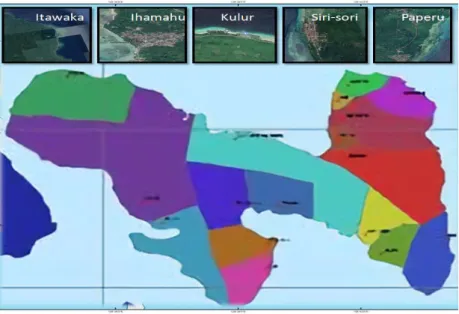
This research was conducted for 8 months starting from December 2019 to August 2020. It was carried out in the waters of Saparua Island (Figure 1). Sampling was carried out in several villages, including Paperu Village (rocky), Siri-soriAmalatu Village (rocky sand substrate), Kulur Village (sandy substrate), Ihamahu Village (sandy substrate), and Itawaka Village (rocky sandy substrate).
Sampling is done by using the roaming method. And then observations were made on the surface of the sediment. If there is some kind of dune and the roots of the seagrass are slightly raised, then the Sipuncula usually hides under the area. The bigger the dune that is formed and the roots of the seagrass are lifted, the bigger the body size and vice versa (Silaban & Silaban, 2019).
When sampling is carried out, positions are plotted using a machete. Then after using a machete, a sample of Siasia (Sipunculus nodus) was taken and was put in a labeled plastic sample. Data collection on the population density of Siasia (S. nodus) was carried out by counting the number of individual animals contained in squares at the research location and also documentation in the form of photographs.
13 Figure 1. Research Location Map
Population Density Calculation
The population density of Siasia (Sipunculus nodus) was analyzed using the population density formula (Brower, 1997) as follows:
D = Ni Where : A
D = Population Density of Siasia (S. nodus) (ind / m2) Ni = Number of Individuals
A = Area of the sampling plot (m2) Environmental parameter measurement
Environmental parameters calculation includes salinity, temperature, pH, and substrate (observed). The tools that were used are thermometer and pH meter by placing these tools at two different points, namely at the point near the coast of Station 1 (shallow) and the other at a point near the reef of Station 2 (deep). This tool is placed to determine the fluctuation of temperature and light intensity at the research location at a predetermined time range. The salinity meter uses a hand refractometer, where these measurements are carried out three times at each station. Substrate observation was carried out physically by observing the surface of the sediments found in each research location.
RESULTS AND DISCUSSION Environmental parameter
Environmental parameters measured in this study are salinity, temperature, and water pH. The following are the results of environmental parameter measurements in 5 villages (Paperu, Siri-sori Amalatu, Kulur, Ihamahu, and Itawaka) with different substrates in the waters of the island of Saparua, Central Maluku district. The results of environmental parameters can be seen in Table 1.
Table 1. Results of measurements and observations of environmental parameters
Location Temperature (oC) Salinity (‰) pH Substrate
Ihamahu Village 26.4-28.5 29.8-34.3 7.4-7.7 Rocky, sandy
Paperu Village 29.9-36.5 36.5-41.8 7.7-7.9 Rocky
Itawaka Village 27.1-29.6 31.1-33.1 7.2-7.6 Rocky, sandy
Kulur Village 25.9-27.7 28.3-32.5 7.1-7.5 Sandy
Siri-sori Amalatu Village 29.2-35.9 34.9-38.5 7.6-7.8 Rocky, sandy Temperature
Based on measurements made using a thermometer, the results show that the highest temperature is in Paperu, which ranges from 29.9-36.5oC and is followed by Siri-sori Amalatu Village with values ranging from 29.2-35.9oC The lowest temperature measurement values were in Kulur Village, namely 25.9-27.7oC and followed by Ihamahu and Itawaka villages which had temperature measurement values ranging between 26.4-
14 28.5 and 27.1-29.6oC. This is because in the waters of Paperu and Siri-sori Amalatu only a few rivers flow fresh water into the sea. So the temperature value of the water in the 2 villages namely Paperu and Siri-sori Amalatu is higher than the waters in 3 other villages (Ihamahu, Itawaka, and Kulur). The factors that influence the temperature value are rainfall, evaporation, river run-off, and season (Barus, 2004). In general, the temperature range in all research locations (Paperu, Siri-sori Amalatu, IhamahunItawaka, and Kulur) obtained during the study was tolerable by Siasia (S. nudus). This is because the temperature obtained is below the tolerance limit for the balance of the population structure of benthic animals in general.
According to Effendi (2003), the activity of microorganisms requires different optimum temperatures. Every 10oC increase in temperature will increase the decomposition process and oxygen consumption by 2-3 times.
However, this increase in temperature is accompanied by a decrease in dissolved oxygen levels so that the presence of oxygen is often unable to meet the oxygen needs of aquatic organisms for metabolism and respiration. According to Ghufran & Baso (2007) in other words, the higher the water temperature, the lower the solubility of oxygen in the water, and vice versa.The higher the solubility of oxygen, the lower the water temperature. The indirect effect of temperature on the environment is to affect metabolism, the solubility of gases, including oxygen, and various chemical reactions in water. Welch (1980) states that the temperature that is dangerous for macrozoobenthos ranges from 35oC- 40oC.
Salinity
Based on the results of salinity measurements carried out using a refractometer. The results show that the highest salinity is in Paperu. Which is between 36.5-41.8 ‰ and followed by Siri-sori Amalatu Village with values ranging from 34.9-38.5 ‰. The lowest salinity measurement value is in Kulur Village, which is 28.3-32.5 ‰ and is followed by Ihamahu and Itawaka Villages which have salinity measurement values ranging between 29.8-34.3 and 31.1-33.1 ‰. This is because the results of water temperature measurements in 3 Villages: Ihamahu, Itawaka, and Kulur are lower than the water temperatures in 2 other countries, namely Paperu and Siri- soriAmalatu so that the evaporation rate is also low. The relationship between evaporation and salinity is directly proportional. The higher the level of evaporation in water, the higher the salinity and vice versa (Nybakken, 1992).
Furthermore, Nybakken (1992) also explained that the fluctuation of salinity in the intertidal area can be caused by two things. Firstly, due to heavy rain so that the salinity will decrease and secondly due to very high evaporation during the day. So, the salinity will be very high. In general, the salinity range in all study locations (Paperu, Siri-sori Amalatu, Ihamahu, Itawaka, and Kulur) obtained during the study was tolerable by Siasia (S.
nodus). This is because the salinity obtained is below the tolerance limit for the balance of benthic animal population structures in general.
Mudjiman (1981) states that the salinity range considered suitable for macrozoobenthic life ranges from 15-45
‰. The report from Irwan (1997) added that in low and high salinity waters, macrozoobenthos such as snails, worms (Annelida) and shellfish can be found. Payung (2017) states that salinity greatly affects the balance in the body of organisms through changes in water density and changes in osmotic pressure. The higher the salinity, the greater the osmotic pressure so that the organism must have the ability. Adapt to changes in salinity to some
extent through osmoregulation mechanisms.
pH
Based on the results of pH measurements made using a ph meter, the results have almost the same values from one location to another. The highest pH measurement value ranged from 7.7-7.9 in Paperu Village while the lowest was between 7.1-7.5 in Kulur Village. Variations in pH values are influenced by many factors, including temperature, dissolved oxygen, alkalinity, the presence of various anions and cations as well as the type and stage of organisms (Pescod, 1973).
In general, the pH range in all research locations (Paperu, Siri-sori Amalatu, Ihamahu, Itawaka, and Kulur) obtained during the study was tolerable by Siasia (S. nudus). The life of aquatic organisms is greatly influenced by pH value fluctuations. In general, aquatic organisms are tolerant of a neutral pH value range. The ideal pH for aquatic organisms is generally between 7-8.5. Water conditions that are very acidic or very alkaline will threaten the survival of the organism because it will cause metabolic and respiration disorders (Odum, 1994).
Substrate
Based on the results of substrate observations carried out physically by observing the sediment surface in 5 villages, the results are varied. The substrate that was mostly found is the rocky sandy substrate. It is found in Ihamahu, Itawaka, and Siri-sori Amalatu villages. The least found substrate is the sandy and rocky substrate in Kulur and Paperu villages. Besides the existence of basic substrate organic compounds in the form of flat stones and gravel, it is a good living environment for macrozoobenthos so that it has great population density and
15 diversity (Odum, 1994). Furthermore, Koesbiono (1979) said that the bottom of the waters in the form of sand and fine sediment is not a very good living environment for benthic animals.
According to Seki (1982), the main organic components found in water are amino acids, proteins, carbohydrates, vitamins, and hormones which are also found in water. Only 10% of the organic material settles as a substrate to the bottom of the water. The basic substrate is the main factor affecting the life, development and diversity of macrozoobenthos (Hynes, 1976).
Population density
The results of the calculation on the population density of Siasia (Sipunculus nodus) in the waters of the island of Saparua show quite varied values. The results of observing the presence of individuals in each village can be seen in Table 2. The results of calculating the density of Siasia (S. nodus) can be seen in Table 3.
Table 2. Observations of the presence of individuals in each villages
Location Number of Individuals in Squares to Total of Individuals
1 2 3 4 5 6 7 8 9 10 11 12
Ihamahu 1 - 2 1 - 1 2 2 1 - - 1 11
Paperu - 2 1 - 2 - - 1 - 1 1 - 8
Itawaka 2 - 1 2 2 1 2 2 2 2 3 2 21
Kulur 1 1 1 2 1 1 3 1 1 2 1 - 15
Siri-sori Amalatu 3 2 2 3 1 2 2 1 3 2 2 1 24
Table 3. Population density calculation result
Location Subtrate Type Value
Ihamahu Rocky, sandy 1.21
Paperu Rocky 0.89
Itawaka Rocky, sandy 2.32
Kulur Sandy 1.67
Siri-sori Amalatu Rocky, sandy 2.67
Total 8.76
Based on the population density calculation results that have been obtained, each location shows different values. The total value of the 5 research locations is 8.76 ind / m2. The highest value was in Siri-sori Amalatu Village which had a value of 2.67 ind / m2 and was followed by Itawaka Village with a value of 2.32 ind / m2. The lowest density calculation value was found in Paperu Village with a value of 0.89 ind / m2 and followed by Ihamahu Village with a value of 1.21 ind / m2. For 1 other village, namely Kulur, it has a value close to Ihamahu Village, which is 1.67 ind / m2.
This difference occurs due to environmental conditions that do not support the life of the S. nodus, diet, type of substrate, and capture. In addition, other activities that can damage the seagrass ecosystem which can have an impact on the population density of S. nodus is the local community making the research location a place for boats to dock, the activities of catching gastropods and other marine animals which are carried out at low tide which are mentioned by the local community as "bameti" and tourism / recreational activities such as swimming.
One of the activities of the ship that is suspected of destroying the seagrass is the entry and exit of ships into the coastal area. Tourism activities such as swimming on the beach are also thought to damage the seagrass. In contrast to the existing research station in Siri-Sori Amalatu Village which is quite far from residential areas so that no community activity is found, this makes seagrass cover still well preserved and the opportunities for fishing are less, this is shown in the condition of the sediment surface which is still awake.
CONCLUSION
Based on the results and discussion stated, it can be concluded that: The population density value of Siasia (Sipunculus nodus) in the waters of the island of Saparua shows quite a large difference. The highest population density value is in Siri-soriAmalatu Village and is followed by Itawaka Village. Meanwhile, the lowest population density calculation value was found in Paperu Village and followed by Ihamahu Village. For 1 other country, Kulur has a value that is close to the Ihamahu Village.
REFERENCES
Barnes, R. D. (1987). Invertebrete zoologi. Edisi ke-5. Sounders College Publising, Orlando, New York. pp. 893.
16 Barus, T. A. (2004). Faktor-faktor lingkungan abiotik dan keanekaragaman plankton sebagai indikator kualitas perairan danau toba (Environmental abiotic factors and the diversity of plankton as water quality indicators in lake toba, North Sumatera, Indonesia). Jurnal Manusia dan Lingkungan, 11(2), 64-72. (In Indonesian).
Brower, J., & Zar, J. (1997). Field and laboratory methods for general ecology. Spiral- bound, USA.
Effendi, H. (2003). Telaah kualitas air bagi pengelolaan sumber daya dan lingkungan perairan [study of water quality for management of aquatic resources and environment]. Kanisius, Yogyakarta. (In Indonesian).
Gufran, M. H., & Baso, B. T. (2007). Pengelolaan kualitas air dalam budi daya perairan [Management of water quality in aquaculture]. Rineka Cipta, Jakarta. (In Indonesian).
Hutching, P. A., & Johnson, R. T. (2003). Australian aphroditidae (Polychaeta) delta database. In R.S. Wilson, P.A. Hutchings dan C.J. Glasby (eds). Polychaetes: An Interactive Identification. Csiro, Melbourne.
Hynes, H. B. N. (1976). The ecology with of running water. Lipverpool University Press, England.
Irwan, D. (1997). Prinsip-prinsip ekologi dan organisasi ekosistem & komunitas lingkungan [Ecological principles and organization of environmental ecosystems & communities]. Bumi Aksara, Jakarta. (In Indonesian).
Koesbiono. (1979). Dasar-dasar ekologi umum [General ecology basics]. Sekolah Pasca Sarjana Program Studi Lingkungan, IPB. Bogor. (In Indonesian).
Mudjiman, A. (1981). Budidaya udang windu [Tiger prawn cultivation]. PT. Penebar Swadaya, Jakarta. (In Indonesian).
Nybakken, J. W. (1992). Biologi laut suatu pendekatan ekologis [Marine biology an ecological approach]. PT.
Gramedia Pustaka Utama, Jakarta. (In Indonesian).
Odum, E. P. (1994). Dasar-dasar ekologi [Ecological basics]. Edisi Ketiga. Universitas Gadjah Mada Press, Yogyakarta. (In Indonesian).
Payung, W. R. (2017). Keanekaragaman makrozoobentos (epifauna) pada ekosistem mangrove di sempadan sungai tallo kota makassar [Diversity of macrozoobenthos (epifauna) in the mangrove ecosystem on the tallo riverbank of the city of Makassar]. Skripsi. Departemen Ilmu Kelautan Fakultas Ilmu Kelautan dan Perikanan Universitas Hasanuddin Makassar. (In Indonesian).
Pescod, M. B. (1973). Investigation of rational effluent and stream standart for tropical countries, AIT, Bangkok.
Purwaningsih, S. (2014). Pengembangan pangan fungsional sebagai antidiabetes dari beberapa moluska yang mempunyai aktivitas antioksidan tinggi [Development of functional food as antidiabetic of several mollusks which have high antioxidant activity]. Institut Pertanian Bogor, Bogor. (In Indonesian).
Seki, H. (1982). Organic Material in Aquatik Ecosystem. CRC Press. Inc, Folrida.
Silaban, B. (2012). Profil Nutrisi Sipuncula (Cacing Kacang); Biota laut yang kontrovertif di Pulau Nusalaut, Maluku Tengah [Nutritional Profile of Sipuncula (Peanut Worm); Controversial marine life on Nusalaut Island, Central Maluku]. Laporan hasil penelitian dosen pemula yang dibiayai dengan PNBP Lembaga Penelitian Universitas Pattimura. (In Indonesian).
Silaban, B, br., Nanlohy, E. E. E. M. (2012). Profil nutrisi sipuncula (cacing kacang) biota laut yang kontrovertif di pulau Nusalaut, Maluku Tengah. Jurnal Triton, 7(2):32-41. (In Indonesian).
Silaban, B., & Silaban, R. (2019). Cacing kacang (sipuncula): Kajian biologi, ekologi, penangkapan dan pemanfaatan [Peanut worms (sipuncula): Study of biology, ecology, capture and use]. CV. Budi Utama, Yogyakarta. (In Indonesian).
Supono., U. Y., & Arbi. (2010). Struktur komunitas ekhinodermata di padang lamun perairan kema, Sulawesi Utara [Structure of Echinoderm Community in Kema Seagrass Field, North Sulawesi]. Oseanologi dan Limnologi di Indonesia, 6(3), 329-342. (In Indonesian).
Suwignyo., & Sugiarti. (2005). Avertebrata Air [Aquatic Invertebrates]. Jilid 1, Swadaya, Jakarta. (In Indonesian).
Tree of Life Web Project. (2008). Sipuncula. Peanut Worms. Version 09 January 2008 (temporary).
http://tolweb.org/Sipuncula/2487/2008. 01.09 in The Tree of Life Web Project, http://tolweb.org/ [13 Maret 2021].
Welch, E. B. (1980). Ecological Effect of Wastewater. Cambridge University Press, Cambridge London, New York New Rochelle.
Zhang, C. X., Zi, R. D., Qiu, X. C. (2011). Anti inflammatory and anti-nociceptive activities of Sipunculus nudus L.
Extract. Journal of Ethnopharmacology, 137(3), 1177-1182.
17 Bioedupat 2021, 1(1): 17-23
BIOEDUPAT:
Pattimura Journal of Biology and Learning
https://ojs3.unpatti.ac.id/index.php/bioedupat e-ISSN 2775-4472
Research Article
Decreasing SGPT level and macrophage activity through CD68 expression in the Balb/c mice (Mus musculus) liver infected with Salmonella typhi after treating with atung seeds
(Parinarium glaberimmun Hassk)
Eifan B. Pattiasina1,*, Pieter Kakisina2, Ferymon Mahulette3
1 Postgraduate Student of Biology Education, Pattimura University, Jl. Dr. Tamaela, Ambon, Maluku 97114, Indonesia
2 Department of Biology, Faculty of Mathematics and Natural Science, Pattimura University, Jl. Ir. M. Putuhena, Ambon, Maluku 97233, Indonesia
3 Study Program of Biology Education, Faculty of Teacher Training and Education, Pattimura University, Jl. Ir. M. Putuhena, Ambon, Maluku 97233, Indonesia
* corresponding author: [email protected]
Received: 16February 2021 Revised: 10March 2021 Accepted: 21 April 2021
ABSTRACT
Normally macrophages are always in the body and spread in various body tissues such as liver tissue (Kupffer cells).
Macrophages in tissue can be identified by the expression of several markers, in humans the marker is CD68. The increase and decrease in macrophage activity in the liver can also be indicated by an increase in SGPT levels so that atung seeds have the ability to inhibit the growth of S. tyhpi bacteria which contain tannin compounds which can damage microbial cell walls and form bonds with microbial functional proteins so that bacterial growth is inhibited. The purpose of this study was to determine the SGPT levels and macrophage activity. The method used is laboratory experiment. The results showed an increase in SGPT levels in the positive control (87.00 ± 2,915) and a concentration of 25% (84.20 ± 3,962) and a decrease in SGPT levels in the negative control (50.80 ± 2.168 *), 50% concentration (78.20 ± 3.114 *) and concentrations. 75%
(58.20 ± 3,834), decreased macrophage activity in the liver also occurred at a concentration of 50% and at a concentration of 75%, the liver was normal, which was indicated by the resulting brown expression.
Keywords: SGPT, Macrophage Activitty, CD68, Salmonella typhi, atung seeds To cite this article:
Pattiasina, E. B., Kakisina, P., & Mahulette, F. (2021). Decreasing SGPT level and macrophage activity through CD68expression in the Balb/c mice (Mus musculus) liver infected with Salmonella typhi after treating with atung seeds (Parinarium glaberimmun Hassk). Bioedupat: Pattimura Journal of Biology and Learning, Vol 1(1), 17-23. DOI:
https://doi.org/10.30598/bioedupatv1i2pp17-23
INTRODUCTION
Infection-causing bacteria can usually be killed using drugs containing synthetic antibiotics. Therapy of infection with synthetic antibiotics can bring its own problems, namely the presence of bacterial resistance to these antibiotics and symptoms that indicate side effects with antibiotics. Efforts to find other SGPT alternatives in