Privatization in Malaysia
Regulation, rent-seeking and policy failure
In recent years, privatization has fallen out of favour in many countries because the underlying political factors have not been well understood. This book examines Malaysia’s privatization programme, focusing on how political constraints resulted in the failure of four major privatizations: the national sewerage company (IWK), Kuala Lumpur Light Rail Transit (LRT), national airline (MAS) and national car company (Proton). It considers why developing countries such as Malaysia might want to embark on pri- vatization, the factors that lead to policy failure and what is needed to make it work. It shows clearly that political motives driving privatization often dominate purely economic considerations, and thus it is necessary to analyse privatization within the specific country context. It argues that failure in the Malaysian case was due to political considerations that compromised insti- tutional design and regulatory enforcement, leading to problems associated with corruption. It concludes that privatization does not necessarily improve incentives for efficiency or enhance the finance available for capital invest- ment, and that successful privatization depends on the state’s institutional and political capacity to design and manage an appropriate set of subsidies.
Overall, this book is a comprehensive examination of privatization in Malaysia, providing important insights for understanding the political economy of this process in other developing countries.
Jeff Tan is a political economist at the School of Oriental and African Studies, University of London. His other research interests are in regulation, state capacity, industrial policy, institutions and governance.
Routledge Malaysian Studies Series
Published in association with Malaysian Social Science Association (MSSA)
Series Editors:
Mohammed Hazim Shah, University of Malaya Shamsul A.B., University Kebangsaan Malaysia
Terence Gomez, United Nations Research Institute for Social Development, Geneva
The Routledge Malaysian Studies Series publishes high quality scholarship that provides important new contributions to knowledge on Malaysia. It also signals research that spans comparative studies, involving the Malaysian experience with that of other nations.
This series, initiated by the Malaysian Social Science Association (MSSA) to promote study of contemporary and historical issues in Malaysia, and designed to respond to the growing need to publish important research, also serves as a forum for debate on key issues in Malaysian society. As an academic series, it will be used to generate new theoretical debates in the social sciences and on processes of change in this society.
The Routledge Malaysian Studies Series will cover a broad range of sub- jects including history, politics, economics, sociology, international relations, geography, business, education, religion, literature, culture and ethnicity. The series will encourage work adopting an interdisciplinary approach.
The State of Malaysia Ethnicity, equity and reform Edited by Edmund Terence Gomez Feminism and the Women’s Movement in Malaysia
An unsung (r)evolution
Cecilia Ng, Maznah Mohamad and tan beng hui
Governments and Markets in East Asia The politics of economic crises Jungug Choi
Health Care in Malaysia
The dynamics of provision, financing and access
Edited by Chee Heng Leng and Simon Barraclough
Politics in Malaysia The Malay dimension
Edited by Edmund Terence Gomez Privatization in Malaysia
Regulation, rent-seeking and policy failure
Jeff Tan
Privatization in Malaysia
Regulation, rent-seeking and policy failure
Je ff Tan
by Routledge
2 Park Square, Milton Park, Abingdon, Oxon OX14 4RN Simultaneously published in the USA and Canada by Routledge
270 Madison Ave, New York, NY 10016
Routledge is an imprint of the Taylor & Francis Group, an Informa business
© 2008 Jeff Tan
All rights reserved. No part of this book may be reprinted or reproduced or utilized in any form or by any electronic, mechanical, or other means, now known or hereafter invented, including photocopying and recording, or in any information storage or retrieval system, without permission in writing from the publishers.
British Library Cataloguing in Publication Data
A catalogue record for this book is available from the British Library Library of Congress Cataloging in Publication Data
Tan, Jeff, 1965–
Privatization in Malaysia : regulation, rent-seeking, and policy failure / Jeff Tan.
p. cm.—(Routledge Malaysian studies series ; 6) Includes bibliographical references and index.
1. Privatization—Malaysia. 2. Privatization—Malaysia—Case studies.
3. Malaysia—Politics and government. I. Title.
HD4300.6.T36 2007 338.95951′05—dc22
2007012482
ISBN10: 0–415–42821–1 (hbk) ISBN10: 0–203–93480–6 (ebk) ISBN13: 978–0–415–42821–7 (hbk) ISBN13: 978–0–203–93480–7 (ebk)
This edition published in the Taylor & Francis e-Library, 2007.
“To purchase your own copy of this or any of Taylor & Francis or Routledge’s collection of thousands of eBooks please go to www.eBookstore.tandf.co.uk.”
ISBN 0-203-93480-6 Master e-book ISBN
Dedicated to my parents, Tan Siew Soo and Yeoh Siew Hong
Contents
List of tables ix
Acknowledgements xi
Abbreviations xiii
1 Introduction: why privatize? 1
2 Privatization, rents and rent-seeking 7
Why privatize in developing countries? 10 Why may privatization fail? 18
What is needed to make privatization work? 33
3 Institutional and political failure: privatization in Malaysia 39 Why did Malaysia privatize? 41
Malaysia’s privatization programme (1983–2000) 52 Why did privatization fail? 64
Conditions for successful privatization 72
4 Universal access and private provision: Malaysia’s national
sewerage system 78
Challenges 80 Background 82 Performance 84 Problems 90 Conclusion 103
5 The myth of privatized urban rail: Kuala Lumpur Light Rail Transit 106 Challenges 107
Background 111 Performance 114
Problems 123 Conclusion 131
6 Perverse incentives: Malaysia Airlines 133
Challenges 135 Background 139 Performance 140 Problems 147 Conclusion 156
7 Rents and industrial upgrading: Proton 158
Challenges 161 Background 164 Performance 167 Problems 179 Conclusion 186
8 Summary and conclusion 188
Notes 196
References 206
Index 225
Tables
3.01 Malaysia: Number of privatized projects by sector, 1991–2000 56 3.02 Malaysia: Number of privatized projects by mode, 1983–2000 57 3.03 Malaysia: Revenue from corporate taxes, 1970–2000 59
3.04 Malaysia: Private investment, 1970–2000 62
3.05 Malaysia: Public sector development expenditure, 1976–2000 63 3.06 Malaysia: Malay ownership of share capital 64 3.07 Malaysia: Privatization beneficiaries and political affiliation 74
3.08 Malaysian case studies: Challenges 76
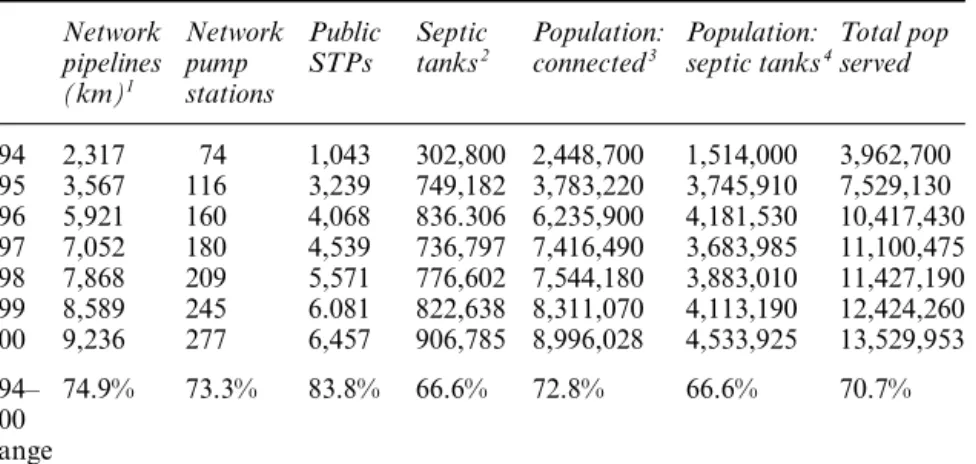
4.01 IWK: Performance summary, 1994–2000 85
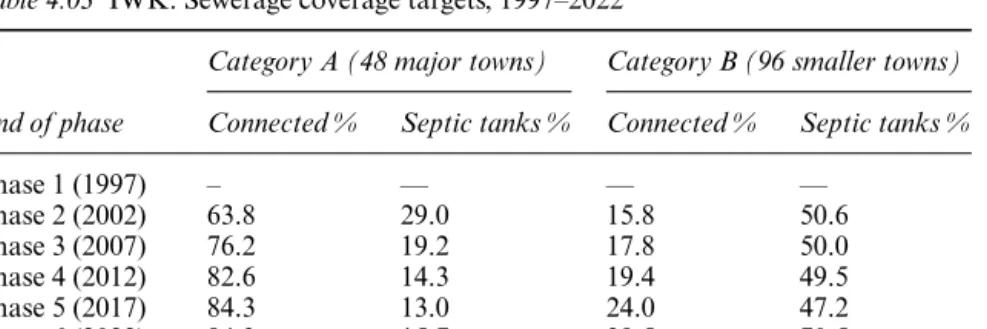
4.02 IWK: Sewerage systems operated and maintained, 1994–2000 86 4.03 IWK: Sewerage coverage targets, 1997–2022 86 4.04 IWK: Sewerage treatment plants meeting effluent standards,
1999–2000 89
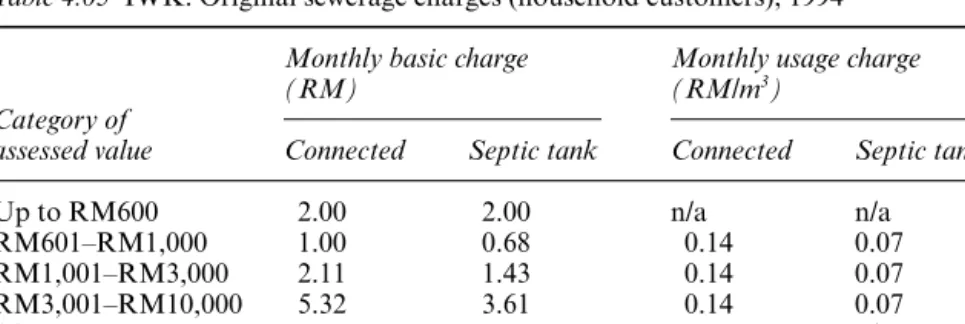
4.05 IWK: Original sewerage charges (household customers), 1994 93 4.06 IWK: Original monthly sewerage charges (non-household
customers), 1994 94
4.07 IWK: Ownership changes and share prices 98
4.08 IWK: Tariff and ownership changes 100
4.09 IWK: Tariff revisions, 1995–1999 101
4.10 IWK: Losses from tariff revisions and non-payment of bills,
1996–2000 102
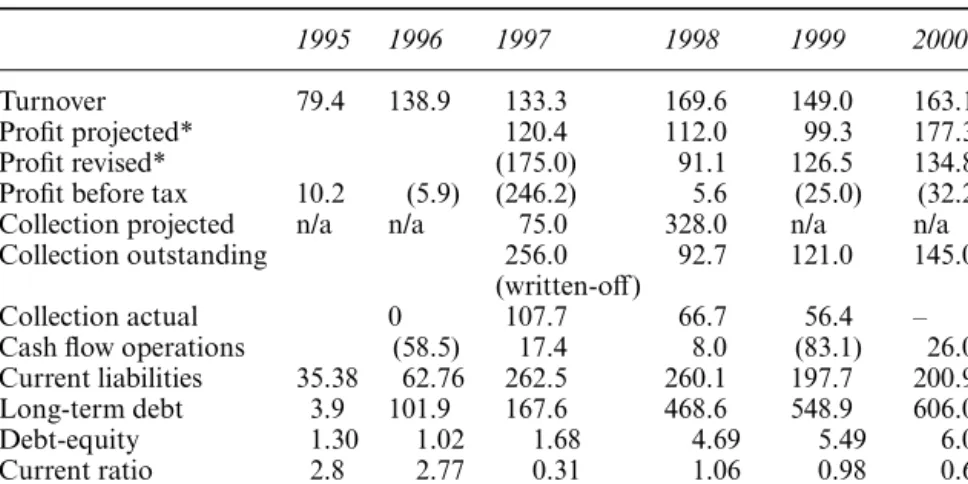
4.11 IWK: Financial performance, 1995–2000 103
5.01 Kuala Lumpur LRT: Financing 115
5.02 Kuala Lumpur urban rail: Breakdown of construction costs 118 5.03 Regional urban rail systems: Selected indicators 119 5.04 Urban rail systems: Regional fares, 2003 120 5.05 Kuala Lumpur LRT: Projected and actual daily ridership 121 5.06 Kuala Lumpur LRT: Daily ridership estimates and actual
numbers needed 121
5.07 STAR: Profit and loss 122
5.08 PUTRA: Profit and loss 122
5.09 KL Monorail: Profit and loss 123
6.01 International airlines: Revenue and expenditure, 1990–1999 136
6.02 Asia Pacific airlines: Revenue and expenditure, 1990–1999 136 6.03 Regional airlines: Average performance, 1990–1993 and
1994–1997, selected indicators 143
6.04 MAS: Leverage ratios and debt, 1990–1997 145
6.05 MAS: Liquidity ratios, 1990–1997 145
6.06 MAS: Operating profit (loss) as a percentage of operating
revenue, 1990–1997 146
6.07 MAS: Debt burden and aircraft orders, 1990–2000 151 7.01 Malaysia: Passenger car tariffs, 1992–2003 165 7.02 Malaysia: Auto industry import duty structure, 1992–2003 166
7.03 Proton: Profitability, 1991–2000 169
7.04 Proton: Liquidity and leverage ratios, 1991–2000 170
7.05 Proton: Production capacity, 1992–2002 170
7.06 Proton: Potential capacity, 1996–2002 171
7.07 Proton: Exports, 1992–2002 172
7.08 Proton: Export potential, 1996–2000 173
7.09 Proton: Impact of reduction of import and excise duties on
car prices with partial duties and no duties 175 7.10 Proton: Domestic market share, 1993–2003 176
Acknowledgements
I would like to thank the British Council for the British Chevening Scholar- ship which allowed me to undertake my PhD. I am very grateful to Mushtaq H. Khan for agreeing to supervise my research at the School of Oriental and African Studies (SOAS), and for his insight, stimulating discussions, and faith in me. I am also indebted to Jomo K.S. for his invaluable guidance, constant support, encouragement and feedback. Finally, I want to thank Edward Terence Gomez for his time and support in getting my research published.
Abbreviations
AFTA Asian Free Trade Agreement AFTK Available freight tonne kilometres APTK Available passenger tonne kilometres ARP Area road pricing
ASEAN Association of Southeast Asian Nations ASK Available seat kilometres
ASN Amanah Saham Nasional (National Unit Trust Scheme) ATK Available tonne kilometres
BBMB Bank Bumiputra Malaysia Bhd BEC Bumiputra Economic Congress Bhd Berhad (limited company)
BNM Bank Negara Malaysia (Central Bank)
BO Build-operate
BOD Biochemical oxygen demand BOO Build-operate-own
BOT Build-operate-transfer
BPIMB Bank Pembangunan dan Infrastruktur Malaysia Bhd (Develop- ment and Infrastructure Bank)
BPPP Bahagian Pembangunan Perakunan dan Pengurusan (Planning Research Development Unit, National Audit Division)
BT Build-transfer CBU Completely built up
CDRC Corporate Debt Restructuring Committee CEPT Common Effective Preferential Tariff CIC Capital Issues Committee
CIMB Commerce International Merchant Bankers Bhd CKD Completely knocked down
CMGI Commerce MGI Sdn Bhd CPA Central planning area
CVLB Commercial Vehicle Licensing Board Danaharta State asset management company
DBKL Dewan Bandaraya Kuala Lumpur (Kuala Lumpur City Hall) DGSS Director General of Sewerage Services
DOE Department of Environment DoR Department of Railways DRB Diversified Resources Bhd DSS Department of Sewerage Services EBIT Earnings before interest and tax
EC European Community
EIB European Investment Bank EMS Engine management system EON Edaran Otomobil Nasional EPF Employees Provident Fund
EPSFD Economic Planning & Social Facilities Department EPU Economic Planning Unit
FTDKVP Federal Territory Development & Klang Valley Planning Division
GSP Generalized Scheme of Preferences HICOM Heavy Industries Corporation HOV High occupancy vehicle HPU Highway Planning Unit
IATA International Air Transport Association IBD International Business Division
ICA Industrial Coordination Act
ICAO International Civil Aviation Organization ICP Inter-departmental Committee on Privatization ICU Implementation and Coordination Unit IFC International Finance Corporation IPC Infrastructure Project Company IPP Independent power producer IWK Indah Water Konsortium
JBIC Japan Bank for International Cooperation JICA Japan International Co-operation Agency JIT Just-in-time
JKR Jabatan Kerja Raya (Public Works Department)
JPJ Jabatan Pengangkutan Jalan (Road Transport Department) KCT Klang Container Terminal
KEJORA Lembaga Kemajuan Johor Tenggara (South East Johor Develop- ment Authority)
KfW Kreditanstalt für Wiederaufbau KL PRT Kuala Lumpur People Rapid Transit KLIA Kuala Lumpur International Airport KLSE Kuala Lumpur Stock Exchange KLTG Kuala Lumpur Transit Group
KTMB Keretapi Tanah Melayu Bhd (Malayan Railways) KWAP Kumpulan Wang Amanah Pencen (State Pension Fund) LLM Lembaga Lebuhraya Malaysia (Malaysian Highway Authority) LOA Lease of asset
LoS Level of service
LPPJ Road Transport Licensing Board LRT Light rail transit
LTA Land Transport Authority
LTAT Lembaga Tabung Angkatan Tentera (Armed Forces Savings Board)
LTD Long-term debt
LTL Long-term lease
MARA Majlis Amanah Rakyat (Council of Trust for Indigenous People) MAS Malaysia Airlines
MBO Management-buy-out MC Mitsubishi Corporation MCA Malaysian Chinese Association MHS Malaysian Helicopter Services MIC Malaysian Indian Congress
MIDA Malaysian Industrial Development Authority MMC Mitsubishi Motor Company
MoED Ministry of Entrepreneur Development MoF Ministry of Finance
MoHA Ministry of Home Affairs MoT Ministry of Transport MoW Ministry of Works MRT Mass Rapid Transit
MTI Ministry of Trade and Industry NCF Net cash flow
NEL North East Line NEP New Economic Policy
NFPEs Non-financial public enterprises NIE New Institutional Economics NPL Non-performing loan NWW North West Water OBA Off-budget agency
OEM Original equipment manufacture OSA Official Secrets Act
PAP Privatization Action Plan PBT Profits before tax
Pernas Perbadanan Nasional (National Corporation) PFI Private finance initiative
PMD Prime Minister’s Department PMP Privatization Master Plan
PNB Permodalan Nasional Berhad (National Equity Corporation) PPP Public–private partnership
PROTON Perusahaan Otomobil Nasional PSD Public Service Department PTF Privatization Task Force
PUTRA Projek Usahasama Transit Ringan Automatik RAC Railway Asset Corporation
R&D Research and development
RIDA Rural Industrial Development Authority RM Ringgit Malaysia (Malaysian ringgit) ROA Return on assets
ROE Return on equity RPK Revenue passenger-km RTO Road Transport Ordinance SCB Siam Commercial Bank
Sdn Bhd Sendirian Berhad (private limited company) SEDC State Economic Development Corporation SIA Singapore International Airlines
SMI Small- and medium-scale industry SMRT Singapore Mass Rapid Transit SOA Sale of asset
SOE State-owned enterprise SS Suspended solids SSA Sewage Services Act
STAR Sistem Transit Aliran Ringgan STL Short-term lease
STP Sewerage treatment plant TAC Track access charge TC Technical committee TNB Tenaga Nasional Berhad TOC Train operating company
TRI Technology Resources Industries Bhd TRTA Teito Rapid Transit Authority UDA Urban Development Authority UMNO United Malays National Organisation USPD Usahasama Proton-DRB Sdn Bhd UTD Urban Transportation Department VDP Vendor Development Programme
1 Introduction
Why privatize?
The debate over privatization is essentially the debate over the relative efficiency of the state versus markets and private property in the allocation of resources. Privatization is said to improve efficiency by changing the structure of incentives, reducing the possibilities of damaging state interventions, improving monitoring and introducing competition. The mainstream litera- ture has largely focused on the correlation between privatization and per- formance (by comparing public and private firms) and on establishing the causality between private ownership and performance. However, the results of privatization have been mixed, with the evidence of efficiency gains inconclusive. These approaches are also usually hampered by methodological difficulties and there is a lack of general consensus on the correlation between privatization (private ownership) and economic performance.
Methodological problems arise from attempts to measure performance, in particular key variables (e.g. allocative efficiency), the use of criteria which mostly favours the private sector, interpreting financial profitability and the absence of common agreement on what constitutes successful performance given the often multiple objectives and different goals of public enterprises.
In particular, it is often unclear whether improved efficiency is due to a change in ownership or structural changes which accompany privatization, especially increased competition. Evidence of improved performance has also been limited to certain sectors with industry-specific conditions, tele- communications being one of the few such instances, and it is unclear whether these can be replicated in other sectors.
As a result, a growing body of literature has found that the evidence
‘does not support any general proposition about the superiority of private over public ownership or vice versa’ (Vickers and Wright 1989: 23, cited in Tatahi 2003: 90) and ‘there exists neither compelling theoretical reasons nor unambiguous empirical evidence for either developed or developing countries suggesting the pervasive “inefficiency” of public enterprises’
(Chang and Singh 1992: 42), with ‘no clear-cut evidence that public owner- ship necessarily results in inferior performance’ (Chang and Singh 1993: 34).
Several important international surveys on the performances of public versus private enterprises conclude that in a competitive environment, private and
public firms do not differ significantly in their economic performance (see Millward and Parker 1983; Borcherding et al. 1982, cited in Tatahi 2003).
Other studies also point to competition and regulation as more important or at least necessary if privatization is to be more efficient (Vickers and Wright 1989; Caves and Christensen 1980; Faere et al. 1985; Atkinson et al. 1986;
Yarrow 1986; Vickers and Yarrow 1988; Bishop and Kay 1989; Beesley and Littlechild 1989; and Martin and Parker 1997, all cited in Tatahi 2003: 80;
Cook and Uchida 2003; also see Hemming and Mansoor 1988; Vickers and Yarrow 1991; Parker and Kirkpatrick 2003).
Despite this, privatization continues to be widely accepted in principle, and the failure of privatization in developing countries has been normally attributed to institutional weaknesses leading to problems of patronage and corruption. The conditions for successful privatization are then said to depend on strengthening institutions, democracy, transparency and account- ability. However, these explanations are restricted by a narrow understanding of what privatization and regulation entail, based on an apolitical and ahistorical reading of the constraints facing developing countries, and grounded in theoretically flawed arguments about the incentive benefits of privatization.
We make two main claims. The first challenges the theory that privatization improves incentives by aligning residual control (ownership) with residual returns (profit). It will be argued that the private sector, both in developed and developing countries, is often unable and unwilling to finance projects with high capital costs such as infrastructure provision on its own, making it necessary for the state to share risks even after privatization. In addition, the provision of public goods or services (such as urban transit and sewage treatment) in developing countries is often not profitable, partly because uni- versal service obligations require that these should be affordable. A subsidy may then be required, even by a very efficient operator, if the tariff customers are willing to pay is less than the minimum cost the producer can achieve.
But a subsidy may also allow inefficiency to survive, particularly in sectors with insufficient competition. These state interventions dilute incentives because there is no longer a direct relationship between management quality and profits, thereby necessitating regulation. However, asymmetric informa- tion will prevent regulators knowing for sure whether an adequate level of efficiency has been achieved. In principle, tough regulators can still achieve efficiency over time in a number of ways, for instance, by setting tariff reduc- tion targets with fixed levels of subsidies. But the success of these strategies depends on the credibility of the regulator’s threats that failure to achieve targets may result in the selection of a different operator or the imposition of a financial penalty. The success of privatization will then depend on insti- tutional prerequisites for effective regulation that can maintain incentives for performance in a context where the state is still providing subsidies and sharing risks.
This brings us directly to the second and related claim: privatization
necessitates continued and often even greater state intervention in terms of maintaining some subsidies, perhaps creating new ones, devising new methods of regulation and coordinating certain sectors such as rail networks.
Regulation will not only involve promoting competition and enforcing rules, but also managing subsidies, setting targets, changing property rights and laws and other interventions that go beyond the simple but standard textbook understanding of regulation. In addition to the issues already discussed, developing countries often also face a shortage of domestic capitalists, and governments will often be engaged in developing entrepreneurial capacity.
States in successful developers have played a central role in the emergence of the capitalist class. Privatization in this context can also be seen as a process that aims to facilitate the emergence of domestic capitalists and to that extent, it usually has a political motivation in addition to the standard eco- nomic ones. It is our contention that the political motive often dominates, and has to be understood on its own terms.
When the issue of emerging domestic capitalism is introduced, we have an associated problem of catching up, as discussed in the late development literature (e.g. see Amsden 1989; Wade 1990). When new domestic capitalists are encouraged to take over advanced technologies, their initial productivity is expected to be low, till they have had the opportunity of learning-by-doing (see Arrow 1962). This means that we can expect a further set of subsidies to be required, this time temporary subsidies that also need to be monitored and withdrawn over a short period of time to create both the opportunity and incentive for catching up (as discussed in the literature on late industrializa- tion and infant industries). This presents different regulatory challenges, with the state needing to ensure that subsidies are conditional upon performance targets being met. This is because the presence of a regulatory structure or intent does not guarantee success as regulatory failure can be the result of institutional failure (e.g. poor incentive structures) or political failure (e.g.
ineffective implementation of subsidy withdrawal). This means that effective regulation will depend on the state’s political capacity just as much as, or even more so than, its institutional capacity. This is because the failure to enforce conditionality is usually due to the state’s political failure to impose discipline on capitalists.
Thus state failure in the context of privatization can occur before or after privatization and we will refer to these as ex ante and ex post state failures.
Ex ante failure can often be unavoidable given the problems of asymmetric information, shortage of entrepreneurs and political considerations, all of which potentially affect the choice of privatization and candidate. It is there- fore critical that the state is able to correct any mistakes ex post, through policy changes, tweaking regulatory structures, devising and enforcing con- ditionality for new or existing subsidy structures, and so on. This ex post failure can provide a more useful explanation for the failure of privatization in developing countries. That is to say, successful privatization will depend on the state’s political capacity, in particular its ex post capacity to correct
mistakes. Understanding the sources of the state’s appropriate political capacities will then allow us to explain better how successful the state has been in managing privatization, and the conditions that need to be met for improving the chances of success in the future.
Theories addressing state failure and the literature on the developmental state provide a useful framework to analyse factors that are important for effective state intervention. The success of the East Asian developmental states has been generally attributed to the state’s autonomy to develop and implement policy, combined with networks of information exchange with productive groups (particularly capitalists), which enabled it to both identify areas of necessary intervention, and then implement these interventions effectively (e.g. see Johnson 1982; Wade 1990; Evans 1994; Weiss 1998;
Woo-Cummings 1999). State capacity in this context will then depend on the nature of the state–society relationship, and the strength of the state in relation to the group(s) it engages with. In developing countries, a capitalist class is often absent or very weak, and the state–society relationship will usually involve the exercise of influence and the exchange of information with
‘unproductive’ groups. Regardless of the state’s potential for eventual suc- cess, its allocation of resources is likely to be through patron–client networks rather than formalized or institutionalized channels since states in late devel- opers rarely have the qualities of Weberian states. The nature of these patron–
client networks, and the relative strength of the state in relation to the groups that are accommodated within these networks (which depends on the broader balance of power between groups and classes in society), will affect how and to whom resources are allocated, and most crucially, determine the state’s capacity to ensure efficient outcomes by enforcing discipline (e.g. see Khan 1998). The latter approach suggests that the analysis of the prospects and performance of privatization needs to be located in a country context, look- ing specifically at the nature of social relations and the balance of power in society and within the networks of governance in which decisions about privatization and the regulation of rules and subsidies take place.
This book seeks to explain why privatization may fail by looking at the political motivations behind this, and the constraints on the state’s political capacity to manage subsidies associated with privatization. The discussion will take place on two levels. Broadly, we examine the role of (and motivations behind) privatization in the context of state attempts to create domestic entrepreneurial capacity, looking at the problems of institutional and political failure. Specifically, we apply this analytical framework to explain Malaysia’s privatization performance and the failure of four of its largest privatizations: Indah Water Konsortium (IWK, the operator of the national sewerage system), Kuala Lumpur’s Light Rail Transit (LRT), Malaysia Airlines (MAS, the national airline) and Proton (the national car company).
Malaysia’s privatization programme between the mid 1980s and mid 1990s was amongst the most extensive in the developing world, widely publicized, hailed as a success story, and promoted as a model for other developing
countries. However, subsequent state bail-outs, and the financial failure and eventual renationalization of these four privatizations by 2000, reveal that this conclusion was premature. Failure here has been generally blamed on the problems of patronage and corruption associated with weak institutions.
While this focus on political factors is useful, it does not consider the specific economic and political challenges related to efficiency and redistribution which the state sought to address through privatization. We will examine the failure of privatization in the context of these challenges by asking three central questions: Why privatize in developing countries? Why may privatization fail? What is needed to make privatization work?
A careful reading of Malaysia’s economic history and political economy reveals that changes within the Malay middle class – as opposed to changes in the balance of power between Malays and other ethnic groups – are critical for understanding Malaysia’s economic policy-making and performance vis-à-vis its privatization strategy. This perspective allows us to identify the drivers of Malaysia’s privatization programme, the motivations behind this, the subsequent constraints on the state’s disciplinary capacity, and how this affected the institutional arrangements and outcomes of privatization. We argue that the drive for a massive privatization strategy was in response to economic inefficiencies but more crucially came from changes in social relations within the Malay middle class that led to increased competition for resources within the ruling Malay party. The emergence of new factions shifted the balance of power, and privatization facilitated the redistribution of resources away from beneficiaries of the state’s previous redistributive policy in favour of emerging factions centred on key political leaders. This personalized and gradually undermined the previously centralized patronage network, and led to a growing moral hazard problem as the political leadership became increasingly unwilling or unable to discipline its close supporters. The nature of the changes within these patron–client relation- ships also affected the choice of privatization sectors and candidates, and most crucially, the state’s ability to implement corrective policy or enforce discipline.
This approach allows us to locate our case studies within what we argue is the appropriate political context, while avoiding some of the methodological pitfalls of cross-country and cross-industry comparisons which typify much of the literature. The case studies will offer both a broader discussion of the challenges for privatization in the respective industries as well as a detailed examination of the specific case. Each case study is assessed on its own terms, but within a common analytical framework with performance measured against economic general indicators (efficiency, capital investment and financial performance) as well as indicators specific to each industry and in relation to official objectives. This provides for much richer sources of data, while taking into account non-economic factors which allow us to make useful comparisons and to draw policy lessons. The case studies provide the evidence to support our two main claims that: 1, privatization in developing
countries typically necessitates the continuation of state financial support for a variety of reasons; and 2, successful privatization will depend on the state’s capacity, in particular its ex post political capacity, to correct ex ante failure and to manage the appropriate subsidy regimes.
The book is structured as follows. Chapter 2 examines the main arguments for privatization. These are shown to be problematic, as they do not identify the political motivations for privatization in developing countries, and fail to account for the political reasons why privatization may fail. The typical recommendations to strengthen institutions do not address the main problems that drive regulatory failure in countries like Malaysia. The chapter then examines sources of state capacity, looking at social relations and the balance of power specific to the country.
Chapter 3 provides the background to understand the political context in which privatization was undertaken in Malaysia, looking at both economic and political imperatives in order to properly locate the subsequent case study chapters. Malaysia’s privatization programme will be examined within the theoretical framework presented in Chapter 2, applying the three central questions to the Malaysian case. A discussion of the country’s redistributive New Economic Policy (NEP) shows that this was both a consequence and a cause of changes in social relations, in particular the growth of and increasing differentiation within the Malay middle class. This provides the context in which to understand the drivers of the Malaysian government’s privatization strategy. The drivers came from both the growing political demands of a new Malay upper middle class, and the challenges faced by the government in managing the public sector. The chapter then provides some background and details of Malaysia’s privatization programme, and evaluates its per- formance from 1983–2000. The results, measured against official objectives, will be shown to be mixed, with privatization in particular failing to develop a dynamic Malay capitalist class. We then trace the failure of Malaysia’s privatization programme to the state’s ex ante and ex post failure, and suggest why the latter is of far greater consequence for the success of privatization in Malaysia.
Chapters 5–7 present the case studies on IWK, the Kuala Lumpur LRT, MAS and Proton respectively. The first half of each case study will examine the challenges posed for privatization, provide the background to each of these decisions to privatize, and assess performance based on official objec- tives. The second half of the case studies then examines the problems, looking at the state’s ex ante and ex post failure as explanations. Failure in each case was due to both types of state failure, but we argue that the state’s ex post failure was the key factor explaining the eventual failure of the four case studies. Chapter 8 summarizes the main findings and presents the conclusions.
2 Privatization, rents and rent-seeking
Privatization is argued to provide better incentives and monitoring through the clear designation of property rights, while also reducing damaging state interventions. Improved efficiency as a result is then seen to encourage the private owner or operator to undertake much-needed capital investment.
However, privatization does not necessarily lead to the clear designation of property rights, reduce state intervention or enhance the private financing of capital investment. This is because the private sector is often unable or un- willing on its own to meet the high cost of capital investment associated with typical privatizations (e.g. sewerage and water services). This is especially so in developing countries where there is in addition a shortage of entre- preneurial capacity. Furthermore, the ability of the private sector to meet capital investment targets will in part also depend on projected revenues based on cost-covering tariffs. However, cost-covering tariffs are usually politically unfeasible for many critical services. High capital costs and the inability of tariffs to cover high operational costs will then require state subsidies which in turn dilute incentives associated with private ownership unless they are combined with additional and credible incentives and sanctions.
In addition, governments in developing countries will often be attempting to create domestic capitalists due to a shortage of entrepreneurial capacity but also because of political pressure from groups contesting for resources.
This will require additional subsidies for learning (also known as ‘rents for learning’) in order to develop entrepreneurial capacity, and in the long term, promote efficiency and technological ‘catching up’. The processes involved here have elements similar to the process of (primitive) capital accumulation in early capitalism (e.g. see Marx 1979) in addition to the regulatory issues raised in the privatization of public sector enterprises in advanced countries.
As such, privatization will often be closely tied in with state motivations and the political forces behind this. Here, the mainstream literature on privatiza- tion suffers from several shortcomings when attempting to explain the failure of privatization in developing countries because it tends to largely ignore the political context and hence political motivations which often drive privatiza- tion. These can affect both the character of privatization (what is privatized,
how and to whom) and determine the type and efficacy of related institutions that are important for the success of privatization. Economic theories explaining the success or failure of privatization have generally ignored related literature on why institutions fail and why weak institutions persist (e.g. see Alavi, H. 1982; Khan 1997, 1998, 2000b).
While effective regulation is seen as central for successful privatization, the discussion in the literature is limited in scope, focusing on institutional prerequisites, with regulation viewed as a second-best option in the absence of competitive markets. Proposed institutional solutions focus on strengthen- ing relevant institutions to promote transparency and accountability, and a regulatory framework which safeguards the private sector from political intervention and which promotes competition (e.g. see Vickers and Yarrow 1991; Clague 1997b; Williamson 2000). This does not address the problems related to the management of subsidies, especially in relation to the learning processes necessary for creating a viable private operator. Here the privatiza- tion literature fails to identify some important conditions for effective regulation in developing countries because it does not begin by identifying some of the key motivations for privatization, including state attempts to develop domestic entrepreneurs.
A further problem is that these institutional preconditions are often unrealistic for developing countries as they are based on a partial reading of problems in an ahistorical and apolitical framework of analysis. Implicitly, this means that institutions are benchmarked against existing Western standards, but these institutions were themselves the outcome rather than the cause of specific patterns of economic development in developed countries (e.g. see Chang 1999). As such, their prescription is unrealistic, as almost no developing country is able to meet these conditions. The mainstream approach to governance and regulation is also more concerned with how to improve the efficiency of service delivery rather than how to accelerate the process of dynamic change which is a necessary part of the development process (Rowthorn and Chang 1993; Khan 2004). The latter has historically required a different type of interventionist capacity, in particular connected with the efficient provision and regulation of dynamic rents that accelerate growth and ensure successful structural transformations (e.g. see Amsden 1989; Wade 1990; Aoki et al. 1997; Khan 2000a, 2000b).
Effective regulation is thus central to privatization but its treatment needs to go beyond measures to overcome market failure and strengthening insti- tutional structures to include discussion of sources of state failure and inade- quate state capacities with respect to the specific transformational tasks that the state is trying to achieve. Whether privatization leads to capital accumula- tion or capital consumption by the new owners will depend on the design of incentive structures (including rents to support learning, the management of long-term subsidies and/or terms of risk-sharing), and the ability of the state to enforce effective and credible sanctions for non-performance. The outcome of privatization, including what is privatized, how, to whom, and
more crucially, the performance of privatized entities, will thus be determined by both institutional and political factors.
Failure can then be either due to poorly structured incentives (institutional failure) or well-structured incentives which are not effectively implemented (political failure). Institutional failure usually relates to mistakes made ex ante (e.g. failure to ensure the viability of the privatization project in the first place) while ex post failure refers to the failure to correct mistakes and enforce discipline. As the choice of privatization and candidate will be con- strained by political considerations and imperfect information, particularly in developing countries, the state’s (ex post) political capacity is usually more critical for successful privatization outcomes. The perception that pri- vatization will reduce the role of the state is therefore misguided because privatization in fact necessitates continued and effective state intervention, and indeed the enhancement of regulatory capacity in key areas. The main concern should then be to ensure that the state has the capacity to intervene effectively, in particular, to correct mistakes.
Unfortunately, the analysis of politics in the privatization literature is limited, and restricted to ex ante political constraints (i.e. opposition by groups with vested interests such as politicians and trade unions) (e.g. Cook and Kirkpatrick 1988; Bienen and Waterbury 1989; Roland 1994; Shirley 1997), focusing on weak political and economic institutions. There is a grow- ing recognition of the need to take into account political power and conflict arising from existing social relations (e.g. Cook and Minogue 1990; Parker 2001; Parker and Kirkpatrick 2002, 2003) and an emphasis on institutional compatibility (e.g. Kessides 2004). However, discussion of political factors tends to centre on the problem of corruption and remains largely uninformed by theory and with little analytical priority. We will build on the existing privatization literature but also draw from developmental state theories to provide a theoretical framework to explain the problem of institutional and political failure.
Theories addressing state failure and the literature on the developmental state provide a more useful framework to analyse factors that are important for effective state intervention, looking in particular at the East Asian develop- mental states which Malaysia sought to emulate. The lessons that can be gleaned from this suggest that effective state intervention depends on the compatibility of institutions and patterns of intervention with the balance of political power in society. The strength of the state in relation to various competing groups in society is critical for understanding the outcome, because it can help to determine whether the state is able to resist challenges from those who stand to lose out from the proposed changes, and whether critical incentive structures can be effectively enforced. The analytical priority of political factors in our analysis is justified because without an understand- ing of the political constraints, it is difficult to identify the institutional inter- ventions that may be effective, or to explain why particular institutions do not work in that context. This approach can explain why weak institutions may
often persist where the state lacks the political capacity to enforce, as it is unlikely that it can change institutions if it is unable to implement policy in the first place. It is therefore important to locate the analysis of institutional changes such as privatization within an analysis of the political constraints facing the state in a specific country.
This chapter seeks to identify the important conditions for successful privatization by critically examining theory and the evidence of privatization in developing countries. It will ask the following questions: Why privatize in developing countries? Why may privatization fail? What is needed to make privatization work? This will provide the framework to explain Malaysia’s privatization experience and the four case studies in the following chapters.
The chapter is divided into four sections. The following section briefly looks at the reasons why developing countries would want to privatize, and com- pare this with the main arguments for privatization. It will be argued that most of the conventional theories of privatization very often do not identify the real motivations of privatization in specific developing countries and are therefore unable to analyse the very problem they seek to address.
The next section examines why privatization may fail, looking at con- ventional (institutional) arguments. Many of these arguments are problem- atic because the institutional preconditions identified are based on ahistorical and unrealistic benchmarks and ignore the realities of the development pro- cess, in particular the specific political constraints faced by specific countries.
This requires an analysis of state capacity, looking in particular at how this is affected by the (changing) balance of power in society. The fourth section seeks to identify some of the conditions for successful privatization, looking at both institutional and political capacity. We argue that while an appro- priate institutional design is necessary, political capacity is more important as this is far harder to correct if not in place, and also determines the quality of institutions and the ability of the state to strengthen weak institutions.
Why privatize in developing countries?
Conventional arguments for privatization
Arguments in favour of privatization are based on the efficiency claimed for private property rights, principal agent theories comparing asymmetric information problems under public and private ownership, and public choice theories looking at the ways in which objectives and outcomes are determined in bureaucracies. These theoretical developments came about in response to poor public sector performance, escalating operational and capital costs, and state fiscal constraints in both advanced and developing countries (Batley 1996). These theories mostly showed that, where feasible, private provision (and market choices) was socially preferable and superior to public provision or production (Windsor 1996). Privatization improved efficiency by: 1, changing the objectives of the firm’s ultimate owners; and 2, reducing the
possibilities of continuous government intervention (Hakim et al. 1996b;
Payson and Steckler 1996; Stottmann 2000). This improved the monitoring of managerial performance (Vickers and Yarrow 1991) thereby addressing the problems of poor operational and financial performance of state-owned enterprises (SOEs) and the underinvestment in infrastructure.
Clearly designated property rights
According to property rights and principal agent theories, private ownership is superior to public ownership because clearly defined property rights provide incentives for monitoring and improving efficiency through the alignment of residual control (ownership) and residual return (profit) (Alchian and Demsetz 1972). This is because there are a series of principal–
agent problems in public enterprises. All citizens are joint owners of the residual and are therefore the ultimate principal. They have to contract with government, their agent, to manage public enterprises, but government in turn has to contract with managers, who have most of the residual control rights. The government’s problem as principal is that it is unable to provide the appropriate incentives to the agent (managers of SOEs) to exert effort in monitoring the performance of workers and employees in a context of asymmetric information. Private ownership is seen as the most efficient way to align incentives because the owner of the residual thereby gains effective residual control rights (Alchian and Demsetz 1972). This alignment is attenuated with shareholding, where the residual owners and control rights again become separated, but specific mechanisms such as the market in managers, takeover threats and regulation ensure that managers in share- holder-owned companies have better incentives and compulsions for monitoring than managers in public enterprises. Different forms of privatiza- tion can improve incentives by transferring responsibility and risk to the private sector. Hence, while the public sector bears all the commercial risks in a service contract, this risk is shared in the case of a lease, and fully assumed by the private sector in build-operate-transfer (BOT) and build-operate-own (BOO) contracts, and divestitures.
Reduced state intervention
Private ownership is also shown in these models to enable a more credible promise for the state not to intervene, thus providing beneficial incentive effects for employment and investment (Sappington and Stiglitz 1987a).
According to public choice theory, the state is intrinsically inefficient and perpetually overburdened and underdisciplined (Linder 2000), and ‘public enterprises are inefficient because they address the objectives of politicians rather than maximize efficiency’ (Boycko et al. 1996: 309). SOEs are seen to be constrained by the behaviour of politicians and bureaucrats who pursue their own utility rather than the public interest. As such, political motives
usually outweigh efficiency considerations (Krueger 1990; Vickers and Yarrow 1991), and any economic intervention by the state is viewed as a potentially counter-productive policy response and an invitation to rent-seeking behaviour. The greater the degree of regulation, the more private resources are absorbed by rent-seeking activities (Krueger 1974, 1990; Buchanan 1980).
Because SOEs, through the allocation of rents, are seen as a vehicle to redistribute wealth or promote politically motivated redistributive arrange- ments (Jones and Mason 1982), privatization is desirable as it ‘effectively drives a wedge between politicians and managers’ by depoliticizing firms and making it too costly for politicians to subsidize them (Boycko et al. 1996:
318). By placing some distance between the government and producer and substantially increasing the transaction costs of such interventions, privatiza- tion is said to make more credible the promise not to use public funds to subsidize losses (Sappington and Stiglitz 1987a; Stiglitz 1996). This also has beneficial effects by subjecting the firm to the discipline of the market.
Privatization therefore limits government intervention by changing ‘the residual rights of intervention’ and altering the incentives to intervene (Sappington and Stiglitz 1987a: 80).
Financing capital investment
The increasing cost of infrastructure development has required new financing solutions, and privatization has been promoted as a way of mobilizing resources and investing them cost-effectively to meet the growing needs of developing countries while also overcoming existing inefficiencies. Privatiza- tion is seen as suitable for high-cost, capital-intensive infrastructure projects where cost is the main concern and where there are limited externalities (Heilman and Johnson 1992; Rosenau 2000b) because private ownership is said to provide more incentives or make it easier to implement cost-covering tariffs, thus making the project more viable. The private sector is said to offer potential efficiency gains (needed to turn around or restructure failing public enterprises), new sources of funding (leveraged development) and project revenue enhancement (World Bank 1994; Hakim et al. 1996b; Payson and Steckler 1996). While governments may have access to cheaper credit, this is argued to be insufficient to outweigh inefficiencies arising from lax financial discipline, leading to cost overruns and delays in infrastructure construction (World Bank 1994). In this case, an efficient private operator who can reduce cost and raise efficiency can theoretically raise money more cheaply as lenders face lower default rates.
Privatization problems
These well-known arguments for privatization are, however, problematic because the private sector is often unable or unwilling to finance capital investment on its own, thereby necessitating state subsidies. Subsidies will
also be needed for welfare reasons and to promote learning. These subsidies potentially dilute incentives, thereby requiring continued state intervention in the form of regulation and subsidy management. As such, privatization does not lead to the clear designation of property rights or finance capital investment, especially in developing countries, and it does not reduce state intervention.
Subsidies for capital costs, welfare and learning
The benefits of privatization are premised on the clear designation of property rights where the private owner, as the residual claimant, has full incentives to improve efficiency as this impacts directly on his or her residual returns. This, however, requires that the private owner must either be able to control revenue and/or bear risks. In reality, these incentives are diluted and full divestitures have been limited because of: 1, the high capital costs and significant externalities associated with large-scale projects such as in infrastructure; 2, welfare concerns (which constrain the implementation of cost-covering tariffs); and 3, the lack of entrepreneurial capacity (which necessitates learning and ‘catching up’).
Contrary to privatization providing new funding sources for capital- intensive projects, large capital investments usually require some public financing. This is because infrastructure development is characterized by long-term contracts involving durable assets with high sunk costs, asset lumpiness, long gestation periods and uncertainty. Being capital-intensive means that turnover compared to investment is low, while long lead times mean that the financing requirements during the initial stages of the work are high (Fayard 1999) yet revenue is low in the early years of the operation.
Consequently, many infrastructure projects which offer positive economic and social benefits cannot break even (Poole 1996; Fayard 1999). Addition- ally, a higher price elasticity for demand leads to uncertain revenues, with investors expecting a higher rate of return given the higher risk (Payson and Steckler 1996). Private sector financing also costs more due to the possibility of default, project-specific risks and limited liability (Sappington and Stiglitz 1987a; Daniels and Trebilcock 2000). As a result, the private sector faces great difficulties in financing such high-cost, long-gestation projects without government guarantees (to secure long-term loans) and tax breaks (to reduce the tax burden at the beginning of the loan period) (Windsor 1996; Fayard 1999; Dunn 2000). The state must therefore either reduce the private sector’s share of the cost, or its risk, to ensure the project is viable for private sector participation (Heilman and Johnson 1992).
In contrast, the state can keep costs down by providing long-term loans, given that long maturity is more important than low interest rates (see Fayard 1999) (provided that moral hazard problems can be mitigated because the state as a financier is likely to be perceived as a weaker enforcer of changes in management than a private financier). This is complicated by the perceived
need for government financial assistance to encourage private participation to ensure that projects that have negative net private present value are under- taken (Daniels and Trebilcock 2000). This may also involve monopoly pricing or profit guarantees to attract investors or ensure project viability (e.g. see Kessides 2004).
Given the difficulties the private sector faces in financing capital intensive projects, privatization has increasingly involved some form of public–private partnership (PPP) (see Supiot 1996; Sparer 1996 and 1998; Saltman and Figueras 1998, all cited in Pongsiri 2001: 14), with the actual number of complete divestitures being small, especially in sectors such as rail where concessions have been the dominant form of private participation (Kessides 2004). A striking feature of PPPs is the high degree of government financial assistance because of the very high capital costs and the need to subsidize public goods or compensate for positive externalities. Despite the promise of private sector investment in infrastructure with privatization, ‘utility operators around the world are having an extraordinarily hard time securing the financing needed to maintain and expand services’ (Kessides 2004: 11), and subsidies and grants play an increasingly significant part of infra- structure investment in developed countries.
The sharing of risks leads to risk-incentive trade-offs as private incentives are reduced where the risk is transferred back to the state (Heilman and Johnson 1992; Daniels and Trebilcock 2000). As risks have largely been borne by the public sector, there can be no clear designation of property rights as the owner ‘cannot capture the whole social and economic benefits generated’
nor would such a designation ensure efficiency and high levels of investment (Fayard 1999: 12–13). This means that the owner’s ‘residual’ depends just as much on government decisions as on performance in monitoring the work process, and this can significantly dilute the incentives to monitor in the absence of adequate institutional arrangements and regulation. Where government subsidies finance the project, the government may constrain design and construction options, but more importantly may be unwilling to let the project fail or terminate concessions given the ‘essential’ nature of public services and political repercussions of interruptions in their provision.
Operational subsidies will be needed where the private operator can- not charge cost-covering tariffs or fares. Cost-covering tariffs are usually politically sensitive but remain a central element of investment-oriented regulation as this is seen to encourage efficient actions by consumers, suppliers and investors, promote financial viability and increase access to affordable services (Kessides 2004). Past pricing policies by SOEs and subsidy mechanisms are seen as seriously flawed as they undermined the financial viability of utilities, leading to chronic underinvestment and a deterioration in service quality as subsidies are poorly targeted while distorted prices impose significant costs (Kessides 2004). As underpricing leads to under- investment, privatization is said to require aligning prices with underlying
costs to attract investors, particularly if the private sector is expected to invest in rehabilitating the system or expanding coverage (Kessides 2004).
The case for cost-covering tariffs is thus twofold. On the one hand, this is needed to expand affordable services and access, especially for poor people.
However, this will involve raising service charges which impact upon poor people. To counter this, it is argued that subsidized services (e.g. water, electricity and telecommunications) largely benefit the middle and upper classes, and hence increased prices mainly affect these groups rather than the poor. The privatization of utilities in Latin America, for example, is argued to have hurt mainly the middle class (Morley 2000, cited in Cornia 2003). On the other hand, it is argued that ‘many poor people would be willing to pay for efficient services if they were offered’, and regulatory impediments to financial viability are said to be eliminated when utilities are allowed to charge appropriate prices in a competitive environment (Kessides 2004:
50–51).
In reality, cost-covering tariffs are often not possible because much of the population in developing countries have a limited ability to pay for basic services, and tariff increases usually encounter strong resistance (e.g. see Parker and Kirkpatrick 2002: 16; Estache 2003; Kessides 2004), not least from the middle class. Not surprisingly, privatization has become increasingly more unpopular, for example in Latin America and Sri Lanka (Zeufack 2004). As such, the government is obliged to guarantee universal service provision of basic services even after privatization. The general unwillingness of populations in developing countries to pay for higher service charges is the reason why governments have been unable (as opposed to unwilling) to implement cost-covering tariffs. Subsidies will therefore be necessary for operational viability if universal service obligations and public unwillingness to pay higher charges prevent the implementation of cost-covering tariffs or fares.1 This is not to argue that cost-covering tariffs are unimportant in order to attract private participation, as demonstrated by the withdrawal of UK firm Biwater from a planned water project in Zimbabwe in 1999 because consumers were too poor to pay the necessary tariffs to meet the company’s profit projections (Parker and Kirkpatrick 2002). Rather, the choice is between cost-reflective tariffs which are politically difficult to implement, or lower prices but with subsidies to guarantee returns for private investors.
Welfare and political considerations mean that the state will need to subsidize capital and operational costs to help make privatization commercially feasible for the private sector to invest in infrastructure.
Subsidies will also be required because many developing countries lack the entrepreneurial capacity in terms of depth (capabilities and technologies) and breadth (a large enough pool of potential entrepreneurs) (e.g. see Jones and Mason 1982: 25). Capital formation is not limited by political risk (i.e.
the threat of state predation) (e.g. see Bates 2001) but rather the lack of domestic capitalists. As such, privatization is likely to be undertaken where the state is engaged in developing entrepreneurial capacity, and this will
require subsidies for learning and ‘catching up’. Rather than merely imple- menting measures to encourage private investment, governments will then need to help the private sector in developing countries to acquire tech- nological and entrepreneurial skills, which requires learning-by-doing. The operation of enterprises during this critical period usually requires direct or indirect state subsidies (i.e. rents for learning or conditional subsidies) (e.g. see Amsden 1989; Wade 1990; Aoki et al. 1997; Khan 2000a, 2000b).
Regulation and management of subsidies
The necessity for subsidies discussed above will require continued, and in some areas, enhanced state intervention, both ex ante and ex post. The state must be able to ensure that correct decisions are made ex ante in relation to what is privatized, to whom and how, the types of subsidies required, and the appropriate regulatory framework. This will depend largely on its insti- tutional capacity and available information to make the right technical decisions. However, the state must also be able to make and implement decisions post privatization in response to ex ante mistakes and changing entrepreneurial capacity (in the case of the management of learning rents).
This will entail some element of ex post state discretion involving qualitative judgements which are often arbitrary (i.e. how high to set targets, how much subsidy to provide, how much pressure to apply, when to withdraw subsidies, and when to replace private sector operators with new ones).
The management of learning rents in developing countries will therefore entail a very different type of regulation involving political judgement and not just technical requirements. This will require more dynamic regulatory structures to respond to changing entrepreneurial capacity, and to push entrepreneurs to levels previously not achieved and which cannot be achieved in the public sector. Regulation here is thus not just about providing a stable and predictable environment to encourage private investment, or to protect consumer welfare in monopoly environments, but also to manage rents, especially those related to promoting learning and developing entrepreneurial capacity. The ability of the state to intervene ex post to correct ex ante mis- takes and respond to changing circumstances will depend on the political context (in particular the balance of power in society that may allow or prevent some types of disciplining of entrepreneurs).
Political motivations for privatization
We have argued that privatization entails continued state intervention in terms of providing implicit and explicit subsidies. Successful privatization will then depend on how well the state can design and manage these subsidies.
As discussed above, the ability of the state to intervene effectively, particu- larly to correct ex ante mistakes, will be politically circumscribed, depending on the state’s strength in relation to the groups receiving subsidies. This will in
turn depend on the political context in which privatization is undertaken.
Here, conventional arguments for privatization are based on the assumption that developing countries privatize mainly for economic reasons (e.g. see Hemming and Mansoor 1988; Kikeri et al. 1994; Plane 1997). The failure here to account for the political motivations behind privatization restricts our understanding of the character of privatization in many developing countries in terms of what is privatized, how and to whom, and the effectiveness of related institutions and state intervention, which are central to our assess- ment of privatization. As such, this approach cannot explain why privatiza- tion may fail, and why weak institutions persist.
Privatization is an inherently political process as ‘what is privatized and how represents the state’s continuing intervention within the economy, favouring certain capitals at the expense of others’ (Fine 1997: 376; also see Vickers and Yarrow 1991). Different constellations of political interest will thus produce different levels of political response to pressure for privatization (Cook and Minogue 1990: 29; also see Cook 1997). Privatization may be undertaken as part of state attempts to develop domestic entrepreneurial capacity to meet developmental objectives, or be politically motivated (e.g. by powerful groups contesting resources and political leaders wishing to secure support through the distribution of economic resources to these groups).
Decisions to ‘establish, retain or divest a public enterprise are thus not made in a political vacuum’ and ‘ownership and control of economic units are instruments for advancing certain interests and frustrating others’ in the struggle for power among various interest groups (Jones and Mason 1982:
16; also see Cook and Kirkpatrick 1988). As politics will drive decisions to privatize (Parker and Kirkpatrick 2003), who benefits depends on which groups are more powerful and influential. The nature and outcome of privatization will therefore be affected by the balance of power in society. So, while there may often be economic (fiscal and efficiency) reasons, privatiza- tion will usually be pushed through by groups which stand to gain the most and will only be introduced if it is politically feasible to do so, namely where the balance of power in society favours its introduction.
This balance of power, and the character of the groups contesting and potentially benefiting, will in turn shape the nature of a country’s privatiza- tion programme. In developed countries, privatization is usually awarded to existing capitalists most capable of financing and running former state enterprises. This is not the case in developing countries where there is a lack of entrepreneurial capacity and where groups contesting for privatization projects may not be capitalists but often members of an ‘unproductive’
intermediate class who are politically powerful or well-connected. This will invariably affect how privatization is undertaken in terms of the chosen industries, mode of privatization, choice of candidates as future owners, the choice of regulatory structure, and performance (outcome), particularly where privatization is used to develop domestic capitalists. This allows us to address one of the paradoxes in public choice theory: why should politicians
and bureaucrats support privatization if this is not in their interest? Here, privatization will be politically motivated where it offers opportunities for certain groups (including politicians and bureaucrats) to capture resources. Understanding the political context and motivations for privatiza- tion thus helps explain the character of privatization which allows us to then determine why privatization may fail and what conditions are necessary for it to work.
Why may privatization fail?
Conventional arguments for privatization blame failure on weak political and economic institutions, the problems of patronage and corruption associated with these, and arbitrary state intervention in many developing countries. As a result, privatization is characterized by poor choices, poor implementation and weak regulation, with a lack of credible commitment to contracts or policies. There are two problems with this explanation. First, it does not locate institutional failure within a country’s political context nor account for political motivations. This is important given that institutions are the outcome of historical and political factors. This will then allow us to explain why weak institutions may persist, and to come up with more appropriate solutions to improve the state’s regulatory capacity. Looking at a country’s political context will also help us correctly identify the motivations for privatization. As discussed in the previous section, privatization will often be politically motivated, especially in developing countries. This will affect what is privatized, how and to whom. Second, and as a result of this, privatization will entail regulation which goes beyond conventional views of regulation in the context of market failure. Hence, rather than simply promoting com- petition and safeguarding property rights (to encourage private investment), regulation will be needed to deal with diluted incentives arising from subsidies for capital costs, welfare considerations and learning (to develop domestic entrepreneurial capacity).
The success of privatization then depends on the effectiveness of state regulation in the context of managing these subsidies. This will depend on the state’s institutional and political capacity. The failure of privatization can thus be due to institutional or political failure. As mentioned earlier, institutional failure refers to the absence of, or weaknesses in, political and economic institutions which affect the choice, implementation and regulation of privatizations. Political failure refers to the inability of the government to enforce regulation. As we shall see, both explanations of failure are based on different conceptions of what privatization involves, and thus provide different recommendations for successful privatization. Both institutional and political failures represent state failures which can occur before (ex ante) or after (ex post) privatization. It will be argued that political failure, in particular the state’s ex post failure, is more serious and provides a more useful explanation for the failure of privatization because mistakes are bound