APPRENTICESHIP REPORT PT. IMBANG TATA ALAM
MERANTI-RIAU
NABILA 5504201025
ENGLISH FOR BUSINESS AND PROFESSIONAL COMMUNICATION STUDY PROGRAM
LANGUAGE DEPARTMENT
STATE POLYTECHNIC OF BENGKALIS
APPROVAL SHEET
ACCEPTANCE SHEET
ACKNOWLEDGEMENT
Praise and thank the authors say for the presence of Allah SWT who has given His grace and gifts so that the author can finish writing this practical work report. This practical work report is prepared based on the implementation of practical work that the author did at PT. Imbang Tata Alam on September 01 2023 to January 01 2024.
In the implementation of this practical work the author seeks to gain knowledge, insight and skills regarding administration that has been obtained in collage and systems in the world of work as much as possible by utilizing the facilities provided by the company.
The authors also express their gratitude to all employees of PT. Imbang Tata Alam who are very kind, friendly and accept the authors to join and have an opportunity to become one of the family members of PT. Imbang Tata Alam.
In compiling this Apprenticeship report, the author realizes that without the guidance from various parties this Apprenticeship report cannot be completed in a specific time, so the authors want to thank all the those who have been involved and assisted the author. Related parties include:
1. Mr. Johny Custer, S.T.MT as the Director of State Polytechnic of Bengkalis.
2. Diah Paramita Sari, M.Pd as the Head of the Language Department.
3. Aswandi, M. Pd as the head of D-IV English for Business and Professional Communication Study Program.
4. Ari Satria,M.Pd. B. I as the Head of D-III English Study Program.
5. Pretti Ristra, S.Pd., M.Ed as the Coordinator of apprenticeship.
6. Rindilla Antika, M. Pd as advisor of apprenticeship.
7. Tengku Kespandiar as a Head of Campus Relation.
8. Mr. Sugiarto and Mr. Junaidi as Field Material Receiving Assistant Department Warehouse of PT. Imbang Tata Alam who has provided orientation before the author begins practical work.
9. Mr. Muksin and Mr. Amin Sutrisno as Formalities Asset Record Assistant Department Warehouse at PT. Imbang Tata Alam who has provided orientation before the author begins practical work.
10. For all staff and employees who work for PT. Imbang Tata Alam who gave his smile and friendliness as well as his assistance to the writer both directly and indirectly.
11. Both the author’s parent and family members who always provide motivation and encouragement and guidance for the writer.
12. All parties who have helped the writer during the practical work that the author cannot mention one by one.
With the limited time and ability, the authors realize that in writing this report there are still many shortcomings. Therefore, the authors highly expect all suggestions and constructive critics as lessons for the future, hopefully this report can be useful for readers.
Bengkalis, January 01st, 2024
Nabila
Reg. Number 5504201025
TABLE OF CONTENTS
APPROVAL SHEET ... ii
ACCEPTANCE SHEET ... iii
ACKNOWLEDGEMENT ... iv
TABLE OF CONTENTS ... vi
LIST OF TABLES ... vii
LIST OF FIGURES ... viii
LIST OF APPENDICES ... x
CHAPTER I INTRODUCTION ... 1
1.1 Background of the Apprenticeship ... 1
1.2 Purposes of the Apprenticeship ... 3
1.3 Significances of the Apprenticeship ... 3
1.3.1 Significances for State Polytechnic of Bengkalis ... 4
1.3.2 Significances for the Company ... 4
CHAPTER II GENERAL DESCRIPTION OF THE COMPANY... 5
2.1 Company History ... 5
2.2 Vision and Mission of PT. Imbang Tata Alam ... 8
2.2.1 Vision of PT. Imbang Tata Alam ... 8
2.2.2 Mission of PT. Imbang Tata Alam ... 8
2.3 Kind of Business ... 8
2.4 Structure of Organization ... 11
2.4.1 Structure of PT. Imbang Tata Alam ... 11
2.4.2 Organizational Structure of Support Division ... 12
2.5 The Working Process ... 13
2.6 Document Used for Activity ... 15
CHAPTER III
SCOPE OF THE APPRENTICESHIP ... 20
3.2 System and Procedure ... 20
3.2.1 The Working System ... 20
3.2.2 Working Procedures ... 21
3.3 Place of Apprenticeship ... 36
3.4 Kind and Description of the Activity ... 36
3.5 Obstacles and Solution ... 46
3.5.1 Obstacles ... 46
3.5.2 Solution ... 46
CHAPTER IV CONCLUSION AND SUGGESTION ... 48
4.1 Conclusion... 48
4.2 Suggestion ... 49
4.2.1 Suggestion for PT. Imbang Tata Alam ... 49
4.2.2 Suggestion for State Polytechnic of Bengkalis ... 50
APPENDICES... 52
LIST OF TABLES
Table 3.1 Practice Work Schedule ... 36
Table 3.2 Daily Activities 01 September 2023 to 07 September 2023 ... 36
Table 3.3 Daily Activities 08 September 2023 to 14 September 2023 ... 37
Table 3.4 Daily Activities 15 September 2023 to 21 September 2023 ... 37
Table 3.5 Daily Activities 22 September 2023 to 27 September 2023 ... 38
Table 3.6 Daily Activities 29 September 2023 to 5 October 2023 ... 38
Table 3.7 Daily Activities 06 October 2023 to 12 October 2023 ... 39
Table 3.8 Daily Activities 13 October 2023 to 19 October 2023 ... 40
Table 3.9 Daily Activities 20 October 2023 to 26 October 2023 ... 40
Table 3.10 Daily Activities 27 October 2023 to 02 November 2023 ... 41
Table 3.11 Daily Activities 03 November 2023 to 09 November 2023... 41
Table 3.12 Daily Activities 10 November 2023 to 16 November 2023 ... 42
Table 3.13 Daily Activities 17 November 2023 to 23 November 2023 ... 42
Table 3.14 Daily Activities 24 November 2023 to 30 November 2023 ... 43
Table 3.15 Daily Activities 01 December May 2023 to December 07 2023 ... 43
Table 3.16 Daily Activities 08 December 2023 to 14 December 2023 ... 44
Table 3.17 Daily Activities 15 December 2023 to 21 December 2023 ... 44
Table 3.18 Daily Activities 22 December 2023 to 01 January 2024 ... 45
LIST OF FIGURES
Figure 2.1 PT. Imbang Tata Alam ... 6
Figure 2.2 Company Organization Structure ... 11
Figure 2.3 Support Division Organization Structure ... 12
Figure 2.4 Purchase Order ... 15
Figure 2.5 SPR (Small Purchase / Service Requisition) ... 16
Figure 2.6 Delivery Order ... 17
Figure 2.7 Tax Invoice ... 18
Figure 2.8 Invoice ... 19
Figure 3.1 Material Transfer Flowchart ... 21
Figure 3.2 MT Register Book ... 22
Figure 3.3 Material Transfer Flowchart ... 22
Figure 3.4 MT (Material Transfer) ... 23
Figure 3.5 MRR (Materials Receipt Report) Flowchart ... 23
Figure 3.6 MRR Register Book ... 24
Figure 3.7 MRR (Materials Receipt Report) Flowchart ... 24
Figure 3.8 MRR (Materials Receipt Report) ... 25
Figure 3.9 Map Ordner MT ... 26
Figure 3.10 Archiving MT (Material Transfer) Flowchart ... 26
Figure 3.11 Cargo Manifest ... 27
Figure 3.12 Archiving Cargo Manifest Flowchart ... 27
Figure 3.13 Map of Ordner Cargo Manifest ... 28
Figure 3.14 (PO) Purchase Order Registration Book Flowchart ... 28
Figure 3.15 PO (Purchase Order) Register Book ... 29
Figure 3.19 Register Book of MRR Field P10 & S10 to Field Buyer ... 31
Figure 3.20 Input daily movement out of materials Flowchart ... 31
Figure 3.21 Table of Daily Movement Out of Materials ... 32
Figure 3.22 SSR Registration (Stores Stock Requisition) Flowchart ... 32
Figure 3.23 SSR Register Book ... 33
Figure 3.24 Input MRR into the Stock Card Form Flowchart ... 33
Figure 3.25 MRR Stock Card ... 34
Figure 3.26 Input SSR into the Stock Card Form Flowchart ... 34
Figure 3.27 SSR Stock Card ... 35
Figure 3.28 Writing Number Vocabulary Flowchart ... 35
Figure 3.29 Vocabulary ... 36
LIST OF APPENDICES
Appendix 1: Apprenticeship Letter for Practical Work ... 52
Appendix 2: Application Reply Letter ... 53
Appendix 3: Company Appraisal Sheet ... 54
Appendix 4: List of Apprenticeship Attendance Sheet ... 55
Appendix 5: Apprenticeship Statement Letter ... 60
Appendix 6: Revision List ... 61
Appendix 7: Daily Activities ... 62
CHAPTER I INTRODUCTION
1.1 Background of the Apprenticeship
Bengkalis State Polytechnic is one of the State Polytechnics located in Bengkalis, Riau, Indonesia. State Polytechnic of Bengkalis is the first Polytechnic in Riau which was founded in 2000. Through the Gema Bahari foundation, its name for the first time was "Shipping Polytechnic of Bengkalis". On July 29, 2011, the Bengkalis Polytechnic officially became a PTN with the name State Polytechnic of Bengkalis through the Minister of National Education Regulation (Permendiknas) No. 28 of 2011 concerning the Organizational Establishment and work procedures of the State Polytechnic of Bengkalis. On December 26, 2011, the State Polytechnic of Bengkalis was inaugurated by the Minister of Education and Culture of the Republic of Indonesia.
State Polytechnic of Bengkalis has 18 (eighteen) Study Programs consisting of 10 (ten) D3 (diploma three) in the Department of Naval Architecture, Mechanical Engineering, Civil Engineering, Informatics Engineering, Electrical Engineering, Nautical, Shipping Commerce Management, Business English, and Business Administration, and 8 (eight) D4 (diploma four) Study Programs, including Production and Maintenance Mechanical Engineering, International Business Administration, Public Finance Accounting, Electrical Engineering, Road and Bridge Planning Engineering, Information Systems Security Engineering, English For Business and Professional Communication and Software Engineering.
Field Work Practice (PKL) or Apprenticeship is one of the requirements that must be met by every student. At this time the smooth flow of information between the world of industry and education is very important in order to create harmony between the two.
The development of science allows everything to become increasingly sophisticated. This encourages the world of work to get human resources who have superior abilities to meet all the needs that exist in the world of work. The need to obtain reliable human resources also makes the company more effective in recruiting workers.
This is a natural thing considering that companies must get workers who have the ability to build their companies. This triggers students to prepare themselves as well as possible by increasing hard skills and soft skills while in college in order to face competition in the world of work.
Therefore, to empower human resources in Indonesia, State Polytechnic of Bengkalis as one of the State Universities in Riau Province is expected to be able to produce quality graduates so they can compete in the world of work. To meet these expectations, the State Polytechnic of Bengkalis created a program that can help graduates become quality graduates, namely the Job Training (KP) program. By participating in Practical Work, students will get direct assignment experience into the real world of work by practicing the theories they have learned.
Job Training is a learning process by knowing directly the scope of the real world of work. Every student is required to go directly into the world of work which is their respective field so that every student is expected to be able to directly apply the knowledge that has been studied before into the world of work. Apart from that, with practical work students can add to their knowledge, skills and experience at work which can later be applied in the real world of work. To do practical work, students must complete up to eight semesters of their studies and graduate in that semester.
The International Business Administration Study Program hopes that with practical work students can find out directly how the business world really is, and can broaden each student's horizons so that they are more skilled, responsive, and able to compete and be efficient in the future. Consequently, after completing practical work, each student is required to make a work report when carrying out practical work so that students can be accountable for the results obtained from the practical work.
six months and a minimum of four months. The author has chosen PT. Imbang Tata Alam as one of the places to carry out practical work activities for four months.
During the implementation of practical work (KP) the author gets a place in the Warehouse section.
The implementation of this practical work starts from 6 February 2023 to 9 June 2023. The implementation of this practical work is expected to broaden the author's insight into various good and correct implementation of tasks and be able to face the real world of work with the experience he has gained.
1.2 Purposes of the Apprenticeship
The practical work activities of State Polytechnic of Bengkalis students, International Business Administration study program have the following objectives to find out:
1. Job Description at PT. Imbang Tata Alam.
2. The work system and work procedures at PT. Imbang Tata Alam.
3. The place of apprenticeship practical work at PT. Imbang Tata Alam.
4. The kind and description of the activity at PT. Imbang Tata Alam.
5. The obstacles and solutions during the implementation of the practical work program at PT. Imbang Tata Alam.
1.3 Significances of the Apprenticeship
The benefits of implementing practical work are:
1. Students have the opportunity to apply theoretical knowledge or concepts in the real world of work.
2. Students gain practical experience in applying theoretical knowledge according to their study program.
3. Students have the opportunity to be able to analyze problems related to science applied in work according to their study program.
1.3.1 Significances for State Polytechnic of Bengkalis
The benefits of practical work for State Polytechnic of Bengkalis are as follows:
1. Practical work can strengthen cooperation and socialization between State Polytechnic of Bengkalis and PT. Imbang Tata Alam.
2. Practical work can improve the competence State Polytechnic of Bengkalis graduates.
1.3.2 Significances for the Company
1. Apprenticeship is one of the liaisons between the company and the campus.
2. The company received assistance from students who did practical work.
CHAPTER II
GENERAL DESCRIPTION OF THE COMPANY
2.1 Company History
PT. Imbang Tata Alam, has a working area in the Riau Archipelago, namely Pulau Padang and Tebing Tinggi. The area is included in the Riau Province and is located in the Malacca Strait. The Malacca Strait Block oil and gas concession (Malacca Strait) was originally (in 1971) owned by a foreign oil company Pan Ocean Corporation, but in the same year (July 2, 1971) its ownership changed hands to the Atlantic Rich Field Company (Arco) before then Hudbay Oil (Malacca Straits) Ltd. (a Canadian oil company) acquired this concession on March 1, 1978.
Operation of the Malacca Strait Block by Hudbay oil (MS) Ltd. Continuing technical assistance from British Petrolium (BP) until then on May 13, 1991 the operator of the Malacca Strait Block changed hands to a foreign oil company from England named Lasmo Oil (Malacca Strait) Ltd.
In mid-1995, Far Eastern Hydrocarbons Ltd, domiciled in Hong Kong, owned by the Bakre business group, controlled Resources Holding Incorporations, the holding company of Kondur Petrolium S.A and in the same year, when Lasmo Oil sold their shares in the Malacca Straits block, Kondur Petrolium S.A used this opportunity to take over all of Lasmo Oil's shares. The process of acquisition and change of operator from Lasmo Oil to Kondur Petrolium S.A was signed on October 12, 1995. Furthermore, in 2003 PT.
Energi Mega Persada (EMP) took over the ownership of Resources Holding Incorporation of Kondur Petrolium S.A, also called EMP Malacca Strait S.A then in 2021 PT. Energi Mega Persada (EMP) announced that its subsidiary, called PT. Imbang Tata Alam (ITA), which is the operator and owner of 100% working interest in the Malacca Strait PSC (cooperation contract) block in Riau province.
Based on the legal entity, the word S.A in EMP Malacca Strait S.A stands for Societ Anonyme, which in French law means a partnership carried out with one of its members. S.A also means an association where the liability of all partners is limited. The term S.A is also used in England for a Chartered Company which means a company.
With joint stock in which the shareholder, with the permission of a special law from parliament, is limited from an obligation for company debts that exceeds the value of its shares or its responsibility for company debts is limited to the number of shares in the company.
Based on the explanation above, the word S.A can be equated with PT (Limited Liability Company) in Indonesia. The Company's History of Operations is as follows:
1. Kondur Petroleum S.A. 05 August 1970
2. Pan Ocean Oil Corporation 21 March 1971
3. Atlantic Richfield Indonesia 02 July 1971 4. Hudbay Oil (Malacca Strait) Ltd. 01 March 1978 5. LASMO Oil (Malacca Strait) Ltd. 13 May 1991
6. Kondur Petroleum S.A. 12 October 1995
7. EMP Malacca Straits S.A. 16 February 2003
8. PT. Imbang Tata Alam 10 September 2021
Figure 2.1 PT. Imbang Tata Alam Source: Processed Data (2023)
As the holding company of business units in the upstream oil and gas industry, Energi Mega Persada has extensive expertise in oil and gas reserve management and is committed to providing innovative, modern, safe, and environmentally friendly drilling solutions. innovative drilling technology and technology Energi Mega Persada uses modern, safe, and environmentally friendly production technology for oil exploration and production, and owns and produces oil and working areas with an area of more than 1 million square kilometers.
Energi Mega Persada has developed itself into a gas supplier for a number of large industries in East Java, Sumatra and Kalimantan. As one of the leading oil and gas exploration and production companies in Indonesia, Energi Mega Persada and all of its business units, have direct or indirect control over its business units, which consist of:
1. Operator Highlights Operator a. Malacca Strait PSC (60.48%
b. Bentu PSC (100%)
c. Korinci Baru PSC (100 %)
d. Gelam TAC (100 % with Pertamina) e. Sangatta II CMB PSC (42 %)
f. Tabulako CMB PSC (70 %)
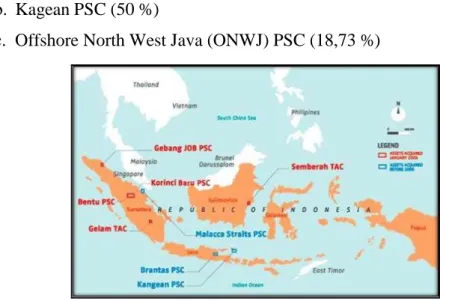
b. Kagean PSC (50 %)
c. Offshore North West Java (ONWJ) PSC (18,73 %)
Figure 2.1 Company area of PT IMBANG TATA ALAM in Indonesia Source: PT. IMBANG TATA ALAM (2022)
PT. Imbang Tata Alam is the operator of the Malacca Straits Block (PT. Imbang Tata Alam), EMP has a 60.49% participating interest in the block. The resulting production was petroleum of 10,000 BOPD (Barrel Oil per Day) in 2005. but now the production is around 3,500 BOPD.
Currently PT. Imbang Tata Alam has five fields that have produced oil with the production capacities of each field as follows:
1. Lalang Field (offshore).
2. Mengkapan Field (offshore).
3. Melibur Field (onshore).
4. Kurau Field (onshore).
5. South Field (offshore and onshore).
2.2 Vision and Mission of PT. Imbang Tata Alam 2.2.1 Company Vision of PT. Imbang Tata Alam
“PT. Imbang Tata Alam intends to be distinguished remarkable, reliable, efficient, highly profitable, and an independent company with a particular focus in oil and gas
safe, efficient, and reliable manner, and will optimize the assets values and maximize profitability in the best interest of all stakeholders".
2.3 Type Business Type of PT. Imbang Tata Alam
PT. Imbang Tata Alam is a subsidiary of PT. Energi Mega Persada Tbk (EMP) engaged in the Oil and Gas Exploration and Production sector which believes that protection and development of workers and communities, environmental protection, security of workers and company assets, are very important in achieving the targets of exploration, drilling and production activities. To achieve excellence in Occupational Safety and Health. Environment and Security, everyone must behave safely, have a healthy attitude, be environmentally friendly and safe.
PT. Imbang Tata Alam is a multinational company engaged in drilling which is under the auspices of Pertamina. The oil produced by this company is still crude oil, after this crude oil is produced it will be processed by the Pertamina company so that it becomes ready to use oil (Finish Good). The oil field owned by EMP PT. Imbang Tata Alam namely Kurau Oil Field, Lalang Field. Mengkapan Field, Melibur Field, and South Field.
The process of production activities carried out by this company is an activity of taking oil from oil wells in areas that are areas of oil extraction activities in the Riau Province. The area of EMP PT. Imbang Tata Alam has several areas that produce oil including:
1. Kurau Oil Field, Kurau oil field was discovered in 1986, where the existing facilities in the area were operated starting in 1990.
2. The Lalang Field, Ladang Lalang Field is located offshore in the middle of the Lalang Strait and has been operational since April 1984. The Lalang Field has a central processing facility with two satellite platforms which are about 65 feet above the water.
3. The Mengkapan field is also located offshore and was discovered in 1981, the field was operational in 1986 and has two satellite platforms which produce oil with relatively high water and gas content.
4. Melibur Field, Melibur Field is located on the eastern part of Padang Island, and
5. South Field, South Field produces a number of oil fields both on land and in the waters of Island Padang and Tebing Tinggi.
Oil produced by PT. Imbang Tata Alam is crude oil taken directly from oil wells.
The process that is carried out first is taking oil from the well using a pump. The oil collection is then channeled to the oil collection point or Gathering Station. The flow of oil sent to the Gathering Station has three parts namely oil, water and gas. When this stream enters the Gathering Station, the first process that is carried out is the separation of gas and liquid.
The gas produced is then carried out the combustion process to be disposed of.
Furthermore, the liquid consisting of oil and water is accommodated in a tank to be separated between water and oil with a different process. So that the pure oil will be at the top of the liquid and the oil will flow for the next process, namely collecting oil and calculating the oil that has been successfully produced. After that, the oil is channeled to Gandini (Oil Storage) which is in the middle of the sea to carry out the process of selling crude oil to Pertamina, then Pertamina will process and produce ready to use oil.
The water produced at the Gathering Station will then flow to the Water Cleaning Plant (WCP) in this section, the water will be processed to separate oil and water sent from the Gathering Station. This separation also uses the concept of difference in density so that later the water and oil will separate and then the oil produced will flow back to the Gathering Station to be processed from scratch again. The water that has been treated for separation is then flowed through the existing filter to remove the remaining oil in the water. Clean water is collected and then sent to a Water Injection Plant (WIP). Injection wells are used to increase oil production in
existing wells.
Before the water produced by WCP enters the injection well, the water first enters the WIP to be able to adjust the specified water pressure so that it enters the injection well. The process of oil production activities takes place at any time, so that in carrying out their work field officers work in 2 shifts, namely day and night to be able to
2.4 Structure of Organization
2.4.1 Structure PT. Imbang Tata Alam
Figure 2.2 Company Organization Structure Source: PT. Imbang Tata Alam (2022)
The functions and responsibilities of each division in PT. Imbang Tata Alam are as follows:
1. Production Manager (PM)
The Production Manager (PM) is responsible for the smooth production of crude oil with his duties of supervising and controlling oil wells and their equipment, and supervising the process of Plant Facilities (facilities for processing crude oil) and their activities as well as supervising and controlling the power generation systems placed in Process Plant Facilities.
2. Maintenance Manager (MM))
Maintenance Manager (MM) is responsible for the smooth operation of supporting equipment for crude oil production and its facilities. The Maintenance Manager (MM) has the duty to carry out periodic repairs or maintenance of all equipment and machines supporting crude oil production. Carry out repairs to equipment and machinery
2.4.2 Organizational Structure of Support Division
FIELD SCM – SUPPORT DIVISION PT. IMBANG TATA ALAM FIELD OPERATION SUPPORT
SUPERINTENDENT 1. ASEP IWAN SETIAWAN 2. ADI SUSENO
PROCUREMENT OFFICER 1. BRAZI
2. VACANT
FORMALITIES INVENTORY & STOCK
RECORD
1. AMIN SUTRISNO (ITA) 2. MUKSIN (ITA)
3. BUDI IRIANTO (C) 4. SYAFRI IMRON (C) 5. WAN ZAIDIR (C)
PROCUREMENT ASSIT 1. MINARNI (C) 2. VACANT
RECEIVING & ISSUING 1. JUNAIDI (ITA)
2. SUGIARTO (ITA) 3. MANIHAR (C) 4. DENI SUSWANTO (C) 5. SYAFRIZAL (C) 6. SYAIFUL ANAS (C) 7. M. HAFIZ (C) 8. HENDRA DEDI (C) Figure 2.3 Support Division Organization Structure
Source: PT. Imbang Tata Alam (2023)
Within the overall Support Manager area, there are four departments of Material Service Officers serving four departments with unique roles and responsibilities. The roles and responsibilities of each support department at EMP Malacca Strait S.A. are as follows:
1. Field Procurement Officer
The Field Procurement Officer is responsible for the smooth running of purchases made by PT. Imbang Tata Alam, its job is to carry out auctions for tenders,
find vendors or suppliers, issue PO (Purchase Order) carry out all buying and selling matters related to administration.
2. Inventory Control & Stock Record Supervisor
Inventory Control & Stock Record Supervisor, as for the duties of this division, namely signing all approval correspondence, and supervising the recording of goods, and carrying out re-checks, both in Warehouses and computerized. Inventory Control & Stock Record Supervisor there are 2 parts that help him namely Field Inventory and Asset Assistant and Stock Record Assistant.
The tasks of the inventory and field asset support department include assigning numbers to SPR sheets (small purchase requisition lists), assigning vocabulary numbers to new items, intermediate inspections and product inspections, etc. to facilitate the work and activities of supervisors. It’s about supporting implementation. Volume of goods per year.
The Inventory Recording Assistant is responsible for inventory and material monitoring.
His role is to assist the supervisor in checking materials on site, conducting mid-year inspections at the warehouse, entering or posting the inventory list into the Cardex system provided, and filing SRRs and MRRs on site.
2.5 The Working Process of the PT. Imbang Tata Alam
When placed in the Warehouse section of PT. Imbang Tata Alam, Warehouse is a warehousing or logistics system used by companies to store and provide goods. The difference with an ordinary Warehouse is that Warehouse is a system that provides information regarding the availability or stock of goods, the condition of the goods, to the status of goods delivery. Warehouse duties and functions of PT. Imbang Tata Alam is as follows:
1. The main task of the Warehouse a. Doing Coordination
Coordinate with related teams regarding goods entering and leaving the Warehouse to comply with established standards.
b. List of Item for Reports
Responsible for making reports regarding the goods in the Warehouse. This report includes the number of stock items, the condition of the goods.
c. Storing and Organizing Goods
The officer in this position is responsible for storing and organizing goods in the Warehouse so that they are easy to find and maintain their quality. Usually each item has its own place according to a predetermined code.
d. Ensure Goods to be Shipped
Check that the goods to be sent are in accordance with the orders from the user.
e. Moving goods according to their parts
Move goods according to their parts so that they are easy to find and maintain their quality.
f. Perform Preventive Maintenance
Perform preventive maintenance on auxiliary equipment such as Forklifts, Pallet Jacks to keep them in good condition.
2. Warehouse Main Function a. Fulfill user requests faster
The Warehouse management system ensures sufficient stock keeping in the Warehouse.
b. Determine the location of goods and stock availability automatically
Availability of adequate stock, delivery of goods, the right goods, timely delivery, as well as optimizing and balancing the distribution of inventory according to logistical needs. Warehouse layout determines how quickly and accurately goods are picked up and shipped, Warehouse Management System can ensure stock of goods in proper condition and storage space for better management.
c. Determine inventory levels and place reorders in a timely manner
The Warehouse management system can continuously monitor the amount of stock inventory so that the Warehouse manager can directly contact the vendor if the inventory is low.
2.6 Document Used for Activity
In the implementation of practical work, there are several documents needed to complete the work given. The documents are as follows:
1. PO (Purchase Order)
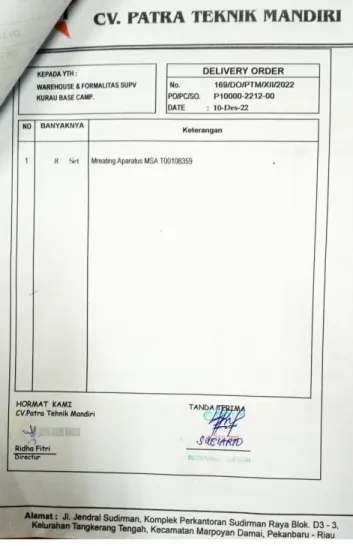
Figure 2.4 Purchase Order Source: Warehouse PT. Imbang Tata Alam
Purchase order are documents made by the buyer division of PT. Imbang Tata
company PT. Imbang Tata Alam confirms to the buyer about the goods they want to order, then the buyer makes a PO and orders the goods needed by the user, the PO is also used as a contract that forms an agreement between the buyer and the seller regarding the goods to be purchased by the buyer.
2. SPR (Small Purchase / Service Requisition)
Figure 2.5 SPR (Small Purchase / Service Requisition) Source: Warehouse PT. Imbang Tata Alam
SPR is a letter for ordering goods or services for which the number of Small Purchase purchases is below 5 million, this letter comes to the Warehouse together with the goods ordered by the user.
3. DO (Delivery Order)
Figure 2.6 Delivery Order Source: Warehouse PT. Imbang Tata Alam
Delivery order is a document in the form of a letter of delivery of goods made by a vendor based on a buyer order, whether in the city, outside the city, or abroad. This document is made by agreement between the seller and the buyer, so it contains the details and prices of the goods ordered, DO usually comes to the Warehouse with a Purchase
4. Tax invoice
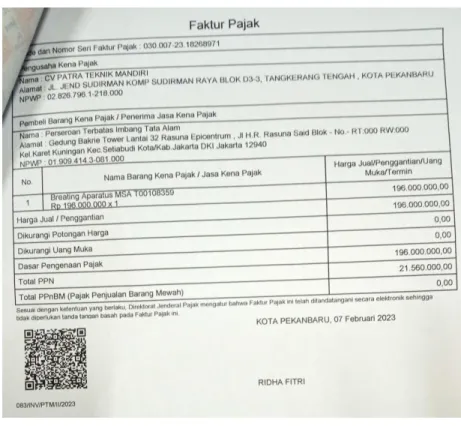
Figure 2.7 Tax Invoice
Source: Warehouse PT. Imbang Tata Alam
A tax invoice is a document in the form of proof of collection made by a taxable entrepreneur (PKP) when delivering taxable goods (BKP) or taxable services (JKP) to the buyer, namely the user. That is, when a pkp sells a taxable good or service, they must issue a tax invoice as proof that they have collected tax from the person who has purchased the taxable good or service.
5. Invoice
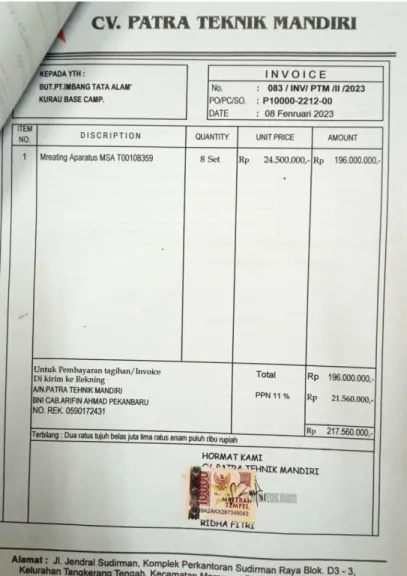
Figure 2.8 Invoice
Source: Warehouse PT. Imbang Tata Alam
Invoice is a document that is used as proof of a transaction that contains information, such as buyer information, goods or services purchased, quantity of goods, price and total price to be paid by the buyer and to be received by the seller. So, a payment invoice is a document that serves as proof of a transaction as well as a means of billing payment for a transaction. This payment invoice is generally sent by the seller to the buyer
CHAPTER III
SCOPE OF THE APPRENTICESHIP
3.1 Job Description
This apprenticeship program is implemented at PT. Imbang Tata Alam for 4 (Four Months), starting from 06 February to 09 June 2023. During the internship period, apprentices are placed in the Warehouse which consists of Material Receiving Assistants, Material Issuing Assistants and Formalities Inventory and Stock Record. There are several tasks during practical work in the Warehouse department at PT. Imbang Tata Alam are as follows:
1. Material Transfer.
2. MRR (Materials Receipt Report).
3. Archive MT (Material Transfer).
4. Cargo Manifest.
5. Archive Cargo Manifest.
6. Fill in the Purchase Order (PO) registration book.
7. Fill in the SPR registration book (Small Purchase / Service Requisition).
8. MRR Field P10 & S10 Registration to Field Buyer.
9. Input daily movement out of materials.
10. SSR Registration (Stores Stock Requisition).
11. Input MRR (Materials Receipt Report) into the Stock card form.
12. Input SSR (Stores Stock Requisition) into the Stock card form.
13. Write number vocabulary.
3.2 System and Procedure 3.2.1 The Working System
posting a list of inventory items to the stock card system provided and manual systems such as making material transfer, materials receipt report, filling in SPR registration books, filling in SSR registration books, entering MRR and SSR into stock card forms, writing vocabulary numbers when new goods arrive for stock at the Warehouse.
3.2.2 Working Procedures
Work procedures or activities carried out when doing practical work at the Warehouse department at PT. Imbang Tata Alam, activities that have been carried out while carrying out Practical Work (KP) in the Warehouse from 06 February 2023 to 09 June 2023 for full details can be seen in the following description:
1. Material Transfer
This work is done when the Warehouse section receives goods from user orders or other departments and to be sent to the user who ordered the goods, the workings of making Material Transfer from the form provided by PT. Imbang Tata Alam are as follows:
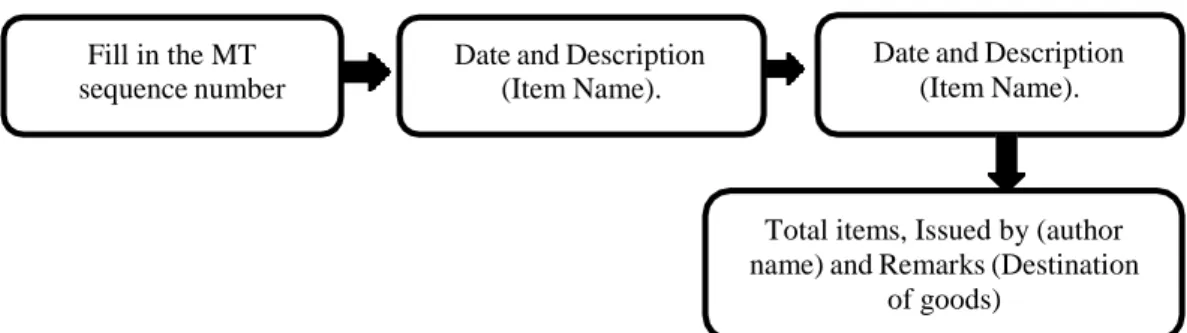
a. Fill out the 2022 MT registration book
Figure 3.1 Material Transfer Flowchart Source: Processed Data, 2023 Fill in the MT
sequence number
Date and Description (Item Name).
Date and Description (Item Name).
Total items, Issued by (author name) and Remarks (Destination
of goods)
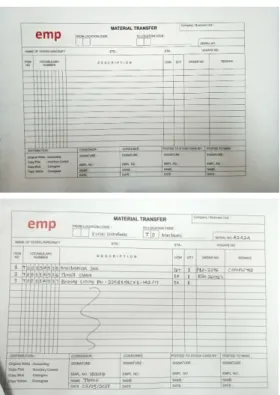
Figure 3.2 MT Register Book Source: Warehouse PT. Imbang Tata Alam
b. After filling out the registration book, proceed with filling out the Material Transfer form
Fill in the serial number (Based on the serial number
of the registration book)
Fill in the form and delivery destination.
Fill item number, vocabulary number, description, type of goods, number of items, order
number and remarks
After the form is signed, the MT sheets are divided according to the orders in the distribution column
In the consignor column, fill in the EMPL number (Employee Number) and name of the employee who will sign the
MT form and fill in the MT date
Figure 3.3 Material Transfer Flowchart Source: Processed Data, 2023
Figure 3.4 MT (Material Transfer) Source: Warehouse PT. Imbang tata alam
2. MRR (Materials Receipt Report)
This report is carried out when goods come to the Warehouse that have been ordered via a purchase order to the seller, the workings of making a Materials Receipt Report from the form provided by PT. Imbang Tata Alam are as follows:
a. Fill in the MRR registration book
Date and Fill in the MRR sequence no
Description (Item Name) and Total items (Number
of Items)
Completed or partial and Remarks (Destination of
Goods).
Figure 3.5 MRR (Materials Receipt Report) Flowchart Source: Processed Data, 2023
Figure 3.6 MRR Register Book Source: Warehouse PT. Imbang Tata Alam
b. After filling out the registration book, proceed with filling out the MRR (Materials Receipt Report) form
Figure 3.7 MRR (Materials Receipt Report) Flowchart Source: Processed Data, 2023
Fill in the MRR number and dated and Fill in number, PO number, item number
and stock code (Vocabulary Number)
In the receiving section column, fill in received from, carried by, checked by, position and date and Then initials, name,
position, EMPL number and date.
Fill in the DO (Delivery Order) number and remarks (Completed or Partial
Information)
After the MRR is signed, the MRR is photocopied, the MRR (Materials Receipt Report) copy is used to be submitted to the buyer and as a Warehouse archive, then the original
MRR is submitted to the inventory
Fill in the description (Name of Goods), type of goods and amount of
goods
Figure 3.8 MRR (Materials Receipt Report) Source: Warehouse PT. Imbang Tata Alam
3. Archiving MT (Material Transfer)
Archiving MT is work that is done almost every day at the Material Receiving Assistant. This work is done with the aim that incoming and outgoing MT letters can be stored in their proper place and make it easier to search when needed. The way of working in archiving Material Transfer is as follows:
Figure 3.9 Map Ordner MT Source: Warehouse PT. Imbang Tata Alam
Archiving the Material Transfer Form at MT in Coming from Al Location, this MT is a delivery letter from another department to the Warehouse section. After this letter is received at the Warehouse section, the
Warehouse
Section will make MT which will be sent to a certain party, after the MT is ready, MT from other departments are
archived at MT in Coming from Al Location
Archiving Material Transfer at MT Out Going is done after the MT letter to be sent has been completed, after the letter is ready to be made, the form is divided based on the order in the distribution form column which is printed to be archived, it will be
stored on MT Out Going
Figure 3.10 Archiving MT (Material Transfer) Flowchart Source: Processed Data, 2023
4. Cargo Manifest
Cargo Manifest is a form that contains information about goods sent by cargo or transportation, be it by sea, land or air, which contains documents and a detailed list of goods loaded as cargo which contains information about the sender, information about
Figure 3.11 Cargo Manifest Source: Warehouse PT. Imbang Tata Alam
5. Archiving Cargo Manifest
This work is carried out when the Cargo Manifest letter containing sender information, goods information and consignee information is ready to be delivered to the destination that is sent either by sea or land, the way of working in archiving Cargo Manifest is as follows:
Archive the Cargo Manifest Form on Cargo
Manifest Out Going is done after the Cargo Manifest letter is ready
Then the Cargo Manifest that is printed to be archived will be stored in
the Cargo Manifest Out Going.
Figure 3.12 Archiving Cargo Manifest Flowchart Source: Processed Data, 2023
Figure 3.13 Map of Ordner Cargo Manifest Source: Warehouse PT. Imbang Tata Alam
6. Filling in the Purchase Order (PO) Registration Book
This work is done when the goods have arrived at the Warehouse and complete the Delivery order (DO or cover letter), invoice, and Material Transfer (MT) and Materials Receipt Report (MRR) have been made, so the registration book is directly submitted to the finance department, work in filling the PO registration book is as follows:
After the PO is complete (DO, Invoice, MT and MRR) the next
step is to fill in the Purchase Order (PO) Registration and Fill
in date
Number Purchase Order (PO) and
MT number
Description, total item, rec'd by (Finance Receipt
Date) and seller (Name of seller)
After the Purchase Order (PO) registration book is ready, the PO and PO book are submitted to the finance department Figure 3.14 (PO) Purchase Order Registration Book Flowchart
Source: Processed Data, 2023
Figure 3.15 PO (Purchase Order) Register Book Source: Warehouse PT. Imbang Tata Alam
7. Filling in the SPR registration book (Small Purchase/ Service Requisition)
This work is done when getting an order for goods or services whose total purchases are in the range of under 5 million the working procedure for filling in the SPR registration book is as follows:
Figure 3.16 SPR Registration Book Flowchart Source: Processed Data, 2023
Total Items, Rec'd by (Requested) and Vendors
(Vendor Name) Write date, SPR number, MT
number and Description (name of goods or services)
Figure 3.17 SPR Register Book Source: Warehouse PT. Imbang Tata Alam
8. MRR Field P10&S10 Registration to Field Buyer
This work is done when providing proof of MRR submission from the Warehouse to the buyer, the working procedure for registering MRR Field P10&S10 to Field Buyer is as follows:
Fill in the date, MRR number and PO or SO number and Fill MT
number
Write down the MRR description, Total Items (Amount) and Rec'd by (Date and Initials of Receipt) and name of the seller
Figure 3.18 MRR Field P10&S10 Registration to Field Buyer Flowchart Source: Processed Data, 2023
Figure 3.19 Register Book of MRR Field P10 & S10 to Field Buyer Source: Warehouse PT. Imbang Tata Alam
9. Input daily movement out of materials
This work is done every day when the user requests goods from the Warehouse the working method for inputting the daily movement out of materials is as follows:
Open the Microsoft excel application that has been provided with tables by
the company
Fill in the number of the SSR sequence and fill in the vocabulary number and
Quantity (Number of Goods).
Uoi (Type or Unit of goods), Description (Explanation About Goods),
Req by (Name of Goods Requester), Location (Name of the Goods Requesting Department) and Remarks
(Completed or Not) Figure 3.20 Input daily movement out of materials Flowchart
Source: Processed Data, 2023
Figure 3.21 Table of Daily Movement Out of Materials Source: Warehouse PT. Imbang Tata Alam
10. SSR Registration (Stores Stock Requisition)
This work is done when the user requests goods to the Warehouse by bringing the SSR for registration so that every item that comes out of the Warehouse every day can be known, the way of working in registering SSR is as follows:
Fill in the SSR number (According to the order) and Fill
in the SSR date and description
Fill in total items and Fill in Issued by (Author Name) and remarks
(Department Name) Figure 3.22 SSR Registration (Stores Stock Requisition) Flowchart
Source: Processed Data, 2023
Figure 3.23 SSR Register Book Source: Warehouse PT. Imbang Tata Alam
11. Input MRR (Materials Receipt Report) into the Stock card form
This work is carried out when the Warehouse receives goods from orders that have been ordered through purchase orders to the destination seller to be inputted to Stock card in order to find out the amount of stock available in the Warehouse, the working method for inputting MRR to the Stock card form is as follows:
After the writer gets the vocabulary number on the MRR form, the writer looks
for the vocabulary number on the stock card form
Continue to fill in the date, MRR number and
quantity Rec'd (Total Receipt of Goods).
Then the BAL (Balanced) column uses the formula BAL = Previous BAL + Quantity Rec'd and Next fill in the PO number, MT number and
remarks (Author Name)
Figure 3.24 Input MRR into the Stock Card Form Flowchart Source: Processed Data, 2023
Figure 3.25 MRR Stock Card Source: Warehouse PT. Imbang Tata Alam
12. Input SSR (Stores Stock Requisition) into the Stock card form
This work is carried out when releasing goods by the Warehouse to the destination user and inputting them to stock card so that they know the amount of stock available in the Warehouse, the working method for inputting SSR into the Stock card form is as follows:
After the writer gets the vocabulary number on the SSR form, the writer looks for the vocabulary number on the
Stock card form
After the writer gets the vocabulary number on the SSR form, the writer looks for the vocabulary number on
the Stock card form
Then the BAL (Balanced) column uses the formula BAL= Previous BAL - Quantity Rec'd and Next, fill in the end
user and remark (Author Name)
Continue to fill in the date, SSR number and quantity issued (Total
issued Goods).
Figure 3.26 Input SSR into the Stock Card Form Flowchart Source: Processed Data, 2023
Figure 3.27 SSR Stock Card Source: Warehouse PT. Imbang Tata Alam
13. Writing number vocabulary
Each item received must be accompanied by a vocab (Number Vocabulary) to make it easier for employees to recognize and search for the type of item, number vocabulary is a no that has been determined and determined by the Warehouse which is used as the standard for identifying an item, the workings of writing Number vocabulary are as follows:
Write number vocabulary, after the item is received, proceed with looking at the item data on the Purchase Order form, on that form, there is a vocabulary number according
to the goods ordered by the vendor
After the vocabulary number is known, it is written on the item and Then write a Purchase Order
(Number Order) and write the date of receipt of the goods
Figure 3.28 Writing Number Vocabulary Flowchart Source: Processed Data, 2023
Figure 3.29 Vocabulary
Source: Warehouse PT. Imbang Tata Alam
3.3 Place of Apprenticeship
This Apprenticeship activity was carried out at PT. Imbang Tata Alam which is located at Kurau, Merbau District, Meranti Island Regency, Riau Province, during the Job Training activities the author is placed in the Warehouse. Apprenticeship Activities starting from February 06, 2023 to June 09, 2023.
Table 3.1 Practice Work Schedule
No Day Working Hours Agency
1 Monday to Friday 07:00 to 15:00 PT. Imbang Tata Alam
2 Saturday and Sunday Holiday Holiday
Source: Processed Data (2023)
3.4 Kind and Description of the Activity
The following are the activities carried out during the Apprenticeship Process at PT. Imbang Tata Alam:
Table 3.2 Daily Activities 01 September 2023 to 07 September 2023
No Day/Date Activity Place
1 Friday
Septemeber, 1 2023
1. Self-introduction / warehouse introduction 2. The activity as to record the entry of good and the
exit of these good by writing the number and code, as well as the name of the item
Warehouse
2 Monday
Septemeber, 4 2023
1. Introduction of warehouse division data in the material receipt report, material transfer
2. She meeting
Warehouse
3 Tuesday
Septemeber, 5 2023
1. Searcing for data spo data number Warehouse
4 Wednesday
Septemeber, 6 2023
1. Making MT (Material Transfer) Warehouse
5 Thursday
Septemeber, 7 2023
1. Recording incoming good Warehouse
Source: Processed Data (2023)
Table 3.3 Daily Activities of September 08th to September 14th, 2023
No Day/Date Activity Place
1 Friday
September 8, 2023
1. Compiling
2. Copying and incoming good data
Warehouse
2 Monday
September, 11 2023
1. Permission to be absent from the internship because she went to Bengkalis to fix a blocked atm card
Warehouse
3 Tuesday
September, 12 2023
1. Permission to be absent from the internship because she went to Bengkalis to fix a blocked atm card
Warehouse
4 Wednesday
September, 13 2023
1. Permission to be absent from the internship because she went to Bengkalis to fix a blocked atm card
Warehouse
5 Thursday
September, 14 2023
1. Permission to be absent from the internship because she went to Bengkalis to fix a blocked atm card
Warehouse Source: Processed Data (2023)
Table 3.4 Daily Activities of September 15th to September 21st, 2023
No Day/Date Activity Place
1 Friday
September, 15 2023
1. Making MT (Material Transfer)
2. Making MRR ((Materials Receipt Report)
Warehouse
2 Monday
September, 18 2023
1. Is to created data from MRR Materials Receipt Report)
2. Making MT (Material Transfer)
Warehouse
3 Thursday
September, 19 2023
1. Is to created data from MRR Materials Receipt Report)
2. Making MT (Material Transfer) 3. Making SAS (Stocke Adjusment Sheet)
Warehouse
4 Wednesday
September, 20 2023
1. Holiday Warehouse
5 Tuesday
September, 21 2023
1. Create data from MRR ((Materials Receipt Report) 2. Making MT (Material Transfer)
Warehouse Source: Processed Data (2023)
Table 3.5 Daily Activities of September 22nd to September 27th, 2023
No Day/Date Activity Place
1 Friday
September, 22 2023
1. 1. Making SAS (Stocke Adjusment Sheet)
2. Create data from MRR (Materials Receipt Report)
3. 3. Making MT (Material Transfer)
Warehouse
2 Monday
September, 25 2023
1. Create data from MRR (Material Receiptt Report) 2. Making MT (Material Transfer)
3. Making SAS (Stocke Adjusment Sheet) 2
Warehouse
3 Tuesday
September, 26 2023
1. Making vocabulary number in the note book register po (Purchase Order)
Warehouse
4 Weadnesday
September, 27 2023
1. Making MRR ((Materials Receipt Report) 2. Making MT (Material Transfer)
3. Making SAS (Stocke Adjusment Sheet)
Warehouse
5 Weadnesday
September, 27 2023
1. Red date leave Warehouse
Source: Processed Data (2023)
Table 3.6 Daily Activities of September 29th to October 5st, 2023
No Day/Date Activity Place
1 Friday
September, 29 2023
1. Create data from MRR ((Materials Receiptt Report)
2. Coppy MRR (Material Research Report)
Warehouse
2 Monday
September, 2 2023
1. Making MT (Material Transfer) Warehouse
3 Tuesday
October, 3 2023
1. Making MT (Material Transfer) Warehouse
4 Wednesday
October, 4 2023
1. Permission Warehouse
5 Thursday
October, 5 2023
1. Making MRR (Materials Receipt Report) 2. Making MT (Material Transfer)
Warehouse Source: Processed Data (2023)
Table 3.7 Daily activities of October 6th to October 12st, 2023
No Day/Date Activity Place
1 Friday
October, 6 2023
1. Making MT (Material Transfer) Warehouse
2 Monday
October, 9 2023
1. Making MT (Material Transfer) 2. Pick up spr book at the main office
Warehouse
3 Tuesday
October, 10 2023
1. Coppy MRR (Materials Receipt Report) 2. Deliver mail to transport
Warehouse
4 Wednesday
October, 11 2023
1. Making MT (Material Transfer) Warehouse
5 Thursday
October, 12 2023
1. Making SAS (Stocke Adjusment Sheet) Warehouse Source: Processed Data (2023)
Table 3.8 Daily activities of October 13th to October 19st, 2023
No Day/Date Activity Place
1 Friday
October, 13 2023
1. Making MT (Material Transfer) Warehouse
2 Monday
October, 16 2023
1. Permission Warehouse
3 Tuessday
October, 17 2023
1. Making MRR (Materials Receipt Report) Warehouse
4 Wednesday
October, 18 2023
1. Making MT (Material Transfer) Warehouse
5 Thursday
October, 19 2023
1. Making MT (Material Transfer) Warehouse Source: Processed Data (2023)
Table 3.9 Daily activities of October 20th to October 26st, 2023
No Day/Date Activity Place
1 Friday
October, 20 2023
1. Writing No Vocabulary
2. Making MRR (Material Receipt Report) 3. Making MT (Material Transfer)
Warehouse
2 Monday
October, 23 2023
1. Input SSR (Stores Stock Requisition) in Form Cardex
2. Making MT (Material Transfer)
Warehouse
3 Tuesday
October, 24 2023
1. Making MRR (Materials Receipt Report) 2. Making MT (Material Transfer)
3. Registration SSR (Stores Stock Requisition)
Warehouse
4 Wednesday
October, 25 2023
1. Making MT (Material Transfer) 2. Searching for SPO data on the computer
Warehouse
5 Thursday
October, 26 2023
1. Making MT (Material Transfer)
2. Deliver SPO Register Letter to Main Office
Warehouse
Source: Processed Data (2023)
Table 3.10 Daily activities of October 27th to November st, 2 2023
No Day/Date Activity Place
1 Friday
October, 27 2023
1. Writing book Registration SPR 2. Making MT (Material Transfer) 3. Input daily movement out of materials 4. Registration SSR (Stores Stock Requisition)
Warehouse
2 Monday
October, 30 2023
1. Making Cargo Manifest 2. Making MT (Material Transfer)
Warehouse
3 Tuesday
October, 31 2023
1. Making MT (Material Transfer) 2. Input daily movement out of materials 3. Registration SSR (Stores Stock Requisition)
Warehouse
4 Wednesday
November, 1 2023
1. Making MRR (Materials Receipt Report) 2. Making MT (Material Transfer)
3. Packing goods from the warehouse that will be sent to the user
Warehouse
5 Thursday
November, 2 2023
1. Packing goods from the warehouse that will be sent to the user
Warehouse
Source: Processed Data (2023)