TERRAINS OF TENSION:
MAPPING VIOLENCE IN MEDIEVAL ISLAMIC SOCIETY
By Taryn Marashi
Dissertation
Submitted to the Faculty of the Graduate School of Vanderbilt University
In partial fulfillment of the requirements for the degree of
DOCTOR OF PHILOSOPHY In
History August 12, 2022 Nashville, Tennessee
Approved:
Leor Halevi, Ph.D.
David J. Wasserstein, D. Phil.
William P. Caferro, Ph.D.
Richard McGregor, Ph.D.
ii
Copyright © by Taryn Marashi All Rights Reserved.
iii
To my beloved husband, Wyatt, a resolute force of support and
To my dear uncle Jim, who always pushed me towards greater horizons
iv
ACKNOWLEDGEMENTS
This work would not have been possible without the financial support of the Vanderbilt History Department, the Weaver Language grant, and the Stella Vaughn Fellowship offered by the Robert Penn Warren Center for the Humanities. I am grateful to all of those with whom I have
had the pleasure to work with on this project and on other projects.
This dissertation owes a tremendous debt to my advisor Dr. Leor Halevi, Professor of History and Law at Vanderbilt University, who has supported my career goals, worked actively to offer
sufficient and protected academic time to pursue those goals, and tirelessly provided edits and comments for the many revisions. Each of the members of my Dissertation Committee, Professors David Wasserstein, William Caferro, and Richard McGregor, has also provided me
with extensive personal and professional guidance and taught me a great deal about being a historian.
I would especially like to thank my colleagues, Mohammed Allehbi and Chad Attenborough, whose friendship and support have steered me on the arduous path to surviving graduate school.
I would like to thank the members of my family, my sister and mother, whose love and guidance have forever shaped my pursuits. I wish to thank my loving husband, Wyatt, who has provided
unyielding support and encouragement to pursue my dreams.
v
TABLE OF CONTENTS
Page
DEDICATION………iii
ACKNOWLEDGEMENTS………iv
LIST OF MAPS……….vii
A NOTE ON TRANSLITERATION………...viii
Introduction Mapping Violence……….1
A Spatial Approach to Violence in Medieval Islam………7
Historiography and Interventions………..12
Urban Structures and their Contexts: Methodological Approach and Strengths...19
Sources………...26
Chapter Organization……….……31
Chapter 1 Humiliation, Torture, and the Abbasid Political Court………...34
The Political Setting-Caliphal Palaces………...40
Humiliation and Torture in the Caliphal Palace………44
Understanding Humiliation as a Historical Construct……….53
Humiliation, Gender, and Asymmetries of Power………...55
Retaliatory Unmaning………..63
Humiliation and Torture in the Palatial Residences of Viziers: Gendered Aggression……….67
Postmortem Harm and Objectification………...72
Conclusion……….78
2 Home Seizure and Administrative Competition………....83
A Government’s Right to Seize Property………..86
Bureaucratization of Home Seizure………...89
Fiscal Problems in the Administration………...91
Reasons to Seize Property………..95
Administrative Accountability and Political Control over the Urban Landscape………...109
The Violence of Home Seizure: A Legal Perspective……….112
Conclusion………...121
3 Necro-Policies and Urban Geographies of Death………....123
The Public Gate and the Hanging of Bodies………....126
The Death of Afshīn Khaydar………..128
The Death of Bābak Khorramī and the Khashbat Bābak………137
Necro-Policies and the Geography of Death in Samarra………143
The Public Square in the Ṭūlūnid Palace of Fustat………..147
Fustat After Ṭūlūnid Rule and Punitive Space in the Urban Sphere……..152
vi
The Bridges of Baghdad………..155
Zakarawayh’s Revolt and an Ineffective Form of Public Punishment………...165
Conclusion………...168
4 Riots and Breaks at Prisons and Police Headquarters: A Dialectic of Violence……….172
Riots at Prisons and Law Enforcement Headquarters: Reclaiming Carceral Geographies………...177
Carceral Policing and the Shurṭa……….185
The Spatial and Social Advantages to Rioting at Prisons………....188
Understanding Carceral Geographies in a Medieval Islamic Urban Landscape……….…193
Government Responsiveness and Carceral Policies………195
Public Perception of Prisons………196
Urban Topography and Diversity………200
Prison Populations………...207
Conclusion………...209
5 Sullied Waters, Thick Walls, and Underground Terrains: Unsettling Narratives of Violence at Bathhouses………..213
Imprisonment in Bathhouses………....217
A Bathhouse as a Site of Death and Decay: Regulation and Water……224
Muslim-non-Muslim Encounter Inside……….………...230
The Division and Obfuscation of Gender………...……….235
Murder in a Bathhouse……….241
Policing a Bathhouse………248
Collective Violence at Bathhouses………..251
Conclusion………...254
6 A Culture of Violence in Religious Space………...257
Social Unrest at Mosques……….262
Administrative Measures in Response to Aggression at Mosques………..272
The Threshold and Façade of a Mosque………..276
Orienting and Legislating the Public Gaze: The Outer Façade of a Mosque………288
Other Forms of Violence in Mosques………..291
Mosque Destruction and Reconstruction……….297
Infringements of Muslim-Christian Space………...299
Infringements of Muslim-Muslim Space……….305
The Case of the Barāthā Mosque……….307
Conclusion………...315
CONCLUSION………....318
REFERENCES………329
vii
LIST OF MAPS Introduction
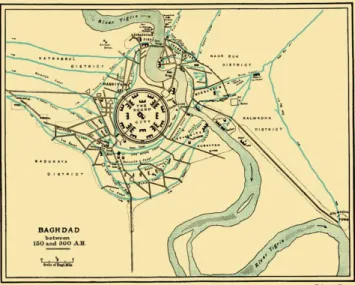
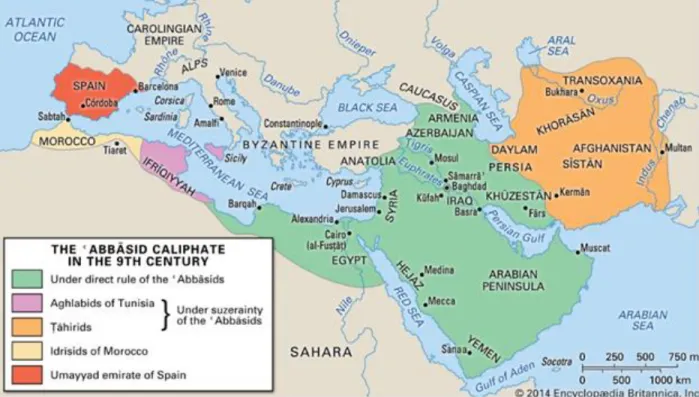
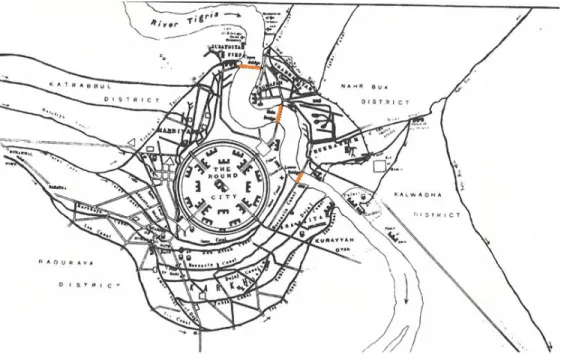
Figure 1. Map of Baghdad……….…..3 Figure 2. Map of the Abbasid caliphate………….………19 Chapter 1
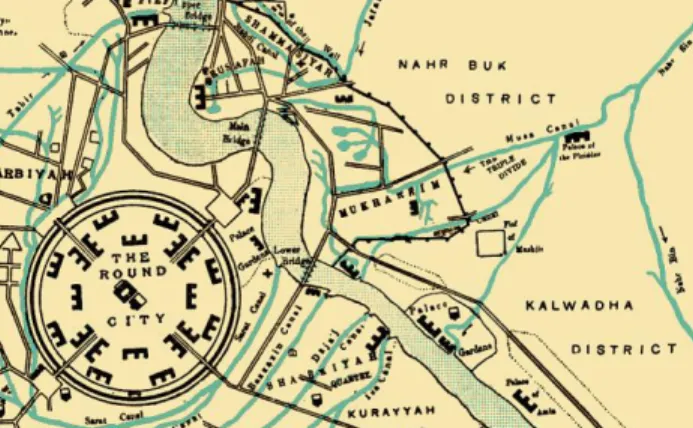
Figure 1. Map of Baghdad’s Mukharrim Quarter..………47 Chapter 2
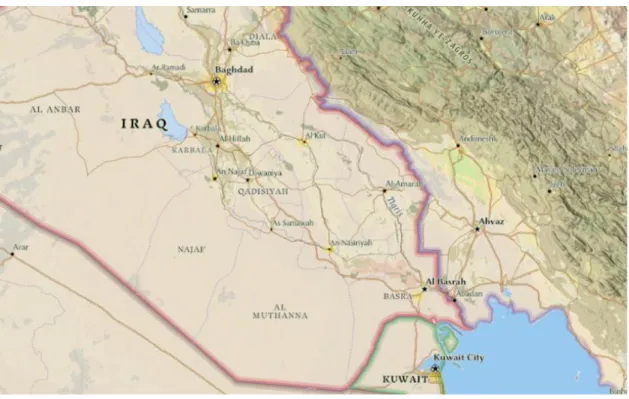
Figure 1. Map of Lower Iraq………..92 Chapter 3
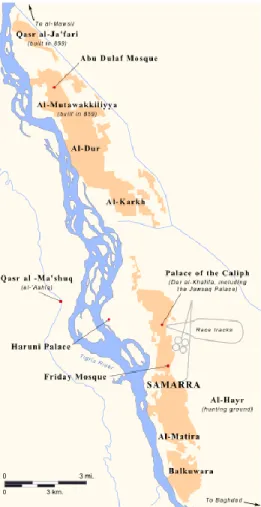
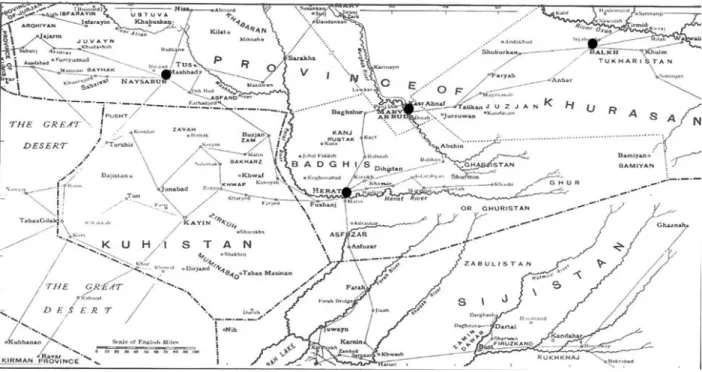
Figure 1: Abbasid Samarra Map……….………...137 Figure 2: Map, The Province of Khurasan………...142 Figure 3. The Bridges of Baghdad…..………...155 Chapter 4
Figure 1. Map of Baghdad. Image modified to show placement of prisons and law
enforcement headquarters………204
viii
A NOTE ON TRANSLITERATION AND DATES
I have chosen to follow the translation and transliteration guidelines established according to the International Journal of Middle East Studies (IJMES). Proper names and titles found in the Oxford English Dictionary or Merriam-Webster dictionary are not transliterated. For example, I did not transliterate Arabic terms like Abbasid and Buyid. This similarly applies to geographic regions such as Khurasan and Egypt as well as cities such as Mecca and Baghdad.
Dates are listed according to the Ḥijrī and Gregorian calendar. I only provided death dates for the first mention of each historical author and actor in the thesis.
1
INTRODUCTION
Mapping Violence
The story of violence in medieval Islamic society, in the years 850-950 CE, is
delightfully macabre. It is full of vicious murders in bathhouses, humiliating tortures in caliphal palaces, knife fights that left bodies in the blood-soaked streets, gruesome executions performed in public squares before the raucous jeers and joys of a crowd, protests over bread and taxes at prisons, and fiery sermons inspiring the cudgels and cries of mosque attendees. This narrative of contestation may appear like random twists and turns that bled haphazardly onto an urban
landscape; however, a pattern emerges that reveals dynamic encounters between rulers and the ruled. Despite its importance for political and social history, the history of urban aggression in medieval Islamic cities remains untold. “Terrains of Tension: Mapping Violence in Medieval Islamic Society,” seeks to address this lacuna, focusing on the topographies of six Islamic contexts—Baghdad, Basra, Kufa, Fustat, Khurasan, and Samarra. The dissertation argues that violence adapted to the built urban environment to produce, contest, and suppress social power.
Examining the spatial dimensions of violence in the urban sphere provides us with a richer understanding of how social change took place in a medieval Islamic society.
A fundamental question that threads the dissertation: if people and even objects can assert themselves in violent ways, cannot spaces and, if so, how exactly? Investigating the spatial dimensions of violence in a medieval Islamic society exposes the agency of urban space and its role in the production of violence. From this analytical vantage point, we can see the destructive force as well as the productive potential of urban aggression. Violence is, after all, a producer and mover of social change. Here, violence serves as a lens through which we can better
2
understand the processes of social change in a medieval Islamic society. Studying the
complexities of contestations over urban space, this thesis charts a new direction in the field of conflict studies and urban design in the medieval Middle East.
Social theorists have long appreciated and studied the meanings, architectural forms, and power of the built urban environment. Alongside the theories of the spatiality of social life proposed by Martin Heidegger and Michel Foucault, a monumental work in the field of space- making is Henri Lefebvre’s The Production of Space. According to Lefebvre, space is produced and reproduced from social relations and human involvement; social space is a type of social product with materials, potentials, and significations that can be redesigned, manufactured, and consumed.1 Lefebvre opens the introduction with a pivotal historical question,
did there not at one time, between the sixteenth century (the Renaissance - and the
Renaissance city) and the nineteenth century, exist a code at once architectural, urbanistic and political, constituting a language common to country people and townspeople, to the authorities and to artists – a code which allowed space not only to be ‘read’ but also to be constructed?2
While Lefebvre situates his conception and construction of space to the European Renaissance, his speculative point can also be applied to rapidly urbanizing contexts in medieval Islamic societies. Urban spaces are designed social constructs that are meant to be representational.
How medieval builders fashioned “Islamic cities,” positioning mosques and palaces and prisons in particular locations but not others, had practical social, religious, political, and symbolic purposes.3 The City of Peace (madīnat al-salām) or Round City of Baghdad, constructed by the
1 Henri Lefebvre, The Production of Space, trans. Donald Nicholson-Smith (Malden, MA: Blackwell Publishing, 1991), 26-27. Martin Heidegger, Maurice Merleau-Ponty, and Michel Foucault all discuss spatial thinking, and how conceptions of space shape our worldview and understanding of ourselves.
2 Lefebvre, The Production of Space, 7.
3 I use brackets for the term “Islamic cities” because the idea of a singular design operating across the urban topographies of various cities in medieval Islam is a problematic historiographical assumption. In the early 20th century, French and German scholars like Jean Sauvaget, Gustave E. von Grunebaum, Robert Brunschvig, Roger Le Tourneau, and others set about identifying the properties of an “Islamic city” to characterize common aspects found in every city in the Islamic world. More recent work has dispensed with a general view of an “Islamic city,”
3
Abbasid caliph al-Manṣūr in the year 145/762, for example, had been partially built with materials from the great Iranian capital of Ctesiphon and on an astrological plane meant to cultivate a grander of worldly and cosmological significance.4 Baghdad was a well-populated,
cosmopolitan city in the 9th and 10th centuries; as the capital of the Abbasid empire, it was a city that eclipsed other cities. Analyzing the production of medieval Islamic urban space in a metropole like Baghdad, therefore, has broader implications for understanding city design and planning, social encounter and activity, communal identity and differentiation, and architectural expressions of dominance and power.
Viewing space as a conceptual and pragmatic category of analysis, scholars like Edward Soja, David Harvey, Jürgen Habermas, Doreen Massey, and others have exposed an underlying spatial praxis that shapes and is shaped by social encounter.5 Their contributions to the study of
showing patterns as well as discrepancies in the urban morphology of social structures. See Somaiyeh Falahat, Re- Imaging the City: A New Conceptualization of the Urban Logic of the “Islamic City” (Dordrecht: Springer, 2013), 1-36; The City in the Islamic World, Vol I and II, eds. Salma K. Jayyusi et al (Leiden; Boston, MA: Brill, 2008);
Janet L. Abu-Lughod, “The Islamic City—Historic Myth, Islamic Essence, and Contemporary Relevance,”
International Journal of Middle East Studies 19 (1987): 155-176; The Arab City: Its Character and Islamic Cultural Heritage, Proceedings on a Symposium held in Medina, Kingdom of Saudi Arabia, 24-29 Rabi II, 1401 A.H./28 Feb.-5 Mar. 1981, eds. Ismail Serageldin and Samir El-Sadek (Arab Urban Development Institute, 1982); Nezar Al- Sayyad, “Space in an Islamic City: Some Urban Design Patterns,” Journal of Architectural and Planning Research 4, no. 2 (June 1987): 108-119; Falahat and M. Reza Shirazi, “Spatial Fragmentation and Bottom-Up Appropriations:
the case of Safavid Isfahan,” Urban History 42, no. 1 (Feb. 2015): 3-21.
4 Jacob Lassner, The Shaping of ʿAbbāsid Rule (Princeton, NJ: Princeton University Press, 1980), 169-175; Charles Wendell, “Baghdad: Imago Mundi and Other Foundation-Lore,” International Journal of Middle East Studies 2, no.
2 (April 1971): 99-128; Tayeb El-Hibri, “The Empire in Iraq, 763-861,” in The New Cambridge History of Islam, Vol. 1: The Formation of the Islamic World, Sixth to Eleventh Centuries (Cambridge University Press, 2011), 273.
5 Edward W. Soja’s postmodernist take on urban planning exposes how the construction and use of space allow individuals to encounter and consume these sites, all the while policing authorities can monitor and regulate this social encounter. See Postmodern Geographies: The Reassertion of Space in Critical Social Theory (London, UK;
New York: Verso, 1989). For the everyday experience of space, see Michel de Certeau, The Practice of Everyday Life, trans. Steven Rendall (Berkeley: University of California Press, 1984). David Harvey, calling for a shift in
Figure 1: Baghdad. Source: William Muir, The Caliphate: Its Rise, Decline, and Fall: From Original Sources (Edinburgh, 1883), 464. Public Domain via Wikimedia commons.
4
space and society show an activity that is mutually constitutive. In the built urban environment, both the construction and placement of buildings like public gates, caliphal palaces, and even prisons evince a deliberate intent, a purpose to elicit, support, or suppress a particular social behavior.6 Certain urban sites in the urban landscape have the ability to facilitate and influence human actions, in both direct and indirect ways, and thus possess a type of agency.7 This agency is seen through the encounter between an actor and a building in the urban environment which, after all, is a reservoir of social resources, political acts, economic foundations, and religious meanings that offers tools for social change.8 Different forms of urban architecture also have varying political, economic, and social properties that, by way of material encounter and continued usage, can generate signification.9 The dissertation shows that medieval historical actors tapped into, channeled, and refashioned these properties to better express forceful behavior in or against a particular form of urban architecture.
A goal of the dissertation is to open a window into urban terrains of tension, exploring how diverse gendered, marginalized communities as well as members of the ruling elite
negotiated and participated in forms of forceful behavior. Contestation, in this way, unmasks an
Marxist geography, looks at the spatial dimensions of capitalist structures. See Social Justice and the City (Athens:
University of Georgia Press, 2009). Looking at the interplay of social relations and space, Doreen Massey articulates an interdependent dynamism inherent to the social construction of space, place, and gender. See Space, Place, and Gender (Minneapolis: University of Minnesota Press, 1994). For more, see Jürgen Habermas, The Structural Transformation of the Public Sphere: An Inquiry into a Category of Bourgeois Society, trans. Thomas Burger with assistance of Frederick Lawrence (Cambridge, MA: MIT Press, 1989); N.J. Habraken, The Structure of the Ordinary: Form and Control in the Built Environment, ed. Jonathan Teicher (MIT Press, 2000); William H.
Whyte, City: Rediscovering the Center (New York: Doubleday, 1988); Warren Magnusson, Politics of Urbanism:
Seeing Like a City (Abingdon, Oxon; New York: Routledge, 2011).
6 See Saadi Lahlou, “Layer 1: Objective Material Environment,” in Installation Theory: The Societal Construction and Regulation of Behavior (Cambridge, UK; New York: Cambridge University Press, 2018), 97-107.
7 Lahlou, Installation Theory, 51-52. Lahlou cites the early scholarship of the social scientist Kurt Lewin. See also scholarship on Actor-Network Theory, a contested subject which seeks to explain how humans encounter inanimate objects. For more explanation on this, see Bruno Latour, “On Actor-Network Theory: A Few Clarifications,”
Soziale Welt 47, Jahrg. H. 4 (1996): 369-381.
8 Falahat and Shirazi, “Spatial Fragmentation and bottom-up appropriations,” 1-2.
9 See Langdon Winner, “Do Artifacts Have Politics?” Daedalus 109, no. 1 (Winter, 1980): 121-136.
5
encounter between the individual, social groups, and place, conveying a responsive relationship framed by a dynamic of social power. But what exactly is social power? Based on Weberian definitions, contemporary scholars contend that social power is the ability to exert influence over resources in society with, or even despite, opposition from others.10 To project social power effectively requires the use and manipulation of social resources, symbols, and spaces, all of which are types of goods that can be consumed, appropriated, and destroyed. Currencies of social power can be constituted spatially, and are embedded in urban artifacts like public gates, monuments, squares, and more. For just like violence, power is spatialized.
A key thinker in the discussion of social power is Foucault, who proposes that an analysis of power relations requires a more practical approach, one that locates and contextualizes types of resistance against different forms of power, a study of oppositions.11 Sociologists and anthropologists have also relied on this Foucauldian approach. James Scott, in the text
Domination and the Arts of Resistance, exposes the “hidden transcript” between the dominant and subjugated, a negotiation of power relations that are ever present in the public discourse.12 This dissertation draws upon the views of Scott and Foucault in the consideration of social
10 Heinrich Popitz, Phenomena of Power: Authority, Domination, and Violence, trans. Gianfranco Poggi, eds.
Andreas Göttlich and Jochen Dreher (New York: Columbia University Press, 2017); Michael Mann, The Sources of Social Power (New York: Columbia University Press, 2012); Alvin I. Goldman, “Toward a Theory of Social Power,” Philosophical Studies: An International Journal for Philosophy in the Analytic Tradition 23, no. 4 (June 1972): 221-268; Talcott Parsons, “An Analytical Approach to the Theory of Social Stratification,” American Journal of Sociology 45, no. 6 (May 1940): 841-862; Harold F. Kaufman, “An Approach to the Study of Urban Stratification,” American Sociological Review 17, no. 4 (Aug. 1952): 430-437; J.M. Barbalet, “Power and
Resistance,” The British Journal of Sociology 36, no. 4 (Dec 1985): 531-548; Max Weber, Economy and Society: An Outline of an Interpretive Sociology, eds. Guenther Roth and Claus Wittich, trans. Ephraim Fischoff (New York:
Bedminster Press, 1968). According to Weber, power is the opportunity to realize one’s will despite the resistance of others. Barbalet expands Weber’s view, adding that resistance is a necessary aspect of power. Noting that power and resistance are distinct yet interdependent, Barbalet observes that the “exercise of power over others draws upon social resources not available to subordinate agents” (1).
11 Michael Foucault, “The Subject and Power,” Critical Inquiry 8, no. 4 (Summer 1982): 780.
12 James C. Scott, Domination and the Arts of Resistance: Hidden Transcripts (New Haven, CT; London, UK: Yale University Press, 1990), 19.
6
power, for both outline a mechanism of power that is self-reliant, acted, enacted, and reinforced in different ways by the dominant and the subjugated.
Examining how different forms of urban architecture influenced the formation of violence unveils a dynamic relationship between human actors and the city, where architecture, group identity, and individuality informed one another. The landscape of a medieval Islamic city, a real and imagined conception of place that the historian Zayde Antrim has analyzed, can inspire even today a profound sense of belonging, nostalgia, and abiding wonder.13 The
philosopher al-Ghazālī (d. 505/1111) illuminated a deeply personal connection between the individual and the city. “The self is like the city, the hands and feet and all of its members are the city’s landed property, the alluring strength and wrathful power are its police force, the heart is its sovereign, and the mind is its minister.”14 In this anthropomorphic vignette, organs represent a political infrastructure connected by arteries or streets that pulse with people and objects and life.
Like a human body, a medieval Islamic city has a spatial organization that reflects and frames its constitutive political parts.
Medieval Muslim historians and philosophers like al-Ghazālī appreciated the
representative power of the built urban environment. But “any general theory of the city,” as social theorist David Harvey aptly points out, “must somehow relate the social processes in the city to the spatial form which the city assumes.”15 The struggle to contextualize a “spatial
consciousness” exists because of the many and complex behaviors, images, and symbols that are attached to social spaces and the individuals who make up those social spaces. This
epistemological approach to expose the spatial contours of social encounter helps us to flesh out
13 Zayde Antrim, Routes and Realms: The Power of Place in the Early Islamic World (New York: Oxford University Press, 2012).
14 Al-Ghazālī, Kīmiyāʾ al-Saʿādat, vol. 1 (Tehran: Kitabkhana Markazi, 1976), 128.
15 Harvey, Social Justice and the City, 23.
7
al-Ghazālī’s metaphor of the body, a representation made all the more potent when examining how different forms of violence harmed an urban landscape.
Al-Ghazālī’s anthropomorphized city, much like a body, can suffer from internal and external injuries that require almost surgical care. Violence risked the welfare of residents in a medieval Islamic city as well as the delicate apparatus that framed political rule. Warfare was a particularly virulent threat to social order, as the Abbasid court companion Abū Bakr
Muḥammad b. Yaḥyā al-Ṣūlī (d. 335/947) demonstrates when he concludes that “war is a contagion.”16 By extension, to treat such a contagion requires a methodical approach. Like al- Ghazālī, the Muslim philosopher al-Fārābī (d. 339/950) compares “the city to a body which needs to be treated holistically.”17 Ascertaining the source, path, and consequences of the contagion—a line of inquiry familiar to medieval Muslim philosophers and medical practitioners—is also how contemporary scholars have approached the study of violence.
A Spatial Approach to Violence in Medieval Islam
The study of violence has experienced a resurgence in the field of Islamic Studies.
Conflict studies have risen exponentially, following the fateful act of terror on 9/11, to better understand and defend historical contexts of violence in Islam.18 But even prior to 9/11, contemporary scholarship on medieval Islamic violence focused largely on a frame of rupture and continuity, a clash of civilizations and cultures. This historical impetus may skew
interpretations of historical violence, raising significant moral dilemmas about the legitimacy of
16 Al-Ṣūlī, Akhbār al-Rāḍī billāh wa-l-Muttaqī lillāh (Egypt: Maṭbaʿa al-Ṣāwī, 1935), 54.
17 See Peter Adamson, “The Arabic Tradition,” in The Routledge Companion to Ethics, ed. John Skorupski (London, UK; New York: Routledge, 2010), 70.
18 These scholarly discussions have provoked heated debates and deadly consequences, as the beheading of the French schoolteacher Samuel Paty in October of 2020 has shown. Consider also, the rise of literature on terrorism and suicide bombing in Islam.
8
such behavior. This introduces troubling political and ethical concerns, especially considering contemporary debates over the rise of terrorism. So how should we contextualize historical violence in medieval Islam?
Medievalists have studied how people and government implemented and experienced violence, legal concepts of rebellion, interfaith conflicts between Muslim and non-Muslim communities, gender-based aggressions, and even, for contrast, nonviolence.19 More recent scholarship on punishment and social justice has shown renewed interest in the subject of public violence.20 Maribel Fierro and Christian Lange, editors of the pioneering volume Public Violence in Islamic Societies, call for a shift in scholarship, stating that contemporary scholars have only recently begun asking questions about the role of violence in the political economy of Islamic society.21 Seeking to advance studies of the spatial dimensions of violence, the dissertation
19 Khaled Abou El Fadl, Rebellion and Violence in Islamic Law (Cambridge, UK; New York: Cambridge University Press, 2001); Hina Azam, Sexual Violation in Islamic Law: Substance, Evidence, and Procedure (New York:
Cambridge University Press, 2015); Yohanan Friedmann, Tolerance and Coercion in Islam: Interfaith Relations in the Muslim Tradition (Cambridge: Cambridge University Press, 2003); Omayra Herrero Soto, El perdón del gobernante: Al-Andalus, ss. II-V/VIII-XI (Helsinki: Academia Scientiarum Fennica, 2016); Mohammed Abu-Nimer, Nonviolence and Peace building in Islam: Theory and Practice (Gainesville, FL: University Press of Florida, 2003);
Christian Sahner, Christian Martyrs under Islam: Religious Violence and the Making of the Muslim World (Princeton, NJ: Princeton University Press, 2018); Marco Demichelis, Violence in Early Islam: Religious Narratives, the Arab Conquests and the Canonization of Jihad (London: I.B. Tauris & Co, 2021); Jonathan Fine, Political Violence in Judaism, Christianity, and Islam: From Holy War to Modern Terror (Lanham, MD: Rowman
& Littlefield, 2015); Patrycja Sasnal, Arendt, Fanon, and Political Violence in Islam (Abingdon, Oxon; New York, NY: Routledge, 2020); Bruce B. Lawrence, Shattering the Myth: Islam Beyond Violence (Princeton, NJ: Princeton University Press, 1998).
20 Deborah Tor, Violent Order: Religious Warfare, Chivalry, and the ʿAyyār Phenomenon in the Medieval Islamic World (Würzburg: Ergon, 2007); Public Violence in Islamic Societies: Power, Discipline, and the Construction of the Public Sphere, 7th-19th centuries C.E., eds. Christian Lange and Maribel Fierro (Edinburgh: Edinburgh University Press, 2009); Lange, Justice, Punishment, and the Medieval Muslim Imagination (Cambridge, UK:
Cambridge University Press, 2008); Thomas Sizgorich, Violence and Belief in Late Antiquity: Militant Devotion in Christianity and Islam (PA: University of Pennsylvania Press, 2009); Violence in Islamic Thought from the Qurʾān to the Mongols, eds. Robert Gleave and István T. Kristó-Nagy (Edinburgh: Edinburgh University Press, 2015).
21 Fierro and Lange, “Introduction: Spatial, Ritual, and Representational aspects of Public Violence in Islamic Societies (7th-19th centuries CE), in Public Violence in Islamic Societies, 1. In a discussion of “counter publics,”
both Fierro and Lange underline a theme that the volume addresses: “How, concretely, the different spheres of influence of the state, the ʿulamāʾ, the literati and other networks of authority related to one another, and how the public sphere was configurated in the light of violence, varied from one historical context to an other” (9). This, however, denotes a passive construction of the public sphere rather than conveying the active roles of violence and the public sphere in shaping medieval Islamic societies.
9
prioritizes the role of urban space instead of concentrating solely on the public sphere. The thesis looks beyond a public-private divide, interrogating the reciprocal ways that urban spaces occupy violence and violence occupies urban spaces. Urban space is as much an active
participant in, as it is a recipient of, the production of violence. The layout and material dimensions of a particular form of urban architecture factor into the way violence takes place.
After all, violence does not move evenly in or across different urban domains.
The dissertation aims to give critical insight into the roles that urban space and violence performed in medieval Islamic society. Although no single definition can satisfactorily capture the multifaceted and shifting aspects of violence, the dissertation builds from a tentative
definition: violence is an act or behavior that, intentionally or unintentionally, infringes upon the agency or identity of a body or a place. Scholars in the fields of Anthropology and Sociology have approached violence from a myriad of angles: aesthetics of pain, suffering and trauma, social relationships and inequalities, psychology of oppression, individual versus collective aggression, state versus non-state terror, and more.22 Recent scholarship on the agency of urban space in the formation of violence has shown promising insight into the construction of
communal boundaries and self-definition; violence surrounds boundary maintenance.23
22 Frantz Fanon, The Wretched of the Earth (New York: Grove Press, 1963); Hannah Arendt, On Violence (San Diego, CA; New York: Harcourt, Brace, Jovanovich, 1970); Nancy Scheper-Hughes and Philippe Bourgois,
“Introduction: Making Sense of Violence,” in Violence in War and Peace, eds. Scheper-Hughes and Bourgois (Malden, MA: Blackwell, 2004); Elton Valentine Daniel, Charred Lullabies: Chapters in an Anthropology of Violence (Princeton, NJ: Princeton University Press, 1996); Elaine Scarry, The Body in Pain: The Making and Unmaking of the World (New York: Oxford University Press, 1985); Henrich Popitz, Phenomena of Power; Judith Butler, The Force of Nonviolence: An Ethico-Political Bind (London, UK; New York: Verso, 2020); Arno J. Mayer, The Furies: Violence and Terror in the French and Russian Revolutions (Princeton, NJ: Princeton University Press, 2013); John Galtung, “Cultural Violence,” Journal of Peace Research 27, no. 3 (Aug 1990): 291-305; Paul Farmer,
“On Suffering and Structural Violence,” Daedalus 125, no. 1 (Winter 1996): 261-283. Consider also early studies of violence by Karl Marx. Take, for example, Hannah Arendt’s theory on violence, which can be a performative aspect and consequential force of political action. See Daniel Baraz, “Violence or Cruelty? An Intercultural Perspective,” in ‘A Great Effusion of Blood’? Interpreting Medieval Violence, eds. Mark D. Meyerson, Daniel Thiery, and Oren Falk (Toronto: University of Toronto Press, 2014), 164-189.
23 Freek Colombijn, “The Production of Urban Space by Violence and its aftermath in Jakarta and Kota Ambon, Indonesia,” Ethnos 83, no. 1 (2018): 58-79; Violence at the Urban Margins, eds. Javier Auyero, Nancy Scheper-
10
Framing the narrative of contestation according to distinct forms of urban architecture also provides a novel way to view violence as a discursive process rather than a finality, a
perspective that broadens our understanding of how social change occurred in a medieval Islamic society. This allows me to explore a multiplicity of motivations, provocations, performances, and consequences of violence. By viewing urban space as a primary category of analysis, I can trace the nature, movement, and impact of violence and expose the various negotiations taking place between historical actors particular to an urban domain.
Importantly, the dissertation offers a way of thinking about violence without relying on typologies that can do more to constrict rather than convey. A long-lasting dichotomy in the field of conflict studies has been that of tolerance and intolerance, a thin juxtaposition that carries political and moral import when looking back at the medieval past. Tolerance and intolerance are not mutually exclusive but are socially constructed claims based on a matter of interpretation.
Relying on the binary of tolerance/intolerance can retroactively impose a value system on past conflicts and obfuscate a grayscale that existed in the relationships between the dominant and the subjugated. As Scott demonstrates, the dominant demands a “continuous stream of
performances of deference, respect, reverence, admiration, esteem, and even adoration that serve to further convince ruling elites that their claims are in fact validated by the social evidence they see before their very eyes.” By contrast, most displays of “power from below, even when they are protests—implicitly or explicitly—will largely observe the ‘rules’ even if their objective is to
Hughes, and Philippe Bourgois (New York: Oxford University Press, 2015). See Michael Taussig, “Culture of Terror—Space of Death. Roger Casement’s Putumayo Report and the Explanation of Torture,” Comparative Studies in Society and History 26, no. 3 (July 1984): 467-497; Sizgorich, “Sanctified Violence: Monotheistic Militancy as the Tie that Bound Christian Rome and Islam: Sanctified Violence in History,” Journal of the American Academy of Religion 77, no. 4 (2009): 19. Nancy Scheper-Hughes and Phillip Bourgois, in the text Violence at the Urban Margins, articulate the role of boundary-making and boundary-protection at the urban margins. See also Kate Brown, A Biography of No Place: From Ethnic Borderland to Soviet Heartland (Cambridge, MA: Harvard University Press, 2004).
11
undermine them.”24 Scott illuminates a codependent interplay occurring between the dominant and the subordinate; however, this relationship reveals more than a simple, direct asymmetry of oppositional forces. Not all acts of violence performed by the subordinate ascribed to a
legitimate, government-approved code of forceful conduct. Put differently, the ways in which Muslim governments instrumentalized and legitimized violence in the urban sphere did not necessarily match or even correspond to the measures taken by the populace to claim and contest authority over urban domains. A similar case can be made for nonviolence, as Judith Butler proposes, which is an expression or condition that does not necessarily exist in stark
contradistinction to violence.25 Forces of nonviolence may have aggressive characteristics.
Dropping the dichotomy displays a spectrum of antagonistic behaviors, responses, and forces that operated between diverse individuals and groups.
Likewise, organizing violence into distinct categories—such as systemic, endemic, structural, religious, symbolic, and political—can help to classify complex phenomena, but these groupings also subsume varieties of forceful behavior according to the nature, impact, and place of the act. But just as certain spaces do not always feature certain types of violence, violence does not always possess a single justification. This terminology, albeit modern to apply for medieval Islamic contexts, does not fully represent the scale of hostilities that can have multiple, overlapping, multilevel, and interdependent provocations. I find that the boundaries separating these categories are not narrow or firm but somewhat porous: acts of forceful behavior can simultaneously possess structural, political, social, religious, and symbolic qualities. Instead of laboring under inadequate typologies, the dissertation avoids this classification and seeks rather to expose the messiness of violence in the urban sphere.
24 Scott, Domination and the Arts of Resistance, 93.
25 Butler, The Force of Nonviolence, 20-23.
12 Historiography and Interventions
The dissertation contributes to contemporary scholarship in two critical ways. “Terrains of Tension” is the first manuscript to analyze systematically the spatial dimensions of violence in medieval Islamic society. I do not seek to reconcile medieval Islamic history with its violent past; rather, I seek to expose how violence served as a tool for social change. Inquiry into the agency and role of urban space in the production of historical violence marks a turning point in the analysis of the “making” of medieval Islamic societies.
Moreover, an investigation into the interconnections between urban space and violence yields promising comparative analyses for larger urban historical conversations on how different social groups interacted with the built urban environment. Though space has long been
considered a determining factor in urban hostilities, the agency and role of the built urban environment in shaping violence in medieval Islam has not been fully explored.26 The thesis comparatively analyzes the production of violence according to distinct urban articulations in six medieval Islamic contexts. Cities such as Baghdad and Samarra had a greater degree of urban infrastructure and sophistication that led to different manifestations of violence. For example, breaking open a large prison facility in Baghdad as opposed to a smaller jail in Kufa, a
phenomenon discussed in Chapter 4, carried a different social and political resonance, and even sparked a unique response depending on the local population.
Historians have, of course, used rural and urban environments for their studies. From Richard Bulliet’s depiction of the romantic mountainous landscape of Nishapur to Charles
26 For viewing space as a determining factor in urban hostilities, see Roger I. Moore, The Formation of A Persecuting Society: Authority and Deviance in Western Europe, 950-1250 (Malden, MA: Blackwell Publishing, 2007); Mark Gregory Pegg, The Corruption of Angels: The Great Inquisition of 1245-1246 (Princeton, NJ:
Princeton University Press, 2001); David Nirenberg, Communities of Violence: Persecution of Minorities in the Middle Ages (Princeton, NJ: Princeton University Press, 1998).
13
Pellat’s literary world of Basra, many scholars have privileged an urban historical method for analyzing cultural advancements, artistic and scientific achievements, and social movements.27 More recent scholarship in the fields of architecture, landscape studies, and urban design have shown how the layout and placement of certain areas and buildings—such as gardens, mosques, homes, hospitals, palaces, and more—shaped social behavior in profound and concrete ways.28 My dissertation departs from contemporary scholarship, however, by exploring violence in key urban structures found in the topographies of six Islamic contexts.
The second intervention is the analysis on the role of violence in shaping medieval Islamic society during the years from roughly 850 to 950 CE, a time of significant urban
transformation and social change. Contemporary histories of the Abbasids (132-656/750-1258), a Muslim dynasty governing a vast territory stretching from the Indus River valley to North Africa, prioritize the early decades of the regime and treat this era as a kind of gilded age, much like the 9th to 13th CE historical chroniclers who gave prominence to the reigns of rulers in the early years of the empire. In this nascent stage of revolutionary fervor and political
advancement, members of the ruling elite began building cities, strengthening military
27 Richard Bulliet, The Patricians of Nishapur: A Study in Medieval Islamic Social History (Cambridge, MA:
Harvard University Press, 1972); Charles Pellat, Le Milieu Baṣrien et la Formation de Ğāḥiẓ (Paris: Librarie d’Amérique et d’orient Adrien-Maisonneuve, 1953); Patricia Crone, The Nativist Prophets of Early Islamic Iran:
Rural Revolt and Local Zoroastrianism (New York, NY: Cambridge University Press, 2012); Najam Haider, The Origins of the Shīʿa: Identity, Ritual, and Sacred Space in Eighth-Century Kufa (Cambridge: Cambridge University Press, 2011); Matthew Gordon, The Breaking of a Thousand Swords: A History of the Turkish Military of Samarra, A.H. 200-275/815-889 C.E. (Albany: State University of New York Press, 2001); Alastair Northedge, The Historical Topography of Samarra, Samarra Studies I (British School of Archaeology in Iraq: Fondation Max van Berchem, 2007); A Medieval Islamic City Reconsidered: An Interdisciplinary Approach to Samarra, ed. Chase F. Robinson (Oxford: Oxford University Press, 2001); and more.
28 Stephennie Mulder, The Shrines of the ‘Alids in Medieval Syria: Sunnis, Shi’is, and the Architecture of Coexistence (Edinburgh: Edinburgh University Press, 2014); Mattia Guidetti, In the Shadow of the Church: The Building of Mosques in Early Medieval Syria (Leiden: Brill, 2016); Amos Rapoport, The Meaning of the Built Environment: A Nonverbal Communication Approach (Beverley Hills: Sage Publications, 1982); House Form and Culture (Englewood Cliffs, NJ: Prentice-Hall, 1969); Fairchild D. Ruggles, Islamic Gardens and Landscapes (Philadelphia: University of Pennsylvania Press, 2008); Landscapes of the Islamic World: Archaeology, History, and Ethnography, eds. Stephen McPhillips and Paul D. Wordsworth (Philadelphia: University of Pennsylvania Press, 2016); Akel Ismail Kahera, Reading the Islamic City: Discursive Practices and Legal Judgement (Lanham, MD: Lexington Books, 2012); and more.
14
capabilities, funding literary works, and buttressing the position and prestige of the caliph.
Medievalists have composed numerous books on the Abbasid revolution and early caliphate,29 the Greco-Arabic translation movement,30 the military units of the caliphal army,31 the
development of political sovereignty,32 early Islamic historiography and the scholarship of jurists and ʿulamā (guardians of religious knowledge),33 and more.34 But many of these studies of the Abbasids end in the mid-9th century, marking a discernible and somewhat arbitrary break in Islamic history, closely followed by a period of political disintegration.
This thesis, on the other hand, begins in the mid-9th century, when violence opens a lens into the contested construction and defense of political sovereignty, new forms of economically motivated loyalties, rising social activism and resistance movements, and blurred communal boundaries. Several key events took place in the mid-9th century that mark a starting point for
29 Amira Bennison, The Great Caliphs: The Golden Age of the ʿAbbasid Empire (New Haven: Yale University Press, 2009); Hugh Kennedy, The Court of the Caliphs: The Rise and Fall of Islam’s Greatest Dynasty (London:
Weidenfeld & Nicolson, 2004); Roberto-Marin Guzman, Popular Dimensions of the ʿAbbasid Revolution: A Case Study of Medieval Islamic Social History (Cambridge, MA: Fullbright-Laspau, 1990); Elton J. Daniel, The Political and Social History of Khurasan under Abbasid Rule, 747-820 (Minneapolis: Bibliotheca Islamica, 1979); and more.
30 Dimitri Gutas, Greek Thought, Arabic Culture: The Graeco-Arabic Translation Movement in Baghdad and Early
‘Abbasid Society (2nd-4th/5th-10th C.) (Taylor and Francis, 2012); Travis Zadeh, Mapping Frontiers across Medieval Islam: Geography, Translation, and the ʿAbbasid Empire (London, UK: New York: I.B. Tauris, 2011).
31 Michael Morony, Iraq After the Muslim Conquest (Piscataway, NJ: Gorgias Press, 2005); Hugh Kennedy, The Armies of the Caliphs: Military and Society in the Early Islamic State (London; New York: Routledge, 2001);
Daniel Pipes, Slave Soldiers and Islam: The Genesis of a Military System (New Haven: Yale University Press, 1981); From Arabian Tribes to Islamic Empire: Army, State and Society in the Near East c. 600-850 (Aldershot, England; Burlington, VT: Ashgate, 2008); Patricia Crone, Slaves on Horses: The Evolution of the Islamic Polity (London, UK; New York: Cambridge University Press, 1980).
32 Andrew Marsham, Rituals of Islamic Monarchy: Accession and Succession in the First Muslim Empire
(Edinburgh: Edinburgh University Press, 2009); Andrew F. March, “Genealogies of Sovereignty in Islamic Political Theology,” 80, no. 1 (Spring 2013): 293-320; Neguin Yavari, “The Political Regard in Medieval Islamic Thought,”
Historical Social Research 44, no. 3 (2019): 52-73.
33 Chase Robinson, Islamic Historiography (Cambridge, UK; New York: Cambridge University Press, 2003); Franz Rosenthal, Muslim Intellectual and Social History: A Collection of Essays (Aldershot: Variorum, 1990); Tarif Khalidi, Arabic Historical Thought in the Classical Period (Cambridge: Cambridge University Press, 1994); Konrad Hirschler, Medieval Arabic Historiography: Authors as Actors (Abington, Oxon: Routledge, 2006); Michael Cooperson, Classical Arabic Biography: The Heirs of the Prophets in the Age of al-Maʾmun (Cambridge:
Cambridge University Press, 2000); Nimrod Hurvitz, The Formation of Hanbalism: Piety into Power (Hoboken:
Taylor and Francis, 2012).
34 See also Robert McC.Adams, The Land Behind Baghdad: A History of Settlement on the Diyala Plains (Chicago:
University of Chicago Press, 1965).
15
the dissertation—the construction of Samarra (223/836) as a new capital of the Abbasid empire and home for regiments of Turkish and enslaved soldiers,35 the end of a caliphal inquisition on the nature of the Qurʾan known as the miḥna (ca. 234/848–237/851-2),36 and the assassination of an Abbasid caliph, al-Mutawakkil (d. 247/861).37
Mired in social strife after the death of al-Mutawakkil, the cities of Baghdad and Samarra suffered a bitter period of political, military, and economic rivalry that undermined the
machinery of government and spurred unrest. Numerous encyclopedic entries and leading scholarship classify this decade-long period as the “Anarchy of Samarra,” since this time saw not one but five caliphs either deposed or killed under suspicious causes.38 More problematic is the
35 According to Crone and Kennedy, al-Muʿtaṣim started to rely heavily on enslaved soldiers which resulted in a military force too dependent on the regime for its survival, a significant problem considering the rapidly depleting treasury and the caliph’s inability to pay salaries. See also Kennedy, “Abbasid Caliphate,” in Abbasid Belles- Lettres, ed. Julia Ashtiany (Cambridge: Cambridge University Press, 1990), 5; David Ayalon, “The Military reforms of Caliph al-Muʿtasim,” in Islam and the Abode of War: Military Slaves and Islamic Adversaries, ed. David Ayalon (Aldershot, UK; Brookfield, VT: Variorum, 1994), 1-39; Bernard Lewis, Race and Slavery in the Middle East: An Historical Enquiry (New York; Oxford, UK: Oxford University Press, 1990); Daniel Pipes, Slave Soldiers and Islam: The Genesis of a Military System (New Haven: Yale University Press, 1981); The Turks in the Early Islamic World, ed. Clifford E. Bosworth (Aldershot, UK; Burlington, VT: Ashgate, 2007), 1-20.
36 As John Turner observes, caliphs occasionally enforced their definitions of orthodoxy coercively. In this respect, the miḥna was not unique but reflected a “legitimation crisis” that al-Mutawakkil inherited and stopped. But the damage to the caliphate had already been done. See Inquisition in Early Islam: The Competition for Political and Religious Authority in the Abbasid Empire (London: I.B. Tauris, 2013), 117-136. See also Hurvitz, The Formation of Hanbalism; Muhammad Qasim Zaman, Religion and Politics Under the Early ‘Abbasids. The Emergence of the Proto-Sunnī Elite (Leiden: Brill, 1997); John Nawas, Al-Maʾmūn, the Inquisition, and the Quest for Caliphal Authority (Atlanta, GA: Lockwood Press, 2015).
37 A group of Turkish officers, who had not received enough money to satisfy their ambitions and coffers,
assassinated the Abbasid caliph al-Mutawakkil and shamefully violated the sanctity of the caliphal household. For a subordinate to murder a caliph, and to do so in the caliphal palace, was shocking. One can wonder whether these Turkish officials fully realized the political consequences of their deadly deed; for the homicide of a caliph—a position of authority that the Abbasids had spent decades bolstering with pomp, prestige, and political ideology—
triggered a shift that threatened to unravel the political administration and Islamic society itself. See the vivid detail of his death in Ibn al-Athīr, Al-Kāmil fī l-Taʾrīkh, vol. 6 (Beirut: Dār al-Kitab al-ʿArabī, 2010), 173-178; al-Masʿūdī, Murūj al-Dhahab, vol. 4 (Beirut: al-Maktaba al-ʿAsriyya, 2005), 98-99; Khaṭīb al-Baghdādī, Taʾrīkh Baghdād, vol.
7, ed. Bashshār ʿAwwād Maʿrūf (Beirut: Dār al-Gharb al-Islāmī, 2002), 180-181.
38 Kennedy, “The Abbasid Caliphate,” Encyclopedia Britannica (March 2020); K.V. Zetterstéen and C.E. Bosworth,
“al-Muhtadī,” in Encyclopaedia of Islam, 2nd ed., eds. P. Bearman et al (Leiden: Brill, 2012); Bernard Lewis,
“ʿAbbāsids,” Encyclopaedia of Islam, 2nd ed., eds. P. Bearman et al (Leiden: Brill, 2012); Kennedy, “The Decline and Fall of the First Muslim Empire,” Der Islam 81 (2004): 3-30; Tayeb El-Hibri, “Chapter Four: From Triumph to Tribulation (833-990),” in The Abbasid Caliphate: A History (Cambridge, UK; New York, NY: Cambridge University Press, 2021); El-Hibri, “The Empire in Iraq, 763-861,” in The New Cambridge History of Islam, Vol. 1:
The Formation of the Islamic World, Sixth to Eleventh Centuries, ed. Chase Robinson (Cambridge: Cambridge University Press, 2010), 269-304; Gordon, The Breaking of a Thousand Swords; Lutz Berger, “Chapter 14:
16
term anarchy, a word tossed around without fully acknowledging the interpretive damage and historiographical blind spots produced. Mild apprehension with using the term “anarchy” has led some scholars to coin the phrase “near-anarchy” or “so-called anarchy” in a concerted effort to skirt or minimize historiographic obstacles. I contend, however, that this usage, or near-usage, of anarchy is still troubling because it simplifies a decade filled with political creativity,
conspiracies, complications, and crises to that of complete collapse. Looking back and labeling the decade following al-Mutawakkil’s murder as a time of anarchy limits a sense of historical action. A violent remaking of medieval Islamic society took place, and the system of caliphal governance did not disappear or even dismantle entirely.
To be sure, the assassination of al-Mutawakkil and siege that ensued in Baghdad were catastrophes of epic proportion, and they were not the only signs of crisis in the mid-9th century.
Several interdependent problems emerged which led to what Michael Bonner poignantly called the “waning of empire.”39 Political fragmentation of Abbasid lands allowed regional dynasties—
such as the Ṭūlūnids of Egypt and Syria, the Ḥamdānids in Northern Syria, the Ṭāhirids and then Sāmānids of Khurasan, the Ṣaffārids in Fars, Sistan, and northern Afghanistan, the Ziyārids of Tabaristan, the Musafirids of Gilan and Azerbaijan, the Buyids of Shiraz, Ray, and eventually Baghdad, and more—to exert more control over their own territory’s affairs. Regional governors
Mamluks in Abbasid Society,” in Migration Histories of the Medieval Afroeurasian Transition Zone: Aspects of Mobility between Africa, Asia, and Europe, 300-1500 C.E., eds. Johannes Preiser-Kapeller et al (Leiden: Brill, 2020), 417; Michael Bonner, “The Waning of Empire, 861-945,” ed. Chase F. Robinson, The New Cambridge History of Islam, Vol. 1: The Formation of the Islamic World, Sixth to Eleventh Centuries (Cambridge University Press, 2011), 309. See also Étienne de la Vaissière, who dismisses Crone and Kennedy’s assertion that the system of using enslaved soldiers or Mamluks had been instituted by al-Muʿtaṣim’s reign. See Samarcande et Samarra:
Élites d’Asie centrale dans l’empire Abbasside (Paris: Association pour l’avancement des études iraniennes, 2007), 270-; Dominique Sourdel, L’État impérial des califes abbasides: VIIIe-Xe siècle (Paris: Presses universitaires de France, 1999).
39 Bonner, “The Waning of Empire, 861-945,” 305-359. See also Tayeb El-Hibri who ends his text on the allusive power of historical accounts of the early Abbasids with al-Mutawakkil and his son. See Reinterpreting Islamic Historiography: Hārūn al-Rashīd and the Narrative of the ʿAbbasids (Cambridge: Cambridge University Press, 1999). See also Lassner, The Shaping of ʿAbbāsid Rule (Princeton, NJ: Princeton University Press, 1980).
17
began withholding money meant for the Abbasid imperial treasury. Also, fighting a series of prolonged revolts across Greater Iraq, especially the Zanj rebellion in Basra, drained the Abbasid regime of its funds. By the 10th century, a decline in imperial revenue coupled with an
exploitation of agricultural resources led to a decrease in land production and cultivation.
Therefore, the thesis ends in the mid-10th century, a time when numerous scholars claim that the Abbasid caliphate crumpled under the burdens of regional rebellions, fiscal solvency in the imperial treasury, and inadequate agricultural production.40 This assertion that the caliphate collapsed in the first half of the 10th century holds significant historiographical implications.
Rather than explore the rumblings of discontent in the second half of the 9th century, studies of the Buyids (r. 320-454/932-1062) tend to begin in the 930s, when the Buyid brothers Muʿizz al- Dawla, ʿImād al-Dawla, and Rukn al-Dawla carved up principalities in western Iran and took control of the capital of the Abbasid empire, Baghdad, in the year 334/945.41 The view that the caliphate collapsed in the early 10th century has led scholars to use, whether purposeful or not, a periodization that has persisted for decades: the high point of the Abbasid caliphate was in the years between 750-833 and the low point of caliphal authority was in the period of 930-945.
What gets lost in this periodization is the social historical meat in the middle.
There are, of course, notable exceptions. Despite, or perhaps because of, a rise of violence, the period of 850 to 950 CE also saw a burst of cultural activity, scientific
40 David Waines, “The Third Century Internal Crisis of the Abbasids,” Journal of the Economic and Social History of the Orient 20, no. 3 (Oct. 1977): 282-306; Bernard Lewis, “ʿAbbāsids,” Encyclopaedia of Islam, 2nd ed, eds. P.
Bearman et al (Leiden: Brill, 2012). Fukuzo Amabe writes that the Abbasid state was “completely eliminated and supplanted by the Buwayhid confederation.” See The Emergence of the ʿAbbāsid Autocracy: The ʿAbbāsid Army, Khurāsan, and Adharbayjān (Japan: Kyoto University Press, 1995), 243.
41 Some examples include Heribert Busse, Chalif und Grosskönig: Die Buyiden im Iraq (945-1055) (Beirut: Franz Steiner, Wiesbaden, 1969); Roy Mottahedeh, Loyalty and Leadership in an Early Islamic Society (Princeton, NJ:
Princeton University Press, 1980); Adam Metz, The Renaissance of Islam, trans. Salahuddin Khuda Bukhsh and D.S. Margoliouth (New York: AMS Press, 1975); Joel Kramer, Humanism in the Renaissance of Islam: The Cultural Revival During the Buyid Age (Leiden: Brill, 1986); Eric J. Hanne, Putting the Caliph in His Place: Power, Authority, and the Late Abbasid Caliphate (Madison, NJ: Farleigh Dickinson University Press, 2007).
18
advancements, and literary production. This long century experienced a growth of jurisprudential learning, Hadith writing, medical knowledge, endowments, and literary
competition. Scholars like Samer Ali, Matthew Gordon, Richard Bulliet, Khaled Abou El Fadl, Yaacov Lev, Nadia Maria El Cheikh, Maaike van Berkel, and others look at the efflorescence of literature, legal thought, and culture in the 9th century.42 My dissertation builds upon and
advances scholarship on this period of history that was transformative for the making and unmaking of order in the development of Islamic civilization.
42 Matthew Gordon, Ahmad ibn Tulun: Governor of Abbasid Egypt, 868-884 (London, UK: OneWorld Academic, 2021); The Breaking of a Thousand Swords; Samer M. Ali, Arabic Literary Salons in the Islamic Middle Ages:
Poetry, Public Performance, and the Presentation of the Past (Notre Dame, IN: University of Notre Dame Press, 2010); Bulliet, Conversion to Islam in the Medieval Period: An Essay in Quantitative History (Cambridge, MA:
Harvard University Press, 1979); Abou El Fadl, Rebellion and Violence in Islamic Law; Yaacov Lev, Charity, Endowments, and Charitable Institutions in Medieval Islam (Gainesville: University Press of Florida, 2005); Lev, The Administration of Justice in Medieval Egypt: From the Seventh to the Twelfth Century (Edinburgh: Edinburgh University Press, 2020); Nadia Maria El Cheikh, Women, Islam, and Abbasid Identity (Cambridge, MA: Harvard University Press, 2015); Crisis and Continuity at the Abbasid Court: Formal and Informal Politics in the caliphate of al-Muqtadir (295-320/908-932), ed. Maaike van Berkel (Leiden; Boston: Brill, 2013); Christopher Melchert, The Formation of the Sunni Schools of Law, 9th-10th Centuries C.E. (Leiden; New York: Brill, 1997); Simha Sabari, Mouvements Populaires à Baghdad à l’époque ‘Abbasside, IX-XI siècles (Paris: Librairie d’Amerique et d’Orient Adrien Maisonneuve, 1981); David Marmer, The Political Culture of the Abbasid Court, 279-324 (A.H.) (ProQuest Dissertation Publishing, 1994). See also the fantastic work by Dominique Sourdel, Le vizirat ‘abbāsside de 749 à 936 (132 à 324 de l’hégire), vol. 2 (Damas: Institut français de Damas, 1959-60).
19
Figure 2: Map of the Abbasid Caliphate. Source: Encyclopaedia Britannica, 2014.
Urban Structures and their Contexts: Methodological Approach and Strengths
A key methodological approach that frames the dissertation is that only by centering place in the analysis, can we fully grasp the impact and stakes of violence in the urban landscape.
Indeed, the effectiveness of violence depends not only on the nature and intensity of the conflict, but on the location itself. By laying methodological emphasis on urban space, the dissertation frames varied phenomena of violence and provides a depth of focus on the material dimensions, layout, and meanings built into different forms of urban architecture.
The specific urban structures examined in the dissertation include caliphal and administrative palaces, residences, public gates, public squares, bridges, prisons, law enforcement headquarters, bathhouses, and religious institutions, namely mosques but also churches and monasteries. I did not choose these urban sites arbitrarily; rather, my medieval historical authors and interlocutors prioritized acts of violence in these domains. Through a place-based methodology, different acts of violence can be judged by their spatial context and