i
IT IS ABOUT TIME: TEACHER STORIES OF ENACTING INCLUSIVE EDUCATION IN INDIA
By
Tanushree Sarkar Dissertation
Submitted to the Faculty of the Graduate School of Vanderbilt University
in partial fulfillment of the requirements for the degree of
DOCTOR OF PHILOSOPHY in
Community Research and Action May 12, 2023
Nashville, Tennessee Approved:
David Diehl, Ph.D.
Marybeth Shinn, Ph.D.
Brian Christens, Ph.D.
Xiu Cravens, Ph.D.
ii
Copyright © 2023 Tanushree Sarkar All Rights Reserved
iii
To all the teachers raging against time.
iv
Acknowledgments
It is an impossible task to thank everyone who supported and nourished me in writing this dissertation. This is a feeble attempt. I want to thank Anjali Forber-Pratt and David Diehl for serving as my advisors at different points in my doctoral journey. Anjali helped me start on this path, and David made sure I got to the end. Thank you both for your kindness, guidance, and support. I want to acknowledge members of my dissertation committee: Brian Christens and Beth Shinn for their encouragement, and Xiu Cravens, for being part of this journey from the beginning. I want to thank Paul Speer for making my time in India possible. I want to express my gratitude to the faculty who supported and influenced my intellectual journey in numerous ways:
Sara Safransky, Elizabeth Self, Sarah Suiter, Jyoti Gupta, and Hasina Mohyuddin. I want to thank Maya Kalyanpur, Christopher Johnstone, and Nidhi Singal for their mentorship and timely advice in navigating fieldwork when everything seemed to be falling apart during the pandemic.
I want to acknowledge the Margaret McNamara Education Grant for supporting fieldwork for this dissertation.
The doctoral journey is made so much more bearable because of friends. To the
(erstwhile) Sony Gang (Jonathan, Reha, Ashley, Katy, Molly, Leah, and Dominique): thank you for your friendship. A big thank you to Molly, Leah, and Dominique for the love and for always being there. To the desi gang: Eeshan, Shashwat, Dipanjan, Rashi, and Ipshita (+ Madhumita + Anupam), thank you for the food, laughter, and trips to Patel Brothers that sustained me. Rashi and Ipshita: thank you for being the best cheerleaders. To Rho (and Nino and Thea), for our mad, crip house. Thank you to my CRA friends: Rachel, Mariah, KT, Jordan, Julie, Marlena, Sara, and Tessa for your kindness, wisdom, and company. And to Carlyn: thank you for being my 3 AM mentor. A big shoutout to Blue Tokai Coffee Roasters, where I wrote all my Ph.D. applications and significant chunks of this dissertation.
Immense gratitude to my family for making this journey possible. My parents for making sure I have always had everything I needed to succeed, thank you, Ma, and Baba. My in-laws, bhaiya, bhabhi, and Abeer for being so supportive and loving. And to Saransh, my partner, for creating a new model of marriage with me. Thank you for being my champion.
This dissertation exists because of the teachers, school leaders, and NGO staff who were so patient, trusting, and forthcoming with their stories and their time. Thank you for doing what you do. Your devotion and tenacity keep me going.
v
Table of Contents
Acknowledgments... IV List of tables ... VI List of figures ... VII
1 Introduction: It is about time ... 1
2 Time, temporality, and inclusive education ... 14
3 Methodology ... 40
4 Becoming out of time: Dis/ability in schools and classrooms... 71
5 Dhyāna and dilemmas of inclusive classroom times ... 111
6 Intervening for inclusion: Past, present, and future ... 150
7 Discussion: other times in inclusive education... 196
References ... 205
vi
LIST OF TABLES
Table 1: School characteristics across the two sites ... 51
Table 2: Data gathered across the school-NGO partnership sites. ... 54
Table 3: Differences and similarities in ability categorization at the two schools ... 86
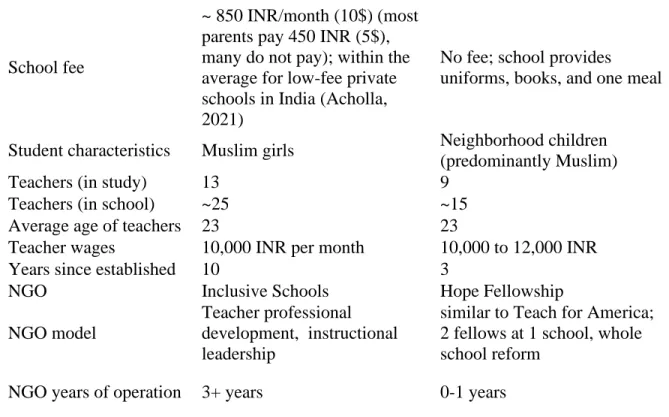
Table 4:Differences and similarities between the two school-NGO partnerships ... 158
vii
LIST OF FIGURES
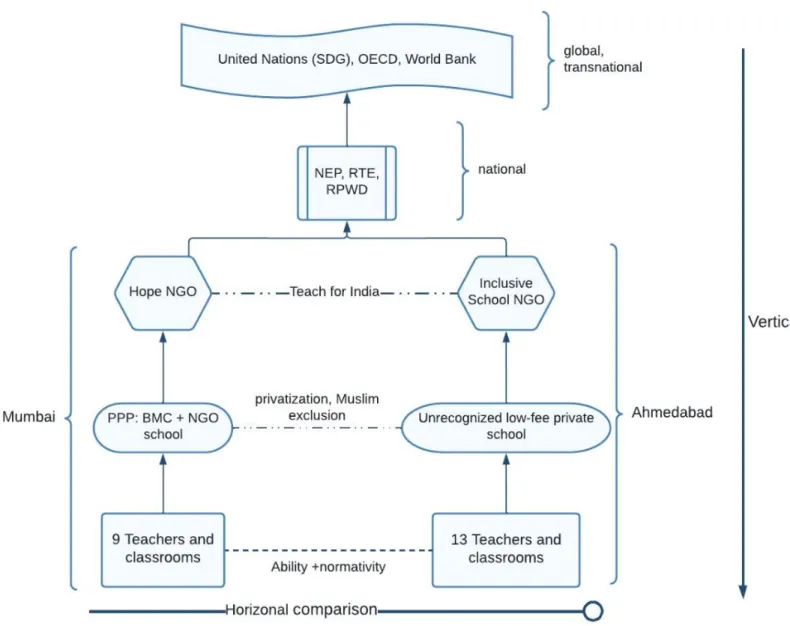
Figure 1: Representation of the comparative case study approach used in this study ... 43
1 CHAPTER 1
1 Introduction: It is about time
Inclusive education is often examined as a traveling theory, circulating internationally from first-generation, global North countries to countries in the global South, changing and evolving in its meaning (Artiles et al., 2011; Slee, 2008). This dissertation interrogates: what does inclusive education ‘do’ when it travels to schools through non-governmental organizations (NGOs)? How is inclusive education done in schools? What are the processes and actions
instituted for inclusive education to occur? How are these processes and actions legitimized?
How do teachers enact and interpret inclusion and disability within school-NGO partnerships for inclusive education? How do NGOs engage with, represent, and enact inclusive education? And what are the dilemmas, tensions, and contradictions experienced by teachers in enacting
inclusion? Through this dissertation, I focus on how teachers, schools, and NGOs enact inclusive education. The theory of policy enactment allows for the study of how local actors interpret and translate policies within particular contexts. The theory provides tools to examine how
contradictions within and across inclusive policies, and how material and discursive resources facilitate or inhibit certain responses to policies (Ball et al., 2011). In this dissertation, I argue that questions of enacting inclusive education benefit from a perspective of “doing time in the sociology of education” (Lingard & Thompson, 2017) by examining dis/ability, teaching, and reform from a temporal perspective.
Inclusive education examines the ways in which educational policies and practices construct and respond to difference. In this dissertation, I study the construction of and response to difference through a temporal lens. This dissertation contributes to the literature on inclusive
2
education by examining the ways in which time and temporality contribute to the exclusion of children and the enactment of inclusive practices by teachers in India. I engage with what
happens to inclusive education as it travels to schools in India through school-NGO partnerships, how teachers enact and interpret inclusion and disability within school-NGO partnerships for inclusive education, and how NGOs engage with, represent, and enact inclusive education through participant observations, interviews, and teacher workshops at two school-NGO sites in Mumbai and Ahmedabad.
Crucial to this dissertation are the ways in which temporal regimes of schools contribute to the construction of difference and the exclusion of children who do not conform to the temporal norms of the school (Edling, 2022; Saul, 2020). In this context of temporal exclusion and othering, I engage with how teachers, working in schools that partner with inclusive
education NGOs, enact inclusion in their classrooms. Within disability studies in education and critical disability studies perspectives, inclusive education is viewed as a means to challenge notions of achievement and ability that disadvantage and exclude children within educational systems. (Annamma & Morrison, 2018; Danforth & Naraian, 2015; Erevelles, 2000) Such perspectives emphasize vigilance towards exclusion, “to detect, understand and dismantle exclusion as it presents itself in education” (Slee, 2013, p. 11).
This dissertation focuses on teachers and how their practice and sense-making of inclusive education benefit from examining the construction of dis/ability in conjunction with time and temporality in schools, classrooms, and policies. I use the term dis/ability to denote the mutual constitution of disability and ability (Goodley, 2018). Teachers’ judgments and beliefs about student ability have important consequences for student success and inclusion in the classroom (Florian, 2009; Horn, 2007). Yet, while it is essential to examine the time pressures
3
teachers experience in enacting inclusive education, I argue that it is crucial to examine how exclusion occurs through the operations of time and temporality in schools and education policies.
Overall, I emphasize the need to engage with teachers' perspectives, stories, and
knowledge on inclusive education, such that teachers are “viewed as partners in the inclusive education agenda” (Singal, 2019, p. 837). Although classrooms are the primary site of inclusion for teachers, there are few narratives from teachers within inclusive education theory (Naraian, 2017). This perpetuates a gap between inclusive education theory and practice, as the
complexities and contradictions underlying inclusion as a practice are not considered (Naraian, 2017). In the Indian context, stories about teachers are stories of deficit and despair – teachers are absent (Kremer et al., 2005), unmotivated (Ramachandran et al., 2005), deprofessionalized (Kumar, 2011), and responsible for poor learning outcomes (Azam & Kingdon, 2014). By examining how teachers enact inclusive education within conflicting and complex theoretical and policy terrains in low-fee private and public-private partnership schools in India, this dissertation challenges the deficit perspectives towards teachers (Tuck & Yang, 2014).
The findings of this dissertation are located in multiple temporalities: the times occupied by children in schools and classrooms (Chapter 4), the times of the curriculum and the classroom traversed by teachers (Chapter 5), and the pasts, futures, and presents of the school and the NGO (Chapter 6). I demonstrate how children are identified as becoming “out of time” in classroom spaces through their relationships with the structures and expectations of classroom times and curriculum times (Chapter 4). Teachers are tasked with resolving complex dilemmas: do I ensure that all children achieve the age-grade level outcomes and complete the curriculum, or do I focus on the learning and development of individual children (Thompson & Cook, 2017)?
4
Do I teach in service of the curriculum, focusing on rote memorization and teaching to the test, the way things have always been, or do I incorporate children’s voices, needs, preferences, and activities, the demands of the future? Is inclusion about uniformity and taking everyone along together or is it about focusing on individuals characterized as having needs within normative systems? Is it achieving the times dictated by the curriculum or respecting the time and pace of individual children? I examine teachers' dilemmas of enacting inclusion through a temporal lens (Chapter 5). Further, I highlight ways in which teachers’ responses to the dilemma of difference are constructed in time through the notion of dhyāna (Chapter 5). The normative expectations of attention and parental responsibility, dhyāna, indicate to teachers who needs care, or dhyāna.
I examine the ways in which the school-NGO partnerships create and exacerbate the dilemma between individual time and curriculum time for teachers (Chapter 6). The NGOs work with teachers to implement forms of child-centered pedagogy in their classrooms, which requires teachers to develop practices that cater to the needs, interests, and capacities of individual
children in the classroom, to follow individual times. The pedagogical approaches and processes introduced by the NGO enable the identification of children with disabilities in the schools. I argue that the future orientation of the school-NGO partnership neglects teachers' past experiences and the present circumstances within which teachers enact inclusion.
In future research, there is a need to examine the kinds of futures teachers and schools are engaging with in building schools that seek to produce English-speaking, middle-class,
professional Muslim children in a neoliberal, majoritarian India. Further research is also required to investigate how religion interacts with other axes of differences in the enactment of inclusive education.
5
Thinking about the futures of inclusive education in the global South, researchers can consider how the colonial operations of time shape the enactment of inclusive education in colonized contexts (Banerjee, 2006; Hunfeld, 2022; Mills, 2020). Recognizing that North/South binaries are tenuous, I invoke the global South to refer to countries and contexts that share histories of colonization (Singal & Muthukrishna, 2014). The global South, also described as the majority world, is where a significant percentage of the disabled population lives (Grech, 2011).
Scholars of disability and inclusive education in the global South critique the transfer of theories and practices of inclusive education from the global North to the global South without
consideration for historical, cultural, material, and sociopolitical contexts in countries of the global South.
1.1 Inclusive education and the need for a temporal perspective
As a form of globalized policy (Kendall, 2007), inclusive education circulated from first- generation, global North countries to countries in the global South. Through its travels over space and time, inclusive education changed, evolved, and for some, became a vacant term that lost meaning (Slee, 2018). The literature on inclusive education comprises a diversity of
definitions and perspectives on the purpose and focus on inclusion: whom does it seek to include? Include into what? Include how? Include to what end?
Debates, dilemmas, and contradictions characterize the enactment of inclusive education.
The distinction between the medical and social models of disability is one such debate. The medical model views disability as a within-child pathology that requires cure while the social model views disability as a form of oppression. Positioned as viewpoints in tension, their co-
6
existence in educational systems contributes to dilemmas in practice (Naraian, 2019; Naraian &
Schlessinger, 2018). Another example of contradictions is the tension between assessments and inclusion (Hamre et al., 2018). Assessments, as sorting mechanisms, exist in contrast to the acceptance of diversity embedded within the idea of inclusion. Yet, educational systems
demand both. Scholars have questioned the application of theories, policies, and practices from the global North without consideration for historical, cultural, and material contexts in the global South (Kalyanpur, 2020; Muthukrishna & Engelbrecht, 2018; Walton, 2018a). Yet, questions of disability are central to the project of inclusive education (Schuelka et al., 2019).
Following Kafer (2013), I examine the dilemmas, debates, and contradictions associated with inclusive education to “anticipate presents and to imagine futures that include all of us” and to
“explore disability in time” (Kafer, 2013, p. 46).
Time is a socially constructed, political force that masquerades as neutral and objective.
The role of power in the structuring of time has consequences for justice and democratic participation (Cohen, 2018). Theories of international policy and inclusive education increasingly emphasize a spatial orientation (Waitoller & Annamma, 2017). As an
“apprenticeship in democracy” (Slee, 2013, p. 11) or rooted in democratic values, inclusive education is a means to ensure children with and without disabilities are in the same school and the same classroom. However, theorists of temporality aim to balance the spatial turn to consider the relationship between the spatial and the temporal. A key insight in this dissertation is that
“the sharing of space does not guarantee the sharing of time” (Sharma, 2014, p. 22).
The organization of time within educational systems has differential effects, such that those able to conform to the ‘normative temporal order’ are viewed as achieving (Edling, 2022;
Saul, 2020). That is, achievement is not a neutral or objective condition, but what is valued is
7
achievement within a pre-determined time. This ‘normative temporal order’ contributes to the creation of an embodied, temporal Other (Edling, 2022) such that schools and educational systems discriminate against students who do not conform temporally (Saul, 2020).
Teaching as a temporal experience requires teachers to bring together individual histories and futures in the present and the here and now (Adam, 1995; Roth, 2002). Further, the temporal order restricts student and teacher agency within schools and classrooms (Roth et al., 2008). The scholarship on time and education emphasizes temporality as crucial to understanding
intersectionality (Saul, 2020), exclusion (Edling, 2022; Thomas & Whitburn, 2019), and teaching (Adam, 1995, 2003; Decuypere & Vanden Broeck, 2020; Roth et al., 2008) as affect, materiality, and space (McLeod, 2017). By engaging with teacher narratives of enacting inclusive education in India, this dissertation aims to address how time and temporality interact with teachers’
understanding and practice of inclusive education. Following Whitburn and Thomas (2021b), I carry out a “critical analysis of the temporal politics of inclusive education” (2021b, p. 104).
1.2 Temporality, exclusion, and the construction of difference in classrooms
Schools categorize dis/ability through measurement, competition, and performance.
Within this context, disability is understood as a consequence of policy and institutional arrangements. This dissertation expands this work by demonstrating how temporal regimes operate as institutional arrangements underlying exclusion (Chapter 4). Schools exclude children who do not conform to the temporal norms (Edling, 2022; Saul, 2020). A key project of this dissertation is to “unravel the dominant representations of time” (Adam, 1995, p. 103) that characterize inclusive education. There is an assumption that all students progress towards a
8
uniform and unified timeline of progress (Edling, 2022; Saul, 2020). I argue that temporal exclusion – and the ways in which students become ‘out of time’ in the classroom – determines sites for intervention. I identify three ways in which schools and teachers construct children as
‘out of time’ – that is, how children are characterized as problems when they do not conform to the temporal norms of classrooms, schools, and policy.
Out-of-pace children, or those who drag, are characterized by their inability to keep pace with their peers in everyday tasks in the classroom. The ways in which achievement is tied to speed (Saul, 2020), being slow has dire consequences. The assumption of uniform time disadvantages children whose parents cannot provide out-of-school support to facilitate children’s learning (Saul, 2020).
The second way children become out of time is by becoming out of sync with the collective temporality of the classroom. Children are marked this way when they disrupt, defy, and disobey the norms and practices that constitute classroom times (Adam, 1995). Classroom time operates as a means to discipline students to behave in normative ways. Once out-of-sync children are identified, through their defiant and ‘unruly bodies’ (Erevelles, 2000) that do not follow classroom norms and habits that disrupt collective temporalities of the classroom, strategies are put in place to eliminate “temporal diversity.”
The third way children become out of time is by becoming ‘out of age.’ Children do not display appropriate age-grade-related behaviors or academic outcomes. There is an emphasis on future-oriented, developmental understandings of childhood. This focus on future ‘becoming’
precludes an uncertain ‘becoming’ that allows space for diverse bodies, abilities, and learners to emerge in the classroom. (Gabel, 2002; Goodley, 2007; Saul, 2020).
9
Thus, children are identified as deficient based on what is considered appropriate within the norms of curriculum and classroom time. Children existing outside or beyond normative time are marked as becoming out of time in three distinct but related ways: out of pace, out of sync, and out of age. I argue that in making kinds of people, ‘out of time’ becomes the site of doing inclusion. Schools surveil, regulate, and reform bodies considered outside of normative
experiences. Time disciplines teachers and students by controlling the sequence, pace, rhythm, and order of individuals, activities, and institutions (Saul, 2020).
1.3 Teacher dilemmas of enacting inclusion
Inclusive education requires teachers to “give meaning to the concept of inclusion”
(Black-Hawkins & Florian, 2012, p. 571) in the classroom. I explore how the construction of classroom times contributes to teacher dilemmas around enacting inclusion (Chapter 5). Time and temporality serve as a context for and influence teacher experiences and resolutions to the dilemma of difference. Dilemmas provide an important perspective to understanding how schools and teachers respond to contradictory demands within educational systems (Clark et al., 1999). The dilemma of difference is concerned with whether treating people differently
stigmatizes difference or whether ignoring difference undermines needs. It is important to consider the context within which the dilemma of difference becomes pertinent (Artiles, 1998).
Teachers wrestle with competing pressures of recognizing the diverse times that children operate in while ensuring collective times that guarantee equal participation and achievement. While time poverty is a key constraint to inclusive practice (Thomas & Whitburn, 2020), it is crucial to examine the temporal foundations of need and difference. I argue that creating classroom times,
10
that is, the joining of personal times, histories, and futures into the classroom present, serves as a key site for the dilemma of difference.
I identify two approaches to inclusion and highlight the ways in which teachers identify and address need – changing the temporally deviant through assimilation into rigid, normative classroom times or by focusing on the needs of those rendered temporally deviant. The first way emphasizes uniformity. In this version of inclusion, curriculum time is paramount. The role of the teacher is to ensure temporal uniformity. The second approach emphasizes individual pace and potential. The two approaches correspond to distinct temporal orientations: the former aligns with the pace of curriculum while the latter seeks to preserve the pace of the individual.
I find that teachers construct the normative order of the classroom in the relationships between curriculum time, classroom time, the teacher, and children. I explain this using the notion of dhyāna, a Hindi term used by teachers to describe their practices of enacting care and attention in classroom times. Teachers use dhyāna in three ways: (i) norms about attention, established by controlling children’s bodies in the classroom; (ii) standards of care expected from parents; and (iii) teachers’ actions to ensure children’s engagement and participation in the classroom. The three meanings of dhyāna constitute both the temporal foundations of
normativity in classrooms and caring relationships established in classroom times. The different meanings associated with dhyāna allow an examination of how local knowledge (Canagarajah, 2002) can encompass both the “myth of the normal child” (Baglieri et al., 2011) that dominates educational policies and practices and the possibilities of caring relationships that recognize diversity in classroom times (Thomas & Whitburn, 2020).
Further, I examine the relationship between the teachers and the NGO (Chapter 6). I highlight the limitations of the notion of teachers as agents of inclusion by emphasizing the
11
temporal aspects of education reforms (Thompson & Cook, 2017). I argue that NGOs fail to engage with teachers’ location in the “larger economy of temporal worth” (Sharma, 2014, p. 8).
It is important to note that I am not simply arguing for teachers to have more time or free time.
Instead, there is a need for “awareness of power relations as they play out in time” (Sharma, 2014, p. 4) and its consequences for the enactment of inclusion and social justice in schools.
A temporal perspective aids our understanding of the ways in which teachers respond to changes brought about by school-NGO partnerships for inclusive education. The two NGOs enter the schools with a particular vision of what inclusion is and should be and donors require NGOs to make projections about the future (Davidov & Nelson, 2016). Teachers across the two sites highlight a temporal distinction between teaching practices, between the pedagogy of teachers’ past and the pedagogy of the NGO’s future, and how teachers navigate the two in their present. Teacher actions for inclusive education represent how multiple temporalities: past, present, future, classroom time, curriculum time, calendar and clock times shape teacher practices for inclusive education (Adam, 1995; Leaton Gray, 2017; Roth, 2002). Overall, I highlight the importance of engaging with the temporal, material, and structural contexts within which teachers enact inclusion.
1.4 Conclusion
In this dissertation, I engage with the tensions embedded within theories and policies for inclusive education through the perspectives of time and teachers. I locate this investigation within school-NGO partnerships for inclusive education in India.
12
The education system in India is marked by exclusion and oppression along lines of caste, class, gender, religion, indigeneity, and dis/ability. This exclusion expresses itself in differential rates of school enrollment, classroom experiences of discrimination, omission from the curriculum, rates of school completion, and educational outcomes. Policy reforms such as the Right to Education Act 2009 and the Sarva Shiksha Abhiyan 2001 (Education for All Mission) have contributed towards universal elementary enrollment in India. Yet, historical inequities experienced by girls, Dalits1, Adivasis2, Muslims, and disabled children persist. The increased privatization of education, neoliberal education policies, and right-wing majoritarianism are likely to exacerbate educational exclusion for children from historically marginalized communities.
Further, NGOs have a considerable and growing networked influence on education policymaking and practice in India. While scholars have examined the role of NGOs within inclusive education and provisions for disabled children (Johnstone et al., 2019, 2022; Naraian &
Natarajan, 2013), the implications of school-NGO partnerships for inclusive education are less examined (Sleegers, 2019). The schools in the study are low-fee private schools and public- partnership schools. Not only do these two models of schooling represent the increasing privatization of education (Ashley, 2013; Ohara, 2012; Srivastava, 2010), but the perspectives and experiences of teachers from such schools are also currently missing from the literature. In Chapter 3, I elaborate on the importance of my field sites and my research questions.
To understand the operations of time and temporality within inclusive education, I draw on a variety of disciplinary and theoretical perspectives: sociology of education, critical
disability studies, disability studies in education, childhood studies, cultural studies, care theory,
1 Dalit refers to marginalized caste groups; included in the constitution as Scheduled Castes
2 Adivasi refers to tribal and indigenous communities; included in the constitution as Scheduled Tribes
13
inclusive education, and comparative education. In the next chapter, I explain how these perspectives contribute to addressing the central questions of this dissertation.
14 CHAPTER 2
2 Time, temporality, and inclusive education
Schools are spaces where the temporal structure of everyday life is perhaps most visible. The two schools where I conducted research have a routine, a daily rhythm. In Mumbai, the aapas, older women hired as school caretakers, sit out in the corridor to make sure the school bell is rung at the designated hour. Their work is paramount and demands perfection, to be aligned with the timetable that principals create, and the teachers and students beautifully decorate in their
notebooks. The work of the aapas was rarely perfect, and often the site of much frustration to the teachers. The timing of the school assembly determines who is late, who is scolded for their tardiness, and whose parents will be chastised for poor parenting. In Ahmedabad, the biometric scanner at the school doorway logs the timings of teachers’ ins and outs from the school.
Teachers in Ahmedabad also plan their lessons by the minute. Influenced by the Teach for India (TFI) fellows that have been stationed at the school for over 5 years, the school requires all teachers to create ‘minute-wise lesson plans’ causing some teachers to wonder what they should do when student questions derail their timed lesson. During online teaching of the pandemic times, the Zoom countdown timer popped up 10 minutes before each class ended. Classes would invariably end in the middle of a sentence at the end of the free 40-minute Zoom meeting.
At the same time, schools, as competitive institutions, are where ideas of dis/ability are contested, understood, constructed, performed, and acquired (Lundqvist 2019). Success and failure are categories identified in schools through the measurement of performance (Varenne &
McDermott, 1999). Failure, in particular, is a “dangerous category” – with failure comes the question of who is responsible for those identified as failures. Identified failures require action –
15
explanation, evaluation, and remediation when delays are noticed and observed (Varenne &
McDermott, 1999). A particular focus of this dissertation is examining how time and temporality feature in the enactment of inclusive education.
The literature on the social construction of dis/ability argues that ability and disability are not properties inherent to children’s minds and bodies but are constructed through and within classroom discourses (Lundqvist, 2019), teacher conversations (Horn, 2007), institutions, and cultures (Varenne and McDermott 1999; McDermott and Varenne 1995), circumscribed by the ideological foundations of individualism, Whiteness, and neoliberalism (Dudley-Marling 2004;
Sleeter 2010; Sleeter 1986; Leonardo and Broderick 2011; Sengupta-Irving 2021). This body of work implicitly acknowledges how temporal regimes shape the construction of ability.
In this chapter, I make these connections explicit to “unravel the dominant
representations of time” (Adam, 1999, p. 103). Explaining the tensions within the field of inclusive education, I highlight the need for a temporal perspective to inclusive education by connecting the literature on time and temporality in education and disability theory with research on the social construction of dis/ability. Lastly, I address the relevance of this work to examining inclusive education in India and the global South.
2.1 Inclusive education as a reform in tension
Inclusive education, as a set of theories and policy reforms developed in countries of the global North, traveled to the global South as an internationalized policy (Armstrong et al., 2010).
In countries of the global North, often described as first-generation countries of inclusive
education (Artiles et al., 2011; Kozleski et al., 2014), the reforms were established through social
16
movements against the institutionalization of disabled children. In the Global South, inclusive education arrived through the direct or indirect influence of international agencies and donor organizations. Sarkar, Mueller, and Forber-Pratt (2022) identified three challenges within global North theories of inclusive education that traveled to the global South: frictions between special and inclusive education, the tensions within the social models of disability, and the neoliberal challenges to social justice. These tensions and challenges contribute to ambiguities in the field of inclusive education about what inclusive education is, whom it seeks to include, and what does it seek to include children into? (Graham & Slee, 2008; Slee & Allan, 2001). Further, this travel is said to have “diluted, tamed, and domesticated” (Waitoller and Annamma, 2017, p. 8) the radical agenda of inclusive education to challenge normativity within educational systems.
Instead, inclusive education is now used as means to assimilate into normativity.
Inclusive education exists in a tenuous relationship with special education. Special education responds to difference through individualized interventions, while inclusive education challenges structures that marginalize and exclude children from education systems (Florian, 2019; Schuelka et al., 2019). Inclusive education critiques the emphasis on deficit-based, within- child explanations that target treatment and identification of disability through segregation (Naraian, 2016). Yet, policies and practices of inclusive education continue to be intertwined with special education such that inclusive education transformed into a "new iteration of special education" (Schuelka et al., 2019, p. xxxvii). For instance, special and inclusive education are tied together in the 1994 Salamanca Statement and the 1990 Jomtien Education for All
conference (Florian, 2019). Yet, special education is considered to be in tension with the social justice goals of inclusive education (Artiles et al., 2011; Schuelka et al., 2019). In the global North, this debate is rooted in questions of the over-representation of minoritized children in
17
special education settings, calling scholars to recognize disability, race, class, and gender as intersecting forms of difference (Annamma et al., 2013; Artiles, 1998). The debate between special and inclusive education led to the development of new theoretical foundations for inclusive education in the global North. Danforth and Naraian (2015) develop four transnational foundational principles for inclusive education: democracy, care, political consciousness, and situated agency. Siuty (2019) describes critical inclusion as a means to challenge ableism and the construction of normativity in schools and classrooms. Waitoller and colleagues (Waitoller &
Annamma, 2017; Waitoller & Artiles, 2013) draw on the work of Nancy Fraser to reorient inclusive education through social justice, understood as redistribution of access and
participation, recognition of difference in assessments, pedagogy, and curriculum, and increased representation by creating opportunities for historically marginalized groups.
Further, special education is located within the medical model of disability. The medical model emphasizes the assessment, identification, and treatment of within-child pathologies.
Inclusive education aligns itself with a social model of disability (Naraian, 2016), which views challenges experienced by disabled children in schools as a result of socially constructed barriers (Schuelka et al., 2019). However, as Sarkar, Mueller, and Forber-Pratt (2022) argue and I further demonstrate in this chapter, to theorize disability as an entirely medicalized individual problem or an entirely socially constructed “draws hard boundaries around disability itself; these
boundaries make it difficult for inclusive education as a field to theorize exclusion in a way that can address social justice” (p. 82).
Lastly, the tension between the values of standardization and performance management that underlie large-scale assessment and ranking regimes and the radical goals of inclusive education (Kozleski et al., 2014; Slee, 2013) demonstrates the impact of neoliberalism on
18
inclusion and social justice in the Global North. Neoliberal logics in education emphasize performance, standardization, competition, individual choice, and market-based reforms (Waitoller, 2020). There is an increasing influence of international policy actors on education policy and practice in India (Ball, 2016; Nambissan & Ball, 2010). NGOs and philanthropies are important actors in the education system (Subramanian, 2018) and the reduced role of the state in public education through neoliberal policy reforms delegated the responsibility of education policymaking and service provision to networked NGOs with considerable influence (Ball, 2016;
Srivastava, 2016). The influence of such organizations has furthered advocacy for market-based education policies (Nambissan & Ball, 2010).
The debates and tension around inclusive education translate into questions in the
classroom. Special education and inclusive education discourses circulate simultaneously within schools and policies, asking us to consider how teachers navigate the tensions between these approaches (Naraian & Schlessinger, 2017). Teachers navigate contradictory demands: must special and inclusive education co-exist to support disabled children (Florian, 2019) or are special education practices incompatible with structural social justice approaches (Schuelka et al., 2019)? Teachers are tasked with the responsibility of navigating these contradictory goals and values and practicing inclusion and social justice in the classroom (Done & Murphy, 2018).
In this dissertation, I examine how temporality is obfuscated in the spatial orientation or the spatial turn within inclusive education. The conceptualization of inclusive education focuses on access to space: for children with and without disabilities to be located in the same schools and classrooms, to challenge the spatial segregation of disability (Waitoller & Annamma, 2017).
In response to this spatial orientation, scholars in inclusive education have called for an explicit examination of spatial justice and educational exclusion, and the construction of normativity
19
(Beneke, 2021; Siuty, 2019; Waitoller & Annamma, 2017). That is, “foregrounding spatiality in inclusive education provides opportunities to reexamine the familiar to ignite new
understandings that can destabilize taken-for-granted assumptions about the role that space plays in the work around inclusive education” (Siuty, 2019, p. 1034). The imagination of inclusive education as an “apprenticeship in democracy” rests on the notion of a collective public sphere (Slee, 2013, p. 11). Yet, time and temporality shape access to the democratic public sphere (Cohen, 2018; Sharma, 2014). In the rest of this chapter, I examine how time and temporality are important to understanding inclusion and exclusion in educational systems.
2.2 Temporal exclusion and the question of inclusive education
The temporal structure of schools has differential impacts on students. Those who do not
conform come to constitute the Other (Edling, 2022). One way to understand how time acts as a differentiator between students is through temporal assumptions that underlie educational systems. Saul (2020) outlines four temporal assumptions that the dominant culture of schooling
“differentiate, order, and discriminate in ways that benefit some students over others” (p. 2). The four biases are neutrality (time is objective), uniformity (time is experienced by everyone in the same way), spatial (emphasizing space over time in understanding inclusion), and developmental (linear, pre-determined models of child development and progress). That is, differences in
schools are associated with temporal conformity, disciplining students who are out of sync with the dominant culture of time in schools.
Temporality as an aspect of intersectionality furthers how temporal biases preclude inclusion. On the whole, temporality constructs who is and is not considered normal within
20
school settings. Pillow (2015), focusing on “policy temporality”, highlights how certain bodies are marked as deficient or lacking based on what are considered developmentally and socially appropriate timelines. Writing about policies on teenage pregnancies within education in the United States, she draws on the notion of queer temporalities to highlight how policies seek to surveil, regulate, and reform bodies considered outside of normative experiences (Pillow, 2015).
Teacher judgments of students are associated with the temporalities of schooling. Edling (2022) implicates two factors in the othering of students through time. The first is the “cult of efficiency.” The focus on testing, achievement, measurement, and improvement “indirectly risks shaping teachers’ conceptualizations of time in relation to their students” (p. 89). Within
efficiency, the goal is to modify and discipline behavior to minimize costs and effort. The second is a focus on linear time – a unidirectional orientation to time. Within education, this manifests as
“progress towards pre-defined goals” (p. 91) that assume a certain uniformity: “people share the same timeline” and therefore are “same and progress in the same way” (p. 96). Edling (2022) calls on teachers to be aware of temporal differences that lead to the creation of the temporal embodied Other. Linear time and efficiency lead to time being constructed as a “universal commodity that needs to be managed” to save money and work in ways that “overlook the presence of the embodied other” (p. 98). There is no place for the Other in linear time, instead, they are constructed as disruptions that need to conform to uniform time.
Thus, the temporal structures of schooling construct normative ways of being that contribute to exclusion. Queer studies scholar Elizabeth Freeman (2010) describes this as chronormativity, that is, using time to “organize individual human bodies toward maximum productivity” (p. 3). Chrononormativity naturalizes certain trajectories and ways of being through institutional and cultural structures.
21
Given the power of temporal regimes to exclude certain bodies and privilege others and extensive research on the role of time and temporality in the social sciences, it is surprising that few scholars have engaged with how time is associated with the policies and practices of inclusive education. The limited research in this domain argues that “modern temporality”
(Thomas & Whitburn, 2020, p. 196) places constraints that are antithetical to the development of inclusive education. That is, teacher practices are shaped by requirements of compliance
(Thomas & Whitburn, 2020, 2019).
Time operates as a neutral, commonsense background to life. Yet, there is a need for greater deliberation on the ways in which linear, fixed time constructs learning in particular ways. The extensive time pressure within schools transforms inclusion into a burden, an additional task to be completed (Thomas & Whitburn, 2019). That is, teachers do not have the time to develop relationships with students. Further, audit and performance regimes require students to be labeled and identified by teachers. Overall, learning is then transformed into
“compartmentalised into sped up notions of demonstrated understanding” (Thomas & Whitburn, 2020, p. 206), which precludes any relational pedagogy. Inclusion is thus forgotten when the focus is on producing outcomes that do not consider the requisite time for learning.
The unquestioned operations of time within education contribute to the marginalization of certain students from education (Adam, 1999). Time disciplines teachers and students by controlling the sequence, pace, rhythm, and order of individuals, activities, and institutions.
Further, clock time produces temporal milestones that must be achieved by teachers and students. The construction of time as a commodity operates through policy mechanisms that associate funding and student achievement timelines. Once classified, achievement gaps require attention through identification, containment, or exclusion (Slee, 2018). The focus on efficiency
22
further promotes the classification of students and the assignment of time to particular activities or tasks signals what educational institutions consider valuable and valued (Whitburn & Thomas, 2021a).
Thus, through this “critical analysis of the temporal politics of inclusive education”
(Whitburn & Thomas, 2021b, p. 104), we can examine how exclusion is constructed as those unable to meet pre-determined temporal norms. Teachers cite lack of time as a reason to be unable to practice that support all learners in the classroom (Thomas & Whitburn, 2019).
Inclusion is then predicated on compliance with linear normative time and those who require additional time from teachers are excluded.
2.3 Time and temporality in education
Social life operates across multiple temporalities. There is time dictated by the clock and the calendar, and there is the time of the past and present and the future (Adam, 1995). Leaton Gray (2017) provides a helpful typology to understand how time relates to the structure of
schooling. There is clock time or measured time, but also biological or chronological time; social time, constituting decisions about the duration of a school term or the creation of weekly
timetables; time as a commodity and the varying experiences of speed; and differences in the allotted time to the curriculum. The experience of time varies for children and teachers, often based on characteristics such as class, race, ability, and gender (Leaton Gray, 2017). McLeod (2017) addresses how time organizes curriculum and pedagogy. She defines temporality as the
“messy moving relations between past, present, and future” (p. 13), arguing that the dominant orientation of education is towards the future. She introduces the notion of temporal regimes to
23
highlight how time is about power. Time regulates and controls movement and the pace and rhythm of activities. That is, how time is organized organizes, controls, and governs individuals.
Yasmin, a teacher in Mumbai, scolds her sixth graders to make sure they fully comprehend the gravity of their school-leaving examinations, four years from the present moment. A part of a lesson is dedicated to ensuring they understand how to take an exam –
“don’t waste your time copying the question! Write the question number in the margins and answer the question!” Time is a finite commodity that can be wasted – students learn this young.
They are learning this now to be prepared for the future. Time is a scarce commodity – students must learn to use time efficiently and expediently.
Clock time, that is, measured time is quantitative, decontextualized, and universalized (Adam, 1994, 1995). This clock time is dominant within Western education in how teaching, learning, and teacher pay are enacted. Clock time is tied to speed, efficiency, and flexibility – all lending to maximize economic profit. In E.P Thompson’s (1967) classic essay, clock time is described in contrast with task or event time. The former is associated with the advent of industrial capitalism, while the latter is associated with times of rural, agrarian societies. The control of clock time is thus considered central to the foundation of factories, and later, schools.
Clock time appears in the timetable, age-grade association of the curriculum, dates, and duration of assessments (Adam, 1995). It is decontextualized in that time for activities is determined without wiggle room for “individual and local differences, special circumstances, and personal preferences” (p. 106). As finite time, it requires efficient allocation. Time as a finite commodity and a medium of exchange – associated with relations of power.
Beyond clock time are the more “implicit temporalities of educational practice” (p.109).
The operations of ‘classroom times’ requires “the joining of personal times” to a “collective
24
temporality” (p.110). Classroom times are not only constructed by assigned clock time but also through norms, habits, and practices. These collective temporalities of classroom time require
“all participants to suspend their extended, multiple time-worlds” to “enter collectively, with the guidance of the teacher” to join personal times. (p. 110). Further, the classification of student ability is an expression of the past performance projected into the future in the present moment – expectation to perform based on a particular pace, accumulated over a measured duration of time. Drawing on the phenomenological aspects of time, Adam (1995) asserts that “teachers experience the constitutive power of the past and future permeation on a daily basis” (p.120).
That is, teachers merge and address their individual time worlds with those of their students and the curriculum to create a classroom culture. The past and the future permeate classroom time and how the past and the future appear in classroom time through record keeping and planning.
Further, temporal structures across different levels of the education system shape
temporalities within the classroom (Roth et al., 2008). Through a seven-year ethnographic study at a school site, Roth and colleagues (2008) highlight the temporal structures that “truncate the agency of teachers and students” (p.139). For instance, Thompson and Cook (2017) demonstrate how standardized testing and regulations in the Australian context create “a new temporal
politics” (p. 26). That is, teachers experience a feeling of running out of time or time poverty and a feeling of being out of rhythm vis a vis the expectations from them. Time politics in the era of reform is associated with the sense of time poverty within the existing operations of clock time, that is, the use of time as a disciplining mechanism, and the feeling of being out of sync with time in cultures of audit and performativity. Teachers struggle across two timelines, one wherein they value individual learning and unique development and the other where they are required to monitor progress through standardized testing over time. Time is then divided based on when
25
data is to be generated and collected. Thus, teachers are constantly held accountable for time – the control exercised on their teaching time and through the time they spend collecting data to monitor their work (Thompson and Cook, 2017).
2.4 The social construction of dis/ability
A key argument in this dissertation is to emphasize time and temporalities as a structure that contributes to educational exclusion. That is, time is an important aspect of the social construction of dis/ability. In this section, I provide an overview of the literature on the social construction of dis/ability.
Schools categorize dis/ability and this categorization is associated with the focus on measurement, competition, and performance. Dis/ability categorization is carried out in classroom discourses, teacher conversations, and reflects broader cultural and ideological arrangements such as individualism, whiteness, and neoliberalism. Overall, culture plays a crucial role in categorization. Deficit, difference, or dis/ability is not the property of individuals or resides within children, but is acquired through relationships, interactions, and institutions.
Thus, the culture as disability approach argues that disability is a consequence of certain
institutional arrangements such that “without schools, no learning disabilities” (McDermott and Varenne 1995, p. 338) This dissertation rests on these arguments, furthering our understanding of how temporal regimes function as crucial institutional arrangements underlying inclusion and exclusion. The scholarship on the social construction of dis/ability includes several implicit references to temporality. Examining the construction of learning disabilities, Dudley-Marling (2004) references age-grade synchronization and the pace of learning,
26
Such practices as tracking and ability grouping, age-graded instruction, changing teachers every year in elementary schools, and the evaluation of student performance based
largely on assessing differential rates of learning—with the underlying assumption that school achievement distributes more or less normally—are neither natural nor normal. (p.
484)
Further, McDermott (1993) asserts how competition and measurement are central to the
categorization of student success and failure, “to the point that the rate of learning rather than the learning is the total measure of the learner” (McDermott, 1993, p. 272). Across these studies, time and the temporal structure of schooling are invoked – age-grade instruction, annual teacher changes, and rates of learning – all underlie a notion of the temporal life of schooling that is taken for granted. Making the operations of time in school explicit, Adam (2003) writes, “we know that not all children learn at the same pace. Yet, age-based classes, educational attainment targets and assessments apply the invariable norm as measure.” (p. 63)
There is extensive research that examines the ways in which children acquire
smartness/not-so-smartness in schools and classrooms. The work of Varenne and McDermott (2006; 1993; 1995; 1999) is considered a landmark in developing a new “science of people” that challenges individual or within-child explanations of learning and ability and emphasizes how children acquire certain labels within institutions and interactions (Lundqvist, 2019; Sengupta- Irving, 2021). Schools are sites of contestation around smartness and ability. Lundqvist (2019) through long-term ethnographic research offers how positions of success and failure are acquired in comparison with or in relation to peers within institutional notions of smartness. Drawing on positioning theory, Sengupta-Irving (2021) examines how children come to occupy success and failure within discourses of race, class, and gender outside the classroom. In particular, she
27
argues that students are constructed as deficient or undesirable by demonstrating the operations of neoliberal logics in schools and classrooms. By neoliberal logics, she refers to the impetus on individuals to maximize their value– a focus on productivity and future value in developing oneself for the labor market.
Schools ascribe smartness to some and position other students as inferior (Leonardo &
Broderick, 2011). That is, the construction of smartness in school “requires its dialectical
opposite and cannot exist without the cursed population of so-called low intellect” (p. 2222). As Lundqvist (2019) demonstrates, when teachers categorize or position one child in the classroom, they position everyone else. Positions assigned to individual children are dynamic and shifting while the categories are interdependent. That is, the dialectics of smart/not-so-smart,
ability/disability, educable/ineducable, or desirable/undesirable must be discussed and
understood together. Understanding and exposing these dialectics is crucial to enacting inclusive education, which seeks to disentangle the “myth of the normal child” (Baglieri et al., 2011) that underlies these categorizations and labels of ability in schools and classrooms.
Work linking disability studies, critical race theory, and whiteness studies (Annamma et al., 2013; Leonardo & Broderick, 2011), examines the ideological underpinnings of smartness as cultural capital or a form of property, constructed to uphold white supremacy. As Leonardo and Broderick (2011) argue, smartness is an ideology that supports the construction of normativity in schools. Smartness is not rooted in biology or cognition but is an identity position that has
“material consequences” for access to support and cultural capital in schools. Similarly, a key tenet of DisCrit (Annamma et al., 2013) emphasizes the “social constructions of race and ability”
(p. 57) emphasizing how acquiring the label “sets one outside of the western cultural norms” (p.
57). The association between race and disability is tied to the history of the creation of learning
28
disabilities as a special education category in the United States in the 1960s. A common thread across this research is that such categorizations are not facts of individual differences or biologically determined, but sociocultural and political constructions.
Varenne and McDermott (1995; 1999) describe learning disabilities as a cultural problem. That is, there is “there is no such thing as learning disability, only a social practice of displaying, noticing, documenting, remediating, and explaining it” (p. 272). Disability as a cultural fact or disability as culture asks, “when does a physical difference count, under what conditions and in what ways, and for what reasons?” (p. 138) That is, body/mind differences do not inherently constitute “problems” but are constructed to be problems within certain
institutional and interactional arrangements. These arrangements could be at the level of the classroom, where success or failure might be acquired based on children’s exchange of the
“cultural currency” (39) of the classroom, and as a consequence of testing, competition, and measurement regimes aiming to ascertain causes of school failure. The culture as disability approach focuses on the contexts within which impairments acquire relevance. This is distinguished from prevailing approaches to school failure, such as the culture as poverty
argument (some cultures are deficient) or culture as difference models (cultures are different, and schools are tasked with helping children acquire dominant cultures).
‘Culture as disability’ distinguishes between the physicality of impairment and the exclusion that results from institutional and political arrangements that exclude and isolate to create disability. In this way, learning disabilities are not an anomaly of development, but a category in a culture that acquires children because of the organization of schools. The construction of learning disabilities is ascribed to a cultural explanation of school failure that focuses on the child (Varenne & McDermott, 1999). Dudley-Marling (2004) argues that this
29
constitutes an “ideology of individualism” prevalent in American societies, “an institution that typically equates learning with the mastery of skills, learning disability will be defined in terms of skill deficits. In an institution that valorizes the individual, we can also expect that learning disability will be situated in the heads of individual students” (p. 484). Dudley-Marling (2004) provides a social constructivist lens that does not view problems within individuals, either the teacher or the student. Instead, individuals are in relationship with problems, encouraging teachers to examine contexts and structures that lead to challenges in learning.
Sleeter (1986, 2010) demonstrates how learning disabilities came to be a category during Cold War education reform efforts, focused on establishing international dominance of the United States economy. Five categories of school failure were constructed – slow learners, mentally retarded, emotionally disturbed, culturally deprived, and learning disabled. The first two categories were determined based on IQ levels. The categories of emotionally disturbed and culturally deprived largely included poor, Black, and Brown families, considered to provide deficient environments for their children. Sleeter (1986, 2010) argues that the category of learning disability was produced to protect white middle-class families from “the stigma of failure” (Sleeter, 1986, p. 46) – this category was developed through the advocacy of parents – their children did not fit in definitions of intellectual disability yet required a special education category to access services to help with school failure. School categorizations of students have ideological underpinnings of the purpose of schooling in society, and what constitutes normal (Sleeter 2010). The “political purpose” for learning disabilities as a category to exist is to protect whiteness: “white middle-class students should not be failing…or suffer consequences of school failure” (p. 22)
30
Similarly, in the context of the United Kingdom, Tomlinson (2015) addresses how class and race interact with access to special education services and labels. Although learning
disability labels have expanded beyond white middle-class groups since the 1980s, middle-class parents are more likely to demand their children have access to special education services.
Further, she argues that neoliberal conditions that promote competition between schools and individuals bolster the special educational needs (SEN) industry as a means to manage the population of students labeled as low achieving. This is particularly true for schools serving working class and poor communities.
A crucial question is how these categorizations influence teacher actions in the classroom. Examining teacher conversations across two schools in the United States, Horn (2007) argues that teacher categorization of students relates to their understanding of their discipline and their teaching practices. She examines these conversational category systems in the context of the mismatch problem, a dilemma described as whether teachers teach to the rigor of the curriculum or the level of the student. Horn (2007) argues that these category systems play a role in addressing everyday problems of enacting the curriculum. If teachers understand
success and failure based on variations in innate ability, it restricts teacher action. On the other hand, if teachers understand the discipline and their role in different ways, teachers can transform classroom discourses around ability and status to allow for those perceived as having low status to contribute to the classroom. Horn (2007) argues that these category systems, of fast kids, slow kids, lazy kids, and so forth become embedded within the school through the curriculum and classroom practices.
Most of the literature discussed so far is located in the United States, examining how classroom-level discourses, teacher conversational category systems, and ideological systems
31
contribute to the categorization of ability in schools and classrooms. Beyond the United States, Raveaud (2005) demonstrates how the construction of students and responses to individual differences varies across national contexts. National contexts imply both historical conditions within nation-states as well as cultural contexts associated with those historical conditions. The comparison of the social construction of students between France and England indicates how historical, cultural, and political differences can lead teachers to exhibit different constructions of and responses to ability differences in the classroom.
Teachers in England focus on the learning of individual children and the uniqueness of each child’s characteristics and needs. Thus, the teachers seek to develop each child’s learning potential, varying tasks by ability grouping as learning is considered a task to be accomplished by individuals. This is perhaps not different from Dudley-Marling's (2004) observation of the
“ideology of individualism”, supporting comparisons Tomlinson (2015) draws between the United States and the United Kingdom in the construction of learning disabilities as a category in highly individualized, competitive education systems. On the other hand, Raveaud (2005)
observes that teachers in France view learning as a social activity, such that their goals were to ensure that all children had equal access to the same classroom experiences. Thus, teachers did not differentiate tasks – all children were expected to participate, but varied the means of learning, including providing extra time and support. Unlike English teachers, who practiced ability grouping and streaming to protect the self-esteem needs of each child, teachers in France did not want to engage in labeling or stigmatizing students by assigning categories of difference.
This is not to suggest that one system is superior to the other. Through children’s testimonies and classroom observations, Raveaud (2005) highlights the shortcomings of both approaches: the English approach reinforces inequalities while the French system disregards
32
individual needs. However, this provides support to the ‘culture as disability’ argument -
different institutional arrangements enable or disable individuals in particular ways (McDermott
& Varenne, 1995). Below, I highlight the limitations of this approach to understanding the social construction of dis/ability.
2.5 Disability theory and temporal regimes
Through this dissertation, I seek to provide “alternative visions and approaches” (Adam, 1995, p. 199) to the prevailing constructions of time and dis/ability. I trouble the body/society distinction within the social construction of dis/ability literature. As demonstrated above, the culture as disability approach (McDermott and Varenne 1995) focuses on the contexts within which impairments acquire relevance. That is, body/mind differences become problems within specific institutional and interactional arrangements. The distinction between the body and world or impairment and disability is derived from the original social model of disability. I draw on critiques of the social model, from Southern theory (Connell, 2011; Meekosha, 2011) and disability studies (Kafer, 2013; Siebers, 2008). In particular, Kafer’s (2013) feminist disability studies approach to crip time serves as the foundation to provide an alternative vision of time and dis/ability within schools, classrooms, and policy (see Chapter 7).
The notion of culture as disability rests on a strong social model view of disability (Shakespeare & Watson, 2002). That is, it relies on a strict division between biology and society – impairments are not viewed as relevant in so far as they are constructed to be relevant by culture. The strong social model eschews individual and medical models of disability, arguing that disability is a result of societal oppression.
33
The strong social model has been critiqued widely, including by the early scholars of the theory (Shakespeare & Watson, 2002). The social model ignores the role that impairments and bodies play in the everyday experiences of disabled people. Denying the role of the body creates a strong binary between bodies and society. Connell (2011) argues that the distinction between the medical and social model of disability rests on a false distinction between the body and society and therefore between impairment and disability. Instead, they put forth the idea of social embodiment, which explores how bodies operate in social dynamics (disability) and social dynamics are enacted onto bodies (impairment). The binary distinction between disability and impairment views disability as a social or political concept, while impairment is viewed as a bodily, medical, or natural issue. This binary ignores the production of impairment through state and geopolitical violence, which Soldatic (2013) refers to as the “bio-politics of geopolitical power" (p. 747). That is, both bodies and societies are social (Kafer, 2013; Shakespeare &
Watson, 2002)
Further, ignoring bodies neglects how disability can be a site of situated knowledge located within embodiment. That is, ‘disability as culture’ sits in tension with disability culture, which can be understood as “a set of artifacts, beliefs, [and] expressions created by disabled people ourselves to describe our own life experiences.” (Brown, 2002, p. 50). By disability culture, I allude to disability pride and disability identity – which imply forms of solidarity and identification between disabled people (Putnam, 2005) and situated, embodied knowledge that allows for navigating the social world (Siebers, 2008). Disability pride and identity are further associated with an engagement with and investment in disabled futures (Kafer, 2013). To counter this separation between bodies and societies, Siebers (2008) proposes a theory of complex
embodiment, which values disability as an aspect of human diversity. That is, the lived
34
experiences of disabled people are associated with both, the power of culture to disable
(McDermott and Varenne 1995) and the conditions of the body, such as pain, neurodivergence, and aging.
Instead of engaging with the dichotomy between bodies and society, it may be more generative to understand ‘culture as disability’ through the ideology of ability (Siebers, 2008).
The ideology of ability refers to a “preference for able-bodiedness” (p. 8) that contributes to disability exclusion by casting ways of being outside boundaries of ability, “the lesser the ability, the lesser the human being” (p.10). The ideology of ability can be understood in terms of
compulsory able-bodiedness (McRuer, 2006) or ableism, which refers to “a network of beliefs, processes, and practices that produces a particular kind of self and body (the corporeal standard) that is projected as the perfect, species-typical, and therefore essential and fully human.
Disability then is cast as a diminished state of being human” (Campbell, 2009, p. 5).
Overall, disability theorists are likely to agree with the notion of culture as disability to emphasize how societal structures exclude disabled people. Further, there is agreement that disability is not a medical or individual problem that requires cure or remediation, but instead, is
“experienced in and through relationships. It does not occur in isolation.” (Kafer, 2013, p. 8) The disagreement I am trying to highlight is the crucial role that embodiment plays in the lived experiences of disabled people and the construction of disability. That is, we cannot ignore embodiment in understanding how cultures enable or disable individuals.
Disability theory, in taking embodiment seriously, further helps us appreciate how the pace and rhythm of “the body are inseparable from human being, from well-being and from everyday social life” (Adam 1995, p. 77). The notion of crip time is particularly helpful in disrupting “normative understandings” of time and developmental trajectories (Ljuslinder et al.,
35
2020). Crip temporalities refer to “the way disability disrupts normative understandings of time”
(Ljuslinder et al., 2020, p. 35) questioning the rigid capitalist temporalities that emphasize normative notions of productivity (Samuels, 2017; Samuels & Freeman, 2021). Crip time encapsulates both bodies and societies – crip time can refer to the extra time needed to perform tasks, both as a result of bodily pace and as a result of barriers to accessing the social world.
Iqbal, a fifth grader with a mobility impairment in Mumbai, missed fifteen minutes of
instructional time every day. His teachers and his parents decided he would leave school earlier than his peers, not only because it took him longer to walk down the stairs to exit the school but also because they were concerned for his safety when excited and excitable students ran down the corridors at home time. Iqbal’s loss of instructional time is associated with the pace of his body, the inaccessibility of school infrastructure, and the lack of imagination on part of adults to determine ways of ensuring equitable participation for Iqbal (Kafer, 2013).
2.6 Time and inclusive education in the global South
The literature on time I have examined thus far is drawn from countries of the global North. The dominance of clock time is associated with Western, modern, industrial societies (Adam, 1995). Across disciplines o