Roberts, for his great mentorship during my graduate career here at Caltech. They have provided very valuable help along the way which has kept me on track in pursuit of my degree. I have been fortunate to have worked with a number of fantastic colleagues in Roberts' group.
I would also like to thank our secretary, Margot Hoyt, for her support during my time at Caltech. My five years at Caltech were very enjoyable, all because of the friendships I had with many friends, including Jessica Mao, Amanda Cashin, Christie Morrill, and many others. I am so blessed to have the gifts of my life, my lovely daughters, Amy and Jennifer, who have brought so much joy.
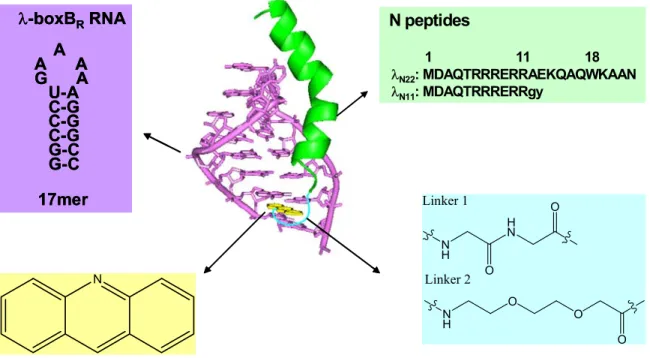
We designed and synthesized a series of peptide-acridine conjugates based on the principle of modular design to target RNA structures. Some of the peptide-acridine conjugates have significantly improved RNA binding affinity and specificity relative to the peptide alone.
Design of Acridine-N Peptide Conjugates with
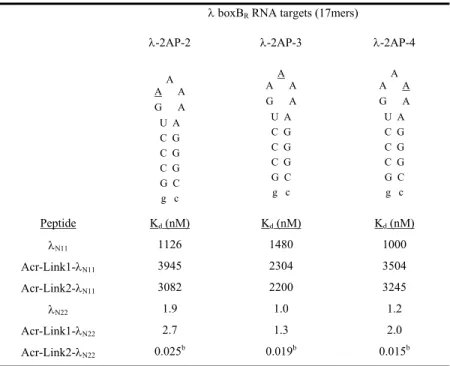
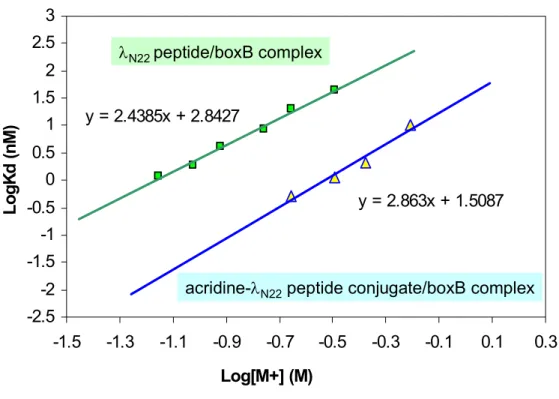
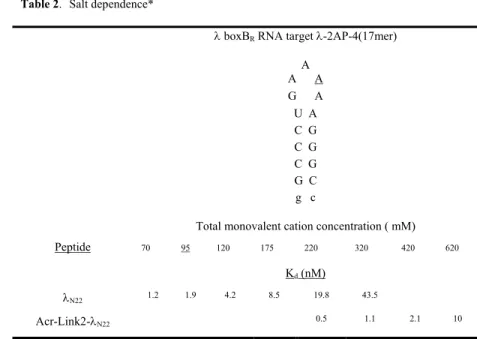
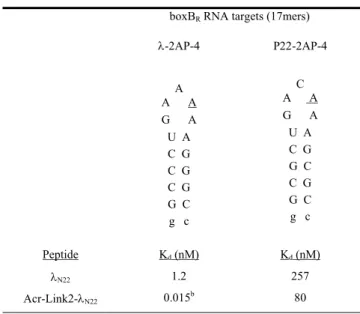
To do this, we designed and synthesized a series of peptide-acridine conjugates using parts of the N RNA-binding domain (11 and 22 residue peptide segments). We hypothesized that in the acridine peptide conjugate-RNA complex, the λN peptide would bind with high affinity to the major groove of the boxB RNA with the same structure as in the wild-type complex. Dissociation constants (Kd) were determined by monitoring the change in fluorescence of 2-aminopurine (2AP) incorporated at variable positions in the loops of the RNA hairpins.
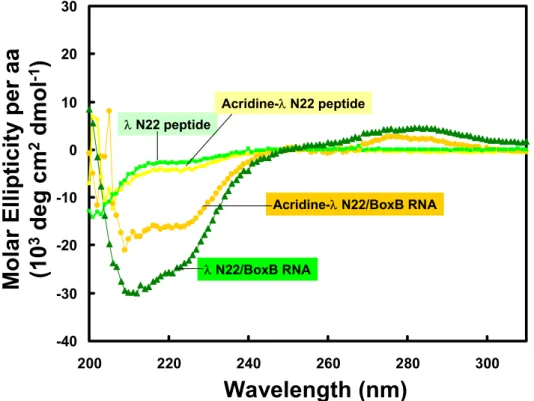
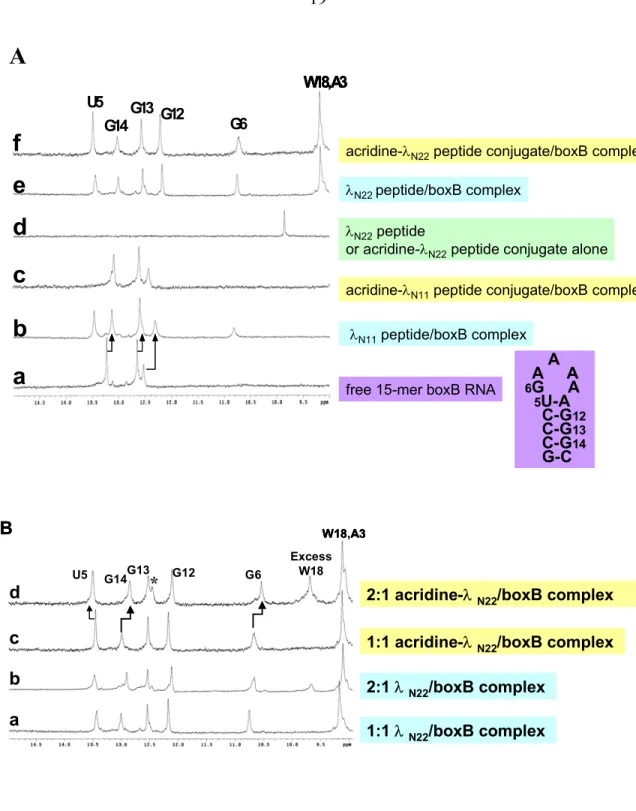
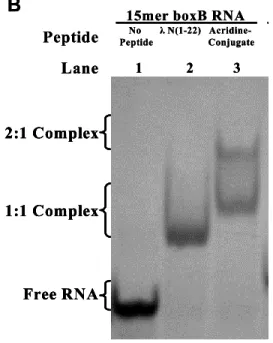
The different spectra of the two complexes indicate that both peptides fold into α-helices when bound to RNA. NMR spectra were collected to investigate the binding mode between the acridine-peptide conjugate and boxB RNA and compared with that of free peptide and RNA (Figure 4). Comparison of the spectra for the 1:1 and 2:1 complexes of the WT peptide and the acridine-peptide conjugate revealed interesting discrepancies (Figure 4B).
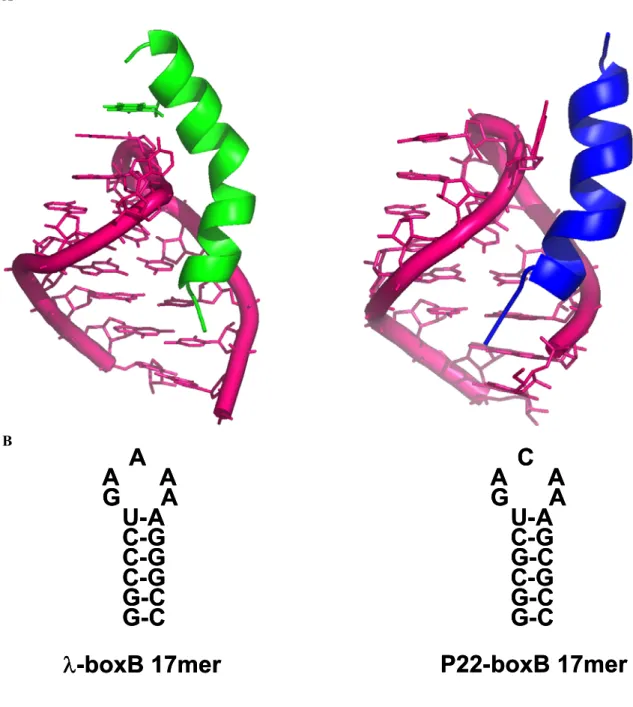
The specific binding peptide module of the full-length acridine-peptide conjugate has much higher affinity for λboxB RNA, the peptide moiety retains all native contacts with the RNA (Figure 4A), and the acridine moiety can be delivered specific to the target country. Recognition of four Watson-Crick base pairs in the minor groove of DNA by synthetic ligands. NMR structure of the bacteriophage lambda/boxB RNA N-peptide complex: recognition of a GNRA fold by an arginine-rich motif.
Crystal structure of the topoisomerase II poison 9-amino-[N-(2-dimethylamino)ethyl]acridine-4-carboxamide bound to the DNA hexanucleotide d(CGTACG)2.
Creating Synthetic “Blanks” in the Genetic Code
The UAG stop codon is often referred to as a "blank" in the genetic code because it can be suppressed by an appropriate tRNA. We would like to eliminate the activity of specifically chosen aminoacyl-tRNA synthetase (aaRS), thus creating our own blanks in the codes. Several unnatural amino acids have been incorporated into dipeptides through the use of chemically misacylated tRNAs in the . aa aa aa. aa aa. aa aaaa aaaa aaaaaaaa aaaa. aa.
The UAG stop codon is often referred to as a "blank" in the genetic code because it can be suppressed by an appropriate suppressor tRNA. We would like to create our own loopholes in the code by eliminating the activities of certain aaRS as we choose. Tricine-SDS-PAGE analysis of translation reactions of [35S]Met-protein in the presence of 1 µM aminoacyl-sulfamides.
Presumably, the larger the amino acid in the template, the easier it is to inhibit translation by shutting down aminoacyl tRNA synthetase activity. In the presence of biocytin-tRNA, globin translation was restored to approximately 40% relative to no drug translation, depending on which biocytin-tRNAs were added (lanes 4-6). Restoration of globin translation by biocytin-tRNA variant THG73 containing the anticodon CAC, AAC, or GAC in the presence of the inhibitor Val-sulfamide: lane 1, no template; lane 2, depth only; lane 3, 1 µM val-sulfamide; lanes 4-6, biocytin-tRNA-CAC, GAC or AAC were added individually.
As shown in Figure 9, the degree of biocytin incorporation in the presence of inhibitor (lanes 6 and 7) is higher than in the absence of inhibitor (lanes 4 and 5). This suggests that the presence of the inhibitor increases the incorporation of unnatural amino acids. Globin Translation Restoration assayed by Western blot in the presence and absence of inhibitor.
This also showed that in the presence of biocytin tRNAs, globin translation was restored to approximately 35-40% compared to no drug translation. We further demonstrated the restoration of globin translation by biocytin tRNAs encoding valine in the presence of Val sulfamide inhibitor. Here, the specific biocytin uptake was examined by Western blot, and the biocytin uptake level in the presence of an inhibitor is higher than that in the absence of an inhibitor.
In this work, we have shown that we can create and reprogram synthetic "blanks" in the genetic code. Tricine-sodium dodecyl sulfate-polyacrylamide gel electrophoresis for the separation of proteins in the range of 1 to 100 kDa.

Probing Flexibility of Protein Synthesis In Vitro by the
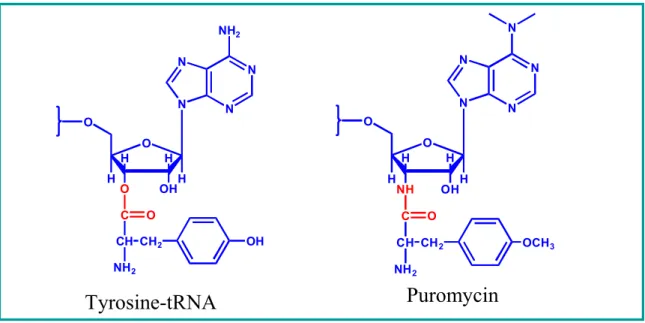
We constructed a series of puromycin analogs with natural and unnatural amino acid side chains to systematically test the effects of side chain characteristics of amino acid residues on the activity of puromycin. Both the IC50 values and the carboxypeptidase Y (CPY)-resistant results lead us to the conclusion that all of the compounds we synthesized both inhibit translation and participate in the formation of ribosome-mediated peptide bonds. Puromycin has played an important role in our understanding of ribosome and protein synthesis.
Here, we have used a series of synthetic puromycin analogs with a variety of α-amino acid moieties in both L- and D-configurations, and β-amino acids, to measure their activity in an intact eukaryotic translation system. We have synthesized a series of puromycin derivatives ( Figure 3 ) that differ in 1) amino acid moiety, 2) amino acid stereochemistry, and 3) number of carbon units in the amino acid backbone. The D-amino acid variant (2b) shows significantly reduced activity (IC50 = 2400 µM) with ~9-fold reduced activity compared to D-puromycin (1b) and is 2400-fold less potent than the L-isomer.
Compared to the naturally occurring L-puromycin (1.8 µM), the other analogs we constructed, including Methionine (Met), Leucine (Leu), NorLeucine (Nle), Lysine (Lys), Biocytin and Valine ( Val), Alanine ( Ala), are all less potent as inhibitors of protein synthesis (Table 1), but they show an interesting trend. This shows that the ribosome may not distinguish between L and D configurations for charged amino acid analogs. The IC50 values for the puromycin analogue with unnatural amino acid L-Nle and D-Nle are 61 µM and 937 µM, respectively.
This allows us to conclude that the more hydrophobic the amino acid moiety, the more different the potency of the D- and L-puromycin analogue, consistent with our previous observation that a larger hydrophobic aromatic side chain is a key element of ribosome discrimination. The production of truncated protein fragments in the presence of each puromycin derivative, previously shown to be the result of puromycin attachment to globin, together with the CPY resistance results lead us to conclude that all of the compounds we synthesized both inhibit translation and participate in the ribosome. -mediated peptide bond formation. To systematically test the effects of the size chain characteristics of an amino acid group on the activity of puromycin, we constructed a series of puromycin analogs with natural and unnatural amino acid side chains.
Within the L amino acid series (1a, 2a, and 3a), a marked difference is also seen based on side chain identity alone. In the series of amino acids L-, 4-methylphenylalanine and natural puromycin are the best, followed by long aliphatic amino acids (Met, Nle, Leu). Our approach allows us to examine ribosome activity directly in a physiologically complete protein synthesis system.
Preparation of misacylated aminoacyl transfer RNA Phes useful as probes of the ribosomal acceptor site. An experimental approach to evaluate the role of backbone interactions in proteins using unnatural amino acid mutagenesis.
Total synthesis of Hydroxymethylacylfulvene
A simple synthetic method to rapidly construct the skeleton of HMAF and its analogues starting from 2-(3-methoxyphenyl)ethanol is demonstrated. Over the past 10 years, extensive preclinical studies have been conducted on HMAF and related fulvenes, leading to phase I human clinical trials, which began in December 1995. The biologically active natural products will have a profound effect on the field of medicine in the 21st century.
Chemical synthesis can produce these compounds in the mass quantities needed for intensive research and therapy. Several syntheses of structurally related compounds have appeared in the chemical literature, 10-13 but these syntheses are not suitable for large-scale production. A retrosynthetic analysis of the total synthesis of Hydroxymethylacylfulvene 1 (HMAF, also MGI 114) is illustrated in Scheme 2.
Starting from 2-(3-methoxyphenyl)ethanol, our strategy should lead to an efficient and versatile synthesis of HMAF and provide access to several derivatives of these products in sufficient quantities for further biological testing. The key features of this synthesis are: (1) Nazar reaction to form the bicyclic system Enantioselective aromatic oxidation chemistry to accommodate the free hydroxy at the chiral center of the intermediates (11); (3) Tandem oxidation/cyclopropanation in the final step for efficient recovery of HMAF. Starting from (3-methoxy)-2-phenylethanol, compound (3) was synthesized as described in the literature.15 Two methyl groups were introduced into the aromatic ring by Friedel-Crafts alkylation followed by LAH or Li/NH3 reduction (Scheme 3).
After benzyl protection of the hydroxyl group in 3-methoxy-2,6-dimethyl phenylethanol (3), selective α-bromination was achieved using NBS and silica gel. Although HMAF and related molecules are known to have biological activity, the mechanisms by which they act remain to be further understood. The development of an efficient total synthesis of HMAF and its analogs would allow the production of large quantities of each and thus enable advanced biological testing of these molecules.
Efficacy of HMAF (MGI-114) in the MV522 xenograft model of metastatic lung carcinoma refractory to traditional anticancer agents. A brief synthesis of the potent antitumor agent (+/-)-hydroxymethylacylfulvene using an allenic cycloaddition of the Pauson-Khand type. Synthesis of tRNA synthetase inhibitors and incorporation of unnatural amino acid residues using chemically aminoacylated tRNAs that recognize specific codons.