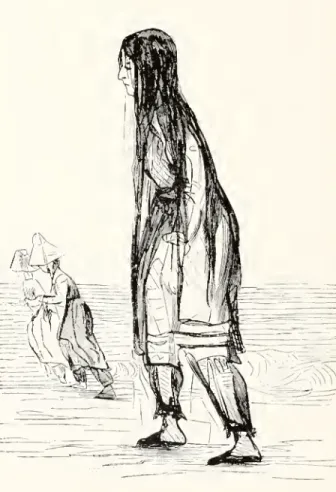
One of the earliest sources showing an appreciation for mineral water for bathing in the new world is. 34; '' In place of the changing rooms available in the floating baths, special facilities are often provided.
SWIMMING
Thus, with changing economic and technological factors, bathing transformed from a medical treatment for the leisure class to a recreation enjoyed by a large section of the population. Bennet's publication requires special mention not only because of the basic value of the information, but because of the extraordinary title (i.e., The Art of Swimming, augmented by diagrams from which both groups Aiay learn .. to swim and to swim in the water: and the Rules for all kinds oj bathing in the presentation of health and the cure of diseases, with the management of diet from infancy to old age, and a good remedy against sea-sickness). We have already noted in an earlier discussion that the bathhouses at Berkeley Springs in the 1850s offered a swimming bath for men but no similar facilities for women.
Also at certain seaside resorts in the same period, a special time was set for men to practice the art of swimming without clothing, but. In response to the possible objection that the teaching facilities were not always available, the writer asserted that in addition to the coast there were rivers, lakes and ponds as well as swimming. As part of the health moment mentioned above, there was a growing concern about personal cleansing.
12 BULLETIN 2.5U: CONTRIBUTIONS FROM THE MUSEUM OF HISTORY .AND TECHNOLOGY
Several books instructing men how toswim were brought into the United States in the early 19th century, and some were republished here, but the. The increasing prosperity of the last three decades of the 19th century, which enabled the widespread popularity of summer excursions, encouraged swimming as an individual pastime as well as a growing spectator sport. The most notable of these were the development of the indoor pool and the introduction of crawling in the United States.
According to a 1924 Delineator magazine article, rarely was a swim meet held anywhere in the country without women's events. II :45 in the morning; if you did, you risked being taken for a maid or valet. The restrictive attitudes that defined women's proper behavior in the water before the 1920s were one.
COSTUME IN THE UNITED ST.ATES 13
By the 1880s they were so popular that bath time was scheduled to allow many sets of bathers to enjoy the water. At Palm Beach, however, one of the few remaining bastions of "high society" dictated an anxiom of fashion that a lady-gentleman did not go to the water before. As previously stated, swimming was practiced by the Middle Ages as a useful skill for men.
Finally, at the end of the 19th century, swimming had also achieved the status of a competitive sport, but only for men. Thus, as more liberal attitudes became accepted and the original concept of the 'weaker sex' changed, women gradually achieved social acceptance of their full participation in aquatic life. To give a clearer idea of the costume worn in the colonies and in the United States, descriptions of English dress will be included where relevant.
THE EARLY BATHING GOWN
14 BULLETIN 2,'')0: CONTRIBUTIONS FROM THE MUSEUM OF HISTORY .-^ND TECHNOLOGY
Unfortunately, the painting only shows that the bathing gowns were long and dark in color compared to the white gowns of the period. This is the only reference to the cost of a second quarter 19th century American bathroom that the author has found at this time. However, one English source describes what must have been a transitional style between the shirt-type bathing dress and the more fitted suit of the 1850s.
Like the width of the materials, from which a bathrobe. is done, it changes, it is impossible to say how much . width should consist. The width of the lower part, when the dress is doubled, should be about 15 nails [1 nail=. The instructions for finishing this dress, however, indicate that the sleeves were held close to the wrists and that the fullness of the skirt was secured at the waist with a belt. With the addition of the above details, this type of bathing suit more closely approximates the long-skirted blouse style of the 1850s that will be described later.
BIFURCATED BATHING DRESS
16 BULLETIN 2.50
CONTRIBUTIONS FROM THE MUSEUM OF HISTOR5' AND TECHNOLOGY
During the same period, Peterson's Magarjne had illustrations previously used in the London publication, Qiieen's Alagazine. The minority, consisting of those who were strictly bathers, wore the ankle-length drawers under a long dress as described or illustrated in the majority of sources originating in the United States. While men and women in the United States bathed freely together at the seaside during the latter half of the 19th.
In the presence of men, American women probably felt compelled to keep their more concealed dress and drawers. In England, swimming seems to have been more popular with women than it was in the United States. A drama of breeze versus long skirt appears with the petite feminine figure in the left background of this print.

BULLETIN 250 : CONTRIBUTIONS FROM THE MUSEUM OF HISTORY AND TECHNOLOGY
In 1871, manila sandals were worn, but the most invented bathing shoes are said to be tall slippers made of thick unbleached cotton with cork soles. The slippers for walking on the sand were "mulci," or just flannel toes and soles, plaited to the cloak and sewn on. Now that the women were having fun in the water instead of just being dunked repeatedly, their costume became a bit more functional.
20 BULLETIN 250: CONTRIBUTIONS FROM THE MUSEUM OF HISTORY AND TECHNOLOGY
As early as the 1870s, there were attempts to shorten sleeves and eliminate high necklines.
PRINCESS STYLE BATHING DRESS
This tendency to make bathing gown more practical increased in nionientuni towards the end of the century. Despite this neat resolution of the diminishing sleeve, contemporary sketches of bathing scenes indicate that some women in the United States wore the shorter sleeves even earlier. They had whalebone in the brim and could be adjusted with drawstrings in the back.
Another indication of this trend was that stockinet, a knitted material, gained popularity at the end of the century. However, in the mid-1890s the drawers, now called knickerbockers, were shortened so that they were completely covered by the knee-length skirt. waist by a series of flat leg buttons. The use of the more streamlined bathing tights was another step towards a more functional swimsuit.
22 BULLETIN 250: CONTRIBUTIONS FROM THE MUSEUM OF HISTORY .AND TEC:HNOLOGY
Bathing suit did not come gracefully into the swimwear, nor was there a sudden substitution of one article of clothing for another. Instead, a garment designed for swimming emerged in the 19th century, as tentative and as poorly received as the suggestion that women should be active in the water. The growing popularity of swimming and the changing status of women finally made it possible in the 1920s for the swimsuit to replace the bathing suit.
EARLY SWIMMING SUITS
24 BULLETIN 250; CONTRIBUTIONS FROM THE MUSEUM OF HISTORY AND TECHNOLOGY
However, this later catalog makes no sense that there was a greater demand for bathing suits, as twelve skirted costume designs were featured as opposed to the two dresses in the first issue. She found that they were all cut too low at the collar and arms and did not cover the legs enough to prevent criticism. The Red Cross, which began its excellent water safety program in 1914, taught women to swim, but by 1920 had accepted women as members of the Life Saving Corps. The contrast between the old and the new attitude was the relative role of bathing suits and swimwear. '- in this era. sAnnetteKellermand described them;.
The June 1, 1917 issue of the I'ogue newspaper reported that there were two types of digging. dresses: a loose straight dress and a dress with raw lines. which hold their place because they are very becoming." ^^. The most popular of these, the surplice, was not the noxelty of the season, but a continuation of 19th-century bathing styles. Fashion illustrations show that the hem of the skirt approached the middle of the knee, and the sweaters remain hidden.
26 BULLETIN 250 : CONTRIBUTIONS FROM THE MUSEUM OF HISTORY AND TECHNOLOGY
Also on beaches where stockings are required, a one-piece undergarment must have feet, thus eliminating the separate stocking and associated garter.'''*. Knitted swimsuits of the period were one-piece or two-piece; the trunks were tied or separated, but they always reached an inch or two under the short skirt. In 1920, fashion pages showed stockings that reached only the calf and many advertisements for the shortened knitted swimsuits presented the lower leg with only the high lace-up bathing shoe (fig. 17) or, in a few cases, bare.
Bath slippers were black satin or black or white canvas held on the feet by a ribbon with a cross on the leg to tie at mid-calf. Bathing gowns of the 19th century were designed to hide, hide and conceal not only the torso, but also the limbs. The swimsuit that gained acceptance in the early 1920s not only revealed the arms and a good part of the legs, but actually dared to follow the lines of the upper body.
28 BULLETIN 250 : CONTRIBUTIONS FROM THE MUSEUM OF HISTORY AND TECHNOLOGY
Despite the distinction between the two types of swimwear, the beach robe was still used by both the serious swimmer and those who stayed safe in the shallows. In 1917, the convention of the American Association of Park Superintendents in New Orleans adopted a series of bathing regulations for city beaches that dealt with the problems of the changing bathing suit. Regulations for knit suits were similar, with the added caution that the skirt hem could not be more than two inches above the bottom edge of the trunks.
The chemise-style bathing dress of black taffeta or satin still appeared in fashion magazines (Fig. 15), but by 1929 it had disappeared. appeared. The result of the battle between the smart bathing suit and the plain knitted suit became clear in the popular magazines of the period. Perhaps the last stand for the isathing dress was the appearance of the "dressmaker's suit" towards the end of 192() and into the early 1930s. Then the neck and shoulder line copied those on currently fashionable evening dresses, with a parallel treatment of the skirt.
SWIM SUIT INDUSTRY