ZAKAT PRACTICES AMONG MUSLIM MIGRANT WORKERS IN MALAYSIA
Jarita Duasa
International Islamic University Malaysia
*1Corresponding Email: [email protected]
ABSTRACT – Zakat, one of the five pillars of Islam, is a religious obligation for Muslims worldwide, irrespective of their place of residence or work. This research investigates the factors influencing the likelihood of Muslim migrant workers in Malaysia to pay zakat fitr and zakat income. Data was collected via a survey conducted in the Wilayah Persekutuan area (Kuala Lumpur and Putrajaya), and analyzed using logistic regression. The study found that the propensity to pay zakat fitr is primarily influenced by the workers’ knowledge of zakat fitr and their employment sector. In contrast, the likelihood of paying zakat income is significantly determined by gender (with males being more likely), income level, knowledge of zakat income, and the motivational factors of religiosity and recognition. The study also revealed that the respondents’ willingness to pay zakat in Malaysia in the future is likely influenced by their understanding of the zakat distribution system in the country. These findings provide valuable insights for policymakers and zakat institutions in enhancing the efficiency of zakat collection and distribution. Further research is recommended to validate these findings in other contexts and among different demographic groups.
Keywords: Migrant workers, zakat fitr, zakat income, Malaysia
ABSTRAK - Praktik Zakat Pekerja Migran Muslim di Malaysia. Sebagai salah satu dari rukun Islam, zakat menjadi kewajiban bagi semua muslim dimanapun mereka tinggal dan bekerja. Penelitian ini menginvestigasi determinan yang berkontribusi terhadap kemungkinan pekerja migran muslim di Malaysia untuk membayar zakat fitrah dan zakat penghasilan. Data penelitian dikumpulkan melalui survei terhadap sejumlah pekerja migran di Wilayah Persekutuan (Kuala Lumpur dan Putrajaya), dan dianalisis dengan regresi logistik. Kajian ini menemukan bahwa kecenderungan para pekerja migran untuk membayar zakat fitrah di Malaysia umumnya dipengaruhi oleh pengetahuan tentang zakat fitrah dan jenis pekerjaan mereka. Sebaliknya, untuk zakat penghasilan, kemungkinan mereka untuk membayar zakat di Malaysia dipengaruhi secara signifikan oleh jenis kelamin (laki-laki memiliki probabilitas lebih besar), tingkat pendapatan, pengetahuan tentang zakat penghasilan, dan faktor motivasi yang berkaitan dengan religiusitas dan rekognisi. Selain itu, juga ditemukan bahwa kesediaan responden untuk membayar zakatnya di Malaysia di masa yang akan datang cenderung dipengaruhi oleh pemahaman mereka tentang sistem pendistribusian zakat di negara ini. Temuan ini berimplikasi bagi pembuat kebijakan dan lembaga amil zakat dalam meningkatkan efisiensi pengumpulan dan pendistribusian zakat. Penelitian selanjutnya disarankan untuk memvalidasi temuan ini dalam konteks lain dengan kondisi demografis dan geografis yang berbeda.
Kata Kunci: Pekerja migran, zakat fitrah, zakat penghasilan, Malaysia
INTRODUCTION
Zakat, a fundamental pillar of Islam, serves as both a spiritual and material form of worship. It involves the purification of wealth and income through the donation of a specified sum to the impoverished and needy, provided the net income surpasses the nisab (the minimum threshold) for a complete year. The term 'zakat' originates from the Arabic root verb, signifying growth, purification, and blessing. The act of paying zakat is intended to foster grace, purification, and benevolence (Hafidhuddin, 2002). Al-Qardawi (1993) noted that this obligatory act of intelligence is cited in the twenty-seventh position in the Holy Quran, where zakat is linked with prayers thirty times. Furthermore, it is underscored in numerous hadiths. Beyond being a mandatory act of worship, zakat has socio-economic objectives (Ibrahim, 2011). It is undeniably a religious, spiritual, and social purity in its essence, facilitating the transfer of wealth from those with excess to those in need. This creates a form of social pressure and religious duty among wealthier Muslims towards their less fortunate counterparts, ultimately promoting the equitable distribution of income through the corrective distribution of wealth (Khan, 2013).
The zakat system in Malaysia is a structured institutional framework, with each state administering its zakat collection and disbursement in alignment with the respective Islamic law and religious decrees. This state-centric approach has resulted in a degree of heterogeneity in zakat rulings and their enforcement, which has contributed to a relatively decentralized regulation of zakat within the country (Noor, Nordin, & Zahlan, 2013). Over the years, there has been a steady increase in zakat collection in Malaysia, with figures escalating from RM63 million in 1991 to RM320.35 million in 2001, and further to RM1,360.82 million in 2010 (PPZ, 2018). Income zakat has consistently been a significant factor contributing to this rise in zakat collection. However, there have been instances of zakat evasion among payers (Hasan, et al., 2013).
A substantial portion of the literature, with 108 articles published from 2003 to 2013, has been dedicated to the study of zakat management in Malaysia, indicating a concentrated scholarly focus on this subject (Johari, Ab Aziz, &
Mohd Ali, 2014). Past research has addressed various aspects of zakat in Malaysia, including legal and compliance issues, theoretical frameworks, Muslim awareness and payment behavior, accounting practices, and the performance of zakat collection and distribution, as well as the impact of privatization on zakat institutions (Adnan & Abu Bakar, 2009; Ismail & Sanusi,
2004; Md Idris & Ayob, 2002; Mujitahir, 2003; Nor et al., 2001; Sanep &
Wahid, 2005).
Studies exploring the motivational factors influencing zakat payment have identified faith and individual religious commitment as significant determinants (Aidit, 1998; Al-Qaradawi, 1999). Firdaus et al. (2012) suggested that factors such as education, employment, and income play critical roles in how and where zakat is paid. Wahid et al. (2007) found that demographic factors like age, marital status, education, income, and payment methods significantly affect zakat payment, while other studies have pointed to factors such as gender, dependents, knowledge, and piety (Noor et al., 2004; Ghazali
& Ibrahim, 2022; Tamimah, 2020).
Recent studies have also examined the role of religiosity, knowledge, moral norms, attitudes, performance expectancy, social influence, facilitating conditions, and technology adoption in the context of zakat payments in Malaysia, highlighting the importance of confidence in zakat institutions and the influence of social pressures and regulatory frameworks (Wahid et al., 2022; Khalil et al., 2020; Purwadani & Ridlwan, 2022; Bananuka et al., 2020;
Aji et al., 2021; Syauqi et al., 2022; Mariyanti et al., 2022; Cahyanti et al., 2022;
Nor et al., 2021; Nordin et al., 2021). Furthermore, Siraj et.al (2022), Sulaeman and Ninglasari (2020), Bin-Nashwan (2022), Kasri and Yuniar (2021), Ali et al. (2021), and Nordin et al. (2021) proposed several conceptual frameworks to study the acceptance level of digitally paying Zakat via FinTech.
Malaysia, with a population of 32.7 million in 2022, has experienced an increase in the Outside Labour Force, reaching 7,392.4 thousand in 2021 (DoSM, 2023). Data from the Ministry of Home Affairs stated that as of February 2018, the country has attracted a significant number of migrant workers, with around 1.76 million working in various sectors (KDN, 2023), contributing significantly to the economy. While specific data on Muslim migrant workers is unavailable, it is anticipated that workers from Muslim- majority countries such as Indonesia, Bangladesh, and Pakistan are expected to pay zakat as part of their religious obligation.
Studies specifically addressing zakat payment among Muslim migrant workers are limited. In the context of Indonesia, Latief (2017) investigated the efforts of an Islamic philanthropic organization, Dompet Dhuafa (DD), in identifying and assisting unfortunate Indonesian migrant workers in Hong Kong as
recipients of zakat. In Malaysia, particularly in Johor, the State Religious Affairs has mandated migrant workers to pay their zakat fitr in Johor, the state where they are employed (Musa, 2017). However, comprehensive studies on zakat payment among migrant workers in Malaysia are largely absent.
To address the gap, the current study aims to analyze the practice of zakat payment among Muslim migrant workers in Malaysia and the factors that contribute to the tendency of zakat payment made in the country. This research is expected to augment the extant literature in the domain of zakat and social finance, particularly concerning the zakat obligations of individuals working abroad. Moreover, the findings of this study could prove instrumental for Malaysian authorities and zakat institutions, aiding in the strategic development of initiatives aimed at enhancing zakat collection from Muslim migrant workers.
The paper is organized into several sections: the second section elaborates on related literature followed by the methodology and data collection techniques;
the next section is dedicated to the analysis of the data and the presentation of the findings; and the last section concludes with policy recommendations, acknowledges the limitations, and suggests directions for future research endeavors.
LITERATURE REVIEW
Research on the motivational factors influencing zakat payment has been conducted by various scholars. Aidit (1998) and Al-Qaradawi (1999) posited that the primary reason for non-compliance with zakat obligations is the individual’s level of faith in religious duties. Further, Firdaus et al. (2012) discovered that Muslims who consistently paid zakat, both monthly and annually, exhibited stronger faith, appreciation, sacrifice, and self-esteem. They also concluded that education, occupation, and income significantly influence the frequency and location of zakat and charity payments. Furthermore, Wahid et al. (2007) examined thirteen factors that could potentially affect the payment or non-payment of income zakat in Malaysia. They found that age, marital status, education level, income level, and salary deduction mechanism significantly and positively influence the payment of income zakat.
Interestingly, they also found that working females are more likely to pay income zakat. However, knowledge of Islam, awareness of income as ‘ikhtilaf’
wealth and satisfaction in zakat distribution were found to be insignificant, albeit positively related.
Meanwhile, Noor et al. (2004) conducted a survey among employees of the National University of Malaysia (UKM) and identified six factors that significantly influence their behavior toward income zakat payment. These factors include gender, number of dependents, education level, knowledge of zakat income, knowledge of Islam, and level of piety (iman). They found that education level and knowledge of zakat income negatively impact the behavior of income zakat payment, while the remaining factors positively relate to zakat payment. Moreover, Ghazali and Ibrahim (2022) identified determinant factors for muzakki (zakat payers) to pay zakat, which includes compliance to pay zakat, trust, knowledge about zakat, motivation for paying zakat, zakat payment methods, zakat regulation, and zakat board management members. In addition, Tamimah (2020) concluded that religious influence significantly affects the compliance of paying zakat maal. A person’s confidence in the organization greatly influences their zakat performance. This tendency is seen as a desire to trust others, which can affect the level of confidence a person should have (Kamri et al., 2014).
Recently, Wahid et al. (2022) discovered that the intention of FELDA settlers to pay income zakat during the COVID-19 pandemic was the only significant variable influencing their behavior. The settlers’ belief in the utility of Zakat funds for assisting the needy, along with their faith and altruism, formed the foundation of their consciousness. Age, religious influences, and courtesy were identified as the primary drivers of the settlers’ awareness. Khalil et al. (2020) suggested that environmental factors, such as community demographics, obedience to a collector institution, and the beliefs of the surrounding community group, influenced an individual’s behavior in terms of physical and mental readiness for Zakat payment. Purwadani and Ridlwan (2022) found that religiosity and attitude positively and significantly affect millennials’ intention to pay zakat. Their study also revealed that attitude mediates the relationship between religiosity and millennials’ intention to pay zakat. Bananuka et al.
(2020) demonstrated that attitude influences the determination of zakat payment intention. This finding was supported by Aji et al. (2021), who showed that attitude significantly affects online infaq intention.
Syauqi et al. (2022) identified religiosity, zakat literacy, and government regulations as factors that simultaneously affect the motivation to pay zakat
through a management agency. They found that zakat literacy and government regulations partially influenced these factors, while religiosity had no effect.
They also noted that the strength of the zakat system depends on the synergy among the government, scholars, muzakki, amil (zakat managers), mustahiq, and related parties, such as accounting and educational institutions. Meanwhile, Mariyanti et al. (2022) suggested that a muzzaki’s knowledge and the moral norms they adhere to significantly influence their intention to pay zakat. In contrast, Cahyani et al. (2022) concluded that performance expectancy, social influence, and facilitating conditions positively affected the behavioral intention to use digital zakat payment.
This summary presents a comprehensive review of the extant literature on the practices of zakat payment in Malaysia. However, research on zakat payment in Malaysia has predominantly focused on domestic Muslims, with only a handful of studies examining migrant workers. Existing studies indicate that various factors, including religious faith, knowledge of zakat, income level, and trust in zakat institutions, influence zakat payment behavior. There is some evidence to suggest that migrant workers are willing to pay zakat but encounter difficulties in understanding and accessing the system.
Despite these findings, there are significant gaps in the research. There is a considerable dearth of research on the specific zakat payment practices of Muslim migrant workers in Malaysia. Existing studies often concentrate on single states or specific sectors, thereby limiting their generalizability. The motivations and challenges faced by migrant workers in paying zakat are not well understood. Furthermore, the impact of different zakat collection and distribution methods on migrant workers' participation remains largely unexplored. These gaps highlight the need for further research in this area.
METHODOLOGY
Data for the study were collected from a survey of Muslim migrant workers, using a purposive sampling method. This method identified members of the population who were likely to possess certain characteristics believed to contribute to the analysis. In this case, they were Muslim migrant workers currently working in Malaysia. The sample size was 426, and respondents were randomly selected from the area of Wilayah Persekutuan (WP Kuala Lumpur and WP Putrajaya), which has the highest number of migrant workers in Malaysia. The survey questions were developed based on the study’s
objectives, which included a mix of the researchers’ own questions and past literature related to zakat. The questionnaires consisted of questions on the respondents’ demographic background, knowledge and awareness about zakat, factors motivating them to pay zakat, and their practice of paying zakat.
The study utilized descriptive statistics and econometric techniques in its analysis. The econometric techniques adopted included the independent t-test to compare means between two unrelated groups, one-way ANOVA to compare the means of more than two unrelated groups, Pearson’s Chi-square test to discover the relationship between two categorical variables, and the Logit model to test the probability that explanatory variables contribute to the practice of paying zakat among respondents. This is a nonlinear regression model specifically designed for binary dependent variables using a cumulative probability distribution function. The logistic cumulative distribution function has a specific functional form, defined in terms of the exponential function. The population logit model of the binary dependent variable Y with multiple regressors could be expressed as:
Pr(Y=1|X1,X2…)=F(β0+β1X1+β2X2+…+βkXk)= 1
1+e-(β0+β1X1+β2X2+…+βkXk) (1) In modeling the probability that explanatory variables contribute to the practice of paying zakat among respondents, a Logit Model can be written as follows:
L=ln[Pi
1-Pi]= β0+∑ni=1βi(Xi)+ εi (2) where Li is a dummy variable with value of 0 or 1 (Li = 0, if respondent not paying zakat or the answer of ‘no’ and Li = 1 if respondent is paying zakat or the answer of ‘yes’), Xi are explanatory variables such as motivational factors, demographic variables, and other controlled variables. In equation 1, if we take the antilog of the jth slope coefficients (β’s), subtract one from it, and multiply the result by 100, we will obtain the percent change in the odds for a unit increase in the jth regressor. The percentage change could be interpreted as probability that the respondents pay zakat will change (increase or decrease) due to a unit increase in independent variables. The goodness fit of the model is tested using ‘fraction correctly predicted’ as well as Pearson χ2-type tests of goodness-of-fit, namely Hosmer et al. (1989) and Andrews (1988a, 1988b).
RESULT AND DISCUSSION Descriptive Analysis
The analysis in this section is divided into two parts: the analysis of categorical variables and the analysis of continuous variables. For the categorical variables, the frequency and percentage are computed. For the continuous variables, statistics such as mean, minimum, maximum, skewness, and kurtosis are provided.
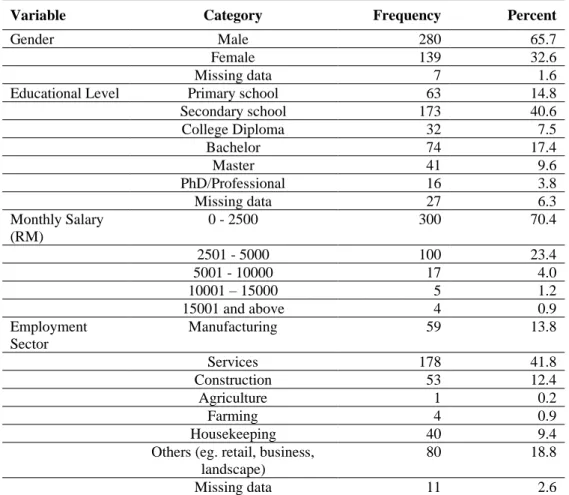
Table 1. Background Information on Respondents
Variable Category Frequency Percent
Gender Male 280 65.7
Female 139 32.6
Missing data 7 1.6
Educational Level Primary school 63 14.8
Secondary school 173 40.6
College Diploma 32 7.5
Bachelor 74 17.4
Master 41 9.6
PhD/Professional 16 3.8
Missing data 27 6.3
Monthly Salary (RM)
0 - 2500 300 70.4
2501 - 5000 100 23.4
5001 - 10000 17 4.0
10001 – 15000 5 1.2
15001 and above 4 0.9
Employment Sector
Manufacturing 59 13.8
Services 178 41.8
Construction 53 12.4
Agriculture 1 0.2
Farming 4 0.9
Housekeeping 40 9.4
Others (eg. retail, business, landscape)
80 18.8
Missing data 11 2.6
Table 1 displays the distribution of respondents by demographic information.
Approximately 65.7 percent of the respondents are male, while 32.6 percent are female. The majority of respondents are educated, with nearly 40.6 percent having secondary school education, 7.5 percent having a college diploma, 17.4 percent having a bachelor's degree, and more than 10 percent holding postgraduate qualifications such as a Master's or PhD. In terms of monthly
salary (in RM), 70.4 percent of respondents earn less than RM2500 per month, and 23.4 percent earn between RM2500 to RM5000 per month. Most respondents work in the service sector, followed by other sectors (such as retail and business) and the manufacturing sector.
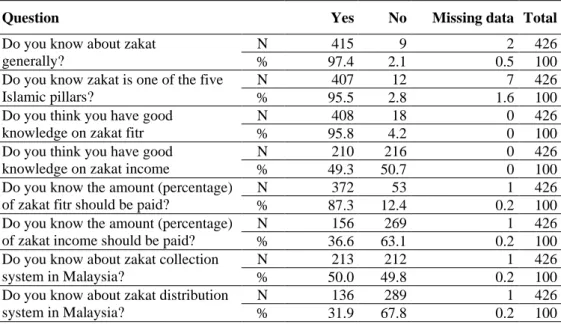
Table 2. Knowledge and Awareness About Zakat
Question Yes No Missing data Total
Do you know about zakat generally?
N 415 9 2 426
% 97.4 2.1 0.5 100
Do you know zakat is one of the five Islamic pillars?
N 407 12 7 426
% 95.5 2.8 1.6 100
Do you think you have good knowledge on zakat fitr
N 408 18 0 426
% 95.8 4.2 0 100
Do you think you have good knowledge on zakat income
N 210 216 0 426
% 49.3 50.7 0 100
Do you know the amount (percentage) of zakat fitr should be paid?
N 372 53 1 426
% 87.3 12.4 0.2 100
Do you know the amount (percentage) of zakat income should be paid?
N 156 269 1 426
% 36.6 63.1 0.2 100
Do you know about zakat collection system in Malaysia?
N 213 212 1 426
% 50.0 49.8 0.2 100
Do you know about zakat distribution system in Malaysia?
N 136 289 1 426
% 31.9 67.8 0.2 100
Table 2 reveals that majority of respondents (97.4 percent) are aware of zakat in general and also know that zakat is one of the five pillars of Islam (95.5 percent). Interestingly, less than 50 percent of respondents believe they have a good knowledge of zakat income compared to zakat fitr (95.8 percent).
Similarly, more than half of the respondents (87.3 percent) know the amount of zakat fitr they should pay, compared to the amount of zakat income they should pay (36.6 percent). The respondents also have very limited knowledge and awareness of the zakat system in Malaysia. Only 50 percent of them have a good understanding of zakat collection in Malaysia. However, just 31.9 percent are aware of zakat distribution in Malaysia.
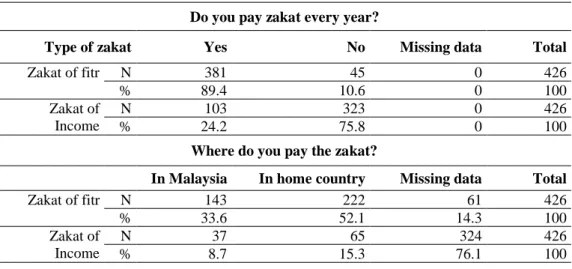
The practice of zakat payment among the respondents is presented in Table 3.
It shows that 89.4 percent of respondents pay zakat fitr every year, while only 24.2 percent pay zakat income. When it comes to the location of zakat payment, 33.6 percent pay zakat fitr in Malaysia, 52.1 percent pay in their country of origin, and 14.3 percent did not provide this information. For zakat income, 8.7 percent pay in Malaysia, 15.3 percent pay in their country of origin, and a significant 76.1 percent did not provide this information. These findings
provide valuable insights into the zakat payment practices among Muslim migrant workers in Malaysia.
Table 3. Practice of Zakat Payment
Do you pay zakat every year?
Type of zakat Yes No Missing data Total
Zakat of fitr N 381 45 0 426
% 89.4 10.6 0 100
Zakat of Income
N 103 323 0 426
% 24.2 75.8 0 100
Where do you pay the zakat?
In Malaysia In home country Missing data Total
Zakat of fitr N 143 222 61 426
% 33.6 52.1 14.3 100
Zakat of Income
N 37 65 324 426
% 8.7 15.3 76.1 100
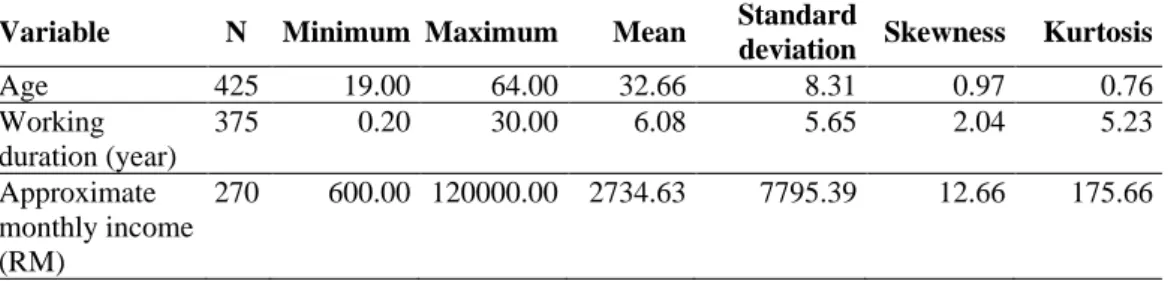
Regarding the continuous data/variables, Table 4 indicates that the respondents' ages range from 19 to 64 years, with an average age of 33 years. The duration of their work experience varies from 0.2 years (or 2.4 months) to 30 years, with an average duration of approximately 6 years. The respondents were also asked about their approximate monthly income. Although only 270 respondents answered this question, it was found that the minimum monthly income received by them is RM600.00, while the maximum is RM120,000.00. The average monthly income received by the respondents is approximately RM2,735.00.
Table 4. Descriptive Statistics on Continuous Variables
Variable N Minimum Maximum Mean Standard
deviation Skewness Kurtosis
Age 425 19.00 64.00 32.66 8.31 0.97 0.76
Working duration (year)
375 0.20 30.00 6.08 5.65 2.04 5.23
Approximate monthly income (RM)
270 600.00 120000.00 2734.63 7795.39 12.66 175.66
Independent t-test, One-way ANOVA, and Pearson’s Chi-square test The independent t-test is conducted on continuous variables, namely age, working duration, and approximate monthly income. It compares the mean of
these variables between two unrelated groups, male and female. The hypotheses developed for the variables are as follows:
Hypothesis 1
Ho1: There is no difference in the mean age between males and females.
Ha1: There is a difference in the mean age between males and females.
Hypothesis 2
Ho2: There is no difference in the mean working duration between males and females.
Ha2: There is a difference in the mean working duration between males and females.
Hypothesis 3
Ho3: There is no difference in the mean approximate monthly income between males and females.
Ha3: There is a difference in the mean approximate monthly income between males and females.
Table 5. Results of Independent T-test
Continuous variable
Unrelated
group Mean (SD) F-test (df) p-value
Age (year)
Male 32.87(8.0)
0.816(416) 0.19
Female 33.98(8.36)
Working duration (year)
Male 6.63(5.62)
1.412(367) 0.842
Female 6.76(5.82)
Approximate monthly income (RM)
Male 3119.95(9408)
2.691(265) 0.244
Female 1915.47(1345)
Based on the F-test statistics presented in Table 5, it can be observed that in all three cases, they are not significant (p-value of significance is more than 0.05).
Thus, it can be inferred that there is no significant difference in the mean of age, working duration, and monthly income between males and females.
Further analysis is conducted by comparing the mean monthly income across different employment sectors and different educational levels. The test conducted for this is a one-way ANOVA with the following hypotheses:
Hypotheses 1
Ho1: The is no difference in the mean approximate monthly income among different employment sectors.
Ha1: The is a difference in the mean approximate monthly income among different employment sectors.
Hypotheses 2
Ho2: The is no difference in the mean approximate monthly income among different educational levels.
Ha2: The is a difference in the mean approximate monthly income among different educational levels.
Table 6. Results of One-way ANOVA
Continuous
variable Unrelated group Mean (SD) F-test (df) p-value
Approximate monthly income (RM)
Manufacturing 5790(21577)
1.185 0.317
Services 2814(4499)
Construction 1869(643)
Farming 1975(694)
Housekeeping 1520(469)
Others 2136(1712)
Approximate monthly income (RM)
Primary school 1595(494)
5.355 0.000 Secondary school 1718(545)
College Diploma 2248(1917)
Bachelor 2250(1317)
Master 9775(23193)
PhD/Professional 3122(1531)
The results of the one-way ANOVA presented in Table 6 indicate that there are no significant differences in the monthly income of respondents across different sectors of employment, as the p-value of the F-statistics is more than 0.05.
However, significant differences are found in the monthly income of respondents at different levels of education. Specifically, significant differences are observed between Primary and Master (p=0.000 < 0.05), Secondary and Master (p=0.000 < 0.05), Diploma and Master (p=0.005 < 0.05),
and Bachelor and Master (p=0.000 < 0.05). However, no significant difference is found between Master's and PhD/professional levels (p=0.209 > 0.05). These findings imply that there is a significant difference in the monthly income of respondents between each pair of education levels, except between Master's and PhD/professional levels. In all significant cases, those with higher education levels earn more than those below them.
Further investigation into the relationship between two categorical variables is conducted using Pearson’s chi-square test. The hypotheses for this analysis are as follows:
Hypotheses 1
Ho1: There is no association between ‘gender’ and ‘’payment of zakat fitr’
Ha1: There is an association between ‘gender’ and ‘’payment of zakat fitr’
Hypotheses 2
Ho2: There is no association between ‘gender’ and ‘’payment of zakat income’
Ha2: There is an association between ‘gender’ and ‘’payment of zakat income’
Hypotheses 3
Ho3: There is no association between ‘knowledge about zakat’ and ‘’payment of zakat fitr’
Ha3: There is an association between ‘knowledge about zakat’ and ‘’payment of zakat fitr’
Hypotheses 4
Ho4: There is no association between ‘knowledge about zakat’ and ‘’payment of zakat income’
Ha4: There is an association between ‘knowledge about zakat’ and ‘’payment of zakat income’.
Hypotheses 5
Ho5: There is no association between ‘know zakat collection system in Malaysia’ and ‘’payment of zakat fitr’
Ha5: There is an association between ‘know zakat collection system in Malaysia’ and ‘’payment of zakat fitr’
Hypotheses 6
Ho6: There is no association between the ‘know zakat collection system in Malaysia’ and ‘payment of zakat income’.
Ha6: There is an association between the ‘know zakat collection system in Malaysia’ and ‘payment of zakat income’.
Hypotheses 7
Ho7: There is no association between the ‘know zakat distribution system in Malaysia’ and ‘payment of zakat fitr’
Ha7: There is an association between the ‘know zakat distribution system in Malaysia’ and ‘payment of zakat fitr’.
Hypotheses 8
Ho8: There is no association between ‘know zakat distribution system in Malaysia’ and ‘’payment of zakat income’.
Ha8: There is an association between ‘know zakat distribution system in Malaysia’ and ‘’payment of zakat income’.
For the assumption to be met, the Pearson Chi-square test is referred if < 20%
of the cells have an expected count < 5, and the Fisher’s Exact test is referred if > 20% of the cells have an expected count < 5.
Table 7. Results of Pearson Chi-square test and Fisher’s Exact test
Characteristics
Frequency (%)
p-value
Frequency (%)
p-value Pay
zakat fitr
Not pay zakat fitr
Pay zakat income
Not pay zakat income Gender
Male 252
(90.0)
28 (10.0)
0.488
80 (28.6)
200
(71.4) 0.002
Female 122
(87.8)
17 (12.2)
21 (15.1)
118 (84.9) Knowledge on
zakat in general
Yes 376
(90.6)
39 (9.4)
0.001
101 (24.3)
314 (75.7)
1.000
No 4
(44.4)
5 (55.6)
2 (22.2)
7 (77.8) Know collection
zakat system in Malaysia
Yes 194 19 0.331 56 157 0.322
(91.1) (8.9) (26.3) (73.7)
No 187
(88.2)
25 (11.8)
47 (22.2)
165 (77.8) Know
distribution zakat system in Malaysia
Yes 128
(94.1)
8 (5.9)
0.038
33 (24.3)
103 (75.7)
0.992
No 253
(87.5)
36 (12.5)
70 (24.2)
219 (75.8) Notes: *Fisher’s Exact test
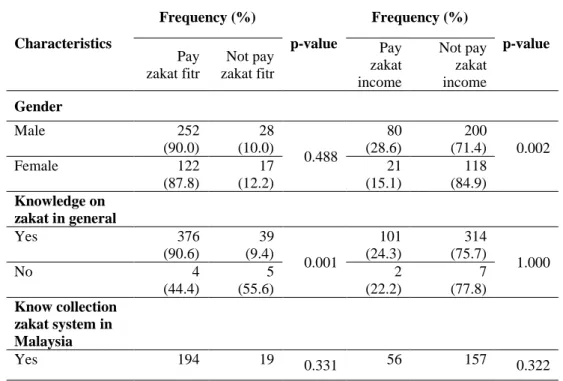
As shown in Table 7, the relationship between gender and the payment of zakat income is found to be significant (p=0.002). The relationship between knowledge about zakat and the payment of zakat fitr is also found to be significant (p=0.001). Those who have knowledge about zakat are more likely to pay zakat fitr. Moreover, there is a significant association between knowledge about the zakat distribution system in Malaysia and the practice of paying zakat fitr (p=0.038). Those with knowledge of the Malaysian zakat distribution system are more likely to pay zakat fitr. Interestingly, it is also found that even those respondents who lack knowledge about it are more likely to pay zakat fitr. In fact, the percentage of those who lack knowledge about the collection and distribution of the zakat system in Malaysia is quite high among respondents.
Logit regression
Empirically, the current study also attempts to investigate factors that might contribute to the likelihood (probability) of paying zakat fitr and income among migrant workers as well as the likelihood that they will pay zakat in Malaysia in the future. In logistic regression, predictors/independent variables can be either categorical or continuous, or a mix of both in one model. The model developed in this study is a Binary Logistic, where the dependent variable has only two categories, one and zero. The regressors are demographic variables such as gender, age, education level, working duration, employment sector and income level. Other controlled variables included are knowledge on zakat in general, knowledge that zakat is one of Islamic five pillars, knowledge on specific zakat (fitr or income), motivational factors (religiosity, recognition, altruism, self-satisfaction, organizational), and knowledge on zakat collection and distribution in Malaysia. In some cases, the independent variables are dummy variables such as gender and knowledge about zakat. There are also
continuous variables such as age, working duration, educational level, and income level as well as categorical variables such as employment sector.
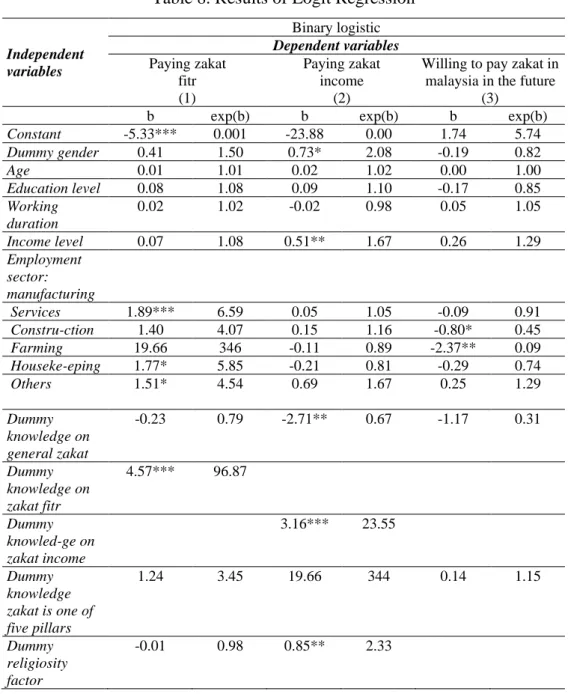
There are three regressions (Models 1, 2, and 3) developed with different dependent variables. Model 1 focuses on the practice of ‘zakat fitr’ payment, Model 2 is on the practice of ‘zakat income’ payment, and Model 3 is on the willingness to pay zakat in Malaysia in the future. Results of all regressions are displayed in Table 8.
Table 8. Results of Logit Regression
Independent variables
Binary logistic Dependent variables Paying zakat
fitr (1)
Paying zakat income
(2)
Willing to pay zakat in malaysia in the future
(3)
b exp(b) b exp(b) b exp(b)
Constant -5.33*** 0.001 -23.88 0.00 1.74 5.74
Dummy gender 0.41 1.50 0.73* 2.08 -0.19 0.82
Age 0.01 1.01 0.02 1.02 0.00 1.00
Education level 0.08 1.08 0.09 1.10 -0.17 0.85
Working duration
0.02 1.02 -0.02 0.98 0.05 1.05
Income level 0.07 1.08 0.51** 1.67 0.26 1.29
Employment sector:
manufacturing
Services 1.89*** 6.59 0.05 1.05 -0.09 0.91
Constru-ction 1.40 4.07 0.15 1.16 -0.80* 0.45
Farming 19.66 346 -0.11 0.89 -2.37** 0.09
Houseke-eping 1.77* 5.85 -0.21 0.81 -0.29 0.74
Others 1.51* 4.54 0.69 1.67 0.25 1.29
Dummy knowledge on general zakat
-0.23 0.79 -2.71** 0.67 -1.17 0.31
Dummy knowledge on zakat fitr
4.57*** 96.87 Dummy
knowled-ge on zakat income
3.16*** 23.55
Dummy knowledge zakat is one of five pillars
1.24 3.45 19.66 344 0.14 1.15
Dummy religiosity factor
-0.01 0.98 0.85** 2.33
Dummy recognition factor
-0.79 0.45 0.70** 2.02
Dummy alturism factor
0.44 1.55 0.32 1.37
Dummy self- satisfaction factor
-0.15 0.86 0.38 1.47
Dummy organisation factor
0.47 1.60 0.13 1.13
Dummy know collection zkt sytm m’sia
0.01 1.00
Dummy know distribution zkt sytm m’sia
1.25*** 3.49
diagnostic tests
% Correct classification
93.3 (from 90.0) 80.9 (from 74.5) 72.0 (from 70.5) Omnibus chi-
square stat.
74.45*** 134.59*** 39.25***
Hosmer &
lemeshow test stat..
7.26 7.49 4.18
Cox & snell r-square
0.20 0.34 0.11
Negelkerke r-square
0.42 0.49 0.16
Notes: 1. Standard errors are in parentheses;
2. ***statistically significant at the 1% level; **5% level; *10% level.
The results of Model 1 show that the significant predictors of the practice of paying zakat fitr are ‘knowledge of zakat fitr’ and ‘employment sector’. The positive value of beta (β) of knowledge about zakat fitr, that is 4.57, indicates that an increase in independent variable score, that is the higher knowledge of respondents on zakat fitr, results in an increased probability of the case recording a score of 1 in the dependent variable (that is paying zakat fitr). The odd ratio (Exp (β)) for this dummy variable is 96.87. This could be interpreted that the odds of a person paying zakat fitr, is 97 times higher for someone who have knowledge about zakat fitr as compared to those who have no knowledge about zakat fitr, all other factors being equal.
The finding is supported by Mariyanti et al. (2022) who indicated that the knowledge of a muzzaki influence the person's intention to pay zakat significantly, by Syauqi et.al (2022) who stated that zakat literacy affects the motivation to pay zakat, as well as Ghazali and Ibrahim (2022) and Noor et al.
(2004) on the importance of knowledge on zakat. As for the employment sector, those working in services, housekeeping, and other (business, retail, etc) sectors have more tendency to pay zakat fitr as compared to those working in the manufacturing sector. Referring to the odd ratios of the variables, the odds of a person paying zakat fitr are 6.6, 5.9, and 4.5 times more in services, housekeeping, and other sectors respectively, than those in the manufacturing sector. Other independent variables do not contribute significantly to the probability of paying zakat fitr among migrant workers.
In the classification table, with no predictor, the overall percent of correctly classified cases is 90.0%. When a set of predictor variables is entered, it improves the accuracy of this prediction to 93.3%. Since the Omnibus tests of Model coefficients are significant (p-value < 0.05), the model with a set of variables used as predictors is better than the SPSS’s original guess. The Chi- square value in this test is 74.45. The Hosmer & Lemeshow test also supports the ‘goodness of fit’ of the model with the Chi-square statistics of 7.26 with a p-value more than 0.05. The pseudo-R-square statistics (Cox & Snell R-square and Nagelkerke R-square) show that between 20% and 42% of the variability in the dependent variable is explained by the set of predictor variables.
Using zakat income payment as a binary dependent variable, it is found that there is a higher probability of paying zakat income by male workers, among those who have higher income, those who have good knowledge of zakat income, and religiosity and recognition motivational factors. This could be seen from the positive and significant coefficients (βs) of the variables. The odd ratio (Exp (β)) for gender is 2.08 which indicates that the odds of a person paying zakat income, is 2.1 times higher for someone who is male than female, all other factors being equal. This finding seems to contrast with a study by Wahid et al. (2007) who found that females are more likely to pay zakat income in Malaysia. This is probably because the present study is focused on migrant workers rather than Malaysians. The odd ratio of 1.67 (more than 1) for income level implies that as income increases, the practice of paying zakat income is more likely to occur.
A similar finding was found by Wahid et al. (2007) in testing thirteen factors that might influence the payment or non-payment of zakat of income in Malaysia and a study by Firdaus et.al. (2012). Good knowledge about zakat income itself also significantly contributes to the probability of paying zakat income. The odd ratio (Exp (β)) for this variable is 23.55. This could be
interpreted that the odds of a person paying zakat income, are 24 times higher for someone who has knowledge about zakat income as compared to those who have no knowledge about zakat income, all other factors being equal. Ghazali and Ibrahim (2022) are among others who supported this finding. In a similar vein, Syauqi et.al (2022) found zakat literacy is an important determinant of paying zakat.
As for the motivational factors, the odd ratios of 2.33 and 2.02 for religiosity and recognition factors respectively, indicate that these factors contribute 2 times higher odds. This is also mentioned by Aidit (1998) and Al-Qaradawi (1999), who argued that non-compliance with the obligation to pay intelligence is primarily due to the level of faith in individuals in religious obligations.
Similarly, Firdaus et.al. (2012) found that Muslims who paid zakat monthly and annually tend to have stronger faith. The level of piety (iman) or religiosity factor was also found to be a significant factor in a study by Noor et al. (2004) and Syauqi et.al (2022). Nonetheless, the recognition factor is supported by Khalil et al. (2020) who opined that environmental factors such as the beliefs of the surrounding community group were found to influence an individual’s behavior in terms of physical and mental readiness for the payment of zakat.
On the other hand, the coefficient of knowledge on zakat in general, is negative and significant. The odd ratio of knowledge of zakat in general is less than one implies that the odd of paying zakat income is 0.67 times lower for those who have knowledge about zakat in general as compared to those who have no knowledge about zakat in general, ceteris paribus. The diagnostic tests show that Model 2 is better in its performance. When a set of predictor variables is entered, it improves the accuracy of this prediction to 80.9%. The Chi-square value for the Omnibus test is 134.59 with a p-value < 0.05 which indicates that the model with a set of variables used as predictors is better than with no predictor. The Hosmer & Lemeshow test also supports the ‘goodness of fit’ of the model with the Chi-square statistics of 7.49 and p-value > 0.05. The pseudo- R-square statistics (Cox & Snell R-square and Nagelkerke R-square) show that between 34% and 49% of the variability in the dependent variable is explained by the set of predictor variables.
As for Model 3, the willingness of respondents to pay zakat in Malaysia in the future is likely to be contributed by the knowledge of the zakat distribution system in Malaysia. A study by Syauqi et.al (2022) also supported that zakat literacy and government regulations simultaneously affect the motivation to
pay zakat through a management agency (Battal & Ibrahim, 2023). The odd ratio (Exp (β)) 3.49 for this variable implies that the odds of a person willing to pay zakat in Malaysia in the future is 3.5 times higher for someone who has knowledge about the zakat distribution system in Malaysia as compared to those who have no knowledge about it, all other factors being equal. The negative coefficients of the construction and farming sectors indicate that those working in these sectors are less likely to pay zakat in Malaysia in the future as compared to those in the manufacturing sector (base sector).
The odd ratios in both cases are 0.45 and 0.09 respectively indicating that willingness to pay zakat in Malaysia in the future is 0.45 and 0.09 times lower compared to those who are in the manufacturing sector, other things equal. The model in general is good as its accuracy of prediction is improved to 72% when a set of predictor variables is entered. This is supported by the Chi-square value for the Omnibus test is 39.25 with a p-value < 0.05. The Hosmer & Lemeshow test also states the high ‘goodness of fit’ of the model with the Chi-square statistics of 4.18 and p-value > 0.05. The pseudo-R-square statistics (Cox &
Snell R-square and Nagelkerke R-square) show that between 11% and 16% of the variability in the dependent variable is explained by the model.
The findings have multifaceted implications and contribute to the understanding of zakat payment behaviors among Muslim migrant workers in Malaysia. The significant predictors identified in Model 1, namely the 'knowledge of zakat fitr ' and 'employment sector,' underscore the importance of educational initiatives to enhance understanding of zakat obligations among this demographic. The strong positive correlation between knowledge of zakat fitr and the likelihood of payment suggests that informed workers are significantly more inclined to fulfill their zakat duties. This aligns with findings by Mariyanti et al. (2022), Syauqi et al. (2022), and Wahid et al., (2014), which highlight the pivotal role of zakat literacy in motivating payment.
For policy implications, the study recommends targeted educational programs to improve knowledge of zakat among Muslim migrant workers, particularly in sectors where payment is less common, such as manufacturing. Furthermore, the logistic regression analysis suggests that gender, income level, and motivational factors such as religiosity and recognition significantly influence zakat income payment. This implies that zakat collection strategies could be tailored to these demographic and psychographic factors to enhance compliance.
The findings also indicate a potential for increasing future zakat payments in Malaysia if knowledge about the zakat distribution system is disseminated effectively among migrant workers. This is corroborated by research suggesting that a better understanding of zakat management can positively affect motivation to pay through official channels. However, there is an observed negative correlation between general zakat knowledge and the likelihood of paying zakat income, which may indicate a need for more specific and contextualized education about the zakat system in Malaysia. The diagnostic tests validate the robustness of the models used in predicting zakat payment behaviors.
CONCLUSIONS
This study addresses a significant gap in the literature by examining the practice of zakat payment among Muslim migrant workers in Malaysia, a demographic that has seen substantial growth in recent years. The study aims to analyze the practice of zakat payment among Muslim migrant workers in Malaysia and investigate the likelihood of their future zakat payment and its determinants.
It is evident that the practice of paying zakat fitr among migrant workers is significantly influenced by their knowledge of zakat fitr and the employment sector in which they work. The results show that the odds of a person paying zakat fitr are significantly higher for those who have knowledge about zakat fitr compared to those who do not, and this finding is supported by previous research. The study also indicates that the accuracy of predicting zakat fitr payment is significantly improved by the inclusion of predictor variables.
Furthermore, the likelihood of paying zakat income is influenced by gender, income level, knowledge of zakat income, religiosity, and recognition factors.
The odds of a person paying zakat income are higher for males, those with higher income, and those with good knowledge of zakat income. Additionally, religiosity and recognition factors significantly contribute to the probability of paying zakat income. The model used in the study demonstrates good accuracy in predicting the willingness of respondents to pay zakat in Malaysia in the future, with knowledge of the zakat distribution system in Malaysia being a significant contributing factor. These findings suggest that zakat authorities should focus on targeted education programs, sector-specific outreach strategies, and initiatives that address motivational factors to enhance zakat compliance among Muslim migrant workers. Additionally, understanding the
unique characteristics and needs of this group can lead to more effective policy formulation and implementation.
In summary, this study highlights the significant factors that contribute to the likelihood of Muslim migrant workers paying zakat fitr and income in Malaysia. It also identifies the determinants that influence the propensity of these workers to pay zakat in Malaysia in the future. However, it should be noted that this analysis is limited to Muslim migrant workers residing within Wilayah Persekutuan Kuala Lumpur and Putrajaya. For a more comprehensive understanding, it is recommended that future studies broaden their scope to include other states and countries. The insights gained from this study can assist zakat institutions, especially in Malaysia, in developing effective strategies to encourage a higher number of zakat contributors among migrant workers. The identified determining factors provide valuable insights into the elements that influence the inclination of migrant workers to pay zakat in Malaysia rather than in their countries of origin.
REFERENCES
Abdul Rahman, R. (2017). Divulging foreign workers issues in Malaysia. In Foreign Labour in Malaysia: Selected Works (1st ed.). Ministry of Higher Education, Malaysia.
Abdullah, S. A. J., & Ahmad, H. (2002). The influence of demographic factors towards tax compliance in Universiti Utara Malaysia. Unpublished project report, Universiti Utara Malaysia, Sintok. Retrieved from http://lintas.uum.edu.my:8080/elmu/index.jsp?module=webopac-
l&action=fullDisplayRetriever.jsp&szMaterialNo=0000204716
Adnan, M. A., & Abu Bakar, N. B. (2009). Accounting treatment for corporate zakat: A critical review. International Journal of Islamic and Middle Eastern Finance and Management, 2(1), 32-45.
Ahmad, S., & Wahid, H. (2005). Penerimaan dan tanggapan masyarakat terhadap sumber zakat harta yang diikhtilaf. Islamiyyat, 27(1), 45-65.
Aidit, G. (1998). Zakat-Satu Tinjauan. IBS Buku Sdn. Bhd.
Aji, H. M., Albari, A., Muthohar, M., Sumadi, S., Sigit, M., Muslichah, I., &
Hidayat, A. (2021). Investigating the determinants of online infaq intention during the COVID-19 pandemic: An insight from Indonesia.
Journal of Islamic Accounting and Business Research, 12(1), 1-20.
Al-Qaradawi, Y. (1999). Fiqh al Zakat. Translated by Monzer Kahf. Scientific Publishing Centre.
Al-Qardawi, Y. (1993). Fiqhuz Zakah. Litera AntarNusa.
Ali, M., Raza, S. A., Khamis, B., Puah, C. H., & Amin, H. (2021). How perceived risk, benefit and trust determine user fintech adoption: A new dimension for Islamic finance. Foresight, 23(4), 403-420.
Andrews, D. W. K. (1988a). Chi-square diagnostic tests for econometric models: Introduction and applications. Journal of Econometrics, 37(1), 135-156.
Andrews, D. W. K. (1988b). Laws of large numbers for dependent non- identically distributed random variables. Econometric Theory, 4(3), 458- 467.
Aziz, R. M. (2020). Efficiency of zakat management organizing (Opz) in Indonesia. Jurnal Akuntansi Dan Auditing, 16(1), 112-149.
Bananuka, J., Kasera, M., Najjemba, G. M., Musimenta, D., Ssekiziyivu, B., &
Kimuli, S. N. L. (2020). Attitude: Mediator of subjective norm, religiosity and intention to adopt Islamic banking. Journal of Islamic Marketing, 11(1), 81-96.
Battal, F., & Ibrahim, A. (2023). How Does Cynicism Mediate Spiritual Leadership and Organizational Commitment? The case of Turkish and Indonesian Universities. Ege Academic Review, 23(2), 315-330.
Bin-Nashwan, S. A. (2022). Toward diffusion of e-zakat initiatives amid the COVID-19 crisis and beyond. Foresight, 24(2), 141-158.
Cahyani, U. E., Sari, D. P., & Afandi, A. (2022). Determinant of behavioral intention to use digital zakat payment: The moderating role of knowledge of zakat. ZISWAF: Jurnal Zakat Dan Wakaf, 9(1), 1-16.
DoSM. (2023). Key statistics of labour force in Malaysia. Retrieved from https://www.dosm.gov.my/portal-main/release-content/key-statistics-of- labour-force-in-malaysia
Firdaus, M., Beik, I. S., Irawan, T., & Juanda, B. (2012). Economic estimation and determinations of zakat potential in Indonesia. Islamic Research and Training Institute, 1-75.
Ghazali, R., & Ibrahim, P. (2022). Intention determinant factors of muzakki to pay zakat during Covid 19 pandemic 2020 in Wilayah Persekutuan.
AZKA International Journal of Zakat & Social Finance, 3, 85-102.
Hafidhuddin, D. (2002). Zakat Dalam Perekonomian Modern. Jakarta: Gema Insani.
Harahap, R. A. (2022). Literature study of zakat distribution in Indonesia.
Jurnal Ilmiah Ekonomi Islam, 8(1), 618-624.
Hasan, Z. A., Mohd Noor, A. H., Othman, A., & Mohd Rafien, N. S. (2013).
Evasion of zakat on income: A study among public servants in Melaka.
In A. H. Mohd Noor, H. Bahrom, & A. Md Salleh (Eds.), Zakat and Contemporary Management: Multifacet Issues and Challenges (pp. 31- 45). Zakat Research Institute of Malaysia.
Hosmer, D. W., Jovanovic, B., & Lemeshow, S. (1989). Best subsets logistic regression. Biometrics, 1265-1270.
Ibrahim, A. (2011). Maksimalisasi Zakat Sebagai Salah Satu Komponen Fiskal Dalam Sistem Ekonomi Islam. JURISPRUDENSI: Jurnal Syariah, 3(1), 1-20.
Idris, K. M., & Ayob, A. M. (2002). Peranan sikap dalam gelagat kepatuhan zakat pendapatan gaji. Analisis, 9(1 & 2), 171-191.
Irawati, L., & Ratno, F. A. (2020). The effect of trust and income on motivation to pay zakat. Indonesian Journal of Islamic Economics Research, 2(2), 117-125.
Ismail, A. G., & Sanusi, N. A. (2004). Metodologi pengiraan zakat dan nilai syarikat. In Muzakarah Pakar Zakat. Kumpulan Kajian Zakat, Universiti Kebangsaan Malaysia, Kuala Lumpur (pp. 145-154).
Johari, F., Ab Aziz, M. R., & Mohd Ali, A. F. (2014). A review on literatures of zakat between 2003-2013. Library Philosophy and Practice (e-
journal), Paper 1175. Retrieved from
http://digitalcommons.unl.edu/libphilprac/1175
Kamri, N. A., Ramlan, S., & Ibrahim, A. (2014). Qur'anic Work Ethics. Journal of Usuluddin, 40, 135-172.
Kanapathy, V. (2001). International migration and labor market adjustments in Malaysia: The role of foreign labor management policies. Asian and Pacific Migration Journal, 10(3–4), 429-461.
Kasri, R. A., & Yuniar, A. M. (2021). Determinants of digital zakat payments:
Lessons from Indonesian experience. Journal of Islamic Accounting and Business Research, 12(3), 362-379.
KDN. (2023). Jumlah pekerja asing (PLKS aktif) mengikut jantina dan negara
sumber. Retrieved June 6, 2023, from
https://www.data.gov.my/data/ms_MY/dataset/jumlah-pekerja-asing- plks-aktif-mengikut-jantina-dan-negara-sumber/resource/e5353b72- 0b63-4f3a-9b39-047c513952c5?inner_span%25252525253DTrue Khalil, N. M., Amin, H., & Azman, N. S. (2020). Compliance intention to pay
zakat on salary. International Journal of Zakat, 5(2), 37-50.
Khan, M. A. (2013). Comprehensive approach to zakat: Poverty alleviation and sustainable development ramifications. In A. H. Mohd Noor, H. Bahrom,
& A. Md Salleh (Eds.), Zakat and Contemporary Management:
Multifacet Issues and Challenges. Zakat Research Institute of Malaysia.
Khotimah, H., bin Lahuri, S., & Zuhroh, A. A. (2022). Muslim Perception on Zakat as A Tax Deduction in Indonesia. Share: Jurnal Ekonomi dan Keuangan Islam, 11(2), 477-501.
Latief, H. (2017). Addressing unfortunate wayfarer: Islamic philanthropy and Indonesian migrant workers in Hong Kong. Advances in Southeast Asian Studies, 10(2), 237-255.
Mariyanti, T., Basri, Y. Z., & Jazuli, J. (2022). The basic factors driving the intention to pay zakat. APTISI Transactions on Management (ATM), 6(1), 30-41.
Md Idris, K., & Ayob, A. M. (2002). Peranan sikap dalam gelagat kepatuhan zakat pendapatan gaji. Analisis, 9(1 & 2), 171-191.
Mujitahir. (2003). Perkaedahan fiqh dalam aplikasi zakat pendapatan. Seminar Zakat Pendapatan, 13.
Munadi, M., Umar, A., & Anggraii, N. (2021). Education and concern of zakat agencies. Jurnal Penelitian, 15(1), 51-76.
Musa, Z. (2017, May 24). Muslim foreigners working in Johor not exempted from paying zakat. The Star. Retrieved from
https://www.thestar.com.my/metro/community/2017/05/24/muslim- foreigners-working-in-johor-not-exempted-from-paying-zakat-religious- affairs-exco-says-it-is
Noor, A. H. M., Nordin, R., & Zahlan, M. S. (2013). Determining the effectiveness of zakat management in Malaysia. In A. H. M. Noor, H.
Bahrom, & A. M. Salleh (Eds.), Zakat and Contemporary Management:
Multifacet Issues and Challenges (pp. 137-148). Selangor: Zakat Research Institute of Malaysia.
Noor, A. H. M., Ahmad, M., & Bahrom, H. (Eds.). (2013). Prestasi pengagihan dana zakat di Malaysia. Isu-isu Kontemporari Zakat di Malaysia.
Selangor: IKAZ, UiTM.
Noor, H. Bahrom, & A. Md Salleh (Eds.), Zakat and Contemporary Management: Multifacet Issues and Challenges (pp. 137–148). Zakat Research Institute of Malaysia.
Noor, M. A. M., Wahid, H., & Ghani, N. (2004). Kesedaran membayar zakat pendapatan kakitangan profesional: Kajian di Universiti Kebangsaan Malaysia. The International Journal of Islamic Studies, 26, 59-67.
Nor, N. G. M., Ahmad, M., & Bahrom, H. (2001). Can privatization improve performance? Evidence from zakat collection institutions. Presented at Bengkel Ekonomi Islam Fakulti Ekonomi, Universiti Kebangsaan Malaysia.