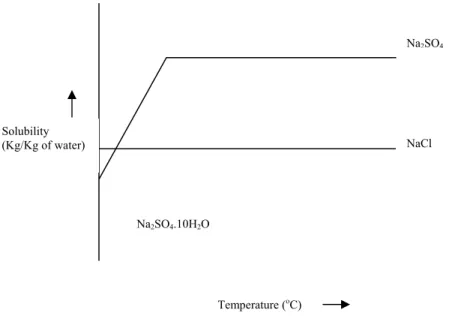
All these factors, when thoroughly controlled, lead to effective therapeutic concentration of the drug in the biological fluids, thus a desirable effect is seen. Since it is known that drug absorption is dependent on the solubility of the drug in the respective dissolution medium. In pharmacokinetic studies, drug solubility is of crucial importance as it depicts the in vivo behavior of the drug, which means that the absorption of the drug is dependent on the dissolution in the gastric milieu.
The solubility profile of any drug candidate can be generated by dissolving a slight excess of the drug in a fixed volume of solvent to form a saturated solution. Each crystal form has a specific pattern, ie. network, the integrity of which affects drug solubility. Usually, ∆Hcl is greater than ∆Hsolv, so ∆H is positive, indicating that drug dissolution is an endothermic process.
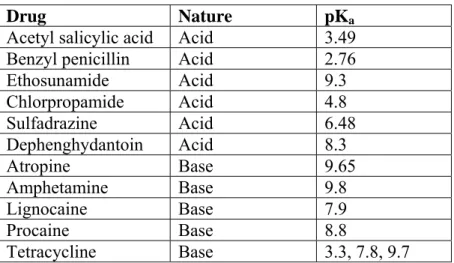
Where S is the total solubility of the drug So is the solubility of the unionized form. Thus, if the pH of acidic drug is reduced, the proportion of the unionized drug will increase and precipitation of the drug from the medium will occur. The content in the other phase is the difference from the organic phase or water phase.
The changes affect the localization of the drug or increase lipid solubility so that absorption is increased.
Influence of hydrolysis: Hydrolysis causes degradation of several formulations and drugs. It follows a second order reaction depending on the concentration of the drug undergoing
Normally, the plasma concentration is lower than the gastrointestinal (GI) concentration because the drug is constantly being removed from this site, so that the sink state is always maintained. Therefore, if we assume that the drug is not metabolized at all by the enzymes of the liver and gastrointestinal wall, then the oral dose will be the same as the i.v. Therefore, the choice of route of administration depends on the intrinsic characteristic of the drug molecule, for example the drug phenytoin is insoluble in water and is administered as a hydroalcoholic injection at pH 12, but if administered as an i.v.
The variable bioavailability is shown in the figure below, where the drug is given with a protein diet, a carbohydrate diet and a fat diet and under fasting conditions with a low (20 ml) water volume and a high (250 ml) water volume. However, with propantheline, the drug that slows down gastrointestinal motility, the serum digoxin level was observed to be high, indicating the high availability of the drug. Usually, the drug follows pseudo-first-order kinetics, not just because they are simple, but because everything but the drug concentration is constant.
That a single homogeneous compartment or one compartment model has "apparent volume of distribution" parameter as a characteristic feature because it gives plasma concentration and the amount of the drug in the body. But the apparent volume of distribution of a drug very rarely corresponds to any physiological volume, and if it does at all, it never indicates whether or not the drug has entered body spaces. Therefore, when drugs have a high affinity for a tissue binding site, the plasma concentration of the drug is low and there is a high volume of distribution.
It indicates that the substance appearing in the urine (Du) is the same as the substance remaining in the body (Db). However, if the pH of the urine increases, the drug will be in an ionized concentration that favors the urine side over the blood, so that the equilibrium shifts from the blood side to the urine side. Therefore, clearance of the drug from the body includes blood clearance and plasma clearance of bound or unbound drug.
We know that the drug administered by the intravenous route shows complete absorption because the drug is directly dissolved in the fluid and diffused through one or more membranes. Bioavailability is the measure of the speed and extent to which the drug can perform its intended function. Drug Distribution: Drug distribution is the process of distributing the drug through body fluid to the site of action.
This is also called biotransformation and includes the biochemical changes in the drug molecule after the action of pH or enzymes that lead to the formation of active or inactive metabolites within the system. Absolute bioavailability: It is a fraction of systemic availability of the drug from the dosage form.
Calculations for Oral bioavailability by graphical method
A medicinal product is therapeutically equivalent to another product if it contains the same active substance or therapeutic part and clinically shows the same efficacy and safety as that product whose efficacy and safety have been established. Comparative bioavailability: The comparative bioavailability studies involve the determination of the relative bioavailability of an active drug in two or more formulations, without regard to the actual amount absorbed from each formulation. Where AUCoral and AUCsc are the area under the curves of plasma profile of oral and subcutaneous doses, respectively.
Calculations of the volume of distribution (Vd) to assess the pharmacokinetic profile of the drug: The volume of distribution estimates the extent and intensity of the exposure of the body.
The renal clearance in the formula above is defined as the ratio between the urinary excretion rate and the plasma concentration and it has units of volume/time, i.e. ml/min or liter/hour. Since the intravenous bolus injection is known to show complete absorption, therefore the loading dose (DL) in such dose calculations is the same as the bolus injection. However, if the drug is given by a route other than IV, the dose calculations are dependent on the elimination rate of the drug.
If maintenance dose is given at a rate of the drug's elimination half-life, then DL = 2 DM. Similarly, drugs that follow non-dependent first-order kinetics, the equation to calculate the peak plasma concentration is given by Michaelis-Menten equation. The volume of distribution is high for drugs that are easily distributed in the body fluid, but drugs with affinity for tissue binding or protein binding are less distributed and therefore have low values of distribution volume.
Vd value of 10 to 20 liters or between 15 and 27% of body weight indicates that the drug has distributed into intracellular fluids. If it is between 25 and 30 liters or between 35 and 42% of body weight, then its distribution is mainly in intracellular fluids. If the distribution is about 40 liters or 60% of body weight, it is assumed that the drug has distributed throughout the body fluid.
If the volume of distribution exceeds body weight, then it is assumed that the drug is stored in body fat, bound to body tissues, or distributed to peripheral compartments. Elimination half-life of drug dosage form: The elimination phase of any drug within the biological system indicates the decrease in plasma concentration. The elimination half-life is defined as t½, which is the time required by the plasma to reduce the concentration of the drug by half.
Usually, the drug administered for systemic action follows first-order kinetics, that is, the concentration of drug eliminated per limit time is proportional to the amount present at the initial time point. The elimination rate constant (Kel) for first order kinetics is calculated using the following formula. Creatinine clearance: It is known that the elimination of drugs and other compounds involves the estimation of the excretion profile of the drug, which is known by the glomerulus.
Creatinine clearance: It is known that the elimination of drugs and other compounds involves the estimation of the excretion profile of the drug, which is known by the glomerulus
The creatinine clearance, as known, represents the volume of blood plasma that has cleared the creatinine by renal filtration per minute, it is also calculated using two main equations. Since normal creatinine clearance rate is considered to be 100 ml/minute, this rate along with body weight of the drug is also useful to calculate the loading dose (LD) and maintenance dose of the drug. If the bioavailability factor (F) for a 200 mg tablet of a drug is 0.70 compared to the bioavailability factor of 1.0 for an injection of the same drug, many milliliters of the injection containing 40 mg/ml will considered bioequivalent to the tablet. .
From the following data, plot a serum concentration time curve and determine (a) the peak height concentration (Cmax) and. b) the time of the peak height concentration (Tmax). If the half-life of a drug is 4 hours, approximately what percentage of the administered drug (20mg) will remain in the body 16 hours after administration. Ans: Since half-life indicates the time when the drug is reduced to its half concentration after administration, the method given below is followed to know the concentration of the drug after administration.
Therefore, the concentration of the drug remaining in the body after sixteen hours of administration is 1.25 mg. If 150 mg of a drug is administered intravenously and the resulting plasma concentration of the drug is determined to be 2.5 µg/ml. Calculate the creatinine clearance rate for a 20-year-old male patient who weighs 70 kg and has a serum creatinine of 1 mg/dL.
If a patient is 5 feet, 8 inches tall, adjust the creatinine clearance based on body surface area. A female patient who weighs 70 kg and is 65 years old has a serum creatinine level of 2 mg/dL, which is the expected creatinine clearance rate. The antibiotic follows the pharmacokinetics of a one-compartment model and has an elimination half-life of 1.5 hours.
The apparent volume of distribution is 0.18 L/kg and the drug is 35% bound to plasma proteins. How long after a dose exactly 75% of the drug is eliminated from the patient's body. A 35-year-old man weighing 70 kg with normal renal function requires an intravenous infusion of an antibiotic.