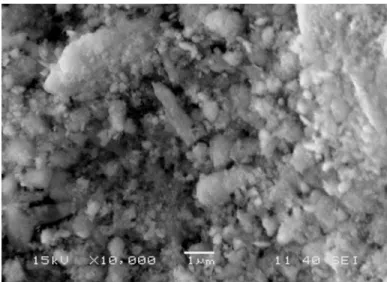
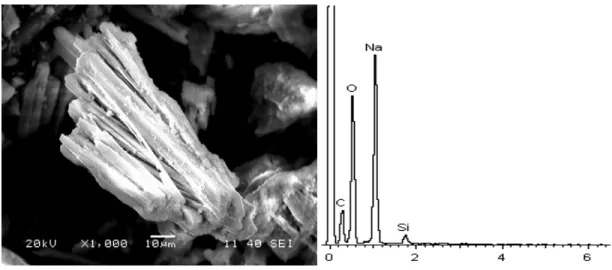
A laboratory study was conducted to investigate the ability to neutralize red mud (RM) using carbon dioxide gas sequestration cycle at ambient conditions. The neutralized red mud (NRM) was characterized by XRD, SEM, EDX, FT-IR, CHNS, TG-DSC and autotitration method.
Background 1
Red mud (RM) is the caustic residue from the processing of bauxite ore to extract aluminium. Various methods have been used to neutralize red mud by adding liquid carbon dioxide [16,18], saline brine or seawater [19], brines rich in Ca and Mg, soluble Ca and Mg salts, acidic water from mine tailings, fly ash, carbon dioxide gas [20,21].
Motivation 5
But its neutralization through a cost-effective process is highly necessary for sustainable development of alumina industry. Therefore, its neutralization with the help of CO2 sequestration can solve some problem of global warming and this waste can be used as resources for the alumina industry.
Objectives 6
Global climate and the atmospheric partial pressure of carbon dioxide are correlated over recent glacial cycles, with lower CO2 partial pressures during ice ages, but the causes of the CO2 partial pressure changes are unknown [99]. The oceans are thought to contain around 40% of the CO2 produced by burning fossil fuels. TG-DSC charts showing weight loss of red mud in the temperature range 30-910ºC. TG-DSC charts showing weight loss of CO2 neutralized red mud (CNRM) in the temperature range 30-910ºC.
The average pH, electrical conductivity and alkalinity of cycles 1, 2 and 3, each of them treated for 5 hours of sequestration. a) The average pH of carbonated red mud from cycle 1. b). The average electrical conductivity of carbonated red mud from cycle 1. c) The average alkalinity of carbonated red mud from cycle 1. d) The average reflux pH of the NRM after cycle 3. Hydroxylated surface of the oxides of red mud develops charge on the surface in the water.
![Fig. 2.1. Production process of alumina and red mud (bauxite residue) in the Bayer process [43]](https://thumb-ap.123doks.com/thumbv2/azpdfnet/10558190.0/28.918.183.568.407.942/fig-production-process-alumina-bauxite-residue-bayer-process.webp)
Bayer process of alumina industry 8
Origin of red mud 14
- Disposal methods 18
- Advantages and disadvantages 20
Environmental pollution 21
Silicosis is the most common form of pneumoconiosis, which is caused due to exposure to free silica [51]. Groundwater contamination near the refinery site is due to seepage from the ash pond and red mud pond (Fig. 2.2b).
Neutralization methods 22
Neutralization using gypsum, strong acid or similar additives can produce safer red mud storage. Virotec scientists looked at the problem of neutralizing red mud and, if possible, turned it into a usable product.
Utilizations of red mud 26
This weight loss was probably due to physically adsorbed water on the neutralized red mud. Ray, Use of activated CO2-neutralized red mud for arsenate removal from aqueous solutions, J.
CO 2 sequestration and utilizations 30
These gases absorb the sun's infrared energy radiation that is reflected from the earth, causing the temperature of the troposphere to rise. CO2 is considered a standard component of air, although the concentration of CO2 in the air varies slightly by location and time of year.
Chemistry of Inorganic CO 2 32
Globally, the average concentration of CO2 in the Earth's atmosphere is rising at a rate of about 2 ppmv per year. The solubility of CO2 in water decreases with increasing temperature and increases with increasing pressure. Adding CO2 to water initially leads to an increase in the amount of dissolved CO2.
![Table 2.7: Thermodynamics data for CO 2 and a few related carbon-containing compounds [84]](https://thumb-ap.123doks.com/thumbv2/azpdfnet/10558190.0/49.918.182.783.659.947/table-thermodynamics-data-related-carbon-containing-compounds-84.webp)
The reaction of CaCO3 and CO2 in water to form Ca(HCO3)2 is responsible for the fixation of large amounts of CO2 in the oceans. Large amounts of CO2 are produced by lime kilns, which burn limestone (mainly CaCO3) to produce CaO (lime, used to make cement); and in the production of magnesium from dolomite (CaCO3.MgCO3). The increase in CO2 concentration in the atmosphere will increase its flux across the air-sea interface.
Different technological mitigation approaches 45
Natural gas can also be deployed to fuel fleet vehicles, buses and long-haul trucks in the transport sector. The chemical reactions can take place, and this immobilizes the CO2 in the form of minerals. CO2 is the main component of the greenhouse gases and its accumulation in the environment leads to serious global warming issues [117].
Main problems of CO 2 sequestration 48
Due to the long lifetime of CO2, it is very difficult to solve the problem of global warming and climate change [123]. Collection of CO2 from air (0.04%) will cost more than collection from power plants when both are operated under the same economic conditions. Two factors make capturing CO2 from air more difficult than from the exhaust streams: (1) the higher thermodynamic barrier due to the lower concentration of CO2 in the air, and (2) the energy and material costs of moving large volumes of air through an absorbent structure.
![Fig. 2.4: Production costs of electricity [122].](https://thumb-ap.123doks.com/thumbv2/azpdfnet/10558190.0/64.918.180.660.292.721/fig-2-4-production-costs-of-electricity-122.webp)
Summary 52
Neutralization of red mud using CO 2 sequestration cycle 53
- Materials 53
- Materials preparation 54
- Materials characterizations 54
- XRD 54
- SEM-EDX 55
- FT-IR 55
- The pH and electrical conductivity 55
- Auto titrator 55
- BET 56
- Particle size analyzer 56
- Ultra Sonic 56
- CHNS 56
- Thermal analysis (TG-DSC) 57
- CO 2 sequestration 57
- Cost estimation 57
The parameters were measured by adding distilled water to the fresh red mud at a solid to liquid ratio of 1:2.5 standard methods [126]. However, the gas flow rate of 5 mL/min and 10 g of red mud was found to be effective. The gas was passed through a rotameter and subsequently passed into the red mud solution through a microbubbler for hours.
Utilization of activated CO 2 -neutralized red mud for
Materials 59
Adsorbent preparation 59
Characterization of adsorbent 59
- XRD 59
- SEM-EDX 60
- FT-IR 60
- Solid UV-vis 61
- The pH meter 61
- Atomic absorption spectrometer (AAS) 61
- Batch experiments 62
- Desorption and regeneration studies 62
FT-IR spectra of the samples were obtained using PerkinElmer FT-IR Spectrometer Spectrum RX-I. According to the principle, the glass electrode (Ag/AgCl) is used to measure the hydrogen ion activity of the solution by measuring the potential reverence. Quantitative analysis of the As(V) ion in the filtrate, after adsorption, was determined using a hydride-generated atomic absorption spectrometer (MHS 15, AAS, PerkinElmer, AAnalyst 200, USA) using the standard method.
Extraction of fine iron oxide from CO 2 -neutralized red mud 63
Experimental section 63
Neutralization of red mud using CO 2 sequestration cycle 64
Mineralogical characterization by X-ray diffraction. 64
Thermal analysis using TG-DSC. 66
TG and DSC analyzes of the neutralized red mud were performed and the results are shown in Figs. The DSC graph showed the peak of the endothermic process at 283 °C and the corresponding weight loss by TG analysis was found to be 8.55%. The third weight loss was 2.00% which may be due to the residual evolution of H2O and CO2.
Particle size and surface area of RM and NRM. 68
CO2 sequestration using caustic red mud is expected to solve the environmental problem of red mud storage. The red mud was treated with CO2 at 5 mL/min for 5 hours in each of the cyclic processes. Enick, Carbon dioxide sequestration by red mud pH reduction using liquid CO2, ACS Div.
Cengeloglu, Removal of fluoride from water using granular red mud: batch and column studies, J. Prokes, Synthesis and characterization of red mud/polyaniline composites: electrical properties and thermal stability, Eur.
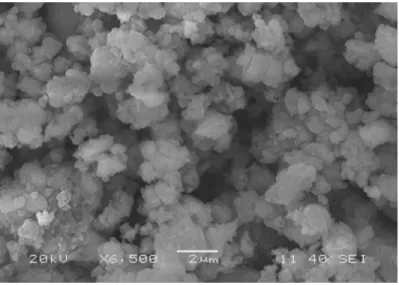
Micro-morphological characterization by SEM and
FT-IR Spectroscopy. 75
In addition, CO2 was used with the biodegradable surfactant to extract fine iron ore from CO2-neutralized red mud. Therefore, utilization of hazardous corrosive red mud minerals for CO2 sequestration and its neutralization will reduce the environmental problem of red mud storage area. Neutralization of caustic red mud can be accomplished by sequestering CO2 from the stack of a coal-fired power plant.

Determination of pH, alkalinity, electrical conductivity
Amount of CO 2 captured as determined by CHNS
The direct comparison between MOFs, steel slag and red mud is difficult because the absorption mechanism is completely different from adsorption.
Acid neutralizing capacity (ANC) and cost estimation. 82
Reaction mechanism of neutralization. 84
The assured dissociation of H2CO3 into H3O+ and HCO3– (cf. 4.2) then leads to a rapid depletion of H2CO3, which precludes a substantial temporary population build-up. The reverse reaction, involving temporary protonation of HCO3–, could potentially lead to substantial production of H2CO3 [145].
Advantages of neutralization of red mud using CO 2
By this sequestration mechanism, mobilized CO2 from the atmosphere can be converted into immobilization (stable compound). CO2 is three times as heavy as fuel and therefore cannot be stored in cars or planes. Today's most pressing need for reducing CO2 emissions may be possible using low-cost CO2 sequestration technology.
Characterization of activated CO 2 -neutralized red mud
RM showed a broad band at ~3142 and a weak peak at ~1644 cm–1, due to the stretching vibrations of O–H bonds and H–O–H bending vibrations of the interlayer adsorbed H2O molecule, respectively. These peaks disappeared in ANRM due to the decomposition of the carbonate group by heat treatment. 1 are due to bending vibrations of Si–O–Al and stretching vibrations of Fe–O bonds, respectively [38,136].
Effect of adsorbent dose and pH. 92
Solution pH not only affects the surface charge property of the ANRM through the protonation, but also affects arsenate speciation in the solution. In an acidic environment, OH– ions concentration in the solution is lower, thus less competition with As(V) anions for the available active sites. Solutes interact with mineral surfaces due to their electrical surface charge, due to reactions involving functional groups (H+, OH–) on the mineral surface and ions in the solution [34].
Mechanism of arsenate removal. 94
This is due to the symmetric stretching (vs) of the As-O bond and the asymmetric stretching (vas) of the As-O bond in As-O-Fe species, respectively. From FT-IR data there is clear evidence for surface precipitation of poorly crystalline iron arsenate at acidic pH ~4, while at alkaline pH arsenate is adsorbed via surface complexation. The observed As(V) FT-IR bands at different pH values are consistent with previous reports [149–153].
Effect of contact time and adsorption kinetics. 96
K1 and R2 were found to be 0.0076 and 0.939, respectively, which are extremely low, indicating that the adsorption of As(V) on ANRM did not follow the pseudo-first-order scaling model. The low value of K2 and the high value of R2 indicates that the adsorptions followed pseudo second-order kinetics.
Adsorption equilibrium isotherms. 98
Desorption and regeneration studies. 99
Chemistry 100 Because, in the pH range 4–9, Lewis bases, ligands, and arsenates are selectively adsorbed by the formation of complexes in the inner sphere [157]. But as the pH increases from 9 to 12, the desorption of arsenate increases and maximum desorption (92%) occurred at pH 12 as shown in figure. Because at pH > 11.0 negatively charged FeO– is the predominant surface functional group, thus rejects all ions including arsenates [158].
Extraction of fine iron oxide from CO 2 -neutralized red mud 101
Characterization by XRD, SEM 102
Element composition by EDX 102
Direct use of RM as secondary mineral for steel mill is not possible due to its caustic nature. Through this ore extraction process, large amount of RM can be used directly in the steel plant as high quality iron ore. The decrease in viscosity due to the expansion of the liquid with the addition of CO2 aids in separation [87].
Advantages 103
Neutralization and utilization of red mud waste as a resource is a core objective of the alumina industry. Frost, Thermally activated seawater neutralized red mud used for the removal of arsenate, vanadate and molybdate from aqueous solutions, J. Tade, New applications of red mud as a coagulant, adsorbent and catalyst for environmentally friendly processes, Chemosphere.
Production costs of electricity. 50
TG-DSC diagrams showing weight loss of red mud in the
TG-DSC diagrams showing weight loss of CO 2 -neutralized red mud
Particle size distributions of red mud. 69
Particle size distribution of RM and NRM. 70
Variation of FT-IR spectra of RM and NRM. 76
Variation of FT-IR spectra of cycles-1, 2, and 3, each of
XRD patterns of RM, NRM, and ANRM. 87
FT-IR patterns of RM, NRM, and ANRM. 89
SEM micrographs/EDX spectrum of ANRM. 91
Adsorbent dose versus percentage removal of As(V) by ANRM. 92
Effect of initial pH on As(V) adsorption on ANRM. 93
FT-IR patterns of As(V) adsorbed on ANRM at different pH. 95
Time versus percentage removal of As(V). 96
Desorption of arsenate with respect to solution pH. 99
SEM image of recovered fine iron oxide. 101
EDX analysis spectrum of recovered fine iron oxide. 102
Average chemical composition (wt%) of red mud in worldwide. 15
Chemical composition (wt%) of red mud in different alumina
The approximate amount of red mud generation in India. 17
Chemical composition (wt%) of Indian red mud. 18
Red mud disposal practices at the Indian alumina plants. 19
Thermodynamics data for CO 2 and a few related carbon-containing
The BET-N 2 surface area, pore volume, pore diameter of RM. 69
Major compound composition (%w/w) of RM, NRM and
Major element composition (%w/w) of RM, NRM and carbonated
The average pH, electrical conductivity, and alkalinity of
Pseudo-second-order kinetics constants and related regression
Element composition (wt%) of recovered fine iron oxide. 102
![Table 2.1: Average chemical composition (wt%) of red mud in worldwide [43,44].](https://thumb-ap.123doks.com/thumbv2/azpdfnet/10558190.0/29.918.205.516.544.755/table-average-chemical-composition-wt-red-mud-worldwide.webp)
![Fig. 2.2: (a) Red mud, (b) Red mud pond of NALCO [50].](https://thumb-ap.123doks.com/thumbv2/azpdfnet/10558190.0/35.918.175.540.139.612/fig-red-mud-red-mud-pond-nalco-50.webp)