Analysis of the expression of ACLY and p-ACLY in different stages of oral cancer. Analysis of the expression of ACLY and p-ACLY in different TNM stages of oral cancer.
Introduction
In addition, it has been shown that OSCC frequently metastasizes to cervical lymph nodes [Sasabe et al., 2017]. As such, significant markers are essential for the primary detection of OSCC [Randhawa et al., 2015].
Oral cancer
Unfortunately, about 33% of smoking-related oral cancers occur in the northeastern region of India [Bhattacharjee et al., 2006]. Furthermore, infectious agents and genetic factors also participate in the development of oral cancer [Scully et al., 2005].
Types of oral cancer
- Verrucous carcinoma
- Minor salivary gland carcinomas
- Lymphoma
- Melanoma
These squamous cells commonly have flattened cells that protect the inside of the mouth, nose, larynx and pharynx [Lamichhane et al., 2015]. The common sites for oral melanoma consist of maxillary gingiva and hard palate [Lamichhane et al., 2015].
Development of oral cancer
- Leukoplakia
- Erythroplakia
- Oral Lichen Planus
- Oral Submucous Fibrosis (OSMF)
It has been shown that close to 70% of oral leukoplakias were observed on lip vermilion, oral mucosa and gingivae [Mortazavi et al., 2014]. Clinically, OLP is characterized by white keratotic lesions, usually painless to erosions and ulcerations that are painful [Mortazavi et al., 2014].
TNM (Tumour lymph node metastasis) Staging
In addition, it has been estimated that OSMF patients will have 19 times higher chances of developing OSCC compared to healthy people [Mortazavi et al., 2014]. N2a Metastasis in a single ipsilateral lymph node, more than 3 cm but not more than 6 cm or less in greatest dimension.
Stage grouping
Risk factors of oral cancer
- Tobacco
- Betal quid and areca nut
- Alcohol
- Human papilloma virus (HPV)
- Other factors
It is also said that nicotine in the body can give rise to TSNA [Sanner et al., 2015]. Some viruses, such as EBV, HPV, retroviruses and herpes simplex viruses (HSV), are involved in the origin of tumors in the oral cavity [Radhakrishnan et al., 2012].
Molecular Alterations of Oral cancer
The increase in MVD (microvessel density) affects VEGF and thereby regulates the progression of OSCC [Tsantoulis et al., 2007]. Genetic alterations of oral tumorigenesis; (a) Normal squamous epithelium, (b) papillary hyperplasia, (c) moderate dysplasia, (d) moderate dysplasia, (e) severe dysplasia, (f) carcinoma in situ and (g) invasive squamous cell carcinoma (Tanaka T et. al. , 2011).

Therapies available for cancer of the oral cavity 1. Surgery
Radiation therapy
Sometimes radiation therapy can also be combined with chemotherapy for better prognosis of the disease [David et al., 2011].
Chemotherapy
Problems associated with therapies 1. Chemoresistance
Side effects
Problems such as mucositis, xerostomia, osteoradionecrosis, microbial infection, ageusia, osteoradionecrosis and dental caries [Dose et al., 1995, Zlotolow et al., 1998]. A major non-haematological complication of cytotoxic chemotherapy and radiotherapy is oral mucositis responsible for subsequent dehydration and malnutrition, odynodysphagia, pain, morbidity and dyseugia [Bitran et al., 1996].
Tumor recurrence
Further, persistent genetic changes in keratinocytes can lead to the transformation of keratinocytes into tumor cells forming a new tumor area near the resected primary tumor [De Vries et al., 1986, Gallo et al., 1995, Braakhuis et al. al. ., 2002, Goldenberg et al., 2004, Levi et al., 2006]. Here, the survival rate of patients becomes low, because there is an increased risk of developing a subsequent primary tumor [Tanaka et al., 2011].
Lipogenic enzymes
- Structure and Distribution of ACLY in body tissues
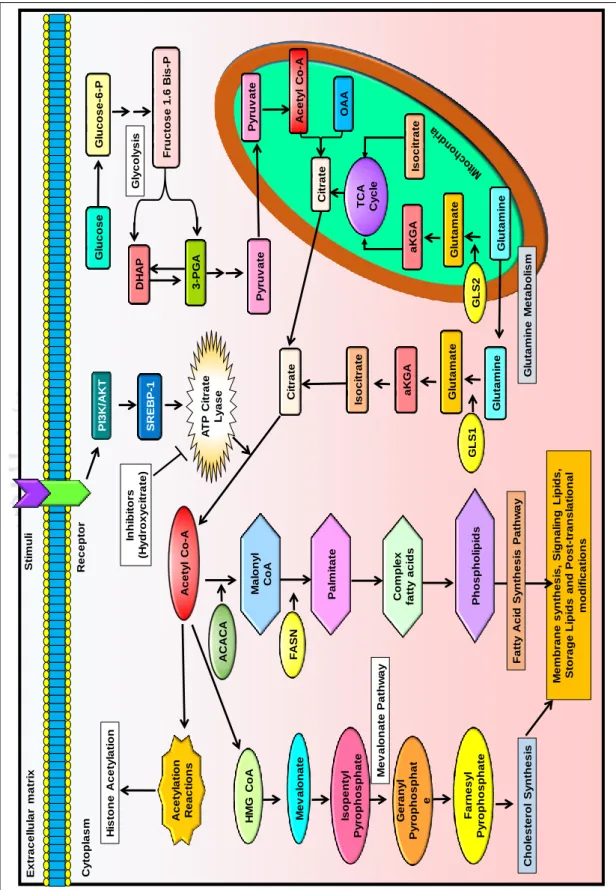
- Pathways served by ACLY
- Regulation in the expression of ACLY
- Inhibition of ACLY
Many studies have proven that ACLY inhibitors regulate ACLY expression [Hatzivassiliou et al., 2005]. Additionally, cells with higher levels of ACLY showed up-regulated Snail expression (stimulate epithelial-mesenchymal transition (EMT) and stemness) [Hanai et al., 2013.

ATP citrate lyase and cancer
- Breast cancer
- Colon cancer
- Bladder cancer
- Gastric cancer
- Brain cancer
- Hepatocellular carcinoma
- Lung cancer
- Prostate cancer
- Ovarian cancer
Studies have shown that the expression of ACLY correlated with the local tumor stage of NSCLC [Hanai et al., 2012]. Upregulated expression of phosphorylated ACLY has been observed in ovarian cancer tissues [Wang et al., 2012,].
Importance of the study
In addition, reduction of USP13 significantly suppressed tumor progression and sensitized ovarian tumor cells to PI3K/AKT inhibitors [Al-Saffar et al., 2010]. ACLY knockdown has also been shown to inhibit tumor proliferation and cause cell cycle arrest in ovarian tumor cells [Wang et al., 2012].
Objectives
Therefore, understanding the role of ACLY in oral carcinogenesis may be important for the early detection and prevention of oral malignancy. Thus, the fact that ACLY has played a major role in tumorigenesis means that it can act as an important biomarker in the detection of oral cancer.
Differential expression of ACLY in oral cancer
Materials and Methods
- Genetic alteration of ACLY in head and neck carcinoma analyzed in The Cancer Genome Atlas dataset (TCGA)
- Cell culture
- RNA preparation and reverse transcription-PCR
- Immunohistochemical Analysis
- Scoring and Statistical analysis
The OSCC cell lines such as SCC-9, HSC-3, SAS, (tongue carcinoma), T.Tn (an esophageal carcinoma cell line) and HaCaT (immortalized human keratinocyte) cells were used for our studies. Furthermore, the HaCaT and SAS cell lines were grown in Dulbecco's modified Eagle's medium (DMEM), and the T.Tn cells in 45% DMEM with 45% Ham's F12 medium with 10% fetal calf serum, at 37 °C in a humidified atmosphere. by 5%. The comparative mRNA expression of ACLY on SAS and HaCaT cell lines was studied using reverse transcription polymerase chain reaction (RT-PCR).
ACLY expression was examined in different oral cancer cell lines compared to a normal cell line using Western blot analysis. Bovine serum albumin (BSA) was used as a standard for protein estimation and the concentration of isolated protein was quantified. In our study, TMA slide immunostaining was performed using Histostain-Plus Broad Spectrum (Invitrogen, Cat.
Results and Discussion
- Genetic alteration of ACLY studied in the open data portal of The Cancer Genome Atlas dataset (TCGA)
- Expression analysis of ATP citrate lyase (ACLY) and phospho-ACLY in normal oral tissues and oral cancer tissues
- Expression of ACLY and phospho-ACLY in the various developmental stages of oral cancer
- Analysis in the expression of ACLY and phospho-ACLY in patients of different age groups (Gender wise)
Expression of ACLY and p-ACLY in oral cancer tissue compared with normal oral tissue. Expression of ACLY and p-ACLY in normal tissue versus oral cancer tissue at different stages of development. Analysis in the expression of ACLY and phospho-ACLY in patients of different age groups (by sex) different age groups (by sex).
We also determined the expression of ACLY and p-ACLY in different grades of oral cancer. The analysis of the IHC results also showed an increase in the expression of ACLY and p-ACLY in the different TNM (tumor-node metastasis) stages of oral cancer compared to normal. Expression of ACLY and phospho-ACLY in tumors from the different organs of the oral cavity.

CONCLUSION
Effect of pure tobacco extract and other tobacco related carcinogens on
Materials and Methods 1. Cell lines and cell culture
- Preparation of tobacco extract
- Preparation of tuibur
- Tobacco components
- MTT assay
- RNA preparation and reverse transcription-PCR
- Expression of ACLY and related genes in SAS (an OSCC cell line)
Tobacco extract (TE) was prepared from tobacco leaves purchased from local vendors of Guwahati. The obtained filtrate was lyophilized and a working base concentration of 100 mg/ml was prepared in sterile distilled water and stored at -20 °C for further experimental studies. The non-cytotoxic concentration of tobacco extract, tuibur and other tobacco components was determined using the MTT test.
The cytotoxicity of the above tobacco components was determined by measuring the conversion of 3-(4,5-dimethylthiazol-2-yl)-2,5-diphenyltetrazolium bromide (MTT; Sigma-Aldrich)) to formazan. ACLY mRNA expression upon treatment with tobacco extract, tuibur and other tobacco components was studied by reverse transcription-polymerase chain reaction (RT-PCR). SAS cells were seeded in culture plates at a density of 5 × 10 cells per well and treated with various concentrations of tobacco components for 24 hours.
Results and Discussion
- Effect of tobacco extract on the expression of ACLY and related genes In the previous chapter 2, we have found increased expression of ACLY both in the
- Effect of Nicotine on the expression of ACLY and related genes
- Effect of Tobacco-specific nitrosamines (NNK and NNN) on the expression of ACLY and related genes
ACLY mRNA expression was found to be significantly increased upon treatment with raw tobacco extract. In our study, a significant increase in the expression of ACLY and various other oncogenes was observed with tobacco extract treatment. This supported our IHC results in which ACLY expression was found to increase with oral cancer progression.
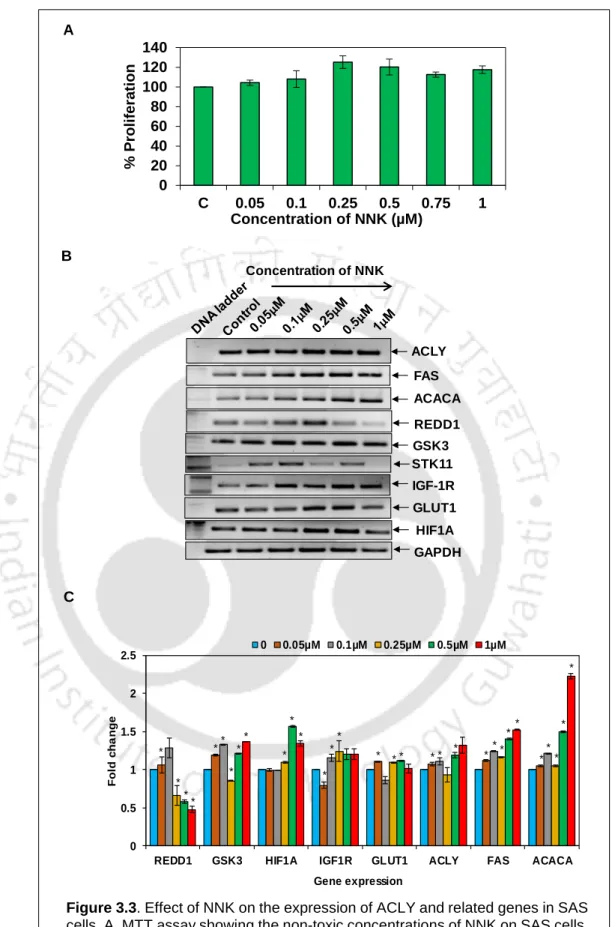
Total RNA was isolated and semi-quantitative RT-PCR was performed to analyze the expression of ACLY and other genes. Effect of tobacco-specific nitrosamines (NNK and NNN) on the expression of ACLY and related genes ACLY and related genes. In this chapter, an attempt has been made to study the effect of TSNA on the expression of ACLY and other oncogenes related to tumor metabolism.
Effect of NNK on the expression of ACLY and related genes
- Effect of Tuibur on the expression of ACLY and related genes
Quantification of expression of ACLY, FAS, ACACA and other related genes such as REDD1, GSK3, STK11, GLUT1, HIF1A and IGF-1R in NNN-treated SAS cells obtained using Image Lab software. Therefore, knowledge of tuibur's effect on ACLY expression would lead to new discoveries of tuibur-induced oral carcinogenesis. Second, we isolated total RNA and studied the expression of ACLY and other genes by semiquantitative RT-PCR.
Quantification of the expression of ACLY, FAS, ACACA and other related genes such as REDD1, GSK3, STK11, GLUT1, HIF1A and IGF-1R in tuibur-treated SAS cells obtained using Image Lab software. Furthermore, we also observed the significant increase in the expression of GSK3 in SAS cells upon treatment with tobacco. We also observed reduction in the expression of REDD1 with the increase in tobacco concentration.
Role of ACLY proteins in the Development and Progression of
- Chemicals
- Bacterial culture and plasmid isolation
- Cell culture
- Gene knockout via CRISPR/cas9
- Proliferation assay
- Colony forming assay
- Migration assay
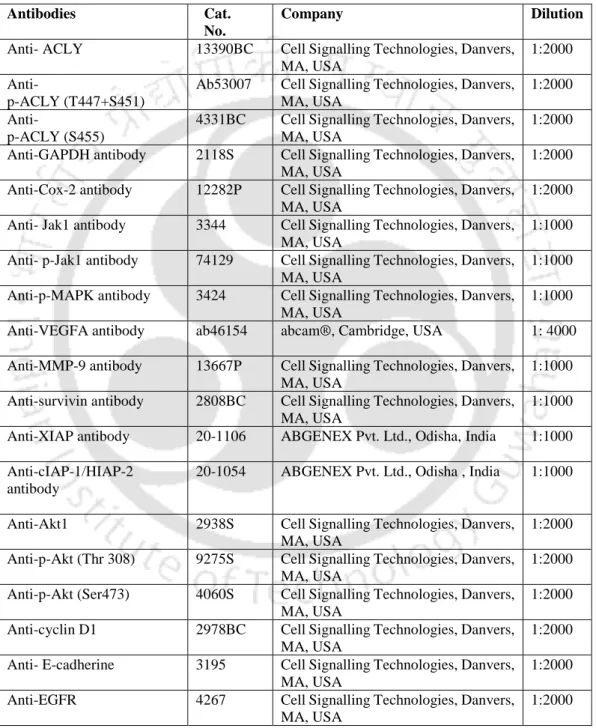
- Western blot analysis
- Successful knockout of ACLY as confirmed by Western blot
- ACLY knockout decreased the proliferation of oral cancer cells
- ACLY knockout inhibited the clonogenic potential of oral cancer cells It is well known that increase in survival, uncontrolled proliferation, resistant to cell
- ACLY knockout inhibits the migration potential of oral cancer cells It has been evidenced that the advanced stages of oral cancer are often associated with
- ACLY knockout downregulated the expression of proteins involved in the growth survival, proliferation, angiogenesis and migration of OSCC cells
- Conclusion
Significant upregulation in ACLY expression was observed in the oral cancer tissues compared to the normal oral tissues. The effect of ACLY knockout on HSC-3 cell proliferation was investigated using the MTT assay. Here we examined the effect of ACLY knockout on HSC-3 cell proliferation using the MTT assay.
Agarose gel images of mRNA expression of ACLY secreted versus scrambled (SCR). Interestingly, complete inhibition of upstream ACLY phosphorylation was observed after deletion of the ACLY (4,4 A-B) protein. Effect of CRISPR/Cas9-mediated deletion of ACLY proteins on phosphorylation of ACLY proteins.
Discussion and Conclusion
Limitations and future prospective of the study
The role of ATP-citrate lyase in the transfer of acetyl groups in rat liver. 2002). Epidermal growth factor (EGF) stimulation of ATP-citrate lyase activity in isolated rat hepatocytes is age dependent. 1987) Effect of transforming growth factor beta (TGF-beta). on ATP citrate lyase in isolated hepatocytes.
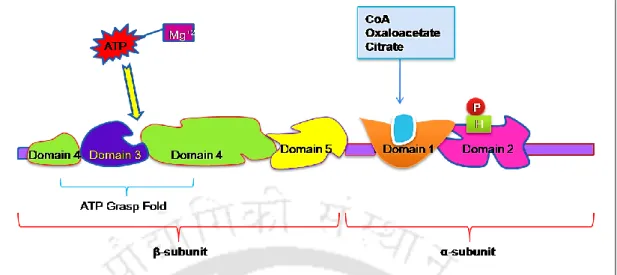
Polyamine-regulating protein antizyme binds to ATP citrate lyase to accelerate acetyl-CoA production in cancer cells. 2014) Increased lipid accumulation in the yeast Yarrowia lipolytica by overexpression of ATP citrate lyase from Mus musculus. Structure of ATP Citrate Lyase (1101 amino acid residues) showing 5 different domains with the binding site of different proteins.
Amrita Devi Khwairakpam, Ajaikumar B Kunnumakkara, An Investigation into the Expression of ATP Citrate Lyase in Oral Squamous Cell Carcinoma (OSCC), Workshop on “Introduction to Basic and Advanced Biomedical Approaches for Improving QOL in Aging Societies” held at Biomedical Research Institute, AIST , Tsukuba Science City, Japan, October. Received 'Best Oral Presentation Award' for the paper entitled "An Investigation on the Expression of ATP Citrate Lyase in Oral Squamous Cell Carcinoma (OSCC)" at Workshop on "Introduction to Basic and Advanced Biomedical Approaches for Improving QOL in Aging Societies ".