A. Zh.Sagyndykova
FUNDAMENTALS OF DIAGNOSTICS
OF HEAT POWER FACILITIES AND CONTROL SYSTEMS TEXTBOOK
Almaty AUES
2020
MINISTRY OF EDUCATION OF THE REPUBLIC OF KAZAKHSTAN NON-PROFIT JOINT-STOCK COMPANY
Almaty university of energy and communications named after Gumarbek Daukeev
A. Zh.Sagyndykova
FUNDAMENTALS OF DIAGNOSTICS
OF HEAT POWER FACILITIES AND CONTROL SYSTEMS
TEXTBOOK
Almaty AUES
2020
UDK 530(075.8) BBK 22.3
С 13
Reviewers:
Professor of the Department "Energy supply and renewable energy sources"
of the Gumarbek Daukeev AUES Aldibekov I.T.
Doc.tech.Professor,Director Of the Department of Informatization of education of Abai KazNPU
Atyhanov A.K.
kand.tech.Professor,Director Of the Department of Informatization of education of Abai KazNPU
Hasanov Kh.M.
Sagyndikova A. Zh.
C13 Fundamentals of diagnostics of heat power facilities and control systems.
Textbook:/ Sagyndikova A. Zh. -Almaty: Gumarbek Daukeev NAO AUES, 2020.- 190p.:tabl.6,figura.55, bibliogr. -99 titles.
ISBN 978-601-7939-48-9
The textbook is intended for students studying in the direction of "Energy supply of agriculture" and is aimed at forming a fully developed specialist who is able to implement tasks to improve the energy efficiency of the country at various levels within the framework of the acquired competencies: from the development and adoption of laws to the direct implementation of certain technical measures.The Textbook is intended for undergraduates, doctoral students and teachers of technical universities.
UDK 530(075.8) BBK 22.3 Published by the decision of the Academic Advisory Board of the Republican Educational Methodical Council on energy, radio engineering, electronics and
telecommunications, MES, from 20.10.2020 Protocol No. 1 ISBN 978-601-7939-48-9
© AUES,2020
© Sagyndikova A. Zh.
CONTENT
TERMS AND DEFINITIONS OF ELECTROTHERMIA 7
SYMBOLS 9
INTRODUCTION 10
1 1
CURRENT PROBLEMS OF ENERGY SAVING AND ENERGY EFFICIENCY IMPROVEMENT
12
1.1 Basic terms and concepts 12
1.2 Physical basics of energy saving 16
1.3 Current problems of energy saving and energy efficiency improvement
18 1.4 Energy survey in the power supply system of an industrial enterprise 20
2 FEATURES OF POWER SUPPLY TO AGRICULTURAL
ENTERPRISES
23 2.1 Improvement of agricultural enterprises in the conditions of
Republic of Kazakhstan. Probabilistic loads of agricultural consumers.
23
2.2 Sources of power supply for agricultural production. Various power supply scheme
25 2.3 Basic schemes of centralized power supply. Nodal and district
substations and their connection schemes
31 2.4 Rural power stations. Types of electric power sources and their
application in different climatic zones
34 2.5 Costs of production and transmission of electric energy. Selection of
parameters of power supply systems for agricultural enterprises and rural localities
40 2.6 Influence of the quality of electric energy on the operation of
electric receivers in agricultural production and ways to improve it
48 2.7 Rural distribution networks with two-way power supply. Backup
power plants as a means of improving the reliability of power supply
52 2.8 Determination of the number and capacity of consumer substations
in large rural localities
56 3 HEAT LOSSES OF BUILDINGS AND STRUCTURES AND
METHODS FOR THEIR DETERMINATION
60
3.1 Structure of heat losses 60
3.2 The resistance to heat transfer 61
3.3 Ways to minimize heat losses. Energy saving measures in buildings and structures
64 3.4 Energy conservation measures in heating, ventilation and air
conditioning
65 4 METHODS AND MEANS OF INCREASING ENERGY
EFFICIENCY
69
4.1 Power quality and energy saving 69
4.2 Typical measures to improve the efficiency of heat and electricity consumption
72 4.3 List of typical energy saving and energy efficiency measures 74 4.4 Technical measures for energy saving and limits of annual savings 77
4.5 Organizational and low-cost activities 80
4.6 Improving the energy efficiency of buildings and structures 81 4.7 Energy saving in heating systems of buildings and structures 85
4.8 Classification of heating systems 86
4.9 Decentralized heating systems for buildings and structures 87 4.10 Power supply оptions for agricultural consumers. Types of different
power supply sources
96 4.11 Design requirements for selecting parameters of the power supply
system for an agricultural area
101 4.12 Comparison of centralized and local power supply. Expenses for
maintenance of networks and Autonomous power sources
106
5 AUTOMATED HEATING SYSTEM CONTROL UNIT 112
5.1 Huge fuel and energy resources 112
5.2 Automated system for integrated accounting of fuel and energy resources
114 5.3 Organization of work and operating conditions of the automated
system of integrated accounting of fuel and energy resources
115 5.4 Structure of the automated system for integrated accounting of fuel
and energy resources
116
6 USE OF RENEWABLE ENERGY SOURCES AND
SECONDARY ENERGY RESOURCES
119
6.1 Renewable energy sources 119
6.2 Secondary energy resources 123
6.3 Renewable energy sources in Kazakhstan 131
7 STATUS OF THE ISSUE AND RESEARCH OBJECTIVES 134
7.1 Classification of electrothermal installations 134 7.2 Tasks and content of design of electrothermal installations 135 7.3 Through-heating induction installations, calculation methods and
operation features
136
7.4 Inductors. Features of induction heating 137
7.5 Energy relations of the inductor – product system 141
7.6 Modes and optimal frequency of high-frequency induction heating 145 7.7 Induction heat treatment as a technical system 147
7.8 Technological process of metal heating 152
7.9 Development of a frequency Converter based on JGBT transistors modules with single-phase power supply
153
7.10 Induction heater (IH) for metal products 156
7.11 Inductors. The design and application 161
7.12 Power sources for induction and dielectric heating installations 162
8 SPECIAL SECURITY ISSUES 168
8.1 Electromagnetic safety. Harmful factors of electromagnetic fields 168 8.2 Ensuring electromagnetic safety during operation of induction
installations
168 8.3 Evaluation of electromagnetic safety of the induction system 169 8.4 Analysis of dangerous and harmful factors during operation, testing
and adjustment of the product
171
8.5 O and VPF protection 171
8.6 Fire safety 171
8.7 Protection against lightning surges in rural electric networks 172
CONCLUSION 1
182
LITERATURE 1
184
TERMS AND DEFINITIONS OF ELECTROTHERMIA
The following terms and definitions are used in this monograph:
Electric heating is a branch of science and technology that studies the conversion of electricity into thermal energy for useful purposes.
Electrothermal effect –the release or absorption of thermal energy due to a longitudinal temperature gradient when an electric current flows through a homogeneous conductor.
Indirect electric heating is an electric heating process in which the generated heat is transferred to the heating material.
Direct electric heating –an electric heating process in which current passes through the heated material.
Arc heating is a heating method in which heat is produced primarily by one or more electric arcs.
Induction heating – electric heating using electromagnetic induction. If you place an object made of an electrically conductive material inside a coil with an alternating current passing through its winding, eddy currents are induced in the object embedded in the coil cavity by an alternating magnetic field.
Microwave – ultra-high-frequency heating, electromagnetic radiation, including the centimeter, centimeter and millimeter ranges of radio waves (wave length from 1 m - frequency 300 MHz to 1 mm -300 GHz).
Specific energy intensity– the ratio of the lowest heat of combustion of fuel to its total volume.
Adhesion is the adhesion of surfaces of two dissimilar solid or liquid particles.
Infrared heating is a heating method based on the transfer of energy by infrared radiation.
Dielectric heating is a method of heating in which heat is mainly generated in a non-conductive body due to the movement of electric charges at the atomic or molecular level under the influence of an electric field in the frequency range from 1 MHz to 300 MHz.
Resistance heating is a heating method in which heat is generated by the Joule –Lenz effect in an electrical conductor connected directly to a power source.
Ultrahigh frequency current heating is a heating method in which heat is mainly generated by molecular motion and ionic conductivity in a non-conductive material under the action of electromagnetic waves in the frequency range between 300 MHz and 300 GHz (wavelengths from 1 m to 1 mm).
Plasma heating is a heating method that uses the thermal and/or electrical properties of an ionized gas.
Electrothermal equipment (ETO) –a device, a set of technological devices for converting electricity into heat.
Electrothermal installation (ETU) –an installation consisting of electrothermal, electrical and mechanical equipment necessary for its operation and
application.
The ETU efficiency is the ratio of the energy converted to useful heat to all the electricity supplied to produce this useful heat.
An electric heater (furnace) inductor is a structural unit that includes an inductive wire.
Heating chamber –a closed heated area of the furnace where heat treatment is performed.
Heating element –a part, removable or non-removable, containing a heating conductor and devices that form an independent device.
Heating cable (wire) –a cable (wire) with high electrical resistance cores designed for heating various objects.
An electrode is a conductive part designed to make contact with a medium with a low specific conductivity.
SYMBOLS
T, t – current temperature on the Kelvin, K, and Celsius scale, °С;
T0 – the initial temperature of the body, К;
Tс, Tж – ambient temperature, liquid, К;
ϑ = (T − T0) – excessive temperature, К;
θ = T/T0 – the dimensionless relative temperature;
х, y, z – current coordinates;
τ – time, с;
2R – total body thickness, m;
d, D – geometric size, m;
L, A, δ – linear size, m;
F – the cross-sectional area of the body or body surface area, m 2; q – specific heat flux, W / m2, or heat loss, %;
qL – linear heat flux density, W / m;
Q – total heat flow or heat output, W;
k – flat wall heat transfer coefficient, W/(m2⋅K);
kL – heat transfer coefficient of the cylindrical wall, W/(m⋅K);
с – specific mass heat capacity, DJ/(kg K);
ρ – material density, kg / m 3;
(сρ) – specific volume heat capacity,D J/(m3⋅K);
G – flow rate of liquid, kg / s, or gas, m3 / s;
V – volume, m3, or volume flow, m3 / s;
m, М, – weight of the substance, kg;
ω – speed of the substance, m / s;
а – coefficient of thermal diffusivity, m2 / s;
λ – coefficient of thermal conductivity, W/(m⋅K);
α – convective heat transfer coefficient, W/(m2⋅K);
E – emissive power, W/m2;
εпр – given the degree system black;
D – steam capacity, kg / s;
Вр, Ву – calculated and conditional fuel consumption, kg / s, m3 / s.
INTRODUCTION
Energy conservation is one of the most important tasks of the XXI century, since the consumption of heat and electricity is a necessary condition for human life and the creation of favorable conditions for his life. Improving the competitiveness, financial stability, energy and environmental security of the Russian economy, as well as increasing the level and quality of life of the population is impossible without realizing the potential of energy saving and improving energy efficiency through modernization, technological development and transition to rational and environmentally responsible use of energy resources. Our society's place among the economically developed countries also depends on the results of solving this problem.
The Republic of Kazakhstan is one of the most wasteful countries in the world. The entire volume of petroleum products and oil exported by us is comparable to the energy saving potential in Kazakhstan. The prospects for energy saving in our country are huge, we only need to use energy resources efficiently.
The so-called "leaks" and" costs " occur in all sectors of the economy: in housing and utilities, in industry, and even in the fuel and energy complex.
"Energy saving and energy efficiency improvement for the period up to 2020" [1] the energy intensity of Kazakhstan's gross domestic product is 2.5 times higher than the global average and 2.5 - 3.5 times higher than in developed countries. More than 90 percent of the capacity of existing power plants, 83 percent of residential buildings, 70 percent of boiler houses, 70 percent of technological equipment of electric networks and 66 percent of heating networks were built before 1990. In industry, 15 percent of fully worn-out fixed assets are used.
A long-term gap in energy efficiency levels with advanced countries is unacceptable, since maintaining the high energy intensity of the Kazakh economy will lead to a decrease in Kazakhstan's energy security and curb economic growth.
The entry of the Republic of Kazakhstan to the standards of well-being of developed countries against the background of increasing global competition and the exhaustion of sources of export-raw material development requires a radical increase in the efficiency of using all types of energy resources.
In 2010 - 2018, after a long lag, Kazakhstan broke out into the world leaders in terms of reducing the energy intensity of gross domestic product. Over the years, this indicator has decreased by 35 percent, that is, on average, it has decreased by almost 5 percent per year. The main contribution to the reduction in the energy intensity of gross domestic product was made by structural shifts in the economy, since industry and the residential sector developed more slowly than the service sector, and the production of less energy-intensive products grew faster in industry [1].
The "recovery" growth in the industry allowed us to get the effect of
"economies of scale" (savings on conditionally fixed energy costs as the load of old production facilities increases), but retained the high-energy-intensive raw material
specialization and technological backwardness of the Kazakh economy.
Between 2000 and 2008, due to the introduction of new technologies in new construction and modernization, the energy intensity of gross domestic product decreased by an average of only 1 percent per year, or about the same as in many developed countries, which did not significantly reduce the technological gap with these countries.
The formation of an energy-efficient society in Kazakhstan is an integral part of the development of the economy of the Republic of Kazakhstan along an innovative path. The transition to an energy-efficient development option must be completed in the coming years, otherwise economic growth will be held back due to high prices and reduced availability of energy resources.
Energy saving and improving energy efficiency should be considered as one of the main sources of future economic growth. However, to date, this source has been used only to a small extent.
The solution to the problem of energy saving and increasing energy efficiency are long term, which is necessary as changes in the system of relations in energy markets and the replacement and modernization of a significant part of production, engineering and social infrastructure and its development on new technology.
One of the most important conditions is to create energy saving as a profitable business, both for companies engaged in energy saving at the professional level, and for financiers. At the same time, energy saving should be converted for energy consumers into a reasonable method of reducing costs. In a market economy, what money is willing to pay for is produced, so it is extremely important to organize the energy saving market by organizing the needs for energy-saving goods and services, and they will not be long in coming in conditions of active demand.
It is also important to provide high-quality and timely energy-saving services, establish contacts between organizations dealing with the problem, demonstrate the capabilities of industries that manufacture devices, implement technologies, provide services to the energy-saving sector, and strengthen partnerships between manufacturers and consumers of energy-saving products.
This textbook is intended for students studying the discipline "Energy supply of agriculture", which belongs to the cycle of professional disciplines. the textbook is aimed at forming a system of knowledge of scientific and technical foundations in terms of training a specialist in the operation, design and development of reliable and uninterrupted supply of rural consumers with fuel, heat, electricity, gas, warm air and water, hot water and steam.
1 CURRENT PROBLEMS OF ENERGY SAVING AND ENERGY EFFICIENCY IMPROVEMENT
1.1 Basic terms and concepts
Thermophysical properties (TFS) or thermophysical characteristics (TFS) of substances, materials and products – coefficients of thermal conductivity, thermal diffusivity, heat transfer, heat transfer, thermal resistance of heat transfer, specific volume or weight heat capacity, degree of blackness, saturation temperature.
Fuel is a substance that can be used in economic activities to produce heat energy released during its combustion[2].
Energy carrier – a substance or form of matter that is in various aggregate States (solid, liquid, gas, plasma, field, radiation). The energy of these substances, when certain conditions are created, is used for energy supply purposes.
Natural energy carrier – energy carrier formed as a result of natural processes:
hydrosphere water (when using the energy of rivers, seas, oceans); hot water and steam from geothermal sources; atmospheric air (when using wind energy); organic fuel (oil, gas, coal, peat, shale), biomass.
Produced energy carrier – energy carrier obtained as a product of the production process: water vapor of various parameters of boiler plants and other steam generators; hot water; compressed air, acetylene; products of organic fuel and biomass processing, etc.
Fuel and energy resources (TER) – a set of natural and industrial energy carriers, the stored energy of which is available for use in the economic activities of enterprises, transport, housing and communal services at the current level of development of equipment and technology[3,4].
Secondary fuel and energy resources – fuel and energy resources obtained as waste or by-products (emissions) of the production process. Secondary fuel and energy resources are found in the form of heat of various parameters and fuel.
Secondary fuel and energy resources include: heated exhaust gases of technological units; gases and liquids of cooling systems; waste water vapor; waste water; ventilation emissions, the heat of which can be usefully used.
Secondary fuel and energy resources in the form of fuel include: solid and liquid waste, gaseous emissions from oil refining, oil production, chemical, pulp and paper, woodworking and other industries, urban garbage, etc.
Useful energy – energy that is theoretically necessary (under idealized conditions) for performing specified operations, technological processes, or performing work and services.
Examples of the definition of the term "useful energy»:
-in lighting systems - by the light flow of lamps;
-in power processes: for motor processes - by the working moment on the motor shaft; for direct impact processes – by the energy consumption required in accordance with the theoretical calculation of the specified forces;
- in electrochemical and electrophysical processes - by the energy consumption required for carrying out the specified conditions;
- in thermal processes - according to the theoretical energy consumption for heating, boiling, melting, evaporation of the material and conducting endothermic reactions;
-in heating, ventilation, air conditioning, hot water, and cold supply systems- by the amount of heat received by consumers or users;
-in systems of conversion, storage, and transportation of fuel and energy resources-by the amount of resources obtained from these systems.
Возобновляемые топливно-энергетические ресурсы – природные энергоносители, постоянно пополняемые в результате естественных (природных) процессов.
Renewable energy sources are based on the use of [4]:
-energy sources: solar radiation, wind energy, rivers, seas and oceans, internal heat of the Earth, water, air;
- energy of the natural movement of air, water flows and natural temperature gradients and density differences;
- biomass energy obtained as waste from crop and animal husbandry, artificial forests and algae;
- energy from the disposal of industrial waste, solid waste and sewage sludge;
- energy from the burning of plant biomass, thermal processing of waste from the forest and woodworking industries.
Power plant – a complex of interconnected equipment and structures designed for the production or conversion, transmission, storage, distribution or consumption of energy.
Rational or efficient use of fuel and energy resources is the use of fuel and energy resources that ensures maximum efficiency at the current level of technology development, taking into account their limited reserves and compliance with the requirements of reducing the anthropogenic impact on the environment and other requirements of society. The concept of "Rational use of fuel and energy resources"
is General in comparison with the concept of "Economical use of fuel and energy resources" and includes:
-selection of the optimum energy mix, i.e. the optimal quantitative ratio of different used types of energy resources to install, on the site, in the shop, at the enterprise, region, industry, economy;
- integrated use of fuel, its heat, including waste products of fuel combustion as raw materials for industry (for example, the use of ash and slag in construction);
- integrated use of water resources of rivers and reservoirs;
- consideration of the possibility of using organic fuel (for example, oil) as a valuable raw material for industry;
- a comprehensive study of export-import opportunities and other structural optimizations[5].
Fuel and energy savings – a comparative reduction in fuel and energy
consumption for the production of products, performance of works and provision of services of established quality without violating environmental and other restrictions in accordance with the company's requirements.
Fuel and energy savings are defined as a comparative reduction in fuel consumption, not consumption, corresponding to the expenditure part of the fuel and energy balance of a specific energy-consuming object (product, process, work and services).
Reference values of fuel and energy consumption are established in regulatory, technical, technological, and methodological documents and are approved by the authorized body in relation to the conditions and results of activities to be checked.
Non-productive consumption of fuel and energy resources – consumption of fuel and energy resources caused by non-compliance or violation of the requirements established by state standards, other regulatory acts, regulatory and methodological documents.
Energy saving – implementation of legal, organizational, scientific, industrial, technical and economic measures aimed at efficient (rational) use (and economical expenditure) Fuel and energy resources and the involvement of renewable energy sources in economic turnover.
Energy saving indicator – a qualitative and (or) quantitative characteristic of planned or implemented energy saving measures.
Energy-saving policy is a comprehensive systematic implementation at the state level of a program of measures aimed at creating the necessary organizational, material, financial and other conditions for the rational use and economical expenditure of fuel and energy resources.
Energy survey – a survey of consumers of fuel and energy resources in order to establish performance indicators for their use and develop economically sound measures to improve them[4,5].
Fuel and energy balance – a system of indicators that reflects the full quantitative correspondence between income and expenditure (including losses and balance) Fuel and energy resources in the economy as a whole or in its individual sections (industry, region, enterprise, shop, process, installation) for the selected time interval.
The term expresses a complete quantitative correspondence (equality) for a certain time interval between the consumption and arrival of energy and fuel of all types in the energy sector. The fuel and energy balance is a static characteristic of a dynamic energy management system over a certain time interval. The optimal structure of the fuel and energy balance is the result of the optimized development of the energy economy.
The fuel and energy balance can be compiled [3, 4]:
- by types of fuel and energy resources (resource balances);
-by stages of the energy flow of fuel and energy resources (extraction, processing, transformation, transportation, storage, use);
-for a single or consolidated fuel and energy balance of all types of energy and fuel and energy resources, and in General for the national economy;
-for energy facilities (power plants, boilers), individual enterprises, workshops, sites, power plants, aggregates;
-as intended (power processes, thermal, electrochemical, lighting, air conditioning, communication and control facilities);
-the level of use (with the release of useful energy and losses);
- in the territorial context and by branches of the national economy.
When compiling the fuel and energy balance, different types of fuel and energy resources lead to the same quantitative measurement. The procedure for bringing to uniformity can be performed:
-by the physical equivalent of the energy contained in the TER, i.e. in accordance with the first law of thermodynamics;
-by relative efficiency (exergy), i.e. in accordance with the second law of thermodynamics;
-by the amount of useful energy that can be obtained from the specified fuel and energy sources in the theoretical plan for the specified conditions.
Energy passport of industrial consumer of fuel and energy resources – regulatory document, reflecting the balance of consumption and indicators of efficiency of use of energy resources in the process of economic activity of object of industrial purpose and able to contain energy saving measures.
Energy passport of a civil building – a document containing the geometric, energy and heat engineering characteristics of buildings and projects of buildings, enclosing structures and establishing their compliance with the requirements of regulatory documents[5].
Energy-saving technology – a new or improved technological process characterized by a higher efficiency of fuel and energy resources.
Certification of energy-consuming products-confirmation of compliance of products with regulatory, technical, technological, methodological and other documents regarding the consumption of energy resources by fuel and energy- consuming equipment.
Energy efficiency indicator – an absolute, specific or relative parameter of consumption or loss of energy resources for products of any purpose or technological process.
Energy efficiency - the ratio of all useful energy used in the economy (site, power plant, etc.) to the total amount of energy consumed.
Efficiency-the ratio of the useful energy to the supplied; a parameter that characterizes the perfection of the process of conversion, conversion or transfer of energy.
Energy loss – the difference between the amount of supplied (primary) and consumed (useful) energy. Energy losses are classified as follows:
a) by area of origin: during extraction, storage, transportation, processing, conversion, use and disposal;
b) by physical characteristics and nature:
- heat loss to the environment with outgoing flue gases, technological products, technological waste, material entrainment, chemical, mechanical and physical underburning, cooling water;
-power losses in transformers, throttles, electrical wires, electrodes, power lines, power plants;
- loss of liquids and gases with leaks through leaks;
- hydraulic pressure losses during throttling and friction losses during the movement of liquid (steam, gas) through pipelines, taking into account local resistances;
- mechanical friction losses of moving parts of machines and mechanisms;
с) for the following reasons:
- due to design flaws,
- as a result of improper operation of the units and not optimally selected technological mode of operation;
- as a result of product defects and other reasons.
Energy intensity of production – a parameter of energy and (or) fuel consumption for the main and auxiliary technological processes of production, performance of works, provision of services on the basis of a given technological system. Practically in the production of any type of product, fuel and energy resources are consumed, and for each type of product there is a corresponding energy intensity of the technological processes of their production. At the same time, the energy intensity of technological processes for the production of the same types of products produced by different enterprises may be different.
The indicator of energy efficiency of a product is a quantitative characteristic of operational properties that reflect the technical perfection of the design, the quality of manufacture, the level or degree of energy and (or) fuel consumption when using this product for its intended purpose[6].
Energy efficiency indicators are individual for different types of products.
They characterize the perfection of the design of this type of product and the quality of its manufacture. As a rule, specific indicators should be chosen as indicators of energy efficiency.
Consumer of fuel and energy resources – an individual or legal entity that uses fuel, electric energy and (or) heat energy (capacity).
1.2 Physical basics of energy saving
The fulfilment of Kazakhstan's Government objectives to improve energy efficiency, supporting energy security and competitiveness of products, seems impossible without a qualitative understanding of experts responsible for saving those physical processes and mechanisms that determine the loss of energy resources during their production, transportation and use. First of all, attention should be paid to the processes of heat energy transfer and conversion and the losses
associated with these processes. To begin with, let's define the object of study – heat and the main mechanisms of its transmission.
Heat, despite the obvious nature of its manifestation, has long remained a mystery to physics. Until the mid-nineteenth century, heat was considered a kind of material substance added to a substance: it was believed that the heating of the body was associated with the addition of this substance to the body, which was called caloric. This idea was in many ways contradictory and continued to exist for a long time because no one could come up with anything better. Let us briefly consider the stages of experimental research that the modern theory of heat has gone through in its development.
The first step was taken by Benjamin Thompson, count of Rumford, who noticed that when drilling holes in metal, the temperature of the latter increased greatly. Where did the heat come from? Obviously, there were no sources of heat.
Rumfoord suggested that the small metal shavings formed during drilling had a lower affinity for heat than the massive metal in which the hole was drilled. Thus, when drilling metal, heat is released, resulting in an increase in temperature.
Rumfoord came up with a simple way to test this assumption.
If you take a blunt drill, he reasoned, then the chips are formed little and the temperature increase should be less. But as a result of the experiment, the temperature rose even higher. The caloric theory didn't work. And here Rumfoord took a major step forward, suggesting that heat is a property of the substance itself, and not something added to it.
Davy (1778-1829) conducted an experiment whose conditions were completely subject to the will of the experimenter. He put two pieces of ice together, placed them in a vessel from which the air was pumped out, and brought them into mutual friction. Some of the ice melted. The heat for melting could not be taken from the heat of the air.
This was the most important step: it was established that heat is a form of kinetic energy. The next necessary step was to calculate the quantitative ratio between heat and mechanical energy. Joule (1818-1889) devoted most of his life to this question. He was able to first approximate the value of the proportionality coefficient in the ratio between heat and mechanical energy from Rumford's experiments, from which it was known how much the temperature of the metal increased during drilling. But in the future, Joule designed a device on which he set quite accurately the value of the mechanical equivalent of heat (mixing water with blades, rotating the blades from weights).
So, the works of Rumford, Davy, and Joule convinced physicists that heat is a form of kinetic energy and can be transferred from one body to another. Further research has shown that heat transfer is a complex process. When studying this process, it is usually divided into three elementary methods of heat transfer: thermal conductivity, convection, and thermal radiation.
Thermal conductivity is the process of propagation of thermal energy in direct contact of individual particles of a body that have different temperatures (recall that
temperature is a measure of the kinetic energy of body molecules). Thermal conductivity is caused by the movement of microparticles of the body.
Convection is the process of transferring heat energy when a liquid or gas moves in space from an area with one temperature to an area with another.
Convection is only possible in a fluid medium.
Thermal radiation is the process of propagation of thermal energy using electromagnetic waves. With thermal radiation, a double transformation of energy occurs: the thermal energy of the radiating body passes into radiant energy and back-radiant energy, absorbed by the body, passes into thermal energy.
In nature and technology, the elementary processes of heat propagation – thermal conductivity, convection, and radiation – very often occur together.
Thermal conductivity in its pure form mostly occurs only in solids. Convection is always accompanied by thermal conductivity, since when a liquid or gas moves, individual particles with different temperatures inevitably come into contact. The combined process of convection and heat conduction is called convective heat exchange[4,5,6].
In engineering, heat exchange processes often occur between various liquids separated by a solid wall. The process of transferring heat from a hot liquid to a cold one through a wall separating them is called heat transfer.
1.3 Current problems of energy saving and energy efficiency improvement
The problems of energy efficiency, along with improving the environmental safety of production and strengthening social responsibility, are becoming the Central object of research in the modern theory and practice of industrial enterprise management. The dynamics of implementation of energy efficiency projects in international companies increases every year, spreading to such areas as the design of energy-efficient buildings and structures, elements of industrial infrastructure.
The implementation of such projects is also a priority for Kazakhstani companies of various types of economic activity. Increasing the relevance of energy conservation and the use of alternative energy sources in connection with global and local resource crises has led to the formation of a developed system of international standardization,which is aimed at regulating and disclosing the content of the principles of building energy-efficient business processes and developing a rational policy of enterprises.
Issues of improving the universal principles of energy efficiency in individual industries and developing tools for economic analysis of the energy infrastructure of industrial enterprises based on the balance method (drawing up energy balances) using various coefficients and finding new ways to work with personnel remain relevant[4,6].
The main consumer of electric energy is industry, as it happened historically.
This, in turn, determines the location of enterprises that generate electricity near its
consumers. However, if a large amount of electricity is required, it is produced at generating stations located in places with large reserves of energy resources. In this case, the transmission of electricity is carried out via high-voltage lines capable of transmitting high power. With these power lines, generating stations are combined into energy systems, which allows you to create a reliable and cost-effective power supply. Industrial centers concentrate a number of enterprises in various industries, as well as cities and urban-type settlements. Existing power supply schemes meet all the requirements for providing power to the formed conglomerates.
Electricity supply to agricultural production and rural localities looks somewhat different. Here it is necessary to supply electric energy to a large number of low-power consumers located unevenly on the vast territory of the Republic of Kazakhstan. The length of electric networks per unit of power is much higher than this value in comparison with other branches of the national economy. The cost of electricity supply in agriculture is up to 75% of the total cost of electrification, including the cost of purchasing working machines [7].
Such a large cost figure becomes a problem for the electricity supply of agriculture. Its profitability can be solved only by efficient use of electric energy in agricultural production and in the everyday life of the rural population. First of all, this should be achieved by complying with all the requirements of rules and regulations aimed at ensuring the required quality of electricity and its reliable supply to the end user. Following this postulate, you can significantly reduce the cost of electricity and additionally create a reserve in its consumption. The complexity and high cost of devices for maintaining high voltage quality in rural networks allows for voltage deviation in the range (+/–7.5%). However, the voltage deviation should be the same as in industrial plants (+/-5%) at complexes for the production of agricultural products on an industrial basis.
A professionally designed power supply system that provides for optimal power flows with the right load of power lines and the right choice of places to install voltage regulators under load is a guarantee that agriculture will become more cost-effective and competitive with the release of its products to foreign markets.
The quality of electricity, determined by voltage and frequency deviations, allows the operation of electric energy receivers with nominal parameters.
Deviation of frequency and voltage above acceptable parameters sometimes makes it impossible for them to work. The frequency, as a parameter, is accurately maintained on the units of power stations, where automatic speed controllers are installed, which stabilize it within the specified limits.
The situation is different with the constant voltage in the networks connected to power systems. The presence of a large number of transformations in rural electric networks, even if the correct cross-section of power lines is selected, sometimes causes large voltage losses in the networks, which leads to a significant decrease in voltage for consumers. The solution to this situation is to install voltage regulators under load, or install compensating devices in the form of capacitor
banks at transformer substations. In the conditions of agricultural production, high- power asynchronous short-circuited motors are increasingly used, which reduce the voltage in the network when starting. Here you also have to introduce restrictions on the level of voltage drop. For a starting engine, it should not exceed 30%, and for other running engines, it should not decrease by more than 20%.
Also important is the asymmetry of loadings on phases in lines with a voltage of 0.38 kV. This especially affects the operation of lighting and power electrical receivers. Lighting devices, falling into different conditions in phases, lose their light output, or dramatically reduce their service life. Electric motors, falling into unbalanced phases, reduce their torque, and therefore lose power. To eliminate phase asymmetry, first of all, it is recommended to use transformers with a "star- zigzag" connection scheme.
Distortion of the voltage sinusoidal shape is determined by the presence of harmonic components in the shape of the curve. It also negatively affects the operation of electrical equipment. This creates additional power and energy losses, both in electrical equipment and in networks.
Reliability of power supply is an integral part of the performance indicator of the power supply system. Any power outage in the conditions of development of large industrial complexes, whether it is planned or emergency, causes huge damage to the consumer and the energy system itself.
1.4 Energy survey in the power supply system of an industrial enterprise
The transition to an innovative development model leads to rapid development of scientific and technological progress and modernization of the resource base of enterprises.
Energy saving is a complex, continuous process that should become the core of the enterprise. By itself, energy-saving equipment or technology without analyzing the impact on the process can lead to the opposite effect and increase the energy intensity of products. As an example, wall insulation and installation of double-glazed Windows are energy-saving measures. But not well-thought-out ventilation of the room or its absence leads to the fact that the staff is forced to open the Windows even in the cold season. This can lead to an increase in the load on the heat system and reduce the positive effect to zero. The introduction of energy- saving technologies must necessarily be accompanied by a comprehensive analysis and monitoring of the effect of implementation[8].
Positive aspects are accompanied by a number of negative aspects. They do not allow you to fully get a positive economic effect from the introduction of high- tech technologies in the production process.
The purpose of the technologies is to increase the level of energy efficiency of the enterprise and reduce the annual cost of energy resources in production. The reduction should be 45 annually by 3-5 % in relation to the reporting year.
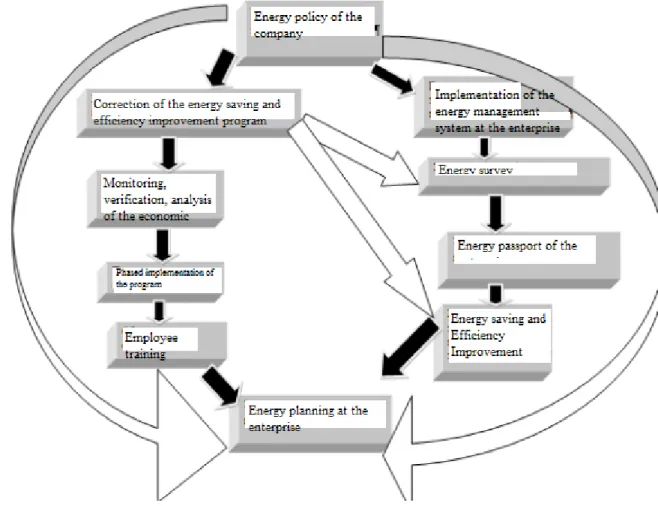
Energy saving and improving energy efficiency should be considered as one of the main sources of future economic growth. At the same time, the effect that can be obtained through technological and organizational measures is evaluated. Also by improving the management system for energy saving and energy efficiency (Fig.
1.1.).
Figure 1.1-Energy saving and energy efficiency improvement systems in an industrial enterprise
The main share of expenses for industrial enterprises of heavy industry is accounted for by electricity. Accordingly, we will consider the main measures to save energy and improve energy efficiency in the field of transmission, distribution and consumption of electric energy.
Technical measures:
- introduction of an automatic control system for outdoor and street lighting;
- introduction of cost-effective ways to control the operation of fans;
- replacement of outdated transformers with modern ones;
- replacement of outdated electric motors with modern ones;
- use of frequency control systems in electric motor drives in ventilation systems, pumping stations and other objects with variable loads;
- modernization of transformer substations taking into account power
consumption;
- switching from traditional light sources to led lighting;
- reactive power compensation for consumers;
- - application of surge transformers;
- ensuring the optimal load of transformers (excluding both overloading and underloading – less than 30%), etc.
- ensuring the normative quality of the consumed electric energy.
Organizational measures:
- appointment of a person responsible for energy saving measures;
- training of personnel responsible for the provision of energy efficiency measures;
- modernization of the company's operating procedures and improvement of lighting, ventilation and water supply systems;
- introduction of schedules for switching on and off ventilation, heat curtains;
- conducting explanatory work with employees on energy saving issues;
- development and introduction of a system to reward employees of the institution for actions to save energy and improve energy efficiency;
- improvement of technical knowledge in energy saving issues for certain categories of employees of the enterprise.
The energy saving system at the enterprise must constantly monitor the process of energy consumption and make appropriate adjustments to the energy saving program. For an enterprise, energy conservation should be a continuous process. This process is subject to the company's management system. This will make both the process of improving energy efficiency and the overall operation of the company sustainable. The integrated energy saving and energy efficiency system implemented at the enterprise includes such sections as energy survey, energy monitoring and energy management. This system creates prerequisites for the implementation of energy service contracts for technical and technological modernization of the enterprise [6,7,8].
2 FEATURES OF POWER SUPPLY TO AGRICULTURAL ENTERPRISES
2.1 Improvement of agricultural enterprises in the conditions Republic of Kazakhstan. Probabilistic loads of agricultural consumers.
Electrification, i.e. the production, distribution and use of electricity, is the basis for the sustainable functioning and development of all industries and agriculture of the country and the comfortable life of the population.
Experience in the development of electrification has shown that reliable, high-quality and cheap power supply is possible only from large regional power plants United in powerful power systems. The generation of the cheapest electricity at large district-scale power plants and its transmission via long-range transmission lines is due to the high concentration of electricity production and the possibility of placing power plants directly at cheap energy sources - coal, shale, and large rivers.
On the vast territory of our country, there are areas where it is economically impractical to connect the networks of the unified energy system. There should be built modern rural power plants with an enlarged capacity of about 1000 kW or more, diesel with full automation of operation, as well as hydraulic. Small, fully automated diesel and petrol installations are only needed in sparsely populated areas [9].
In the world, there is an increased interest in the use of non-traditional, renewable energy sources (nie), which include wind power stations, solar power stations, hydraulic, bioelectric stations that work on agricultural waste, and others.
The share of renewable energy sources in the world's fuel and energy balance is about 20 %, including hydroelectric power-about 26 %, solar energy-6%, wood fuel-49%, wind energy-1.8%, and waste from enterprises-15% [9,10].
In Kazakhstan, there are opportunities to obtain electricity from nvi. Research and development in this area is being intensively conducted, and it is expected that in the future the share of electricity received from nvi will be up to 10%.
Agriculture receives its electricity mainly from energy systems. Air lines cover almost all localities.
Electricity consumption for agricultural production is determined on the basis of data on specific rates of electricity consumption per unit of production. The main consumers of electricity in agricultural production are livestock and poultry farms and complexes, as well as greenhouses, greenhouses, irrigation installations and other consumers (workshops, grain dryers, etc.).
For an approximate assessment of prospective electricity consumption for the production needs of agricultural consumers, you can use generalized indicators of specific electricity consumption. Electric loads in agriculture are a constantly changing quantity: new consumers are connected, the load on entering homes is
gradually increasing, as the saturation with household appliances increases, at the same time large livestock complexes cease to exist, giving way to small farms, etc.
If the electric load increases, the capacity of the electric networks becomes insufficient and there is a need for their reconstruction. In this case, some of the overhead lines are replaced with underground cables or overhead lines with insulated self-supporting wires [9]. The main advantage of such networks is high reliability and long service life. Work is underway on the reconstruction of electrical networks using self-supporting wires and cables. During the reconstruction, measures are being widely implemented to improve the reliability of electricity supply to rural consumers, which is still far from sufficient.
Electric networks in rural areas usually feed a large number of different consumers of electric energy, which is understood as a receiver or a group of receivers of electric energy, united by a technological process and located in a certain territory. A receiver of electrical energy (electric receiver), in turn, is called an apparatus, unit or mechanism designed to convert electrical energy into another type of energy.
The following electricity consumers are located in rural areas:
- residential buildings of workers and employees in localities, farms;
- hospitals, schools, clubs, shops, bakeries, laundries, and other businesses that serve the public;
- production consumers of the farm (livestock farms, grain cleaning stations, greenhouses, storage of agricultural products, mills, garages, boilers, etc.);
- enterprises of the agro-industrial complex, grain receiving points, enterprises for processing agricultural products (dairies, canneries, meat processing plants, etc.);
- other consumers, including industrial enterprises.
The electric load is continuously changing, following the peculiarities of the structure of agricultural production and employment of the rural population, which are not constant in nature, associated with both seasonality and employment during the day. Some consumers are turned on, others are turned off. This is a characteristic feature of farming, which is not at all like the work of industrial production [10].
In terms of electricity supply to agriculture, it is necessary to take into account its features, which are associated with a large dispersion of electricity consumers. The housing stock in rural areas consists of small subsidiary farms, which have a rural population and cover a large area. The electricity consumption of such farms is low. However, the presence of large agricultural complexes generally changes the picture of power supply, since the capacity of these complexes can reach hundreds or thousands of kW. Therefore, both individual and group load schedules need to be compiled for accurate information about the electricity consumption of an agricultural area. The group schedule is made up of individual ones.
Thus, a thorough study of electrical loads in agriculture is a prerequisite for
creating power supply schemes that meet modern requirements. We will consider a partial study of these loads, which is primarily reduced to determining the design loads, i.e. the highest values of total power for consumers or in the electrical network for a period of 0.5 hours at the end of the design period [11,12].
The load graph is called the dependence of the active P, reactive Q, or total S load power on time:
);
( )
(t p t
Р
i Q(t)
qi(t); (2.1)S P2Q2; . 3
2 2
Un
Q I P
(2.2)
Load schedules can be daily or annual.
Distinguish between daytime SD and evening SB maximum loads of a consumer or group of consumers. The calculation period is the time elapsed from the moment the installation is put into operation until the load reaches the calculated value. In rural electrical installations, the duration of this period is assumed to be 5 to 10 years. It is also necessary to know the power factor (сos ) of the calculated loads, which is determined by the active and reactive power metering devices.
а - by month of the year; б - by duration.
Figure 2.1 - The annual load curve
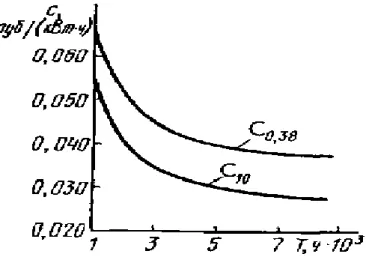
For practical purposes, the annual load schedule by duration is convenient (figure 2.1. b). In this graph, the abscissa axis is used to set the time (8760 hours per year), and the ordinate axis is used to set the minimum load that corresponds to this time. The annual duration schedule is based on daily schedules (figure 2.2) for all days of the year.
Р* — power in relative units (relative to the maximum).
Figure 2.2 - Daily load schedules for winter (a) and summer (b) days
These changes are usually random, but they are subject to probabilistic laws that can be established with great accuracy if there is a large amount of experimental data used in determining them[12].
2.2 Sources of power supply for agricultural production. Various power supply schemes
Improving the efficiency of agricultural production is inextricably linked with the development of energy-saving energy supply systems. They significantly affect the reduction of the cost and energy intensity of agricultural products.
In perspective, due to the necessary growth of agricultural products, the scale of consumption of fuel and energy resources (FER) for these purposes will also grow. Thus, 1% of the increase in gross agricultural output accounts for up to 2 % of the increase in energy consumption.
The agricultural sector and especially its production is a major consumer of fuel and energy resources in stationary processes in the amount of about 10 million tons of conventional fuel. Of these, more than 60% of fuel and energy resources are used in heat supply systems for production facilities. For example, fuel and energy consumption is expected to grow by 20-25% by 2020 [12,13].
There is a direct link between production and energy consumption, the share of which in its cost increased from 3-8 % to 15-30 %, and for some types of agricultural facilities (greenhouses, poultry farms, etc.) - up to 30-50% or more. Of course, this is caused, among other things, by the faster growth of tariffs and prices for electricity and fuel in comparison with prices for agricultural products.
Therefore, there is an urgent need for economical use of electric and thermal
energy. And here the priority and most effective use of systems and technical means of energy supply of a decentralized type.
Providing a microclimate is one of the most energy-intensive processes in the energy supply systems of livestock farms. This is used for up to 60% of the total energy costs of the facility as a whole. Reserves for reducing energy consumption – precise automatic control of temperature and humidity conditions, as well as the use of heat from the removed air. The use of heat exchangers of the recuperative type allows you to save energy consumption in microclimate systems up to 50%.
Currently an important priority of the strategy of industrial-innovative development of Kazakhstan for the period till 2020 is the reduction of costs of production and use of energy by introducing energy saving technologies and equipment, allowing the use of renewable energy sources (RES), especially because 2019 was announced by the President of the Republic of Kazakhstan N. Nazarbayev year of saving. The use of new environmentally friendly alternative energy technologies is particularly relevant in the run-up to Kazakhstan's upcoming ratification of the Kyoto Protocol to the UN framework Convention on climate change and our country's accession to the WTO.
Here are just a few figures describing the intensity of innovation processes in the world in relation to alternative energy sources: in the US, 275 million dollars were allocated from the Federal budget for such developments in 2018, in Japan - about 273 million dollars annually, and the European research budget exceeds 500 million.
The main direction of investment in the Republic of Kazakhstan should be aimed at:
1) development and implementation of wind power plants (wind turbines) in the energy supply systems of various facilities in the Republic of Kazakhstan.
All over the world, much attention is paid to wind power. They develop international programs for the use of wind energy in industry and agriculture. Wind power stations are widely used in Denmark, the USA, Holland, Germany, England, etc. There are more than 100 thousand people in the world. Wind farms, including 30 thousand wind farms in the USA.
Wind power can be a source of electricity supply for areas that are remote from high-power grid networks. Wind is one of the unconventional sources of energy. It is established that modern wind power plants can be effectively used in areas with an average annual wind speed exceeding 3...5 m / s.
2) use of water resources energy - construction of mini-hydroelectric power stations for Autonomous power supply of remote settlements and farms in the Republic of Kazakhstan [14].
Hydraulic power plants (HPP) have a number of advantages over thermal power plants. The cost of electricity generated at them is lower, and the consumption of electricity for their own needs is many times less than at thermal power plants. The start-up and loading of the hydrogenerator take place within a few minutes, in addition, hydroelectric power plants use renewable natural
resources. The disadvantages of hydroelectric power plants include: the high cost and long terms of their construction, additional costs for possible relocation of residents from flooded land, preparation of the reservoir bed, irrigation facilities, as well as damage caused by flooding of agricultural land.
3) development and implementation of energy-saving technologies using solar energy in the energy supply systems of various facilities in the Republic of Kazakhstan.
The earth's surface receives solar energy (SE) during the year, equivalent to the energy contained in 1.22 * 1014 t. t., which is hundreds of times (5·102) higher than the reserves of organic fuel (6·1012 t.t.). Annually, the Earth receives about 4.2·1014 kW·h., and the entire population of the Earth in 2007 was spent (for the year) 94·1012 kW·h. Thus, the solar energy received by us is many times higher than the energy needs of mankind [14].
The use of SE is associated with certain difficulties, which include: the low density of the solar flux; the variability and discontinuity of the receipt of SE over time; the dependence of this flow on the geographical location of the radiation receiver, etc. Conversion of solar energy into electrical energy can be carried out according to two basic schemes: thermodynamic method and photo elements.
Photoelectric (direct) conversion of SE to electrical energy is based on the features of the electronic conductivity of dielectrics. Currently, it is one of the priority areas for its use.
Development and implementation of energy-saving technologies using heat pump units (HPU) in heat supply systems of facilities in various climatic zones of the Republic of Kazakhstan. Heat pump installations are the only installations that produce 3 to 7 times more heat energy than they consume electric energy per compressor drive and are therefore considered the most efficient sources of high- potential heat [15].
Especially in the last two decades at the turn of the 20th and 21st centuries, the scale of introduction of heat pumps in the world is literally staggering.
For comparison, in Russia there are about 350 heat pumps-less than 0.1%
used in the world, and in the Republic of Kazakhstan-only about a dozen units that are used practically in agriculture for processing food (milk, cheese, canned food, etc.), as an alternative source of heat in the heating and hot water supply system of residential, civil and industrial buildings. Potential consumers of the offered products are numerous farms in various regions of the country, cottages in rural areas, remote from the main lines of district heating, where as autonomous sources of heat are applied boilers for liquid and gaseous fuels, electric boilers, etc. Here we can see how much you can save electricity, therefore, incur lower costs for energy resources, reduce the environmental burden on the environment, reduce electricity tariffs, and increase the welfare of the agricultural population.
Over the past 50 years, there has been a growing relationship between the fuel and energy complex (FEC) and the agro-industrial complex. The agri-food complex is becoming more energy-intensive. The consumption of various types of energy resources in agriculture increases under the influence of the growth of
mechanization of crop production and animal husbandry, increasing electricity consumption in rural housing and utilities.
Energy consumption is also increasing in industries that produce agricultural and food products. We can assume that the inevitable strengthening of the technological, economic and organizational relations of agriculture and energy will lead to a deepening of the crisis in the agro-food complex in the reduction of volume of production or cost of energy. Due to the fact that the structure of agricultural production will shift towards developing countries, which still have a lower level of energy consumption, it can be expected that the growth of agricultural mechanization will lead to a significant increase in energy demand. It will increase the need to enter new capacities at generating stations, the need to build distribution networks, both high and low voltage [14,15].
The traditional scheme of electricity generation and consumption is a complex process that is regulated according to all the laws of the economy.
Electric power is generated mainly by large power stations that are integrated into energy systems.
The part of the power system that consists of generators, switchgears, step-up and step-down transformer substations, electrical networks, and power receivers is called an electrical system.
а - distribution; б - supply.
Figure 2.3 - Electrical network diagrams
Electrical networks are parts of an electrical system consisting of substations and power lines of various voltages.
Depending on the purpose of the electric network is divided into distribution and supply.
A distribution network is an electrical network that supplies electricity from a power source (IP) to consumer TP or to consumers themselves (figure 2.3 a), if it is a low-voltage line.
The power supply network is called (figure 2.3, b), which supplies electricity to the distribution points of the RP or substations. Figure 2.3, a shows a schematic diagram of a small electrical system consisting of three district power stations. [15].
The generator voltage of power plants is 10 kV (can be up to 24 kV). It is increased at the most remote station to 220 kV, and at the closest station to 110 kV
(figure 2.3, a), and then the energy is transferred to the common ring with a voltage of 110 kV. At the same time, a 220/110 kV substation was built at the end of the line from the remote station. In addition, the system usually has communication lines with other systems (not shown in the figure).
Lines with a voltage of 35 kV are fed from the 110 kV common ring through 110/35 kV step-down substations. One of these lines is shown in the drawing above.
These lines supply power to smaller substations at 35/10 kV. 10 kV distribution networks with step-down transformer points diverge from substations.
At transformer points, the voltage is lowered from 10 K to the working-380 V. Thus, electrical energy is transformed several times before it reaches the consumer, which necessitates the construction of a large number of transformer substations. The connected systems form the systems of separate zones of the country, and then the Unified energy system of Kazakhstan.
Figure 2.4 b shows a diagram of the rural electrical system. It consists of two hydroelectric power stations and a thermal power plant (TPP) operating on a common network of 10 kV.
а - small; б - rural.
Figure 2.4 - Diagrams of small electrical systems
Low - voltage generators (400 V) are usually installed at small stations, and high-voltage generators (10 kV) are installed at larger ones. In this and in the other case, electric power stations connected to the network through step-up transformer substation. Consumers receive electrical energy either directly from the buses of power plants, or from a line connecting individual stations. Rural systems are connected to powerful electrical systems. In some remote rural areas, there are still