The total production of inland fisheries in the Southeast Asian region in 2012 of approximately 2.8 million tons (SEAFDEC, 2014) accounted for more than 7%. In many countries in the Southeast Asian region, planners and policymakers do not seem to pay much attention to inland fisheries resources, given the inadequacy of data and other relevant information on inland fisheries.

Sustained Promotion of Responsible Fisheries to Secure the Competitiveness of ASEAN Fish and Fishery Products
Along with such a mandate, SEAFDEC has developed and implemented countermeasures to combat Illegal, Unreported and Unregulated (IUU) fishing in the Southeast Asia region, given that IUU fishing activities hamper all efforts by countries Southeast Asia to achieve sustainability in fisheries. Hajime Kawamura during the Third Meeting of the ASEAN Public-Private Task Force on Sustainable Fisheries and Aquaculture in Penang, Malaysia on 20-21 October 2014.
Sustainable Development of Fisheries and Aquaculture
Since its establishment in December 1967, the Southeast Asian Fisheries Development Center (SEAFDEC) has continued to promote the development of sustainable fisheries and aquaculture for food security and poverty reduction in the Southeast Asian region. During the 48 years of its existence, SEAFDEC can boast of enormous technical advances that had moved the development of the region's fisheries and aquaculture towards sustainability, based on its proactive mandate "to develop and manage the fisheries potential of the region by rational exploitation of the resources to provide food security and safety for the population and alleviate poverty through the transfer of new technologies, research and information dissemination activities”.
Countermeasures to Combat IUU Fishing
The AMS therefore recognized that a regional catch documentation scheme could be used as one of the management tools to improve and strengthen better management of fisheries in the ASEAN region. Specifically, ACDS will also assure AMS that the credibility of the region's fish and fishery products is enhanced for intraregional and international trade, given that fish and fishery products from IUU fishing activities can be prevented from entering the supply chain. for the benefit of all stakeholders.
Way Forward
Therefore, the ACDS is not only intended to facilitate intra-regional trade, but also to demonstrate the commitment of AMS to combat IUU fishing in the region. The development of the ASEAN Catch Documentation Scheme (ACDS) would take into account the EC Regulation 1005/2008 to facilitate the export of fish and fishery products to EU countries by the AMS, while the ACDS would focus more on inter- and intra-regional trade in fish and fishery products from offshore fishing.
It is therefore SEAFDEC's commitment, together with other national, regional and international initiatives and efforts, to contribute to the overall effort to develop sustainable fisheries and aquaculture in the Southeast Asian region, not only to increase fisheries production but also to improve national economies. for the food security and livelihood of people in the region. SEAFDEC's efforts to achieve greater technological progress would not end with the measures discussed above, as SEAFDEC would continue to promote the development of fisheries and aquaculture in the Southeast Asian region towards sustainability in the years to come.
About the Authors
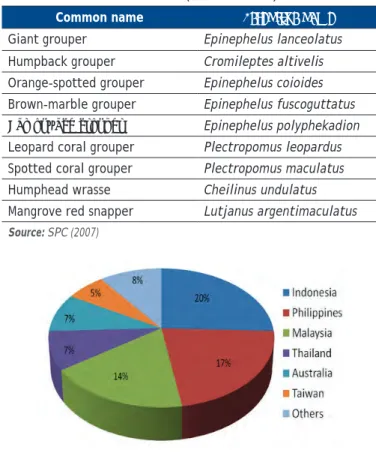
The live reef food fish trade begins with the capture of reef fish that are kept alive and then exported mainly to Hong Kong and China, and to smaller markets in Malaysia and Singapore. Trade in live reef food fish from the Southeast Asian region: economic blessing or curse.
Trading of Live Reef Food Fish from the Southeast Asian Region: Economic Boon or Bane?
Live reef fish have long been traded as a luxury food item in Southeast Asia, and in recent decades the trade in live fish caught from coral reefs has expanded rapidly, threatening the sustainability of the reef resources.
Live Reef Food Fish: Economic and Trade Issues
Regional Initiatives to Address Issues on LRFFT
As shown in Box 1, one of the main outcomes of the Intergovernmental Forum was the approval and signing of a resolution on sustainable LRFFT for member states of Southeast Asia and the Coral Triangle. Key Aspects of the Resolution on Sustainable LRFFT for Southeast Asian and Coral Triangle Countries 1.
About the Author
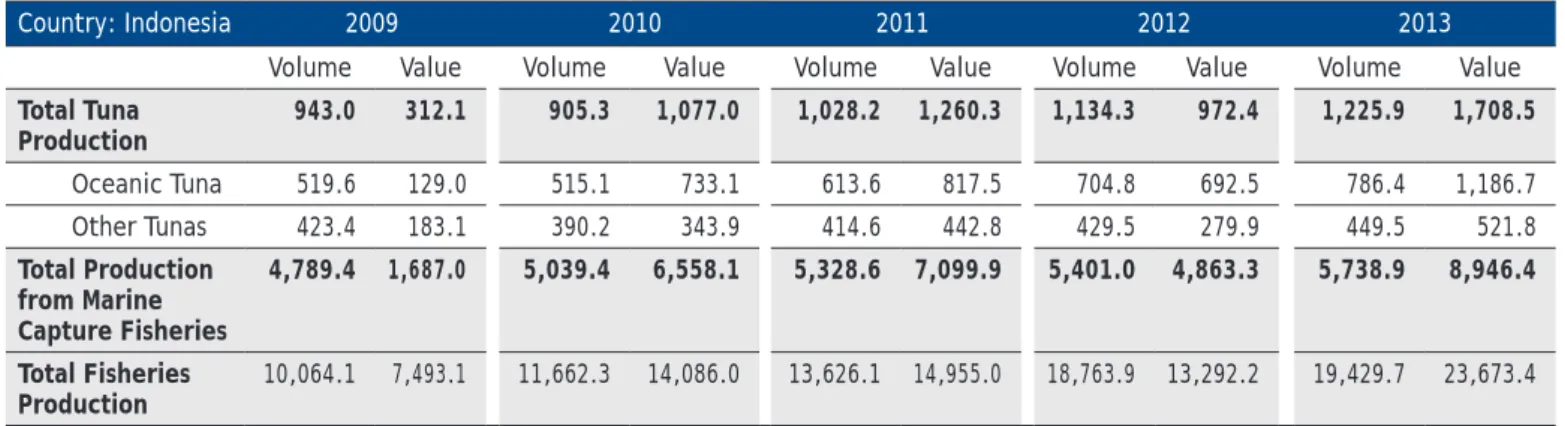
In 2013, its tuna production accounted for about 6.4% of the country's total fisheries production and 21.5% of its marine fisheries production. Considering the significant contribution of tuna resources to the country's economy, the Government of Indonesia has developed policies for the sustainable management of the country's tuna fisheries.
Policies of Indonesia for Sustainable Tuna Fisheries Management: Issues and Concerns
Since the country's reform period in 1999, the Indonesian government has paid more attention to the development of its fisheries resources through the Ministry of Marine Affairs and Fisheries (MMAF), as well as the exploitation and use of such resources to strengthen the country's economy. Tunas, which are part of the country's fisheries resources, play an essential role in Indonesia's economic development, with tuna production growing at an average annual rate of about 8.4% over the past decade.
Tuna Fishery Policy of Indonesia
Issues and Concerns
Secondly, the number of FADs had increased in some parts of the FMAs with no control in sight. In some areas of the FMAs, a total of 968 fishing ports have been constructed (MMAF, 2012d), classified into five types, namely: oceanic fishing port (6 units), archipelagic fishing port (13 units), coastal fishing port (47 units), fish landing point (900 units) and private fishing port (2 units).
Conclusion and Recommendations
The Nam Houm Reservoir in the Lao People's Democratic Republic is located approximately 30 km north of Vientiane Municipality and falls under the administrative jurisdiction of Naxaythong District of the capital Vientiane. In the vicinity of the reservoir, 3,300 people live in four villages with 82 registered fishermen, of whom only 50% can be considered full-time.
Advocating Sustainable Management of Fish Conservation Zones in Lao PDR: the Case of Nam Houm Reservoir
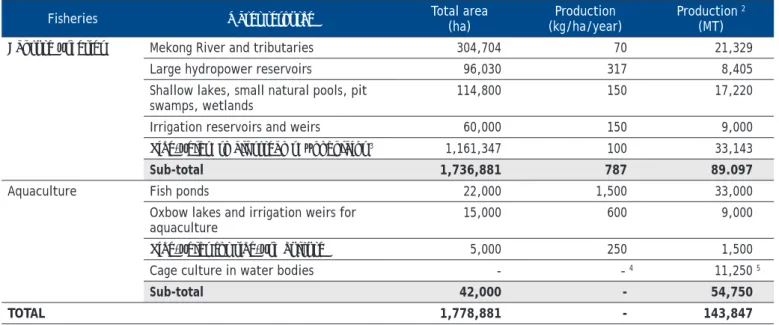
Supporting Sustainable Management of Fish Conservation Areas in Lao PDR: The Case of Nam Houm Reservoir. The aquaculture sector in Lao PDR, although growing slowly, has contributed a large share to the country's total annual fishery production, especially in terms of volume.

Reservoir Fisheries in Lao PDR
The Nam Houm RFMC has a total of 20 members representing the four villages surrounding the reservoir and officially approved by the district governor. After the study tour, members of the Nam Houm RFMC, especially the women, organized themselves into fish processing groups and began producing various value-added products from fish caught in the reservoir.
Activities of Nam Houm RFMC
Chainuek Phakhounthong is the Deputy Director of the Animal Husbandry and Fisheries Department of Bolikhamxai Province, Lao PDR. Still, all of these concerns could be attributed to inadequate enforcement of state fisheries laws and related regulations.
Biosecurity System in Malaysian Fisheries
In the same year, the fisheries sector showed a significant increase in its contribution to the national economy by about 11,440 million Malaysian Ringgit (RM). As a whole, the fisheries sector contributed 1.1% or RM7.822 billion to the national gross domestic product in 2012 (Annual Fisheries Statistics, 2012).
Official Control
This program is also part of the country's monitoring and control program to verify that aquaculture products comply with Malaysian food laws. Malaysia ensures that safety is always provided to importing countries by taking appropriate actions to ensure the health status of the country's aquatic animals, fish and fishery products.
Official Analysis
The Malaysian Good Aquaculture Practices Certification Scheme (MyGAP) was developed based on the MS Good Aquaculture Practices - General Guidelines although it is limited to aquaculture farms and hatcheries that grow food fish and ornamental fish species. The country's Fish Quality Certificate (FQC) is not only a certification scheme designed for businesses intending to export fish and fishery products, but also applies to aquaculture farms and sites, hatcheries, fishing vessels and feed manufacturing plants.
Official Guarantee
Challenges in Biosecurity Faced by the Southeast Asian Countries
Hemalatha Raja Sekaran is the member of the 2014 Regional Fisheries Policy Network (RFPN) for Malaysia based at SEAFDEC Secretariat in Bangkok, Thailand. Locally known as 'ikan barat-barat' in Malaysia, this species is a demersal fish found in sub-tropical areas around the world at depths ranging from 1.0m to 50.0m.
Upholding Local Knowledge for Sustainable Fishery of the Unicorn Leatherjacket Filefish Aluterus monoceros
Map of Malaysia showing states where significant landings of unicorn leatherfish have been recorded. However, fishermen also reported that the fishing gear used to lift the unicorn net is not yet licensed by the Department of Fisheries Malaysia (DOFM).
Characteristics of the Unicorn Leatherjacket Filefish
In addition, research on unicorn leatherfish should be strengthened, especially on fish biological aspects, oceanographic parameters and population dynamics, as the results could provide detailed information needed for the sustainable management of the leatherfish resource for improved economic returns in the future. . Despite such a wide distribution of the fish, very little research information has been available on the leatherjacket unicorn species, especially in Malaysia.
Current Catch Performance of the Unicorn Leatherjacket in Malaysia
The fish is mainly distributed in tropical and subtropical waters (Harmelin-Vivien and Quéro, 1990) including the West Atlantic Ocean, East Atlantic Ocean, East Pacific Ocean, Northwest Indian Ocean, East Indian Ocean and South China Sea (Guallart and Vincent, 2009) . In fact, the fish had never been listed in the country's Annual Fisheries Statistics Reports, not until its 2008 edition.
Landing Performance of the Unicorn Leatherjacket Filefish in Terengganu
Catch of unicorn leatherjacket filefish according to gear used on the east coast of Peninsular Malaysia in metric tons (MT). Thus, the two periods of abundant catches of unicorn leatherjacket filefish in Terengganu state are in the early and later parts of the year (Fig. 4).
Fishing Gears
Catching unicorn leatherjacket filefish by gear used in Perak, Sabah and Sarawak in MT. Overview of gear used to catch unicorn leatherjacket filefish, bait used and price by study area.
Local Knowledge of the Filefish
Products from the Unicorn Leatherjacket Filefish Aluterus monoceros
Discussion and Recommendations
Mohammad Faisal Md Saleh is a Research Officer in the Biology and Resource Assessment Department of SEAFDEC/. Moreover, the state government should play an active role in promoting sustainable fishing and consumption of filefish by organizing local and international events.
Conclusion
Releasing small fish and juveniles is possible using the lifting net, because this is selective and small fish still survive after capture. Furthermore, DOFM and local fishermen groups should organize discussions and dialogues to explore ways and means to strengthen partnerships in the sustainable management of the filefish resource for continued economic gains and returns from this resource in the future.
Acknowledgement
The Southeast Asian Fisheries Development Center (SEAFDEC) was established on December 28, 1967 with the signing of the Agreement Establishing the Southeast Asian Fisheries Development Center by senior officials of the Contracting Governments, namely: Japan, Malaysia, the Philippines, Singapore, Thailand and Vietnam . -Name. For example, in addition to the above six countries, the government of the Socialist Republic of Vietnam renewed its membership of SEAFDEC in 1995, the government of Brunei Darussalam became a new member in 1995, the Union of Myanmar in 1999, the government of the Republic of Indonesia in 2000 , the Government of Cambodia in 2001 and the Government of the Lao People's Democratic Republic in 2002.
Fifth SEAFDEC Department
Open to the governments of the Southeast Asian countries referring to the Union of Burma, the Kingdom of Cambodia, the Republic of Indonesia, the Kingdom of Laos, Malaysia, the Republic of the Philippines, the Republic of Singapore, the Kingdom of Thailand and the Republic of Vietnam and Japan , the membership of the Center was amended on 18 November 1994 by the Protocol amending the Agreement so that membership of the Center is open to the governments of the South East Asian countries and Japan. Simultaneously with the establishment of SEAFDEC, two departments were also established on 28 December 1967, namely: Marine Fisheries Training Department (TD, based in Samut Prakan, Thailand) and Marine Fisheries Research Department (MFRD, based in Singapore); and the Secretariat (located in Thailand).
Status of Inland Capture Fisheries in the Southeast Asian Region
Encourage the development of non-conventional data collection and model for inland ecosystem assessment using existing data and information to protect the importance of inland fisheries. His initial project on “Promoting Responsible Use of Inland Fisheries Resources in Southeast Asia” is considered as a way to create and strengthen regional networks for sustainable management of inland fisheries and inland water resource fish conservation.
CALENDAR OF EVENTS
To develop and manage the fisheries potential of the region by rationally utilizing resources to ensure food security and human security and poverty alleviation through the transfer of new technologies, research activities and information dissemination. To increase the ability of the fisheries sector to address new international issues and for greater access to international trade.