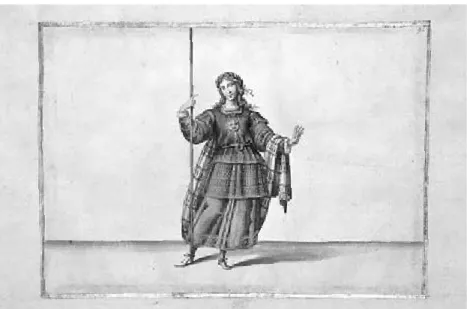
However, I have argued elsewhere for the importance of the concept of this period in the particular context of the history of virtue ethics. The participants are united by their interest in studying the educational history of virtue ethics. At the center of the play is the education of Achilles (identified with Carlo Emanuele II) by the centaur Chiron.
Kent, Bonnie, Virtues of the Will: The Transformation of Ethics in the Late Thirteenth Century (Washington, DC: Catholic University of America Press, 1995).
Eustratius of Nicaea as a source for the Neoplatonist notion of levels of virtue
The question at stake in the following is then this: Did Eustratius contribute to the influence of the Neoplatonist theory of levels of virtue on the Latin commentaries?1. Abelard adopted the theory of the four levels of virtue and its relation to the immortality of the soul. Petrarch and Ficino both drew on Macrobius's account of the virtues specifically, see Zintzen, Bemerkungen, p.
Trizio, Michele, ‘The Neoplatonic Burimor Material in Eustratius of Nicaea’s Commentary on Book VI of the Nicomachean Ethics’, in Medieval Greek Commentaries on the Nicomachean Ethics, ed.
Teaching virtue through the law
These laws, often enacted to ensure "the peace" of the land, were also a means of restraining overpowered subjects. The law will be made and established for the guidance of the people, both rich and poor, and to discern between good and evil. This praise of the law ends with a concise but lucid statement linking law to virtue.
8 In this account of the legislative process, both royal and sectoral interests had to be met. For discussions of Romano-canonical influence in Upplandslagen, see Bååth, Den kanoniska rätten, p. What was the prince's role in this great educational project and how was he qualified for this task.
24v, Giles concludes that the most important of the virtues, Prudentia, must be governed in its exercise by Caritas. These questions are central to Giles's understanding of royal authority, and inseparable from his idea of the king as a teacher of virtue. In Machiavelli's view, it was enough to appear virtuous; the traditional virtues were of no significance to the success of the prince.
To begin with, De regimine principum was in itself an instrument for the moral improvement of the prince. Bagge, Sverre, Cross and Sceptre: The Rise of the Scandinavian Kingdoms from the Vikings to the Reformation (Princeton: Princeton University Press, 2014).
The tree and its fruit
However, it is possible to discern general trends in the discussion of ideal Christian practice from printed texts. 15 Laurentius Andreae was in the leading circles of the Swedish Reformation and supported the Lutheran opinion of Olaus Petri. The need to understand in a more general sense is emphasized, for example, in the introductory paragraphs of two instructional manuals from the early Reformation.
This suggests that love functions as a transformative medium with several purposes in early reform texts. It is this function of love that seems to be most central in the early reformation texts. This discussion is illuminating, as it touches on several features central to the Reformation understanding of the connection between faith, attitude, and good works.
Although hope in the general sense of the term refers to anticipating what is to come, it is described in this section rather as a reaction to a previous state of misery. It thus seems that the attitude of hope rather than love is the main result of faith in Laurentius Petri's collection, and moreover hope lacks the guiding quality evident in the love of the earlier texts. Hope seems to miss the connection with more general lines of discussion about the attitude and behavior of love in the early texts.
Hamm, Berndt, "Why 'Faith' Became for Luther the Central Concept of the Christian Life," in Reforming Faith in the Context of Late Medieval Theology and Piety, ed. Kreitzer, Beth, 'Lutheran Preaching', in Preacher and People in the Reformations and Early Modern Period, ed.
Fostering civic virtue
Therefore, he wrote a large number of texts describing the unknown and distant past of the country. 19 For more on the legitimacy of Charles IX's accession to the throne and Gothicism see Johannesson, 'Gustav II Adolf som retoriker', p. These laws were written between the twelfth and thirteenth centuries, but it was commonly believed that they could be traced back to the time of the ancient Goths.
When the king has made this decision, a messenger carries the news to all parts of the kingdom. In Disa, the role of the classical heroine is to strengthen the ties between the Swedes and the Goths. Cigar, King of Sweden, trusts an unfaithful servant and loses his daughter Signill as a result.
The number of actors and extras who took part in the staging of Mesenius' plays was considerable. Little is left of most of these students beyond their university enrollment records. The nobility is characterized above all by political and civic virtues, since the noble's function is to devote his life to the good of the country. 48.
Virtues which would secure good government and justice were those truly worthy of the name. For a more in-depth study of Girs' thinking on the nobility, see Englund, Det hotade huset.
Dancing virtue
The image of Swedish rule conveyed in these lines is one of prosperity and stability. Skytte played an important role in the Riksdag (parliament) of 1647 in his capacity as Lantmarskalk (Lord Marshal), that is, chairman of the estate of the nobles. He was the son of the Riksmarsk (Lord High Constable) Jacob De la Gardie and quickly rose through the court hierarchies thanks to the favor of Queen Christina.
De la Gardie is described in the sources of the time as a young and promising aristocrat of brilliant attractiveness. Several written accounts have been preserved from De la Gardie's embassy, emphasizing the grand character of the French reception. On his importance as a patron of the arts see Ljungström, Magnus Gabriel De la Gardies Venngarn.
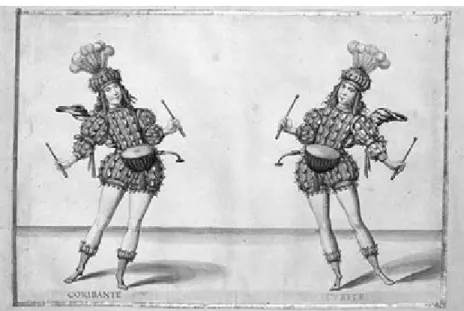
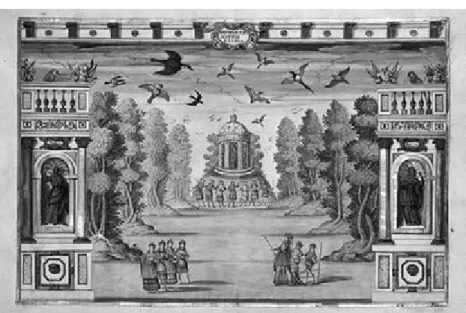
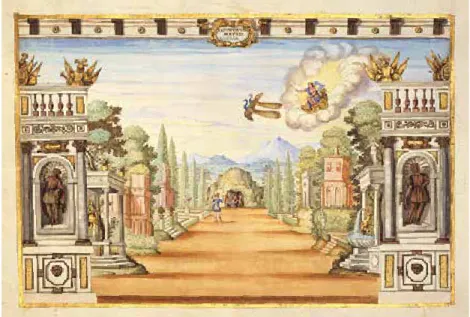
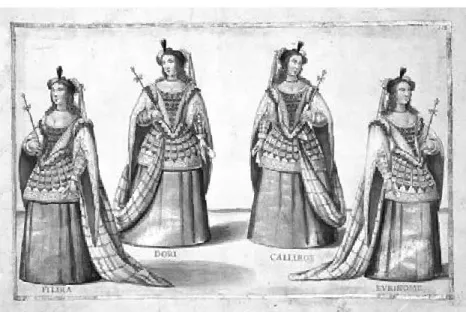
Nicolas Vallari was the French artist who took care of the costumes of the performances. The praise of Christina's heroic virtue would also become one of the privileged themes of her Accademia Reale founded in Rome in 1674. Les Passions Victorieuses et Vaincues was performed on 4 April 1649 in the Castle of the Three Crowns.
Christina, shortly before her appearance on February 23, had finally announced to the Kingdom Council that she The ballets of the later period unequivocally championed the cause of the Queen's personal politics.
The path to virtue
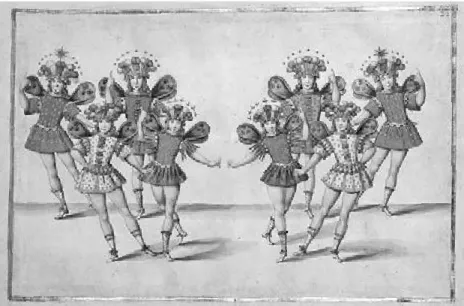
Tesauro also refers to Cornelia elsewhere in the context of the joys of motherhood, 'Il Diamante', p. This idea of the mother ruling the virtual world through her children is also reflected in the ballet. It is worth taking a closer look at the Zephyr Ballet, the first of the series of ballets.
The Nereid Ballet consists of only three entries (but four performances if their grand ballet is included). The perfect balance of the elements might even hint at the importance of a harmonious upbringing. It therefore also establishes a connection between the first and last ballet of the performance.
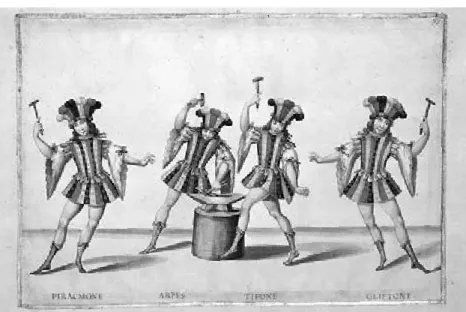
The relationship between the sky and the sea is particularly important in the Nereid Ballet, as is the way the sea reflects light. The theme of the variation is introduced in the final entry of the Masters Ballet. The end of the civil war was celebrated in the ballet La Fenice rinovata (The Renewed Phoenix), performed.
165 The first entry of the Ballet Achilles and his companions is described on BNT q.V 58, fol. 177 The depiction of Apollo on the fresco in the Valentino Palace is also similar. It can also be seen in the context of the more traditional and expected alliance of Venus and Mars.
25, where their description as the wisest is reassuringly related to the virtue of the Nereids.

Virtue and duty
The moral discourse at the universities was subject to the ideological restrictions of the Swedish Lutheran monarchy. The student population was not homogeneous, and the majority of the students were destined for an ecclesiastical career in the church, school and university. This well-known theory of 'the average' in Aristotelian ethics is hardly mentioned in the general versions of Aristotle's theory, but appears in the treatment of the particular virtues.16.
It is a purely intellectual activity, practiced by philosophers and, according to Aristotle, representative of the highest form of virtue. Scheffer taught several sons of the highest nobility and conveyed moral philosophy, rhetoric and historical examples. Count Nils Brahe's dissertation, more closely aligned with the Tacitean strain in political humanism, concerned "the popularity of the prince."
At least for the past, political humanists could justify them with the concept of fate or providence. Compared to non-religious Epicureanism, Stoicism was a tolerable and manageable part of the ancient philosophical heritage. An example of this can be found in a speech in memory of the Uppsala professor Petrus Lagerlöf in 1699.
In the second half of the seventeenth century, Aristotelian moral philosophy was gradually replaced by the doctrine of natural law in Swedish universities. Virtue was not a key concept of natural law, and the philosophical underpinnings of the new doctrine were different.