EMPLOYEE ENGAGEMENT IN PUBLIC SERVICES: CASE STUDY OF ADVISORY GROUP, DEPARTMENT OF MENTAL HEALTH, MINISTRY OF PUBLIC HEALTH, THAILAND. Objective: This exploratory research aims to understand what employee engagement is and what are the key factors that have influenced employee engagement in public services, as well as to make recommendations that will help the organization to utilize employee engagement. The concept of employee engagement is developed from organizational practice rather than from academic research.
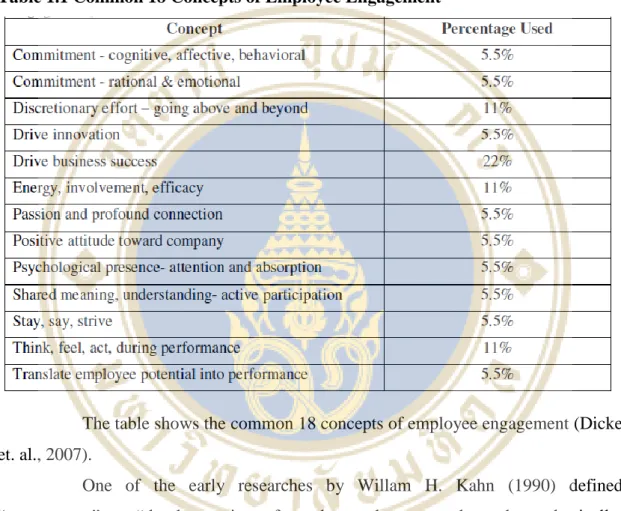
Many of the barriers and various antecedents and consequences of employee engagement have been discovered through practitioner and academic research (Saks, 2006). Many researchers have shown that employee engagement is one of the key success factors that make the organization more successful than others (Aon Hewitt, 2013; The Gallup Organization, 2012). Although there has been extensive research on “employee engagement” by many practitioners and academic researchers, there is no universal definition and ways to measure engagement are lacking (Kular et. al., 2008).
Some studies consider employee engagement as concepts of job satisfaction and organizational commitment (Harter et. al., 2002). This exploratory research aims to understand what employee engagement is and what are the most important factors that influence employee engagement in public services. We also want to make recommendations that can help the organization increase employee involvement.
LITERATURE REVIEW
The Gallup Organization, the well-known organization that associated employee engagement, defines employee engagement as "an increased emotional connection an employee feels to his or her organization, which affects him or her greater discretionary effort toward his or her work." Engaged employees are those who are "loyal and psychologically committed to the organization." They are more productive, more likely to stay in the organization, less likely to have accidents on the job, and less likely to steal (The Gallup Organization, 2012). Despite the lack of consistency in the literature, definitions of “employee engagement” tend to fall into two broad categories. From the above studies, I concluded that employee engagement is "a measurable degree of employee's positive or negative emotional attachment to their job, colleagues and organization, which deeply affects their willingness to learn and perform at work" (Vaijayanthi et. al. , 2011 ).
Antecedents of employee engagement include, for example, “positive emotions in the organizational environment, such as commitment and pride, are encouraged.” Kahn's work is confirmed by May, Gilson and Harter's 2004 study that safety, meaningfulness and availability are significantly related to employee engagement. Vaijayanthi, Shreenivasan and Prabhakaran (2011) found the influence of organizational factors on employee engagement: infrastructure, cross-functional discussions, communication and interaction, reflection on the feedback, support and support.
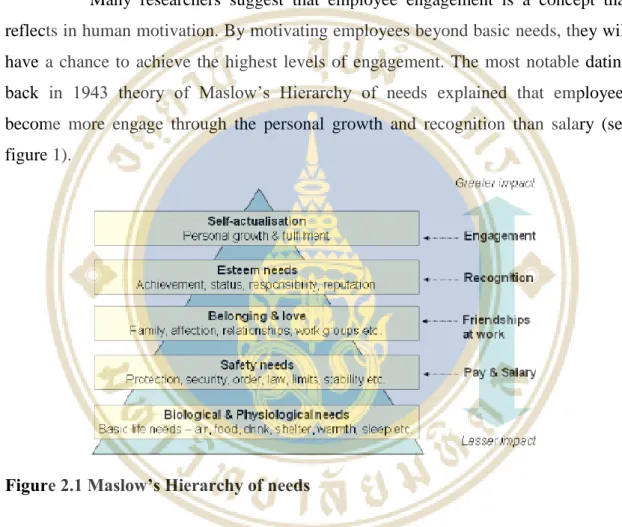
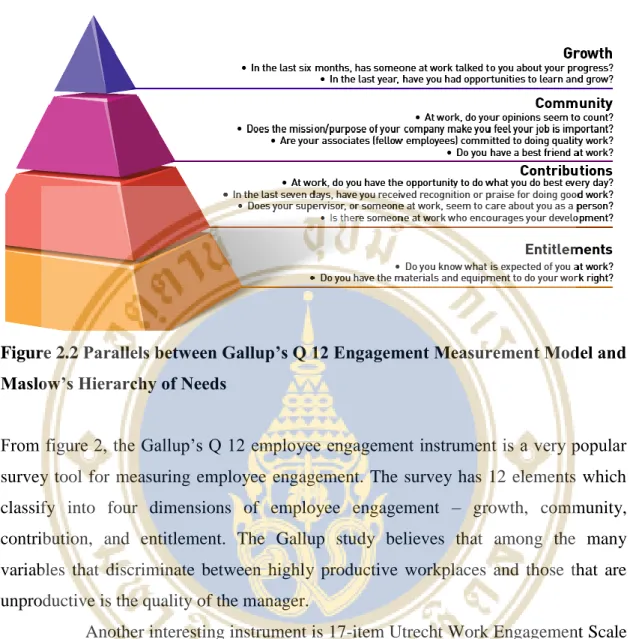
When employees have the opportunity to develop, grow, learn and advance within the organization, they will not quit or find another job. Abraham Maslow's Hierarchy of Needs theory was used in Gallup's Q 12 employee engagement instrument (The Gallup Organization, 2012). In Figure 2, Gallup's Q 12 employee engagement instrument is a very popular tool for measuring employee engagement.
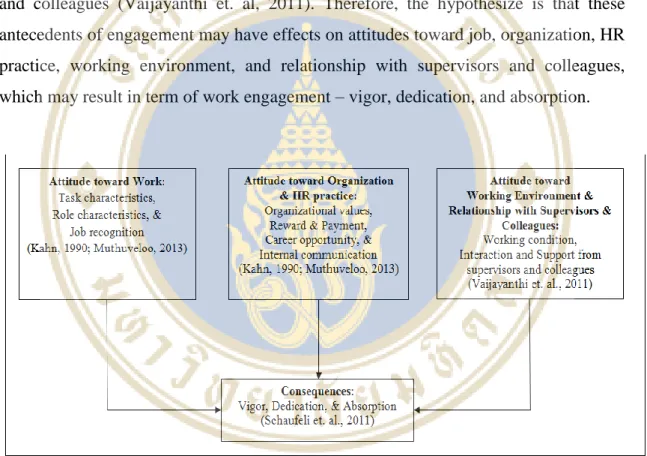
The survey has 12 elements which are classified into four dimensions of employee engagement – growth, community, contribution and entitlement. Vigor is "high levels of energy and mental resilience working in the willingness to invest effort in one's work and persistence even in the face of adversity." According to the literature above, 10 factors that affect employee engagement are task characteristics (Kahn, 1990), role characteristics (Kahn, 1990), job recognition (Muthuveloo, 2013), organizational values (Kahn, 1990), reward &.
The hypothesis is therefore that these prior engagements can have effects on attitudes towards the job, organisation, HR practices, working environment and relationships with supervisors and colleagues, which can result in work engagement – vigor, dedication and immersion.
METHODOLOGY
For this study, Kahn's factors affecting meaning and safety (i.e. task characteristics, role characteristics, organizational norms, interpersonal relationships and management style) and Muthuveloo's antecedents of employee engagement (i.e. communication , reward and recognition, employee development and employee care) were applied to create the questions. The three sets of interview questions pertain to (1) attitudes toward work, (2) attitudes toward the organization and human resource practices, and (3) attitudes toward the work environment and relationships with supervisors and colleagues. The interview questions were given open ended questions to elicit information from the respondents.
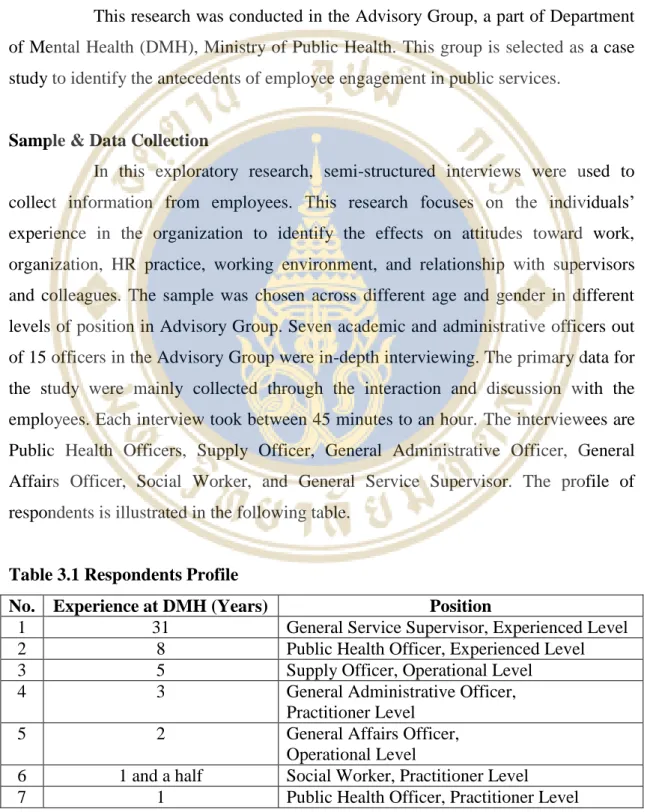
Can you talk to me about your life at DMH and describe what a typical day is like for you at DMH. In-depth interview is a qualitative research method that is suitable to conduct a research in this case; as it allows us to observe body language cues as well as non-verbal gestures. The focus is not only on what the participants say, but also how they say it.
A semi-structured interview allows participants to feel at ease, which may prompt them to answer something interesting and meaningful for the current study. The questions may not follow the outline and some questions may arise during the interview. The interviewer has a list of questions on specific topics to be covered, but the interviewees feel free to answer in their own way.
The interviewer should encourage the interviewees to speak their minds or reveal hidden feelings. Additional information that research may not have previously considered is very useful in better understanding employee engagement. Questions that prompt interviewees to elaborate, explain in detail or give examples on certain issues are listed below.
At the end of the interview, the interviewer can take the opportunity to thank the participants.
FINDINDS
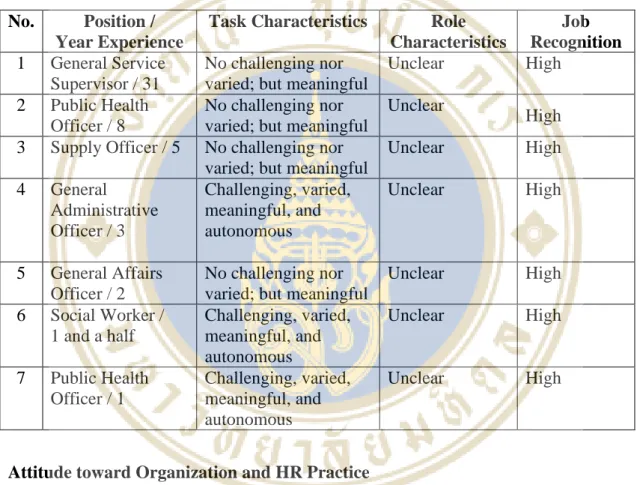
Many employees are still ambitious for more informal day-to-day recognition.” In these case studies, all participants agreed that recognition plays a crucial role in. From observation, all the officers who received recognition present themselves with high energy (power), pride (dedication) and focused (absorption). In our exploratory research, the second set of questions is about attitude towards work, which includes four components – organizational values, HR practices, career opportunities and internal communication.
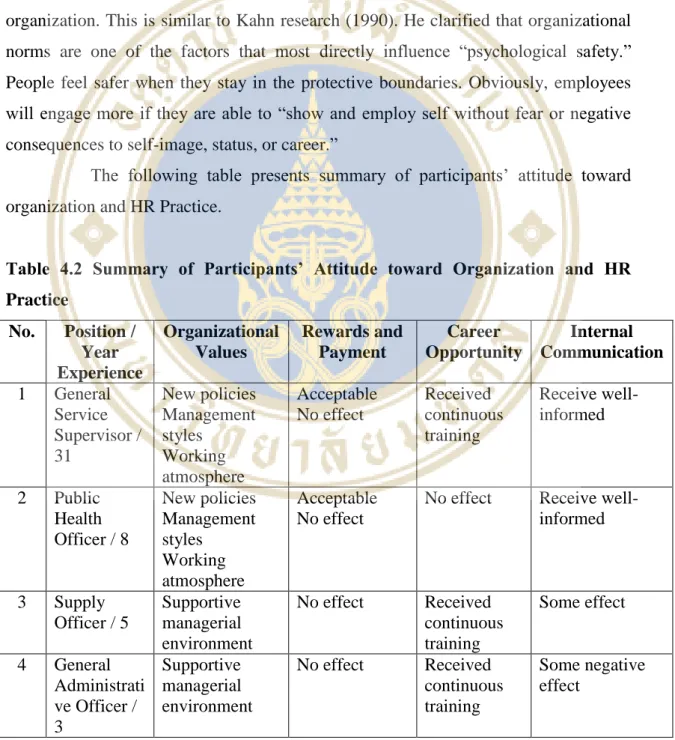
Only one official stated during interviews that she was not aware of the organization's values; another two officers stated that it has no impact on their work; Most participants agreed that the role of top management can influence the norms, values and working atmosphere of the organization. All officers fully understand and accept the government system as it is.
One of the officers who said that career opportunities have a big impact on their work further explained that "it is unclear about the IDP for each position and there is not much growth for each position." Another officer claimed that her supervisor supports and advises her on career options all the time. One of the officers who perceived internal communication as a major problem further stated that “good communication will help employees understand their roles as well as stay up to date on the changes related to work. Consequences of participants' attitudes towards organization and HR practices From interview with many officers, the results showed that rewards and pay have no effect in this organization in terms of employee involvement.
The ambivalence of the organization's management between feeling welcome and avoiding openness is also mixed in this organization. He explained that organizational norms are one of the factors that most directly affect "psychological safety". The third set of questions deals with attitude towards work environment, and relationship with supervisors and colleagues.
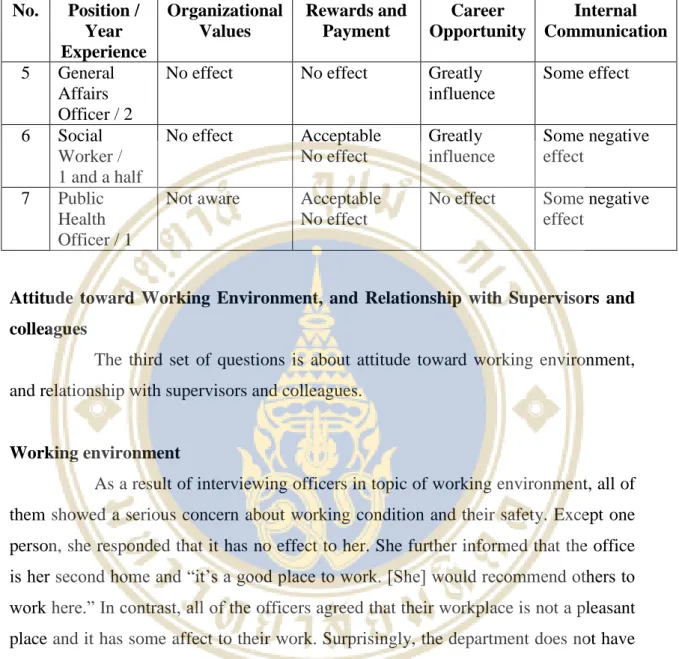
She] would recommend others to work here.” In contrast, all the officers agreed that their workplace is not a pleasant place and it has some impact on their work. It is clear that the attitude towards the working environment can create negative feelings about work, which greatly affect employee engagement. All the officers agreed that their supervisor is very nice and has a big influence on their decisions to resign and leave the organization.
RECCOMENDATIONS
Greater relationships with colleagues, higher employee engagement As mentioned earlier, highly engaged employees can improve organizational performance by up to 30% (The Gallup Organization, 2012) because they are more productive, “less likely to turnover, less likely to be absent and more willing to engage" (Shuck & Wollard, 2010). Bottom line, organizations will benefit from engaging and retaining valuable employees. For the long-term benefits, organizations will be more efficient and perform better (Kataria et. al., 2013).
Because this organization has a high level of recognition and relationship with managers and colleagues, it should place more importance on organizational values, career opportunities, work environment and internal communication. First, the organization must build a strong work culture in which the organization's goals and values are aligned. Thus, it is the responsibility of top managers to create a new culture or norms of low ambiguity to engage the employees.
The organization already has a lot of training, so it needs to develop more on each individual employee. To upgrade knowledge and skills, the employee will acquire more work methods and will eventually feel encouraged to continue and be more engaged in his work. Third, to improve the working environment, the organization must create a first aid room and perhaps a cleaning day once a year for better occupational health and safety.
Employees must receive well-informed and have a clear understanding of the organization and their jobs. It contributes to organizational success as it helps employees organize, focus and prepare. Such a study will help to understand differences between departments in the organization and also between employees.
Finally, since more employees are not engaged in their work, it would be interesting to focus on the concept of "disengagement" in future research.