COMPETITIVENESS OF FURNITURE BETWEEN IMPORT AND PRODUCTION IN THAILAND
CHATPAKAN CHAROENVIJITSLIP
A THEMATIC PAPER SUBMITTED IN PARTIAL FULFILLMENT OF THE REQUIREMENTS FOR THE DEGREE OF MASTER OF MANAGEMENT
COLLEGE OF MANAGEMENT MAHIDOL UNIVERSITY
2022
COPYRIGHT OF MAHIDOL UNIVERSITY
ACKNOWLEDGEMENTS
The completion of this thematic paper could not have been attainable without the unwavering support of my professor, peers, as well as professional colleagues. I would like to express my appreciation for Associate Professor Dr. Nathasit Gerdsri – whose mastery in the field of research and virtue as an educator were invaluable for my development. In addition, my peers have been a great help in reviewing the paper and provided constructive comments; not to mention being available to offer mental support during my moments of stress. Finally, the time and knowledge shared by the interviewees were of the utmost importance in making my research become a piece of empirical work that offers practical insights.
Chatpakan Charoenvijitslip
COMPETITIVENESS OF FURNITURE BETWEEN IMPORT AND PRODUCTION IN THAILAND
CHATPAKAN CHAROENVIJITSLIP 6349123 M.M. (ENTREPRENEURSHIP MANAGEMENT)
THEMATIC PAPER ADVISORY COMMITTEE: ASSOC. PROF. NATHASIT GERDSRI, Ph.D., ASSOC. PROF. WINAI WONGSURAWAT, NISIT MANOTUNGVORAPUN, Ph.D.
ABSTRACT
Thailand’s unique qualities and conditions are known to supportively facilitate production and goods movements – perhaps accounting for the country being one of Asia’s emerging furniture markets. As Thailand has recently undergone disruptions such as rapid technological advancements and the global Covid-19 outbreak, coupled with the limited literature on the country’s furniture sector, the current research aimed to uncover the current state of the industry and assess the competitiveness between two different business models.
Specifically focused on furniture manufacturing versus importing, the study adopted a qualitative approach in interviewing practitioners as well as consumers. Thematic analysis was implemented, and findings supported the resource-based view – essentially arguing for firms’ evaluation of internal as well as external factors in selecting and actioning their business models.
KEY WORDS: Furniture / Import Furniture / Furniture Production / Manufacturer 39 pages
CONTENTS
Page
ACKNOWLEDGEMENTS ii
ABSTRACT iii
LIST OF TABLES vi
CHAPTER I INTRODUCTION 1
1.1. Background 1
1.2. Rationale 2
1.3. Aim and Objectives 3
CHAPTER II LITERATURE REVIEW 4
2.1. The Current State of Thailand’s Furniture Industry 4 2.2. Furniture Consumption Trends in Thailand Post Covid-19 5 2.3. Opportunities and Challenges of Furniture Commercialization Approaches:
Implications for Thailand 6
2.3.1. Understanding Consumers 6
2.3.2. Furniture Production 8
2.3.3. Third-Party Distribution 9
2.4. Resource-Based View (RBV) 10
2.5. Conclusion 10
CHAPTER III RESEARCH METHODOLOGY 12
3.1. Research Design 12
3.2. Participants 12
3.3. Data Collection 14
3.4. Material 15
3.5. Data Analysis 18
3.6. Ethical Considerations and Procedures 19
CONTENTS
(cont.)Page
CHAPTER IV FINDINGS 20
4.1. Summary of Findings 20
4.2. Is it “Worth It?” – A Question Whose Answer Rests on the Long-Term Business
Direction Beyond the Goal of Profit Maximization 31
4.3. The Influence of Location Attributes on Practitioner Decisions 33
4.6. Conclusion 34
CHAPTER V RECOMMENDATIONS AND CONCLUSION 36
5.1. Recommendations 36
5.2. Conclusion 38
REFERENCES 39
LIST OF TABLES
Table Page 2.1 Determinants of consumers’ behaviors in the furniture market
(Zwierzyński, 2017) 7
3.1 Participant’s classification 13
3.2 Interview questions and probes for business representatives 15
3.3 Interview questions and probes for consumers 18
4.1 Findings from a business perspective (manufacturers) 20 4.2 Findings from a business perspective (third-party distributors of
imported furniture) 28
4.3 Findings from consumers’ perspective 30
5.1 Competitive advantages and disadvantages of furniture import
versus manufacturing 36
CHAPTER I INTRODUCTION
1.1. Background
A silent but integral element of individuals’ routine and everyday environment, furniture is regarded as “a tool for indoor or architectural space, allowing humans to lead a life” (Jeoung and Park, 2016). The physical surroundings of human communities are therefore clearly permeated with these movable objects that serve purposes for a variety of basic activities; such as tables for dining, chairs for sitting, cabinets for storage, and so forth.
Because furniture is not viewed only as products with functional values but can also be decorative or religious, demands for furniture products may be driven by consumer preferences or purchasing power for premium furnishings; in addition to appliance needs (Beligatamulla and Siyambalapitiya, 2016; GlobeNewswire, 2022). As recent statistics have revealed, the global furniture market is valued at US$716 billion in 2022 and is foreseen to have a compound annual growth rate (CAGR) of 4.5% from 2022 to 2030. By 2030, it is predicted that the global furniture market will be worth approximately US$946 billion (Statista, 2022a; PR Newswire, 2022). Referring to a discussion by McKinsey &
Company, furniture comprises products with unique challenges given their large and often non-standard sizes; contributing further to the furniture industry’s competitiveness and requiring companies’ grasping of consumer insights (Hajro, Roche, Schumacher, and Symonenko, 2022).
Although the industry’s largest market share – equivalent to US$239 billion – is attributed to the United States, the Asia region is envisioned to continuously grow in congruence with changing lifestyle and investment trends for residential furnishing (Statista, 2022a; PR Newswire, 2022). According to data revealed by Statista (2022b), the furniture market’s revenue per person (PPP) in Asia is estimated at US$34. Currently, the Asia furniture industry has a market size of US$154 billion and is expected to have a CAGR
of 8.5% from the year 2022 to 2026 (Statista, 2022b). Among the emerging markets in Asia is Thailand – wherein the user penetration rate of furniture products is anticipated to grow up to 19% by the year 2025. Compared with the US$34 PPP of the overall Asia region, Thailand’s average PPP amounts to around US$56 (Statista, 2022c). Considering the fact that Thai households are expected to have increased real income during the years 2022 to 2026, the market’s spendings on products that meet higher level needs – such as furniture for decoration and aesthetics rather than for serving basic functional purposes – are predicted to grow correspondingly (Retail Asia, 2022).
1.2. Rationale
As the previous section has illustrated, the furniture industry in Thailand is deemed to have favorable prospects in the near future given changing consumer trends and spending power – making the market an appealing area to examine. Moreover, as scholars Wongtanasuporn et al. (2021) have described, the furniture industry in Thailand is distinguished mainly in its geographical advantage – given that the country’s tropical climate facilitates the securing of high-quality materials for furniture manufacturing such as timber. The location is also convenient for land, sea, or air movement of products – allowing both export and import operations to be carried out with relative ease.
While it is apparent that Thailand’s furniture businesses have unique and interesting aspects to explore, from the author’s view as a practitioner in the industry, academic attention to its management models and strategic plans has been limited in comparison with other retail and wholesale products. To explain, previous studies that investigate the furniture market in Thailand tend to focus on suggestions for improving process or manufacturing efficiency (Rakkarn and Dersing, 2018; Sritong, 2021; Tangsuratkun, Theanruecnai, and Roopsing, 2022) – no identifiable empirical efforts have been directed at understanding the commercialization approach itself. Local companies’ furniture exports have also been identified as a topic of interest for many studies, but not imports (Muangkhot and Ussahawanitchakit, 2015; Riansut, 2016).
1.3. Aim and Objectives
For the above stated reasons, the present study aims to compare the furniture commercialization approaches of furniture import versus manufacturing and discuss implications for entrepreneurs and practitioners. The study’s objectives are as follows:
● To assess the current state of Thailand’s furniture market
● To compare the competitive advantages and disadvantages between furniture imports versus furniture production
● To develop recommendations for practitioners in Thailand ‘furniture industry
CHAPTER II
LITERATURE REVIEW
The literature review discusses in detail the extant frameworks and research on operating furniture businesses. It begins by providing an overview of Thailand’s furniture industry then explores the consumption trends in Thailand taking into consideration the impact of the recent Covid-19 crisis. Following this, the section examines the opportunities and challenges for selling furniture as well as discussing the implications for Thailand. A review of the chosen theoretical framework concludes the section.
2.1. The Current State of Thailand’s Furniture Industry
As the preceding section has mentioned, Thailand is characterized by qualities and conditions – be it the country’s location, natural resources, or cost of labor, to name a few – that facilitate furniture production as well as movements (Tangsuratkun, Theanruecnai, and Roopsing, 2022; Wongtanasuporn et al., 2021). Moreover, with reference to Wongtanasuporn et al. (2021), the development of Thailand’s furniture industry is associated with the country’s increasing proliferation of urban communities – which has rapidly progressed in the past few decades (Pimonsree, Limsakul, Kammuang, Kachenchart, and Kamlangkla, 2022). Expenditure growth for the furniture industry in Thailand has been forecasted by Fitch Solutions (2022) – a prominent research and analytics agency – as 3.1% for the year 2022 given an encouraging view for progressive economic recovery. This is also in line with the perspective of the market’s dominant home furnishing retailer IKEA as the Swedish conglomerate plans to open a new branch in Bangkok – mirroring optimism for Thailand’s tendency to spend more on furniture and furnishing products (Fitch Solutions, 2022).
2.2. Furniture Consumption Trends in Thailand Post Covid-19
It is unarguable that the recent outbreak of the Covid-19 virus has immobilized economic activities and various industries’ growth – resulting in dramatic decreases of household income, private and public expenditure, as well as revenues for businesses (The World Bank, 2022). As the Office of the National Economic and Social Development Council has illustrated, Thailand’s household consumption expenditure declined 16% from pre-pandemic figures during the peak of the pandemic in 2020 – owing to the government’s lockdown measures which resulted in the country’s economic downturn. While most spending categories have contracted, housing-related expenses actually grew during the lockdown period – ranking behind household utilities is the furniture and home improvement category which can be attributed to consumers’ desire to enhance their environment as more time is spent at home (Hean and Chairassamee, 2022).
Accordingly, furniture brands in Thailand were seen to acknowledge this trend and seized the opportunity. An example of this is Chanintr, a leading luxury furniture retailer, and their online dialogue series with practitioners and experts in the creative field under the theme of “#StayingIn” to inspire at-home readers – instigating conversations on the “living space” during quarantines and work-from-home phases (Chanintr, 2020). As the brand’s founder has revealed, Chanintr’s sales have surged during the pandemic despite the products’ exceptionally high prices. Especially in demand are home office furniture such as Herman Miller’s ergonomic chair – which was reported to increase over 10 times in revenue. Further, the brand’s specialization in imported luxury furniture has allowed them to see the growing preferences of Thai consumers toward American, English, and Italian style furniture (Pattareeya, 2022). Another popular furniture brand in Thailand – Podium – reported a similar impact from Covid-19 with Chanintr – such that domestic sales have expanded considerably given that consumers are spending more time at home. As Podium is a furniture manufacturer that also exports finished products to third-party distributors, the company’s export earnings were notably affected for partners whose operations are offline.
However, for foreign partners with online outlets, sales markedly increased – suggesting
that the shift to online distribution has cushioned the blow to export activities (Prachachat, 2019).
2.3. Opportunities and Challenges of Furniture Commercialization Approaches: Implications for Thailand
2.3.1. Understanding Consumers
With reference to Zwierzyński (2017), furniture is characterized by its relatively long life cycle and durability – thus entailing infrequent purchases and typically long- to mid-term usage by both individual or group consumers. Accordingly, the factors that meaningfully impact consumers’ decision to purchase furniture are distinguished to be price value, performance expectancy, and social norms as reference groups or status associated with the goods (Li, Li, Zhang, Zhang, and Gong, 2020). Demands for product specification are also observed to be leant toward personalization – such that consumers want furniture that can be, to some extent, customized to their preferences (Bahasuan and Kodrat, 2021).
Therefore, it can be inferred that furniture brands can design their marketing approaches in a way that these aspects are offered and advertised; for example, implementing special price campaigns or advertising customization options. However, scholars have suggested that the promotion of such features alone is far from being sufficient. As shown in Table 1, there are in fact 4 categories of determinants for furniture consumption behaviors – those mentioned being classified as the direct determinants of marketing elements:
Table 2.1. Determinants of consumers’ behaviors in the furniture market (Zwierzyński, 2017)
Direct/Indirect Determinants Examples
Direct determinants 1) Marketing elements Product features/ price/ nature of distribution/ advertisement 2) Psychological
factors
Needs/ viewpoint/ motives/
attitudes/ preferences/ personality/
perceived risks related to furniture acquisition
Indirect determinants 3) Economic environment (both
macroeconomic and microeconomic)
Supply/ income/ expenses and savings/ possessed durable goods
4) Demographic factors
Consumer age/ gender/ household size/ household location
Taking into account that furniture purchases are not frequently made, the decision-making stage during which these factors come into play is usually quite extended and more complicated – given the possible level of specificity consumers demand from furniture which is anticipated to have longer life cycles than other less durable consumer goods (Zwierzyński, 2017). Moreover, as recent consumer trends have steered toward products’ multi-functionality and concerns for environmental wellness, there are opportunities for furniture businesses to develop green and smart innovations and/or solutions (Papadopoulos, Karagouni, and Trigkas, 2018). Interestingly, however, researchers Namsawat and Rugwongwan (2017) found that furniture consumption in Thailand seems to be characterized by a shorter rather than longer usage cycle as consumers prefer their furniture to be in good condition, in order to satisfy aesthetic needs.
Following the exploration of a customer-centric view, ensuing discussions focus on practitioners’ perspectives based on implementing different approaches – namely, in-house furniture production versus importing from foreign brands.
2.3.2. Furniture Production
With Thailand’s competitive advantages of resource availability and affordability, the country is known to be highly suitable for the labor intensive activity of producing furniture – which makes use of Thailand’s high natural resources content (Organisation for Economic Cooperation and Development, n.d.; Reinhardt, 2000;
Wongtanasuporn, 2022). In addition, the enactment of Thailand-China Free Trade Agreement (FTA) allowing zero import tariffs facilitates furniture manufacturers to source parts or materials from China – especially as the industry requires large trade volumes. In the same manner, exports to China are also exempted from tariffs – facilitating local manufacturers’ sales both domestically and internationally (Suksri, Sermcheep, and Srisangnam, 2015). Apart from China which is the biggest trade partner of Thailand’s, the country also has FTAs with Japan, Republic of Korea, New Zealand, Chile, Australia, India, and the ASEAN region (Aicher, 2020; Thomson Reuters, 2016). In congruence with this, Thailand’s furniture manufacturing sector is known to be primarily focused on export-based activities as opposed to domestic distribution – accounting for over 70% of furniture production in the country (Gazo & Quesada, 2005).
While the competitiveness of Thailand as a furniture manufacturer is evidently explained by the country’s resource accessibility, Reinhardt (2000) underlined the role of production techniques and design innovations which especially added value to the manufactured furniture products, on top of the low cost factor (Sritong, 2021; Suhaily, Jawaid, Khalil, Mohamed, and Ibrahim, 2012). A similar insight was reached by Laemlaksakul, Bangsarantip, Sripatomsawat, Kaewkuekool, and Sangsai, (2011)’s work focused on the Thai furniture industry; specifically asserting that furniture product design surpassed other factors – such as logistics efficiency, information technology and data management, or organizing strategy – in shaping logistic management and mitigating the impact of high logistic cost.
2.3.3. Third-Party Distribution
According to Sakpichaisakul (2012), third-party distributors in Thailand that import furniture from international brands comprise two groups: distributors of high-end and affordable products. The former group tends to import from developed countries – whose furniture brands are discerned by a defined brand identity and high prices.
Correspondingly, the target market of these brands and their distributors is typified by high purchasing power. Among the most dominant players of the sector are Chanintr, Norse Republics, Euro Creation, Boundary, and RCD Design Center – whose furniture products are of well-known luxury brands such as Herman Miller from the United States of America, PP Møbler from Denmark, and Cassina from Italy, to name a few (List Sotheby’s International Realty, 2019; Stylestay, 2021). Per List Sotheby’s International Realty (2019), luxury furniture as proffered by these third-party distributors is recognized by the quality and attention to detail – elevating both the space’s style and its owner’s taste. On the contrary, distributors of affordable furniture – characterized by weaker or no brand identity, commonly imported from developing countries – typically target low purchasing power consumers (Sakpichaisakul, 2012). A point of concern regarding these players has previously been raised by the U.S. furniture market – particularly that imported Chinese furniture, distinguished by its remarkably lower prices relative to domestically manufactured products, causes damage to the U.S. industries and factory jobs (Cao, Hansen, Xu, and Xu, 2004). This was also observed to be the case for Africa – where Chinese furniture suppliers disrupted the local market and gave rise to price competitions (Ogawa, 2018). A similar finding has been noted for the furniture market of Thailand; such that China and Vietnam’s competitive position in terms of lower wages was found to have put Thai manufacturers in a challenge against notably lower price points (Nakwa, Zawdie, and Intarakumnerd, 2012).
2.4. Resource-Based View (RBV)
Based on insights gathered from a review of the literature as heretofore illustrated, it can be suggested the noteworthy role of resources in determining a competitive position for different furniture players and markets. In line with this, the resource-based view (RBV) is selected as a guiding theory for the present research endeavor. As Kraaijenbrink, Spender, and Groen (2010) have described, the RBV is widely applied and supported as a theoretical framework in the context of management. According to the RBV, a firm can secure a sustainable competitive advantage provided that it is equipped with internal sources and capabilities that are valuable, rare, inimitable, and non-substitutable.
With reference to Madhani (2010), a firm’s resources can be classified as tangible – including funds, physical assets, technological strengths, and organizational structure – and intangible – including the workforce, innovation, and reputation. In the case of Thailand’s furniture industry, as previously mentioned, natural materials for production and labor availability are examples of the location’s tangible and intangible resources, respectively.
However, as the preceding subsection has demonstrated, Thailand’s labor source might not be as inexpensive as those of neighboring countries, making the competitive position of Thailand’s furniture industry being inferior relative to China or Vietnam. Although the theory has been challenged given its limited managerial implications – specifically that it does not yield explicit guidance for actual practices, scholars have argued that the RBV’s focus on indicative rather than operational value still efficiently provides guidance necessary for management to understanding and designing execution directions (Kraaijenbrink, Spender, and Groen, 2010).
2.5. Conclusion
To conclude, insights derived from secondary research demonstrate that Thailand’s furniture industry is characterized by the country’s unique availability of resources as well as consumption patterns – whether with respect to domestic or international target markets (i.e. exports). In spite of Thailand’s role as among the key
players of the global furniture trade, there is restricted availability of empirical efforts directed at the market – let alone up-to-date investigations particularly focused on a comparative analysis of competitive strategies (i.e. local manufacturing vs. imports of international brands). With the pandemic disruption to virtually all industries, it is all the more important for a refreshed perspective on the market in question.
CHAPTER III
RESEARCH METHODOLOGY
The section provides details on the selected research design along with the methods and tools implemented for completing data collection and analysis. Brief backgrounds of the interviewed participants are also provided.
3.1. Research Design
The research approach deemed fitting for the present study is qualitative provided that, as mentioned, the topic in question necessitates a revisiting of Thailand’s furniture industry that has been disrupted by the Covid-19 crisis, in addition to being a market scarcely studied in academia. Therefore, it is anticipated that the primary data yield rich and unforeseen insights unconfined by pre-framed responses in order to provide ample contextual details to guide managerial recommendations (Lanka, Lanka, Rostron, and Singh, 2020).
3.2. Participants
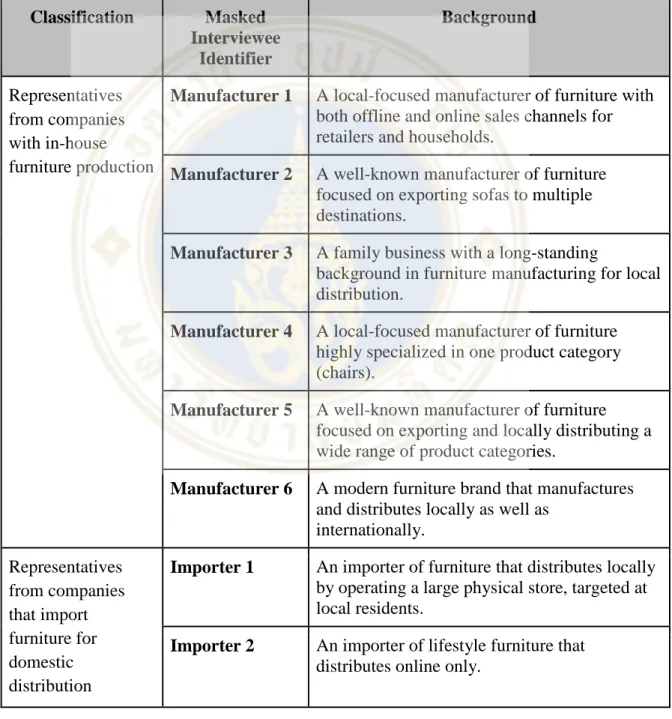
A total of 12 interviewees were recruited using the method of snowball sampling – a convenience sampling approach via which research participants are identified by their suitable attributes, and are reached and contacted by mutual acquaintances. With reference to Naderifar, Goli, and Ghaljaie (2017), the primary advantages of snowball sampling is the relatively less time requirement and improved rapport with participants – facilitating the data collection process. The inclusion criteria is that the participants must occupy a supervisory or management level position in the firm. Correspondingly, participants are classified into three groups: a) representatives from companies with in-
house furniture production (for domestic and/or international distribution i.e. exports), b) representatives from companies that import furniture for domestic distribution, and b) furniture consumers (for residential and/or commercial use).
Table 3.1. Participants classification
Classification Masked Interviewee
Identifier
Background
Representatives from companies with in-house furniture production
Manufacturer 1 A local-focused manufacturer of furniture with both offline and online sales channels for retailers and households.
Manufacturer 2 A well-known manufacturer of furniture focused on exporting sofas to multiple destinations.
Manufacturer 3 A family business with a long-standing
background in furniture manufacturing for local distribution.
Manufacturer 4 A local-focused manufacturer of furniture highly specialized in one product category (chairs).
Manufacturer 5 A well-known manufacturer of furniture focused on exporting and locally distributing a wide range of product categories.
Manufacturer 6 A modern furniture brand that manufactures and distributes locally as well as
internationally.
Representatives from companies that import furniture for domestic distribution
Importer 1 An importer of furniture that distributes locally by operating a large physical store, targeted at local residents.
Importer 2 An importer of lifestyle furniture that distributes online only.
Table 3.1. Participants classification (cont.)
Classification Masked Interviewee
Identifier
Background
Furniture consumers
Consumer 1 An architect/interior designer whose responsibility comprises sourcing furniture items for multiple clients.
Consumer 2 An architect whose responsibility comprises sourcing furniture items for residential properties.
Consumer 3 A potential owner of a cafe currently in the process of designing the space and sourcing for furniture.
Consumer 4 A consumer that purchases furniture for residential furnishing and decoration.
3.3. Data Collection
Per the suggestion of Roulston and Choi (2018), interviews enable the exploration of subjects’ individual experience – permitting the attainment of insights that were not anticipated nor constrained by the theoretical frame of the research. Although the method may necessitate considerable time and practiced interviewing skills, it is deemed suitable for the present study given the anticipated quality, richness, and saturation of data.
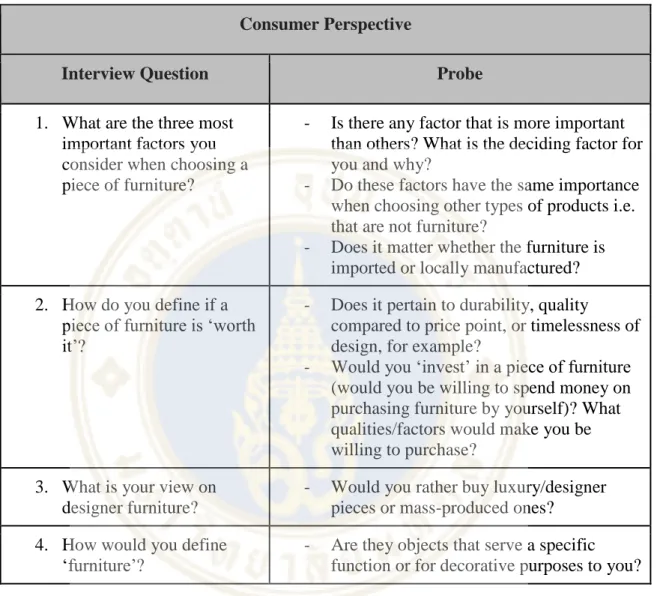
Accordingly, data is collected via individual interviews with representatives from furniture businesses in Thailand. In order to allow a certain degree of flexibility in responses while retaining objectiveness, the approach of semi-structured interviews was selected – wherein a set of open-ended questions is administered to guide the conversation without needing to adhere to a particular sequence or phrasing (Kallio, Pietilä, Johnson, and Kangasniemi, 2016). As illustrated in the subsequent section, the interview questions were designed to elicit interviewees’ recounts of their unique experience and viewpoints; with probing
questions to direct responses toward more specificity. Provided the current Covid-19 situation potentially threatening the researcher and participants’ health safety, interviews will be conducted online.
3.4. Material
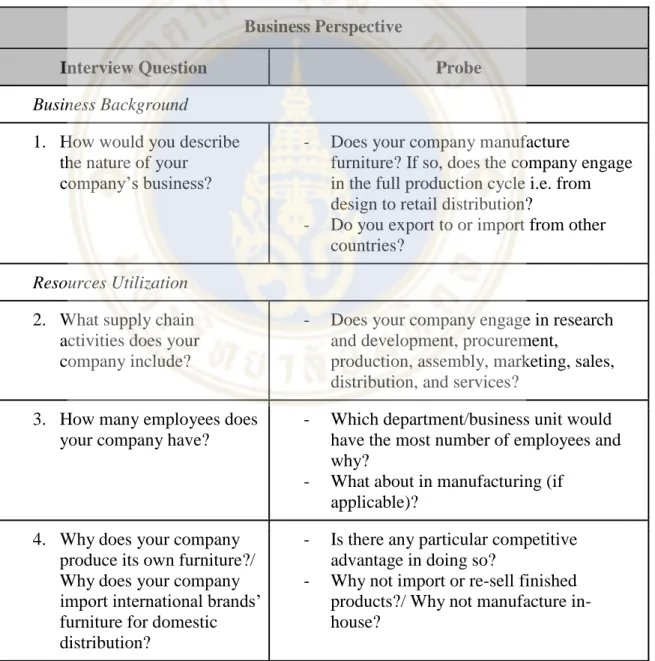
Table 3.2. Interview questions and probes for business representatives
Business Perspective
Interview Question Probe
Business Background 1. How would you describe
the nature of your company’s business?
- Does your company manufacture
furniture? If so, does the company engage in the full production cycle i.e. from design to retail distribution?
- Do you export to or import from other countries?
Resources Utilization 2. What supply chain
activities does your company include?
- Does your company engage in research and development, procurement,
production, assembly, marketing, sales, distribution, and services?
3. How many employees does your company have?
- Which department/business unit would have the most number of employees and why?
- What about in manufacturing (if applicable)?
4. Why does your company produce its own furniture?/
Why does your company import international brands’
furniture for domestic distribution?
- Is there any particular competitive advantage in doing so?
- Why not import or re-sell finished products?/ Why not manufacture in- house?
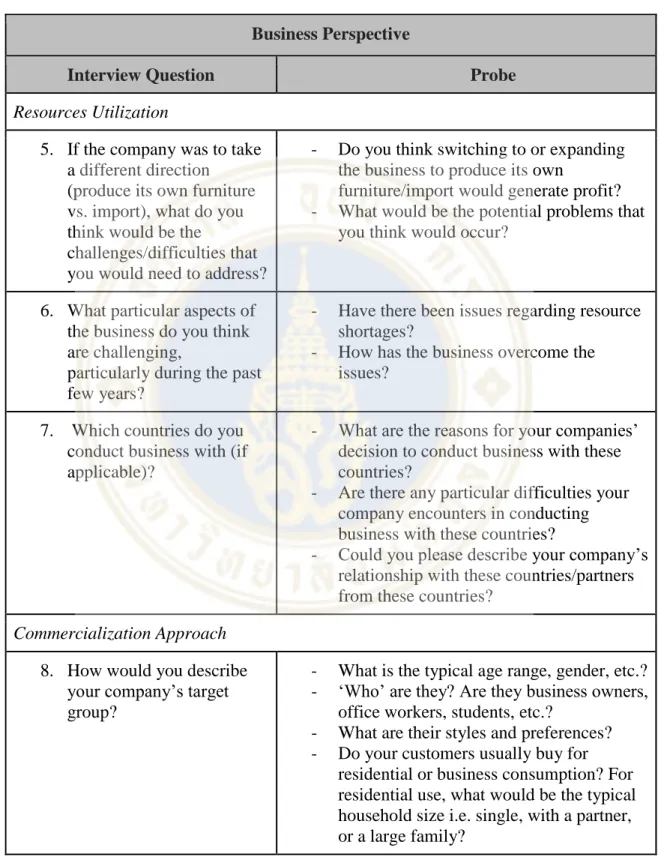
Table 3.2. Interview questions and probes for business representatives (cont.)
Business Perspective
Interview Question Probe
Resources Utilization
5. If the company was to take a different direction
(produce its own furniture vs. import), what do you think would be the
challenges/difficulties that you would need to address?
- Do you think switching to or expanding the business to produce its own
furniture/import would generate profit?
- What would be the potential problems that you think would occur?
6. What particular aspects of the business do you think are challenging,
particularly during the past few years?
- Have there been issues regarding resource shortages?
- How has the business overcome the issues?
7. Which countries do you conduct business with (if applicable)?
- What are the reasons for your companies’
decision to conduct business with these countries?
- Are there any particular difficulties your company encounters in conducting business with these countries?
- Could you please describe your company’s relationship with these countries/partners from these countries?
Commercialization Approach 8. How would you describe
your company’s target group?
- What is the typical age range, gender, etc.?
- ‘Who’ are they? Are they business owners, office workers, students, etc.?
- What are their styles and preferences?
- Do your customers usually buy for residential or business consumption? For residential use, what would be the typical household size i.e. single, with a partner, or a large family?
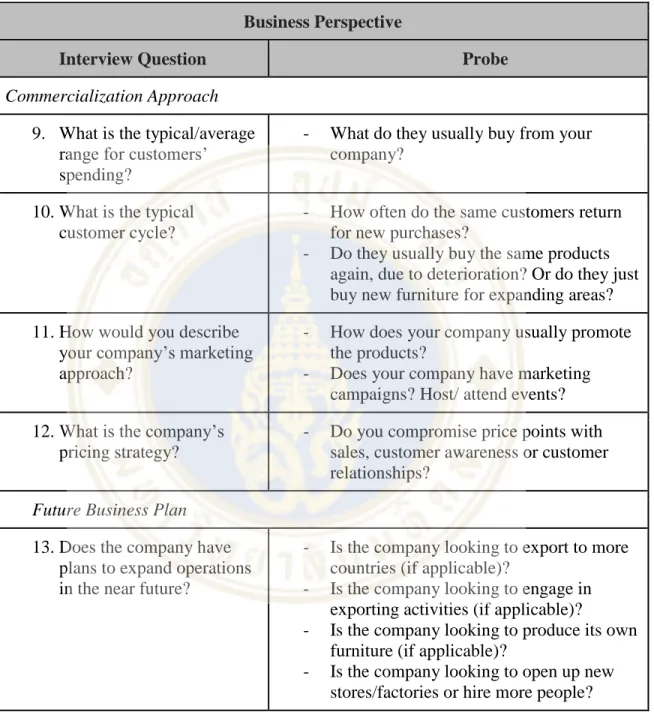
Table 3.2. Interview questions and probes for business representatives (cont.)
Business Perspective
Interview Question Probe
Commercialization Approach 9. What is the typical/average
range for customers’
spending?
- What do they usually buy from your company?
10. What is the typical customer cycle?
- How often do the same customers return for new purchases?
- Do they usually buy the same products again, due to deterioration? Or do they just buy new furniture for expanding areas?
11. How would you describe your company’s marketing approach?
- How does your company usually promote the products?
- Does your company have marketing campaigns? Host/ attend events?
12. What is the company’s pricing strategy?
- Do you compromise price points with sales, customer awareness or customer relationships?
Future Business Plan 13. Does the company have
plans to expand operations in the near future?
- Is the company looking to export to more countries (if applicable)?
- Is the company looking to engage in exporting activities (if applicable)?
- Is the company looking to produce its own furniture (if applicable)?
- Is the company looking to open up new stores/factories or hire more people?
Table 3.3. Interview questions and probes for consumers
Consumer Perspective
Interview Question Probe
1. What are the three most important factors you consider when choosing a piece of furniture?
- Is there any factor that is more important than others? What is the deciding factor for you and why?
- Do these factors have the same importance when choosing other types of products i.e.
that are not furniture?
- Does it matter whether the furniture is imported or locally manufactured?
2. How do you define if a piece of furniture is ‘worth it’?
- Does it pertain to durability, quality
compared to price point, or timelessness of design, for example?
- Would you ‘invest’ in a piece of furniture (would you be willing to spend money on purchasing furniture by yourself)? What qualities/factors would make you be willing to purchase?
3. What is your view on designer furniture?
- Would you rather buy luxury/designer pieces or mass-produced ones?
4. How would you define
‘furniture’?
- Are they objects that serve a specific
function or for decorative purposes to you?
3.5. Data Analysis
Corresponding to the qualitative approach selected, data collected via semi- structured interviews is tabulated, analyzed, and presented adhering to the method of thematic analysis. The rationale for selecting this approach pertains to its objective of identifying patterns in the data and illustrating aspects of the attained insights under different themes. In this manner, a systematic grouping of interpretations can be achieved (Braun, Clarke, Hayfield, and Terry 2019) – allowing analytical but clear and coherent
understanding of Thailand’s furniture industry based on which recommendations can be extrapolated.
3.6. Ethical Considerations and Procedures
During the recruitment as well as the interview onset, participants are informed of their voluntary nature – such that their participation can be revoked at any time during the study’s duration. In light of both standard ethical considerations and the recently enacted Personal Data Protection Act (PDPA) in Thailand, personal identifiable data is not retrieved (Greenleaf and Suriyawongkul, 2019). Further, given that the interview topic is sensitive to practitioner participants’ strategic competitiveness, the name of their company is not collected nor revealed; merely a brief background of the business nature is requested in order to provide a contextual understanding of the individual’s experience.
CHAPTER IV FINDINGS
The section first provides a summary of findings categorized by the group of participants: namely, a) representatives from companies with in-house furniture production, b) representatives from companies that import furniture for domestic distribution, and b) furniture consumers. Then, in line with the approach of thematic analysis as mentioned, the findings are illustrated in the nature of different themes that have been identified based on data patterns.
4.1. Summary of Findings
Table 4.1. Findings from a business perspective (manufacturers)
Masked Interviewee
Identifier
Findings
Business Background Manufacturer 1
● Manufactures furniture using locally available materials i.e.
particle boards, wood, etc. but also imports some replacement parts from China
● Finished products include vanity tables, media centers, and closets
● Distribute domestically for both business-to-business (B2B) and business-to-consumers (B2C) via online and offline channels
● B2B concerns retail furniture stores that purchase in bulk while B2C is mostly for customers’ residential use
Table 4.1. Findings from a business perspective (manufacturers) (cont.)
Masked Interviewee
Identifier
Findings
Business Background Manufacturer 2
● Manufactures furniture for both local and international distribution albeit focuses more on the latter given its high order volume
● Highly specialized in designing, crafting, and producing sofas with over 30 years’ expertise
● Wholesale export markets include multiple locations such as Japan, Korea, the Middle East, Europe, etc.
Manufacturer 3
● Manufactures furniture for local distribution via third-party agents
● A family business with long-standing experience in the industry
● Finished products include steel wardrobe closets Manufacturer
4
● Manufactures furniture using locally available material (plastics, as Thailand is among the largest producer of plastics) for local markets
● Finished products include chairs exclusively
● The company hopped on the trend of eco-friendly materials and shifted from steel chairs to plastic chairs
Manufacturer 5
● Manufactures furniture for both local and international distribution
● Imports materials unavailable in Thailand from other countries i.e. America, Europe
● Highly specialized in a wide range of product categories particularly focused on wood furniture
Manufacturer 6
● Manufactures furniture for both local and international distribution
● Although a relatively new entry to the modern Thai furniture market, has been doing well and establishing a favorable presence
● Exports comprise a minor proportion of operations with ranging destination countries in Asia, Europe, and the U.S.
Table 4.1. Findings from a business perspective (manufacturers) (cont.)
Masked Interviewee
Identifier
Findings
Resources Utilization Manufacturer 1
● Given that the company is a family business, the size of the workforce is not large and operation areas typically overlap
● There are approximately 30 employees in the manufacturing sector
● Views that in-house furniture production for distribution yields competitive advantages for the company to competently address the target market’s needs i.e. products can be
customized/tailored to customers’ specifications
● Operating the company’s own manufacturing allows greater degrees of control for managing costs and setting price points
● On the contrary, re-selling finished products is seen as more expensive and challenging with respect to consumers’
purchasing power
● Another concern associated with importing finished products for distribution would be the increased costs involved
● The pandemic has not caused issues in terms of resources shortage, but significantly impacted the target market’s purchasing power (reduced by as much as 50%)
Manufacturer 2
● Manufacturing for local distribution, given that the company is not specialized in wood furniture, is done via an original equipment manufacturer (OEM) in Japan then shipped to Thailand for distribution
● The company’s local market comprise both end-users and project-based businesses i.e. hotels
● Has multiple research & development teams in order to ensure clients’ satisfaction
● The manufacturing department has multiple production lines specialized in specific areas – currently has approximately 100 employees
Table 4.1. Findings from a business perspective (manufacturers) (cont.)
Masked Interviewee
Identifier
Findings
Resources Utilization Manufacturer 3
● Does not operate a full manufacturing cycle
● Has only 4-5 employees
● Views that furniture manufacturing, opposed to third-party distribution, allows for more profit margins
● Challenges for the business primarily pertain to Chinese players’ disruption given their underpriced products that local manufacturers cannot compete with
Manufacturer 4
● Was not particularly impacted by the recent Covid-19 crisis given that the company implements automation technologies
● The company’s strength lies in its long-standing expertise in the industry (over 30 years’ experience)
Manufacturer 5
● Views that an important strategy to adhere to is sustainability – sourcing materials that are supplied in line with regulations safeguarding natural resources
● Views that the challenging aspect of furniture production is planning and managing the materials and production cycles
● Recognizes the importance in establishing a research and development unit to systematically analyze warehouse and materials management
● Sees that businesses do not necessarily need a large workforce as long as the level of expertise can be compensated with fewer employees
● Sees that, for furniture production, precision technologies are highly needed in order to minimize human errors
● Perceives that manufacturing, as opposed to mere distribution of products, creates jobs and communities for the local society; in other words, views the supply chain cycle of furniture production as an activity that extends beyond short- to medium-term profit maximization as it can uplift Thais’
manufacturing expertise as a whole
Table 4.1. Findings from a business perspective (manufacturers) (cont.)
Masked Interviewee
Identifier
Findings
Resources Utilization Manufacturer 6
● Views the competitive advantage of furniture manufacturing, in comparison with third-party distribution, as pertaining to the high level of control over product designs, costs, brand directions, etc.
● The challenge of furniture manufacturing is the heavy utilization of resources – high fixed cost for the workforce, multiple aspects to manage, etc.
● On the contrary, third-party distributors typically receive brand books and a focus on marketing and sales is sufficient
● The challenge with third-party distributions, however, is that the brand itself is entitled to revoking distribution rights and penetrating the local market themselves
● Sees the furniture import market as having many barriers and currently already has strong industry players
● Currently utilizing 3D printing technology to shorten some production processes and views automation technologies as an important asset to the firm
● Addressed the past material shortage and delivery delays by communicating with clients and offering alternatives Commercialization Approach
Manufacturer 1
● The target market is typically families of varying sizes and retail furniture stores which regularly make repeated orders
● Best selling products are closets followed by media centers and vanity tables
● Sales and marketing strategies generally focus on bulk-buy promotions – such as the offering of an additional item with 30 purchases, or a discount eligibility for a particular spending amount
● There is no particular pricing strategy – the focus is on the business’ viability and maintaining existing workforce
● Aims to make some profit and maximize sales volume
Table 4.1. Findings from a business perspective (manufacturers) (cont.)
Masked Interviewee
Identifier
Findings
Commercialization Approach Manufacturer
2
● As the company’s strength lies in its technical and production expertise, it does not focus on sales and marketing
● Current strategies include attending furniture fairs and promotion campaigns i.e. mid-year sale
● As the company’s products are high-priced, current local client base is consumers with high purchasing power i.e.
executive-level employees, seconded expatriates, or wealthy couples
● For international distribution, the company has a physical showroom operating in Japan
● There is no particular marketing strategy for exports – the focus is on large wholesalers in foreign countries as well as chain hotels
● A challenge encountered in the recent past, provided the Covid-19 pandemic, is that material prices have surged
● Views that furniture consumption patterns and purchasing cycles hinge on consumers’ culture and lifestyle – for example, furniture life cycle for Thais might be around 10 years as they typically only purchase new furniture given that they are moving houses, whereas Japanese adults tend to move around often thus the furniture life cycle for them is shorter Manufacturer
3
● Provided that the market is a red ocean, the marketing strategy is that the company selects products that is already popular among consumers
● The pandemic has resulted in a significant reduction in profits (over 50%) which is still an ongoing impact
● Resolves by increasing products’ price but can only do so in a limited degree
Manufacturer 4
● Current customer base includes both businesses (i.e.
restaurants, other public spaces, and third-party distributors) and residential end-users
● Current sales and marketing strategy includes basic promotions and attending furniture fairs
Table 4.1. Findings from a business perspective (manufacturers) (cont.)
Masked Interviewee
Identifier
Findings
Commercialization Approach Manufacturer
5
● In the past, the company has seen increases in wood materials and responded by compromising some aspects of the products (while retaining the same quality) and communicating with customers
● The current target group for international markets is wholesalers – retailers tend to have smaller order volumes
● Views Thai consumers as a relatively unpredictable group with varying needs
● Focuses on establishing a strong brand identity using unique materials and design
Manufacturer 6
● International clients mostly approach the brand from advertisements and furniture fairs
● Current local client base includes 3 main groups all in urban areas: residential spaces, commercial spaces, and workspaces
● Current sales and marketing approach centers on furniture exhibitions given the target market’s behavior of attending furniture fairs
Future Business Plan Manufacturer 1
● Foresees potential in expanding locally to other regions in Thailand
● Particularly interested in the Northeastern region where the purchasing power of consumers is observed to be fairly stable over time and the population is growing
Manufacturer 2
● Foresees potential in expanding locally as a lifestyle brand that has product lines other than furniture – for this the company would need to focus on branding strategies
● Views that the company needs to focus more on marketing and expanding the communication landscape to reach more customers
Manufacturer 3
● Does not see any potential to expand given the high competitiveness in the market
Table 4.1. Findings from a business perspective (manufacturers) (cont.)
Masked Interviewee
Identifier
Findings
Future Business Plan Manufacturer 4
● Foresees an opportunity to expand to other non-furniture product lines using eco-friendly materials
Manufacturer 5
● Foresees the potential expansion to include imports of international brands for distribution as an opportunity to elevate current employees skills and expertise by learning from established brands
● The challenge, however, might be the planning, design, and negotiation processes for stocking and managing the products
● Aims to focus more on online channels for international markets
● Foresees an opportunity to expand the local market by operating more showrooms in distant locations outside Bangkok
Manufacturer 6
● Future directions are focused on strengthening current products
Table 4.2. Findings from a business perspective (third-party distributors of imported furniture)
Masked Interviewee
Identifier
Findings
Business Background
Importer 1 ● Originated from being a retailer/wholesaler of furniture, importing products from China and Malaysia
● Has recently started operating furniture manufacturing given that the business has been disrupted by bigger players and online sellers – causing price competitions
● Only distributes locally; operates a large showroom in a densely populated suburban area
Importer 2 ● Imports furniture from China and distributes via a social media platform only
Resources Utilization
Importer 1 ● The decision to choose China is owing to Chinese suppliers’
offering of diversified products, competitive pricing, and ability to keep up with consumer trends
● Experienced that being a third-party distributor allows for limited margins; thus faced difficulties during the price competitions in the market, resulting from a disruption of bigger industry players
● Impact from the pandemic had caused delays in shipping and surges in costs – the company was forced to increase product prices
Importer 2 ● The decision of choosing China as a supplier is owing to the country’s vast production capability – resulting in their offering of low-price products, allowing increased margin for resellers even with the consideration of shipping costs
● Only has two employees for coordinating with suppliers and managing warehouse and products movement
● The challenge with importing Chinese furniture is the
abundant availability of suppliers – permitting competitors to source similar products and prices
Table 4.2. Findings from a business perspective (third-party distributors of imported furniture) (cont.)
Masked Interviewee
Identifier
Findings
Commercialization Approach
Importer 1 ● Current target market includes homeowners in the suburban area who prioritize products with “good value” such as purchasing a full set of furniture for the price of a few items Importer 2 ● Focuses on the business’ social media page to associate
products with a fashionable and luxury lifestyle
● Also launches targeted advertisements on social media to create awareness
● Compared with other competitors, the brand has a higher price point given its focus on premium and high quality products from trustworthy and reliable suppliers
● Customers’ typical spending range is 10,000 to 30,000 Thai Baht
Future Business Plan
Importer 1 ● Aims to establish in-house furniture products to strengthen the company’s brand identity
● Foresees an opportunity to expand the consumer base, focused on developers and property project owners
Importer 2 ● Plans to operate a physical showroom
Table 4.3. Findings from consumers’ perspective
Masked Interviewee
Identifier
Findings
Consumer Background
Consumer 1 An architect/interior designer whose responsibility comprise sourcing furniture items for multiple clients
Consumer 2 An architect whose responsibility comprises sourcing furniture items for residential properties
Consumer 3 A potential owner of a cafe currently in the process of designing the space and sourcing for furniture
Consumer 4 A consumer that purchases furniture for residential furnishing and decoration
Perspective on Furniture
Consumer 1 ● The most important attribute of any piece of furniture is the visual appeal
● Durability and the price point is also important, but if the piece is not aesthetic then it is not preferable; similarly, if the piece is highly exquisite then it compensates for its
expensiveness
● Views designer/luxury furniture as highly desirable and can elevate the space – for this category, its function and comfort are less important
Consumer 2 ● Views furniture as essentially serving functional purposes – for users to relax and elevate their mood – but in some situations furniture can also be treated as an art piece for emotional satisfaction
● Be it for own usage or clients’ projects, the top priority is on the furniture’s timeless design as furniture is seen as an investment
● Prefers designer over unbranded furniture given the
appreciation for the efforts and meticulousness for creating the piece
Table 4.3. Findings from consumers’ perspective (cont.)
Masked Interviewee
Identifier
Findings
Perspective on Furniture
Consumer 3 ● Views furniture as art – a representation of the owner’s identity and sets the mood and tone for the space
● Priorities when selecting furniture for the commercial space include the “human” factor – meaning that the furniture must provide a sense of emotional connectedness while having a unique design
Consumer 4 ● Views furniture as primarily serving functional purposes and providing comfort for users
● Prioritizes comfort, functionality, and minimal design over brand names or status associated with the piece
● A piece of furniture is “worth it” if the price is not outrageously high and the design is beautiful while being comfortable
4.2. Is it “Worth It?” – A Question Whose Answer Rests on the Long- Term Business Direction Beyond the Goal of Profit Maximization
The question of worthiness in the context of the furniture industry concerns multiple answers, contingent on different industry players. From the perspective of furniture manufacturers, for instance, the high initial investment costs and expertise required have been reported to prove gainful and sustainable for the business along with its enclosed community, based on the recounts from the current study’s primary research. To quote manufacturer 5, “Furniture manufacturing creates jobs for the community and uplifts the Thai furniture industry by strengthening design and production expertise among practitioners.” Moreover, it allows greater degrees of freedom in determining the brand identity and direction; paving way for the strategic management of resources and operations as well as enabling more opportunities for expansion. This has been exemplified by
manufacturer 1, manufacturer 5, and manufacturer 6 who, in the face of external factors’
impact on business viability, were able to substitute unavailable materials with comparable alternatives or compromise aesthetics for the maintenance of the same price points while safeguarding quality and brand trustworthiness. Further, from the view of manufacturer 2, furniture manufacturers have the liberty to expand in any direction deemed feasible – such as the establishment of various product lines unrelated to furniture.
Importers of international furniture brands for third-party distribution, while not given the privilege to govern the brand strategy or tailor operations to complement changing contexts, are associated with relative ease of entering the market provided that the resources required are not as demanding. As indicated by importer 2, the business did not require more than a few employees to successfully operate as a furniture retailer; with the physical asset required being only a warehouse for storing products prior to customer delivery. In line with this, manufacturer 6 had also provided an insight that international furniture brands typically dispense a “brand book” to guide third-party distributors’ business directions; therefore, a focus on marketing and sales alone is sufficient for profit maximization. However, the brand itself is entitled to an ownership authority that allows them to revoke distribution rights and penetrate the local market by themselves, making the third-party’s efforts in establishing the brand’s local presence be in vain.
Regardless of being distributed by a manufacturer of its own furniture brand or a third-party supplier of imported furniture, the value of furniture pieces as perceived by consumers largely depends on their subjective standards and preferences along with the context for furniture selection. As shared by importer 1, the client base of mass products was observed to particularly appreciate the promotion and price value of furniture products;
an insight that is in line with multiple other furniture manufacturing businesses whose target market is less high-end. For consumers whose view of furniture is leaned toward satisfying aesthetic rather than functional purposes, the “worthiness” of furniture pieces hinges on the timeless design, durability, and emotional appeal – reported by consumer 1, consumer 2, consumer 3, and consumer 4 alike.
4.3. The Influence of Location Attributes on Practitioner Decisions
Regardless of being furniture manufacturers or third-party distributors, it was found that unique geographical qualities of the country in which operations are being conducted play a critical role in directing business decisions. Owing to the intricacy and multifacetedness of furniture products – particularly pertaining to their design, crafting, and material selection, practitioners’ decision to focus on a particular furniture item or category for commercializing hinges importantly on the country’s available resources and distinctive offerings.
In the case of manufacturers, this has been exemplified by the view of manufacturer 4 – whose decision to focus on plastic chairs was attributed to Thailand’s competitive position as among the largest producers of plastics. For materials that are not abundantly available in Thailand, on the other hand, it was indicated by manufacturer 5 that the resources of other countries need to be leveraged instead. In further details, manufacturer 5 has revealed that the selection of a supplier country over another is led by particular specifications of the furniture design – such as the requirement of wood with curly over straight grains – given that different geographic conditions shape unique material qualities. For third-party distributors that import furniture products from other countries, it was evident from both importer 1 and importer 2 that China is the most preferable supplier market owing to its production capability and resources availability– thus allowing Chinese furniture manufacturers to offer highly competitive pricing and permitting third-party distributors to absorb greater margins.
4.4. The Role of Technology and the Virtual World As A Disruptive Force in the Furniture Industry
The role of technological and innovative advancements is documented in the present study for both business categories of furniture manufacturers and third-party distributors. Although the recognition of their importance and impact is identical for both practitioner groups, the nature of adoption is different given the dissimilar operational
processes. To explain, manufacturers are observed to have implemented, to some extent, automation technologies in the production line – such as manufacturer 4 which has integrated automated systems and manufacturer 6 which is currently utilizing 3D printing.
In addition to enhancing efficiency, such integration has also been illustrated to lessen the health risks imposed on factory workers – as manufacturer 4 has attributed the business’
exemption from Covid-19’s impact to the use of automation technologies. The activity of product distribution has also been observed to incorporate technological innovations, such as manufacturer 1’s utilization of online shopping applications. Platforms that appear to be popular among multiple businesses are brand websites and social media accounts – evidenced by manufacturer 5 and manufacturer 6’s reach of international clients via company sites and manufacturer 2 and importer 2’s strategy of creating awareness via social media.
4.5. Shifting Trends Toward Sustainability and Environmental Consciousness
An interesting observation is businesses’ recognition of the industry’s impact on the environment. As manufacturer 5 has explained, concerns for sustainable utilization of natural materials and furniture production have been incorporated into the business strategy – reflected in the company’s prioritization of lawful wood supplying as well as principles for upskilling the Thai creative industry. A similar realization has also been illustrated by manufacturer 4 whose focus has shifted from steel to plastic furniture given the latter’s relatively better biodegradability.
4.6. Conclusion
All in all, the present study’s primary findings have shown support for the framework of the resource-based view (RBV) – as differing business strategies and practitioner decisions appear to hinge largely on the competitive resource advantages
unique to different market locations. Moreover, an examination of varying parties – including two categories of furniture businesses and furniture consumers – has allowed the study to shed light on multiple perspectives and reach interesting patterns of insights, as previously discussed.
CHAPTER V
RECOMMENDATIONS AND CONCLUSION
Integrating both secondary and primary findings, the section concludes the paper by proposing a series of recommendations per the initially established research aim of comparing the furniture commercialization approaches of furniture import versus manufacturing in the context of the Thailand market.
5.1. Recommendations
Table 5.1. Competitive advantages and disadvantages of furniture import versus manufacturing
Furniture Import for Third- Party Distribution
Furniture Manufacturing
Advantages ● Necessitates a minimal number of employees for operating the business
● Entails reduced supply chain operations
● Ease of market entry
● High degrees of freedom and control over brand identity and business directions
● Returns of investment materialize sustainably and yield long-term advantages
Table 5.1. Competitive advantages and disadvantages of furniture import versus manufacturing (cont.)
Furniture Import for Third-Party
Distribution
Furniture Manufacturing
Disadvantages ● Susceptible to risks of brand owner revoking distribution rights
● Limited margin and restricted control of costs and brand identity
● Prone to price
competition and market disruption by new entries
● Necessitates heavy utilization of resources – including high fixed costs for the workforce
● Entails the management of multiple aspects within the production process
● Requires careful research and planning of materials sourcing and production cycle
Based on the above presented illustration of comparative competitive advantages between furniture import versus manufacturing, the findings show that both business approaches yield fruitful implications for practitioners; however the suitability of one or the other needs to be determined by understanding the business’ long-term strategy above and beyond considerations for profit maximization. Therefore, entrepreneurs and management must first evaluate the firm’s internal availability of resources (i.e. capacity for high or low investment costs), external resources and factors (i.e. domestically accessible materials or risks for business viability), and aspired target market of focus (i.e.
high-end with high purchasing power or lower-end consumers prioritizing price value and affordability).
5.2. Conclusion
Referring to the initially outlined objectives of the present study, it can be concluded that the present study has successfully assessed the current state of Thailand’s furniture market via both secondary and primary research; particularly asserting that while the latter has supported the former in its illustration of Thailand’s competitive position as a furniture manufacturer, interview results have shed light on new trends emerging in the market such as technological integrations and concerns for eco-friendliness. Further, the competitive advantages and disadvantages between furniture imports versus furniture production have also been outlined – specifically adhering to the resource-based view (RBV). In a similar manner, while the managerial recommendations have been put forth also being in line with the RBV, they also correspond to the literature’s suggestion that Thailand’s furniture market can be classified into higher-end or lower-end consumers.
As the research has also acknowledged the complexity of the furniture industry beyond merely categorizing practitioners as third-party distributors of imported furniture or furniture manufacturers, future research should conduct a more in-depth analysis and identification of the sub-sectors in order to arrive at more tailored recommendations for practitioners.