It is sold on the understanding that the Publisher is not involved in the provision of professional services. Games families play: the role of family myths 103 The impact of family myths on the family business 105.
DEVELOPING A BUSINESS
THE CLINICAL RATING SCALES
PR EFAC E
Established methods of measuring and understanding business performance can only explain so much in the family business. Completely absent from the family business literature is any consideration of the influence of the family system on individual behavior, a critical element of family businesses [7].
Refl ection and Learning
It examines business and human challenges that are particularly applicable to family firms. In this chapter we discuss the genogram—a tool that gives a quick snapshot of family relationships.
Integration and Action
We also examine separation-individuation - the process of becoming a person and differentiating oneself from one's family - sibling rivalry and Oedipal issues. We highlight how what happens in a family business is strongly influenced by the family system's structure and matrix of relationships.
AC K N OWLEDG M EN TS
The families we work with often say that they hope to pass on their hard-earned wisdom to other business families and the people who work for them. By sharing what we have learned through this book, we hope to repay our debt to “our” business families.
Sam's eldest daughter Mitzi took an executive role in the company, and his third daughter Marilyn took effective control of the family trusts. From the business side, she began to assert herself through her ownership role and the management of the family trusts.
Understanding the therapist's role in the system is fundamental to understanding the systemic approach to families. Addresses problems in the system. • Focuses on the problems of the individual, from a relational perspective.
Family members place a high priority on emotional capital - the family's shared experiences of working across generations. The business circle typically includes non-family members who are employed in the family business.

For family members, one of the obvious benefits of working for the family business is the perception (albeit illusory) of controlling their own destiny. A legendary example of the overflow of shared family values into the family business is the furniture manufacturer Herman Miller Inc. Conflicts within branches of the family can spill over into the company and create a stalemate.
Individual rivalry and family competition can lead to power games in the family business that ultimately destroy the business [10]. Resistance to change in the family is likely to fuel a lack of innovation in the company. He rationalizes his behavior by saying that he works for the benefit of the family.
Are family and business strategies aligned to ensure that the needs of both systems are sustainable in the long term.

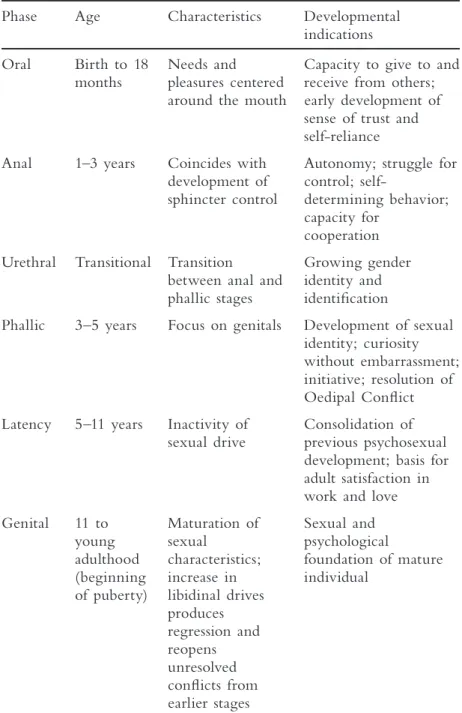
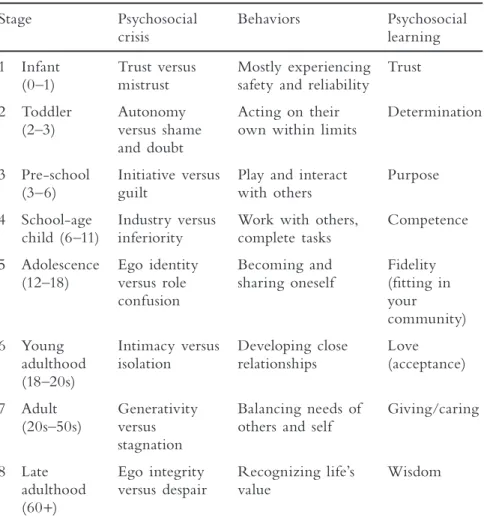
The ideal outcome of this stage, according to Erikson, is the ability to love as well as to address and accept differences and contradictions—the ability to form a commitment to a relationship, whether a marriage or a relationship between friends or colleagues. Establishing a career and raising children are two markers of this period, as the individual's focus shifts from the 'future'. In 1989, family therapists Elizabeth Carter and Monica McGoldrick [11] developed a six-stage model of the family life cycle.
In a family systems model this is called 'differentiation': the phase in which individuals in a family system transition from a family of children and parents to a family of adults. Margaret was her father's only child; his wife had died when Margaret was five. The founders of the freight forwarding company were very ambitious and, despite poor cash flow in the early years, had been able to grow the company into a strong regional freight forwarding and logistics support company. We can also consider the parallel process of the individual life cycles of the family and the business cycle.
Belmont, CA: Brooks/Cole Publishing; Levinson, D.J. Season of a Man's Life, New York: Ballantine Books; Eggers, J.H., Leahy, K.T. Small business growth stages revisited: Insights into growth path and leadership/management skills in low- and high-growth companies,' in Bygrave, W.D., Birely, S., Churchill, N.C., Gatewood, E., Hoy, F. and Wetzel, W.E. transl. and ed.), The Standard Edition of the Complete Psychological Works of Sigmund Freud Vol.
![Figure 4.1 Life cycle forces impacting on strategy, structure, manage- manage-ment and ownership in family businesses [2]](https://thumb-ap.123doks.com/thumbv2/azpdfco/10806330.0/94.646.95.555.589.853/figure-forces-impacting-strategy-structure-manage-ownership-businesses.webp)
As the descendant of the founder of the family company, he had succeeded in building a successful newspaper venture in Eastern Europe. In many entrepreneurial and family businesses, the particularities of the person in charge are strongly reflected in the company's corporate culture. For this, the child must first acquire the ability of intrapsychic separation, the ability to feel adequate in the other's absence.
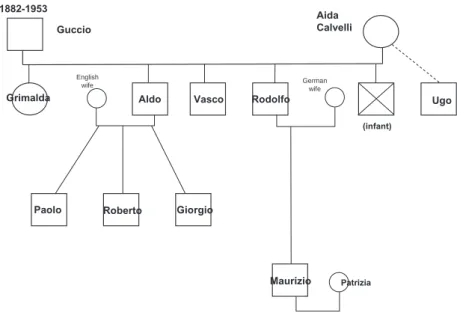
As indicated in the Gucci family story that follows (see Figure 5.1), the danger is that too much time and attention will be spent on conspiratorial activities and not enough on the substance of the enterprise. Maurizio Gucci's life was marred by family feuds as he battled with other family members for control of the company. By the late 1970s, Gucci was everywhere, but the ubiquity of the brand was not matched by the company's prosperity.
Such an unrealistic view of what happens in the family obviously does not bode well for the future of the family-run business.
A closer look at the inner theater of the entrepreneur often reveals a shaky sense of self-esteem and identity. As one former employee put it, 'Larry is one of the smartest guys in the software industry. Ellison's goal was to double the size of the company every year, and nothing stood in the way.
This brief review of the facts (and myths) of Larry Ellison's background and leadership style raises some intriguing questions. For many reasons—one of which may have stemmed from a need to differentiate himself from his adoptive father, whom Ellison described as an automatic and unthinking deference to authority figures and rules—Ellison has always been 'Oracle's Oracle. '. person with vision and hyper-drive for maximum market share. Larry Ellison did a fair amount of blame shifting after the Oracle merger in 1990.
Larry Ellison has undoubtedly harnessed the best of his drive, intelligence and unique vision of the world to create a great organization.
In the opening minutes of the Danish film Arvet (The Inheritance) [2] we are introduced to the privileged life of Christoffer Borch-Muller. I was thrown out of the family firm.' Christoffer's father replied: 'Just wait until you have a son of your own.' But later, standing in front of the assembled factory workers, Christoffer tells them that he is the new leader of the steelworks.
Employees of a family firm always view the sons and daughters of the owners who work in the business as different. The problem here is that such a burden can begin to affect the mental health of the leader in question. In many cases, these adult children give in and trust in the assumed wisdom of the parent.
Is the leader resistant to change, believing that he or she, as the chosen representative of the family, always knows best.
For Bateson and some of his associates, schizophrenia was the result of disrupted communication patterns in the family. They can discuss extreme scenarios, with family members imagining the worst that could happen. The intervention became the first step in a rearrangement of the existing rituals in the family system.
When we use the systems perspective, it is not assumed that one family member – the one with the symptoms – is the problem, but rather that responsibility for both the problem and the solution lies within the entire family system [8]. According to this systemic view, one member of the system cannot change without causing a ripple effect throughout the family system. Several aspects of the family script will be particularly relevant in the business situation – especially those that help the family organize itself.
The influence of the family triangle on intimacy,' American Mental Health Counselors Association Journal, 8:.
The concept of the genogram was developed in the 1970s by Murray Bowen as a tool to help unravel relationships between family members by diagramming family relationships and relational patterns [1]. Some genograms also include information about disorders that run in the family (e.g., alcoholism, depression, and heart problems), alliances (close supportive relationships in the family), and specific living situations (children raised outside the parental home, stepchildren, blended families). This is because it can act as a record of the facts and characteristics of a family, and can also help highlight problem areas in the family.
First of all, we see that in 1990, Grandfather Julio turned 60 – the age at which his own father had died. This explains some of the pressure in the system, but to find the roots of the conflict between the sisters you have to go further back in the history of previous generations in the family. She did well at university and returned to work in the family business after graduation.
When we examined the genogram of this family (a real family situation in which all identifying facts were hidden), it became clear that the problems between the sisters, and between Julietta and her mother, had their origins in the period when Julietta's beloved grandmother died.

![Figure 2.2 Balancing family and business needs in fi ve critical areas [5]](https://thumb-ap.123doks.com/thumbv2/azpdfco/10806330.0/62.646.161.485.603.855/figure-balancing-family-business-needs-fi-critical-areas.webp)