Direct citizen benefits: These are the benefits that are noticeable and extended directly to the citizens even without the knowledge of the existence of the ERP system. The findings therefore support improved ERP system for the benefit of management and which in turn will ensure improved service delivery to the citizenry.
Introduction
This further underlines the need to study the benefits of ERP in terms of the stakeholder context. It is important to understand the benefits of each investment, and according to Lagsten and Goldkuhl (2008), an important reason to conduct information systems evaluations is to take action based on the results of the evaluation.
Background to the problem in the context of a typical municipality
Research problem
Research question
Research sub-questions and objectives
Research assumptions
Research methodology
Delineation of the study
It concentrated on the functions of the ERP system that have a direct impact on citizens as part of service delivery. The focus of the research was on the management of the ERP system, which goes hand in hand with implementation and utilization.
Rationale of the study
Thus, the advantages of the ERP systems are examined from an operational and strategic perspective. It is the citizen benefit perspective, as it prevails at a management level, which is the focus of the study.
Contribution and significance of the research
Comprehensive list of sources
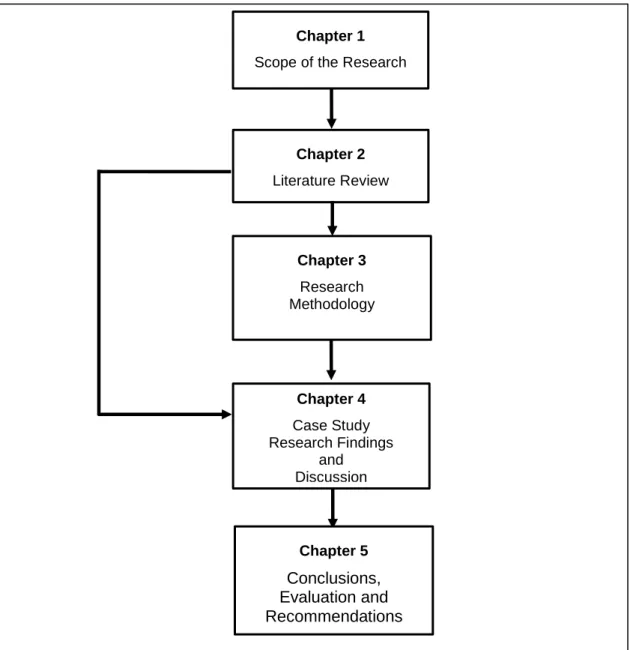
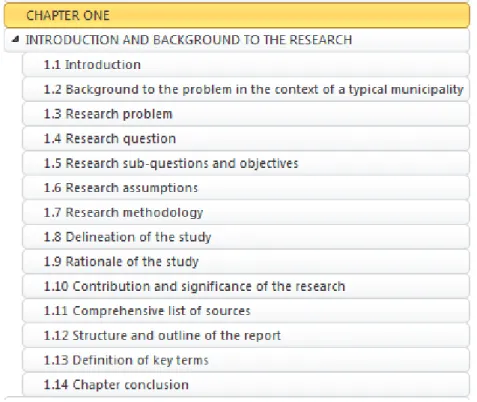
Structure and outline of the report
The findings are supported by quotations from the actual words of the respondents, and a discussion of these findings concludes the chapter. It then details the steps taken to ensure the integrity of the study.
Definition of key terms
Chapter conclusion
In conclusion, an overview of the entire structure of the thesis is given and diagrammatically illustrated.
Introduction
Defining Enterprise Resource Planning (ERP) systems
ERP systems background and capabilities
- Flow of Information
- Interoperability
- Unification
- Compatibility
- Centralised monitoring
- Auto-error handling
- Accurate data
- Common user interface
Many ERP systems can now facilitate the flow of information between all business processes internally and externally (Robertson, 2013). From the literature summarized above, it becomes clear that ERP systems have a list of salient features.
ERP systems successes and challenges
- Hardware and Software Compatibility
- Legacy systems and data
- Change management
- User-training
- Real costs
- Project monitoring and evaluation
- Technical and customer support
- Poor communication
- Security issues
Limited customization may not adequately integrate the ERP system with the business process (Clegg & Wan, 2013). Unfortunately, the "cross-functionality" is a requirement for the ERP system to be complete and successful (Markus et al., 2000).
ERP systems implementation in public organisations
Public vs. private ERP system implementation
Convincing all stakeholders in a public organization about the usefulness of an ERP system requires some intensive research on the benefits of ERP system implementation (Markus & Tennis, 2000). A carefully planned good business case can easily justify ERP system projects (Holland & Light, 1999; Hong & Kim, 2002).
ERP systems in South African municipalities
The dramatic reduction in turnaround time can be attributed to the support of the ERP system. The ERP system is self-managed, making it an integral part of the Municipality's assets.
Management of ICT benefits
Benefits classification
ICT benefits can be categorized into tangible, those that can be easily measured, even with traditional means, and intangible, which are difficult to measure. This study also concluded that ICT benefits can be categorized into tangible, those that can be easily measured, even with traditional means, and intangible, which are difficult to measure or immeasurable ( Irani & Love, 2001; Ward & Daniel, 2006).
Benefits monitoring and review
A number of authors have researched the benefits of ICT systems as the significant aspect that can distinguish successful implementations from unsuccessful implementations. Stakeholders must agree on a governance model that ensures ownership and accountability while reviewing and measuring the benefits (Ward & Daniel, 2006; Glynne, 2007).
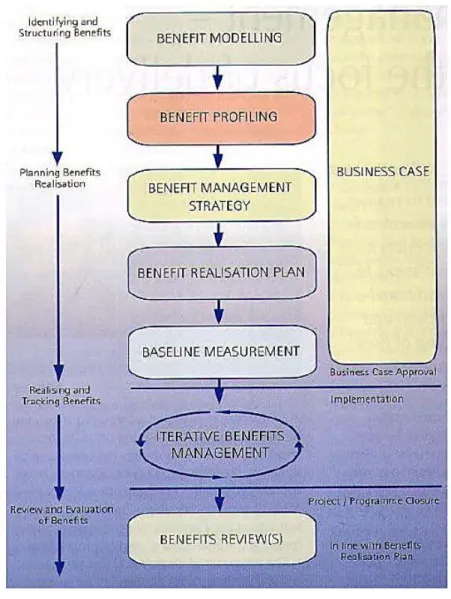
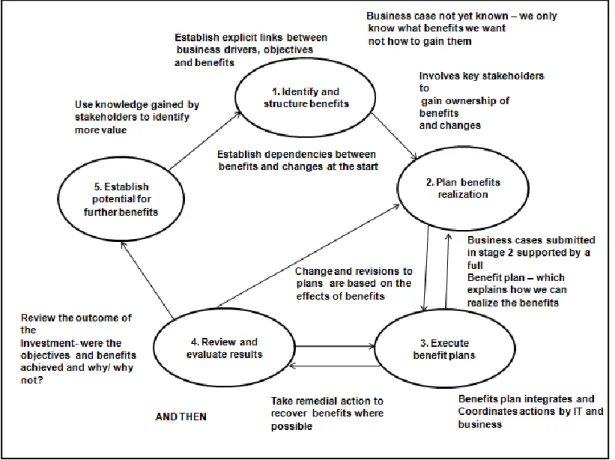
The Benefits Management Cycle
According to the diagram above, researchers analyze the different stages of the benefits management cycle. These studies highlight the need for benefit assessment as part of appropriate benefits management.
Evaluation of IS benefits
Effectiveness in this regard is defined as the degree to which the goals (ie, the objective of organizational performance improvement) that organizations have set with ERP system are achieved. Their research also noted deterioration in the evaluation of IT investments in general and ERP systems specifically.
Approaches to ERP system benefits evaluation
- The Bailey and Pearson Instrument (1983)
- The Miller-Doyle Approach (1987)
- The Balanced Score Card (BSC - 1992)
- The Task-Technology Fit Model (1995)
- The Mirani and Lederer Instrument (1998)
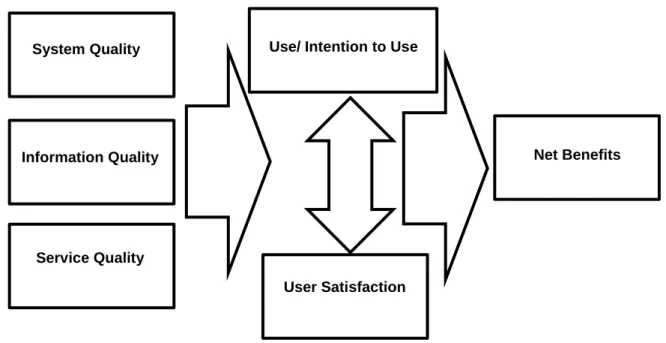
- Shang and Seddon Framework (2000)
- Resource-Based View Model (2005)
- The exp-ben Framework (2009)
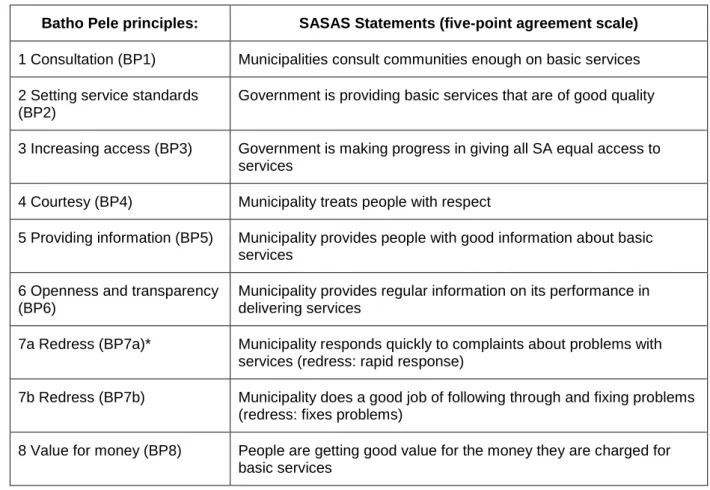
- Framework for Strategic Plans and Annual Performance Plans (DNT, 2010) . 46
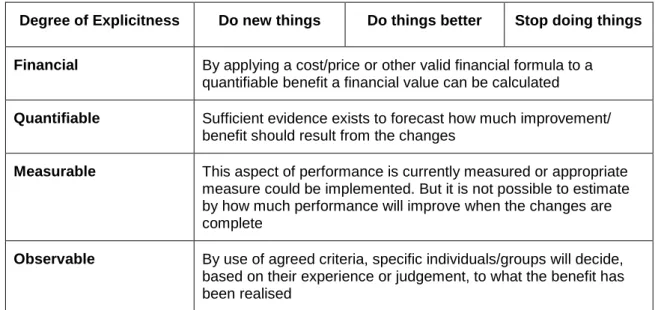
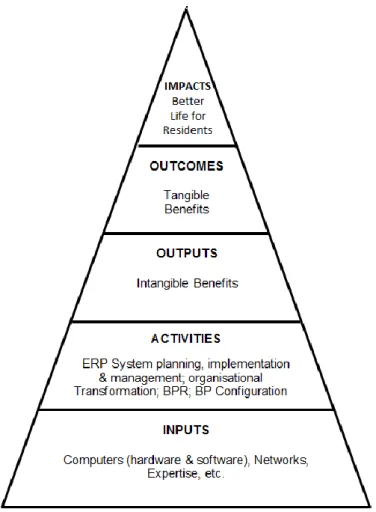
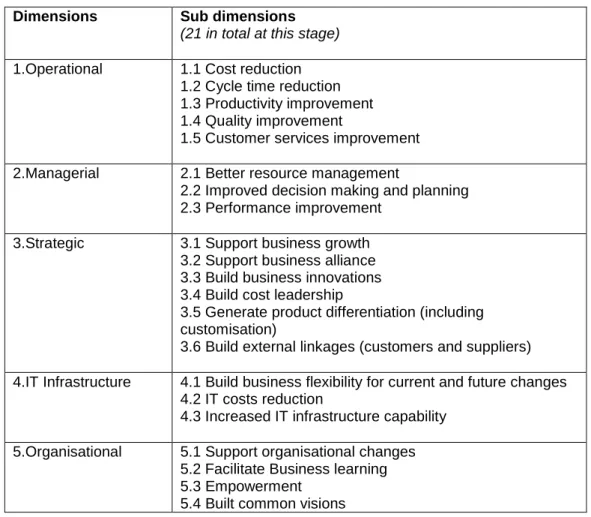
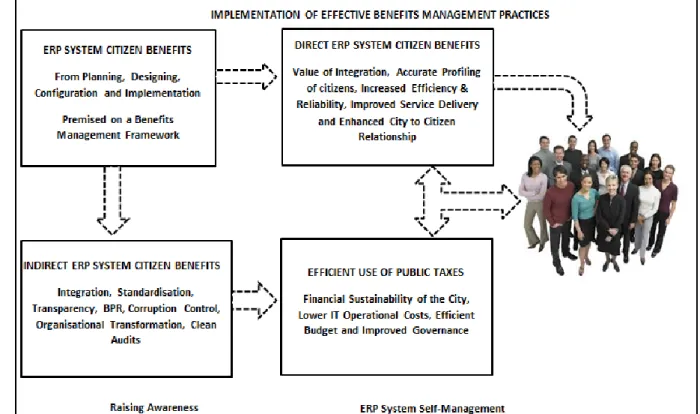
Applying this framework to assess the impact of the ERP system from the citizen's perspective can be output as Figure 2.5 below. However, the structure of this framework is very general and needs modification to fit well with citizens' perspective on ERP system implementation as a project.
Conclusion
What are the typical benefits that are derived from the citizens of municipalities that have implemented ERP systems. This literature also provided a suitable foundation on which this research was designed, as described in the next chapter.
Introduction
He distinguishes that the focus of research design is on the end product while methodology focuses on the research process. It focuses on the research process and the type of tools and procedures that will be used.
Research Design
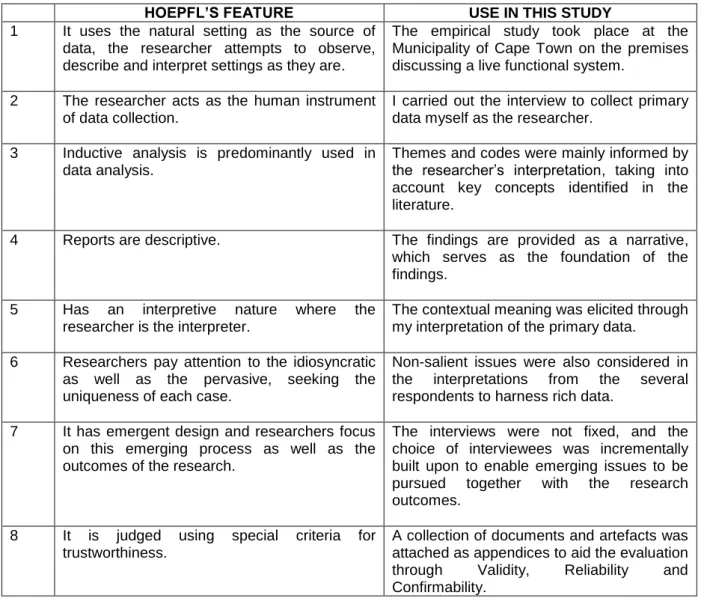
Qualitative research design
Neuman argues that "...the meaning of a social event or statement depends to a great extent on the context in which it occurs". There was a need to share meaning through the interviews that were conducted to support the qualitative research design.
Research philosophy
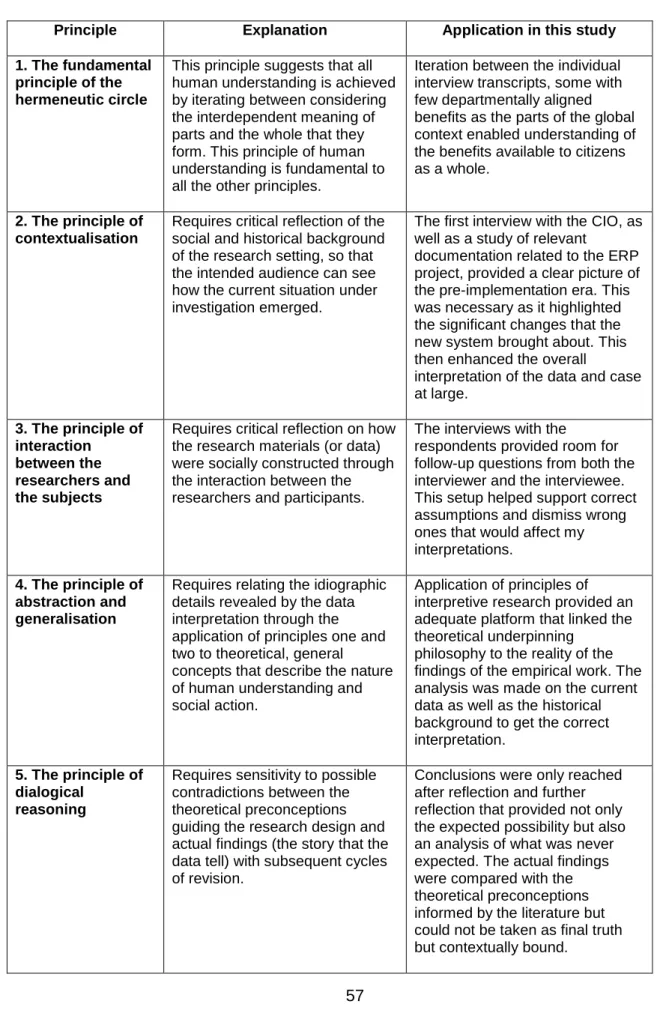
Although careful consideration was given to the choice of the qualitative paradigm, it was not a blind choice for the study design. Requires critical reflection of the social and historical background of the research setting so that the intended audience can see how the current situation under investigation came about.
Research strategy
The chosen case was the Municipality of Cape Town in South Africa.7 The case study was specifically chosen, not only because of the need to uncover rich detail, but also to identify how the various findings are related and interact with each other. is. Since this study had similar research objectives in relation to a public institution, the choice of a case study approach was further strengthened.
Research Methodology
- Delineation of the research study
- Primary data
- Selection of key respondents
- The interview
- Designing the interview Schedule
- Conducting the Interviews
- Secondary data
An interview guide is attached (see Appendix B) and describes in more detail the objectives of the formulated questions. All respondents were first contacted via email, with a brief description of the research accompanying the meeting request.

Ethical issues
At the beginning of the interview, interviewees were also informed that they could withdraw from the research at any stage (See Appendix B). All respondents were informed about the interview as explained on the cover of the interview guide (see Appendix B).
Data analysis methods
Micro-analysis
A colleague also received the transcript and the audio to determine the accuracy of the transcript. A decision was then made to interpret the rest of the evidence by means of hermeneutic techniques11 (Klein & Myers, 1999; Neuman, 2011).
Using Atlas.ti to conduct data analysis
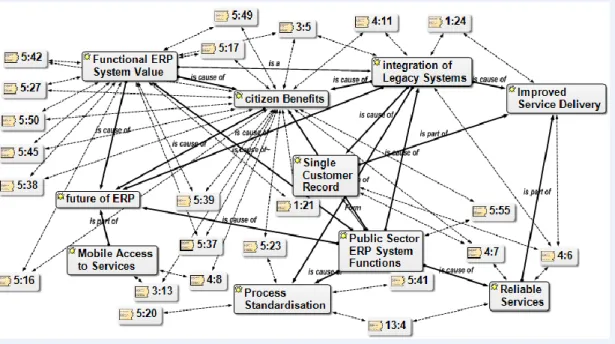
A number of labels were derived from the underlying meanings of the terms (see Appendix F for a report of the list from Atlas.ti). Most of the links were facilitated by Atlas.ti to group these categories as they were associated with the same citations (see Figure 3.4).
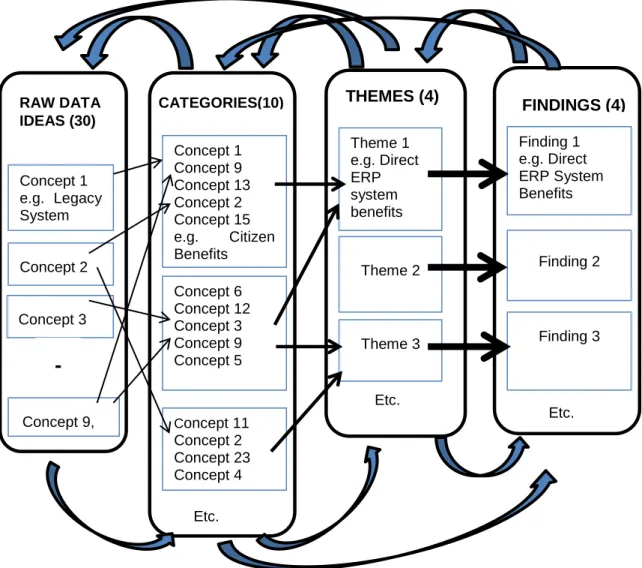
Summary of the data analysis procedure
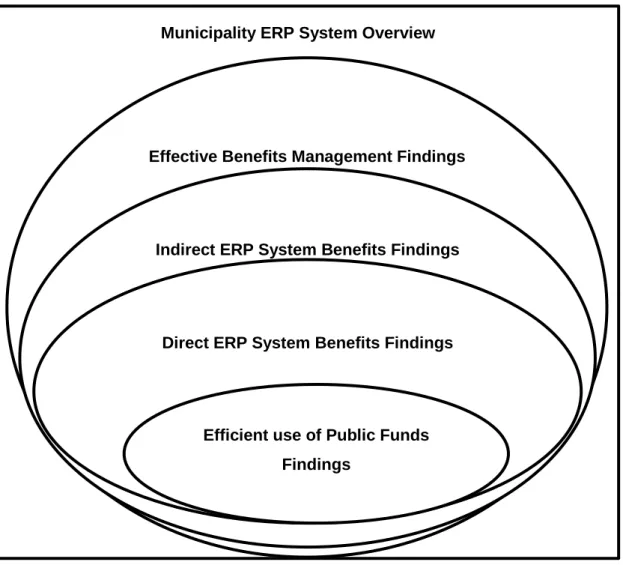
The emerging themes formed the basis for the results (see Figure 4.5 for the various issues discussed within the findings). From this figure, it is important to note that the qualitative analysis process was not linear.
Conclusion
Introduction
The issues have emerged as sub-themes, but have not necessarily been linked to the sub-categories due to the analysis and reflection. Before elaborating on the findings, an overview of the case study is provided to establish the context of the study.
The Case Study
- Legislative background
- Services offered to the citizens
- The business case: background and rationale
- Not yet accrued benefits
- Current status of the ERP system
- The findings framework
- Conclusion of the section
13 Note that I have substituted the actual names and positions of the informants in accordance with the confidentiality agreement with informants that ―the evidence will not be referred to you personally or your position (see Appendix B for the full confidentiality clause). The first main finding is in line with the indirect benefits of the Municipality's ERP system.
Indirect ERP-system benefits
- Integration of disparate systems
- Standardisation of business processes
- Clean audits
- Transparency and accountability
- Control of corruption
- Business process configuration
- Organisational transformation
- Increased trust
- Summary of this finding
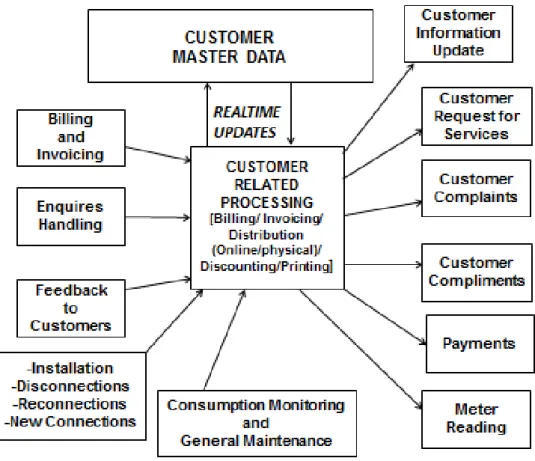
The ERP system was configured to enable a seamless integration of all information flows in the Municipality. So this is the way in which we are trying to reach people" (Interviewee 5 2012).
Efficient and effective use of public money
- Financial sustainability of the City
- Lower IT operational costs
- Efficient budget
- Improved governance
- Summary of the finding
The foregoing testifies to the fact that sustainability of the City is at the center of the implementation of the ERP system. In this subsection, the role of the ERP system in improving management is examined.
Direct citizen benefits
- Opportunity value of integration
- More accurate profiling of citizens
- Increased efficiency
- Increased reliability
- Improved service delivery
- Summary of the finding
The complexity associated with public participation processes is simplified by using an ERP system. All the advantages of the ERP system are supported by the back-end modules due to the way the services are supported.
Effective ERP system benefits management
Public awareness campaign
All these measures are aimed at raising awareness among residents about the capabilities brought by ERP." The above is a presentation of the measures that are supposed to improve access to the benefits extended by the ERP system.
ERP system self-management
Management has established mechanisms to raise awareness among residents about the availability of certain amenities. To successfully bridge the digital divide, the municipality's management must implement measures to raise awareness of the benefits of the ERP system available.
Discussion on findings
If the municipality's management is aware of the critical success factors, then they will be able to justify their spending on certain decisions aimed at the benefits of the citizens. However, the city must maintain the integrity and reputation of the city by accommodating visitors in the same way as citizens.
Conclusion
Summary of findings
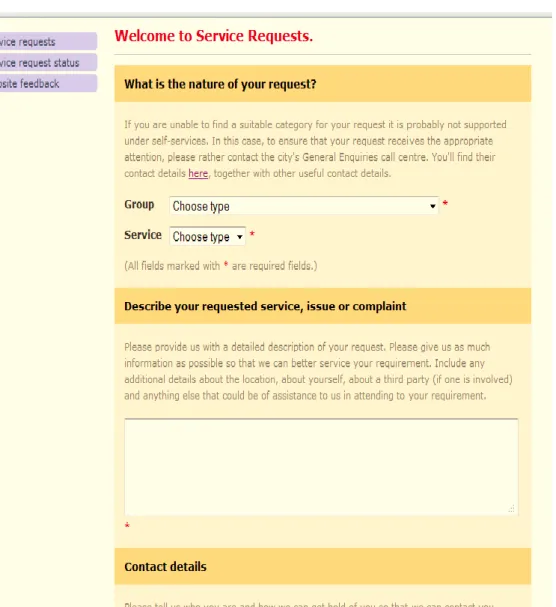
Citizens can now access some of the city's services through 'multi-channels' that are consistent and standardized. This is extended by multi-channel access to a single customer record within the city's services database.
Integrated view of benefits
The high level of transparency and accountability made possible by ERP system use eliminates corrupt activities. This means that the ERP system, in addition to solving problems for the municipality, brought functionalities.
Introduction
Importance of findings
Finally, ordinary citizens will be clarified about the benefits they should expect and demand from the Municipality after an expensive implementation of the ERP system. If citizens are aware of the benefits, then there will be satisfaction among this particular group of stakeholders in using the public ERP system in general.
Assessing the response to research questions
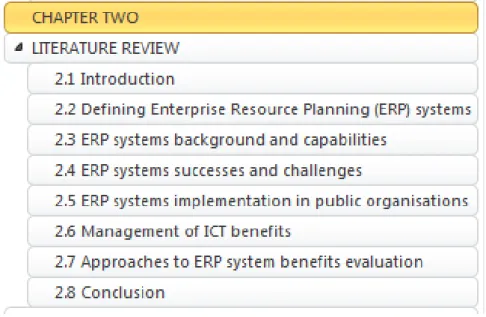
Therefore, this study provides recommendations to the municipalities and other public institutions on how important citizen benefits are so that they not only document them at the business case stage, but will also be able to manage and maintain them throughout the ERP system utilization. One Section 2.2: Defining Enterprise Resource Planning Systems Section 2.3: ERP systems background and capabilities Two Section 2.4: ERP systems successes and challenges Three Section 2.6: Managing ICT benefits.
Relevance of key findings
- Capabilities and functionality of an ERP system in a municipality
- ERP systems successes and failures
- Benefits management
- The typical benefits of public ERP systems
- The ERP system at the Municipality
- ERP system contribution to maximum citizen value
- Relationships among the findings
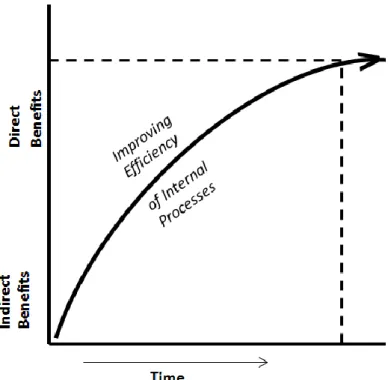
This happens over time as the indirect benefits increase once the ERP system is implemented. The most direct benefits of the ERP system for citizens come from the management of the ERP system and additional functionalities.
Evaluation of the Research
- Credibility
- Transferability
- Dependability
- Confirmability
A summary of the findings is presented in Figure 4.5 on page 92 as the framework of findings that emerged from the study. This demonstrates the logical and coherent framework adopted to increase the reliability of the findings.
Research limitations
Lessons learnt from the research process
Notwithstanding all the requirements that confirm the authenticity of the study, the results that emerge from the study also play a decisive role in making sense of the entire research process, given the subjectivity of the qualitative paradigm. Therefore, the results of this study can be considered credible, confirmable, transferable and reliable, in line with the qualitative traditional-aligned evaluation approach.
Evolving technology
Recommendations
- Appropriate profiling of citizens for sustainability
- The Benefit Management Framework Need
- Augmenting modules needed
- Robust awareness campaign needed
- Distinguishing implementation and benefits management objectives
- Link to the population database
- Summary of recommendations
Currently, the ERP system is populated by those citizens who have direct interaction with the municipality. For whatever reason, this indicates that the capabilities of the ERP system are underutilized in this regard.
Future research
This study ratified the planning part of the ERP system and noted that it is the implementation and management phases that are found to be lacking, as described above. If these phases are handled in a way that recognizes the citizen as the most important stakeholder, more value can be extracted from the ERP system.
Concluding remarks
Process Standardization Any advantage associated with the adoption of standard practices supported by the use of the ERP system. Functional value of the ERP system The general advantages that are clearly attributable to the existence of the system.
Sample interview notes