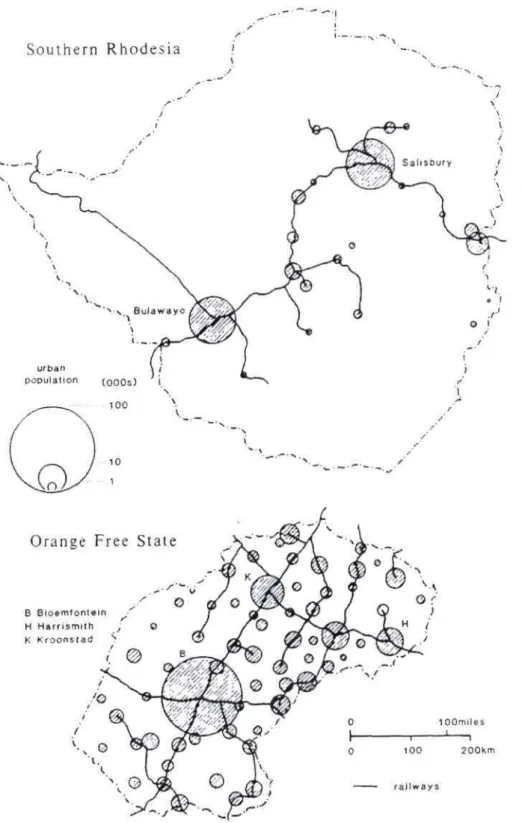
In the basic form of this process, capital is converted into commodities, which form the basis for the production of new commodities. First, what is the function of various cities throughout the colonial empire, world system, region, and colony.
EARLY EUROPEAN SETTLEMENT
1 Early European settlement
- King Shaka and the settlement at Port Natal
- The Republic of Natalia
- Annexation
- Conclusion
This pattern of villages was prevalent throughout South Africa in the mid-nineteenth century. Only in the vicinity of the city of Durban and along the trunk road to the Drakensberg were a number of rudimentary tracks developed.
THE BRITISH TAKE OVER
- Is Natal to be a settler colony?
- New settlements
- Pietermaritzburg as capital
- The state of the economy of Natal in the late 1840s
The British did not recognize the legality of the Volksraad's land grants and began to review all claims. This was the task of the 'Diplomatic Agent to the Native Tribes of Natal', Theophilus Shepstone. This may be part of the reason why few emigrants had settled in Natal by 1860.
The towns were points of contact between the rural population and the rest of the world. The enormous importance of the overberg trade was also reflected in the location of the main towns. In October 1850 the Government Immigration Agent wrote a report on the first results of the Byrne scheme.
The importance of Pietermaritzburg to this forwarding trade was due to the nature of transport in Natal. Fort Napier, "armed [...] and commanding the town of Pietermaritzburg," was one of the first and most important permanent military posts in the colony. The development of agriculture, although very hesitant, broadened the colony's economic base.
THE 1850s AND 1860s
3 The 1850s and 1860s
- Durban as a port city
- The overberg trade
- Pastoralists and agriculturalists
- Indentured labour
- Natal between growing pains and a silver lining
Activity in Port Natal increased rapidly after the start of immigration to Natal. A large part of the trade through Port Natal did not come from or was not destined for Natal. Transport facilities had to be improved and this was obviously one of the main concerns.
Africans meanwhile adapted to the circumstances and took advantage of the many opportunities to maintain their relative independence. An extensive and nuanced account of the history of this company can be found in: J.J.A. 70 KKLC, Assisted Immigration and Settlement Scheme of the Natal Land and Colonization Company ("Limited-").
Aspects of the Economic and Social History of Colonial Natal, Pietermaritzburg, University of Natal Press, 1985, str. SELLERS (ur.), Enterprise and Exploitation in a Victorian Colony: Aspects of the Economic and Social History of Colonial Natal. SELLERS (ur.), Enterprise and Exploitation in a Victorian Colony: Aspects of the Economic and Social History of Colonial Natal, Pietermaritzburg, University of Natal Press, 1985, str.
THE 1870s AND 1880s
4 The 1870s and 1880s
- Railways, coal and diamonds
- Capital in Natal
- Indians in Natal's economy
- Natal and the mineral revolution
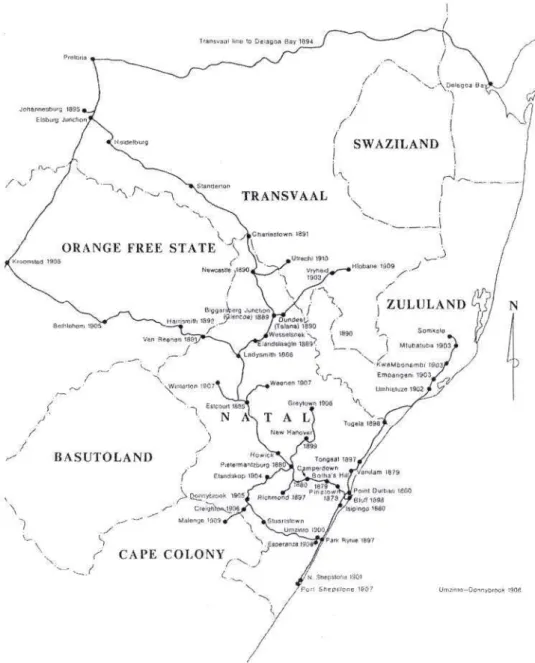
For this reason were the bad roads and the importance of overland trade. But along with the revival of the economy and the discovery of diamonds, the issue of railways again became a hotly debated issue in the late 1860s and early 1870s. As in many colonies, capital in Natal was scarce for the most part. great nineteenth century.
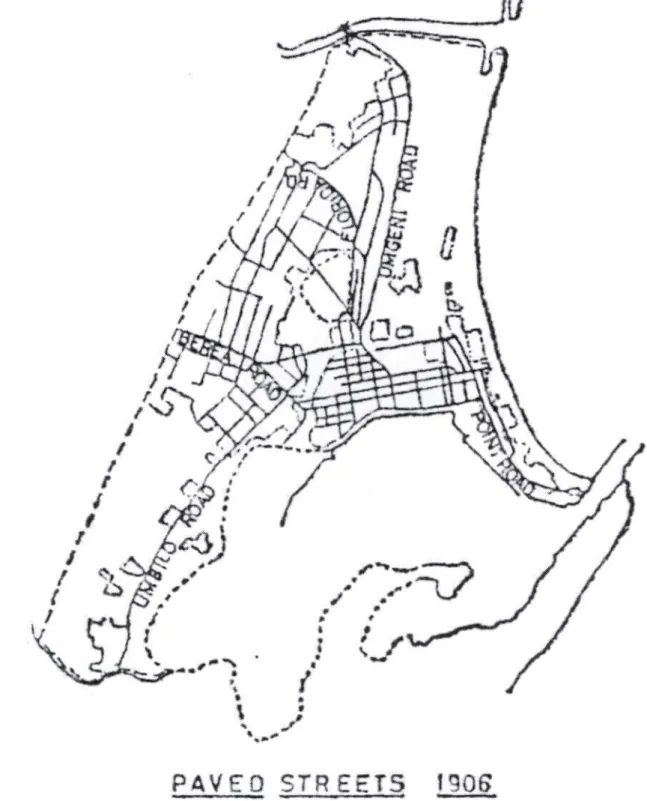
7 The future of the Natal Bank was quite linked to the future of the colony. This different role of foreign (commercial) and local (development) banks also expressed itself in the total liabilities of the branch offices of the bank. Durban increasingly became the sole commercial center of the colony while settler interests increasingly dominated the capital.
00 The role that these merchants played in establishing the trade network in the colonies has been discussed in the previous section. This prosperity was expressed in the growth of cities; both Pietermaritzburg and Durban grew significantly in this period. As cities, population, trade, revenue, railroads, and capital resources grew, so did communications.
THE END OF THE CENTURY
5 The end of the century
The changing nature of agriculture in Natal
Cast crops were not the business of the European population, as farmer competition was too strong in this sector. Settler evictions therefore occurred more frequently, limiting the peasants' options. Dependence on the farmers as cheap suppliers to the markets also decreased as settler agriculture became more capitalized and thus better able to supply the markets cheaply.
The importance of cattle and those crops particularly vulnerable to locusts in the subsistence strategies of the peasantry and their limited access to veterinary medicine, other technological breakthroughs and capital to overcome setbacks compounded the problems faced by the peasantry, . The stratification within the class of African growers also meant that, despite the moderate success of some producers, the majority was even more prone to proletarianization.43 However, the completion of this process took place largely in the twentieth century.44 More as half of the African population remained as tenants on white-owned land, but conditions changed dramatically,45 they effectively became slaves. In 1900 - and for a long time in the twentieth century - there was still a fairly large Indian peasant population, especially in the coastal areas.51 The part of the African farmers on the other hand was played out quickly after the turn of the century.
The changes that took place in the last decade of the nineteenth century and at the beginning of the twentieth century somehow changed the nature of the colony. The commercial white agricultural sector took off, and the role of African farmers and absentee landlords quickly diminished. Due to the trade with the goldfields, Durban succeeded in becoming one of the great African port cities.
Durban and Pietermaritzburg
The will to control the labor force and keep labor cheap constantly conflicts with the need for reproduction of the labor force.64. Most of the history of Pietermaritzburg and Durban has been characterized by attempts at social engineering. One of the first attempts to arrive at a coherent approach to the problems of Africans in the towns and labor supply was the 1847 'Native Town' scheme.
The reasoning of the planners and the man was also twofold: the need for a stable, free and submissive workforce on the one hand, and fear on the other. Segregation and a more thorough surveillance of the African and Indian population were promoted mainly by the police and health officials. An initial African class consciousness in the towns of Natal originated in the kitchen boys' quarters.
This gathering in the servants' quarters was the basis of the kitchen societies, which, however, did not only serve social needs. As they were economically independent and – in accordance with their position – often informal leaders of kitchen associations, they personified "evil". A third element in the breakdown of amaWash was the operation of a commercial laundry by the women of the Inanda mission station101 from 1889 onwards.102.
The end of the century
4 This not only made the African workers pay for their own oppression, it also robbed many people on the outskirts of the cities of their livelihood, especially women, since brewing was a woman's job.105 This could not of course be accomplished without conflict and when Durban Corporation wanted to build a new beer hall in an area with many shebeens, male consumers and female brewers found each other in a boycott of and protest against the brewing monopoly.106. The consequences of the mineral revolution made the dream of a white city with only a docile black workforce unattainable. 22 Apart from the two short stretches along the coast north and south from Durban, which were built in the 1870s.
34 It was Colin Bundy who set a landmark in this debate by challenging the liberal-conservative 'dual economy' model of South African agriculture in his book 'The Rise and Fall of the South African Peasant Population'. The reasons for the downfall of the peasants were the capitalization of settler agriculture, a government that oppressed non-white cultivators and gave great support to white farmers, and the hunger for work in the gold mines. Some of the main criticisms are that Bundy has a deterministic conception of the market; that he overestimates the general well-being of the peasantry—in other words, he confuses large-scale production with well-being—and that his thesis is functionalist.
LEWIS, "The Rise and Fall of the South African Peasantry: A Critique and Reassesment" i: Journal of Southern African Studies, vol. MORRIS, "The Development of Capitalism in South African Agriculture: Class Struggle in the Countryside" i: Economy and Society, vol. SWANSON, "The Sanitation Syndrome: Bubonic Plague and Urban Native Policy in the Cape Colony i: The Journal of African History, vol.
Conclusion
Later, the storage of coal mined in the north of the colony also became an important activity. One of the defining events in the history of South Africa was the discovery of diamonds and later gold in the interior. The colony's urban growth and newfound prosperity not only provided new opportunities for white settlers, but also for blacks and Native Americans.
The big workers in particular were in strong bargaining positions and embodied the 'evil' of the independent African in the city. SELLERS (eds.), Enterprise and Exploitation in a Victorian Colony: Aspects of the Economic and Social History of Colonial Natal, Pietermaritzburg, University of Natal Press, 1985, p. SELLERS (ed.), Enterprise and Exploitation in a Victorian Colony: Aspects of the Economic and Social History of Colonial Natal, Pietermaritzburg, University of Natal Press,.
DA VIES, "The Growth of the Durban Metropolitan Area" in: South African Geographical Journal, vol. Foundations of the World Urban System (The International Library of Sociology), London and New York, Routledge p. LAB AND, Rope of Sand: The Rise and Fall of the Zulu Kingdom in the Nineteenth Century, Johannesburg, Jonathan Ball, p.