A COMPARATIVE STUDY ON CARBOHYDRATES AND ANTIOXIDANTS OF INDIGENOUS CROP BLACK JACK (Bidens Pilosa L.) AND SELECTED COMMERCIAL VEGETABLE CROPS
By
Nelani Simon Mbokazi
Submitted in partial fulfilment of the degree of Master of Science in Agriculture Discipline of Horticultural Sciences In the
School of Agricultural, Earth and Environmental Sciences College of Agriculture, Engineering and Sciences University of KwaZulu-Natal
Pietermaritzburg November 2014
i
Declaration
I, Nelani Simon Mbokazi, declare that the research reported in this thesis, except where otherwise indicated, is my original work. This thesis has not been submitted for any degree or examination at any other university.
__________________________
Nelani Simon Mbokazi Final Date:
Certify that the above statement is correct
._________________________
Dr. Samson Tesfay Supervisor
ii
Acknowledgement
I would like to express my sincerely thanks to my supervisor Dr Samson Tesfay; for all the support and guidance he has provided during this study, in reviewing all of my work and for giving me directions on practical experiments. I would also like to thank my supervisor again for all the financial support he has provided during this study, for the period of two years since this study was not funded. I would also like to thank my family my parents, brothers and my sister for all the support they have provided of encouraging me to complete my studies. I would also grateful like to acknowledge the support I have received from others as well, notable Jive Media Africa (http://jivemedia.co.za/) for encouraging me and supporting me financially until the completion of my studies. Mostly important I would like to thank the Almighty ever present God for all the strength, support and knowledge He has given to me, all of these years in this university.
iii
Abstract
The adequate consumption of African leafy vegetables has been closely associated with a strong reduction of chronically disease such as cancer, diabetes and cardiovascular diseases. The health benefits provided by African leafy vegetables are due to the presence of various primary and secondary metabolites. However, most of the epidemiological studies have indicated that very little is known about the antioxidant activity of African leafy vegetables, which is believed to be responsible for their therapeutic effect. In this present study the physiochemical and antioxidant properties were examined, in relation to other Asteraceae, commercial vegetables (lettuce and chicory). Firstly, the study investigated the physicochemical and antioxidant compounds during seed germination in black jack. Secondly examined the non-enzymatic and enzymatic antioxidants in black jack and compared them with lettuce and chicory.
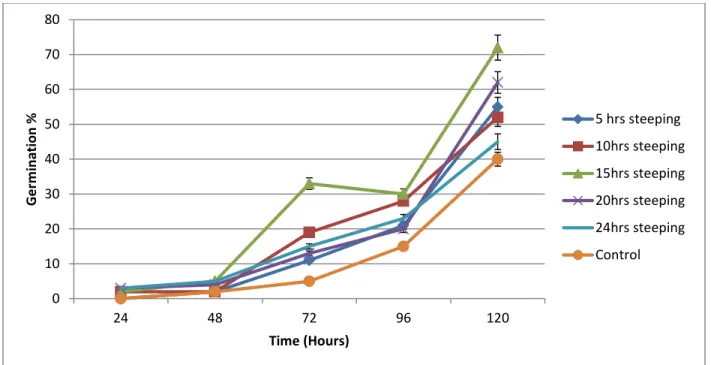
In seed germination test, physicochemical seed quality properties for African leafy vegetable, black jack antioxidants accumulation during seed imbibition were reported. The results revealed that soaking of black jack seeds in water before sowing, induces germination. In this study black jack seeds that were soaked for 15 hours before germinating, showed a highest percentage of germination (72 %) in 5 days. The seeds also showed high considerable total antioxidants capacity of antioxidants (DPPH) and phenols (0.69±0.44 mg/g and 56.45±0.08 mg/g DW). The protein content was also high on the seeds (0.328±0.17 mg/g DW). However, there were high amounts of anti-nutritional factors noticed on the seeds, where the total tannins content was (416.36±1.14 mg/g DW).
iv
The results further revealed that African leafy vegetable, black jack contained significant amount of non-enzymatic antioxidants at the early stages of growth than other leafy vegetables. The plant biomass per plant increased with the number of harvests. The plant DPPH antioxidant assay recorded black jack (0.73 ± 0.13mg/g DW - 0.29±0.083mg/g DW), lettuce (0.10±0.64mg/g DW - 0.29±0.03mg/g DW) and chicory (0.35±0.72 - 0.20±0.11mg/g DW). The plant phenolic content recorded black jack (155.46±0.07mg/g DW - 73.11±0.02mg/g DW) for lettuce it was found to be (13.24±0.05mg/g DW - 44.92±0.07mg/g DW) and for chicory (97.09±0.37mg/g DW - 17.88±0.22mg/g DW). However, as black jack all of the secondary metabolites were decreasing drastically when it was reaching maturity, while the phenols were increasing. For carbohydrates, black jack had the lowest concentration of the soluble sugars (glucose, sucrose and fructose).
The enzymatic antioxidants of black jack were the lowest for most of enzymes, but SOD activity was higher. Although it decreased as the plant approaches maturity.
In conclusion, black jack accumulates different types of antioxidants and their concentration varied over plant developmental stages. The key findings of this study are; the African leafy vegetables have different antioxidant production trends compared to exotic vegetables.
Depending on leaf positions and leaf stage, preferably young leaves of the ALVs, there might be sequential harvests, increases the food access for extended period for household consumption.
The ALVs also experience higher SOD, CAT, POD activities during early growth stage. These plants have also displayed the highest antioxidant capacity during the early plant development, early stage high accumulation of the studied antioxidants most likely contribute to this antioxidant strength. Furthermore there adaptation to wild environment, exposed to various harsh
v
conditions, their tolerance to survive to this condition probably attributed to plants’ antioxidant production characteristics.
vi
Table of Contents
Declaration
... i
Acknowledgement
...ii
Abstract
... iii
List of tables
... x
List of figures
... x
Chapter 1
Literature review 1.1 Introduction ... 11.2 General overview of antioxidants ... 3
1.3 Classification and properties of major dietary antioxidants ... 5
1.3.1 Ascorbate (Vitamin C) ... 6
1.3.2 Phenols... 8
1.3.3 Carotenoids ... 10
1.3.4 Chlorophyll ... 13
1.3.5 Sugars ... 15
1.4 Enzymatic antioxidants ... 18
1.5 The role of the seed in plant development and food security... 19
1.6 Plant morphological and nutritional properties ... 20
1.6.1 Black Jack ... 20
1.6.2 Lettuce ... 22
1.6.3 Chicory ... 23
1.7 Indigenous crops and nutritional profile of African people ... 23
1.8 References
...
26vii
Chapter 2
The physiochemical and antioxidant mobilization of black jack (Bidens pilosa L) seeds during seed germination
2.1 Abstract ... 35
2.2 Introduction ... 36
2.3 Materials and methods ... 37
2.3.1 Plant material ... 37
2.3.2 Germination test ... 37
2.3.3 Dry Matter ... 38
2.3.4 Growing and identifying sprouts ... 38
2.3.5 DPPH radical scavenging activity ... 39
2.3.6 The ferric reducing power (FRAP) assay ... 39
2.3.7 Total Phenol content ... 40
2.3.8 Total flavonoid content ... 40
2.3.9 Protein determination ... 41
2.3.10 Tannin determination ... 41
2.3.11 Statistical Analysis ... 42
2.4 Results and discussion ... 42
2.4.1 Dry matter ... 42
2.4.2 Germination ... 43
2.4.3 Chemical compounds ... 45
2.5 Conclusion ... 46
2.6 Reference ... 47
viii
Chapter 3
Evaluation of phytochemicals and Antioxidant properties of leafy vegetables, black jack (Bidens Pilosa L) and some Asteraceae species: A comparative study
3.1 Abstract ... 49
3.2 Introduction ... 50
3.3 Materials and methods ... 51
3.3.1 Plant culture ... 51
3.3.2 DPPH radical scavenging activity ... 52
3.3.3 The ferric reducing power (FRAP) assay ... 53
3.3.4 Total phenol content ... 53
3.3.5 Total flavonoid content ... 54
3.3.6 Total carotenoid and chlorophylls ... 54
3.3.7 Soluble sugars ... 55
3.3.8 Statistical analysis... 56
3.4 Result and discussion ... 56
3.4.1 Antioxidants... 56
3.4.2 Phenols... 58
3.4.3 Carotenoids and chlorophylls ... 61
3.4.3 Carotenoids ... 63
3.4.4 Soluble sugars ... 65
3.5 Conclusion ... 67
3.6 Reference List
...
68ix
Chapter 4
Study on enzymatic antioxidant: Emphasis on Black Jack (Bidens Pilosa L) in relation to other asteraceae leafy vegetables
4.1 Abstract ... 72
4.2 Introduction ... 73
4.3 Materials and methods ... 74
4.3.1 Antioxidants... 74
4.3.1.1 Peroxidase ... 74
4.3.1.2 Ascorbic acid oxidase ... 74
4.3.1.3 Ascorbate peroxidase (APx) ... 75
4.3.1.4 Catalase ... 75
4.3.6 Superoxide dismutase (SOD) ... 76
4.3.7 Statistical analysis... 76
4.4 Result, discussion and conclusions ... 76
4.5 Conclusion ... 82
4.5 Reference List ... 83
Chapter 5
General Discussion and Conclusion 5.1 Recommendations ... 865.2 References ... 87
x
List of tables
Chapter 2
Table 1.Antioxidant activity, polyphenols and protein content investigated in black jack seeds and sprout………..46
List of figures
Chapter 1
Figure 1.Schematic diagram of the antioxidant activity and free radical production under normal and stressful condition (Tesfay et al.,2010)……….………..……….……5 Figure 2.Ascorbate redox cycle and catabolic pathways (Borut and John, 2009)………...7 Figure 3.Different structures of phenolics, flavonoids and tannins (Jin and Russell, 2010)…….9
Figure 4.Chemical structures of various carotenoids of which a (α-carotene) and b (β-carotene) are precursors of vitamin A (Jafar & Qudah, 2009)………..12
Figure 5.Chlorophyll ‘a’ and chlorophyll ‘b’ are converted into their respective derivative (Ching – Yun et al.,2008)………..……….14
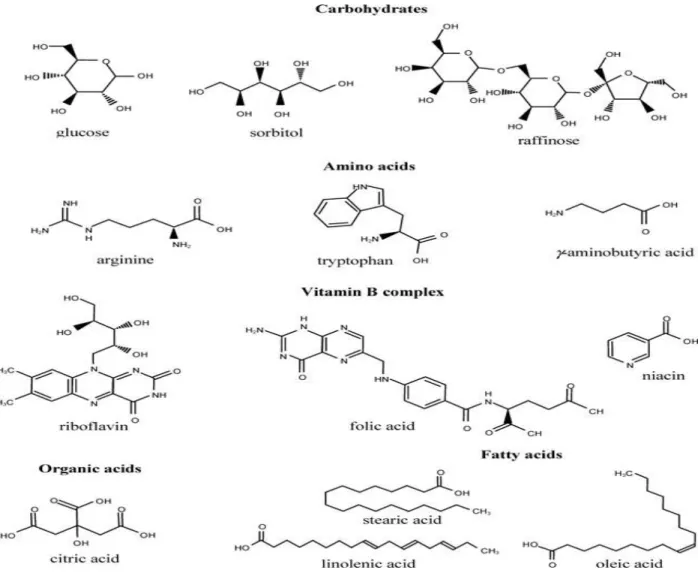
Figure 6.Chemical structure of primary metabolites (Carbohydrates) (Hounsome et al.,2008)..16
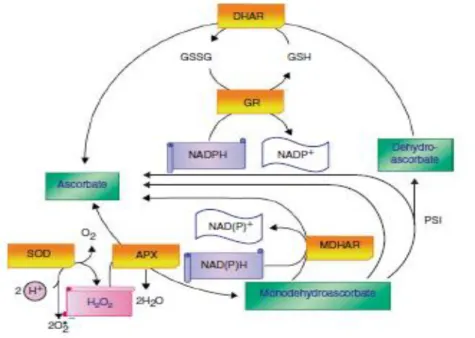
Figure 7.Ascorbate-glutathione cycle in leafy vegetables. Where enzymatic antioxidants scavenge hydrogen peroxide to water and oxygen (Hossain et al., 2011)……….18
Chapter 2
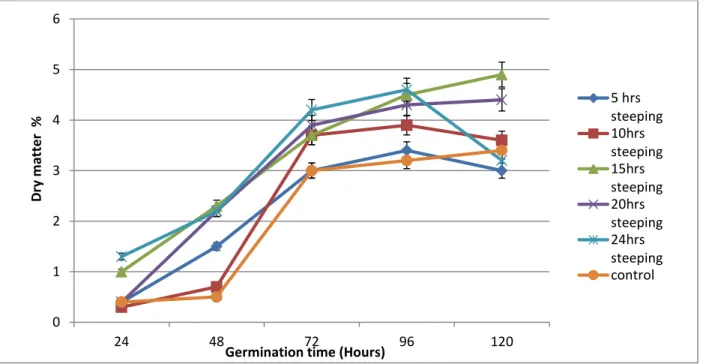
Figure 1.The effect of soaking and germination period on the dry matter of black jack.
Vertical bars represents ±s.e of the mean value (n = 5)…………..……..………..…..43
xi
Figure 2.The germination percentage of black jack in relation to steeping time. Vertical bars represent ± s.e of the mean value (n =5)……….45
Chapter 3
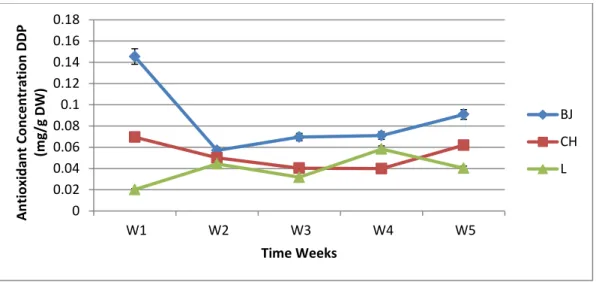
Figure 1.Total antioxidant capacity (DPPH) black jack, chicory and lettuce over growing period.
Vertical bars represent ± s.e of the mean (n=5)………..…….…….……..…57 Figure 2.Total antioxidant capacity (FRAP) black jack, chicory and lettuce over a growing
period. Vertical bars represent ± s.e of the mean (n=5)…….….………..….57 Figure 3.Total phenol content in black jack, chicory and lettuce over growing period. Vertical
bars represent ± s.e of the mean (n=5)….……….…60 Figure 4.Total flavonoids content in black jack, chicory and lettuce over the growing period.
Vertical bars represent ± s.e of the mean (n=5)…….……….60 Figure 5.Chlorophyll ‘a’ content for all leafy vegetables over the growing period. Vertical bars
represent ± s.e of the mean (n=5)……….……...62 Figure 6.Chlorophyll ‘b’ content for all leafy vegetables over the growing period. Vertical bars
represent ± s.e of the mean (n=5)…...62 Figure 7.Total chlorophyll content for all leafy vegetables over the growing period. Vertical bars
represent ± s.e of the mean (n=5)……….………...…………63 Figure 8.Total Carotenoids content for all leafy vegetables over the growing period. Vertical
bars represent ± s.e of the mean (n=5……….………….…………...64 Figure 9.Sucrose content of black jack, chicory and lettuce over the growing period. Vertical
bars represent ± s.e of the mean (n=5)……….………..………….66 Figure 10.Glucose content of black jack, chicory and lettuce over the growing period. Vertical
bars represent ± s.e of the mean (n=5)……….…………..…….…..…66 Figure 11.Fructose content of black jack, chicory and lettuce over the growing period. Vertical
bars represent ± s.e of the mean (n=5)………..….………...67
xii
Chapter 4
Figure 1.Ascorbate peroxidase activity for all leaf vegetables over the growing period. Vertical bars represent ± s.e of the mean (n=5)………79 Figure 2.Ascorbic acid peroxidase activity quantity over the growing period. Vertical bars
represent ± s.e of the mean (n=5).…………..………..………80 Figure 3.Catalase activity of all leafy vegetables over the growing period. Vertical bars represent
± s.e of the mean (n=5)………..………..….……..80 Figure 4.Superoxide dismutase activity of all leafy vegetables over the growing period. Vertical
bars represent ± s.e of the mean (n=5)….………...………81 Figure 5.Peroxidase activity of all leafy vegetables over the growing period. Vertical bars
represent ± s.e of the mean (n=5)………82
1
Chapter 1
Literature review
1.1 Introduction
In most scientific works, indigenous crops are considered to be the highest group of underutilized crops as a result of their narrowly use. In general indigenous refers to the crop species or variety genuinely traditional or originated to the region (Weinberger, 2007). This definition also takes into account naturalized species or varieties that have evolved from materials introduced to the country from another geographical region over a long period of time (Hoeschle & Jaenicke, 2007). The crops that are domesticated or produced scientifically are not included in this definition. Humphry et al. (1993) argued that indigenous crops are referred to terms like neglected or underutilized, because they are believed to be poor man food, which is mostly consumed during times of hunger or droughts and /or during social unrest and wars.
The FAO (1996) reported that global food security depends largely on only few crop species. These crops almost provide about 95% of the dietary energy for most human beings, where maize, wheat and rice alone received more recognition worldwide more than any other crop. There are more than 7500 plant species that are cultivated around the world and they include mostly the vegetables and legumes and are also some estimated 70000 edible plants that can be found on earth of which most of these plant species are considered underutilized because they have never been planted on commercial or large scale farms (Hoeschle &
Jaenicke, 2007).
2
The food base of many people especial those residing in rural areas of Africa have been shown to decline over years and that has resulted in many problems such as high levels of poverty. Malnutrition has also increased over time resulting in compromised well-being and high mortality rates among young children and women who are giving birth in rural Southern Africa as a result of insufficient food supply (WHO, 2003; Awino, 1989).
Most of the underutilized African leafy vegetables have been reported to have an excellent nutritional profiles compared to major commercial crops (Allemann, 2007). These leafy vegetables contain high protein, vitamins and mineral content that can contribute to the reduction of malnutrition among children as well as alleviation of food insecurity, especially in the low income communities (Engler & Altoos, 2001).
In most epidemiological studies, it has been indicated that, consumption of indigenous leafy vegetables can play a huge role in the reduction of risk of certain cancers, cardiovascular disease, cataract, mascular degeneration, and other age related diseases due to the high antioxidant activity of leafy vegetables (Viviane et al., 2011). Most of the leafy vegetables have been shown to be the essential source of various dietary antioxidants, such as carotenoids (which are the main procuresors of vitamin A biosynthesis) of which the deficiency leads to blindness and other physiological disorders. Dietary antioxidants are also valuable for many other physiological functions for promoting good health such as boosting immune system, photoprotection and preventing aging of cells (Bhutkar & Bhise, 2011).
Engler & Altoveros (2001) argued that most of the indigenous crops mainly the vegetables ones are categorised as neglected or underutilized, because in most cases they are mainly planted in home gardens and used by very small groups of people in certain geographic areas. Engler & Altoveros (2001) further stated since the indigenous crops are underutilized or neglected, due to the lack of information among the people for their use, and more attention is given to high value commercial crops. Underutilized crops are
3
therefore facing danger of being replaced or lost and the indigenous knowledge associated with their cultivation, utilization and conservation is also endangered.
In South Africa, there are also many indigenous crops, currently termed underutilized as a result of their limited use.Vorster et al. (2002) states that in South Africa there are several lesser known plant species, which have remarkable potential to be used as commercial vegetables. The biggest advantage of these crops is that they do not require high intensive technology and input levels, they can be grown well on the diversity of climatic conditions of a country, at the same time reducing the issue of malnutrition among young and older people. Rensburg et al. (2007) stated that it is very important that promotion of underutilized crops in terms of poverty alleviation and nutritional improvement of the rural households to be given priority, due to their potential to bring economic empowerment in rural communities whilst it could also improve the well-being of urban communities. Subsequently, both rural and urban community poverty and food insecurity related challenges would be dealt with thereof.
1.2 General overview of antioxidants
According to Benzie & Straint (1996) biological antioxidants are any substance, when present at low concentrations compared to those of an oxidizable substrates significantly delay or prevent that substrate.
On the other hand Chanda & Nagani (2010) defined antioxidants, as any compounds that inhibit the oxidation of other molecules by preventing the initiation or propagation of oxidizing chain. Antioxidants are generally involved in the prevention of reactive oxygen species (ROS) which are free radicals that are capable of causing huge damage in biological systems.
4
Potentially harmful reactive oxygen species (ROS) are produced as a result of normal metabolism and these free radicals are charged molecules which attack and damage cells, breaking cellular membranes by reacting with nucleic acids, proteins and the enzymes which are in the cell (Benzie and straint, 1996; Valko et al., 2007 & Villamor et al., 2004). Lushchak (2011; Ajaikumar et al. (2005) reported the oxidative damage caused by the action of free radicals, which is capable of initiating and promoting the progression of number of chronic diseases such as cancer, neurodegenerative disorders, cardiovascular diseases and ageing.
In nature there are two types of antioxidants, natural and synthetic ones. Natural antioxidant include various plants (fruits and vegetables) with significant scavenging properties as a result of being a source of secondary metabolites. Natural antioxidants have been reported to be safer than synthetic antioxidants, and they also possess anticancer, antiviral, anti-inflammatory, anti-tumour, anti-mutagenic and heptoprotective properties (Laxmi et al., 2012). The major sources of natural antioxidant are all or any part of a plant such as fruit, vegetable leaves, seeds, stem, peels or roots.
Currently, the search for natural antioxidants in plant sources especially those with medicinal potential, has turned into a very interesting and attractive research field with the major focus of improving the quality of the human life. According to Jin & Russell (2010) polyphenols and phenolic acids, flavonoids, tannins and other significant plant metabolites are wildly distributed in plant foods and they all function as effective free radical scavengers. In healthy individuals the production of free radicals is balanced by the antioxidative defense system, but the oxidative stress is generated when equilibrium favors free radical generation as a
5
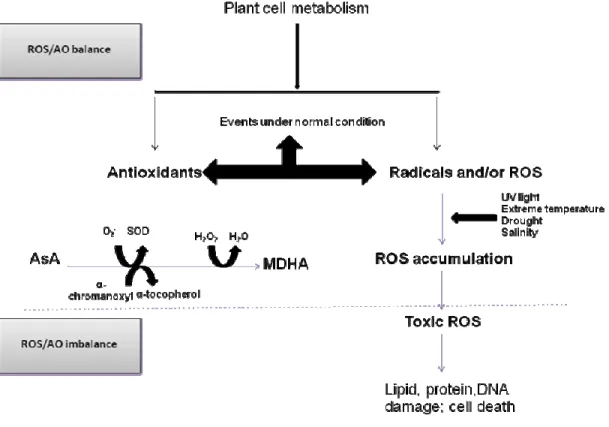
result of a depletion of antioxidants levels (Tesfay et al.,2010).
Figure 1: Schematic diagram of the antioxidant activity and free radical production under normal and stressful conditions (Tesfay et al., 2010).
1.3 Classification and properties of major dietary antioxidants
Antioxidants are divided into enzymatic and non-enzymatic groups based on a system where they are found and functioning. The effectiveness of non- enzymatic antioxidants found in plants to act as free radical scavengers is related to three major groups which are vitamins, phenolics and carotenoids, where ascorbic acid and phenolics are termed water-soluble hydrophilic antioxidants, while carotenoids are termed water- insoluble lipophilic antioxidants (Marino et al., 2001; Chong, 2010). On the other hand, the effectiveness of
6
enzymatic antioxidants to act as radical scavengers is also related to three major groups which are SOD, CAT and POD.
1.3.1 Ascorbate (Vitamin C)
Ascorbic acid (vitamin C) is a very important and essential vitamin in human diet, it is found in plant tissues where it is abundant with a chemical formula of (C6H8O6). In plants ascorbic acid plays a very important role, functioning by protecting the plants from biological and environmental stresses.
Vitamin C is known as the most essential water soluble antioxidant in extracellular fluids, it functions on the neutralization of reactive oxygen species in the aqueous phase before lipid peroxidation is initiated (Patrica
& Conklin, 2006). Ascorbic acid provides many other benefits except being a free radical scavenger, it is capable of regenerating other antioxidants such as tocopheroxyl and carotene radical cation from their core radical (Nangula et al., 2010).
The properties of ascorbic acid to act as the effective antioxidant are attributed by its ability to reduce potentially damaging ROS and forming a relatively stable ascorbly free radical (Carr & Frei, 1999).
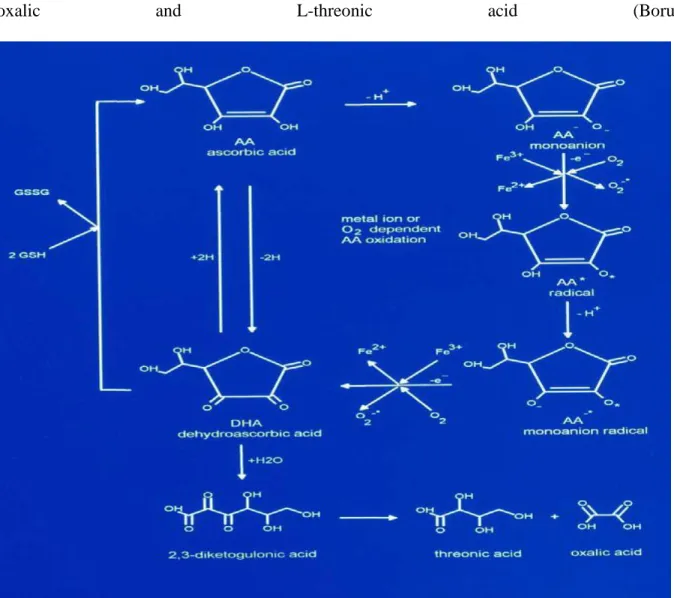
Ascorbate has the greater ability to act as a reducing agent and, a single electron donated by ascorbate gives ascorbyl radicals which are known as monodehydroascorbate (MDHA) or semi dehydroascorbate (SDA), which further oxidized to dehydroascorbate (DHA) (Borut & John, 2009). DHA is a very unstable compound which further breakdown rapidly, resulting to diketo-L-gulonic acids which also disintegrate to
7
oxalic and L-threonic acid (Borut&John,2009).
Figure 2: Ascorbate redox cycle and catabolic pathways (Borut & John, 2009).
Ascorbate in plants is used as coenzyme in the Fedioxygenase to function in the post-translational modification of cell wall proteins (Zhang, 2013). Fry (1986) argued that dehydroascorbate in plants, is capable of interacting with the side chain of arginine and lysine in the enzymes to prevent protein crosslinking. Ascorbate is shown to modulate plant growth, by controlling biological processes such as the biosynthesis of hydroxyproline rich proteins, which are required for the functioning of G1 and G2 phases of
8
the cell cycle and the plasmalemma redox reactions, which are functioning in the elongation mechanisms (Zhang, 2013). Ascorbate is also responsible for influencing senescence of plants by modulating the expression of SAGs (Olmos et al., 2006). Barth et al. (2006) stated that in vegetables low levels of ascorbate induce the senescence, while higher levels of ascorbate prolongs senescence.
1.3.2 Phenols
Plant phenolics are the most broadly abundant secondary metabolites in plants with more than 8000 phenolic structures that are currently known ranging from simple molecules like phenolic acids to more highly specialized polymerized substances like tannins (Jin & Russell, 2010). Phenolics are compounds that are characterized by one or more aromatic rings with one or more hydroxyl groups (Jin & Russell, 2010).
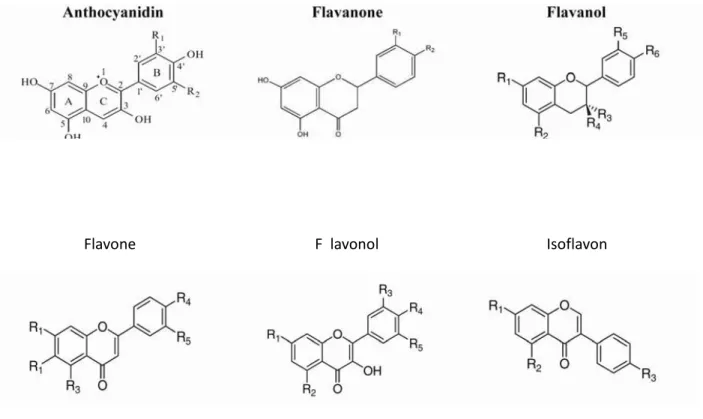
Phenols are synthesized from cinnamic acid which is created from phenylalanine through the action of L- phenylalanine ammonia-lyase (PAL), which is the branch point enzyme between primary (shikimate pathway) and secondary (phenylpropanoid) metabolism (Michalak, 2006). Plant phenolics are mainly divided into three groups, which are notable as phenolic acids, flavonoids and tannins, but they are also less common groups such as stilbenes and lignans (Zbigniew, 2005). Phenolic acids can further be divided into two classes, which are the derivatives of benzoic acids such as gallic acid and the derivatives of cinnamic acid such as coumaric, caffeic and ferulic acid (Zbigniew, 2005). The flavonols are the most common phenolics in the diets; they are characterized by 15 carbon atoms arranged in three rings (C6-C3-C6).
Flavonoids are also divided in several subgroups: flavones, flavanols, flavanones, isoflavones, and anthocyanins, based on the oxidation state of center C ring (Zbigniew, 2005). Tannins they belong to the major group of polyphenols which is also mostly abundant in the diet, they are divided into two main
9
groups: hydrolysable tannins, characterized by a central core of glucose or another polyol esterified with gallic acid and condensed tannins.
Flavone F lavonol Isoflavon
Figure 3: Different structures of phenolics, and flavonoids (Jin & Russell, 2010).
Phenolics in plants they serve many functions such as pigmentation, growth, reproduction, and the enhancement of phenylopropanoid metabolism and, the amount of phenolic compounds can be observed under different environmental factors and stress (Michalak, 2006). The isoflavones synthesis and other flavonoids are induced when the plants are infected or injured, or under low temperatures and low nutrient conditions (Michalak, 2006). Most of the plant phenols have antimicrobial activity and they also protect the plant from ultraviolet (UV) damage since the plants accumulate UV absorption flavonoids and other phenolic compounds mainly in vacuoles of epidermal cells and they also possess other physiological functions as they regulate cell elongation (Valentine et al., 2003).
10
Phenols also have been reported to pose antioxidant activities (Zbigniew, 2005). The intensity and the ability of phenols to scavenge free radicals is dependent on many factors such as the number of hydroxyl groups bound to the aromatic ring and the number and places of double bonds in the molecule (Zbigniew, 2005). The ability of phenols to act as antioxidants is also contributed by the ability of phenols to chelate metals. Phenols they consist of hydroxyl and carboxyl groups which are capable of binding mainly iron and copper ions (Michalak, 2006).
1.3.3 Carotenoids
Carotenoids are naturally occurring pigments that are found mainly on plants, and currently there are more than 750 carotenoids that have been identified in nature, mainly functioning in the coloration of many plants (i.e. yellow, orange and red colors) as well as several aromas in plants (Zhang et al., 2011). In green plants, the colour of the carotenoids is masked by the more dominant pigment, chlorophyll and their concentration increases, becomes visible only plant growing results during the degradation of chlorophyll (Debjani et al., 2005).
Carotenoids are lipophilic compounds, which are divided into two main groups, which are carotenes and /or hydrocarbon (Jafar & Qudah, 2009). Carotenoids only composed of carbon and hydrogen atoms and the second group are xanthophylls which are oxygenated hydrocarbon derivatives which contain at least one oxygen function such as hydroxyl-, keto-, epoxy, methoxy or carboxylic acid groups (Jafar & Qudah, 2009).
Katri (1999) also defined carotenoids as the isopropanoid compounds that are biosynthesized by tail to tail linkages of two C20 geranylgeranyl diphosphate molecules. Which produces the parent C40 carbon skeleton where all the individuals variations are derived.
11
They widely known compounds on the first group of carotenoids (carotenes) are α-carotene, β- carotene and lycopene. Β-carotene and α-carotene are the mostly known as provitamins. On the other hand, Di-mascio et al. (1989) stated that, Lycopene is not a provitamin but it is a more efficient antioxidant than β-Carotene.
Luteine has been wildly reported to be also one of the major carotenoids found in leafy vegetables (Dragan et al., 2011).
Jafar and Qudah (2009) further stated that lipophilic carotenoids display their structural characteristic by the conjugated double bond system, which influences their chemical and physical properties.
a Structure of α- carotene
b Structure of β- carotene
c Structure of lycopene
12 d Lutene
Figure 4: Chemical structures of various carotenoids of which (α-carotene) and b (β-carotene) are precursors of vitamin A (Jafar & Qudah, 2009).
The major ability of carotenoids to act as antioxidants is due to their ability to react and deactivate reactive oxygen species formed as results of free radicals, which may ended up producing harmful processes such as lipid peroxidation. The ability of β-carotenoids to act as an effective antioxidant is due to the electron rich conjugated double bond structure which permits β-carotenoid to physically prevent reactive oxygen species without degradation, during reacting with free radicals and for β-carotenoids to be instability towards oxidation (Briton, 1995).
Debjani et al. (2005) explained that there are four structural properties that contribute to antioxidant functions of carotenoids and they are:
The availability of the multiplicity of tiny packed energy levels between the excited state and the ground state of the carotenoids, which permits the carotenoid to dissipate excited state of energy through small collisional exchange with solvents,
The ability of the excited energy state of the carotenoid to be sensitized other molecules,
The significance of the exciting state of the carotenoid to allow delocalization and stabilization of the excited state, and
13
The multiple potential sites of the carotenoids to be attacked by the reactive oxygen species.
The ability of carotenoids to act as antioxidants is also based on the physical and chemical properties of carotenoids to prevent the formation of oxygen or by reacting with free radicals. The physical benefits of preventing the formation of oxygenspecies is that the carotenoids may act as the antioxidants without losing their own structure, whereas this reaction may only leads to energy dissipation as heat.
1.3.4 Chlorophyll
Chlorophyll is a photosynthetic green pigment found in most plants, chlorophyll is the most abundant of all natural pigments found in plants. It can exceed 1000 to 2000 ppm wet weight in some species (Mario et al., 2007). Structural chlorophyll is a substituted tetrapyrrole with a central bound magnesium atom (Ferruzzi et al., 2002). They are various forms of chlorophyll and all of them are characterized by the central bound magnesium atom, chlorophyll ‘a’ which is greenish to yellowish in solution, it is known as the primary photosynthetic pigment in most green plants for the transfer of light energy to chemical acceptors, which provides energy for photosynthesis.
One of these chemical acceptors is chlorophyll ‘b’ which is blue to green in solution, and it is prevalent in higher plants and green algae with chlorophyll ‘a’ (Sheer, 1991). In general, chlorophyll ‘a’ is more abundant over chlorophyll ‘b’ with a ratio of 3:1(Ferruzzi et al., 2002).
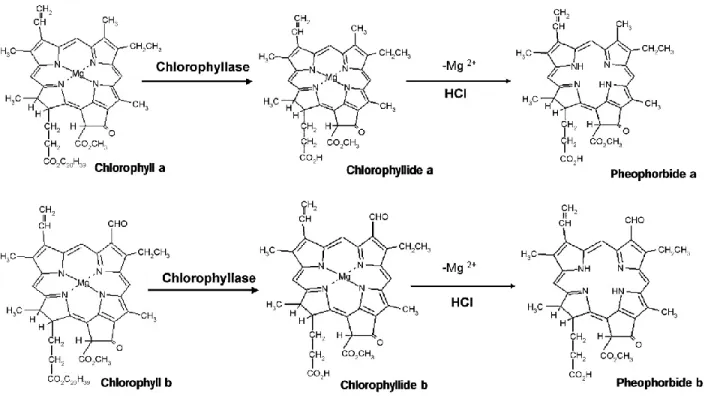
Natural chlorophylls are catabolized into two related products: chlorophyllide and pheophorbide. The removal of the phytol tail from chlorophyll compound it forms chlorophyllide, and a removal of both the
14
phytol tail and chelated magnesium atom forms pheophorbide (Harttig & Bailey, 1998). The major structural differences between chlorophyll ‘a’ and chlorophyll ‘b’ is the methyl side chain in chlorophyll ‘a’, is replaced by a formyl group in chlorophyll ‘b’, so this result in converting chlorophylls into chlorophyllide
‘a’ (Chlide ‘a’) and chlorophyllide ‘b’ (Chlide ‘b’) or pheophorbide ‘a’ (Pho ‘a’) and pheophorbide ‘b’ (Pho
‘b’), respectively (Ching – Yun et al.,2008)
Figure 5: Chlorophyll a and chlorophyll b are converted into their respective derivative. Source (Ching – Yun et al., 2008).
The amount and distribution of chlorophyll content on vegetables and fruits is dependent on the variety of internal and external factors such as species, climatic conditions and pre-and postharvest treatment (Gross, 1991). Mario et al. (2007) stated that chlorophyll and its various derivatives are also known for their long established history of being successful used in traditional medicine for therapeutic purposes. In medicine chlorophyll is also known for the significant role on the reduction of inflammation, wound healing and oxidation (Tachino et al., 1994). The medicinal properties of chlorophyll are believed to be due to the
15
presence of antioxidant properties on the derivatives of chlorophyll (Hoshina, 1998). Wanasundara (1998) also stated that other studies have indicated that chlorophyll and it derivatives were also responsible for the pro-oxidant effect on the oxidation of oils.
1.3.5 Sugars
Carbohydrates are primary metabolites; they are in the same category as amino acids, fatty acids and organic acids. Primary metabolites play a very important role in growth and development, photosynthesis, respiration, protein synthesis and hormone regulation (Hounsome et al., 2008).
In vegetables carbohydrates occur in a simple form of sugar monosaccharides (galactose, glucose and fructose), disaccharides (sucrose and maltose), oligosaccharites (raffinose and fructooligosaccharides), polysaccharides (starch, cellulose and hemicellulose) and sugar alcohols (mannitol and sorbitol) (Wang and Van Eys, 1981). Kuo et al.(1988, and Frias et al. 1999) stated that monosaccharides, polysaccharides and sucrose are present and found in all vegetables. Whereas, oligosaccharides such as raffinose are only present in legumes (beans and peas) (Hounsome et al., 2008).
16
Figure 6: Chemical structure of primary metabolites (Carbohydrates) (Hounsome et al.,2008).
The most important soluble sugars in plant metabolism are sucrose and glucose; they are involved in the intermediary and respiratory processes of the plant. Sucrose and glucose also act as the primary substrate for synthesizing complex carbohydrates and as building blocks of amino acids (Filip et al., 2002). Apart from providing energy for all complex metabolisms, sugars are also responsible for the control of gene expression related to plant stress resistance, growth and development (Ramond et al.,2008; Pego et al., 2000). Sugar
17
status also modulates and coordinates internal regulators and environmental cues that govern growth and development (Sheen et al., 1999; Smeekens, 2000).
During the internal processes of germination and seedling development, sugars play a very important role in the promotion and mobilization of nutrients shoot development, hypocotyl elongation and cotyledon greening and expansion (Dijkwel et al., 1997; Perata et al., 1997 and Kurata and Yamamoto, 1998).
However, Smirniff et al., (2001) stated that during early seedling development high sugar accumulation may give rise to undesirable growth conditions.
Sugars also play a very important role in the synthesis of numerous antioxidant compounds, which protect the plants from the harmful reactive oxygen species (Asadi 1999; Tesfay et al., 2010). During the normal process of photosynthesis plants produce both soluble sugars and ROS. However, Hounsome et al. (2008) stated that low levels of sugar accumulation can also leads to high production of ROS. Simple sugars such as, glucose are the primary initiator of certain antioxidant compounds, such as carotenoids and ascorbate synthesis (Tesfay et al., 2010; Smirniff et al., 2001; Smirniff 2000). According to Tesfay et al. (2010) glucose also yield, carbon skeletons of amino acids, such as cysteine, glycine and glutamate which are all the building blocks of antioxidant glutathione. And all of these systems are involved in defence mechanisms to prevent free radicals initiation through ascorbate- glutathione cycle (Tesfay et al., 2010).
18
1.4 Enzymatic antioxidants
Plants also consist of a network of enzymatic antioxidants which also known as biological detoxifying systems that functions on the regulation of ROS. These antioxidant systems include enzymatic antioxidant compounds such as superoxide dismutase (SOD), ascorbate peroxidase (APX), catalase (CAT), glutathione reductase (GR) and glutathione peroxidase (GPX) (Apel & Hirt, 2004; Fridovich, 1983). Superoxide dismutase (SOD) functions by converting the highly active superoxide radicals (O2-
) into hydrogen and peroxide (H2O2) and oxygen (O2), and the accumulation of H2O2 is prevented in the cell by CAT and GPX;
(Okezie & Aruoma, 2003; Gechev et al., 2006).CAT and GPX are capable of converting H2O2 into water and oxygen (Purev et al., 2010; (Foyer & Noctor, 2011).
Figure 7: Ascorbate-glutathione cycle in terrestrial plants. Where enzymatic antioxidants scavenge H2O2 to H2O and O2 (Hossain et al., 2011).
APX is also one of the most important enzymatic antioxidant present in plants and functions on the AsA–
GSH cycle and in plant defense against oxidative damaged caused by the ROS (Hossain & Fujita, 2011).
19
For APX to function effectively reduced ascorbate must be present and the effectiveness of GPX is determined by the phenolic compounds such as guaiacol in the plant tissue (Ho-Min & Saltveit, 2001).
Glutathione reductase (GR) requires the regeneration of reduced ascorbate after it has been converted to monodehydroascorbate by APX in order to function effectively (Ho-Min & Saltveit, 2001).
1.5 The role of the seed in plant development and food security
The seed plays a very important role in the plant life, such as permitting the propagation of new plants, allowing the success of new plants and it also allows the new generation of plants to adapt or inhibit new environments which are distance from the parent plant (Deirdre et al., 2014). Hartmann et al. (1997) also argued that in depth information about the chemical reactions of the seed is very important since the seed allows for propagation of root stock that give rise to hybrid plants that are useful in breeding studies. Many scholars indicated that most of our knowledge about the chemical composition of seeds is for those current cultivated species since they make a large share of our food sources and they also contribute the raw materials for industries. However, information on the seed of indigenous species is relatively scarce.
Seed plays a very important role in meeting the human demand for food and nutrition security. Humans heavily rely on seeds for nutrition value and survival as food in the form of cereal grains and legumes (Prakash et al., 2014). However, this heavy dependency of humans in seeds in a form of cereal based, such as maize, sorghum and millet, have been strongly criticized by many researchers, who indicated that this imposes a danger of malnutrition, especial in rural areas. Most epidemiological studies have shown that, the cereal based diets are deficiency in various micro nutrients such as vitamins and minerals (Gibson et al., 2006). Nevertheless, the recent advancements in food technologies, such as food fortification and
20
micronutrients supplementation, decrease the risk of malnutrition in cereal based foods (Ruel, 2008; Kiess et al., 2001; Olsen & Wendel, 2013; Beddingtonm, 2010).
Many of the indigenous seeds have been shown to be good sources of secondary metabolites that can contribute to the removal of reactive oxygen species that are responsible for many diseases. Seeds of indigenous plants that were previously ignored and neglected, such as those of amaranth, have been shown to contain more proteins and phenols than other well-known grains such as maize, sorghum and wheat they are also good sources of antioxidants, minerals and vitamins A and E (Okoth et al., 2011; Pawel et al.,2009;
Yilmaz & Toledo, 2004).
The seed can allow for the proper conservation and storage of African leafy vegetables from time to time, allowing for the crops to be available when they are needed (Meissa et al., 2007). Therefore, proper information on the seed biology and technology is very vital when it comes to preservation of indigenous African leafy vegetables.
1.6 Plant morphological and nutritional properties
1.6.1 Black Jack
Bidens Pilosa L. (Asteraceae) is an annual erect, branched herb capable of reaching a maximum height of about 1.5 m, the plant has yellow flowers with the diameter of around 5-15mm (Hutchinson & Dalziel, 1963). The plant is commonly known as black jack in most scientific works, however in rural KZN (South Africa) it is known as ‘Uqadolo’. Black jack is native in South America, but today it is widely distributed in
21
the tropical and subtropical regions in Africa (DAFF, 2011). The plants strive very well on fertile soils on the wild and in disturbed land, planting fields and home gardens.
In South Africa the plant is found mainly in waste places, abandoned crop fields, river banks and along the road sides. It is commonly known as the troublesome weed. In most cases black jack is not cultivated; it grows on its own. Faber (2003) stated that in rural South Africa black jack is naturally available, especially during winter when most of the other natural indigenous leafy vegetables are not available. Black jack is also considered nutritious by many rural households.
Faber (2003) further stated that the leaves of black jack cannot be stored for more than one day. However, if the refrigerators are available they can be stored for longer periods, although this has the quality implication.
Most of the rural households preferred or consumed black jack by the time it is young on the first or second week after emergence, because when it start flowering it turn to be very bitter.
Black jack is also known for its wide use in traditional medicines. Geissberger & Sequin (1991) indicated that black jack was widely used in traditional medicines to treat malaria and it was found to have anti- inflammatory activity. Processed leaves (extract) of black jack were also used by ‘Zulu’ people for the treatment of diarrhea, flue, high blood pressure, dysentery and colic (Rabe & Staden, 1997; Faber, 2003).
The medicinal properties of black jack are believed to be due to the present of high antioxidant and phenolic compounds in black jack tissues. However, very little that has been published about the antioxidant and nutritional content of black jack, and their role in improving the human health.
22 1.6.2
Lettuce
Lactuca sativa L (Asteraceae) is considered as one the most important vegetable in a group of leafy vegetables, it is a cool season crop originated in the Mediterranean region (Kristkova et al., 2008). Lettuce is also one of the most common vegetables that are known for growing well in hydroponics systems (Santos et al., 2012). Hydroponics is the production methods of growing plants in water without the soil. Lettuce in most cases is exclusively used as the fresh salad vegetable that is consumed raw, however other varieties of lettuce can also be cooked.
Lettuce is also one of the world most commercially produced vegetables in many countries. It is known for its superior taste on it raw form. Lettuce is also known for its high nutritional value and also regarded as the good source of phytonutrients (Khoo et al., 2011). However, Tomas et al. (1997) stated that the leafy tissues of lettuce contain small amounts of phenolic compounds when compared with other leafy vegetables.
Nevertheless, Koudelal & Petrikova (2008) indicated that the nutritional content of lettuce depend on many factors such as the growing conditions, namely temperature, nutrition and means of fertilization, irrigation, cultivation methods and the cultivar. However, lettuce is a good source of fiber, folate, manganase, chromium and potassium. Lettuce is also regarded as an excellent source of beta carotene, vitamin A, K and C, but lettuce is low in calories because it is made by the high fraction of water. Federico et al. (1997) further state that, the antioxidant activity of lettuce also provides several health benefits such as reduction in the risk of heart disease, cataracts and stroke, so it is very important that lettuce must be included in each daily diet.
23
1.6.3 Chicory
Cichorium intybus L. (Asteraceae) is a small aromatic biennial or perennial herb it is commonly known as chicory (Nandagopal & Kumari, 2007). Chicory is widely distributed in Asia and Europe, and it is used as a salad by many people (Bais and Ravishankar, 2001). Chicory as the whole plant possess a number of great medicinally important compounds such as alkaloids, flavonoids, tannins, inulin, esculin, unsaturated sterols, chlorophyll pigments, and vitamins (Nandagopal & Kumari, 2007; Molan et al., 2003).
Other parts of chicory are also known for the great commercial values the tuberous root of chicory also contains a number of medicinal important compounds such as inulin, bitter sesquiterpene lactones and coumarins (Varotto et al., 2000). Nandagopal & Kumari (2007) further stated that the root of chicory are also used as anti-hepatotonic, anti-inflammatory, appetizer, stomachic, liver tonic, cardiotonic and diuretic.
Many researchers also suggested that the roots of chicory are rich in alkaloids which form very important ingredients for coffee. Afzal et al. (2009) also indicated that the medicinal properties of chicory are noticeable in different parts of the world where chicory is used. Chicory has been traditionally used in many countries where it is available to treat illnesses such as different fevers, diarrhoea, jaundice and gallstones (Molan et al., 2003).
1.7 Indigenous crops and nutritional profile of African people
Adequate consumption of leafy vegetables has been closely associated with a high reduction of chronically illnesses such as cancer, diabetes and cardiovascular disease (Steinmetz & Potter, 1996). These health
24
benefits which are provided by indigenous crops are due to the high nutritional and antioxidant activity of many indigenous leafy vegetables (Lila, 2006). Most epidemiological studies proved that Africa is the leading continent in the world for being rich in the biodiversity of indigenous crops especial the leafy ones.
However, of all the benefit that are provided by biodiversity, African people especial those who are residing in rural areas are still living below the acceptable standards that are recommended by the world health organization (FAO, 2009).
A limiting factor for dearth of information is lack of research output that contributes for crop improvement and its consequence towards consumer’s perception of their significance as these vegetables provide health promoting antioxidants.
The world health organization (WHO) recommends that a healthy daily diet of an individual must contain a variety of nutrients such as protein, carbohydrates, lipids, vitamins, and minerals. WHO (2003) also indicated that at least the diet of an individual must contain 400g of vegetables and fruits to protect against the chronic diseases. However, most of the people especially those who are residing in rural areas they cannot afford the type of diet that is recommended by WHO. Rose et al. (2002) argued that, the current recommended diet by the WHO is like doubling the amount of food currently consumed by the average South African.
Smith & Eyzaguirre (2007) suggested that due to nutritional properties of indigenous crops especially the leafy vegetables, could play a very crucial role in the global initiative of WHO for increasing the consumption of vegetables and fruits.
Currently, most of the research that has been done on the area of indigenous crops focus on the general health benefits of indigenous crops and on the conservation and protection of indigenous knowledge associated with their cultivation. Very little is known about the physiochemical and antioxidant activity of
25
indigenous crops. The objective of this study was to investigate the nutritional and antioxidant properties of black jack, in comparison with two known commercial vegetables lettuce and chicory. The second objective was to examine the germination potential of black jack seeds and their nutritional quality.
26
1.8 References
Allemann, J. (2007). Re-introduction of indigenous vegetables at the community level in South Africa.
Acta Hort. (ISHS) 752:157-160. http://www.actahort.org/books/752/752_23.htm
Afzal, S.N., Afzal, M.R., Awan, T.S., Khan, A., Gilani, R., Khanum and Tariq,S. (2009). Ethno- botanical studies from Nothern Pakistan. J. Ayub Med.Coll. Abbotabad 21(1): 52-57.
Apel, K. and Hirt, H. (2004). Reactive oxygen species: Metabolism, oxidative stress, and signal transduction. Annu.Rev. Plant Biol. 55, 373-399.
Asada, K. (1999). The water cycle in chloroplasts:scavenging of active oxygen and dissipation of excess photons. Annu Rev Plant Physiol Plant Mol Biol 50 ,601–639.
Ajaikumar, K. B., Asheef, M., Babu, B. H. and Padikkala, J. (2005). The inhibition of gastric mucosal injury by Punica granatum L. (pomegranate) methanolic extract. Journal of Ethnopharmacology, 96: 171- 176.
Awino, W.O. (1989). Role of indigenous vegetation in food production. Paper presented at the Indigenous Vegetation Experience Sharing Symposium. Organised by Kengo, 20-22 September, JKCAT (Thika), Kenya.
Benzie, L. and Straint, J.J. (1996). The Ferric Reducing Ability of Plasma (FRAP) as a Measure of
"Antioxidant Power. IsTas 239, 70-76. AR9iCLE NO. 0292.
Bais, H.P. and Ravishankar, G.A. (2001). Cichorium intybus L. Cultivation, processing, utility, value addition and biotechnology, with an emphasis on current status and future prospects. J. Sci. Food Agric. 81:
467-484.
Borut, P. & John ,G. I.(2009). Pro-Oxidant vs. Antioxidant Effects of Vitamin C. In: Handbook of Vitamin C Research ISBN: 978-1-60741-874-0 ©2009 Nova Science Publishers, Inc.
Bhutkar, M.A. & Bhise, S.B. (2011). Comparative Studies on Antioxidant Properties of Catharanthus Rosea and Catharanthus Alba. International Journal of PharmTech Research. Vol.3, No.3, pp 1551-1556.
Barth, C., Moeder, W., Klessig, D.F. and Conklin, P.L. (2006). The timing of senescence and response to pathogens is altered in the ascorbate-deficient Arabidopsis mutant vitamin C-1. Plant Physiol 134:1784–
1792.
27
Briton, G.S. (1995).Carotenoid in relation to function.Federation of American Societies for Experimental Biology Journal,9:1551–1558.
Patricia, L. and Conklin, A. (2006). The role of ascorbic acid in the control of flowering time and the onset of senescence. Journal of Experimental Botany, Vol. 57, No. 8, pp. 1657–1665, 2006.
Beddington,J.(2010).Foodsecurity:contributionsfromsciencetoanewandgreener revolution.Philos.Trans.R.Soc.London,Ser.B365,61–71.
Carr, A . & Frei, B. (1999). Does vitamin C act as a pro-oxidant under physiological conditions?. FASEB J. 13, 1007-1024.
Ching-Yun, H.b., Yue-Hwa, C., Chenc, Pi-Yu, C., Chiao-Ming, C., Ling-Ling, H. and Shene-Pin, H.(2008). Naturally occurring chlorophyll derivatives inhibit aflatoxin B1-DNA adduct formation in hepatoma cells. Mutation Research 657 (2008) 98–104.
Chanda, S.V & Nagani, K.V. (2010). Antioxidant Capacity of Manilkara zapota L. Leaves Extracts Evaluated by Four in vitro Methods. Nature and Science 2010;8(10).
Chong-Han, K. (2010). Dietary Lipophilic Antioxidants:Implications and Significance in the Aging Process. Food science and Nutrition, 50:931–937 (2010).
Di-Mascio, P ., Kaiser, S. and Sies, H. (1989). Lycopene as the most efficient biological carotenoid singlet oxygen quancher. Arch. Biochem. Biophys. 274: 532-538.
Debjani, D,. Utpal, R. C. and Runu, C. (2005). Structure, health benefits, antioxidant property an processing and storage of carotenoids. African Journal of Biotechnology Vol. 4 (13), pp. 1510-1520,.
Available online at http://www.academicjournals.org/AJB.
Deirdre, K., Ainsley, C., Jenna, L., Millar, I., Girard, J., Mark, F. and Belmonte, F. (2014). Predicting transcriptional circuitry underlying seed coat development. Plant Science 223 (2014) 146–152.
Dragan, Z., Dean, B., and Helena, Š. (2011).Carotenoid and chlorophyll composition of commonly consumed leafy vegetables in Mediterranean countries. Food Chemistry 129 (2011) 1164–1168.
Dijkwel, P.P., Huijser, C., Weisbeek, P.J., Chua, N.H., and Smeekens, S.C.M. (1997). Sucrose control of phytochrome A signalling in Arabidopsis. Plant Cell 9, 583–595.
Department of Agriculture, Forestry and Fisheries, DAFF.(2011). Black Jack Production guideline.
Republic of South Africa.
28
Engler, L.M. & Altoos, N. (2001). Collection,conservation and utilization of indigenous vegetables, Proccedings of a work-shop AVRDC, Shanhua, Tainan, Taiwan 16-18 August 199, Shanhua,Asia vegetable Research and Development centre.
Food and Agriculture Organization of the United Nations, FAO. (1996). Global Plan of action for the conservation and sustainable utilization of plant genetic resources for food and agriculture.Section 12.
Rome, Italy: FAO.
Federico, F., Marıa, I., Gil, Marisol, C., Francisco, A. and Toma´s, B. (1997). Phenolic Metabolites in Red Pigmented Lettuce (Lactuca sativa).Changes with Minimal Processing and Cold Storage. J. Agric.
Food Chem. 45, 4249-4254.
Ferruzzi, M.G., Bohm, V., Courtney, P.D. and Schwartz, S.J. (2002). Antioxidant and antimutagenic activity of dietary chlorophyll derivatives determined by radical
scavenging and bacterial reverse mutagenesis assays. J. Food Sci. 67:2589-2595.
Faber, M., Oelofse, A., Van-Jaarsveld, P.J., Wenhold, F.A.M. and Jansen van Rensburg, W.S. (2010).
African leafy vegetables consumed byhouseholds in the Limpopo and KwaZulu-Natal provincesin South Africa. Original Research: African leafy vegetables consumed by households in the Limpopo and KwaZulu- NatalSAfr J ClinNutr 2010;23(1):30-38.
Fry, S.C. (1986). Cross-linking of matrix polymers in the growing cell walls of angiosperms.Ann Rev Plant Physiol Plant Mol Biol 37:165–186.
Food Agriculture Organisation, FAO. (2009). “The Special Challenge for sub-Saharan Africa,”
presentation at the high-level expert forum “How to Feed the World 2050,” Rome, October 2009.
Frias, J., Bakhsh, A., Jones, D.A., Arthur, A.E., Vidal-Valverde., C., Rhodes, M.J.C. and Hedley, C.
(1999). Genetic analysis of the raffinose oligosaccharide pathway in lentil seeds. J Exp Bot50: 469–76.
Filip, R., Brandon, M. and Jen, S. (2002).Sugar Sensing and Signaling in Plants. The Plant Cell, S185–
S205, Supplement 2002.
Fridovich, T. (1983). Superoxide radical: an endogenous toxicant, Ann. Rev. Pharmacol. Toxicol. 23 (1983) 239–257.
Foyer, C.H. & Noctor, G. (2011). Ascorbate and glutathione: the heart of the redox hub. Plant Physiology, 155, 2-18, ISSN 1532-2548.
Geissberger, P. & Sequin, U. (1991). Constituents of Bidens Pilosa L. Do the components found so far explain the use of this plant in traditional medicine? Acta Tropica 48: 251 – 261.
29
Gross, J. (1991). Pigments in vegetables, chlorophylls and carotenoids.New York (NY)7 Van Nostrand Reinhold.
Gibson, R. S., Perlas, L. and Horz, C. (2006). Improving the Bioavailability of Nutrients in PlantFoods at the Household level. Proceedings of the Nutrition Societ.65: 160-168, University Press.Online Cambridge University.
Gechev, T.S., Van Breusegem, F., Stone, J.M., Denev, L. and Laloi, C. (2006). Reactive oxygen species as signals that modulate plant stress responses and programmed cell death.BioEssays, 28, 1091-1101, ISSN 1521-1878.
Hutchinson, H. & Dalziel, J.M. (1963). Flora of west tropical Africa. Vol 3, 2nd edition, Crown Agents, London.
Hoshina, C., Tomita, K., Shioi, Y. (1998). Antioxidant activity of chlorophylls: its structure–activity relationship. Photosynthesis: Mechanisms Effects 4:3281-3284.
Harttig, U. & Bailey, G.S. (1998). Chemoprotection by natural chlorophylls in vivo: inhibition of dibenzo- pyrene-DNA adducts in rainbow trout liver, Carcinogenesis19: 1323–1326.
Hoeschle, Z.I. & Jaenicke, H. (2007). A strategic framework for global research and development of underutilized plant species: A contribution to the enhancement of indigenous vegetables and legumes. Acta
Hort. (ISHS) 752:103-110.
Humphry, C., Clegg, M.S., Keen, C. and Grivetti, L.E. (1993). Food Diversity and Drought Survival.
The Hausa Example. International J. of Food Sciences and Nutrition 44:1-16.
Hartmann, H.T., Kester, D.E., Davies, F.T. and Geneve, R.L. (1997). Plant propagation: Principles and practices, 6th edition. Prentice Hall, USA.
Hounsome, N., Hounsome, B., Tomos, T.G. and Edwards, J. (2008). Plant metabolites and Nutritional Quality of Vegetables. Journal of food science -Vol. 73, Nr. 4, 2008.
Hossain, M.A., Hasanuzzaman, M. and Fujita, M. (2011). Coordinate induction of antioxidant defense and glyoxalase system by exogenous proline and glycinebetaine is correlated with salt tolerance in mung bean. Frontiers of Agriculture in China, 5, 1, 1-14, ISSN 1673-744X.
30
Ho-Min, K., Mikal, E. and Saltveit (2001). Activity of enzymatic antioxidant defense systems in chilled and heat shocked cucumber seedling radicles. Physiological Plantarum 113: 548–556. 2001.
Hossain, M.A. & Fujita, M. (2011). Regulatory role of components of ascorbate-glutathione (AsA-GSH) pathway in plant tolerance to oxidative stress. In Oxidative Stress in Plants: Causes, Consequences and Tolerance, Anjum, N.A., Umar, S., Ahmed, A. (eds.), pp 81-147, IK International Publishing. House Pvt.
Ltd., ISBN 9789381141021,India.
Jin, D. & Russell, J. M. (2010). Plant Phenolics: Extraction, Analysis and Their Antioxidant and Anticancer Properties. Molecules 2010, 15, 7313-7352; doi:10.3390/molecules15107313.
Jafar, M. & Qudah, E.L. (2009). Identification and Quantification of Major Carotenoids in Some Vegetables. American Journal of Applied Sciences 6 (3): 492-497, 2009.
Koudela, M. & Petrikova, K. (2008). Nutrients content and yield in selected cultivars of leaf lettuce (Lactuca sativa L. var. crispa). Hort. Sci. (Prague), 35, 2008 (3): 99–106.
Katri, K. (1999). Effects of carotenoids and carotenoid-Tocopherol, Interaction on Lipid Oxidation In Vitro. 1). Food Res. Technol. 204: 81-52.
Kuo, T.M., Van – Middlesworth, J.F. and Wolf, W.J. (1988). Content of raffinose oligosaccharides and sucrose in various plant seeds. J Agric Food Chem 36:32–6.
Kurata, T. and Yamamoto, K.T. (1998). petit1, a conditional growth mutant of Arabidopsis defective in sucrose-dependent elongation growth. Plant Physiol. 118, 793–801.
Khoo, H., Prasad, K.N., Kong, K., Jiang, Y. and Ismail. (2011) A. Carotenoids and their isomers: Color pigments in fruits and vegetables. Molecules 2011, 16, 1710–1738.
Kristkova, E. I., Dolezalová, A., Lebeda, V., Vinter, A. and Novotna (2008). Description of morphological characters of lettuce (Lactuca sativa L.) genetic resources. Hort. Sci. (Prague), 35, 2008 (3):
113–129.
Kiess, L., Moench-Pfanner, R. and Bloem, M. (2001). Food-based strategies: can they play a role in international development? Food Nutr Bull 2001;22(4):436–42.
Laxmi, P., Monica, B., Ashish, B., and Vinay, S. (2012). Reactive oxygen species control by plant biopolymers intended to be used in wound dressings. International Journal of Pharmacy and Pharmaceutical Sciences ISSN- 0975-1491 Vol 4.
Lila, M.A. (2006). The nature – Versus- Nurture debate on bioactive phytochemicals: The genome versus terroir. J. Sci. Food Agric. 86:2510-2515.
31
Lushchak, V.I. (2011). Environmentally induced oxidative stress in aquatic animals, AquaticToxicology, Vol. 101, No. 1, pp. 13-30.
Marino, B. Arnao, A., Antonio, C. and Manuel, A. (2001). The hydrophilic and lipophilic contribution to total activity. Food Chemistry 73 (2001) 239-244.
Meïssa, D., Gueye, M,. Faye, B., Dieme, O. and Lo1, C. (2007).The commodity systems of four indigenous leafy vegetablesin Senegal. Water SA Vol. 33 No. 3 (Special Edition) 2007.
Molan, A.L., Duncan, A.J., Barryand, T.N. and McNabb, W.C. (2003). Effect of condensed tannins and sesquiterpene lactones extracted from chicory on the motility of larvae of deer lungworm and gastrointestinal nematodes. Parasitol. Int. 52: 209-218.
Mario, G., Ferruzzia, D. and Joshua, B. (2007). Digestion, absorption, and cancer preventative activity of dietary chlorophyll derivatives. Nutrition Research 27 (2007) 1– 12.
Michalak, C. (2006). Phenolic Compounds and Their Antioxidant Activity in Plants Growing under Heavy Metal stress. Polish J. of Environ. Stud. Vol. 15, No. 4 (2006), 523-530.
Nangula, P., Usiku, U., Andre, O., Kwaku, G., Duodu, D., Megan, J., B. and Mieke, F. (2010).
Nutritional value of leafy vegetables of Sub-Saharan Africa and their potential contribution to human health:
A review Journal of Food Composition and Analysis 23 (2010) 499–509.
Nandagopal, S. & Kumari, R. (2007). Phytochemical and Antibacterial Studies of Chicory (Cichorium intybus L.) - A Multipurpose Medicinal Plant. Advances in Biological Research 1 (1-2): 17-21, 2007.
Olmos, E., Kiddle, G., Pellny, T.K., Kumar, S. and Foyer, C.H .(2006). Modulation of plant morphology,root architecture, and cell structure by low vitamin C in Arabidopsis thaliana. J Exp Bot 57:1645–1655.
Olsen, K.M. & Wendel, J.F. (2013). A bountiful harvest: genomic insights into crop domestication phenotypes.Annu.Rev.PlantBiol.64,47–70.
Okoth, J.K., Sophie, O. N. Gikonyo, K. and Anselimo, M.(2011).Optimization of the Period of Steeping and Germination for Amaranth Grain. J. Agric. Food. Tech., 1(6) 101-105, 2011.
Okezie, I & Aruoma, C. (2003).Methodological considerations for characterizing potentialantioxidant actions of bioactive components in plant foods. Mutation Research 523–524 (2003) 9–20.
32
Paweł, P., Henryk, B., Paweł, Z., Shela, G., Maria, F. and Zofia, Z. (2009). Anthocyanins total polyphenols and antioxidant activity in amaranth and quinoa seeds and sprouts during their growth. Food Chemistry 115 (2009) 994–998.
Prakash,V., Daoquan, X., Edwin, W. and Raju, D. (2014). Genomics of seed development: Challenges and opportunities for genetic improvement of seed traits in crop plants. Biocatalysisand Agricultural Biotechnology3(2014)24–30.
Perata, P., Matsukura, C., Vernieri, P., and Yamaguchi, J. (1997). Sugar repression of a gibberellin- dependent signaling pathway in barley embryos. Plant Cell 9, 2197–2208.
Pego, J.V., Kortstee, A.J., Huijser, C. and Smeekens, S.C.M. (2000). Photosynthesis, sugars and the regulation of gene expression. J Exp Bot 51, 407–416.
Purev, M., Kim, Y.J., Kim, M.K., Pulla, R.K. and Yang D.C. (2010). Isolation of a novel catalase (Cat1) gene from Panax ginseng and analysis of the response of this gene to various stresses. Plant Physiology and Biochemistry 48,451-460, ISSN 0981-9428.
Rose, D., Bourne, L. and Bradshaw, D. (2002). Food and nutrient availability in South African households. Development of a nationally representative database. Parow: Medical Research Council; 2002.
Rabe, T. & Van-Staden, J. (1997). Antibacterial activity of South African plants used for medicina purposes. J. Ethnopharmacol. 56, 81-87.
Rensburg, J.V., Van-Averbeke, W., Slabbert, R., Faber, M., Van-Jaarsveld, P.,, Van-Heerden, I., Wenhold, F. and Oelofs, A. (2007). African leafy vegetables in South Africa. Water SA Vol. 33 No. 3.
Ramond, M., Rolland, F. and Sheen, J. (2008). Sugar sensing and signaling. The Arabidopsis Book.
American Society of Plant Biologists. doi:10.1199/tab.0117.
Ruel, M.T. (2008). Addressing the underlying determinants of undernutrition: examples of successful integration of nutrition in poverty-reduction and agriculture strategies. SCN News No 36. Geneva: Standing Committee on Nutrition; 2008:21–9.
Steinmetz, K. A., & Potter, J. D. (1996). Vegetables, fruit, and cancer prevention: A review. Journal of the American Dietetic Association, 96, 1027-1039.
Sheer, H. (1991). The chlorophylls. Boca Raton (Fla)7 CRC Press.
Smith, I.F. & Eyzaguirre, P. (2007). African leafy vegetables: their role in the World Health Organization’s global fruit and vegetable initiative. Afr J Food Agric Nutr Develop 2007. Available from http://www.ajfand.net.index. html.
33
Santos, B.M, Dittmar, P.J., Raid, R.N. and Webb, S.E. (2012). Lettuce, Endive, and Escarole Production in Florida. University of Florida IFH extension 2012-2013HS728
Smeekens, S.C. (2000). Plant fructokinases: A sweet family get-together. Trends Plant Sci. 5, 531–536.
Sheen, J. (1996). Ca2-dependent protein