A COMPARATIVE SOCIO-ECONOMIC IMPACT ANALYSIS OF THE 2010 COMRADES MARATHON
ON THE
CITIES OF DURBAN AND PIETERMARITZBURG
ASHOK MAHARAJH
Thesis submitted in fulfillment of the requirements for the degree Doctor of Philosophy
in the
Faculty of Health Sciences
University of KwaZulu-Natal (Westville Campus)
Supervisor: Professor Johan van Heerden
DECLARATION
I hereby declare that this thesis, unless otherwise indicated in the text, is my own original work. This research has also not been submitted to any other institution for degree purposes.
NAME : Ashok Maharajh
STUDENT NUMBER : 912739
DATE : 20 March 2015
SIGNATURE : ………
SUMMARY
Sport has always been a significant component of society but is now becoming an increasingly significant component of the economy. Recent years have seen the staging of hallmark and mega-events in sport as increasingly important in the development of a tourist product centered on large cities (Jones, 2001). Studies that assess the impact of hallmark and mega-events often focus on the economic impact of the host economy. Such events are often rationalised as an economic initiative of the host governing authority.
This study aspires to estimate the economic and social impacts of a large one-day international sporting event viz. the 2010 Comrades Marathon on the economies of two cities viz. Pietermaritzburg and Durban. A secondary objective is to demonstrate the value of such a major sporting event to the regional and provincial governments as well as formal and informal businesses in the said cities. This study also addresses the social impact of the event on the residents and communities in KwaZulu-Natal. According to Matheson (2006) the role of sports in a society such as South Africa in driving the developmental agenda cannot be over-emphasised. He stated that sporting events do not only play an important economic role but are also useful catalysts in forging social cohesion and nation building.
This study also seeks to investigate the socio-economic impact of the 2010 FIFA World Cup that was hosted in South Africa on the Comrades Marathon. Durban was one of the nine cities that hosted games whilst Pietermaritzburg was utilised
the first World Cup match was played eleven days after the Comrades Marathon was run. The study also seeks to investigate the regional origins of visitors to the event and the relationship between the visitors both national and international and the expenditure generated at the event.
Durban and Pietermaritzburg like other key cities in the world are and will increasingly be confronted by two vital and related challenges. Firstly, there is need to successfully compete in a universal economy characterised by increased competition and globalisation. Secondly, there is need to eliminate poverty and address issues of inequality and marginalisation. Thus, the Comrades Marathon, as a hallmark sporting event, can be seen as a primary driver to create jobs and contribute to competitiveness.
The organisation of major sporting events is a crucial time in the lives of large
cities. It provides them with an opportunity to promote themselves, their energy and creativity and, increasingly, their competitiveness. However, it also involves exchanging experiences in this field so as to control the effects, minimise possible risks and guarantee positive results as far as possible.
Measuring the effect of an event on the development of a city is a complex and demanding task. This exercise spreads over a variety of different spheres viz. the economy, society, tourism, public finance, organisation capacity, infrastructures, public confidence and international reputation.
Much of the analysis in this study was undertaken using a questionnaire survey to interview the key interest groups at the registration venues in both the cities prior to the event and on race day at the finish venue in Durban. The data collected was then analysed using a specialist statistical software package viz. SPSS to calculate the additional expenditure in the host cities. In certain instances, face-to-face interviews were employed to collect the data. The questionnaire requested data on places of residence, the age, gender, occupations, income, spending patterns, features of the cities, unsavoury incidents experienced and the types of activities that the population found attractive. The population comprised of foreign runners and supporters, domestic runners and supporters that reside in other provinces of South Africa, residents of the cities, stall holders at the registration venues, representatives of the sponsors of the event, the organizer of the Bonitas
Comrades Experience, vendors, the organisers of the event and representatives of selected shopping malls and hotels in the cities.
A truly great sports event is an event where the impact and spin-offs for all those involved viz. the organisers, the community within which the event takes place, the participants and possibly the government, is a positive one when clear benefit is acquired from the event.
The Statistical Package for the Social Sciences (SPSS) was used to analyse the data collected. The Chi-Square Test and the Analysis of Variance were applied in this study. The chi-square test was used to determine whether there is a
significant difference between the expected frequencies and the observed
used to analyse the differences between group means and their associated procedures. It provides a statistical test of whether or not the means of several groups are equal and is useful in comparing/testing three or more means i.e.
groups or variables for statistical significance.
The p-value of 0.001 that was computed revealed that there was a significant difference in terms of the racial groups amongst the respondents who resided in Durban and Pietermaritzburg. This can be attributed to the substantial increase in the number of participants and their supporters and family members that arrived in the cities because of the aggressive marketing campaign that the CMA had
conducted both internationally and nationally and the fact that the 2010 FIFA World Cup was hosted by South Africa. The p-value regarding the income earned by the respondents was calculated to be 0.001 which showed that there was a significant difference in the income of the respondents who visited the registration venues in Durban and Pietermaritzburg. The p-value of 0.8 revealed that there was no significant difference in the age categories of the respondents that resided in both the cities. A p-value of 0.001 confirmed that there was a significant difference in the items the respondents purchased in the cities. The
p-value of 0.20 verified that there was no significant difference in the various types of accommodation establishments that the respondents utilized in both cities. The p-value of 0.001 indicated that there was a significant difference in the duration of stay of the respondents who resided in Durban and those who resided in Pietermaritzburg.
The findings of this study revealed that a grand total of R130 978 314 was new income that was generated by the participants, their families and friends. This amount comprised of R110 340 612 that was generated in Durban and
R20 637 702 in Pietermaritzburg. A closer examination of the amount generated in Durban showed that R93 397 920 was the average daily expenditure of the participants, their families and friends and that R16 942 692 was the expenditure spent on accommodation.
The findings also revealed that of the total amount spent in Pietermaritzburg the sum of R16 283 266 was the average daily expenditure by the participants, their families and friends and R4 354 436 represented the expenditure spent by the afore-mentioned on accommodation. This bodes well for the event, the organisers and the Cities of Durban and Pietermaritzburg. It must also be noted that the Comrades Marathon also brings additional intangible benefits for the local and South African fraternity. The event is also likely to have significant yet unquantifiable benefits for the local economy by presenting Durban and
Pietermaritzburg in a positive light to the South African television audience and to its potential participants and their supporters.
In addition to the quantifiable impacts related to the Comrades Marathon that was previously discussed, the event also engendered significant intangible benefits to the communities of Durban and Pietermaritzburg in terms of lifestyle
improvements. Examples of the intangible benefits are:
significant national and international exposure for the cities as sport fans who enjoyed their visits to the cities may return later thereby raising future tourist revenues
enhancing community pride, self-image, exposure, reputation and prestige associated with hosting a world-famous event and in this way creating a climate of optimism
enhancing the national and international image of the cities so that they become world-class cities and travel destinations
enhancing economic growth and ancillary private sector development spurred on by the operations and activities associated with the Comrades Marathon
providing assets in the cities e.g. the International Convention Centre (ICC) in Durban that can augment their world-class attractions, accommodations and international airport
increase in tourism
promoting the cultural diversity of the population in terms of race, ethnicity and religion
motivate the community to develop active healthy lifestyles and in so doing reduce absenteeism and increase productivity in the work place
Furthermore, there is escalating evidence that the media coverage of the race has improved. Gerretsen (2006) reported that Tourism KZN confirmed that the race was viewed by millions because of the television coverage. It is envisaged that
television viewers might decide to take a trip to the city at some time in the future based on what they see during the broadcast of the event. This is an exceptional way to showcase the province’s scenic beauty and the warmth and hospitality of its inhabitants.
The potential of the Comrades Marathon to attract more visitors and for the visitors to stay longer is indicated by the number of visitors who expressed an interest in existing activities and/or attractions which are related to sport and recreation. The Comrades Marathon is an excellent example of a hallmark sporting event that attracts “outsiders” to the region and the cities. These tourists thus generate “new money” into the economies of the cities and the province.
ACKNOWLEDGEMENTS
I express my heartfelt and sincere gratitude to the following persons who contributed to the successful completion of this study:
1. Professor Johan van Heerden, my supervisor for his expertise, guidance and for instilling great values and the work ethic necessary to complete this study.
2. The Comrades Marathon Association for permitting me to undertake this study and for providing me with crucial information to complete the study.
3. Mr Deepak Singh for analyzing the data, providing the results and for his invaluable input that kept me focused.
4. The members of the Sport Management Advisory Board viz. Ms Saras Bhanjan and Mr Aleck Skhosana for their persistence, understanding and motivation that provided me with the impetus that was necessary to commence and complete this study.
5. The fieldworkers without whom this study would not have been completed and for their assistance, patience and support in administering the questionnaires.
6. Mr Charles Morton for the English editing of the study and for his invaluable input.
7. The staff of the Comrades Marathon Association viz. Gary Boshoff,
Delaine Cools, Mbali Madondo, Thami Vilakazi, Bronwyn Freeman and Johan van Staaden for their invaluable information on the event.
8. My wife, Sharla, daughters, Nerisha and Zena and sons-in-law, Dhiren and Matthew for their support, encouragement and understanding during this study.
9. My sister-in-law, Arlene and my niece, Farrah for the administrative assistance, and support they rendered.
10. My very good friends Akash Nundhkumar and Harish Budhoo for their assistance, patience, understanding and their technological expertise.
DEDICATION
This study is dedicated to my grandchildren, Zara and Shay, for the immense and priceless joy and love they have brought to our family.
TABLE OF CONTENTS PAGE
Declaration I
Summary II
Acknowledgements IX
Dedication XI
List of figures XIII
List of tables XV
Appendices XVII
LIST OF FIGURES
PAGE
2.1 Determining the economic impact of an event 33
2.2 Total impact of an injection into the economy 37
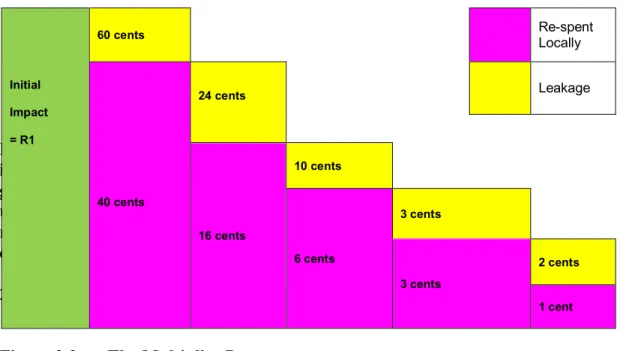
2.3 The multiplier process 47
2.4 South African Sport Tourists Arrivals 60
3.1 The relationship between sample size and accuracy of expenditure
estimates 90
3.2 Data collection 101
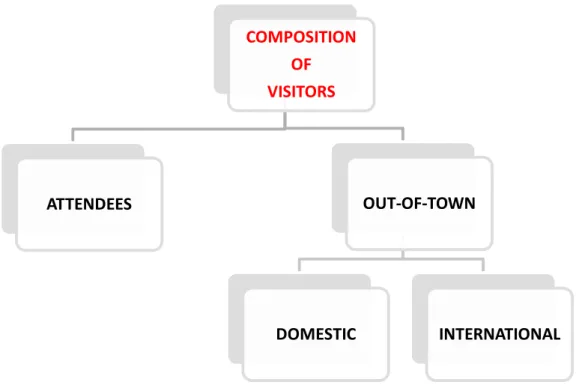
3.3 Composition of visitors 105
4.1 Number of people that visited the registration venues 114
4.2 Modes of transport utilized 125
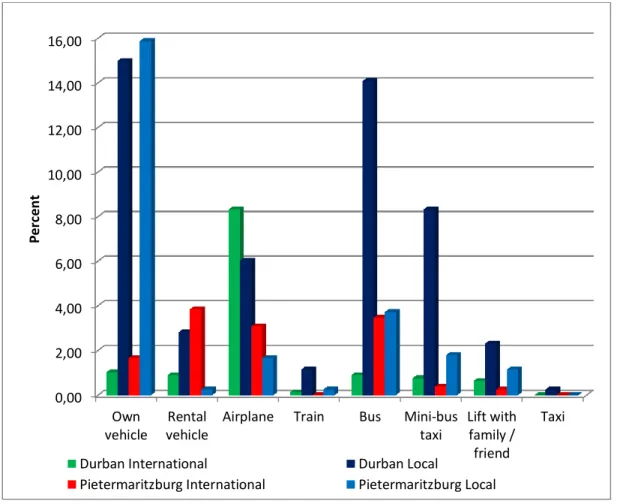
4.3 Positional Metro location of the local residents 126 4.4 Primary reason not to participate in the Comrades Marathon 138 4.5 Positive economic impact of the 2010 FIFA World Cup on the
Comrades Marathon 139
4.6 Respondents’ rating of the event 144
4.7 Increased revenue 148
4.8 Attraction to the cities 149
4.9 2010 FIFA World Cup perceived financial benefits 150 5.1 Perspectives on the roles and impacts of events 161
5.2 Model of Special Events 162
5.3 Event generators and goals 164
5.4 Event Inputs 172
5.5 Event Outcomes 185
5.6 Event Evaluation Framework 189
LIST OF TABLES
PAGE
4.1 Respondents for the 2010 Comrades Marathon 118
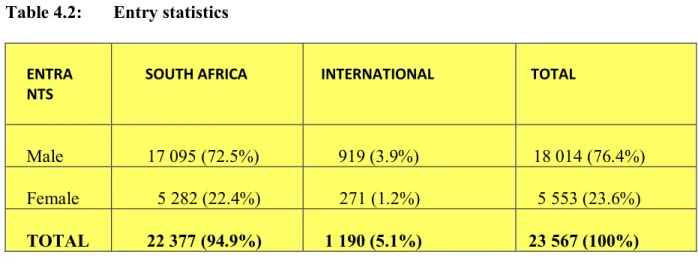
4.2 Entry statistics 120
4.3 International respondents: Country of origin and place of residence
whilst in KwaZulu-Natal 122
4.4 Local participants and supporters from other provinces 123
4.5 Race classification 127
4.6 Income classification 128
4.7 Average daily spend 129
4.8 Cost of accommodation (in Rands) 132
4.9 Duration of stay in nights 133
4.10 Size of the group (including respondent) 134
4.11 Composition of group 136
4.12 Primary reason for visiting the cities 137
4.13 Respondents’ awareness of other events taking place 140
4.14 Respondents’ attendance at other events 141
4.15 Future participation in Comrades Marathon (%) 142 4.16 Respondents’ experiences of unsavoury incidents outside the event (%) 145 4.17 Exhibitors’ level of satisfaction of the event 151
4.18 Summary of overall expenditure 155
5.1 Impact of sport as hallmark events 195
5.2 Economic indicator details 196
5.3 Social indicator details 205
5.4 Recognition of tangible costs and benefits 207
6.1 New income generated by the Comrades Marathon 210 6.2 Attributes of the 2010 Comrades Marathon and the
2010 Virgin London Marathon 217
APPENDICES
PAGE 1. Ethical Clearance from the University of KwaZulu-Natal 245
2. Letter requesting permission 246
3. Comrades Marathon Association: Letter granting permission to
conduct research 247
4. Respondents’ Consent Form 248
5. Questionnaire: Participants and supporters 249
6. Questionnaire: Sponsors and official suppliers 255 7. Questionnaire: Durban and Pietermaritzburg - Vendors 257 8. Questionnaire: Durban and Pietermaritzburg - Stallholders 259
9. Questionnaire: Durban residents 262
10. Questionnaire: Pietermaritzburg residents 265
11. Questionnaire: CMA representatives 267
CHAPTER ONE
PAGE
1.1 Overview 1
1.2 Method 6
1.2.1 Statement of the problem 6
1.2.2 Purpose of the study 8
1.2.3 Critical questions to be answered 9
1.2.4 Hypothesis 10
1.2.5 Delimitations 11
1.2.6 Definition of Terms 12
1.2.7 Abbreviations 15
1.3 Conclusion 16
CHAPTER TWO
REVIEW OF LITERATURE 20
2.1 Introduction 20
2.2 Structure of the Thesis 23
2.3 Special Events Evaluation Concepts and Methods 23
2.3.1 Economics and Tourism 24
2.3.2 Community 24
2.3.3 Art and Culture 25
2.3.4 Sport 25
2.3.5 Business 25
2.3.6 Facilities and Attractions 25
2.3.7 Political 26
2.4 Evaluation 27
2.4.1 Evaluation Theory 28
2.4.1.1 Outcome Evaluations 29
2.5 Corporate Social Responsibility (CSR) 29
2.6 Triple Bottom Line (TBL) 30
2.7 Method 32
2.8 Defining economic impact 33
2.8.1 Direct impacts 34
2.8.1.1 Indirect impact 35
2.8.1.2 Induced impacts 36
2.9 Visitor spending 38
2.10 Multiplier effects 40
2.10.1 Multipliers and sporting events 42
2.10.1.1 The overall size and economic diversity of the region’s
economy 46
2.10.1.2 The geographic extent of the region and its role within
the broader region 46
2.10.1.3 The nature of the economic sectors under consideration 47 2.10.1.4 The period in which the economic impact analysis is
undertaken 47
2.11 Types of multipliers 47
2.11.1 The output multiplier 48
2.11.2 The earning multiplier 48
2.11.3 The employment multiplier 48
2.12 Types of economic impact models 49
2.13 Estimating the economic impact 49
2.13.1 Justification of subsidies 50
2.13.2 Size of the contribution of sport to the economy 51 2.13.3 Relative share of the sport in the economy 52
2.14 Duration of the economic impact 52
2.14.1 The short-term economic impact 52
2.14.2 The long-term economic impact 53
2.15 Is the impact of a major sporting event statistically visible? 53
2.16 Significance of economic impact studies 54
2.17 Sport Tourism 56
2.17.1 The Nature of Sport Tourism 57
2.17.2 Definition of Sport Tourism 57
2.17.3 Critical Components of Sport Tourism 58
2.17.4 Sport tourism in South Africa 59
2.17.5 Sport tourism in the Cities of Durban and Pietermaritzburg 60
2.18 Transformation of sport in South Africa 63
2.19 Transformation within the Comrades Marathon Association 65 2.20 The Comrades Marathon Association and Volunteerism 66
2.21 Review of major studies 67
2.21.2 2003 International Cricket World Cup 68
2.21.3 2003 Cape Argus Pick ‘n Pay Cycle Tour 69
2.21.4 2004 Athens Olympic Games 71
2.21.5 2006 A1 Grand Prix of Nations 72
2.21.6 2008 Beijing Olympic Games 75
2.21.7 2010 FIFA World Cup 77
2.3 Conclusion 81
CHAPTER THREE
METHODS OF STUDY 84
3.1 Introduction 84
3.2 Method 85
3.2.1 The nature of the study 85
3.2.2 Reliability of the questionnaire 87
3.2.3 Administration of the questionnaire 87
3.2.4 Selection of subjects 89
3.2.5 Selection of samples and sampling methods 90
3.2.5.1 Foreign athletes and foreign supporters 91
3.2.5.2 Domestic athletes and supporters from other provinces in
South Africa 92
3.2.5.3 Sponsors 93
3.2.5.4 Tourism KwaZulu-Natal 94
3.2.5.5 Comrades Marathon Association 95
3.2.5.6 Suncoast Casino and Entertainment Centre 96
3.2.5.7 Vendors 96
3.2.5.8 Hotel representatives 96
3.2.5.9 Shopping mall representatives 96
3.2.5.10 Resident participants and resident spectators 97
3.2.5.11 Exhibitors/Stallholders 98
3.2.6 Sampling 98
3.2.7 Fieldworkers 100
3.2.8 Pilot study 100
3.2.9 The Questionnaire 100
3.2.9.1 Foreign athletes and supporters 102 3.2.9.2 Domestic Athletes and Supporters 102
3.2.9.3 Sponsors 103
3.2.9.4 Vendors 103
3.2.10 Interviews 103
3.2.11 Statistical analysis 105
3.2.12 Leverage ratios and Return on Investment (ROI) 109
3.3 Conclusion 110
CHAPTER FOUR
RESULTS 112
4.1 Introduction 112
4.2 Data collection 114
Durban the Pietermaritzburg Registration Venue 114 4.2.2 Respondents of the 2010 Comrades Marathon 116
4.2.3 Entry statistics 119
4.2.3.1 International respondents: General information 120 4.2.3.2 Domestic respondents: General Information 123
4.2.4 Permanent places of residence 124
4.2.5 Mode of transport used to arrive in the cities and at the event 124 4.2.6 Positional Metro location of the residents 125
4.2.7 Race classification 126
4.2.8 Income classification 127
4.2.9 Age classification 129
4.2.10 Economic impact 129
4.2.10.1 Responses on Daily Expenditure 129 4.2.10.2 Durban: Estimated Average Daily Expenditure 129 4.2.10.3 Pietermaritzburg: Estimated Average Daily Expenditure 131 4.2.10.4 Responses on Accommodation Expenditure 131
4.2.10.5 Duration of stay 133
4.2.10.6 Size of the group (including the respondent) 134 4.2.10.7 Durban: Estimated Accommodation Cost 134 4.2.10.8 Pietermaritzburg: Estimated Accommodation Cost 135
4.2.11 Composition of the group 135
4.2.12 Primary reason for visiting the cities 136 4.2.13 Factors influencing the decision to attend and to participate
4.2.14 Primary reason not to participate in the Comrades Marathon 138
4.2.15 Positive impact of the 2010 FIFA World Cup 139 4.2.16 Respondents’ awareness of other events taking place in the cities 140 4.2.17 Respondents’ attendance at other events taking place 141 4.2.18 Participation in future Comrades Marathon 142 4.2.19 Sponsor identification and perceptions 142 4.2.20 Places visited or maybe visited 143 4.2.21 Respondents’ ratings of their experiences of the event 143 4.2.22 Unsavoury incidents experienced by the respondents experienced at
the event 144
4.2.23 Unsavoury incidents experienced outside the event 144 4.2.24 Respondents’ suggestions to improve the event 146 4.2.25 Exhibitors’/Stallholders’ responses 147
4.2.26 Residents’ responses 152
4.2.27 Positive features of the City of Durban 153 4.2.28 Positive features of the City of Pietermaritzburg 153
4.3 Summaries: 154
4.3.1 Summary of overall expenditure 154
4.3.2 Summary of p-values 155
4.4 Conclusion 156
CHAPTER FIVE
MODEL DEVELOPMENT
5.2 Model development 159
5.3 The event and the impacts 163
5.3.1 Event generators 163
5.3.1.1 Local and Provincial Government 165
5.3.1.2 Local community 166
5.3.1.3 The Event Organisation 168
5.3.2 The event inputs 170
5.3.2.1 Local residents 171
5.3.2.2 Local businesses and suppliers 174
5.3.2.3 Built environment 175
5.3.2.4 Natural environment 178
5.3.2.5 Mass media 179
5.3.2.6 Participants, visitors and attendees 181
5.3.2.7 Sport sponsors 181
5.3.3 Legal requirements 183
5.3.4 Event outcomes 184
5.3.4.1 Impacts 184
5.3.4.2 Economic and social indicators 186
5.4 Event evaluation framework 187
5.5 The Evaluation model 190
5.5.1 Option One: Indicators normalized at the indicator level 192 5.5.2 Option Two: Indicators normalized at the dimension level 192
5.6.1 Economic indicators 196 5.6.1.1 E1 and E2: Number of businesses hosted at the event and
category of business representatives hosted 197 5.6.1.2 E3: Rand value of the media coverage 198 5.6.1.3 E4: Number of visiting journalists from target areas 200 5.6.1.4 E5: Direct inscope expenditure of the event 201 5.6.1.5 E6: Number of full-time jobs created 201 5.6.1.6 E7: Number of people trained as part of the event 202 5.6.1.7 E8: Rand value of new infrastructure and facilities
established for the event 202
5.6.2 Social indicators 203
5.7 Conclusion 207
CHAPTER SIX
RESULTS AND DISCUSSIONS 208
6.1 Introduction 208
6.2 Economic impact analyses 208
6.2.1 Economic impact of the 2010 Comrades Marathon 208 6.2.2 Economic impact of the 2010 Comrades Marathon on the
City of Durban 209
6.2.3 Economic impact of the 2010 Comrades Marathon on the
City of Pietermaritzburg 211
6.2.4 Overall economic impact of the 2010 Comrades Marathon 212 6.2.5 Economic impact of the 2010 Virgin London Marathon on
6.3 A comparative study of the economic impacts of the 2010 Comrades
Marathon and the 2010 Virgin London Marathon 216 6.4 Intangible benefits for the Cities of Durban and Pietermaritzburg 217 6.5 A positive return on investment (ROI) 221
6.6 Conclusion 223
CONCLUSIONS AND RECOMMENDATIONS 225
7.1 Introduction 225
7.2 Deductions 225
7.3 Recommendations 226
7.4 Suggestions for future research 228
REFERENCES 230
INTERVIEWS 243
APPENDICES 244
CHAPTER ONE
INTRODUCTION TO THE STUDY Chapter Structure
Overview
Method
Conclusion
1.1 OVERVIEW
Sport events are big investments in every sense of the word (Gratton et al, 2006). It therefore stands to reason that ensuring that an event goes well and is successful is very important;
otherwise it is not worth the immense effort, time and finances it takes to host it. There has been tremendous growth in the number of special events being staged in sport tourism destinations throughout the world. Events have been used strategically to bring “new money” into regions, promote economic development and to showcase destinations to potential visitors. As a result of these economic imperatives, the evaluation of events has predominantly been undertaken from an economic perspective.
A truly great sports event is an event where the impact and spin-offs for all those involved viz. the organisers, the community within which the event takes place, the participants and possibly the government, is a positive one when clear benefit is acquired from the event. Hosting a big sporting event is often seen as the ideal way for a city to put itself on the world map. Major sports events are seen as the perfect method to create or re-create a tourist product centred on large cities or countries. Visdeloup (2010) reported that in today’s environment cities compete against each other for talent, business and resources. He maintained that in many ways they have
to act like commercial enterprises by selling themselves to potential customers, such as business investors, visitors and the creative classes, as successful, vibrant, forward-looking brands
(Visdeloup, 2010).
The hosting of major sporting events appeals to many sectors of the community. Barney et al (2002) declared that the opportunity to advertise products to a global audience, leverage business opportunities in export and new investments, enhance the tourist industry of host countries, and boost citizen morale and pride are factors which motivate both corporate involvement and public support.
Sport, over the years, has become a major industry as well as a key cultural preoccupation in contemporary society. Cities are increasingly using major sporting events and activities to re- image themselves, promote urban development and fund economic growth and regeneration (Gratton, C., Shibili, S. and Coleman, R.), Gratton, C., Dobson, N. and Shibili, S. (2000) reported that up until the 1980’s, hosting major sporting events such as the Olympic Games were thought of as a financial and administrative burden to the organizing city and country. In 1976, Montreal confirmed this viewpoint as the city incurred a loss of £692 million. However, in 1984 the City of Los Angeles changed the economics of major sporting events when it made a surplus of £215 million. Nonetheless, especially in the light of tight public budgets, there still is a substantial need for improving major event planning and strategic management in order to enhance production and allocation efficiency.
The proliferation of sporting events has resulted in the need for the performance of these events to be evaluated more stringently. Currently, event directors are requested to prepare all-inclusive post-event evaluations with detailed accounts of the impacts of the event. These sporting events,
like many other types of events, require financial assistance from governments and businesses in order to be staged. Thus, the agencies that fund these events require the post-event evaluations to assess the value of their investments. Evaluations are also required by the event organisers who need to justify their activities to a diverse set of stakeholders which includes sponsors, funding agencies, economic and tourism agencies and the communities at large. Whilst sporting events can result in positive economic impacts, they also have the potential to result in economic losses.
A negative impact on the economy can result in a lasting legacy that taxpayers have to bear (Torkildsen, 2011). These events can also create conflict within the host community, and tarnish the reputation of the destination, especially if they do not have strong local support.
The purpose of an economic impact study conducted around a sport event is to quantify and qualify the current and residual economic value the event will pass onto the local, provincial and national surroundings. The economic impact is identified and measured objectively as the change in an economy resulting from hosting an event through the direct, indirect, and induced impact of the operation, acquisition, development, programming and use of facilities and services. An economic impact study provides a snapshot from evidence and information in assessing the projected value of the event which reflect economic activity and value added economic impacts that quantify the general benefits to the economy as well as to various levels of government.
According to Matheson (2006) the role of sports in a society such as South Africa in driving the developmental agenda cannot be over-emphasised. He stated that sporting events do not only play an important economic role but are also useful catalysts in forging social cohesion and nation building. The picture of President Nelson Mandela hosting the Rugby World Cup at the end of the 1995 final with Francois Pienaar, the captain of the South African rugby team will
forever be etched in history and in the memories of the millions of television viewers all over the world as a moment of non-racial triumphalism (Matheson, 2006).
Major fairs, expositions, cultural and sporting events of international status which are held on either a regular or one-off basis can be classed as hallmark tourist events. A primary function of the hallmark event is to provide the community with an opportunity to secure high prominence in the tourism market place for a short, well-defined period of time (Hall, 2004). The Comrades Marathon satisfies the above requirements and therefore qualifies as a hallmark sports event.
However, international or regional prominence may be gained with significant social and environmental costs.
The Comrades Marathon has become an annual South African ritual. The race is a veritable South African institution, internationally recognised for the body-sapping challenge it poses, and the camaraderie it fosters among its thousands of participants. The Comrades Marathon is widely regarded as the most prestigious ultra-marathon not only in South Africa but also in the world. It is arguably the most popular ultra-marathon globally and attracts runners from all over the world.
The event draws fields of roughly 18 000 runners on an annual basis for the approximately 89 kilometres ultra-marathon that is run over gruelling terrain. Each year the start and finish venues alternate between the Cities of Durban and Pietermaritzburg. The 2010 race was originally scheduled to finish in Pietermaritzburg but the Comrades Marathon Board decided, almost a year prior to the event that the race would finish in Durban. This decision was influenced by several factors such as logistics and infrastructure but more specifically because 2010 was a colossal sporting year for South Africa as it hosted the 2010 FIFA (International Federation of
Association Football) World Cup. In addition, it was the first time that the FIFA World Cup was
held on the African continent. Also, Durban hosted six of the World Cup games whilst the City of Pietermaritzburg provided a training ground for one of the international teams. With its rich heritage and steeped in tradition, the Comrades Marathon should continue to gain more and more recognition and popularity around the globe and attract ever-increasing numbers of local, regional and international athletes.
The Comrades Marathon is a singular event that is held at a certain point of time but, in general, its economic benefits unequally occur in the pre-event, present and post-event phase. It is
categorised as a hallmark event as it is a regional and tourist attraction and contributes to peoples’
awareness of a particular geographical area. The ultra-marathon is organised by the Comrades Marathon Association (CMA).
Sport Tourism is currently the fastest growing aspect of tourism globally (Joseph, 2009). Sport tourism does not only focus on international events, but also includes local, regional and national events. Joseph (2009) affirmed that there is a proliferation of definitions of “Sport Tourism” and that there is no single agreed definition of the concept. He also confirmed that in 2008, sport tourism accounted for $600 billion (10%) of the international tourism market.
During the twentieth century different factors viz. commercialisation and globalisation influenced daily life. These factors contributed to the growth of big sport events. As a result of the growth of global development, sport has become more and more commercialised. Dejonghe (2004) argued that that the reason for this was the internationalisation of economic activity, growing impact of sport culture, the expansion of communication possibilities, rising mobility of people, acceleration of international migration and global regulations.
1.2 METHOD
1.2.1 Statement of the problem
Delpy (1998) and Turco et al (2003) have verified that major sporting events play a significant role in the context of destination planning by enhancing and linking tourism and commerce in the cities hosting these events.
Lee (2001) drew attention to the fact that there is a great deal of debate about the validity of economic impact studies (EIS) of sporting events. He stated that economists widely believe that event-sponsored studies exaggerated the economic impact of large sporting events on local communities. These overstatements are a result of the following factors:
The studies often ignore the substitution effect i.e. that attendees at a sporting event spend their money on that event instead of on other activities in the local economy. Thus, the sporting event simply results in a reallocation of expenditures in the economy rather than a real net increase in economic activity.
Economic impact studies usually ignore the crowding out effect. Many major sporting events are staged in cities that are already popular tourist destinations. Durban is such a city. If hotels and restaurants in the host city normally tend to be at or near capacity throughout the period during which the event takes place, the event may simply supplant rather than supplement the regular tourist economy.
The economic impact studies usually fail to address whether the money spent at a sporting event stayed in the local economy. A large percentage of the funds spent by the out-of- town visitors go towards hotel rooms, rental cars, and restaurants that are generally
national chains. Thus, profits earned during the event at these businesses do not increase the welfare of the citizens of the local economy but rather accrue to stockholders around the country.
Non-economic costs such as traffic congestion, vandalism, theft and other criminal acts, environmental degradation, disruption of residents’ lifestyle, and so on are rarely
reported.
Economic impact studies are often used by sports organisers to justify public expenditures on sports infrastructure; ultimately, the real question faced by any observer is whether an analysis conducted by agents with a vested interest in the outcome of the study can ever be considered an objective examination of the true economic impact of the event.
Turco et al (2003) and Blaikie (2003) claimed that past statistics have proved that the Comrades Marathon played a significant role in the context of destination planning, enhancing and linking tourism and commerce in the City of Durban. The event possesses the ability to also attract visitors and to focus attention on both the Cities of Durban and Pietermaritzburg. It is perceived that the Comrades Marathon will benefit these cities in the future through an increase in revenue generated from accommodation, food, drinks, shopping, transportation and tourist attractions.
An economic impact analysis of the relationships between sport and economic development usually commences with a look at the empirical evidence which shows that the less a country is economically developed, the less sport practice, sport performance, sport facilities and sport finance are developed. Conducting an economic impact study is important because it becomes a useful tool to evaluate a community’s development economically and socially.
The study falls into the realm of Quantitative Research and has a positivistic framework (Bernard, 2000).
1.2.2 Purpose of the study
This study purports to analyse the socio-economic impact of the 2010 Comrades Marathon on the Cities of Durban and Pietermaritzburg. Special interest is therefore focused on the relationship between the Comrades Marathon and the Cities of Durban and Pietermaritzburg. In addition, there were conflicting perceptions of the financial and social impacts the 2010 FIFA World Cup would have on the race as the event took place approximately two weeks prior to the
commencement of the World Cup.
A secondary objective would be to show the value of major sporting events to the formal as well as the informal businesses in these cities. Very few sport events “make money” in the true sense of the word. Yet they can have a large secondary effect on the local economy and on society, especially if it has a significant number of out-of-town visitors, or “sport tourists.” Each one of these visitors spends money on accommodation, food and other services. In addition, funds paid out to suppliers rendering event services stimulate the local economy as well. Larger events may create temporary jobs, or even stimulate the building of sport infrastructure as was seen in South Africa prior to the 2010 FIFA World Cup. The important part is to be able to show that even if an event ran at a loss, it was off-set by the positive economic and social spin-offs of the event.
There have been numerous researchers since the 1980’s that have called for a broader approach to evaluate the impact of special events (Fredline, Raybould, Jago and Deery, 2004; Getz, 2000;
Laesser, Stettler and Rutter, 2003). Fredline et al (2004) advocated a method that evaluates the impact that takes into consideration the economic, social and environmental impacts of events.
Due to a lack of information regarding the environmental impacts and the fact that the CMA have not implemented an Environmental Policy, the researcher focused on the economic and social impacts of the sporting event in this study in order to develop a model that would be of benefit to sport event organisers.
1.2.3 Critical questions to be answered
Durban and Pietermaritzburg like other major cities in the world are and will increasingly be confronted by two major and related challenges. Firstly, there is the need to successfully compete in a global economy characterized by increased competition and globalization.
Secondly, there is need to eliminate poverty and address issues of inequality and marginalization.
All local governments are mandated to promote sustainable economic development that will simultaneously reduce poverty and strengthen global competitiveness. Consequently, the
Comrades Marathon, as a major sporting event, can be seen as a primary driver to create jobs and contribute to competitiveness. An independent socio-economic impact study has shown that the Pick n Pay Cycle Tour in 2003 was responsible for injecting R260 million into the economy of the City of Cape Town (Next Generation Communication, 2003). This revenue was generated through accommodation, food, drinks, shopping, visits to tourist attractions, sale of bicycle spares and equipment as well as bicycle related services.
The crucial questions that are investigated in this study are:
To profile and measure the economic impact of the Comrades Marathon on the Cities of Durban and Pietermaritzburg and identify which indicators could be utilised to measure these impacts
To profile and measure the social impact of the Comrades Marathon on the Cities of Durban and Pietermaritzburg and identify which indicators could be utilised to measure these impacts
To determine whether the Comrades Marathon generated intangible benefits for the overall communities of the Cities of Durban and Pietermaritzburg
To identify the indicators that would assist in the development of an event evaluation framework for sporting events
To determine the status of transformation in the event and within the Comrades Marathon Association and how this has impacted on the event financially.
1.2.4 Hypothesis
To demonstrate how economic benefits serve as indicators of whether there will be a positive return on investment. Economic benefits that are usually examined in cost-benefit studies are an indication of whether there will be a positive return on investment (ROI). An economic impact study is arguably one of the most important indicators of the success of a major sporting event.
Dobson et al (1997) reported that the “Euro ’96” football championships held in Britain attracted 280 000 overseas visiting supporters who spent approximately £120 million in the eight host cities.
Hence, the hypothesis is: “The Comrades Marathon is an economically viable event in increasing the economy of the Cities of Durban and Pietermaritzburg and the economy of KwaZulu-Natal.”
1.2.5 Delimitations
The sample for this study was selected randomly from all the athletes that participated in the 2010 Comrades Marathon and their supporters that attended the Bonitas Comrades Expo in Durban and at the registration venue in Pietermaritzburg and also were at the finish venue. The respondents in this study came from the following populations:
Foreign athletes
Foreign supporters who accompanied the foreign athletes
Domestic athletes who resided in provinces other than in KwaZulu-Natal in South Africa
Domestic supporters from other provinces in South Africa who accompanied the domestic athletes
Vendors outside the registration areas in both cities
Sponsors of the Comrades Marathon
Representatives of the Comrades Marathon Association
A representative from the organisers of the Bonitas Comrades Expo viz. Conker Exhibitions
Local athletes and supporters and residents from Durban and Pietermaritzburg that attended the Bonitas Comrades Expo in Durban and at the registration venue in Pietermaritzburg
Public Relation Officers/Marketing Managers/store managers at shopping malls and hotel managers/hotel personnel in the cities
Special events of different kinds have played an important role in the economic and social development of communities for many years. Special events are seen to have the ability to
produce a wide range of significant and social benefits for communities and regions, which helps to explain the reason that they have been so eagerly embraced by communities. Special events increase the opportunities for new expenditure within a host region by attracting visitors to the region. They also act to retain the expenditure of locals who, in the absence of local special events, would travel elsewhere in pursuit of leisure activities.
Several important features emerge from an examination of the research of hallmark sporting events such as the Comrades Marathon. First, there is no agreed upon definition of events.
Second, major methodological weaknesses emerge in the study of hallmark events. Third, the majority of research is economic in orientation with relatively little attention being paid to the social and environmental impacts of such events.
1.2.6 Definition of Terms 1.2.6.1 Economic Impact
Van Beek (2007) defines economic impact as the total amount of additional expenditure generated that can be directly or indirectly attributed to the staging of a major sporting event.
Having determined this figure, the impact of an event can then be calculated by comparing money spent in the economy with money generated and retained. The aim of this process is to assess the net effect of staging the event in the said areas.
1.2.6.2 Economic Benefit
Economic benefit can be expressed numerically as an amount of money that will be saved or generated as a result of an action (www.investorwords.com).
1.2.6.3 Comrades Marathon
The Comrades Marathon is an ultramarathon of approximately 89 km (approximately 56 miles) which is run annually in the KwaZulu-Natal province of South African between the cities of Durban and Pietermaritzburg (en.wilipedia.org/wiki/Comrades_Marathon, 2014)
1.2.6.4 Sport
Sport is defined as an activity involving physical exertion and skill that is governed by a set of rules and often undertaken competitively (www.the freedictionary.com/sport).
1.2.6.5 Recreation
Recreation is the refreshment of one’s mind or body after work that amuses or stimulates (www.the freedictionary.com/sport).
1.2.6.6 Sport Tourism
Sport Tourism is defined as a specific travel outside of the usual environment for either passive or active involvement in competitive sport where sport is the prime motivational reason for travel and the touristic or leisure element may act to reinforce the overall experience (www.tourism- review.com)
1.2.6.7 Multipliers
The multiplier is a device which converts total additional expenditure into the amount of local income retained with the local economy (Gratton, Dobson and Shibili, 2000).
1.2.6.8 Visitor Spending
Visitor spending is the monies outlaid behind by those persons who came to the cities because of the sporting event (Gratton, Dobson and Shibili, 2000).
1.2.6.9 Direct Effects
Direct effects are the changes in economic activity during the first round of sspending. For tourism this involves the impacts on the tourism industries (businesses selling directly to tourists) themselves (Styne, 2000)
1.2.6.10 Indirect Effects
Indirect effects are the changes in sales, income or employment within the region in backward- linked indurstries supplying goods and services to tourism businesses (Styne, 2000)
1.2.6.11 Induced Effects
Induced effects are the increased sales within the region from household spending of the income earned in tourism and supporting industries (Styne, 2000)
1.2.6.12 Total Effects
Total effects are the sum of direct, indirect and induced effects (Styne, 2000)
1.2.6.13 Sports Participant
Sports participant means a person who is involved in an activity or event (www.merriam- webster.com)
1.2.6.14 Attendee
An attendee is a person who was present at a specific time and place
(www.dictionary.conference.com). This person must also have visited the Bonitas Comrades Expo held in Durban or the stands/stalls at Comrades House in Pietermaritzburg and supported the participants
1.2.6.15 Qualitative Research
Qualitative research encompasses a range of philosophies, research designs and specific techniques including in-depth interviews; participant and non-participant observation; focus groups; document analyses and a number of other methods of data collection (Pope et al, 2006).
1.2.6.16 Social Benefits
Social benefit is the increase in the welfare of a society that is derived from a particular course of action (www.businessdictionary.com, 2015).
1.2.6.17 Social Impacts
Social impact is the effect of an activity on the social fabric of the community and the well-being of the individuals and families (www.businessdictionary.com).
1.2.6.18 Hallmark Events
Hallmark events, as defined by Getz (2012) are those events that possess such significance, in terms of attractiveness, quality or publicity, that the event promotes the host venue, community or destination with a competitive advantage.
1.2.7 Abbreviations
1.2.7.1 CMA denotes the Comrades Marathon Association 1.2.7.2 EIS denotes economic impact studies
1.2.7.3 GDP is defined as the total market value of all final goods and services
produced within the country in a given period of time (usually a calendar year).
It is also considered the sum of a value added at every stage of production (the intermediate stages) of all final goods and services produced within a country in
a given period of time, and it is given a money value.
1.2.7.4 PRO denotes Public Relation Officers
1.2.7.5 RIMS II denotes the Regional Input-Output Model
1.3 CONCLUSION
Economic impact analysis is a useful mathematical tool capable of quantifying the patterns and magnitudes of interdependence among sectors and activities. It is predicated on two fundamental propositions.
First, regardless of the inherent value of primary activities such as recreation or tourism, to the extent that activity involves the use of scarce resources, they generate economic consequences that can be measured and compared. Second, economic impacts are only partially captured by assessing direct expenditures.
Inasmuch as the economy is a complex whole of interdependent and interacting activities, there are some significant indirect and induced impacts associated with direct expenditure. These indirect and induced impacts can often be larger than the direct impacts. Any sport activity that adds to the promotion of additional economic activity that otherwise would not have taken place without the sport activity, creates incremental economic activity. Thus, economic incremental activity is defined in terms of the creation of jobs and household income that otherwise would not have been produced. Consequently, sport events can be classified as visitor recreational/social activity and money spent on such events by visitors is part of the visitors’ recreational/social budget.
The positive flow of revenue into a region should not be the only factor considered when determining the apparent success of an event. The negative social impacts of an event can do great harm to the future of an event and its host region and can cause the premature death of an event. Conversely, there are many positive impacts that may counter negative economic impacts.
An event that spreads the seasonality of tourism in a region also evenly distributes the flow of money into a region, increasing the opportunities of full-time employment that causes many positive and negative flow-on effects in that region (Janeckzo et al, 2002).
The costs and benefits of an event can be tangible and intangible. The tangible effects are those that can be measured in terms of the amount of expenditure incurred or income earned.
However, the intangible effects are those that are more difficult to quantify or measure such as the capability of an event to help define a society’s identity or develop local pride and talent.
Intangible costs include social costs such as noise pollution due to staging the event. Intangible benefits include the general excitement and pleasure that the community can gain from the event experience.
In this study, equal emphasis was placed on evaluating the positive and negative impacts of the event across the range of economic and social criteria. This ensured that the negative impacts are identified, and hopefully, remedied and the positive impacts are further developed, thus enabling the continuous development of the event.
Since tourism, by definition, involves the influx of non-residents into a community outside of their normal environment, it follows quite logically that any expenditure made by these persons would represent an injection of funds into a local economy, thus increasing the economic activity
of that community. Tourism then, by definition, lends itself quite naturally to economic impact analyses.
Sport Tourism has received growing attention as a source of generating significant revenue and contributing major economic benefits to host cities, regions and countries. Tassiopoulos (2005) confirmed that major sport events are becoming an integral part of tourism development and marketing strategies. Ritchie and Adair (2002) found a growing recognition of sport tourism as both a popular leisure experience and important economic activity.
Sport Tourism events attract participants, their families, friends and fans that spend money on travel, accommodation, food, drink and retail purchases. There are direct revenues from event- related activities (admissions, sponsorships, concessions and licences). Indirect expenditures on other activities in the community, and the multiplier effect as the money circulates around the local economy.
Many authors inter alia Turco et al (2003) and Blaikie (2003) reiterated that there has been an increasing realization of the significant benefits to be earned from hosting major international sports events. Many cities now actively pursue hosting major events as a strategic priority and ensure that they leverage the event to the maximum.
Major events can drive significant numbers of visitors to a city leading to increased business activity and potential inward investment. The Comrades Marathon attracts travelling participants and supporters in huge numbers not only from within South Africa but from throughout the world bringing colour and vibrancy to the event in addition to significant additional expenditure. The popularity of the event has grown to such an extent that it has placed massive demands on the
logistics of the race and on the race organisers. This, in recent years, forced the Comrades Marathon Association to place a ceiling on the number of athletes who could participate in the event.
CHAPTER TWO
REVIEW OF LITERATURE Chapter Structure
Introduction
Structure of the thesis
Special events evaluation concepts and methods
Evaluation
Corporate Social Responsibility (CSR)
Triple-Bottom Line (TBL)
Theoretical Framework
Review of Major Economic Impact Studies
Conclusion
2.1 INTRODUCTION
Globally, events have been recognized as a strong component of tourism that draws people from different places (Gammon and Robinson, 2003; Zauhar, 2004). Numerous authors (Turco et al, 2003; Saayman, 2004; Swart et al, 2005) have contributed to the development and understanding of sport tourism and its imperatives in South Africa. Economic impact has become a key subject of discussion and debate in the sport marketing and sport management disciplines. Estimating the economic impact of a sporting event is extremely difficult and frequently subjective. The nature of social science permits researchers to implement their own ideas and procedures for conducting economic impact studies. However, current methods for assessing economic impact have had variable success in estimating tourist numbers and expenditure directly attributable to a sporting event such as the Comrades Marathon.
Factors that may contribute to a successful event could include:
Increasing visitor stay in the region/town;
Increasing visitor expenditure in the region/town;
Improving destination awareness; and
Increasing civic pride or community solidarity.
Socio-economic impact assessment is designed to assist communities in making decisions that promote long-term sustainability, including economic prosperity, a healthy community and social well-being. Assessing socio-economic impacts requires both quantitative and qualitative
measures of the event. In addition, the perceptions of community members about whether the event is consistent with a commitment to preserving the rural character of the community. The indicators used to measure the potential socio-economic impacts of an event include inter alia the following:
Changes in the aesthetic quality of life of the host community and the local residents
Changes in employment and income levels
Demand for public services
Impact on community pride
Celebration of community values
In recent decades, an abundance of empirical investigations inter alia Fredline (2006), Gursoy, Jurowski and Uysal (2002) have focused on resident and tourist attitudes and perceptions of social, environmental and economic impacts of the sport tourism market segment and have proposed strategies to improve service delivery. However, empirical research on the social impact of sport tourism on local host communities is limited (Fredline, 2006). Chen (2001) declared that the growing importance placed on studying impacts on destination perspective also increases the likelihood for resident support for tourism development and enables policymakers to enhance the quality of life for the community. Conducting a social impact assessment is
important for a variety of reasons. It is used to alert the community, including residents and local officials and the event organisers, of the impact and magnitude of the event on the community’s social and economic well-being. The assessment can assist the communities avoid inequities among community groups as well as encourage the positive impacts associated with the event.
Andriotis (2005) accentuated that the hospitality of the local community is vital to the tourism industry but the destination should be developed according to host community needs.
Some of the economic impact studies identified the need for additional research on social impacts. For example, a report by Jura Consultants (2006) noted a major research gap in understanding the indirect impacts of major events upon host communities, and point out the intangible or less easily measured outcomes or outputs are “often ignored or poorly dealt with.”
The authors argued for the use of focus groups “to develop understanding of cultural networks or impacts on industry and the effect on audience, etc.” (Jura Consultants, 2006).
Morgan (2012) reported that the Comrades Marathon is a South African institution. He declared that it is the world’s greatest ultra-marathon, approximately 89 kilometres long and is
internationally recognized for the body-sapping challenge it poses and the camaraderie it fosters among its thousands of participants and supporters. It is run in the province of KwaZulu-Natal in South Africa between the inland City of Pietermaritzburg and the coastal City of Durban and is regarded as the world’s oldest ultra-marathon road race. This event, over the decades, has grown in stature and popularity not only in South Africa but throughout the world (Morgan, 2012).
2.2 STRUCTURE OF THE THESIS
The researcher has modified a seven-step indicator development process that was developed by Segnestam et al (2000). Segnestam et al (2000) stated that the lessons learnt from undertaking a range of indicator development projects have broader implications for other indicator efforts and the benefit of the process was that it provided practical guidance to other indicator developers.
The developed model would, therefore, be highly relevant for this study as it was developed specifically for event organisers. The three most relevant aspects of the model developed by Segnestam et al (2000) are:
It recommends supporting the indicator development process with an appropriate conceptual framework
It advocates consultations with stakeholders
It employs case studies as a means of testing the indicators
It is important to note that the last aspect i.e. the use of case studies was not included in other development frameworks and also in this study. However, the indicator development process corresponds with the general direction of the researcher’s study. The researcher modified the seven-step indicator development process and applied this modification to provide suitable direction for the structure of this thesis.
2.3 SPECIAL EVENTS EVALUATION CONCEPTS AND METHODS
There are numerous event evaluation concepts and methods that have been suggested by authors.
According to Allen (2000) economic performance of any event can be considered as a primary indicator of its success if analysed from the perspective of the various stakeholders. The
preference to economic performance of the event as the main success measure is also given by Silver (2008) and Tum et al (2006).
Getz (2000), a respected scholar in the events industry, addressed the different types of events and proposed the following event evaluation measures:
2.3.1 Economics and Tourism
2.3.1.1 Market share of specific event or events sector in a specific region needs to be analysed.
2.3.1.2 Economic impact of the event including the level of employment opportunities for the local community
2.3.1.3 People sustainability of events: self-supporting aspect of events can be stated to be the foundation of this specific event success measure
2.3.1.4 Competitive advantage of events compared to the events in different locations can also be stated as success measure
2.3.1.5 Image improvement side of the event, together with the scale and success of publicity that was attracted by the event
2.3.1.6 Rate of habitation of the event: this measure includes assisting hotel and transportation business in the region, as well as assistance provided to local residents
2.3.2 Community
2.3.2.1 The intensity of political support the event was able to pull off and the level of local attendance
2.3.2.2 Willingness of attendants/participants to pay for the event
2.3.2.3 The level of volunteer support that the event was able to generate
2.3.2.4 The accomplishment of the event in developing the spirit of community and pride in various stakeholders
2.3.3 Art and Culture
2.3.3.1 The accomplishment of the event in advertising and developing local talent 2.3.3.2 The success the event was able to achieve in providing cultural and/or artistic
experiences for the local community
2.3.3.3 The accomplishment of the event in fund-raising activities, as well as developing interest and understanding within the local community
2.3.4 Sport
2.3.4.1 The advantages that training and preparing for the event would offer the participants and other stakeholders
2.3.4.2 The accomplishment of the event in generating interest in sport
2.3.5 Business
2.3.5.1 The accomplishment of the event in generating new networks, increasing the level of sales for an involved company, as well as generating new business contacts 2.3.5.2 The accomplishment of the event in introducing new products and services to the
market place.
2.3.6 Facilities and Attractions
2.3.6.1 The amount of revenue an event was able to generate
2.3.6.2 The accomplishment of the event in promotion of new or existing facilities.
2.3.7 Political
Political measures refer to the capacity of the event in ensuring the efficiency of propaganda, and communicating a message of a relevant nature. Ensure that the organisation and network is able to adapt to changing conditions and renew itself periodically.
According to Kilkenny (2006) the amount of profit the event was able to generate and the number of people that attended the event remain to be the most effective evaluation measures. This particular viewpoint is supported by many other writers (Matthews, 2008; Parry, 2001) on the topic of special events.
Dwyer et al (2000), on the other hand stated that when evaluating the success of the special
events of any types, social and economic costs of the event need to be taken into account as well.
The following is a more detailed explanation of this event evaluation principle (Dwyer et al, 2000):
[A] Social Costs
Disruption to resident lifestyles
Unnecessary noise
Vandalism
Crowding
Crime
Property damage
[B] Economic Costs
Disruption to normal businesses trading
Under-utilised infrastructure
2.4 EVALUATION
The Oxford Dictionary defines evaluation as a systematic determination of the worth, value, quality, character or effectiveness of something. According to Davidson (2005), the “something”
can be the entire entity or aspects or components of the entity. Davidson (2005) elaborated by stating that the types of things that can be evaluated are broad and may include projects, programmes or organisations, personnel or performance, policies or strategies and products or services and identifies the reasons why evaluations are undertaken viz.:
To find areas for improvement; and/or
To produce an assessment of overall quality or value that is generally conducted for reporting or decision-making purposes.
Christiansen (2005) supported Davidson (2004) and confirmed that another reason for conducting evaluations was for accountability and that the purpose is to utilise the evaluation to reinforce support for continued support. Robson (2000) maintained that that there was an array of purposes for conducting an evaluation and that for each purpose there would be a set of likely questions that can be asked. In the case of this study, the most significant purpose would be to evaluate the outcome of the event. Likewise, a possible question that could be asked regarding event evaluation is: “What is the social impact of an event on the host community?” However, a question from a sponsor that provides financial support for the event might be: “Is it worth
continuing to support the event?”