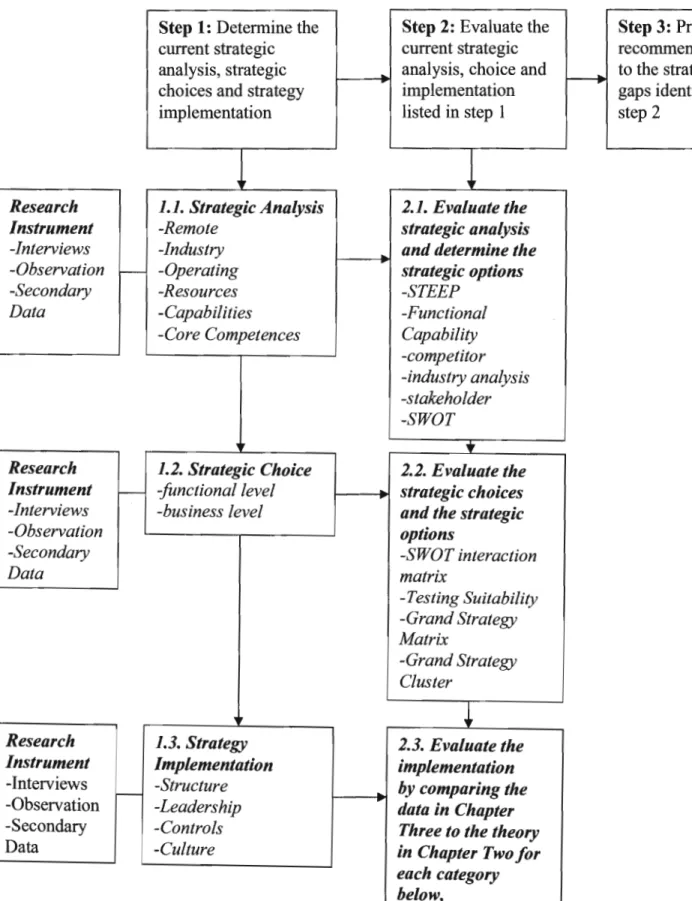
The strategic management process developed by 10hnson and Scholes (1998) was adapted to identify potential strategic gaps and make recommendations. The evaluation of the strategic implementation has determined the strategic gap between the strategic choices and the implementation.
INTRODUCTION
The South African government has identified small to medium enterprises as drivers of growth and the alleviation of unemployment (Ladzanil, 2001). The information above proves that strategic planning and strategic management are important for a small to medium enterprise such as Amalahle Maintenance Services (AMS) to survive and ensure that its strategic objectives are in line with the changing external environment (Ehlers and Lazenby, 2004 ).
BACKGROUND OF COMPANy
- Small to medium enterprises
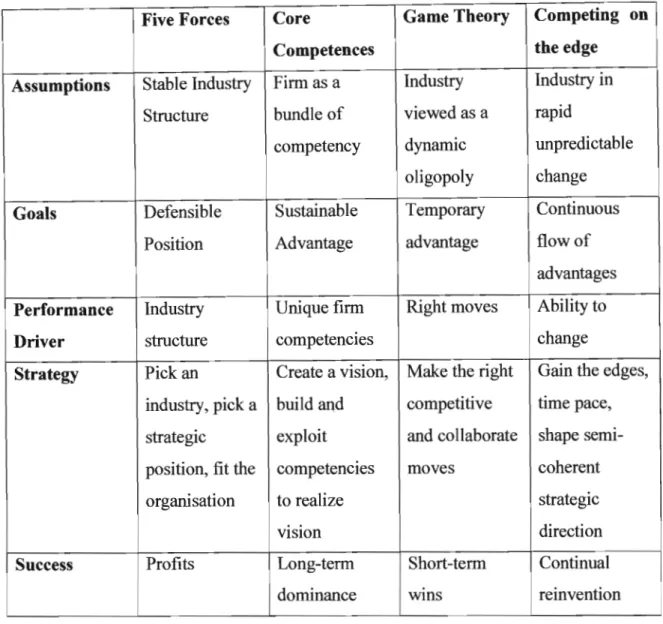
- Comparison of strategy theories
- Industrial Maintenance
- Industrial Safety
According to 10hnson and Scholes (in Robson, 1994), the strategic management process consists of the following three. Research carried out by Montserrat (2003) shows that the success of small and medium enterprises is linked to the adaptation of.
MOTIVATION FOR THE RESEARCH
This study will determine the possible strategic gaps that prevent the firm from renewing the existing contracts and achieving a sustainable competitive advantage. The study will determine the changes of the maintenance services industry within power generation and the possible strategic gaps in the firm's strategy to meet the industry changes.
VALUE OF THE PROJECT
A serendipitous opportunity in 1998 saw the directors of AMS decide to provide ash and coal handling plant maintenance services to Majuba Power Plant.
RESEARCH QUESTION
Once the strategic choices have been made, the company follows along in the implementation phase of the strategic management process. The strategic management process explained above lays the foundation for identifying the possible strategic gaps in the AMS.
OBJECTIVE OF THE STUDY
The strategic choices are then made, taking into account the current and future external and internal environmental conditions of the company. Therefore, a framework had to be determined in advance to determine the current strategic analysis, strategic choice and strategic implementation of AMS, after which an analysis could be performed on each segment of the strategic management process to determine the strategic gaps.
RESEARCH DESIGN AND METHODOLOGY
- Description of the facts related to the case
- Description of data collected
- Deductive or inductive approach
- Triangulation
- Data analysis and interpretation
- Validity and reliability
The primary data collected in the second chapter was compared with the secondary data collected to test the reliability and validity of the data. We compared the validity of the data, especially the interviews, with current trends in the field of external maintenance.
LIMITATIONS OF THE PROJECT
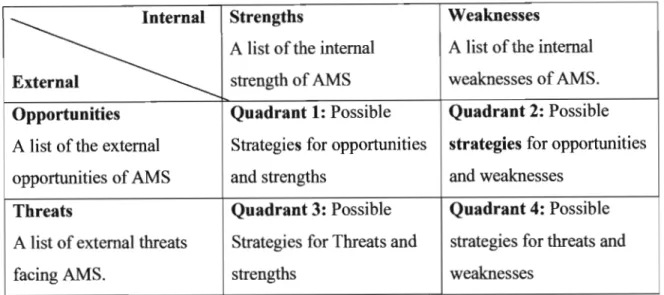
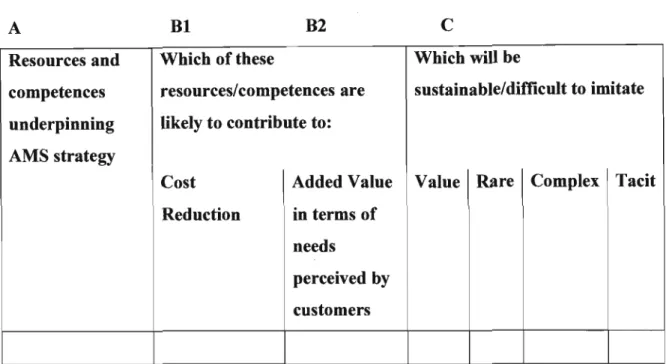
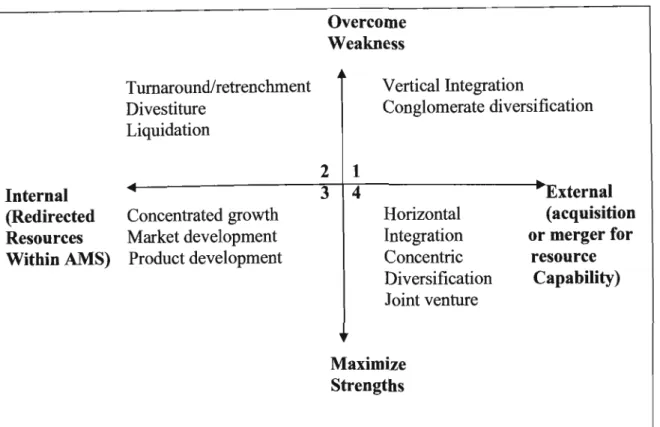
According to Figure 2.1, the core competencies of AMS should be tested through the resource-based view model for sustainability. The degree of fit or mismatch for AMS is indicated in Figure 2.3: The TOWS matrix.
STRUCTURE OF THE STUDy
Chapter Two
The framework is used to identify, assess and provide recommendations on potential strategic gaps in Amalahle's maintenance services.
Chapter Three
Chapter Four
Chapter Five
SUMMARy
The motivation for the research to identify possible strategic choices and implementation strategy gaps is due to the high failure rate among SMEs as well as Eskom's expansion programme. Chapter four analyzes the data presented in chapter three, and chapter five provides recommendations for potential strategic gaps identified in chapter four.
LITERATURE REVIEW
INTRODUCTION
DETERMINING THE CURRENT STRATEGIC ANALYSIS, STRATEGIC CHOICE AND STRATEGIC
- Determining the strategic analysis
- Determining the strategic choice
- Determining the strategy implementation
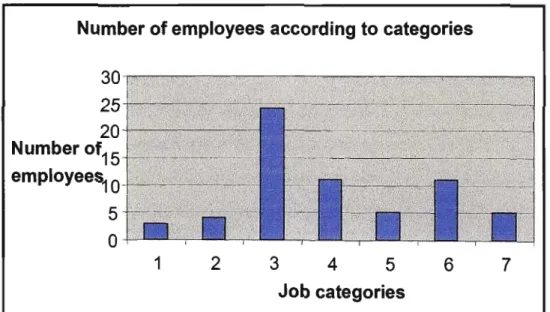
Judging individuals have the following characteristics, closing, setting, planning ahead, planned, planned, adjusted, arranged, finished, punctual and purposeful and controlling events (Fleisher and Bensoussan, 2003). Perceptive individuals live in a spontaneous and flexible way Fleisher and Bensoussan, 2003). The actual structure of the firm is not related to the strategies chosen to deliver a.

EVALUATINGTH:Ii STRATEGIC ANALYSIS, CHOICE AND IMPLEMENTATION
- Evaluating the strategic analysis
- Evaluation of the strategic choice and strategic options
- Evaluation of the strategic implementation
RECOMMENDATIONS
This section provides solutions to the strategic gaps identified in each category of strategic analysis, strategic choice, and strategic implementation. The STEEP analysis of the strategic analysis defines the current and future trends facing the AMS according to social, technological, economic, environmental and political categories.
SUMMARY
The strategic implementation consists of the structure, controls, and culture and leadership subcategories. The evaluation of the strategic implementation is the final category of step two and includes the following subcategories: structure, controls, culture and leadership.
REPRESENTATION OF DATA
INTRODUCTION
REMOTE ENVIRONMENT
- Political/Legal
- Economic
- Social
- Technological
- Environmental
- Global Segment
Documentary analysis of the firm's finances showed that AMS complied with the legal requirements of the South African Revenue Service. According to Woodroffe (internet 12), South Africa is one of the most unequal societies in the world.
CONTRACT MAINTENANCE INDUSTRY ENVIRONMENT
- Threats o/New Entrants
- Bargaining Power o/Suppliers
- Bargaining Power o/Buyers
- Threat 0/ substitute products
- Rivalry among existing competitors
The maintenance function within many power stations is becoming a point of attention now that many of the power stations are entering their thirty-year life cycle. The company's marketing documents show that most other power plants have started outsourcing some maintenance functions to their existing employees to increase productivity and reduce labor costs.
OPERATING ENVIRONMENT
- Customers
- Competitors
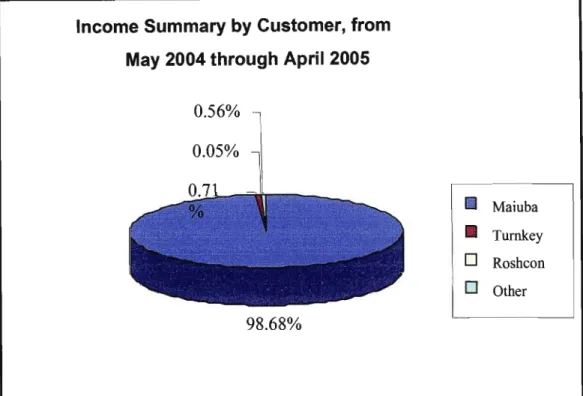
Other Small to Medium Enterprises: The first power station to outsource its maintenance functions was the Majuba Power Station. Major companies: Steinmuller was successful in providing maintenance services to the fuel oil plant at Majuba and Camden power station.
RESOURCE (TANGIBLE AND INTANGIBLE)
The equipment manufacturers such as ABB face difficulties in penetrating these markets, as the small to medium enterprises have a significant cost advantage. Other major companies such as DB Thermal and Babcock have also entered the maintenance services industry within power generation.
CAPABILITIES
- Operations
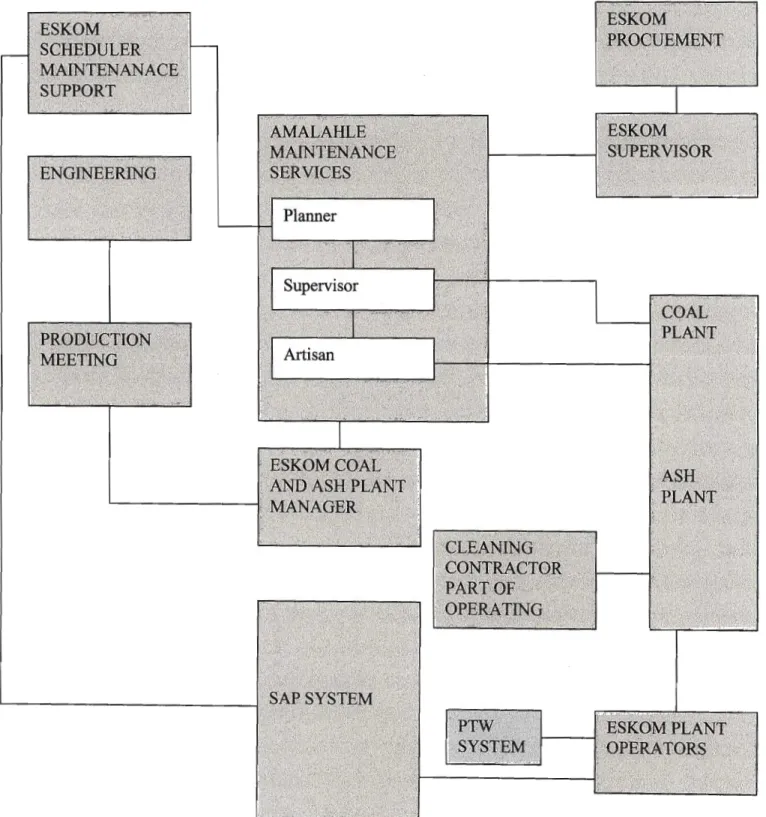
These faults are then printed by the Eskom programmer, who submits the plant fault job cards to the AMS scheduler. The plant defect list is submitted to the scheduler after the work is completed.
COMPETENCIES
FUNCTIONAL LEVEL STRATEGY
BUSINESS LEVEL STRATEGy
The firm's current core competency is its rapid breakdown maintenance expertise and ash and coal plant knowledge. The value that the company currently offers is its knowledge and experience in the ash and coal plant to provide a fast breakdown maintenance service.
LEADERSHIP
His leadership style is more directed towards cost saving and overseeing the operation of the company. The rest of the directors prefer not to take risks and, together with the employees, seek the certainty of knowing in advance that the contract will be renewed.
STRUCTURE
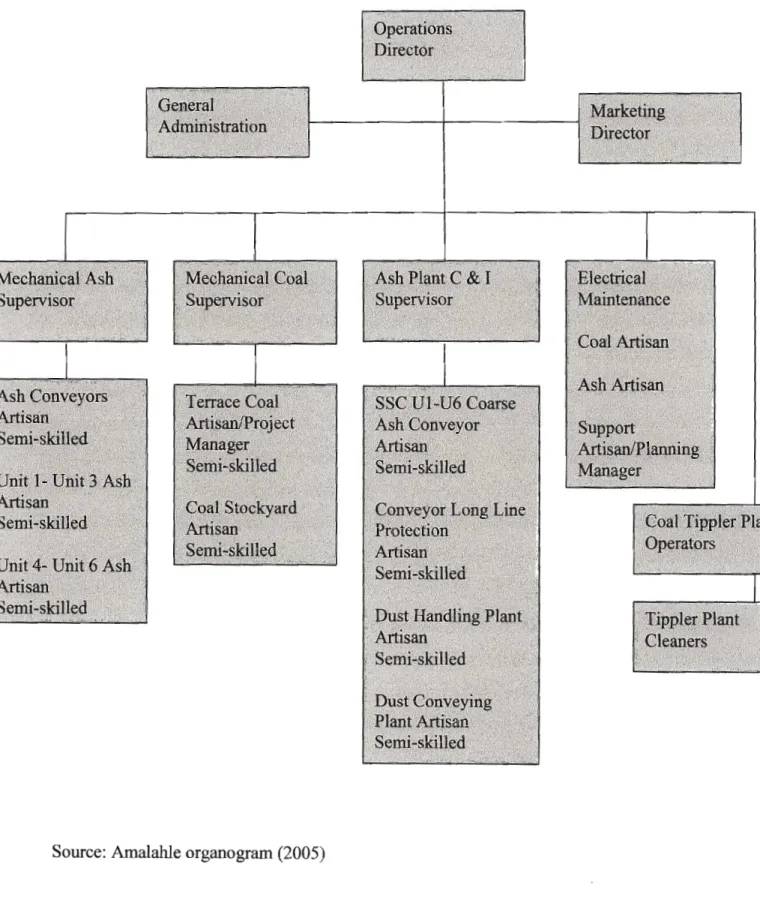
AMS members and employees respect an authoritarian leadership style and prefer not to be responsible for their actions and want to be directed to all functions and lack the ability to assume leadership roles.
CULTURE
CONTROLS
On the other hand, the quality management system is well understood by the operations director, as the system is centrally controlled by the director. The quality controller monitors the morning meetings for re-occurrence of any QCP processed task.
SUMMARY
AMS's core competencies are quickly resolving malfunctions due to its years of experience, technical expertise and knowledge of the ash and coal-fired power plant. The company follows a low-cost, enterprise-level strategy and targets industrial companies that require preventive maintenance on ash and coal transportation facilities.
ANALYSIS OF DATA
INTRODUCTION
STEEP ANALYSIS
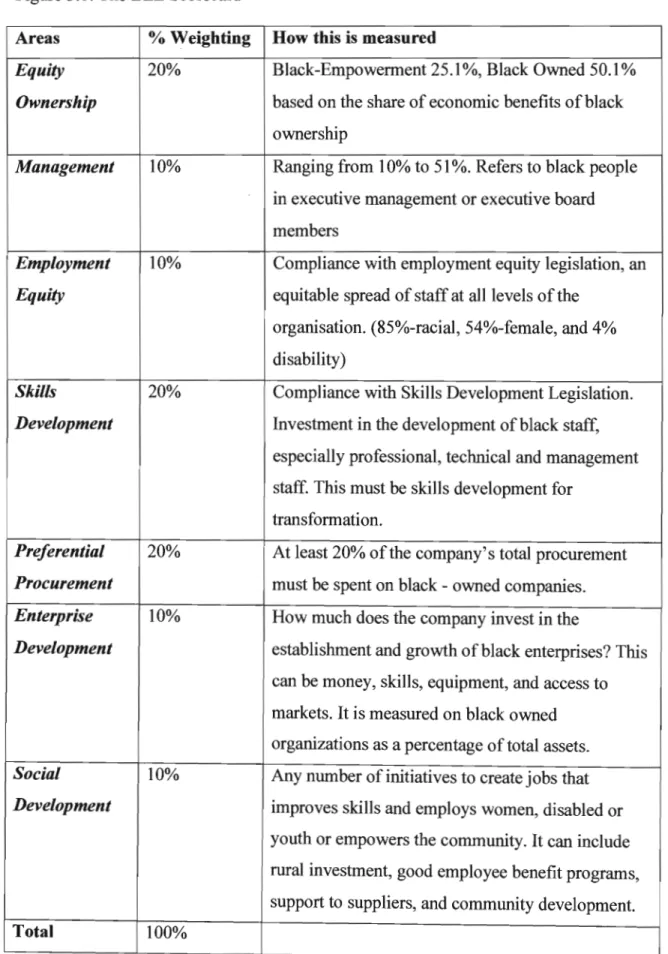
The company does not comply with the new requirements of the BEE regulations. AMS would be required to comply with the customer's environmental, health and safety legislation.
INDUSTRY ANALYSIS
This industry has also gone through a growth phase due to the current life cycle of the power stations and the conveyor belts. Many of the power stations did not contract the generic maintenance service and indicated a reluctance to contract the services.
FUNCTIONAL CAPABILITY AND RESOURCE ANALYSIS
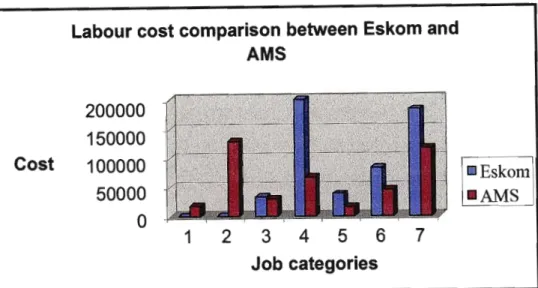
In order for AMS to ensure plant availability, the company must perform preventive, predictive and proactive maintenance of the coal-ash plant. Current strategies of providing low-cost maintenance services using semi-skilled workers are not aligned with the company's differentiated strategy of providing preventive maintenance services in the ash and coal plant.
SWOT ANALySIS
- Identification o/Strengths, Weaknesses, Opportunities and Threats: the various categories
- TOWS Matrix
- Interaction Matrix
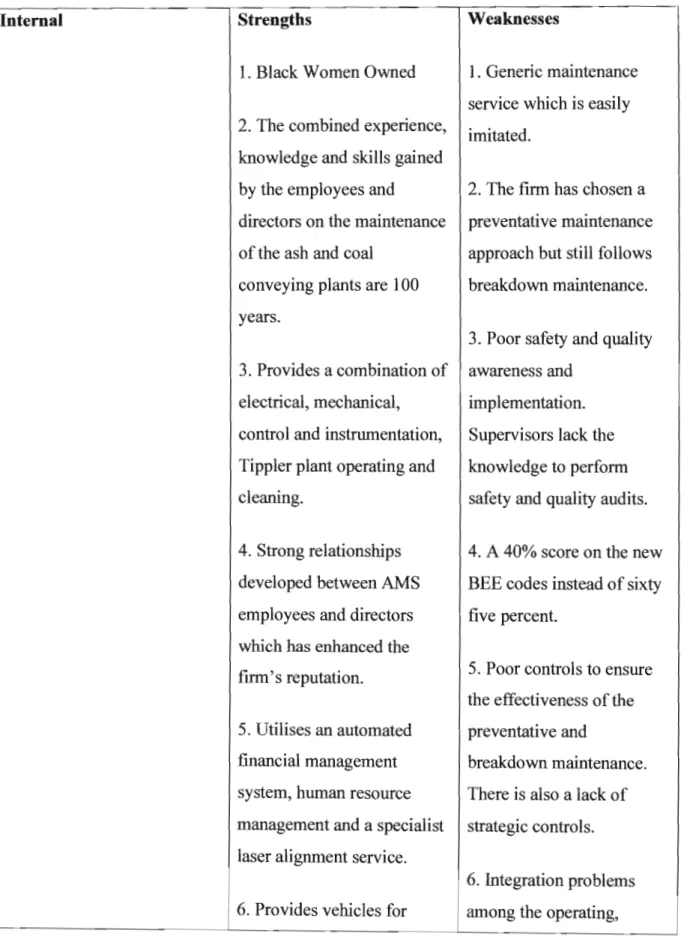
Supervisors are still doing the work at the plant to help the semi-skilled workers due to lack of knowledge. Diversify into specialized BEE companies due to the new technical facility (electrical, breakdown maintenance black economic empowerment, mechanical and C&I) and services such as conveyor codes.
COMPETITOR ANALYSIS
The maintenance services industry has moved into a growth phase created by the return to service of the former power plants (Camden, Grootvlei and Komati plants). Technology-driven companies, such as software companies, increase the efficiency of the maintenance strategy by offering online condition monitoring software and equipment.
STAKEHOLDERANALYSIS
The directors must also meet the demands and expectations of the customers, especially with regard to quality and safety requirements. Build relationships with key customers and tailor services to customer needs and wants.
INDUSTRY LIFE CyCLE
- Current Strategies
- StrategiC Options
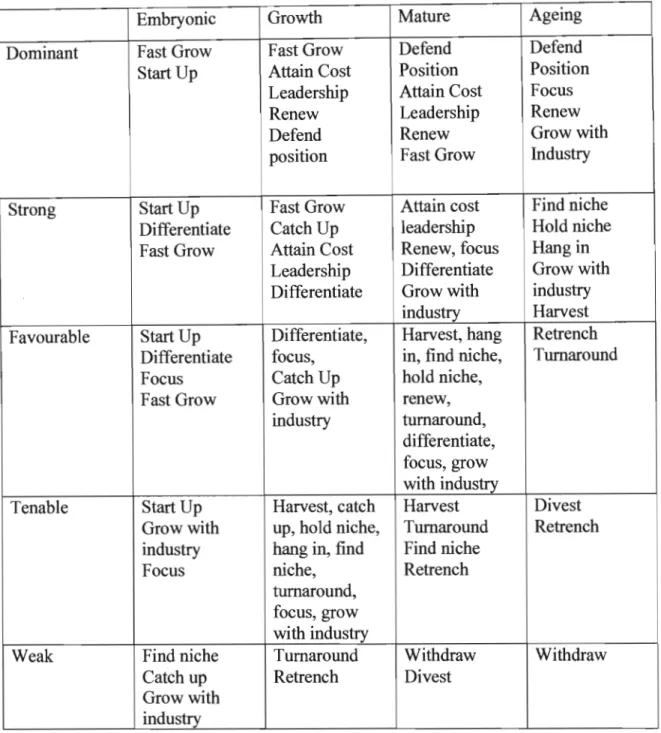
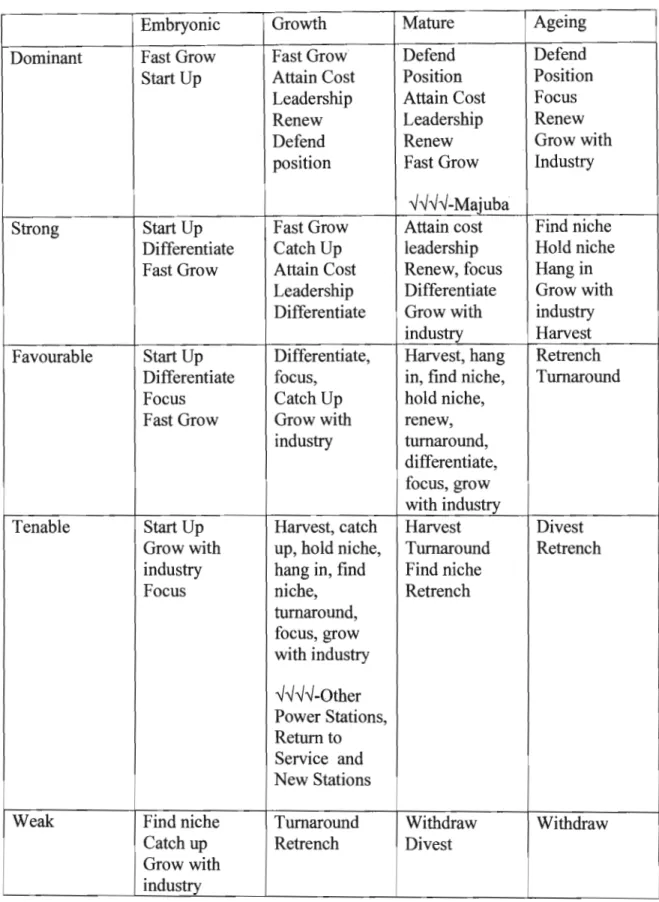
- The life cycle matrix-stages o/industry maturity
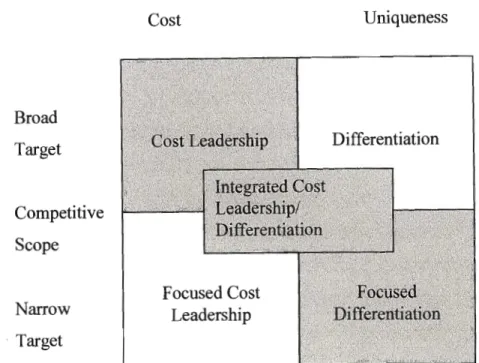
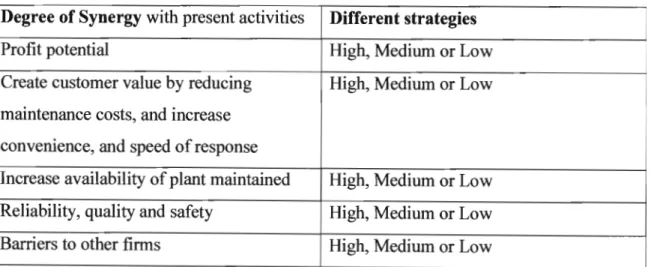
The purpose of the matrix is to determine the appropriateness of the current strategies and strategic options for AMS in relation to the company's current competitive position and the stages of the contracted maintenance industry. It is not possible for the company to target the other power plants with the current generic maintenance services due to the imperfect market conditions.
POSITIONING
Diversification in activities does not give the company a competitive advantage because other competitors tender for the existing contract and use the same labor force. Diversification into the construction sector does not provide the company with a cost advantage and competitive advantage at the Majuba power plant.
VALUE CHAIN
GRAND STRATEGYMATRIX
GRAND STRATEGY CLUSTERS
The company is constantly changing its structure depending on the requirements of the maintenance tasks required. The artisans and semi-skilled workers pass on a huge amount of technical decision-making to the supervisors, forcing them to be involved in the factory.
CONTROLS
The craftsmen then sign off most of the work cards as if the work had been done at the factory. Currently there are no checks to ensure that the work on the preventive task cards has been carried out.
CULTURE
Chapter Five will provide solutions to these problem areas identified in relation to controls. The company lacks the innovative culture required for a proactive approach to maintenance.
LEADERSHIP
- Management Profiling
Plant safety is critical to the survival of AMS, but the employees do not see its importance due to a lack of training and communication from the supervisors and managers. From the analysis above, the operations director, marketing manager and C&I supervisor are rational-intuitive thinking (INTJ), while the project manager, planning manager, plant supervisor and tradesmen have a tradesman-sensitive management personality, and finally the coal plant supervisor (director) has a guardian -sensing judge management personality.
SUMMARy
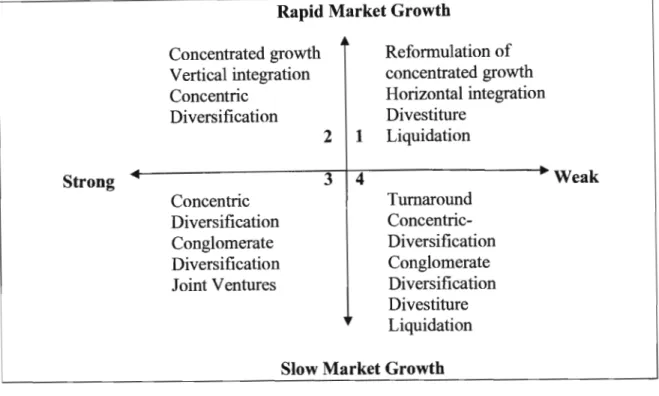
It is therefore recommended that the company reposition itself in the market to achieve growth and competitive advantage. The approach is not aligned with the strategic position the company has chosen to provide preventive maintenance services.
RECOMMENDATIONS
RESEARCH FINDINGS
The company's positioning strategy as a provider of preventive maintenance solutions is threatened by imperfect market conditions. The company has been unsuccessful in implementing quality, safety and a preventive maintenance system due to a lack of controls and management skills.
STRATEGIC ANALYSIS
The company is therefore advised to monitor the customer's buying behavior with regard to online condition monitoring techniques. In the near future, companies will be required to provide compulsory medical benefits to employees.
STRATEGIC CHOICE
The value chain analysis technique also shows AMS's strategic diversification option in conveyor belt jointing and roller jamming as the most appropriate for the firm to choose. If the firm were to diversify into conveyor belt bonding and roller jamming, it would offer a unique mix of services that competitors are unable to provide.
STRATEGIC IMPLEMENTATION
The supervisors should also train the artisans and semi-skilled workers in the safety and quality systems. The maintenance tasks of the installations carried out by the supervisors should be transferred to the craftsmen.
STRATEGIC OBJECTIVES AND ACTION PLANS
SUM11ARY