i
GRADUATES’ VIEWS ON THE EFFECTIVENESS OF TRAINING DELIVERY ENVIRONMENTS FOR SKILLS ACQUISITION IN ADULT NON-FORMAL
EDUCATION CENTRES IN KWAZULU-NATAL, SOUTH AFRICA
By
Celestin Mayombe 206500699
Submitted in partial fulfilment of the requirements for the degree of Master of Education in Adult Education
University of KwaZulu- Natal College of Humanities
School of Education Pietermaritzburg Campus
Supervisor: Dr Zamo Hlela
July 2018
ii Declaration
I, Celestin Mayombe, declare that this Master of Education (Adult Education) dissertation is my original work and that all sources have been appropriately acknowledged and referenced in accordance with university requirements. This dissertation does not contain text, graphics or tables copied and pasted from the Internet, unless specifically acknowledged, and the source being detailed in the dissertation and in the References sections. This dissertation has not been submitted to any other institution as part of an academic qualification.
STUDENT: Celestin Mayombe
Signature: __________________________
Date: __________________________
SUPERVISOR: Dr Zamo Hlela
Signature: __________________________
Date: __________________________
iii Abstract
The South African government legislated non-formal adult education through the Adult Education and Training (AET) Act 25 of 2010 in order to provide employability skills and marketable skills to non-educated and unskilled adults. The scope of this study was demarcated to mainly examine graduates’ views on the effectiveness of training delivery environments for skills acquisition in adult NFE centres in KwaZulu-Natal (KZN). The study utilised mixed research methods or a combination of both qualitative and quantitative methods. The sample was drawn from the educational district of uMgungundlovu of KZN. The sample size of the study consisted of six NFE centres and their 200 graduates. In the quantitative method, the research instruments for the data collection was questionnaires administered to 200 graduates, while one- on-one semi-structured interviews were conducted with five self-employed graduates.
Concerning the inputs, the study found that in the private centres and few from public, the existence of adequate tools and equipment for learning in the workshops for practicum fostered training delivery for skills acquisition. With regard to the transformation process, the majority of graduates, mostly from private centres, viewed that the approach of training delivery fostering skills acquisition was practice-oriented in the real situation similar to the future workplaces.
Regarding the outputs of the training delivery, the majority of the graduates acquired technical skills and competence to work without supervision. As main recommendation, the centre managers should make the technical training delivery be 25% theory and 75% practical by means of workshops, on-the-job training and project-based training.
Key words:
Adult non-formal education Systems approach
Constructivist theory Employability skills Marketable skills Skills acquisition KwaZulu-Natal
iv Dedication
I humbly dedicate this work to my parents Rev. Byamungu and Regina. Into their old age they continued to encourage me to study further. May the Almighty God richly bless them.
v Acknowledgement
My sincere appreciation to Dr E.V Nzama, Head of the Department of Education of KwaZulu- Natal province for granting me permission to conduct this study in AET centres offering skills programmes for adult learners. I would like to express my appreciations to AET centre managers of the district of uMgungundlovu (Msundizi) for their support in the selection of sample centres providing skills training and training courses. Many thanks to the directors of NGOs, FBOs, and CBOs for the permission to conduct the study in their skills development centres.
My sincere gratitude to all adult learners who voluntarily participated in the study. I thank them for their cooperation and time during the process of data collection in their adult centres. Their contribution to the completion of this study is highly appreciated.
vi
Table of Contents
Declaration………...………...……….ii
Abstract………..……….iii
Dedication ………..………iv
Acknowledgement………..……….………v
Table of contents………..…….….vi
List of tables………..vii
List of charts……….viii
Abbreviations and acronyms………..………ix
CHAPTER ONE: INTRODUCTION AND BACKGROUND OF THE STUDY..………….1
1.1 Introduction………...…….…1
1.2 Non-formal education for unemployed adults in KwaZulu-Natal ………...……….1
1.2.1 Socioeconomic situation of the poor adults of KwaZulu-Natal.……….………..3
1.2.2 Education and training for poor adults in KwaZulu-Natal ………..………..………4
1.3 Rationale and significance of the study………...………..……5
1.4 Research problems, objectives and research questions……...………..…6
1.5 The location of the study………...………8
1.6 Definitions of key concepts……….………..8
1.7 Brief overview of the research methodology………...………..…9
1.8 Structure of the Thesis……….………10
1.9 Summary……….……….10
CHAPTER TWO: THEORETICAL FRAMEWORK AND LITERATURE REVIEW.…11 2.1 Introduction………..11
2.2 Systems approach to NFE teaching and learning………11
2.3 Constructivist approach of learning………...………..14
2.3.1 Implication of constructivist approach for adult NFE……….17
2.3.2 Application of constructivist approach of learning adult NFE in KwaZulu-Natal………...18
2.4 Review of research on NFE delivery environments for employment……….19
2.5 Summary……….………25
CHAPTER THREE: RESEARCH DESIGN AND METHODOLOGY…...……….26
3.1 Introduction………..26
3.2 Research paradigm and research design………...………26
3.3 Research style………..28
3.4 Research methods………...……….29
3.4.1 Study population and sampling size………..………..31
vii
3.4.2 Sampling method for NFE centres and graduates……….………..31
3.5 Data collection……….………34
3.5.1 Quantitative methods of data collection………...………35
3.5.2 Qualitative methods of data collection……….………35
3.5.2.1 Semi-structured interviews………...……….36
3.5.2.2 Document analysis………..…………..……….……36
3.6 Data analysis………...……….37
3.7 Validity and reliability of research data...38
3.8 Limitations of the study………...………40
3.9 Ethical considerations………..…………41
3.10 Summary………..………..…………42
CHAPTER FOUR: FINDINGS ON NFE DELIVERY ENVIRONMENTS./…...…………43
4.1 Introduction………..43
4.2 Background of NFE centres……….44
4.3 Demographic characteristics of the graduates……….44
4.4 Graduates’ skills training course studied at the NFE centres………..48
4.5 Graduates’ main expectations after graduating from NFE programmes……….50
4.6 Training delivery internal environment for skills acquisition……….53
4.6.1 Human and material resources for course delivery at NFE centres………..54
4.6.2 Transformation process of NFE programme for skills acquisition………...57
4.6.2.1 Interactive learning………63
4.6.2.2 Collaborative learning………64
4.6.2.3 Facilitating learning………...64
4.6.2.4 Authentic learning………..66
4.6.2.5 Learner-centred learning………67
4.6.2.6 High quality of learning……….69
4.7 The methods of training assessment at the end of the training programmes………...70
4.8 Technical and entrepreneurship skills acquisition by the graduates………71
4.9 Summary………..………77
CHAPTER FIVE: DISCUSSIONS, CONCLUSIONS AND RECOMMENDATIONS.….80 5.1 Introduction………..80
5.2 Discussions of the main findings in relation to conceptual framework………...80
5.2.1 The approaches of training delivery for skills acquisition………88
5.2.2 The mode of training assessment at the end of the training programmes……….86
viii
5.2.3 Graduates’ ability to work without supervision after acquiring skills…….………..88
5.3 The purpose and objectives of the study……….………93
5.3.1 Objective 1……….…………..93
5.3.2 Objective 2……….………….……….94
5.3.3 Objective 3……….………..95
5.3.4 Objective 4……….………..95
5.4 conclusions……….96
5.5 Recommendations……….………..97
5.5.1 Material and human resources for inputs…….………98
5.5.2 Transformation process……….………98
5.5.3 Outputs in acquisition of technical and business skills……….………...99
5.5.4 Further research………..………..99
List of tables Table 4.1: Marital status of the sample graduates by age cohorts……….45
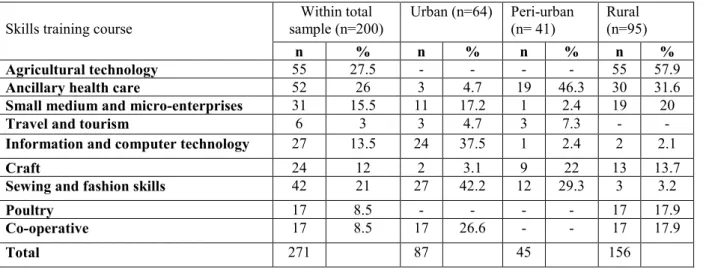
Table 4.2: Graduates’ skills training course studied by residence area (n=200)………...49
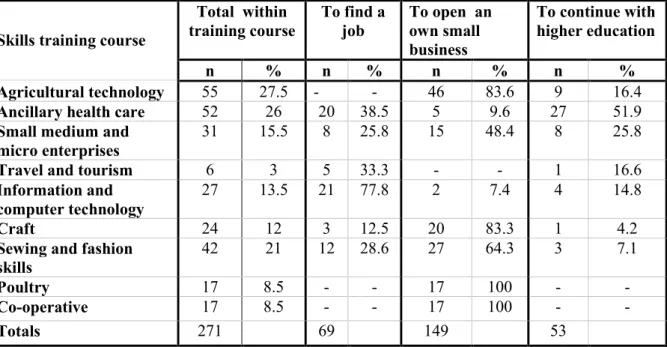
Table 4.3: Graduates’ expectations from NFE by skills training course studied………..51
Table 4.4: Human and material resources for course delivery……….54
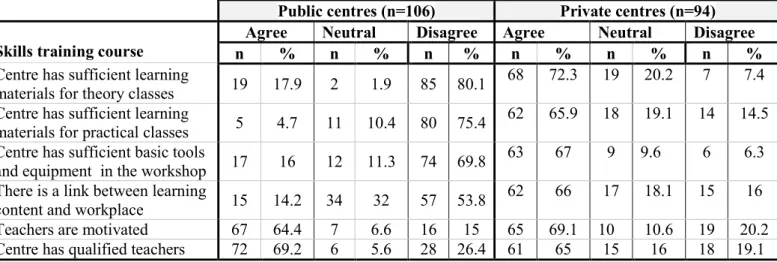
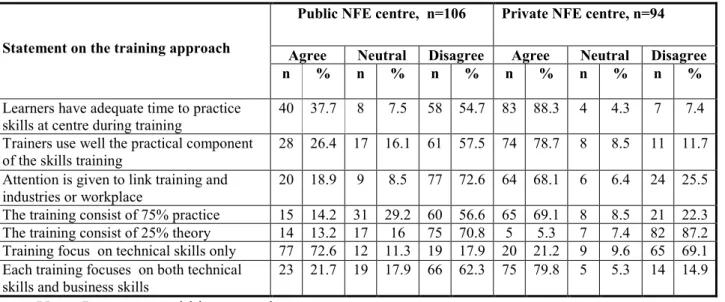
Table 4.5: Approach of delivery of training courses by type of NFE centres………..………….58
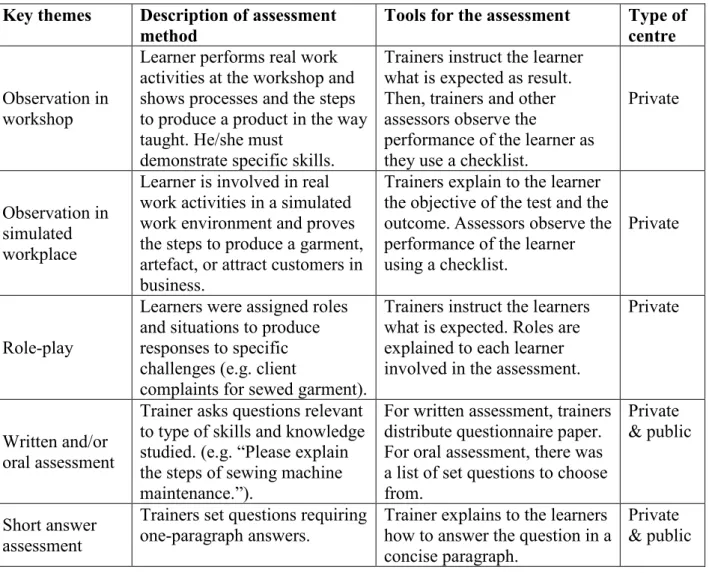
Table 4.6: The methods of assessment at NFE centres………..71
Table 4.7: Entrepreneurship skills acquisition by expectation to open an own small business………75
List of figure and charts Figure 1: Systems approach of NFE delivery environments for skills acquisition………...12
Chart 4.1: Gender composition of graduates by centre area………..44
Chart 4.2: Highest level of formal schooling of the graduates by residence areas………46
Chart 4.3: Being able to work without supervision by centre type………72
Chart 4.4: Being able to work without supervision by centre area………73
REFERENCES………...100
Annexure……….107
Appendix 1A: Questionnaire for Graduates…..………..107
Appendix 1B: Interview Schedule for Graduates..………..110
Appendix 2: Informed Consent Form: Graduates………..…………..111
ix
Appendix 3: Consent Letter Permission for Audio Recording………112
Appendix 4: Request for Permission to Conduct Research………113
Appendix 5: Permission Letter to Conduct Research……….114
Appendix 6: Ethical Clearance………...……….115
Abbreviations and acronyms
AET Adult Education and Training BDS Business Development Services CBO Community-Based Organisation
Cedefop European Centre for the Development of Vocational Training FBO Faith-based Organisation
FET Further Education and Training (colleges) TVET Technical Vocational Education and Training IGAs Income-generating activities
NFET Non-formal Education and Training
NFVET Non-formal vocational education and training NGOs Non-Governmental Organisations
NPOs Non-profit Organisations
SMME Small, Medium, and Micro-Enterprise SME Small Micro-Enterprise
SPSS Statistical Package for Social Sciences KZN KwaZulu-Natal Province (South Africa) KZN-DoE KZN-Department of Education
RSA Republic of South Africa
1
CHAPTER ONE: INTRODUCTION AND BACKGROUND OF THE STUDY 1.1 Introduction
In the Sub-Saharan Africa’s countries, a lack of marketable skills is the main contributing factor hampering adults from entering into labour markets (Betcherman & Khan, 2015). In the context of South Africa, adult non-formal education (NFE) programmes do not only open the doors of learning, but also provide non-educated and unskilled learners the opportunity to acquire marketable skills in order to access the means of living. This focus of NFE programme is justified by the fact that non-educated and unskilled adults are the most stricken by unemployment and poverty in South Africa (Anderson, 2012). This introductory chapter presents the landscape of the study by providing the broad research problem, problem statement and rationale for conducting the study targeting adult graduates.
The lack of employability skills and job opportunities contributes to unemployment of adults. In other words, the lack of employment opportunities is a result of a workforce with lower skills than are demanded by the available jobs in South Africa. This particular position in relation to issue of unemployment and skills, this position is currently subject to critique. Research shows that NFE graduates continue to experience challenges due to the insufficiency of internal enabling environments (Department of Higher Education and Training [DHET], 2012; Blaak, et al. 2012).
Specifically, the main concern in this dissertation is that graduates from adult NFE programmes experience challenges due to the ineffectiveness of training delivery environments for skills acquisition in the centres of KwaZulu-Natal province (Mjoli, 2007). The chapter is organised in five main sections. The chapter starts with a background to the study followed by research problems, objectives and research questions. Next is the location of the study, which entails the description of the geographic areas where the research was conducted. The last sections involve the definitions of key concepts and outlines the structure of the dissertation.
1.2 Background to the study
In South Africa, the provision of adult non-formal education is linked to community development (McGrath & Akoojee, 2009; Mosoetsa, 2011). Particularly, as mentioned in the Continuing Education and Training Act, 2006 (Act No. 16 of 2006) and the White Paper for Post-School
2
Education and Training (DHET, 2013), the government of South Africa considers education and training as the development sectors to reduce unemployment of adults.
It is noteworthy that Statistics South Africa indicates that in the first quarter of 2017, the unemployment rate was 27.7% countrywide (Stats SA, 2017). The unemployment rate among graduates from higher education institutions was at 7.3% (Stats SA, 2017). Though some TVET college and university graduates are also unemployed, it is widely acknowledged in South Africa that the majority of the unemployed adults is composed of those who may have either no formal basic education or individuals who dropped out of school due to circumstances at their early youth age. According to Stats SA (2017), the unemployment rate is persistently high among adults with a formal education level of less than matrics at 33.1%, which is 5.4 % points higher than the national rate average.
The study looks at adult non-formal education (NFE) as a tool to reduce the problem of unemployment. From its inception in the 1960s, the NFE was intended to be a tool to create opportunities for marginalised social groups in order to bridge unemployment and employment (Georgiadou, Kekkeris & Kalantzis, 2009). It is perceived as a ‘second chance education’ to those who had been ‘pushed out’ from the formal system (Kedrayate, 2012, p.12). The South African government legislated non-formal adult education through the Adult Education and Training (AET) Act 25 of 2010 in order to reduce poverty due to unemployment among non-educated and unskilled adults (RSA, 2010). Adult NFE targets those adults who have no access to formal vocational training systems. Central to Act 25 of 2010 is the aim to increase the capacity of non-educated and unskilled adults to produce goods and services; that is, to generate income.
The scope of this study was demarcated to mainly examine graduates’ views on the effectiveness of training delivery environments for skills acquisition in adult NFE centres in KwaZulu-Natal. The centres under investigation were those that provide technical and entrepreneurial skills to rural and urban adults. The researcher only considered adult centres and their skills training programmes which prepare learners for jobs at semi-skilled levels including programmes on starting an own business, or which contribute to the promotion of income-generating activities. These NFE centres are not the same as those recently referred to as Public Adult Learning Centres in the National Policy on Community Colleges (RSA, 2015). In this study, the NFE centres are private skills training programmes in non-profit training centres managed by non-profit organisations.
3
In the case of the public AET centres managed by the KZN Department of Education, the training programmes are also non-accredited skills training courses funded by private sector organisations.
These are vocationally related skills programmes for income-generation activities in the form of non-formal vocational training and rural and community development in South Africa (Aitchison, 2007, p. 18). In South Africa, NFE is not SAQA accredited, therefore its role in the labour market is limited in low-skills jobs and self-employment. Despite these initiatives, there is still insufficient knowledge available on the extent to which the approaches of training delivery environments of NFE centre contribute to skills acquisition of graduates.
1.2.1 Socioeconomic situation of the poor adults of KwaZulu-Natal
Unemployment due to the lack of employability skills and employment opportunities is one of the major challenges in the KZN province. As result, these unskilled adults have little or no access to economic opportunities in KZN (Mosoetsa, 2011). As a result, unemployment is the major cause of poverty (KZN, 2016; Mosoetsa, 2011). The poverty rate for KZN province as a whole was about 50%, meaning that 50% of the inhabitants live below the poverty line (KZN, 2016). In a same vein, data released in September 2016 show that poverty headcount is 7.7% and poverty intensity is 42.5% in the province (Stats SA, 2016). By definition, poverty headcount is “the share of the population which is poor, i.e. the proportion of the population for whom consumption or income is less than the poverty line” (Stats SA, 2014, p. 25). In other word, the head count ratio is the proportion of people that live below the poverty line. Another explanation is that, the “headcount index measures the proportion of the population that is poor” (Stats SA, 2016, p. 43). Poverty intensity is the extent to which the level of living of the poor population is below the poverty line.
The intensity of poverty is measured by the extent to which the income of the poor lies below the poverty line. It entails the differences between the income and poverty line resulting in the poverty gap.
According to the Socio-Economic Review and Outlook 2017/2018 of KZN Government, unemployment causes poverty headcount and poverty intensity and verse versa (KZN, 2017).
Unemployment has been identified as one of the main structural constraints within the province and contributes to high levels of poverty and income inequality. A report on national and provincial labour market (Stats SA, 2015) indicates that in KZN province, the unemployment rate among youth (15-34 years) is 33,4% compared to 13,8% among adults (35-64 years). The Quarterly
4
Labour Force Survey published in June 2017 by Stats South Africa (Stats SA, 2017) indicates that the unemployment rate of KZN province is 25, 8%.
The implication of the above data is that unemployability and low levels of education contribute to poverty in KZN. In other words, education is vital for the improvement of human capital, helping poor adults to generate income and reduce poverty. Poverty is linked to the levels of educational achievement of the population. The Socio-economic Review and Outlook of KZN government indicate that 8.8% (5,640, 206 out 6,426,764) of population had no schooling in 2015 and 13% of inhabitants had only some primary school between Grades one and six (KZN, 2017). Those who had Grade 7-11 constitute 38%, and 0.4 % of population had a certificate or diploma without matric (Grade 12). Those who completed Grade 12 comprised 30.5%, and only 9.3% had higher education qualifications. The implication of these data on the unemployment rate and educational levels for the present study is that there is a need for adult education in order to increase job opportunities for those with low levels of education and skills.
In addition to the background of the study, since 1994, the South African government has provided a range of policies and legislative frameworks that support NFE. The main policy framework and important for the purpose of this study is Adult Education and Training (AET) Act 25 of 2010, adopted in December 2010 (RSA, 2010). The act seeks to achieve the development of conducive factors in which high-quality adult education programmes can flourish. Adult NFE has been included in the AET Act 25 of 2010 (SA, 2010). Under the said Act, adult NFE aims at reducing poverty and social exclusion of adults in South Africa. Furthermore, the NFE programmes aim at responding to the learning needs of adults who did not have access to the formal education system;
to improve their employment opportunities; to reduce the high rates of poverty in South Africa; and to increase social inclusion (Aitchison, 2007; KZN, 2016).
1.2.2 Education and training for poor adults in KwaZulu-Natal
The adult education and training programme is one of the tools utilised by the KZN government to reduce poverty and unemployment due to the lack of employability skills. In the document KZN Human Resource Development Strategy and the Development of an Implementation Framework (2016-2030), it is emphasised that adult education and training is an important component of the skills development structure for serving unemployed adults (KZN, 2016). Therefore, the government of KZN has set out a vision to provide literacy and skills development to all citizens.
5
According to the strategic plan 2015-2020 for KwaZulu-Natal Community Education and Training Colleges, all adult training centres aim to provide “quality technical, occupational and vocational skills towards economic empowerment” (Department of Higher Education and training [DHET], 2016, p.10). The adult education and training programmes mainly target youth and adults who for different reasons did not complete their basic education or who never attended formal education system.
Like formal education, adult NFE is crucial for the improvement of human capital, hence enabling poor people to participate in income-generating activities. To this end, the KZN government has committed itself to serve unskilled adults by “providing formal and non-formal education and skills based programmes that are responsive to socio-economic problems such as illiteracy, unemployment and poverty” (DHET, 2016, p.11). Furthermore, adult NFE programmes also aim at promoting and improving opportunities for entrepreneurship that empowers them to actively participate in the economy of the province. For this purpose, the KZN Department of Education and different NGOs implementing NFE programmes aim at providing adult learners with livelihood skills for employment at semi-skilled levels as well as entrepreneurial training programmes to enable them to start small businesses resulting in the promotion of income-generating activities (KZN, 2017).
1.3 Rationale and significance of the study
As the researcher used empirical data that were already collected for his PhD studies, but not used in the PhD thesis, in this present M.Ed. dissertation, he was motivated to cover the gap that exists in the PhD thesis. The previous study did not examine in-depth and provide rich details on the transformation process of NFE programme for skills acquisition. To this end, he used different research questions/objectives and a different theoretical framework to cover the gap in knowledge.
Furthermore, there are three main reasons for the study: these are the high unemployment rate among adults, the lack of livelihood skills among adults in KZN and South Africa and the lack of effectiveness of training delivery environments for skills acquisition in adult NFE centres (Blaak, et al. 2012; DHET, 2012; DHET, 2016; Stats SA, 2017). These are further presented and discussed here below. Firstly, as mentioned above, according to Stats SA (2017), the unemployment rate in South Africa remains high among adults with a formal education level of less than matric, at 33.1%. The majority of unemployed adults are those who did not complete their formal basic
6
education or individuals who dropped out of school due to circumstances at an early age. Their socio-economic condition is the best lens of development and social equity (KZN, 2013).
Secondly, the lack of livelihood skills among adults in KZN and South Africa hinders them from accessing resources (DHET, 2016). Given the fact that illiterate and unskilled citizens are the poorest of the poor in KZN, their socio-economic condition is the best lens of development and social equity (KZN, 2013). In the context of South Africa, probably the strongest justification is that provided by McGrath and Akoojee (2009) and Robert (2008) who argue that unskilled adults are much more likely to be poor than skilled ones. In the context of KZN Province, citizens living in households with an uneducated household head are more likely to be poor (Robert, 2008). The study is significant in making known the importance of NFE in building social inclusion for low- skilled adults.
Thirdly, the lack of effectiveness of training delivery environments for skills acquisition in adult NFE centres is also a matter of concern (Mjoli, 2007; Blaak, et al. 2012; DHET, 2012). Graduates experience challenges due to the ineffectiveness of training delivery environments for skills acquisition in adult NFE centres. In the context of KZN, previous research revealed that adult graduates failed to make the transition from skills training to skills utilisation for economic activities (Mjoli, 2007). One of the causes is challenges due to the insufficiency of training delivery environments for skills acquisition in the adult NFE centres. Moreover, there is insufficient knowledge about the views of NFE graduates on the link between training delivery approaches and their ability to work without supervision in their future paid jobs or self-employment.
1.4 Research problems, objectives and research questions
The main problem that the present study intended to solve concerns the challenges of training delivery approaches leading to skills acquisition. In other word, the lack of transforming skills into gainful activities is due to the ineffectiveness of training delivery environments for skills acquisition in adult NFE centres of KwaZulu-Natal province (Mjoli, 2007). The research gap that informed the present study was to know the extent to which the approaches of training delivery in the NFE centres contributed to skills acquisition of the NFE graduates. Little attention has been focused on analysing the approaches of training delivery and the mode of training assessment in order to understand the nature of the problem. Therefore, the main research question the study
7
seeks to answer is the following: To what extent do the training delivery environments of the NFE centre contribute to skills acquisition in KwaZulu-Natal? The sub-questions are the following:
- What are the approaches of training delivery for skills acquisition?
- What is the mode of training assessment at the end of the training programmes?
- To what extent do graduates have the ability to work without supervision after acquiring skills?
The research purpose was to assess graduates’ views on the effectiveness of training delivery environments for skills acquisition in adult non-formal education centres in KwaZulu-Natal. The achievement of this purpose of the study is supported by the realisation of the following objectives.
- To conceptualise the training delivery environments for skills acquisition in adult non- formal education centre within the context of a systems approach and constructivist approach of learning;
- To find out the approaches of training delivery for skills acquisition;
- To investigate the mode of training assessment at the end of the training programmes;
- To determine the ability of learners to work without supervision after acquiring skills.
The researcher assumes that if there are employment opportunities in the local communities, an effective training delivery environments at the adult NFE centre level can foster skills utilisation of graduates in the labour market of the graduates. Using a quantitative approach supplemented by qualitative approach and post-positivist paradigm, this study focuses on examining the training delivery environments for skills acquisition in adult NFE centres. The examination entails looking at the approach of training delivery, material resources and the mode of training assessment at the end of the training programmes that could increase the employability of the adults excluded from the labour market. The main argument of the study is that, in the existence of employment opportunities, the training delivery approach and resources at the adult NFE centres lay a good foundation for fostering skills utilisation in the employment of the graduates. The study was conducted among adult learners in the district of uMgungundlovu, who attended training in NFE centres in KZN. The NFE centres under investigation are run by not-for-profit organisations and provide work-related skills training programmes for unemployed adults.
8 1.5 The location of the study
The research was conducted in the province of KwaZulu-Natal, specifically, in the educational district of uMgungundlovu. According to the administrative description, uMgungundlovu District Municipality encompasses seven local municipalities, which are Impendle, Mkhambathini, Mpofana (Mooi River), Msunduzi (Pietermaritzburg), Richmond, uMngeni (Hawick) and uMshwathi (KZN-Department of Health, 2015). The name uMgungundlovu derived from Zulu language meaning “place of the elephant”. The uMgungundlovu District covers 8307 square kilometres and has population of 1,066,152 living in residences ranging from farmland communities, rural settlements, townships to urban areas (KZN, 2016). However, the research did not cover all these seven municipalities because of the lack of the existence NFE centres relevant for the purpose of the study.
The researcher selected uMgungundlovu educational District for the study because of its geographical and demographic the diversities. It entails diversity in geographic areas (Urban, rural and peri-urban). In terms of race, the district covers all four races: Whites, Africans, Indians and Coloured. Therefore, these two factors allowed the researcher to compare the effectiveness of the training delivery approach between urban and rural settings. Concerning the race, it is important to mention that the researcher only considered the learners of NFE centres who were relevant to the objectives of the study. The participants in the study were learners who enrolled for livelihood skills and entrepreneurial training in their respective NFE centres of uMgungundlovu District.
1.6 Definitions of key concepts
It is significant to define two key concepts of the study, adult and NFE. This study adopts the definition of ‘adult’ in the context of the South African legal age of majority which is 18 years old as stated in the Children’s Act 38 of 2005 (Children’s Act 38 of 2005). At this age, a person is considered to have attained physical, mental, emotional and social maturity.
Education: In this study, the concept ‘education’ refers to those activities that provide the knowledge, skills and moral values that individuals need in daily life in order to participate in the cultural and political life of the community (Singh, 2005, p.ix; Erasmus, 2010, p.2).
9
Training: The term ‘training’ refers to the acquisition of knowledge, practical skills and competencies of an adult to perform a task, job or occupation to a benchmarked level (Erasmus, 2010, p.2). Contrary to education, training is “task oriented” because it focuses on the work to be performed in an organisation and institution (Singh, 2005, p. ix).
Learning: There is no generally accepted definition of learning. However, for the focus of the present study, the researcher adopts the definition by De Houwer, Barnes-Holmes and Moors (2013, p. 4), who define learning as the “process by which a relatively stable modification in stimulus-response relations is developed as a consequence of functional environmental interaction via the senses”.
Non-formal education: According to Coombs and Ahmed (in Rogers, 2004), the basic definition of NFE is “any organised, systematic, educational activity carried on outside the framework of the formal schooling system to provide selected types of learning to particular sub-groups in the population, adult as well as children.” In South Africa, NFE is any education that is carried on outside the formal school and higher education system and not certificated (Aitchison, 2007).
Employment: In the context of this study, employment is the state of having paid work and encompasses both wage and self-employment aimed at improving trainees’ livelihoods and living conditions (Erasmus, 2010).
Employability skills: Wherever used in this study, employability skills are the transferable skills needed by adult individuals to become ‘employable’ in their field of training. These skills enable NFE graduates to find a job in the local community or create their own small business to the best of their abilities.
Marketable skills: In the context of the study, these refer to skills that an adult learner can easily use to create or sell a product in the labour market in order to gain an income.
1.7 Brief overview of the research methodology
The study used mixed methods of quantitative and qualitative research design. According to Creswell (2009), the quantitative method is essentially about collecting numerical data to explain a particular phenomenon. The reason for utilising the quantitative method is based on its primary purpose which is to determine cause-and-effect relationships or comparability (Creswell, 2014). In
10
quantitative study, the main source of data collection is generally questionnaires. The researcher used self-completed questionnaires in a survey to collect quantitative data.
The researcher used the qualitative approach to supplement the quantitative approach. In the context of qualitative method, the researcher used semi-structured interviews and document analysis to collect the data (Delport & Roestenburg, 2011). The advantage of qualitative the method was its ability to help understand the transformation process leading to outcomes (outputs) or product. Similarly, Creswell (2014, p. 4) supports that the qualitative method is descriptive allowing the researcher to examine the process, meaning, and to gain understanding through words of the respondents. When collecting the data, the researcher was interacting with the adult learners directly such as it happened while data collection through interviews. Following the view of Maree and Pietersen (2012), one-on-one semi-structured interviews were conducted with five self- employed learners. The researcher also used document analysis.
1.8 Structure of the dissertation
The dissertation has five chapters. Chapter One, “Introduction and background of the study”
presents the context of the study, the problem statement, the research questions and objectives.
Chapter Two, “Theoretical framework and literature review”, discusses the theory underpinning the study and previous studies in the field of adult non-formal education. Chapter Three, “Research design and methodology” describes the methods used in conducting the study. It also entails study population, sampling method, data collection instruments and data analysis. Chapter Four,
“presentation of the findings” consists of analysing and interpreting the data. Finally, Chapter Five,
“discussions and conclusions”, discusses the key findings, draws conclusions and suggests some recommendations arising from the study.
1.9 Summary
This chapter focused on providing the background to the study, the research problem, and presented the socio-economic situation of adults with low educational achievement in the province of KZN. It has also presented the research questions and objectives to be achieved through the empirical findings. The main concern in conducting the study is that the unemployment rate in South Africa remains high among adults who did not complete their basic education and are unskilled. The next chapter deals with conceptual framework and literature review.
11
CHAPTER TWO: CONCEPTUAL FRAMEWORK AND LITERATURE REVIEW 2.1. Introduction
The purpose of this chapter is to present the conceptual framework and the theoretical framework informing the study including its application to the NFE programme, and to examine previous studies on the topic. The conceptual framework of the study consists of the elements of the systems approach while the theoretical framework and constructivist approach to learning. Based on the scope and objectives of the study, the researcher used four elements of systems approach which are:
are inputs, transformation process, outputs and environments of non-formal education. Because of the delimitation of the study on the training delivery environment, the research could not include the fifth element, which is “feedback”. This study emphasises the importance of aligning the major elements of training delivery environments (input, transformation process and output) in order to achieve the system approach in of adult NFE programmes. For the purpose of the study, the researcher argues that the transformation process components of NFE system follow the principles of the constructivist approach to learning. The chapter consists of three main sections. It starts with discussing the systems approach to NFE teaching and learning, followed by the constructivist approach of learning. Next is a review of research on NFE delivery environments for employment.
2.2 The systems approach to NFE teaching and learning
The systems approach is an interconnected (interrelated) set of elements functioning as an operating unit (Lunenburg, 2010). The system theory was coined by Ludwig von Btertalanffly in 1940 and has been applied to math, sciences, research, management and education. In connection with education, a systems approach serves to stress the outcomes or competencies that the learners will demonstrate after receiving a training programme. In other words, a systems approach gives a process that an education programme should have in place as main elements of the design, delivery of a training programme and assessment of a programme (Scott, 2008).
In a simple sense, systems approach means doing something systematically. Salam (2015, p.1) argues that, “In educational industry, to teach systematically teachers must consider input, process and output and decide objectives, contents, methods and assessment.” The systems approach is defined by its components, “its constituent parts and by their interrelationship” (Gupta & Gupta,
12
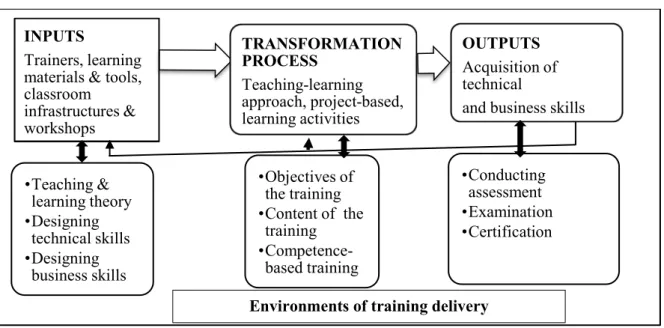
2013, p.52). In the context of NFE, the system approach entails four elements: inputs, a transformation process, outputs and environment (see figure 1).
Figure 1: Systems approach of NFE delivery environments for skills acquisition (adopted from Lunenburg, 2010)
Figure 1 above presents a model of the components of systems approach of NFE delivery environments for skills acquisition. For the learners to acquire skills, all component should be integrated in a process.
Inputs (resources): Following the view of Lunenburg (2010) and Gupta and Gupta (2013), the systems have four types of inputs or resources: human resources, financial resources, material resources and curriculum. For the focus of this study on delivery approach, firstly, the human resources entail qualified and skilled trainers in the field of adult education and training for income- generating activities. Secondly, material resources entail the availability of learning materials, teaching tools, instructional equipment and classroom infrastructures (including workshops) adapted to transmit the skills to adult learners (Palmer, 2007). Thirdly, the curriculum serves as an education system’s roadmap. Care and Anderson (2016, p.8) note thatacurriculum shapes subjects, topics, activities and the route (or routes) to take in order to achieve objectives of a particular skills training programme.
Transformation process: The jobs of NFE centre managers and trainers consist of integrating various resources available in order to achieve the effectiveness of skills delivery, which is skills acquisition. This stage involves training delivery approach discussed as the constructivist approach
INPUTS
Trainers, learning materials & tools, classroom
infrastructures &
workshops
•Teaching &
learning theory
•Designing technical skills
•Designing business skills
TRANSFORMATION PROCESS
Teaching-learning approach, project-based, learning activities
•Objectives of the training
•Content of the training
•Competence- based training
OUTPUTS Acquisition of technical
and business skills
•Conducting assessment
•Examination
•Certification
Environments of training delivery
13
of learning (see section 2. 3 below). As an element of a system, Lunenburg (2010, p.2) argues that,
“This transformation process includes the internal operation of the organisation and its system of operational management.” Therefore, the interaction between adult learners and trainers is a component of learning process by which learners become skilled individuals capable of utilising the skills in the world of work.
As part of the transformation process, the training delivery approach or adult learning approach is not the simple provision of the content of the knowledge contained in the curriculum from trainers to adult learners. In the NFE system, trainers need to teach relevant skills and their application in the world of work (Care & Anderson, 2016). Therefore, to provide skills, trainers require a specific set of teaching approaches, with various tactics adapted to the adult way of learning. In other words, training delivery approach for skills acquisition encompasses a combination of technical skills with business skills, the use of workshops and project-based training similar to the world of work and the visits to the workshops, businesses and industries.
Outputs: This is the attainment of training objectives. The transformation process generates a product (outputs). Gupta and Gupta (2013, p.52) assert that, “The product results from the activities of the class, that is, from interactions between the teacher, the students, the resources and the constraints, via the method used.” It is the task of teachers and NFE centre managers to mobilise the resources (inputs) and transform them in order to attain the objective of the training delivery. In the context of this study, learners should become able to work without supervision after acquiring skills. As Figure 1 shows, the mode of training assessment at the end of the training programmes is an important component of the educational system. Assessment is the means of evaluating learners’ progress in skills acquisition. According to Care and Anderson (2016), in an education system focusing on livelihood skills for employment, the learning objective is the learners’ ability to use the skills after graduating.
Internal environment: In relation to the topic of this study, the environments entail internal factors to the NFE centre, which contribute to favourable conditions for skills acquisition. In the view of Palmer (2007), internal delivery environments for skills acquisition consist of the availability and quality of trainers, learning materials, centre management, curriculum contents, NFE centre infrastructure, workshops and training delivery approaches.
14 2.3 The constructivist approach to learning
Like the systems approach, the constructivist approach to learning is suitable for providing an answer to the research questions. However, in this study, the constructivist approach helped to illuminate the “transformation process” of the systems approach to NFE explained above. This is because the approach points to adult teaching practice involving training delivery approaches which aim at helping adult learners to perform tasks as close to those on the job as possible. In this connection, Knowles (1996) argues that the delivery approaches of adult education stress firstly experiential techniques, which encompass simulation exercises, skill practice exercises and field projects. Secondly, the delivery approach should emphasise the practical application of the acquired skills.
Many scholars in education have expressed various interpretations of constructivism. However, Khanal (2014, p.92) summarises them by stressing that, “Constructivism is a philosophy of learning based on the premise that knowledge is constructed by the individual through his or her interaction with the environment.” Furthermore, Nagowah and Nagowah (2009, p.280) note that,
“constructivism is a learning theory that is actively constructed in the mind of the learners out of their experiences in the world”. Applefied, Huber and Mahnaz (2011) argue that constructivist theory means that learner’s views of “knowledge originate from a meaning-making search in which learners are involved in a process of constructing individual interpretations of their experiences.”
The principle of the approach is that a learner begins by considering a difficult problem and works on it in order to learn and acquire abilities necessary to solve that problem. The constructivist learning approach entails cooperation, testing and flexible problems allowing each learner to become actively involved with the concepts. In this connection, the role of the teachers is of facilitators who support the learners to understand the contents of a course (Nagowah & Nagowah, 2009).
The constructivist approach to learning suggests that prior knowledge or experience lays a good foundation that helps a learner to construct his or her own reality of life. In other words, the constructivist approach of learning entails a paradigm shift in the aspect of learning process, considering the learner’s effort to grasp the new knowledge. According to Huang (2002, p.28), founders of constructivism, Dew (1916), Vygotsky (1973), Piaget (1973), and Bruner (1996) suggested that, “learners could learn actively and construct new knowledge based on their prior knowledge.”
15
Constructivism distinguishes itself from other learning theories on characteristics. Applefied, et al.
(2011) note that most constructivists agree each other that there are four main principles of what impacts on learning processes: (1) “learners construct their own learning”; (2) the “dependence of the new learning on learners’ existing understanding”; (3) the “critical role of social interaction”
and (4) the “need of authentic learning tasks for meaningful learning”. I view that these four principles indicate that a learner can construct meaning if he/she is active in making sense of different knowledge or skills, then relate them to what is already known or believed about the lesson. Thus, significant learning happens when learners are actively participating in a cooperative environment of learning.
In the context of NFE provided in adult training centres, the constructivist approach mainly emphasises the “dynamic interaction between the cognitive and social dimensions of learning”
(Khanal, 2014, p.91). As result of these dimensions, constructivism consists of two types -
“cognitive constructivism and social constructivism” (Khanal, 2014, p.92). Coined by Piaget, (1977), ‘cognitive constructivism’ associates elements of cognitive theory and constructivist approach and suggests that “learning is a process of accommodation assimilation and equilibrium”
(Khanal, 2014, p. 92). In contrast, Vygotsky (1978) argues that in terms of ‘social constructivism’, learning is not purely an internal process of learning, nor is it passive, but it vitally involves the cultural and contextual environment in making understanding.
This study uses five concepts or principles of the constructivist approach of learning developed by Huang (2002). The concepts are as follows: interactive learning,collaborative learning,facilitating learning,authentic learning and learner-centred learning (Huang, 2002, pp.32-34). In the context of the present study, these five instructional principles of constructivism are applicable in answering the research questions. Within the systems of NFE, these five principles will help understand the approaches of training delivery for skills acquisition and the mode of training assessment, which should result in learners having the ability to work without supervision after acquiring skills from NFE centres in KwaZulu-Natal.
Interactive learning: This approach of learning within constructivism consists of motivating learners to learn from others in a group. According to Huang (2002, p.32), “learner do not learn in isolation from others, [rather,] people naturally learn and work collaboratively in their lives”. In the context of adult NFE, the effectiveness of training delivery will depend on the extent to which learners are interactive whether in the whole class or in a designed group. In this connection, the
16
interaction might include group work, discussions among learners or between learners and the trainer. Similarly, Khanal (2014) asserts that Vygotsky's cooperative method of learning allows the acquisition of skills and competencies as result of learners’ interaction. Furthermore, Ngusa and Makewa (2014) argue that the interactive learning through discussions between teachers and learners in the classrooms or workshops helps the learners to share their experience acquired from their communities prior to the enrolment for the training course. Connecting these arguments to the theoretical framework, the inference is that the class discussions can result in the improvement of adult learners’ level of skills acquisition at benchmark.
Collaborative learning: Learning collaboratively entails peer exchanges of ideas and skills among learners. Kaye (in Khanal, 2014, p.97) describes collaborative or cooperative learning as “the acquisition by individuals of knowledge, skills or attitudes occurring as the result of group interaction.” During the class session, this instructional approach helps learners to seek knowledge from classmates who may play the role of guides. Huang (2002, p.33) maintains that in
‘collaborative learning’ learners exchange knowledge “with other people or environments which foster potential development through instructors guidance or in collaboration with more capable peers”. The usefulness of this constructivist principle of learning for the analysis of the training delivery approach of the NFE centre is that learners collaboratively exchange ideas and skills among others with more work experience in a particular context.
Facilitating learning: In order to achieve an effective delivery approach in NFE, a trainer should create a favourable environment for learners to express themselves in sharing their ideas or experiences and to ask relevant questions. According to Huang (2002) and Applified, Huber and Moallen (2011), ‘facilitating learning’ creates favourable factors for learning. As result, adult learners can positively debate in an appropriate way that contributes to the process of teaching and learning in class by asking pertinent questions.
Authentic learning: This principle of constructivism mostly emphases that “learning must be lifelike and that learning needs to meet real-life experiences” (Huang, 2002, p.33). The principle encompasses ‘learning by doing’ through simulation. In other words, authentic learning is learning which consists of participating and working on real-world issues. Through authentic learning,
“learners practice the skills and knowledge that are relevant and real to workplace situations and learn it at the same time” (Iucu and Marin, 2014, p.415). The principle encompasses learning by doing through simulation-based learning. Authentic learning activities help adult learners to construct a new knowledge that is connected to the prior learning experience. This principle is
17
significant to NFE because “adult learners want to learn skills related to their real life or work experience”(Huang, 2002, p.33).
In other words, the NFE centre should train learners using real world and case-based environments for meaningful and authentic skills acquisition. According to Khanal (2014), practical learning such as simulation, case studies, or internship is very important for adult education. Authentic learning also stresses that learning experiences be related to adult learners’ real world of work. Similarly, Iucu and Marin (2014) note that authentic learning is linked to approaches such as personalised learning, project-based learning and community-based learning. The training delivery approaches are guided by activities in which learners have the opportunity to learn related skills such as problem-solving, presentation techniques, etc.
Learner-centred learning: The usefulness of this principle is to help learners become active rather passive during the learning process. Huang (2002, p.34) notes that this principle emphasises the
“ownership of learning process by the learners, experiential learning and problem-solving approach to learning”. Similarly, Pai and Mallya (2016, p. 411) argue that that learner-centred approach to learning is beneficial in making the “students more active in acquiring knowledge and skills and might include exercises in class, fieldwork”. In the context of analysing the extent to which the training delivery environments of the NFE centre contribute to skills acquisition, the trainers should design class activities that motivate learners to take initiative in discovering new knowledge that makes sense of their real-life experiences.
2.3.1 Implication of constructivist approach for adult NFE
The constructivist approach stresses the interaction-based method of learning by providing adult learners with a supportive environment. The interaction between learners and a teacher is vital for participation, reciprocal communication and significant engagement in learning activities that involve questioning and encouraging. According to Khanal (2014, p.96), the “major implications of constructivism for learning environment of adult education entail using curriculum adapted to learners’ prior knowledge, tailoring of teaching methods to learners’ background and employing open-ended questions that stimulate dialogue among learners”. Another implication of the constructivist approach for adult learners concerns its emphasis on collaborative learning as opposed to individual learning. Collaborative learning allows learners to work in groups by cooperating, yet they remain self-directed.
18
2.3.2 Application of the constructivist approach of learning in adult NFE in KwaZulu-Natal
From the perspective of teaching and learning experiences, the approach appears useful because adults easily and quickly learn through hands-on activities that stimulate them to use five senses and the mind. In this connection, Gordon (2009, p.39) points out that “such experiences include problem-based learning, inquiry activities, dialogue with peer and teachers that encourage making sense of the subject matter, exposure to multiple sources of information, and opportunities for students to demonstrate their understanding in diverse ways.” The Gordon’s argument concurs with the constructivist approach of learning where an adult learner constructs his/her own knowledge from the experience encountered.
A constructivist approach of learning place an adult as a learner and teacher of his /her peers by using prior learning experience. Sanders, Van Oss and McGeary (2016, p.76) explains adult learning experience by stating that “personal growth through service learning has been conceptualized in theory of transformational learning as a transformative process in which students become aware of tacit assumptions through analysing values and beliefs around learning experiences, using feedback to further personal understanding”. A prior learning experience as a learner of NFE in any subject can influence a rapid acquisition of the skills. Applying the learner- centred principle during class sessions, a trainer will ensure that each individual learner practice skills activity before introducing a new one. Pai and Mallya (2016, p.410) state that the concept of learner-centred learning is that “students might not only choose what to study but how and why that topic might be an interesting one to study”. In the context of NFE in KZN, learners can benefit from three principles of learner-centred learning approach if utilised diligently during class sessions. Firstly, a trainer must rely on the active participation of learners instead of passive learning. Secondly, the teaching should emphasise deep learning with the intention to foster the understanding of the concepts and their application in the real-life situations. Thirdly, if well applied, the approach can help improve responsibility and accountability on the side of the adult learners in KZN, while creating a condition of interdependence between trainers and learners.
In summary, this section has demonstrated the constructivist approach is the transformation process of the systems approach of NFE programme. The usefulness of a systems approach for skills acquisition in adult NFE centres, specifically for training delivery environments in KZN is its ability to help to analyse and to improve the NFE system. However, Salam (2015) advises that, “the input, transformation process and output must be relevant and there must be the right mix of
19
curricular objectives, contents, methods and assessment” in order to produce competent and confident adult graduates for employment after graduation.
2.4 Review of research on NFE delivery environments for employment
This study draws upon existing literature about non-formal education in South Africa and elsewhere. The literature is that relating (in some way) to the provision of NFE programmes that meet the educational needs of adults for access to appropriate livelihood skills for income- generating activities. This section attempts to review literature on the topic of training delivery environments of NFE linked to skills vocational training programmes and their effectiveness.
Nevertheless, there is an abundance of literature on formal vocational training or adult education focussing on literacy. A key area of the research activities in South Africa and other African countries is the assessment of the implementation of policy and legislation of no-formal adult education. There is a low publication rate of research that has been done in the area of adult NFE.
This is why it is difficult to accurately assess the state of research because of few openings for the sharing of research findings. Besides the lack of sufficient publications on the present topic, this critique has not caused the researcher to abandon his commitment to the idea that good research uses existing knowledge as the basis for the design and direction of new research. Thus, previous studies have helped identify existing gaps of knowledge in NFE programmes.
Non-formal education (NFE) became part of the international discourse on education policy in the late 1960s and the early 1970s (Rogers, 2004). It can be seen as being related to the concepts of recurrent and lifelong learning. Taking the debate on the origin of non-formal education further, Rogers (2004) suggests that in the 1970s, four characteristics came to be associated with NFE:
- Relevance to the needs of disadvantaged groups;
- Concern with a specific category of people;
- A focus on clearly defined purposes;
- Flexibility in organisation and methods (Rogers, 2004, p.42-48).
These four characteristics of NFE point to models of curriculum. There are various models of curriculum in NFE that can be considered depending on context and purpose of the adult education.
This means there are also various ways of approaching curriculum. A short definition of curriculum
20
is a “plan for learning” (Netherland Institute for Curriculum Development [SLO], 2009, p.9). Some scholars like Kelly (2009), Smith (2000), Taba (1962) and Stenhouse (1975) look at the curriculum in four models. The curriculum of adult education can be considered as curriculum as product, curriculum as process and curriculum as praxis. Firstly, curriculum as a body of knowledge means a syllabus to be transmitted to adult learners. In this form of curriculum, the content of knowledge is connected with courses leading to examinations of the learners (Smith, 2000; Stenhouse, 1975).
Therefore, curriculum as a syllabus concerns theory and practice which focus on the content of knowledge to be taught.
Secondly, curriculum as praxis means that the curriculum is developed through the active interaction of action and critical reflection. Grundy (1987, p.115) notes that “ the curriculum is not simply a set of plans to be implemented, but rather is constituted through an active process in which planning, acting and evaluating are all reciprocally related and integrated into the process”.
Curriculum as praxis stresses on information, reflection and commitment to action. Curriculum as praxis motivates learner and teachers together to confront the actual problems of their lives and relationships. In this connection, Grundy (1987, p.105) argues that “When students confront the real problems of their existence they will soon also be faced with their own oppression”.
Thirdly, curriculum as a product is an attempt to achieve certain ends in adult learners. With regard to the curriculum as a product, objectives are set, a plan drawn up, and then applied, and the outcomes (products) measured (Smith, 2000). According to this approach, a curriculum can be seen as a programme of activities (by teachers and learners) designed so that learners will achieve certain educational objectives.
Fourthly, curriculum as process and development means that it is a particular form of specification about the practice of teaching. It is not a package of materials or a syllabus of ground to be covered (Mesaric, Kuzic & Dovedan, 2011). The model of the curriculum as process calls for a critical testing rather than acceptance. In view of Stenhouse (1975, p.42), “A curriculum is an attempt to communicate the essential principles and features of an educational proposal in such a form that it is open to critical scrutiny and capable of effective translation into practice”. Similarly, Mesaric, Kuzic and Dovedan (2011, p.359) argue that, “a process is generally characterised by changes in the time of a system or some of its features, initiated by events, teachers and learners, their roles and results”. The process model of the curriculum in adult NFE seeks to contextualise the knowledge to be relevant and related to the local situation and time of the target learners.
21
There is an abundance of literature on adult education, especially adult literacy. However, few studies have a focus on NFE for livelihood skills acquisition. Adult NFE programmes leading to income-generating activities in order to meet the basic needs of unskilled adults with low educational achievement are not extensively studied. In the following paragraphs, the researcher presents the debate on the relevance of NFE and some findings from previous studies in relation to the topic.
Adult NFE programmes have been used as a tool for income generating programmes. To achieve this goal, Islam and Mia (2007) argue that there should be innovative elements within NFE in terms of its contribution towards poverty alleviation through income generating programmes. In the context of Bangladesh, Islam,et al. (2012) note that the most significant feature of NFE programmes is the conceptual coherence and practical integration between education and skills training with the aim of transforming the target groups into a productive human resource for poverty reduction. In a similar vein, using the context of Kyrgyzstan, Tajikistan and Uzbekistan (former Soviet Union republics), Jiyankhdjaev (2011) joins the discussion by stating that the application of NFE including skills training should be directed at producing services and goods, marketing of products, and allow some income for the trainees while they participate in the intervention programme. Jiyankhdjaev’s (2011) argument is appealing because adult NFE programmes are job-oriented. Therefore, the curriculum design and its delivery approach should have elements of demand-driven non-formal skills training.
In the context of Ethiopia, Tekle (2010) assessed the relevance and effectiveness of non-formal adult farmer training programmes for rural households living in poverty. To solve the problem of poverty, educating farmers through basic education intervention and training on improved agricultural and sustainable living practices was of paramount importance (Tekle, 2010). Tekle concludes that the training was not relevant because the practice on the farm and on a specific agricultural production technology (which are the two most important and appropriate component of such training) were not covered in the training. This study points to the need for course content to be relevant to training delivery for skills acquisition.
The effectiveness of NFE for income-generation can be measured by tangible and immediate outcomes. Tangible and immediate outcomes of education and learning are a major driver for skills acquisition in adult education programmes. In a recent study on improving career prospects for the low-educated adults conducted by the European Centre for the Development of Vocational
22
Training (Cedefop) (2016), the findings reveal that the main driver for learning that was identified across the seven European countries involved was goal-oriented. Many adults viewed the value of education through the tangible benefits it brings to income-generating activities. In a similar vein, Gboku, Nthogo and Lekoko (2007) argue that, for some adults, education is a ‘sacrifice’ (in terms of effort, opportunity costs) and must have a ‘pay-off’ as the objective of learning. According to Cedefop (2016), tangible and immediate outcomes are expressed as a precondition for engaging in learning activities, often based on a negative experience where adult education did not lead to desired outcomes. In my view, the implication is that approaches of training delivery for skills acquisition should go hand-in-hand with the immediate outcomes of learning.
NFE programmes should ensure that real learning is done in ‘real situations’. Blaak, Openjuru and Zeelen (2012) argue that if there is a mismatch between the approach to training delivery and the specific tasks in prospective job activities of graduates, the training delivery for skills acquisition will not be effective. The empirical findings also support that many adult interviewees reflected on the need for learning to be relevant to what they were doing at work; learning on the job was found to motivate them (Cedefop, 2016; Islam, et al., 2012). The main conclusion deriving from the discussion is that adult learning is positive, but only with a strong link to concrete contents and results.
There is a need to connect the training delivery approach to labour market reality. Fennes and Otten (2008) view that the disconnection between education and training and the labour market reality results in the belief by learners that engaging in adult NFE makes no sense because it does not lead to the acquisition of skills that are useful on the labour market. However, Gasperine and Acker (2009) believe that the connection between skills acquisition and labour market reality cannot be achieved without considering the issue of quality of non-formal adult education and training. In their view, the quality of education entails many factors like the quality of existing facilities such as training centres, the qualifications of trainers or teachers and their expertise, the quality of training materials and the use of formative and summative evaluation. Supporting the views of Fennes and Otten (2008) and Gasperine and Acker (2009), one can admit that the quality in NFE is also achieved when curriculum learning (with explicit and clear learning objectives), learning materials and learning methods are designed to be relevant to workplace realities.
The previous studies also reported on the challenges in delivering NFE programmes in the African context. Hussein (2013) analysed the challenges facing adult NFE delivery in Nigeria by looking at