This study examines the perceptions of Indian female youth of HIV and AIDS in the Indian community. During my meeting with several Indian female youth, I was able to explore their perceptions and gain a better understanding of their perceptions of HIV and AIDS in the Indian community.
INTRODUCTION
CONCLUSION
IMPLICATIONS
RECOMMENDATIONS
RECOMMENDATIONS FOR FURTHER RESEARCH
SYNTHESIS
LIST OF TABLES
CHAPTER ONE
INTRODUCTION
Although Vahed (2000a) believes that cultural localism is alive and well and has not been replaced by a modern collective consciousness, research by the Health Systems Trust (2005) clearly indicates that between 2003 and 2004 the percentage increase in the number of HIV infections has increased. the prevalence in the Indian population was 0.9% to 2.7%, which could raise the question of whether there is a link between culture and HIV and AIDS, and whether culture is losing its value. According to Hansen (2000), Indian culture is being commodified and repackaged for commercial purposes, while Indians themselves may be 'losing a sense of themselves'.
PROBLEM STATEMENT
- Primary research question
- Secondary research question
Indian citizens, a minority group in South Africa, as stated by Vahed (2000b), maintain a rich and diverse culture based on traditions and practices that originated in India. It is the researcher's aim to explore the perceptions that young Indian women have about HIV and AIDS in their community, the complex dynamics surrounding the disease and the vulnerability of young Indian women to HIV and AIDS.
RESEARCH AIMS
THEORETICAL FRAMEWORK AND CONCEPT CLARIFICATION
- Theoretical Framework
- Concept Clarification
- Youth
- Human Immunodeficiency Virus
- Acquired Immune Deficiency Syndrome
- Indian community
- Perceptions
Immunity refers to the body's natural innate ability to defend itself against infection and disease. For the purposes of this research, the Indian community refers to a community in the Reservoir Hills area of Durban.
RESEARCH DESIGN AND METHODOLOGY .1 Research design
- Research methodology .1 Sample
- Data Collection
- Data Analysis
Each participant will be given a disposable camera to capture images of how she observes HIV and AIDS in the Indian community. The participants will be asked to choose four of their best photos to be analyzed.
DELIMITATION OF STUDY
The narratives will be further analyzed, as a second level analysis, by the researcher, using a descriptive analysis technique (Tesch, 1990 in Creswell, 1994). A literature review will be undertaken to identify similarities and differences as well as unique contributions.
COURSE OF STUDY
A discussion of the results and how they relate to the reviewed literature will be carried out in chapter four. The second phase of analysis will be carried out by the researcher, which will then be transformed into themes.
SYNTHESIS
Chapter three will focus on the research design and the procedure used to collect and analyze the data. Chapter five will contain concluding remarks and some guidelines for the design and implementation of intervention programs to be carried out at the school.
INTRODUCTION
- What are HIV and AIDS?
- Prevalence of HIV and AIDS internationally
- Prevalence of HIV and AIDS in South Africa
- Rapid Change in Society
- Cultural changes in South Africa
- Changes within the Indian culture
Experts, according to LoveLife (2001), agree that South Africa now faces one of the world's worst HIV and AIDS epidemics. This study covers several aspects of the HIV and AIDS epidemic and the complexities associated with it.
INFLUENCE OF THE SOCIAL CONTEXT OF YOUTH
This increase in the number of HIV-infected Indian youth in South Africa can be attributed to the changing culture and traditions of Indians in South Africa. Access to better job opportunities due to improved and higher qualifications has improved the quality of Indian lifestyle. These changes gradually lead to the erosion of the cultural practices and traditions of the Indian population in South Africa.
Addressing the roots of HIV prevalence in the Indian community requires an approach that recognizes all of these factors.
CONTEXTUAL AND CULTURAL DETERMINANTS OF HIV AND AIDS RELATED BEHAVIOUR
- Capitalising on peer influence
The debilitating effect of HIV and AIDS poses a real threat to the preservation of cultural traditions. However, due to the lack of research conducted in the Indian community, the researcher will try to draw parallels with other cultures. A number of common traditional practices are now recognized as being directly responsible for the spread of HIV and AIDS.
Knowledge about HIV and AIDS does not appear to have deterred young people from becoming sexually active.
MISCONCEPTIONS ABOUT HIV AND AIDS AMONG YOUTH
Research by UNAIDS (2002) claims that the availability of condoms has removed the fear of HIV infection and thus led to an increase in sexual activity. 2002) claim that for some girls, sexual debut should occur at age 13. Some young people believe that HIV and AIDS are transmitted by sharing clothes, while others believe that the disease is a punishment from God, that only girls in brothels are at risk, and that all infected people are skinny and sick. Often, young people are reluctant to follow this course of action, as they believe it shows a lack of trust in their partner.
Much more needs to be done to ensure that young people are provided with accurate information and to keep them alert to the dangers they may encounter.
IMPLICATIONS FOR CURRENT INTERVENTION PROGRAMMES IN SCHOOLS AND COMMUNITY
Effective HIV and AIDS, sexual health and sexuality education must be built into the curriculum at all levels of the system. The problem with HIV and AIDS is not just the government's or the Ministry of Health's problem, it is everyone's problem that requires a systemic solution. Together, people can contribute to the goal of defeating the scourge of HIV and AIDS.
The central message of HIV and AIDS must therefore be hope and humanity's ability to triumph over adversity and tragedy.
SYNTHESIS
INTRODUCTION
PROBLEM STATEMENT
RESEARCH AIMS
These guidelines may also be useful for program planners and other stakeholders involved in designing interventions to help young people become aware of HIV and AIDS.
RESEARCH DESIGN
- The interpretive paradigm
This approach is used when one is trying to understand or study a particular phenomenon that is occurring, which in this case is the perceptions of young Indian women about HIV and AIDS in their community. Efforts were made by the researcher to understand the reality, which is subjective, of the phenomenon perceived by the participants. Indian female participants had to capture images using cameras to highlight their perceptions of HIV and AIDS challenges and solutions in their community.
During the study, participants learned about the challenges and possible solutions to HIV and AIDS in the Indian community.
RESEARCH METHODOLOGY
- Photovoice
- Photo-narrative writing
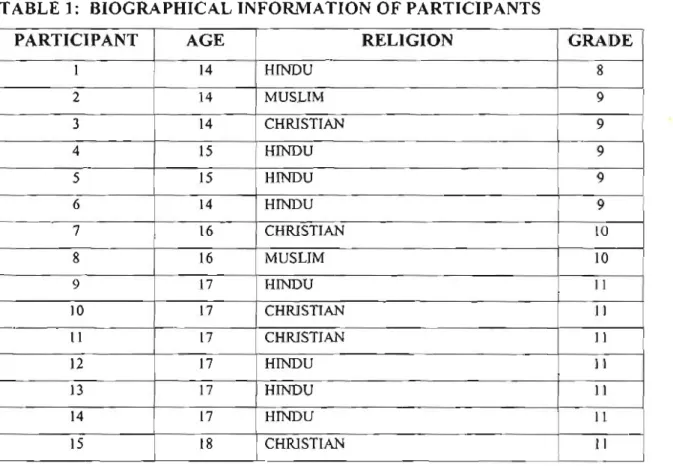
- Sample
Participants become critical of the world and their community in which they live and take action to change the behavior of young people and help reduce their vulnerability to HIV and AIDS in the Indian community. All participants were given the prompt: "Take photos of HIV and AIDS challenges and solutions in your community". This session was short, but I could conclude that many participants shared similar ideas and probably similar perceptions of HIV and AIDS in their community.
An open coding process was used, which included a close examination of the participants' photo-narratives.
ETHICAL ISSUES
TRUSTWORTHINESS
According to Lincoln and Guba (1985), the third measure of reliability addresses the consistency of the data, that is, whether the findings would be consistent if the inquiry were repeated with the same participants or in a similar context. A discussion of the photo-narratives was conducted with the participants to ensure correct interpretation of the photo-narratives. Neutrality refers to the degree to which findings are a function solely of the informants and research conditions and not of other biases, motivations, and perspectives (Guba, 1981).
Confirmability was ensured by providing participants' photo stories to support my analysis and interpretation of the findings.
LIMITATIONS OF THE STUDY
Lincoln and Guba (1985) shifted the emphasis of neutrality in qualitative research from the researcher to the data. It is therefore limited to Indian female youth and does not address issues that may be relevant to male youth. Therefore, the analysis falls within the confines of one school in an affluent area of Durban and cannot offer generalizations.
This limited the data that could have been drawn from different areas of Indian society.
SYNTHESIS
INTRODUCTION
RESULTS
DISCUSSION .1 Photo-narratives
- Themes
- Theme 1: Challenges perceived regarding HIV and AIDS in the Indian community
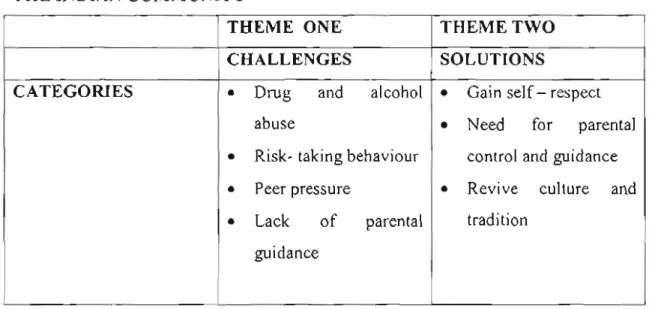
It is observed that many participants perceived lack of parental guidance as a challenge in the Indian society in the spread of HIV and AIDS. Participants also perceived that a solution to HIV and AIDS in Indian society would be to revive cultural and traditional practices in Indian society. Revival of culture and tradition is seen as a solution to HIV and AIDS in Indian society.
Although the participants were from different grades and classes, it was found that many had very similar perceptions about challenges related to HIV and AIDS in the Indian community.
SYNTHESIS
It was also observed that after participating in the research, the participants felt empowered and 'transformed' to relate their understanding of the research to others in order to try to make a positive difference in the Indian community, thus bringing about social change. facilitate. This study explored the perceptions of Indian female youth of HIV and AIDS in their community. It is clear from this study that many challenges of HIV and AIDS exist in the Indian community.
This study provides an insight into the various issues that need to be addressed to try to combat the rapid increase of HIV and AIDS among the Indian youth in particular.
CONCLUSIONS
This lack of parental guidance is also seen as a challenge to HIV and AIDS in Indian society. These efforts should incorporate visual participatory methods as an effective approach to try to slow the spread of HIV and AIDS in society. HIV and AIDS Social Transformation Program 2005. Retrieved from http://ww.ssrc.orglprograms/HIV/youth.page on 5 March 2005).
The Impact of HIV/AIDS on Schooling in South Africa: An International Journal of School Dissatisfaction.
UNIVERSITY Of
KWAZULU-NATAl
If educational programs are interrupted, he/she must therefore conduct his/her research during unofficial contact moments. No school is expected to participate in the study during the fourth year of school as this is the critical period for schools to focus on their exams.
KWAZULU-NATAL
UNIVERSITY OF