LEADERSHIP FACTORS THAT AFFECT THE QUALITY OF EDUCATION IN HIGHER LEARNING INSTITUTIONS OF ETHIOPIA
by
MULUGETA MEKONNEN ABAY Submitted in accordance with the requirements for
the degree of
DOCTOR OF PHILOSOPHY
in the subject
EDUCATION MANAGEMENT
at the
UNIVERSITY OF SOUTH AFRICA
SUPERVISOR: PROF. RN MARISHANE
NOVEMBER 2023
i
DECLARATION OF ORIGINALITY
I declare that this research thesis, titled “Leadership factors that affect the quality of education in higher learning institutions of Ethiopia” is my own work. The thesis is submitted in fulfilment of the requirements for the Doctor of Philosophy (Education Management) degree in the College of Education at the University of South Africa. I further declare that I obtained the required authorisation and consent to carry out this research.
09 November 2023 Student’s Signature Date
09 November 2023 Supervisor’s Signature Date
ii
ACKNOWLEDGEMENTS
This journey could not have been completed without the support of several institutions and people to whom I owe special thanks.
First of all, I am very grateful to my supervisor, Professor RN Marishane, for his critical and constructive comments, continuous encouragement, invaluable advice and unreserved scholarly guidance throughout my study.
My sincere thanks are due to Admas, Arba Minich, Harambee and Wolkite Universities for granting me permission to conduct my research in their respective institutions. Special thanks should be extended to the academic leaders, instructors and students at these universities for their willingness and wholehearted participation in the study.
I would like to thank Dr. Solomon Alemu, Dr. Zelalem Tafere, and Dr. Fetene Regassa for their constructive comments in improving the data collection instruments.
I owe special thanks to the University of South Africa (UNISA) for its financial support through the UNISA bursary scheme.
I would like to express my heartfelt thanks to the Ethiopian Federal Education and Training Authority (my employer) for giving me the chance to pursue my study at UNISA.
An acknowledgement with gratitude goes to Ruth Coetzee for proofreading and professionally editing this thesis.
I realise that I cannot mention everyone who has assisted me during the course of this study, so I want to thank all the people who participated in the interviews and friends who supported me in various ways to make this thesis happen.
Finally, my special thanks and appreciation are due to all my family members for their encouragement and support throughout the period of this research.
iii ABSTRACT
Higher learning institutions (HLIs) are intended to equip learners with advanced knowledge, skills and appropriate attitudes in various disciplines. To enhance their economies, advance the welfare of their citizens and cope with current global economic competitions, countries’ HLIs need to provide quality education to produce a competent workforce. For this reason, leaders in HEIs should be competent in conceptual, technical and interpersonal skills.
The study's main aim was to examine leadership's effectiveness in assuring quality education in the Ethiopian higher education sector. A mixed methods research approach was followed to study four HLIs. Academic staff members, the leadership of the HLIs, students and other external stakeholders participated in this study. The study employed a mixed quantitative and qualitative approach. For the quantitative part, simple random, multi-stage and systematic sampling techniques were used to select 320 respondents (160 regular graduating students and 160 permanent instructors).
Quantitative data were collected through a structured questionnaire. For the qualitative part of the research, the purposive sampling technique was used to select 22 participants for semi-structured and unstructured one-to-one interviews. Focus group discussions were also conducted with the student councils of the three universities.
The study has found that the efficiency of the top- and mid-level leadership in assuring quality education in their HLIs was moderate. The study also indicated that the leadership tried to support quality assurance activities. Overall, the leadership was found to have demonstrated strengths in demonstrating the leadership qualities listed in the study. However, some weaknesses were identified and corrective measures were recommended for the HLI leadership and external stakeholders. According to the study, the quality of education can only be achieved if internal and external stakeholders are committed to and contribute their share in the quality assurance activities. The study proposes a model for enhancing the efficiency of Ethiopian HLI leaders in assuring the quality of education and competency of graduates.
iv
Key TERMS: Ethiopian, higher learning institution, leadership, efficient leadership, quality education, quality assurance
OPSOMMING
Hoërleerinstellings (HLI’s) is veronderstel om leerders toe te rus met gevorderde kennis, vaardighede en toepaslike houdings in verskeie dissiplines. Om hulle ekonomieë te verbeter, die welsyn van hulle burgers te bevorder en heersende globale ekonomiese mededinging te hanteer, moet lande se HLI’s gehalte onderwys verskaf om ’n bekwame arbeidsmag te produseer. Dus moet leiers in HLI’s bekwaam wees in konseptuele, tegniese en interpersoonlike vaardighede.
Die studie se hoofdoel was om die doeltreffendheid van leierskap te ondersoek om gehalte onderwys in die Ethiopiese hoëronderwyssektor te verseker. ’n Navorsingsbenadering vir gemengde metodes is gevolg om vier HLI’s te bestudeer.
Akademiese personeellede, die leierskap van die HLI’s, studente en ander eksterne belanghebbendes het aan hierdie studie deelgeneem. Die studie het ’n gemengde kwantitatiewe en kwalitatiewe benadering gebruik. Vir die kwantitatiewe deel is eenvoudige ewekansige, multi-stadium- en sistematiese steekproeftegnieke gebruik om 320 respondente (160 gewone graduerende studente en 160 permanente instrukteurs) te selekteer. Kwantitatiewe data is deur middel van ’n gestruktureerde vraelys ingesamel. Vir die kwalitatiewe deel van die navorsing is doelgerigte steekproeftegniek gebruik om 22 deelnemers vir semi-gestruktureerde en ongestruktureerde een-tot-een-onderhoude te selekteer. Fokusgroepgesprekke is ook met die studenterade van die drie universiteite gevoer.
Die studie het bevind dat die doeltreffendheid van top- en middelvlakleierskap om gehalte onderwys in hulle HLI’s te verseker matig was. Die studie het ook aangedui dat die leierskap gehalteversekeringsaktiwiteite probeer ondersteun het. Oor die algemeen is gevind dat die leierskap sterkpunte getoon ten opsigte van die leierseienskappe wat in die studie gelys is. Sommige swakhede is egter geïdentifiseer en regstellende maatreëls is aanbeveel vir HLI-leierskap en eksterne belanghebbendes. Volgens die studie kan die gehalte van onderwys slegs bereik word as interne en eksterne belanghebbendes toegewyd is en bydra tot gehalteversekeringsaktiwiteite. Die studie stel ’n model voor om die doeltreffendheid
v
van Ethiopiese HLI-leiers te verbeter om die gehalte van onderwys en bevoegdheid van gegradueerdes te verseker.
SLEUTELTERME: Ethiopiër, hoërleerinstelling, leierskap, doeltreffende leierskap, gehalte onderwys, gehalteversekering
KAKARETŠO
Morero wa diinstithušene tša thuto ya godimo (diHLI) ke go fa baithuti tsebo ya maemo a godimo, bokgoni le maitshwaro a maleba ka dithuto tša go fapana. Go godiša ekonomi, gore badudi ba phele gabotse le go kgona go phela ka gare ga diphadišano tša bjale tša ekonomi ya lefase ka bophara, diHLI tša dinaga di swanetše go aba thuto ya khwalithi go tšweletša bašomi bao ba nago le bokgoni. Ka lebaka le, baetapele ba diHLI ba swanetše go ba le bokgoni bja go sekaseka, bja sethekniki le bja go šomišana le batho.
Maikemišetšo a magolo a nyakišišo ye e be e le go lekodišiša mošomo wa boetapele go netefatša khwalithi ya thuto ka lefapheng la thuto ya godimo la Ethiopia. Mekgwa ye e tswakantšwego ya nyakišišo e šomišitšwe diinstithušeneng tše nne tša thuto ya godimo. Bašomedi ba tša thuto, boetapele bja diHLI, baithuti le batšeakarolo ba bangwe ba ka ntle ba tšere karolo nyakišišong ye. Nyakišišo e šomišitše mekgwa ye e tswakantšwego ya khwalitheithifi le khwanthitheithifi. Nyakišišo e šomišitše mokgwa wa khwanthithethifi go kgoboketša datha ka mekgwa e mekaonekaone ka go kgetha dikemedi fela, ka go kgetha dikemedi go kgato enngwe le enngwe ya nyakišišo, le ka mokgwa wo o rulagantšwego go kgetha dikemedi tše 320 (baithuti ba 160 le bahlahli ba nako ka moka ba 160). Mokgwa wa khwalithethifi o šomišitšwe go kgoboketša datha ka mananeopotšišo ao a rulagantšwego ka go kgetha dikemedi tše 22 go dipoledišano tše di sa rulaganywago le tša dipotšišo tše bulegilego goba tše rulagantšwego. Nyakišišo e šomišitše gape mokgwa wa dipoledišano tša dihlopha le dikhansele tša baithuti diyunibesithing tše tharo.
Nyakišišo e utollotše gore bokgoni bja boetapele bja maemo a godimo le bja magareng go netefatša khwalithi ya thuto ka go diHLI ke bjo bo lekanetšego. Nyakišišo
vi
e laeditše gape gore boetapele bo lekile go thekga mešomo ya go netefatša khwalithi.
Ka kakaretšo, boetapele bo laeditše go ba le dikhwalithi tša boetapele tšeo di ngwadilwego mo nyakišišong. Le ge go le bjalo, mafokodi a mangwe a ile a lemogwa gomme magato a phošollo a šišinywa go boetapele bja HLI le go batšeakarolo ba ka ntle.
Diphihlelelo tša nyakišišo di laeditše gore khwalithi ya thuto e ka fihlelelwa fela ge batšeakarolo ba ka gare le ba ka ntle ba šoma ka maikemišetšo go mediro ya go netefatša khwalithi. Nyakišišo e šišinya mmotlolo wa go kaonafatša bokgoni bja boetapele bja diHLI tša Ethiopia go netefatša khwalithi ya thuto le bokgoni bja dialoga.
MANTŠU A BOHLOKWA: Ethiopia, instithušeni ya thuto ya godimo, boetapele, boetapele bjo bo šomago gabotse, khwalithi ya thuto, netefatšo ya khwalithi
vii LIST OF ABBREVIATIONS
ADU Admas University (Ethiopia) AMU Arba Minch University (Ethiopia)
CHE Council for Higher Education (South Africa) CHEA Council for Higher Education Accreditation (USA) CHED Commission on Higher Education (Philippines) DoE Department of Education (South Africa)
ETA Education and Training Authority (Ethiopia) FDRE Federal Democratic Republic of Ethiopia
FDRGE Federal Democratic Republic Government of Ethiopia HERQA Higher Education Relevance and Quality Agency (Ethiopia) HEQC Higher Education Quality Committee (South Africa)
HLI Higher learning institution HRU Harambee University (Ethiopia)
ICT Information communication technology MLL Middle level leadership
MoE Ministry of Education (Ethiopia)
OECD Organisation for Economic Cooperation and Development QAA Quality Assurance Agency (UK)
TLL Top-level leadership
TVET Technical and vocational education and training UK United Kingdom
UNESCO United Nations Educational, Scientific and Cultural Organization USA United States of America
USAID United States Agency for International Development USDE United States Department of Education
WKU Wolkite University (Ethiopia)
viii LIST OF TABLES
Table 1.1 Enrolment statistics in Ethiopian higher education for 2017/18 academic year
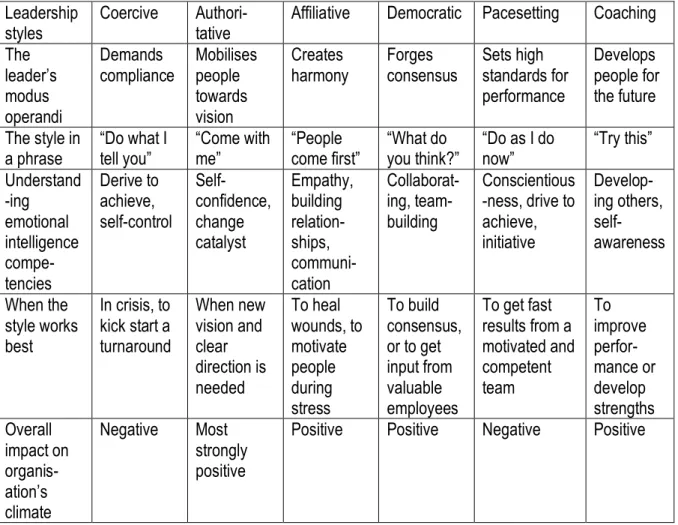
11 Table 3.1 Leadership styles and their characteristics 40 Table 3.2 CHEA- and USDE-recognised accrediting organisations 73 Table 3.3 Programme accreditation levels, terms and benefits for
private HLIs (Philippines)
84 Table 3.4 Enrolment statistics in higher education for academic year
2017/18 (Ethiopia)
88 Table 4.1 Number of samples selected from graduating students and
senior academic staff members/instructors from each department
101
Table 4.2 Samples selected for semi-structured and unstructured interviews
103 Table 4.3 Questionnaire response rates from instructors and students 106 Table 5.1 Students' satisfaction with quality of education acquired 124 Table 5.2 Instructors’ evaluation of quality of students’ learning 126 Table 5.3 External and internal factors affecting leadership of HLIs in
efforts to assure quality of education
129 Table 5.4 Ethiopian national learning assessment mean scores by
year for Grade 4 students
133 Table 5.5 Ethiopian national learning assessment mean scores by
year for Grade 8 students
134 Table 5.6 Ethiopian national learning assessment mean scores by
year for Grade 10 and Grade 12 students
134 Table 5.7 Overall percentages of Grade 2 and Grade 3 students’
achievement at benchmark levels by year and grade
136 Table 5.8 Number of academic staff by academic level in the four HLIs 143 Table 5.9 Number of academic staff by academic rank in the four HLIs 144 Table 5.10 Instructors’ view of extent of stakeholders’ contribution to
assuring quality of HLIs
149 Table 5.11 Students’ view of extent of stakeholders’ contribution to
assuring quality of HLIs
150
ix
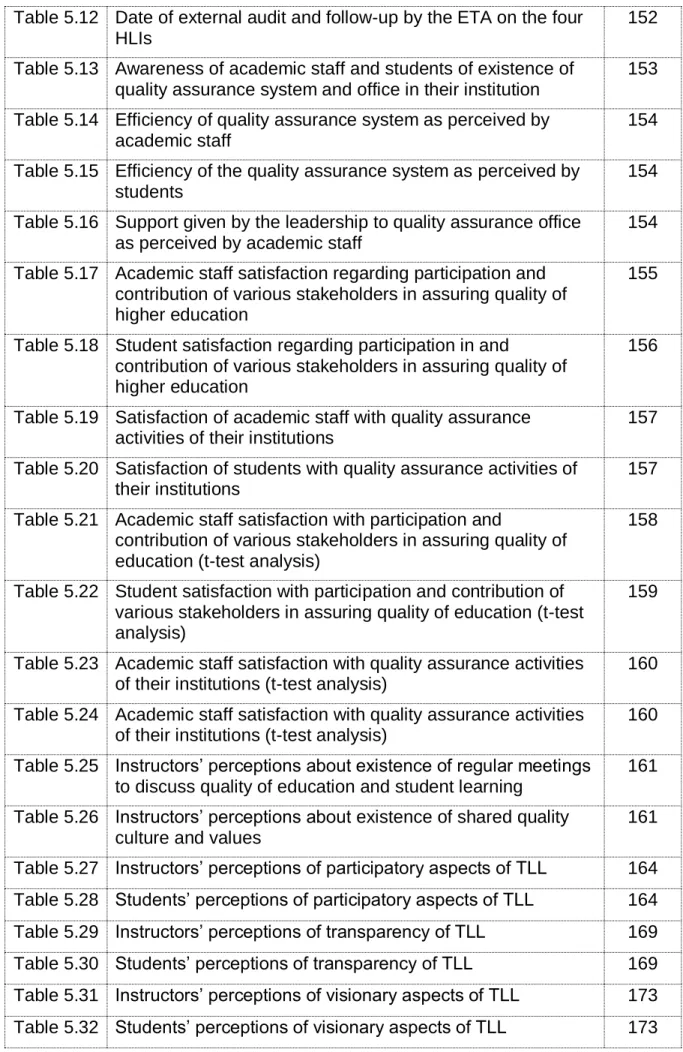
Table 5.12 Date of external audit and follow-up by the ETA on the four HLIs
152 Table 5.13 Awareness of academic staff and students of existence of
quality assurance system and office in their institution
153 Table 5.14 Efficiency of quality assurance system as perceived by
academic staff
154 Table 5.15 Efficiency of the quality assurance system as perceived by
students
154 Table 5.16 Support given by the leadership to quality assurance office
as perceived by academic staff
154 Table 5.17 Academic staff satisfaction regarding participation and
contribution of various stakeholders in assuring quality of higher education
155
Table 5.18 Student satisfaction regarding participation in and
contribution of various stakeholders in assuring quality of higher education
156
Table 5.19 Satisfaction of academic staff with quality assurance activities of their institutions
157 Table 5.20 Satisfaction of students with quality assurance activities of
their institutions
157 Table 5.21 Academic staff satisfaction with participation and
contribution of various stakeholders in assuring quality of education (t-test analysis)
158
Table 5.22 Student satisfaction with participation and contribution of various stakeholders in assuring quality of education (t-test analysis)
159
Table 5.23 Academic staff satisfaction with quality assurance activities of their institutions (t-test analysis)
160 Table 5.24 Academic staff satisfaction with quality assurance activities
of their institutions (t-test analysis)
160 Table 5.25 Instructors’ perceptions about existence of regular meetings
to discuss quality of education and student learning
161 Table 5.26 Instructors’ perceptions about existence of shared quality
culture and values
161 Table 5.27 Instructors’ perceptions of participatory aspects of TLL 164 Table 5.28 Students’ perceptions of participatory aspects of TLL 164 Table 5.29 Instructors’ perceptions of transparency of TLL 169 Table 5.30 Students’ perceptions of transparency of TLL 169 Table 5.31 Instructors’ perceptions of visionary aspects of TLL 173 Table 5.32 Students’ perceptions of visionary aspects of TLL 173
x
Table 5.33 Students’ perceptions of visionary aspects of TLL 176 Table 5.34 Students’ perceptions of motivational aspects of TLL 176 Table 5.35 Instructors’ perceptions of communication aspects of TLL 179 Table 5.36 Students’ perceptions of communication aspects of TLL 179 Table 5.37 Instructors’ perceptions of emphasis given to quality
assurance by TLL
181 Table 5.38 Students’ perceptions of emphasis given to quality
assurance by TLL
181 Table 5.39 Perceptions of instructors about TLL creating environment
conducive to working
183 Table 5.40 Perceptions of students about TLL creating environment
conducive to working
184 Table 5.41 Instructors’ perceptions of other characteristics of TLL 186 Table 5.42 Students’ perceptions of other characteristics of TLL 186 Table 5.43 Instructors’ evaluation of TLL qualities 187
Table 5.44 Students’ evaluation of TLL qualities 188
Table 5.45 Instructors’ perceptions of 35 aspects of MLL 189 Table 5.46 Students’ perceptions of 35 aspects of MLL 191 Table 5.47 Students’ perceptions of 35 aspects of MLL 192
Table 5.48 Students’ evaluation of MLL qualities 192
Table 5.49 Instructors’ perceptions of major characteristics of TLL (summary)
194 Table 5.50 Students’ perceptions of major characteristics of TLL
(summary)
194 Table 5.51 Instructors’ perceptions of major characteristics of MLL
(summary)
194 Table 5.52 Students’ perceptions of major characteristics of MLL
(summary)
195 Table 5.53 Overall rating of TLL effectiveness in assuring quality of
education
195 Table 5.54 Overall rating of MLL effectiveness in assuring quality of
education
195
xi LIST OF FIGURES
Figure 2.1 Conceptual framework of the study 19
Figure 3.1 The four key leadership variables
37
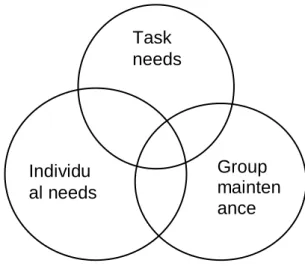
Figure 3.2 John Adair’s model of leadership 47
Figure 6.1 Model of an effective leadership in assuring quality education in HLIs
211
xii
TABLE OF CONTENTS
DECLARATION ...Error! Bookmark not defined.
ACKNOWLEDGEMENTS ... ii
ABSTRACT ... iii
LIST OF ABBREVIATIONS ... vii
LIST OF TABLES ... viii
LIST OF FIGURES... xi
CHAPTER ONE: INTRODUCTION AND OVERVIEW OF THE STUDY ... 1
1.1 INTRODUCTION ... 1
1.2 STATEMENT OF THE PROBLEM ... 4
1.3 RATIONALE FOR THE STUDY ... 4
1.4 PRELIMINARY SUMMARY OF LITERATURE REVIEW ... 6
1.4.1 Leaders and leadership... 6
1.4.2 Character of effective leadership ... 7
1.4.3 Leadership in higher learning institutions ... 7
1.4.4 Quality in higher education ... 8
1.4.5 What is quality assurance? ... 9
1.4.6 Importance of Higher Education ... 10
1.4.7 Higher learning institutions in Ethiopia ... 11
1.4.8 Quality of higher education in Ethiopia ... 11
1.4.9 Conceptual framework of the study ... 12
1.5 RESEARCH QUESTIONS ... 12
1.6 AIMS AND OBJECTIVES OF THE STUDY ... 13
1.6.1 Aim of the study ... 13
1.6.2. Objectives of the study ... 13
1.7 RESEARCH METHODOLOGY ... 14
1.8 DEFINITION OF KEY CONCEPTS ... 14
1.9 CHAPTER OUTLINE ... 15
1.10 SUMMARY ... 15
CHAPTER TWO: CONCEPTUAL FRAMEWORK... 17
2.1. INTRODUCTION ... 17
2.2 CONCEPTUAL FRAMEWORK FOR THE STUDY ... 17
2.2.1 Existing quality assurance practice ... 19
xiii
2.2.2 External organisational structure ... 20
2.2.2.1 Legal framework ... 20
2.2.2.2 Regulatory structures ... 21
2.2.2.3 Other external organisational factors ... 21
2.2.3 Internal organisational structure ... 22
2.2.3.1 Governance ... 22
2.2.3.1.1 Governance in higher learning institutions ... 23
2.2.3.1.2 Factors influencing the governance of higher learning institutions.. 24
2.2.3.1.3 Effective academic governance in higher learning institutions ... 25
2.2.3.2 Institutional complexity ... 26
2.2.3.3 Institutional size ... 27
2.2.3.4 Institutional age ... 28
2.2.3.5 Academic staff and students’ profiles ... 28
2.2.3.6 Physical facilities and infrastructure ... 29
2.2.3.7 Working guidelines ... 29
2.2.4 Role of leadership ... 30
2.2.4.1 Evaluation of leadership effectiveness ... 30
2.2.4.2 Leadership effectiveness in higher learning institutions ... 31
2.2.5 Significance of the conceptual framework for the study ... 31
2.3 SUMMARY ... 32
CHAPTER THREE: LITERATURE REVIEW LEADERSHIP AND QUALITY ASSURANCE IN HIGHER EDUCATION ... 33
3.1 INTRODUCTION ... 33
3.2 INSTITUTIONAL LEADERSHIP ... 33
3.2.1 What is leadership?... 33
3.2.2 Definition of leadership... 35
3.2.3 Key variables of leadership ... 36
3.2.4 Types of leadership ... 37
3.2.5 Leadership power ... 38
3.2.6 Leadership styles ... 39
3.2.7 Effective leadership ... 41
3.2.8 Basic leadership skills ... 44
3.2.9 The role of leaders ... 46
3.2.10 The role of followers ... 47
xiv
3.3 LEADERSHIP IN HIGHER LEARNING INSTITUTIONS ... 49
3.3.1 Higher learning institutions’ leadership structure ... 50
3.3.2 Defining leadership in higher learning institutions ... 50
3.3.3 Effective leadership in higher learning institutions ... 52
3.4 QUALITY ASSURANCE SYSTEM IN HIGHER EDUCATION... 53
3.4.1 Different viewpoints on defining quality ... 54
3.4.2 Defining quality in the context of higher education ... 55
3.4.2.1 Quality as exceptional ... 56
3.4.2.2 Quality as consistency/perfection ... 56
3.4.2.3 Quality as fitness for purpose ... 56
3.4.2.4 Quality as value for money ... 57
3.4.2.5 Quality as transformative ... 57
3.4.2.6 Quality as conformance to standards ... 58
3.4.3 Why is quality in higher education a concern? ... 59
3.4.4 Measuring quality education in higher learning institutions ... 59
3.4.5 Emergence of quality assurance in higher education ... 60
3.4.6 Definitions of quality assurance in higher education ... 61
3.4.7 Internal versus external quality assurance ... 63
3.4.8 Features of effective external quality assurance ... 66
3.4.9 Features of effective internal quality assurance process... 66
3.5 QUALITY ASSURANCE APPROACHES ... 67
3.5.1 Accreditation ... 68
3.5.2 Assessment ... 69
3.5.3 Quality audit ... 70
3.5.4 Peer review ... 71
3.6 QUALITY ASSURANCE EXPERIENCE IN SELECTED COUNTRIES ... 71
3.6.1 Approaches to quality assurance in the USA ... 72
3.6.2 Approaches to quality assurance in the UK ... 75
3.6.3 Approaches to quality assurance in South Africa ... 78
3.6.3.1 Institutional audit in South Africa ... 79
3.6.3.2 Programme accreditation in South Africa... 81
3.6.4 Approaches to quality assurance in the Philippines ... 83
3.6.5 Approaches to quality assurance in Ethiopia ... 86
3.6.5.1 Admission of students to higher learning institutions ... 87
xv
3.7 SUMMARY ... 89
CHAPTER FOUR: RESEARCH DESIGN AND METHODOLOGY ... 93
4.1 INTRODUCTION ... 93
4.2 RESEARCH DESIGN AND METHODOLOGY ... 93
4.2.1 Research approach ... 93
4.2.2 Research design ... 95
4.2.3 Research methodology ... 98
4.3 POPULATION AND SAMPLING ... 99
4.3.1 Research population ... 99
4.3.2 Sampling and sample design ... 100
4.3.2.1 Sample selection for quantitative research ... 101
4.3.2.2 Sample selection for qualitative research ... 102
4.4 DATA COLLECTION TECHNIQUES AND INSTRUMENTS ... 104
4.4.1 Data collection techniques ... 104
4.4.2 Data Collection instruments ... 104
4.4.2.1 Survey questionnaire ... 104
4.4.2.2 Interviews... 107
4.4.2.3 Focus group discussions ... 108
4.4.2.4 Observation ... 108
4.4.2.5 Document analysis ... 109
4.5 DATA ANALYSIS ... 109
4.5.1 Quantitative data analysis ... 110
4.5.2 Qualitative data analysis ... 111
4.5.3 Presentation of data findings ... 112
4.6 QUALITY ASSURANCE OF THE RESEARCH ... 112
4.6.1 Validity and reliability in quantitative research ... 112
4.6.1.1 Validity ... 113
4.6.1.2 Reliability ... 114
4.6.2 Trustworthiness in qualitative research ... 115
4.6.2.1 Credibility ... 116
4.6.2.1.1 Triangulation ... 116
4.6.2.1.2 Member checks ... 117
4.6.2.1.3 Peer scrutiny ... 117
4.6.2.1.4 Extended fieldwork ... 118
xvi
4.6.2.1.5 Freedom from researcher bias ... 119
4.6.2.2 Transferability ... 119
4.6.2.3 Confirmability ... 119
4.6.2.4 Dependability ... 120
4.7 ETHICAL PROCEDURES ... 121
4.7.1 Ethical considerations involving participants ... 121
4.8 SUMMARY ... 122
CHAPTER FIVE: PRESENTATION OF DATA, ANALYSIS AND INTERPRETATION OF RESEARCH FINDINGS ... 124
5.1. INTRODUCTION ... 124
5.2 THE STATE OF QUALITY EDUCATION IN ETHIOPIAN HIGHER LEARNING INSTITUTIONS ... 124
5.2.1 Students’ satisfaction with the quality of education ... 125
5.2.2 Academic staff satisfaction with the quality of education... 126
5.2.3 Document analysis ... 128
5.3 CHALLENGES TO HIGHER LEARNING INSTITUTION LEADERSHIP IN ASSURING QUALITY OF EDUCATION ... 130
5.3.1 Inadequate competence of incoming students ... 131
5.3.1.1 Low quality of general education (Grades 1–12) ... 133
5.3.2 Unsatisfactory teaching and learning practice ... 139
5.3.3 Inadequate qualification and competence of instructors ... 143
5.3.4 Inadequacy of teaching facilities and resources ... 146
5.4 RESPONSIBLE BODY ASSURING QUALITY EDUCATION IN HIGHER LEARNING INSTITUTIONS ... 150
5.5 QUALITY ASSURANCE PRACTICE IN ETHIOPIAN HIGHER LEARNING INSTITUTIONS ... 151
5.5.1 Documentary data analysis results ... 152
5.5.2 Quantitative data analysis and survey results ... 153
5.6 CHARACTERISTICS AND ASPECTS OF LEADERSHIP IN HIGHER LEARNING INSTITUTIONS ... 162
5.6.1 Characteristics and aspects of the top-level leadership ... 163
5.6.1.1 Participation ... 163
5.6.1.2 Transparency ... 168
5.6.1.3 Vision ... 172
5.6.1.4 Motivation ... 175
5.6.1.5 Communication ... 178
xvii
5.6.1.6 Emphasis given to quality assurance ... 180
5.6.1.7 Work environment facilitation ... 182
5.6.1.8 Other characteristics of the top-level leadership ... 184
5.6.1.9 Evaluation of top-level leadership with respect to 11 leadership qualities ... 186
5.6.2 Characteristics and aspects of the middle level of leadership ... 187
Evaluation of mid-level leadership with respect to 11 leadership qualities ... 191
5.7 SUMMARY ... 192
CHAPTER SIX: SUMMARY OF RESEARCH FINDINGS, RECOMMENDATIONS AND CONCLUSION ... 195
6.1 INTRODUCTION ... 195
6.2 SUMMARY OF QUANTITATIVE DATA ... 196
6.2.1 Quality in higher education ... 196
6.2.2 Quality assurance in higher education ... 197
6.2.3 Leadership of higher learning institutions ... 199
6.3 SUMMARY OF QUALITATIVE FINDINGS ... 202
6.3.1 Quality education ... 202
6.3.2 Quality assurance ... 204
6.3.3 HLI leadership ... 205
6.4 LIMITATIONS OF THE STUDY ... 205
6.5 RECOMMENDATIONS FROM THE FINDINGS ... 206
6.5.1 Identifying the status of quality education ... 206
6.5.2 Staff development ... 206
6.5.3 Teaching and learning... 206
6.5.4 Enhancing the quality assurance system ... 207
6.5.5 Governance ... 207
6.5.6 External stakeholders... 208
6.5.7 Proposed model of effective leadership in assuring quality education in Ethiopian HLIs ... 208
6.6 RECOMMENDATIONS FOR FURTHER RESEARCH ... 211
6.7 CONCLUSION ... 211
LIST OF REFERENCES ... 213
ANNEXURES ... 235
1 CHAPTER 1
INTRODUCTION AND OVERVIEW OF THE STUDY
1.1 INTRODUCTION
It can be strongly argued that education is fundamental to ensure and enhance the quality of life for all children and a better world for all people (United Nations Educational Scientific and Cultural Organization [UNESCO], 2003). To address the economic challenges brought about by global competition, education is the most powerful device in providing solutions (Semela, 2011). In particular, the significance of higher education is recognised in improving the economy, fostering development and transforming the welfare of society (Pillay, 2011; Aksu, 2018; Castells, 2009).
Muhammad, Muhammad and Fazalur (2011) and Haris (2013) observe that the quality of higher education plays a decisive role in national development and the transformation of societies. Therefore, to achieve Goal 4 (quality education) of the United Nations sustainable development goals adopted in 2015 (United Nations, 2015) and to cope with the current competition of the global economy and technology advancement, quality in Ethiopian higher education needs to be given much attention by all stakeholders.
The main objective of higher learning institutions (HLIs) in Ethiopia is to produce well- qualified, innovative and accountable citizens who can contribute significantly to the country’s socio-economic growth and poverty reduction efforts, and can also generate scientific knowledge by undertaking appropriate research and community service activities (Federal Democratic Republic Government of Ethiopia [FDRGE], 1994).
Therefore, to attain these objectives, the teaching and learning, community services and research conducted in HLIs all need to be of high quality and relevant (Ashcroft, 2004).
HLIs in Ethiopia have expanded massively in the last 28 years, increasing access to tertiary education countrywide. By the end of the 2021 academic year, the number of public HLIs had reached 46, with 276 private HLIs (Higher Education Relevance and Quality Agency [HERQA], 2021). According to the Ethiopian Education Ministry’s
2
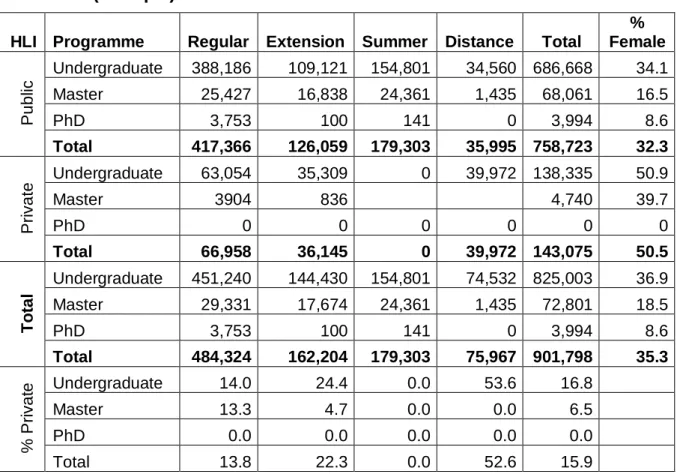
statistical annual abstract of 2018 (Ministry of Education [MoE], 2018a), student enrolment in undergraduate and postgraduate courses totalled 901,798, of whom 758,723 (84%) were in public institutions, and 143,075 (16%) in private institutions.
However, the massive increment in the number of institutions and students poses challenges to HLIs in terms of assuring quality standards and producing competent graduates for the needs of the labour market (MoE, 2018). Therefore, there has been heightened interest by the government to focus on assuring educational quality through improving material and human resources as well as implementing reform processes and quality assurance systems (FDRGE, 2003). Quality assurance refers to the policies, activities, procedures and actions needed to make sure that quality is being enhanced and maintained (Woodhouse, 1999).
Quality assurance plays a crucial role for Ethiopian HLIs in assuring the quality of qualifications achieved by students. Quality education can be enhanced with a range of quality assurance activities primarily undertaken by institutions themselves with the support of external quality assurance regulatory bodies and other stakeholders (Dill, 2007). Internal quality assurance involves conducting continuous self-assessment of education in terms of programme goals, outcomes, resources, processes, structure and management; and taking relevant corrective measures (Jonathan, 2000). To carry out internal quality assurance activities effectively, HLIs should establish a system with appropriate policy and structure, and appoint appropriately qualified personnel with sufficient resources to enable them to apply quality assurance tools (Dill, 2007).
Cognisant of these facts, the Ethiopian Higher Education Proclamation no. 351 (FDRGE, 2003) required each HLI to establish internal quality assurance systems and work towards the enhancement of its academic programmes. Effective HLI leadership is indispensable in implementing the quality assurance system. Assuring educational quality is the primary responsibility of individual HLIs, and stronger visionary leaders who can turn their visions into reality are vital in HLIs.
Although the Ethiopian government established the Education and Training Authority (ETA) (formerly known as HERQA) in 2003 and a quality assurance office in each HLI, quality assurance and enhancement at the institutional and national level did not live up to expectations (FDRE, 2015; MOE, 2018). Ensuring the quality of education remains one of the major problems that the education sector in Ethiopia is facing.
3
Although it is recognised as a national priority – as reflected in both the fourth and fifth national Education Sector Development Programmes (FDRE, 2010; FDRE, 2015) and in the second Growth and Transformation Plan (FDRGE, 2016) – its implementation is unsatisfactory. The MoE noted in its Education Development Roadmap that the quality of education and student achievement had not satisfactorily improved, which in turn endangered the country’s ability to be economically self-sufficient and competitive in the global arena (MoE, 2018). According to the MoE (2018), poor quality of education is demonstrated in the large number of graduates who cannot be gainfully employed without being retrained to meet applied communication skills and technical requirements. This is reflected in the disappointment of stakeholders.
According to FDRGE (2019), the major academic leadership responsibilities of Ethiopian HLIs are 1) to coordinate the preparation of the HLI plan, programme and budget; 2) to administer and oversee the proper utilisation of the physical and other resources of the HLI; 3) to provide rules and procedures for the proper administration of the HLI in line with the existing policies and regulations; 4) to ensure that the policies and regulations are well-known by staff and students; and 5) to implement schemes and programmes that promote academic excellence. Martin, Trigwell, Prosser and Ramsden (2003) and Gibbs, Knapper and Picinnin (2009) state that leadership plays a crucial role in enhancing and sustaining the performance of HLIs and in the overall achievement of the HLI’s goals. There exists a strong correlation between competent leadership and a student’s quality of learning practice and outcomes (Martin et al., 2003).
By employing mixed methods research, the present study investigates the effectiveness of leadership in four selected HLIs in establishing strong quality assurance mechanisms that value quality education. It also investigates whether effective leadership has a positive impact on the provision of quality education in Ethiopian HLIs. Accordingly, the study focuses on the effectiveness of leadership in assuring quality education in the HLIs of Ethiopia and contributes to providing research-based evidence for decision-makers and other concerned bodies in the sector.
4 1.2 STATEMENT OF THE PROBLEM
The research problem for this study is the inability of leadership in the Ethiopian higher education sector to deliver high quality education for the country. The higher education sector in Ethiopia has strengths and makes immense contributions to the economic development and social advancement needs of the country. However, the present system has a number of problems and weaknesses (MoE, 2018). These problems could undermine the ability of the country to meet the United Nations sustainable development goals (United Nations, 2015).
The performance of each Ethiopian HLI in terms of quality education, social responsiveness and efficiency is not beyond question, concern and dispute (Semela, 2011; MoE, 2018). Moreover, a review of some researchers’ work regarding quality education indicates that HLIs are overwhelmed by a number of challenges in assuring the quality of education, which implies that the graduates are not well equipped with the required competencies (Negash, 2006; Teshome, 2004; MoE, 2018). In order to explore these challenges, the current situation of the academic leadership needs in- depth study based on empirical data gathered from various stakeholders of the higher education sector. The aim of this study is, therefore, to explore the effectiveness of the academic leadership of Ethiopian HLIs in assuring the quality of education in the context of the higher education reforms introduced through the Education and Training Policy (FDRGE, 1994), the Higher Education Proclamations (nos.1152/2019, 650/2009 and 351/2003) and the 2018–2030 Education Development Roadmap (MoE, 2018) by conducting a substantial study and forwarding some possible recommendations to mitigate the prevalent challenges.
1.3 RATIONALE FOR THE STUDY
The effectiveness of leadership and quality education in the HLIs of Ethiopia is an area of concern that needs a deep understanding, based on experimental study, of the existing practices and systems for assuring quality education in a changing higher education environment. Because the practice of formal quality assurance at Ethiopian HLIs is relatively recent (introduced with the establishment of the ETA in 2003), it is neither well-researched nor documented. This demonstrates a study gap in the issue of quality education and its relation to HLIs’ leadership effectiveness.
5
Currently, owing to the ongoing transformation process in the public higher education system, the appointment of top-level public HLI leaders including president, vice president and college dean, is undertaken by competition based on their merit. Private HLI leaders are mostly chosen by the institution’s owner, provided that the ETA’s minimum requirements are fulfilled. In the course of this transition, nonetheless, there are a number of challenges and problems faced by HLIs. One such challenge is the lack of experienced and skilled leaders who value the quality of education. Most leaders of the HLIs in Ethiopia are assigned to leadership positions through competition, or are selected directly as teachers without receiving proper or sufficient leadership training. In addition to their low leadership capacity, there is also a lack of accountability and ownership among leaders in fully implementing the quality assurance policies and practices of their institutions.
According to the ETA’s institutional quality audit reports of both private and public HLIs (HERQA, 2013–2020), the signs of poor quality of education include the inefficiency of leadership in motivating and mobilising the academic staff to achieve the institution’s vision and create a quality culture across all institutional activities. The role of academic staff in assuring the quality of education in HLI is highly significant (Newton, 2000). A quality assurance system without the active participation and sense of ownership of academic staff is likely to be ineffective (Armstrong, 2009). Effective leadership is one of the most significant factors for the effective implementation of internal quality assurance systems in HLIs (Martin & Lee, 2018). In most HLIs, poor performance in achieving quality education is directly linked to the poor capacity of the leadership (Martin et al., 2003). The success or failure of an institution of higher learning depends on the capability of leadership (Mahdinezhad, Mansor, Rmbeli, Hashim & Shahhosseini, 2018; Fahimirad, Idris & Kotamjani, 2016). The current research work therefore anticipated discovering the challenges and gaps of the HLIs leadership in assuring quality education, and aimed to produce possible mitigating recommendations.
In recent years, since the establishment of the ETA, the issue of quality education and HLI leadership has become a dialogue and topic of research conferences. Therefore, one of the rationales for conducting the research was to add to the current discourse on academic leadership competence and quality education in Ethiopian HLIs.
6
Moreover, the study produces research-based solutions for the inefficiency of HLI leadership and also serves as a reference for scholars who want to study and contribute to the topic. Therefore, this study is significant because it may be used as a reference and motivation for further study in the area of leadership and quality of education in HLIs of Ethiopia. It can assist in raising main stakeholders’ understanding of the problems in HLI leadership practice, the quality of education and the areas that need improvement. It also proposes research-based corrective measures to be taken by policy and decision-makers who are concerned with enhancing educational quality in HLIs of Ethiopia.
1.4 PRELIMINARY SUMMARY OF LITERATURE REVIEW 1.4.1 Leaders and leadership
Leadership is a day-to-day phenomenon which almost everybody has experienced in some way. Leadership is a universal experience in human beings and is also observed in many species of animals, such as patriarchal gorillas and matriarchal elephants (Bass, 2008). Leadership is recognised as an essential element for the existence of an organisation and as crucial for its performance and achievement (Goleman, 2000;
Lumby, 2012; Thompson, 2000). A leader is someone who can influence others and leadership is what leaders do (Robbins & Coulter, 2012). “Leadership is the process of influencing others to understand and agree about what needs to be done and how to do it, and the process of facilitating individual and collective efforts to accomplish shared objectives” (Yukl, 2013:7).
Leaders are important to organisations because they play a considerable role in identifying critical issues and crafting responses to overcome new challenges. These challenges arise from factors such as ever-increasing globalisation, changing technology, worldwide economic conditions, political/legal, demographic, and socio- cultural influences (Robbins & Coulter, 2012). A leader’s job is not concerned with personal accomplishment; rather, it is about helping others to do their work smoothly (Yukl, 2013; Robbins & Coulter, 2012). Leaders are directly responsible for an organisation’s failure or success (Robbins & Coulter, 2012).
7
An organisation is a purposeful arrangement of people to achieve some specific goals (for example, a college or university); leaders are those people who lead the organisation. Leaders can be categorised into three levels, namely first-line, middle and top leaders (Thompson, 2000).
1.4.2 Character of effective leadership
There are many alternative measures of leadership effectiveness, but most of them are subjective judgements based on assigning a weight to each measure (Yukl, 2013).
“Leadership effectiveness is the extent to which a person has a successful career as a leader” (Yukl, 2013:9). Weese (1996) and Goleman (2000) find a significant link between organisational effectiveness and leadership. Indeed, many researchers agree that institutional leadership plays a significant role in improving quality education (Sallis, 2005; Brundrett & Rhodes, 2010) and that high quality leaders develop through continuous self-study learning, short- or long-term training and experience (Yukl, 2013). According to Goleman (2000), effective leaders make decisions based on tangible evidence. In the decision process, participating representatives of employees and other pertinent bodies are also vital. Moreover, in order to become successful, leaders need to be visionary, exercise team spirit leadership, build trust and credibility among their followers, and use more than one style of leadership; they should adjust their style to the situation of the working environment (Robbins & Coulter, 2012;
Thompson, 2000).
1.4.3 Leadership in higher learning institutions
Leadership in HLIs can occur at executive level (president and vice presidents), college/faculty level, departmental and project levels. The focus of most research on HLIs’ leadership has been on the top/executive level which was considered the most vital in leading institutional activities (Lumby, 2012). However, there is a mounting acknowledgement that executives alone can neither exclusively solve all organisational challenges, nor can they provide all the direction an organisation needs (Currie & Procter, 2005). Leaders, particularly in educational organisations such as HLIs, operate their activities at various levels other than the top level (Lumby, 2012).
Most HLIs are structured at different leadership levels. The president and vice- presidents can be considered as the top level, the college/faculty heads/deans as the middle level, and department heads as the first-line level of leaders. To cope with the
8
current challenges facing higher education, it is essential to appoint effective HLI leaders who are competent in finding solutions to those challenges (Lumby, 2012;
Currie & Procter, 2005).
The top executive level of HLIs is led by the president and vice presidents and the other level is the dean (faculty/college/school level) position which can be considered as mid-level leadership because deans execute their activities between the president/vice-presidents and the other hierarchy of the HLI, such as department heads. Deans who also take part in leadership from the middle level are crucial in the overall performance of the HLI (Currie & Procter, 2005). The focus of this study was on these two positions. Even though the other level of leadership (department head) also has a share in the overall performance of the HLI, the president and the vice presidents are the top decision-making organs of an HLI.
1.4.4 Quality in higher education
Measuring and defining the quality of student performance in higher education has been an ongoing debate, because quality is a relative term (Aksu, 2018). The quest for quality education is dynamic and continuous with ever-emerging new markets, services and technologies; this requires equipping people over time with new knowledge, competencies, qualifications and skills (Harvey, 2006). To deal with these new developments, people need to have a variety of updated basic skills and knowledge (World Bank, 2000). These skills vary based on the development of each nation across the globe. Perceptions of the term “high quality” also differ from institution to institution and from individual to individual (Aksu, 2018). The concept of quality is defined by diverse segments of society in their own perspectives and terms, and this makes it difficult to reach a well-agreed single definition for the concept of quality (Aksu, 2018; Ashcroft & Rayner, 2012; Watty, 2003). According to Harvey and Green (1993), quality in general is relative to the standard one maintains and is in the eye of the beholder.
Most definitions of quality in higher education in the literature can be categorised into stakeholder- and standards-driven perspectives. Accordingly, the most common definitions of quality, as defined by Harvey and Green (1993) and other authors in the field, are:
9
Quality as consistency (fulfils given standards perfectly without any defect and with zero error). However, this definition of quality is difficult to apply in the context of higher education because, unlike in the manufacturing sector, it is unrealistic to attempt to produce “defect-free” graduates.
Quality as exceptional (fulfils high-level standards which are not achievable by most; shows high-level performance).
Quality as value for money (focuses on the output per input ratio, considers the notion of accountability, and fulfils the requirements at an acceptable price.
Quality is evaluated in terms of return on investment or expenditure).
Quality as fitness for purpose (satisfies stakeholders’ needs, meets thresholds, and fulfils a stated purpose or goals set by stakeholders).
Quality as transformation (adding value to researchers’ or students’ knowledge;
further enhancing their level of attribute and thinking).
Quality as conformance to standards (meeting standards or expectations; being fit for a specified status).
Quality of education in the higher education sector can also be defined as satisfaction of customers. To keep public confidence, quality in higher education must be maintained in the educational and other missions (Aksu, 2018). Students are the most significant customers of HLIs, and every HLI provides the required knowledge for their interests and wishes. HLIs that provide better teaching and learning, research and community services definitely enable students to receive the required knowledge, skills and attitudes which ultimately enable them to compete in the market. Employers are also customers of HLIs and the HLIs have to meet their demands. For an employer, the quality of the graduate is considered as a measure of the “quality” of the HLI (UNESCO, 2006; Aksu, 2018). For the employer, quality means appropriateness and that graduates have a sufficiently high professional level to function well in the job offered (Tesfaye, 2015).
1.4.5 What is quality assurance?
Research indicates that the major trigger factors for the establishment of quality assurance systems globally are massification of higher education, the need to match programmes to employment and labour needs, internationalisation of qualifications, accountability from a value for money perspective, increased mobility of students and
10
staff, raising the number of private HLIs and indirect navigation of HLIs by the government (Dill, 2007; Griesel, Strydom & Van der Westhuizen, 2002).
Quality assurance in higher education is defined by different organisations and authors in similar ways. According to the quality glossary of the International Network for Quality Assurance Agencies in Higher Education, quality assurance in higher education means establishing a system that assures the achievement of minimum threshold quality education requirements of input, process, output and outcomes to satisfy the expectations of stakeholders. It is also a systematic and planned way of reviewing an HLI or programme to verify whether acceptable standards of education are being met and sustained (Batool & Qureshi, 2004). The objectives of quality assurance in higher education are to ensure continuous improvement and accountability (Harvey & Williams, 2010).
The quality assurance system has external and internal elements. Internal quality assurance is a structural mechanism established by HLIs to monitor and evaluate the quality of education they provide for further improvement. External quality assurance involves quality assessments, benchmark activities, external audits (or external quality assessments) and accreditation activities undertaken by bodies outside the HLI, such as quality assurance agencies or professional bodies (Dill, 2007; Woodhouse, 1999).
Quality assurance is the responsibility of both the HLIs and the government or any external body delegated or entrusted with the role of assuring quality education in the HLIs (Woodhouse, 1999). In other words, quality assurance is the entire series of activities and systems that support the achievement of quality in higher education. The Ethiopian Higher Education Proclamations nos. 650/2009 and 1152/2019 required every HLI to have a strong and reliable internal structure for quality improvement.
Accordingly, almost all HLIs in Ethiopia have established internal quality assurance units or offices and they assess the quality of their education periodically as per the ETA’s threshold focus areas (HERQA, 2013–2020).
1.4.6 Importance of Higher Education
Higher education plays a crucial role in the modernisation and growth of human capital and thereby influences the level of countries’ ability to compete in the increasingly global world economy (Teferra & Altbach, 2004; Aksu, 2018). Research has also
11
shown that a higher access rate and educational attainment with higher education have a positive effect on the level of economic development of a nation (Pillay, 2011). There exists a positive correlation between increasing access to higher education and economic growth (UNESCO, 2002). The development of a country is described in terms of the number of its educated people and the quality of education it provides to its citizens (Haris, 2013).
1.4.7 Higher learning institutions in Ethiopia
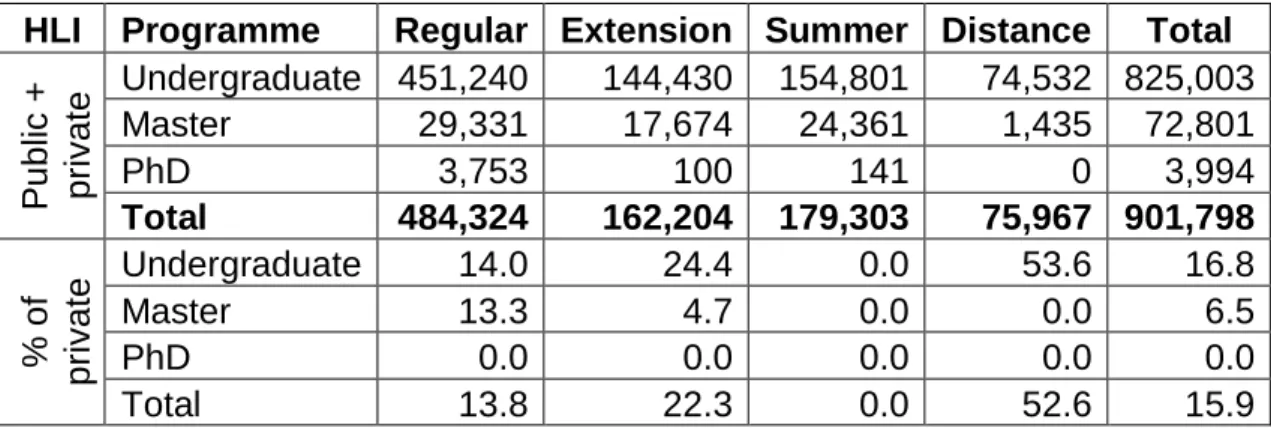
The government of Ethiopia has undertaken an ambitious effort of expanding higher education. This involves reforming the existing HLIs, introducing new fields of study, accrediting new private HLIs and opening new public HLIs. As a result of those activities, the number of HLIs has reached 322 (46 public and 276 private) (HERQA, 2021) and total student enrolment (public and private) at undergraduate and postgraduate levels in regular, evening, summer, and distance education modes of delivery is shown in Table 1.1 below.
Table 1.1 Enrolment statistics in Ethiopian higher education for 2017/18 academic year.
HLI Programme Regular Extension Summer Distance Total
Public + private Undergraduate 451,240 144,430 154,801 74,532 825,003
Master 29,331 17,674 24,361 1,435 72,801
PhD 3,753 100 141 0 3,994
Total 484,324 162,204 179,303 75,967 901,798
% of private Undergraduate 14.0 24.4 0.0 53.6 16.8
Master 13.3 4.7 0.0 0.0 6.5
PhD 0.0 0.0 0.0 0.0 0.0
Total 13.8 22.3 0.0 52.6 15.9
Source: MoE (2018a)
1.4.8 Quality of higher education in Ethiopia
In the Ethiopian context, the ETA was established in 2003 (FDRGE, 2003) as a regulatory body to assure the quality and relevance of education provision in all HLIs in the country. The ETA adopted “fitness for purpose” as a working definition of quality in higher education. During the past 28 years, there has been considerable expansion of the Ethiopian higher education system (MoE, 2018; Ashcroft & Rayner, 2012).
Moreover, to assure and enhance the quality of higher education, the introduction of
12
modular teaching, harmonisation of the undergraduate curriculum, peer learning, continuous assessment, expansion of information communication technology (ICT), conducting external institutional and programme-level audits, and establishment of internal quality assurance mechanisms in each HLI has taken place. However, according to the MoE (2018), these actions have a small positive impact on the quality of HLI’s core process and the capability of graduates.
1.4.9 Conceptual framework of the study
The conceptual framework guides and explains the pathway of research and provides the basis for creating its credibility. Generally, the aim of a conceptual framework is to make the findings of research more meaningful and acceptable to the theoretical constructs in the field of research, to ensure the extension of knowledge, and to enhance the firmness of the research (Adom, Hussein & Joe, 2018). A conceptual framework, according to Grant and Osanloo (2014), explains the precise direction the research will have to follow, the researcher’s understanding of how the research problem will best be investigated, and the connection between the different variables in the study. It illustrates the sequence of actions the researcher plans to carry out in a research study. Ravitch and Carl (2016) suggest that conceptual frameworks reflect the philosophy of the whole research procedure.
The main purpose of this study is to explore the practice of leadership in Ethiopian HLIs in assuring the quality of education and to understand how the quality might have been improved by effective leadership. The study’s conceptual framework is formulated from the relevant literature regarding leadership, quality assurance, and the context of HLIs. Based on these concepts, the framework has four aspects, namely the quality assurance practice of HLIs, leadership practice, external and internal institution structure. A detailed discussion of these aspects of the conceptual framework is presented in Chapter 2.
1.5 RESEARCH QUESTIONS
The study is guided by the following six research questions:
The main research question is: What are the leadership factors affecting the delivery of quality education in Ethiopian HLIs?
13
The secondary research questions emanating from the main question are:
How does leadership in the Ethiopian HLIs work to ensure a quality education?
What challenges does leadership in the Ethiopian HLIs experience in delivering quality education?
How does leadership in the Ethiopian HLIs address the challenges experienced in delivering quality education?
What context-specific model of improving quality education delivery can be suggested for leadership in the Ethiopian higher education sector?
What strategies can be developed to address challenges of leadership in assuring the quality of education?
1.6 AIMS AND OBJECTIVES OF THE STUDY 1.6.1 Aim of the study
Based on the research questions and problem, the aim of this study is to understand the effectiveness of leadership in assuring quality education in the HLIs of Ethiopia.
1.6.2. Objectives of the study The objectives of this study are:
To explore how leadership in the Ethiopian HLIs works to ensure quality education;
To examine challenges that leadership in the Ethiopian HLIs experience in delivering quality education;
To investigate how leadership in the Ethiopian HLIs addresses the challenges experienced in delivering quality education;
To suggest a context-specific model of improving quality education delivery for leadership in the Ethiopian higher education sector to mitigate the problems and challenges;
To develop strategies for addressing the challenges of the leadership in assuring the quality of education.
14 1.7 RESEARCH METHODOLOGY
Owing to the mixed character of the research questions, this study applies a mixed methods research approach. According to Johnson, Onwuegbuzie and Turner (2007) and Maxwell (2018), mixed methods research is the type of research in which a researcher merges components of quantitative and qualitative research methods and approaches (for example, data collection, analysis, viewpoints, and inference techniques) in order to obtain an in-depth understanding of and justification for a given subject under study. This approach is helpful for a better understanding of multiple issues by complementing or triangulating one set of findings with another and so enhancing the validity of inferences (Plano Clark & Ivankova, 2016; Mertens, 2007;
Creswell & Plano Clark, 2018).
A mixed methods design is employed in this study because leadership and quality education in HLIs are multifaceted issues that require the viewpoints of various stakeholders and the collection of data from various sources to get a better understanding of the topic under study. The mixed methods approach is useful to explore leadership competence in assuring the quality of input, process, output and outcome of the HLIs compared to given standards and indicators by collecting data from various sources. This study has been conducted by selecting four sample HLIs (two public and two private) from the existing total number of 322 (46 public and 276 private) HLIs in Ethiopia.
1.8 DEFINITION OF KEY CONCEPTS
Academic leadership is “the act of building a community of scholars to set direction and achieve common purposes through the empowerment of faculty and staff”
(Wolverton & Gmelch, 2002:33).
Higher education in Ethiopia is “education in the arts, sciences and technology, and social sciences programs offered to graduate and undergraduate students who attend degree programs through regular, continuing, distance or virtual education” (Ethiopian Higher Education Proclamation no.1152/2019, article 2:8).
Higher learning, which has the same meaning as higher education is a sub-sector of education which comes after secondary education and embraces undergraduate and graduate programmes.
15
Institution refers to a “public or private higher education institution” (Ethiopian Higher Education Proclamation no.1152/2019, article 2:9).
Private institution is a “non-public higher education institution established by one or more individual owners or by non-profit making associations, founded as cooperative society or commercial association, or higher education institution established abroad and operating in Ethiopia” (Ethiopian Higher Education Proclamation no.1152/2019, article 2:11).
Public institution refers to “an institution whose budget is allocated by the Federal or State Government, as the case may be” (Ethiopian Higher Education Proclamation no.1152/2019, article 2:10).
1.9 CHAPTER OUTLINE
This thesis is organised into six chapters. Following this introductory chapter, the second chapter presents the conceptual framework of the study, focusing on the context of HLIs, institutional leadership, and quality assurance systems in higher education. Chapter 3 explores leadership and quality assurance in higher education, while Chapter 4 presents the methodology of the research including sample and sampling techniques, data sources, data collection techniques and instruments, data analysis and interpretation, reliability and validity/credibility and trustworthiness, ethical procedures of the research and justifications regarding the decisions made to use the mixed methods design in this study. The empirical findings are presented in Chapter 5, based on analysis and interpretation of data. The final chapter offers a summary of the research findings, with recommendations and conclusions based on the research findings.
1.10 SUMMARY
Examination of the relevant literature on leadership in HLIs reveals that the efficiency of the academic leadership system of Ethiopian higher education is the least-studied area. One of the rationales for conducting this research is, therefore, to add to the current discourse of academic leadership effectiveness in assuring quality education in HEIs.
16
This study may be considered useful because it bridges the research gap in connection with leadership effectiveness in assuring quality education in Ethiopian HLIs.
Furthermore, it serves as a reference for additional research work and helps to increase stakeholder awareness of the HLIs’ leadership practice and quality of education. It also identifies the challenges and proposes corrective measures to be taken for further improvement. Finally, the outcome of the study will add value to the interests of the ETA, the MoE, educational policymakers, researchers, and decision- makers who are striving to enhance the quality of higher education in Ethiopia.
17 CHAPTER 2
CONCEPTUAL FRAMEWORK
2.1. INTRODUCTION
The main objective of the study is to explore the leadership factors affecting the delivery of quality education in Ethiopian IHLs and the internal and external factors encountered during the exercise of leadership. While the previous chapter focused on an introduction to and overview of the study, this chapter focuses on the conceptual framework for the study. It begins with a brief discussion of the conceptual framework to understand the sequences of subjects to be studied, focusing on the internal and external institutional contexts, institutional leadership and the quality assurance system. The four dimensions of the conceptual framework are then discussed in detail.
2.2 CONCEPTUAL FRAMEWORK FOR THE STUDY
The conceptual framework directs and describes the research path and makes the research findings more credible and meaningful. It helps the expansion of knowledge and inspires research by providing both impetus and direction to research inquiry (Adom, Hussein & Joe, 2018). A good understanding of the conceptual framework will ensure good research and gives life to research work (Imenda, 2014). The conceptual framework demonstrates the researchers’ map of the research study they seek to undertake (Adom et al., 2018). It illustrates the specific path and sequence of actions the research will have to follow; it enhances understanding of the researcher on how the problem under study will best be explored, and demonstrates the relationships among the various variables in the research work (Grant & Osanloo, 2014).
According to Camp (2001), a conceptual framework is a systematic ordering or arrangement which the researcher thinks can best describe the usual sequence of the issue to be studied. It is related to the empirical research, thoughts, and significant approaches applied in advocating and organising the knowledge adopted by the researcher (Adom et al., 2018). The framework is the researcher’s clarification of how the research problem will be investigated. It is structurally arranged to help in giving a
18
visual display or a picture of how ideas relate to each other in a given study (Grant &
Osanloo, 2014). A conceptual framework can be in a narrative or graphic form depicting the key constructs or variables to be investigated, and their relationships (Miles & Huberman, 1994). The conceptual framework helps researchers to identify and create their worldview of the phenomenon to be researched (Grant & Osanloo, 2014). It reflects the perspective of the entire research process (Ravitch & Carl, 2016).
This study assumes that HLI leadership is one of the most prominent factors influencing the quality of higher education outcomes. Effective academic leadership is, in turn, the result of interaction between the various external and internal contributors involved in the structure of HLIs (Jaramillo, Moreno, Demenet, Zaafrane, Monet, Trenner & Marchionne, 2012). In this study, the main internal contributors to the structure of the HLIs are the human resources (staff and students). Attention must also be given to the material resources, regulations/policies, curriculum, teaching and learning, quality assurance mechanism, implementation of regulations, and working culture of the institution. The external contributors, in the Ethiopian context, are the regulatory bodies outside the institution, namely the MoE and the ETA. Employers, industry, research institutions, national and international HLIs and secondary schools which are suppliers of students to the HLIs can also be considered as external contributors involved in the structure of HLIs.
The study’s conceptual framework is designed according to the quality assurance systems, the HLIs’ context and literature on leadership. Based on these concepts, the study’s conceptual framework encompasses four dimensions: internal and external HLI structure, leadership practice, and quality assurance systems of HLIs. The effectiveness of the quality assurance practices which lead to improved student learning in the HLIs depends on the effectiveness of leadership and on internal and external factors. Therefore, the effectiveness of the quality assurance practices is considered the study’s dependent variable. Figure 2.1 is a graphic presentation of the four dimensions of the conceptual framework, followed by an explanation of each dimension. The influence on the variables and the interaction between actual practices are indicated by single arrow lines and double arrow lines respectively.
19 Figure 2.1: Conceptual framework of the study
2.2.1 Existing quality assurance practice
To discharge their responsibilities, HLIs instigate their function by designing curricula, preparing regulations and working guidelines, and by receiving inputs such as administrative and academic staff, students, and resources (financial, physical, and information) from their environments. They then transform those inputs through the educational process by implementing the regulations, utilising the resources, conducting teaching and learning and student assessment. Finally, they produce outputs in the form of services and graduates. In this way, a quality assurance system refers to what the HLIs do to ensure their overall educational delivery (inputs, processes, and outputs).
Ensuring the quality of educational provision requires policies, standards, structures, systems, procedures, and resources and, more importantly, involvement and commitment of leadership at all levels. Moreover, participation of administrative/support staff, academic staff, students, and external stakeholders;
transparency and accountability are also vital elements in enforcing good quality assurance practices that enhance quality of student learning. Students are the main stakeholders of HLIs. In this regard, many researchers agree that the focus of quality assurance activities should be on the enhancement of students’ learning (Aksu, 2018;
D’Andrea, 2007; Tam, 2002). As Tam (2002) notes, the critical goal of HLIs is Existing quality
assurance practice
Internal organisational structure Leadership
practice
Improvement of educational quality/student performance External organisational structure/environment