LEARNERS' RESPONSES TO AN AIDS - RELATED DEATH IN THE FAMILY OF A CLASSMATE
by
Oosha Darshani Murugan
A research study submitted as the dissertation component in partial fulfillment of the requirements for the Master of Education Degree
in the Faculty of Education University of KwaZulu-Natal
Supervisor: Professor Naydene de Lange January 2007
ACKNOWLEDGEMENTS
Without a shadow of doubt, this study would not have been possible without the
invaluable assistance of a number of people in my life. Therefore, I would especially like to thank:
Jesus Christ through the intersession of Virgin Mother Mary.
My family, my dearest husband (Gona), my two daughters Prianka and Natasha and my son Shaun. Without their support and tolerance this study would never have been possible.
My dedicated supervisor, Professor Naydene de Lange, for her absolute commitment and dedication. Your guidance and wisdom will be forever cherished.
My mum (Mercia) and dad (Sathnarain) who always provided support and inspiration that motivated me.
The principal, staff and learners of the school in which I teach.
DECLARATION OF ORIGINALITY
I, aaSHADARSHANI MURUGAN, declare that this is my own work and all the sourcesI have used or quoted have been indicated and acknowledged by means of complete references.
(;{ /il-l
,,- , 7f/,,~" o.1/\,
-- --
---f----jf~----
a.D.MurugatV (202520266)
11
ABSTRACT
The death of a parent has implications for learners at school in terms of interrupting schooling and having long-term educational, emotional and social consequences. HIV and AIDS is a reality in South Africa and has orphaned more than 12,5 million children in sub-Saharan Africa (UNICEF, 2001). Orphans tend to move house due to their circumstances and therefore their schooling may be disrupted. Young children are often forced to take on adult responsibilities, which they have not been prepared for which then interferes with their schooling. The classmates too, are affected by the experience of death of the family member of a classmate. This research attempts to explore how learners respond to the death of a family member of a classmate. To achieve these aims, a qualitative, descriptive and contextual research design was chosen. The first theme regarding learners responding to rumours revealed various categories i.e. speculating whether the affected learner has AIDS, origin of the information regarding the death, showing concern to the affected learner and perceptions of HIV and AIDS. The second theme regarding responding to the affected learner revealed the following categories, positive gestures, fear of being ostracized and misconceptions leading to stigmatization.
The third theme regarding taking action showed the following categories, being helpful, being mean and acquired knowledge. The information is used to generate guidelines to help educators facilitate suitable responses to a death in the family of a classmate.
TABLE OF CONTENTS
TITLE PAGE
ACKNOWLEDGEMENTS
DECLARATION 11
ABSTRACT iii
TABLE OF CONTENTS iv
1 CHAPTER ONE: INTRODUCTION
1.1 BACKGROUND TO THE STUDY 1
1.2 THEORETICAL LOCATION OF THE STUDY 2
1.3 STATEMENT OF THE PROBLEM 3
1.4 AIMS OF INVESTIGATION 3
1.5 CLARIFICATION OF CONCEPTS 4
1.5.1 Learners 4
1.5.2 Responses 4
1.5.3 Death 4
1.5.4 Family 4
1.6 RESEARCH DESIGN AND METHODOLOGY 4
1.6.1 Research Design 4
1.6.2 Methodology 5
1.6.2.1 Sample 5
1.6.2.2 Data Collection and Analysis 5
1.7 ETHICAL CONSIDERATION 6
1.8 ORGANISATION OF THE STUDY 6
1.9 CONCLUSION 6
2 CHAPTER TWO: THEORETICAL FRAMEWORK 8
2.1 INTRODUCTION 7
2.2 THE ECOSYSTEMIC APPROACH 7
2.3 HIV AND AIDS POLICY 11
2.3.1 The South African constitution 11
2.3.2 DoE guidelines for educators 11
2.3.3 School policy on sexual health 13
IV
2.3.4 Education White Paper 6 15
2.3.4.1 Introduction 15
2.3.4.2 Barriers to learning 16
2.3.4.3 Unsafe schools 17
2.3.4.4 Rape, assault and sexual harassment 18
2.3.4.5 Stigma and trauma 18
2.3.4.6 Lack of affordable schooling 20
2.3.4.7 Fear of infection 20
2.3.5 Community's role with regard to HIV and AIDS 21
2.3.6 Peer role with regard to HIV and AIDS 22
2.4 ROLE OF EDUCATION 22
2.4.1 Prevalence of HIV and AIDS 22
2.4.2 Educating young affected learners 23
2.4.3 Ecosystemic thinking to understanding the complexity of HIV 24 and AIDS
2.4.4 Medical understanding of the disease 24
2.4.5 Educators' perceptions of HIV and AIDS 25
2.6 IMPACT ON SCHOOLS 27
2.6.1 Introduction 27
2.6.2 The teaching-learning process 27
2.6.3 School enrolment 28
2.6.4 Access and treatment 28
2.6.5 Teaching staff 29
2.6.6 Responding to HIV and AIDS at school 30
2.6.6.1 Human values at school 30
2.6.6.2 Powers exercised by schools 31
2.6.6.3 Affected learners' experiences of death 31
2.7 MEETING THE CHALLENGES OF EDUCAnON 32
2.7.1 The role of content of the curriculum 33
2.7.2 The organization of primary education 33
2.7.3 The cost effective community-based initiatives 33
2.8 FAMIL Y AND HIV AND AIDS 34
2.9 THE INDIVIDUAL AND HIV AND AIDS 36
2.9.1 Introduction 36
2.9.2 Grief 36
2.9.3 Support 36
2.9.4 Help 36
2.9.5 Truth 37
2.9.6 Commemorative activities 37
2.9.7 Counselling 37
2.9.8 Expert help 38
2.10 CONCLUSION 38
3 CHAPTER THREE: RESEARCH DESIGN OF 39 METHODOLOGY
3.1 INTRODUCTION 39
3.2 RESEARCH QUESTIONS 39
3.3 RESEARCH AIMS 39
3.4 RESEARCH DESIGN 40
3.4.1 Introduction 40
3.4.2 Qualitative approach 40
3.4.3 Interpretative paradigm 41
3.4.4 The case study 41
3.5 METHOD 42
3.5.1 The research site 42
3.5.1.1 The school population 43
3.5.1.2 Religious representation 43
3.5.1.3 The teaching staff 44
3.5.1.4 The class 44
3.5.2 Data collection 45
3.5.2.1 Sampling 45
3.5.2.2 Method of data collection 46
3.5.3 Data analysis 48
3.6 TRUSTWORTHINESS 49
3.6.1 Credibility (Truth Value) 49
3.6.2 Applicability (Transferability) 50
3.6.3 Consistency (Dependability) 50
3.6.4 Neutrality (Confirmability) 51
3.7 ETHICAL CONSIDERAnON 51
VI
3.8 THE RESEARCHER AS AN INSTRUMENT 52
3.9 CONCLUSION 53
4 CHAPTER FOUR: ANALYSIS AND DISCUSSION OF 54 FINDINGS
4.1 INTRODUCTION 54
4.2 FINDINGS 55
4.3 DISCUSSION OF FINDINGS 55
4.3.1 Theme 1: Responding to rumors 55
4.3.2 Theme 2: Responding to the affected learner 60
4.3.3 Theme 3: Actions taken 65
4.4 CONCLUSION 69
5 CHAPTER FIVE: SUMMARY, CONCLUSION AND 70 RECOMMENDATIONS
5.1 INTRODUCTION 70
5.2 SUMMARY OF RESEARCH 70
5.3 CONCLUSION 70
5.4 RECOMMENDATIONS 72
5.5 LIMITATIONS 74
5.6 SUGGESTIONS FOR FURTHER RESEARCH 75
5.7 CONCLUSION 75
5.8 BIBLIOGRARHY 76
ADDENDA VII
A Vignette
B Consent for learners to participate in the research study
C Informed Consent
D Ethical Clearance
E Permission from the Department to conduct the research F Sample of interview
LIST OF TABLES
1 School Population 43
2 The School 43
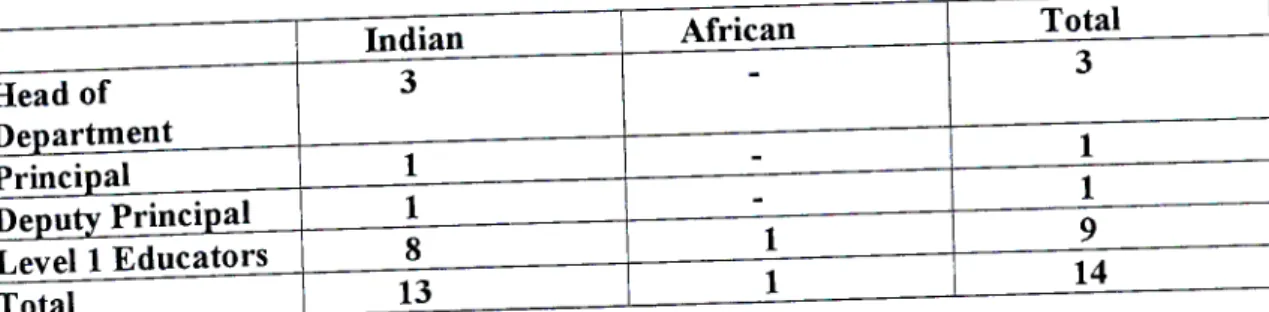
3 Teaching Staff 44
4 Class Population 44
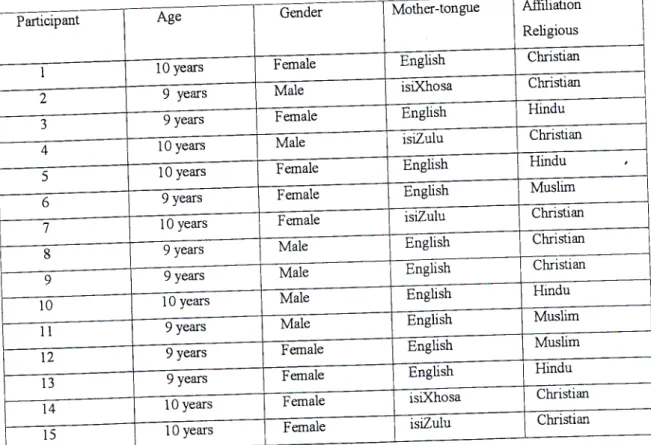
5 Biographic Information of Participants 45
CHAPTER ONE
INTRODUCTION
1.1 BACKGROUND TO THE STUDY
More than 13 million children under the age of 15 have lost theirmothers or both parents to AIDS (UNICEF, 2001). Itis estimated that a vast number of these orphans live in sub- Saharan Africa. The Department of Health has estimated that by 2005 nearly 13 million South African children will have lost their mothers to AIDS before reaching the age of 15. This arouses the fear that the AIDS pandemic will result in a 'lost generation' of dysfunctional and delinquent young children who have been inadequately cared for, educated or socialized. The AIDS epidemic has serious implications for educators and learners. Education, however, ~las to transmit informati~)I1about HIV and AIDS and play a central role in the prevention thereof, yet the disease undermines the structure and function of education itself (Malaney, 2000, p. 3) The HIV and AIDS pandemic therefore poses serious threats to reaching the Education for All Goals for 2015 (Allenmano, 2002, p. 8). According to Coombe (2000, p. 1) it is necessary, while working to limit the spread of the disease, to recognize and manage the pandemic's impact on the educational system, especially on the learners. Learners in the South African educational system have not been sufficiently prepared to handle the pandemic. They are insufficiently prepared within the educational context, as well as the social context, yet infected and affected learners are expected to develop in all areas of their lives. Educators too are also not sufficiently prepared to cope with HIV and AIDS within the educational context, i.e. to teach, facilitate the development of and provide support for these learners. Although some educators have knowledge of HIV and AIDS, many mayfeel uncertain as to how to deal with it within the classroom context. Education can bring hope to a seemingly/ hopeless situation (Kelly, 2000). There are many studies on HIV and AIDS 'in general, but no research has been done on grade 4 learners' responses to an HIV and AIDS affected learner. It is therefore necessary to explore learners' responses to the death of a family member of their classmate.
1.2 THEORETICAL LOCATION OF THE STUDY
The focus of the study is to examine learners' responses to a death in the family of a classmate. This is explained from an Educational PsychologyperspeGtiv~
lwt
minctf\ll of how learners respond to a death in the family of a classmate. From the aim of this study it is evident that there could be many layers of influence on children from the macro, structural, political and ideological through to the community, individual and class contexts (Bronfenbrenner, 1989). A favoured model for understanding the impact of the environment on the person is, therefore Bronfenbrenner's (1989) ecological system theory, which will be used to understand how learners are affected by HIV and AIDS.These layers fuse and interact to result in the individual and class contexts that comprise everyday learning. It is therefore possible that, for example, misconceptions, behaviours and opinions of role models and peers can influence the responses to learners affected by HIV and AIDS, considering the influence of theschool~the immediate cultural context as well as the influence of the wider society. According to the ecosystemic approach a person is seen as a subsystem and the central point of concentrically larger systems.
These may include the family, school, peers, religious groups, community etc. Each of these systems influences the person's behaviour, attitudes, personality, values and other subsystems, which comprise the person. The interactive and interdependent relationship between and amongst the learner and the subsystems also impacts significantly on the person (Don aid, Lazarus& Lolwana, 2002).
The ecosystemic approach is a model framed by Bronfenbrenner (1979). It is useful in Educational Psychology, as there are many layers of influence on children's development and learning from the macro, structural, political and ideological through to the community, individual and class contexts that comprise everyday learning. HIV and AIDS impacting on the whole system can be viewed as a barrier to both the teaching and
"
learning process.
In the context of this research, the grade 4 learners are the central point of the various interactive influences of the respective subsystems. The learner gives meaning and interpretation to his/her experiences in an attempt to internalize and accept these
experiences as part.of his/her reality. The reality that the learner constructs is informed by the various impacting subsystems. It is hypothesized that the learners' perceptions or responses to a death in the family of a classmate will
be
a consequenceof the
influcncli: of the afore-mentioned subsystems.1.3 STATEMENT OF THE PROBLEM
According to the United Nations Children's Fund (UNICEF, 2001), 13 million children under the age of 15 have lost their mothers or both parents to AIDS. It can be expected that these learners would experience trauma and require support in the educational context. Learners are the most important constituents of schooling, and being in the classroom among other learners is a vital aspect of development. Therefore, it is necessary to explore how learners may respond to the death of a family member of a classmate, considering that the death might be HIy and AIDS related. The research question can be formulated as follows:
What are grade 4 learners' responses to an AIDS - related death in the family of a classmate?
A secondary question that arises from the primary question is:
How can the information gained be used to generate guidelines for educators to facilitate suitable responses to an AIDS - related death in the family ofa classmate?
1.4 AIMS OF INVESTIGATION
The aims of the study can be formulated as follows:
• To explore Grade 4 learners' responses to an AIDS - related death in the family of a classmate.
,
• To generate guidelines for educators to facilitate suitable responses to an AIDS - related death in the family of a classmate.
1.5 CLAIUFICATION OF CONCEPTS 1.5.1 Learners
Learners are children who acquire knowledge or skill in something through study or experience or by being taught. For the purpose of this research learners refer to grade four learners, at the beginning of the intermediate phase of school.
1.5.2 Responses
Responses refer to the manner in which persons respond, answer or react to a certain action or experience. In this case it refers to learners' responses to the death of a classmate's father.
1.5.3 Death
For the purpose of this study, death refers to the loss of life or end of life due to HIV and AIDS. The Department ofHe~lth(1998) states that half of South Africa's children aged around 15 years and younger could die due to HIV and AIDS. Deaths of parents and siblings are common in many households. Young learners are not prepared to handle death in the primary school.
1.5.4 Family
Family refers to a group of people related by blood or marriage or the children of a person or a couple. In the study family refers to parents and their children living together as a unit.
1.6 RESEARCH DESIGN AND METHODOLOGY 1.6.1 Research Design
A qualitative, explorative and descriptive research design (Mouton & Marais, 1990) that
"
is suitable for the exploration of young learners' responses to death will be used. This approach will enable me to gather information to gain understanding of how grade 4 learners in a particular class respond to a death in the family of a classmate. Their responses will enable me to address the research questions and to understand the deeper meaning of their responses to affected learners. Qualitative research allows for a rich description of the phenomenon under investigation (Voster, 1995).
1.6.2 Methodology
The interview will be used in an informal manner to gain information on how grade 4 learners respond to another learner affected by AIDS. A vignette will be used to prompt the pm1icipants to respond. Participants will engage with the story because of the personal experience with HIV and AIDS. The questions will aim to find out how they would respond to people affected by AIDS.
1.6.2.1 Sample
The research will be conducted in a grade 4 class at a school in the Overport area situated in the Umlazi District within the Ethekwini Region in KwaZulu Natal. The school is a primary school with 620 learners. The learners follow the NCS curriculum (National Curriculum Statement). The class has 42 learners, 22 ~irls and 20 boys. Many of the learners have lost friends, family or community members due to HIV and AIDS. The participants are within the age group of 8-10 years. A purposive sampling technique will be employed. The research will include as many learners as are willing to participate, and participants will be sought until the data is saturated.
1.6.2.2 Data Collection and Analysis
As it is difficult to collect data from young learners, a vignette, sketching a scenario, will be used as prompt. Learners will be asked to respond to one question. 'What would you do if you were in Mary's class?' The vignette (see attachment A) will be used, because it allows learners to define the situation in their own terms. Hughes (1998, p. 38) states that vignettes are "Stories about individual situations and structures that can make references to important points in the study of responses, beliefs and attitudes"" Further
I
probing and clarifying questions will be asked. '
The data produced will be recorded and transcribed. The transcribed data will be analyzed and coded according to Tesch' s method (Cresswell, 1994) and the units of meaning will be identified and arranged into themes, along with suitable categories.
Measures of trustworthiness will be applied i.e. credibility (truth value), transferability
(applicability), dependability (consistency) and conformity (neutrality) (Krefting, 1991;
Lincoln and Guba, 1985). The results obtained from this research will be used as the basis for generating guidelines in the form of recommendations for educators.
1.7 ETHICAL CONSIDERATIONS
Permission to do research will be sought from the Department of Education (DoE), principal of the school and parents of the learners. Informed consent will be acquired from the participants and ethical measures such as voluntary participation; confidentiality and anonymity will be adhered to (Cresswell, 1994).
1.8 ORGANISATION OF THE STUDY
This chapter has described the problem and the context of the research as well as the intended research design and methodology to be followed. Chapter two reviews literature around HIV and AIDS and education from an ecosystemic perspective. It also focuses on the impact of the death on all layers of the ecosystem, including the individual child.
Chapter three describes the research design and methodology used in this investigation.
Chapter four presents the findings and the discussion of the data. Chapter five draws
conclusions and recommendations emanating from the study.
1.9 CONCLUSION
The vulnerability of children in the primary school is evident due to the fact that these learners often are in the care of terminally ill parents, have lost their parents to HIV and AIDS related illnesses, or may be HIV positive themselves (Department of Health, 1998).
These learners may have also witnessed the illness of parents as well as siblings.
Learners are placed in real, trying conditions, and it is necessary to conductthi~ study in order to explore how learners respond toa death in the family of a classmate. "
CHAPTER TWO
THEORETICAL FRAMEWORK 2.t INTRODUCTION
The main purpose of this study is to explore how learners respond to the death ora 1~\Inily
member of a classmate, and therefore this chapter tries to provide some theoretical framework to understand their responses, but also to explain different ways 01'dealing with death in the classroom, as well as dealing with children who are either in the care of terminally ill parents or who have lost their parents to AIDS-related illnesses. The lilY and AIDS pandemic is rendering an unprecedented number of children e~tremely
vulnerable. Many children themselves are HIV positive, have family affected by HIY and AIDS and often live in conditions of poverty (Department of Health, 1998). Malaney (2000, p. 5) also states that the death of a parent can be expected to have deep psychological effects on children. The effects of such an incident on the interaction between members of the class are highlighted in this study.
2.2 THE ECOSYSTEMIC APPROACH
The study is be framed by Bronfenbrenner's (1979) ecological systems theory often used in Educational Psychology, as there are many layers of int1uence on children's understanding of and experience of death, from the macro, structural, political and ideological through to the community, individual and class context (Bronfenhrenner, 1989). These layers fuse and interact to impact on the individual, and everyday learning.
This research looks at classmates' responses to learners being affected by AIDS considering the influence of the school, the immediate cultural environment as well as the influence of the wider society. A favoured model for understanding the reciprocal impact of the environment on the person and vice versa, is Bronfenbrenner's (1979) ecological systems theory. The learner spends the major part of the day in the classroom with his peers and educators and the classroom therefore can become the environment that either undermines or supports the learner. The linkage between learner and the educational
system and the A IDS pandemic can be seen as a dual one. On the one hand, the school system provides a mechanism for the transmission of information about HIV prevention and care and can therefore fulfil a prevention role. The care role needs to be fulfilled as wcll, and one \vonders how this can be achieved in the class and at school level. On the other hand. the disease undermines the structure and function of education itself (Malaney, 2000, p. 3).
When one looks more closely at the ecosystemic approach one sees that it is an integration of certain fields of study, such as the system theory, ecology and cybernetics.
These fields of study have a number of overlapping assumptions and their epistemologies are compatible. More importantly, they all emphasize epistemological principles. An epistemology refers to a palticular way of thinking which determines how we know and understand thc world around us (Bateson, 1979). The ecosystemic approach emphasizes a particular "way of thinking" or "way of knowing" and this "way of thinking and knowing" rests on certain underlying assumptions and principles, and certain ecosystemic concepts \Vh ich describe these assumptions and principles. These concepts then serve as mcchanisms for describing human functions (Boer& Moore, 1994; Fourie, 1994).
An ccosystemic epistemology in psychology assumes in the same way that the emphasis is on discussing the communication networks in systems and subsystems, and on the transactions that take place in a particular context. With humans, the communication networks occur in the form of language because language, both verbal and nonverbaL is the most important means of communicating meaning and ideas among people (Anderson
& Goolishiam, 1990; Fourie, 1994). As Bateson (1979) puts it then, the ecosystemic approach has to do with an ecology of ideas in systems.
DIAGRAM 1
The following diagram reflects an ecosystemic approach. Levels of system related to the educational process (Donald et aI, 2002, p. 49)
1
Figure 3.5 Levels of system related to the education process
In an ecosystemic approach an individual is seen as a subsystem within a hierarchy of a larger system such as the family and the community. The individual does, however, occupy the central position within the system yet s/he is made up of certain subsystems.
Some of the subsystems that have been identified include physiological, interpersonal, verbal and non-verbal (Jasnoski, 1984).
The ecosystemic approach also recognizes the important role played by the language a person uses when assigning meaning. In fact meaning exists solely in verbal or non- verbal language which the person reveals to himself/herself through internal dialogue or to others through external dialogue (Erfan & Lukens, 1985; Fourie, 1994). The ecosystemic approach has a constructivist epistemology which emphasizes the idea that
9
the meaning a person attaches to a topic or the experience is determined by the person and not by the topic or experience (Mills & Sprenkle, 1995).
According to the ecosystemic approach the network of meaning is the manner in which an indivic!;.IaJlooks at the world. It reflects his/her needs, wishes, goals, values, ideas and beliefs of the larger system of which the person is part, and the interactional patterns between these systems. Human growth and development are thereforealso seen in terms of the changes that take place in the patterns of meaning of systems (Lindquist, Molnar,
& Brauchman, 1987).
Learners are in a central position as a subsystem within larger systems and as a system with certain subsystems of its own. These learners' families are part of the ecosystem.
Each family has their own diverse sets of values, beliefs and experiences. The family lives amongst a community that has the following in common - raising children in an environment where violence is rampant, HIV infections are increasing, drugs are easily available and high risk sexual activity is the norm. The child is faced with many difficult choices and it is important that the learner is taught to understandthe consequences of their actions and decisions (Department of Health, 1998). Thevalues that the community upholds influence the choices the child makes.
A learner, according to Overberg (1994), may be affected by HIV and AIDS when a parent, a sibling, friend or family member is infected. This is so because the ecosystem interacts at all levels, allowing information to flow across makingit possible for systems to influence one another (Jasnoski, 1984). Learners are invariably affected at school, thinking of the situation they left back at home thus hindering their functioning and interaction at school.
The loss of one or both parents has an effect on the arrangementof the family in terms of income loss, lack of food supply, the quality of the care given to children after the death of parents and the duties placed on young children. Death canbe extremely stressful on all members of the family, and all areas of family life and relationships can be strained (Fourie, 1994).
With reference to the ecosystemic approach and the focus ofthe research, one needs to keep in mind that no one lives in a vacuum. An individual's sero-positive status has a tremendous effect on the systems in which s/he exists and the infected person is simultaneously affected by these systems. Likewise, the affected learner, as part of the system, e~:per;encesthe effect thereof.
With regard to the ecosystemic approach and the research, onerealizes that the approach can be used to improve observations, communications and the relationships within the system (e.g. the school). The approach can be used by the school to identify the problems, anxieties and issues related to HIV and AIDS, to verbalize what is wanted or needed within the confines of the school, and to improve communication amongst the various subsystems in the school, thereby supporting the vulnerable learner (Donald et aI.,2002).
2.3 HIV AND AIDS AND POLICY
2.3.1 The South African constitution
The Constitution, (Act 108 of 1996) (RSA, 1996) is the supreme law of the country and all other laws must comply with its provisions. The Bill of Rights (which is part of the constitution) enunciates a number of basic human rights which apply to all citizens and which therefore also protect all people living with HIV and AIDS.
2.3.2 DoE guidelines for educators
Furthermore, the South African Law Commission Consultative Paper and Children Infected and Affected by HIV / AIDS (1998) specifies that:
• No learner, student or educator with HIV and AIDS may be unfairly discriminated against, directly or indirectly. Educators should be alert to unfair accusations against any person suspected to be HIV positiveor who has AIDS.
• No learner or student may be denied admission to or continued attendance at a school or at an institution on account ofhislher
mv/AIDS
status.• Learners and students with
mv
have the right to attend any school or institution.TIle i:ceds of learners and students withHN and AIDS with regard to their right to basic education should as far as is reasonably practicable be accommodated in the school or higher education institution.
• Compulsory disclosure of the learner's, student's or educator's
mv
and AIDS status to school or institution authorities is not advocated as this would serve no meaningful purpose.• Learners and students with
mv
and AIDS should lead as full a life as possible and should not be denied the opportunity to receive an educationto the maximumof their ability.
In spite of the above guidelines, the affected learner experiences more or less the same psychosocial feelings as do their
mv
infected family members (Johnson, 2000, p. 12).The affected learner may experience fear and anxiety about his/herown risk of infection, as s/he watches the parent die, because the learner might be tooyoung to understand how this disease was contracted. Affected learners may also feel unable to cope with the new demands that the infection places on them, and may feel powerless in their interaction with their
mv
positive family member. This could result in them wanting to distance themselves from the disease process as well as the person. "Denialof the illness becomes a negation of the person, accounting for much of isolation experienced by the RN- positive person" (Johnson, 2000, p 84). Therefore, learners could suffer when their parents are infected as the needs of the children with infected parents are often disregarded. They need acceptance, respect, certainty, affiliation, substance, love and protection. These are seldom directly addressed because caregivers do not know how to talk to the children (Van Dyk, 2001).The school can assist with not only prevention, but also care and support. Morrell, are overloaded and that
things that should be fundamental to every learning environment are lacking. The learning environment should be able to provide and supportlearners affected by HIV and AIDS. Such learners may experience loss of control, loss of independence, loss of determination, status and respect in the community. The most common loss is that of confidenc') (IT)d self-worth occasioned by the rejection of thepeople who are important to them. Most affected learners go through a phase of abandon. This is common because it temporarily reduces emotional stress. Children should beallowed to cling to their loss because it allows them to gather their strength and accept their loss. The self-esteem of the learner should not be intimidated. Being snubbed by peers or educators causes the
learner to lose his social identity (Hepburn, 2001).
Socioeconomic and environmental problems such as stigma and discrimination may cause psychosocial problems. Children take on the responsibility to earn an income, produce food and care for family members because they can'thandle the discrimination and stigmatization, and so drop out of school to do all ofthe above. HIV and AIDS affected children become so preoccupied with their health or the health of their parents, that the smallest physical changes or sensations can cause obsessive behaviour or hypochondria. This may be short term and limited to the time immediately after diagnosis, or it may persist in people who find it difficult to adjustto or accept the disease (Van Dyk, 2001).
HIV and AIDS affected children are not the only ones who are vulnerable. There are many other disadvantaged and challenged children, and the education system needs to create acceptable health promoting, secure and compassionate learning environments where the needs of such learners can be addressed.
2.3.3 School policy on sexual health
In terms of policy and the ecosystem, the learner is part of acommunity, and school plays an important role as far as the community is concerned. Schools can be viewed as places that uphold the ethics and values that the community upholds. Policies are important in any school as they set boundaries in so far as school life isconcerned. It is important to formulate and put into practice these policies. When one considerspolicies important for
learners, good health policies can help to maintain a healthylifestyle, good nutrition and exercise. Ithelps learners have a better understanding of their bodies and how viruses affect it (Webb, 2001). Policies on care and treatment needs of those infected or affected with HIV and AIDS also help leamers to understand other affected learners in terms of their respt::l8p.,to and interaction with these learners. They canhelp to learn to empathise, to show compassion and not to stigmatize and discriminate.
Good quality sexual health and HIV and AIDS education is needed in order to provide the affected child with the facts which they rarely get from their parents or senior family members. This education should go beyond the biological facts to include many aspects of behaviour and ultimately of attitudes and values. It is notnew for schools to seek to influence behaviour and instill values that parents, family andcommunity leaders seldom do. The school seeks to influence the student through the curriculum and through the values that it embodies. We need to have a clearer perception of "education as being the process of identifying the valuable, opening it to others andinculcating it in them"
(Collins & Rau, 2000, p. 84). This view is strengthened by the modern approach to the school as an organization. Through the sexual health and HIV and AIDS programmes, the school should also seek to help learners to develop personallyheld choices while at school and throughout life. These choices should also includehow to interact with others infected and affected by HIV and AIDS (Collins & Rau, 2000).
HIV infection hampers the possibility of full development of the affected learner. The right to education includes the right to knowledge and skillsneeded for HIV prevention.
Such a right can only be employed if theschool curriculum deals effectively with sexual health and prevention and care. Sexual health and HIV and AIDS education are a prerequisite for individual and community survival (Car-Hill, Kathabora, & Kathabora, 2000).
Beside the HIV and AIDS programmes, it is the school's responsibility to help the affected learner develop practical, psychological and social skillswhich equip him/her for positive social behaviour and for coping with negative pressures. These learners need to know how to investigate a situation, how to assess the elementof risk that it contains, and Education sees a core set of
these life-skills as including "decision-making, problem-solving, creative thinking, effective communication, interpersonal relationships, self-awareness, stress and anxiety management, coping with pressures, self-esteem and confidence"(Ministerof Education, 1996, p. 43). Promoting these skills is the responsibility ofall who are responsible for the educa!:an of the learners.
Human Rights and HIV and AIDS are intimately connected. "An environment in which the human rights are respected ensures that the danger to HIVand AIDS is reduced, those infected with and affected by HIV and AIDS live a life of dignity without discrimination, and the personal and societal impact of HIV infection is alleviated" (UNAIDS, 2000, p.
5). "A crucial need is for schools' human rights programmesto bring HIV and AIDS out into the open to contribute to break the silence, the secrecy,the stigma, the shame that are associated with AIDS" (Carr-Hill et aI., 2000) It is crucialfor the HIV and AIDS policy to emphasize that hope lies in education, education that responds imaginatively to the crisis, and not necessarily education as it has traditionally been known. In this regard I turn to the new Inclusive Education Policy (DoE, 2001) highlighting how learners infected or affected should be included.
2.3.4 Education White Paper 6
2.3.4.1 Introduction
Inclusive education is defined by White Paper 6 on Special NeedsEducation: Building an inclusive education and training system (Department of Education,2001) as an ongoing process of increasing learner participation and reducing the exclusion from cultures, curricula and involvement in communities; acknowledging thatall children can learn and are in need of support; creating enabling education structures, systems and learning methodologies to meet the needs of all learners; acknowledging and respecting differences in learners, whether due to age, gender, ethnicity,language, class, disabilities, HIV or other infectious diseases; acknowledging that learningalso occurs at home and in the community, within formal and informal settings; and changing attitudes, behaviour, teaching methods, curricula and environments to meet the needs of the learner.
It is vital that children affected by RN and AIDS are not discriminated against, are protected from harm and are given the opportunity to develop and learn like all other children (Van Dyk, 2001). The Department of Education (2001) outlines how education must transform itself to contribute to establishing a caring and humane society, how it must char-ge to accommodate the full range of learning needs and the mechanisms that should be put in place.
In accepting this inclusive approach, we acknowledge learners who are most vulnerable to barriers that could impede their learning and development. Exclusion in South Africa refers not only to those who have historically been termed 'learners with special education needs' i.e. learners with disabilities and impairments (Beyers & Hay, 2006), but also learners who are infected or affected by RN and AIDSand orphans (Department of Education, 2002).
Education is supposed to be the fundamental right of all learners. This does not seem so with learners affected or infected by RN and AIDS. This is because these learners are not given support or any specialized programmes. For the system to promote equal opportunities for effective learning to take place, it is imperativethat policy aimed at the creation of education and development for all learners recognizes a range of different needs among learners. All learners should feel a part of the system, and no one should feel excluded by educators who have not been sufficiently trained to handle learners infected or affected by RN and AIDS.
The development of an inclusive education and training system takes into account the incidence and the impact of the spread of the RN and AIDS pandemic and other infectious diseases. An inclusive programme would allow for these children to be taught at their own pace so that there will not be lags in their work (Foster, 1997).
2.3.4.2 Barriers to learning
Inclusive education is viewed in a broader sense where the notion of special needs interpersonally
challenged, as well as individually disabled learners (and systems),(Donald, et aI., 2002) as can also be seen in the White Paper 6 definition (Department of Education, 2002).
This has specific relevance for Southern Mrican developing countries. Interpersonal challenges and contextual disadvantages affect large sections of the community. Some contextua! ann interpersonal barriers which impact on the deliveryof inclusive education and dramatically broaden the connotation of inclusivity in a school context are discussed
below.
AIDS affects the access and quality of learning for all children, particularly orphans (UNAIDS, 2000). The impact of orphaning on children and their access to quality primary education is multi-faceted and begins with a parentbeing sick. The World Bank (1999) suggests that orphans have lower primary school enrollment rates than non- orphans. Poverty is the primary barrier to caring for orphans locally and nationally. Basic needs go unmet due to lack of resources to feed, clothe and counsel affected children (The World Bank, 1999). There is also a lack in managementcapacity of providers, both in and out of government to address orphans and vulnerablechildren's issues effectively.
Stigma associated with AIDS discriminates against these children,thus further decreasing their access to quality health care and education. Vandemooreteleand Delamonica (2000, p. 3) point out that the four allies that make the virus so prevalent in many developing countries start with "S", namely Silence, Shame, Stigma andSuperstition. These thrive in South Africa because of ignorance and illiteracy, another barrierto learning.
2.3.4.3 Unsafe schools
Schools are not as safe as they seem to be. A South Mricanstudy notes that 23% ofHIV infection is acquired between the ages of 10 and 19 years and suggests that schools are·
major sites for HIV transmission (Shell& Zeitlin, 2001).
2.3.4.4 Rape, assault and sexual harassment
Another study documented that rape, assault and sexual harassment committed by both male teac~.crc;and learners suggests that violence and abuse are an inevitable part of the schooling environment of many South African girls (Badcock-Walters,2002).
2.3.4.5 Stigma and trauma
The psychosocial effects of losing a parent to a debilitating illness are severe and can have long-term effects on a child's development. As they endure the trauma of loss of parental support and nurturing, many orphans experience anxiety, depression and despair.
Siblings are often divided among several households within an extended family to mitigate the economic burden of caring for children. Relatives may take their property or inheritance and leave them more vulnerable to exploitation (Williamson, 2000).
Despite the prevalence of
mv
and AIDS infection in sub-Saharan Mrica, the stigma associated with AIDS is still very real and tangible. Community members who believe that orphans aremv
positive and believe that their families have brought shame totheir community, often discriminate against the children and deny them social, emotional and educational support. Orphaned children may also be treated poorlyor abused in their new homes, furthering their emotional distress and contributing to poor mental and physical health (Williamson, 2000).While the psychosocial needs of children are well documented,they regularly go unmet in the school setting. Gilbom and Nyonyintono (2000) concur that there are two main reasons children do not wish to attend school: the stigma and scorn they experience because they come from AIDS-affected households, and secondly, the psychological trauma and shock they feel after the death of a family member. They see themselves as being different to other people. This may lead to depression, lack of self-worth and despair. Itmay also undermine prevention by making them afraid to find out whether or not they are infected. Some of those infected continue their lives in the same way as
previously, in the belief that behaving differently would raise suspicion about their HIV status.
Learners coming from AIDS affected households may feel stigmaand scorn. They may be denied :J.C'c,~ssto services on the grounds of their parent's serostatus and inthe belief that they may be HIV positive. Children at school and peoplein the community may lack the education to understand that HIV and AIDS cannot be transmittedthrough everyday contact (Bors& Elford, 1994). They may also not know that infection can beavoided by the adoption of relatively simple procedures.
With regards to the study, one needs to examine stigma in the eco-system and how it affects the learner at school level. Children living with HIV and AIDS continue to be marginalized. HIV and AIDS stigma is universal, and is triggeredby many forces, mainly by lack of understanding of the disease. The shame associated with the disease has silenced many parents and prevents free discussion in the home situation. Parents may not see the need to educate their children in simple ways that AIDS cannot be transmitted through everyday contact, and that the infection can be avoided by the adoption of relatively simple precautions. Ifchildren are taught this from home, it would increase their understanding ofHIV and AIDS and change their perceptionsat school level. When the child encounters learners infected or affected at school, he would know how to respond through difficult periods that the child may be experiencing. Allowing the affected learner to feel a part of the classroom community canhelp them to come to terms with the trauma he is facing at home and at school. One way of doing this is to replace shame with solidarity and fear with hope (Post, 1988). Being aware of the effects of stigma and discrimination at school level is not sufficient. With regards to the eco- system, the child encounters many people at home and outsidethe home, and therefore a change in the attitudes of all people that the child encounters is important. Community attitudes need to change for acceptance of affected learners to take place. This is important to offer care and support.
2.3.4.6 Lack of affordable schooling
Primary education is not universally free in sub-Saharan Mrica, and families must pay for the running of a school. In addition to paying school fees, families are required to pay for teachir.g !'l1terials and supplies, uniforms, recreational activitiesand levies for school development, maintenance and construction (Coombe, 2000). Paying these expenses is difficult for many families.
To supplement these household incomes, children may drop outof school and engage in income generating activities, which enhances the opportunities to contract HIV. As household incomes fall, families are often forced to consume less nutritious foods and frequently lack basic health services. All of this contributes to the neglect of children's basic needs resulting in stunted growth and an overall decline in health contributing to lower school enrollment rates (The World Bank, 1999).
2.3.4.7 Fear of infection
The Medical Research Council(1998)reported that most females who are raped between the ages of10years and14years are raped by schoolteachers. This is an important aspect in the study because school is not a safe place for children anymore. Schools are the major sites for HIV transmission (Shell & Zeitlin, 2001). Learners will not respond well to this particular kind of behaviour from male teachers who are supposed to be "father figures" that children are supposed to look up to. African parents may be afraid to keep their daughters at school. Forced sex forms one third of all primary school girls' first sexual experiences and nearly half reported having forced sex at some point (Shell &
Zeitlin, 2001). Stigma surrounding AIDS includes amongst others the following prejudices (Kelly, 2000; Nyblade, Pande, Mathur, et aI.,2003).
• HIV is associated with sexual taboos and immoral behaviour.
• HIV is considered to be sent from God as a result of sexual sin.
• HIV is caused by sorcery, witchcraft or ill will.
• HIV can be easily transmitted which endangers fear.
• HIV results in painful death and therefore HIV positive peoplemust be avoided.
3.5.5 Community's role with regard to HIV and AIDS
Since affected learners spend the major part of their time with the community it is important to discuss community involvement. The AIDS pandemic is rife in rural areas due to po'.'~rty and illiteracy. The community needs to accept and understand the danger of the disease, and they can have a positive influence on learners if they accept people withI-llVvirus as part of the community. They can respond positively by creating a safe environment for girls. They can start off by creating after-care facilities for learners where they can get involved in meaningful activities. Volunteers and paraprofessionals can help to monitor the learners. Affected learners can be preparedto meet the challenges that life will present as the learners grow older (Hepburn, 2001).
I-llVand AIDS can either be stabilized or reversed through the inclusion of strong high- level political leadership forI-llVprevention. A national programme, planning, adequate funding and strong community involvement can help to reducethis epidemic. Epidemics such as
mv
and AIDS bring out both the best and worst in people. They triggerthe best when individuals group together in solidarity to combat government, community and individual denial and to offer support and care to people livingwithmv
and AIDS. They bring out the worst in individuals when they are stigmatized andostracized by their loved ones, their families and their communities and discriminatedagainst individually as well as intrinsically (UNAIDS, 2000, p. 1).Community schools are schools that are set up and funded by the community. The teachers are mainly members of the community who volunteer their services to help ensure that teaching and learning takes place. The volunteers are not professionally trained but given some kind of guidance so that they can help in the classroom.
Unfortunately this is not practiced in South Africa. Community schools are important because they create a safe learning environment by having skilled teachers, increased community supervision and a community location that decreases the risk of traveling long distances. It also provides contextual psychological supportfor children and designs the curriculum to formal, non-formal and life skills education. It can be effective in AIDS-affected rural areas where the school calendar is tailored to reflect community's agricultural cycles and half-day lessons for certain students are provided (Hepburn, 2001).
2.3.6 Peer role with regards to HIV and AIDS
Peers of an affected learner often find it difficult to accept themas their friends. This may cause children to feel ashamed, to conceal their links with the epidemic and to withdraw from partisir~1:ion in more positive social responses. Educators play an importantrole in eliminating negative responses oflearners towards affected learners.Learners in the class need to be involved in role-play to understand the unfairness and injustices of stigmatization and discrimination (UNAIDS, 2000). Also, when drawing up classroom rules at the beginning of the year, this stigmatization and discrimination could be highlighted and eliminated thereby breaking down the barriers to the full realization of human rights. To highlight the need for the research, I will presentdata on the prevalence of HIV and AIDS in South Africa in order to indicate how important it is for the wellbeing of the affected learner that schools address issues aroundHIV and AIDS.
2.4 ROLE OF EDUCATION
2.4.1 Prevalence ofIDV and AIDS
According to Mwamwenda and Jadenzweni (2000) AIDS is a worldwide problem but is also a massive problem of the Mrican continent and a serious health and economic problem in South Mrica. In Sub-Saharan Mrica 24 million Africansare HIV positive and 13 million Africans have died of AIDS (Whiteside & Sunter, 2000). AIDS is reversing decades of slow improvement in child survival (Gellman, 2000). This makes one realize how young children are affected. AIDS destroys whole families and communities and the nation at large.
South Mrica is identified as having the highest number of HIV positive people in the world (Whiteside& Sunter, 2000). Inthe whole of South Mrica, 4,2 million people are living with HIV and AIDS (Howarth, 1996) which is approximately 10% of the South African population. In 2003 5,6 million South Mricans were living with AIDS, (UNAIDS Global Report, 2003). The spread of AIDS is evident among all South Mricans irrespective of their population group (Whiteside& Sunter, 2000).
It was projected that by 2005 there would be 6 million infected people in South Africa.
Epidemiology data from UNAIDS (2000) shows that South Africans' average life expectancy has decreased by 18 years. Prevalence of
mv
and AIDS will continue to increase especially where education and sophisticated medicineis less available. In 1999 one milliC'". .children lost their mothers in Africa and Sub-SaharanAfrica. Many of these children also lost their fathers, thus becoming orphans as a resultof death from AIDS.Taiz (2000) concurs with the above that infants who are HIVinfected have a 50 percent chance of reaching two years of age, and few live beyond five years. Research however shows that 60 to 80% of the children born to HIV positive mothers will not be infected with the virus, while 20 to 40% of such children will be infected (Whiteside & Sunter, 2000). It could be argued that although one or both parents may be HIV positive, the learner may not be infected, but neglected, ill treated or stigmatized because a parent is infected. Aneducated community however will accept all people and treatthem equally.
This could also lead to the decrease in infections.
2.4.2. Educating young affected learners
Many educators are aware of the prevalence of
mv
and AIDS amongst children, and believe that children between the ages of 8 and 10 years are too young to engage with information about prevention and care around HIV and AIDS (Foster, 2000). All children need knowledge of this pandemic as many children are affected in Africa and South Africa. Many children are sexually active from a very young age,and need to know how to take preventative steps against the virus from an early age so that they do not get infected with this deadly virus (UNAIDS, 2000).Children between the ages of 9 and 10 years tend to show a lack of knowledge of the prevalence of the virus (Van Dyk, 2001), although they are ableto distinguish between the causes and effects of any disease. They define illness in terms of specific symptoms experienced by the body (Walsh & Bibace, 1990). When questioned as to what causes AIDS, children in this age group will offer a long list of causes, from what they h.ave heard in the media, from what other people have said or what they imagine to be the cause of AIDS. They are still in the concrete stages of thinking, and therefore
understanding its intensity is difficult. Classifying and generalizing their perceptions of HIV and AIDS is not easy for a child at this stage of development(Van Dyk, 2001).
2.4.3 Ecosystemicthinking to understanding the complexityof HIVandAIDS
The child's relationships should be viewed holistically, as every part of the child's development is as important as another in sustaining the cycles of birth and death or regeneration or decay which together ensure the survival of thewhole system (Van Dyk, 200 l). The family, school and peers are part of the different systems and anything that happens to anyone of the above affects the entire system. If the child is affected or infected with HIV and AIDS this impacts on all the different systems. Each relationship that the child encounters has to have an equal balance otherwise the system cannot be sustained and is threatened. The attitude of the community towards IDV and AIDS influences children's attitude towards the virus. They respond in either a positive or negative way. The system theory is a useful way of trying to understand complex influences and interactions apparent in education, the school andthe classroom.
The responses of other learners towards the child affected byHIV and AIDS may cause the child to become isolated. This may affect the balance between the systems as discussed above. A therapist or counselor or an inclusive education trained teacher could be the answer to the problem of healing the pain (Dawes & Donald,1994), but in South Africa, access to therapy is often not financially viable. Hence, there is a need for the educators to address the issues in class, so that one system complements the other, e.g. in prevention and care.
2.4.4 Medical understanding of the disease
AIDS is acquired, it is not inherited. It is caused by a virus that enters the body from outside. Immunity refers to the body's natural inherent ability to defend itself against infection and disease. Deficiency refers to the fact that the body's immune system has been weakened so that it can no longer defend itself against passing infection. A syndrome is a medical term, which refers to a set or collection of specific signs and a particular pathological
condition. AIDS is not a specific illness. It is a collection of many different conditions that manifest in the body because the HI virus has weakenedthe immune system so that it can no longer fight the disease causing AIDS. AIDS is a syndrome of opportunistic disease, infections and cancers that has the ability to kill the infected person in the final stages oft!:edisease (Van Dyk, 2001).
The Virus that causes AIDS is HIV.
H : Human
I : Immunodeficiency V : Virus
The resultant disease is AIDS.
A : Acquired, the virus is not spread like other viruses e. g. flu, but is caused whereby the virus enters the system through direct blood contact e.g. through an open wound that is bleeding or when semen enters the body during sexual intercourse.
I D: Immune Deficiency, the immune system which protects the body from different viruses is under attack. The immune system struggles to fightback.
S Syndrome, AIDS is a collection of diseases that the body strugglesto fight against.
Children should have a basic understanding of the disease andhow it eventually leads to AIDS.
2.4.5 Educators' perceptions ofIDV and AIDS
Teachers can act as role models for others in helping to combat stigma, discrimination and the isolation of people living with HIV and AIDS. Learnersas young as those in this study need to be taught not to stigmatize. Teachers can showtheir support by caring for all learners in the same way regardless of their health or social status. HIV and AIDS should be treated like any other disease, and learners shouldbe encouraged to talk about
their encounters with the disease. The language that the teacheruses to communicate with his/her learner is important. Prejudiced language may alienatethem from the target group and could encourage isolation. Language used to describe victimsshould include them as part of the class e.g. "she lives with AIDS" or "she is HIV positive" or "she is a rape victim" ,('lan,. Dyk, 2001, p. 108). Positive language should be used, rooting out stereotypes and avoiding hurting the affected learner's feelings. Sexist language should also be avoided in the context of HIV and AIDS, not implying that men are always the guilty party. In this way, the opportunity to talk about HIV and AIDS could be opened up. Learners living with HIV and AIDS should not be denied the ordinary benefits of social life, and should be included in all facets of school life (VanDyk, 2001).
Children love to emulate their teachers. The attitude of the educatortowards HIV and AIDS can influence the children's attitudes towards the disease. The teacher can become a positive role model and encourage positive action, since s/he is positioned as an important part of the eco-system, and plays a vital role in the lives of the learners throughout their school career.
Empathy involves listening to the learner, understanding him/herand hislher concerns, and communicating this understanding to the learner in such a way that s/he might understand him/herself more fully and act in that understanding (Whiteside & Sunter, 2000). Empathy is therefore the ability to recognize and acknowledge the feelings of another person without experiencing the same emotions. Teacherscan show empathy by showing an understanding towards learners who are affected by HIV, and by treating them with respect and allowing them to be part of the family oflearners in a class. Others in the class will follow the example set by the teacher. The affected learner will view the teacher as being supportive and trustworthy. The learners will feel comfortable in that particular environment. Communication, either verbal or nonverbal, will then become easy for the affected learner.
2.6 IMPACT ON SCHOOLS
2.6.1 Introduction
The IDV2.:10AIDS epidemic is likely to compromise education in South Africa. Coombe (2000) suggests that while working to limit the spread of the disease, it is necessary to recognize and manage the pandemic's impact on schools. Thereis no doubt that IDV and AIDS undermines education quality. Education quality is the overall improved learning achievement, which concerns the school and the environment.
IDV and AIDS are the leading causes of death in Africa, and thefourth leading causes of death worldwide. HIV infection and AIDS is a life-threatening and a life-affecting disease. Otaala (2000, p.3) states that:
the threat posed to Africa by HIV and AIDS continues to increase. The epidemic is not restricted by national boundaries. Neither is it confinedby age, social status or learning environment. Once it has gained a foothold, it canaffect every part of the country, every level of society, every aspect of an institution.
This also implies that this disease affects teachers and many childrendue to the fact that they have watched their loved ones die.
2.6.2 The teaching-learning process
The teaching-learning process is one ofthe most important aspectsof educational quality.
Itis also particularly vulnerable to the impact of
mv
and AIDS. Sick teachers give less time to effective teaching, giving homework and assessing pupil progress in learning.Among students affected by HIV and AIDS, pressures to stay home to care for the sick parents and relatives reduce learning time. The teaching and learning conditions as well as the management of educational systems suffer from the effects of AIDS in several ways (Allenmano, 2002, p. 16-21).
2.6.3 School enrolment
Fredrikson and Kanabus (2004) state that a decline in school enrolmentis one of the most visible effects of the epidemic. This will in itself have an effecton HIV prevention, as a good basic education ranks among the most effective and cost-effective means of
preventing~!iIY. Coombe (2000, p. 1) states that HIV and AIDS have a traumaticimpact on learners. As HIV and AIDS reduces the number of parents aged 20 to 40, the number of orphaned children increases, poverty deepens, and school enrolment rates decline.
High dropout due to poverty, illness, lack of motivation and trauma increases, along with absenteeism among children who head households, who help to supplement family income and those who are ill. Many live in families that are financiallyoverextended, and are under pressure to contribute to family income as poverty deepens. They are losing parents, siblings, friends and teachers to the disease. Many haveto move long distances to find new homes. For others there is no home at all. As a result, learners are increasingly absent from school (Van Dyk, 2001).
2.6.4 Access and treatment
Many issues raised by children affected by HIV and AIDS relate to access and treatment at schools. These children are denied admission because they cannot pay fees. In the Central African Republic and Swaziland, school enrolment is reported to have fallen by 20 to 36 percent due to AIDS and orphanhood, with girl children most affected. In Guatemala, studies have shown that more than a third of children orphaned by HIV and AIDS drop out of school. AIDS undermines their learning prospects (Loewenson, 2001, p. 1). In South Africa there is no reliable data on girls between the ages of 8-10 years affected by HIV and AIDS (UNICEF, 2001).
Many children are infected or affected by HIV and AIDS and are not specifically and sufficiently provided for within the South African educationalcontext. They lack support within their social contexts, but are expected to develop in all areas of their lives. Many educators are not properly equipped to deal with these learners. When a learner experiences the death of a family member, it is necessary for theschool and the educators to care and support the learner, but also to help other learners in the class to respond in a supportive way to the affected learner.
2.6.5 Teaching staff
HIV and AIDS not only affect learners, but educators as well. Schoolscould experience a shortage of teachers. As a result of HIV and AIDS, during 1996and 1998 in Gautemala, almost as many teachers died as those who retired, and of thosewho died 85% were HIV positive. Many schools closed down and 71 000 children betweenthe ages of 6 and 11 years will be deprived of primary school education by the year2005 (UNAIDS, 2000, pp.
29-30).
HIV and AIDS increase teacher absenteeism, as the illness itself causes increasing periods of absence from class (Coombe, 2000, p. 1). Teacherswith sick families also take time off to attend funerals or to care for the sick or the dying relatives. Teacher absenteeism also results from the psychological effects of theepidemic.
When a teacher dies from AIDS, classes may be combined with other classes or left untaught for long periods before the teacher is replaced. This can have a significant impact on learners in terms of teaching and learning. Some parents may opt for home schooling and this may drop enrolment numbers at school. Thisdrop in school enrolment will reduce the demand for new teachers (Cheleta, 2004, p. 1).
The death of teachers is a great loss of human resources in schools. The replacement teachers may not be as good as the former teachers. Getting used to the new teachers' style may take time. The illness or death of teachers is devastating in rural areas where schools depend heavily on one or two teachers. In this instance skilled teachers are not easily replaced. Teachers need to be better informed about HIV and AIDS in order to protect themselves from being infected, and also to become betteradvocates in the fight against infection.
Loss of educators will impact on the prospects for positive behaviourchanges anticipated as a result of curriculum reform, materials development and appropriate role modeling.
Teachers are special since they serve as role models for impressionable young people (Theron, 2004). The education sector will be faced with attritionin the ranks of planners and administrators at all levels. As new administrators are replaced, there is considerable
loss of experience, which can be expected to have an effect on the functioning of the system. Long periods of absence from work reduce labour productivity (Kalichman, 2005).
2.6.6 Responding to
mv
and AIDS at schoolsSchools are regarded as important places because parents entrustthe intellectual, as well as the social development of their children to the school. Nextto a family, school may be the most influential force in forming children's characters and in preparing them for future professional and social interactions (Allenmano, 2002, pp. 16-21). Educators and learners generally break the silence of the illness first with family members, and then with their friends at schools. People may tend to respond differently, some with compassion and support, and others with harsh judgment or rejection. In most cases, people's responses to this illness lie mostly in the manner in which the head of the institution responds (Wegner, 1998). The words and actions ofthe school leaders, both as individuals, and as institutional representatives have broad implicationsfor their schools and their communities.
2.6.6.1 Human values at schools
Schools are places that support human values. Educators are supposed to use the curriculum to teach learners moral principles of human values and justice, as well as ethical codes of behavior characteristic of a human society. School is a place where young children are introduced to the formal bodies of knowledgenecessary to understand the world and to become productive members of society (Kelly, 2000). The knowledge gained from school through educators becomes the building blockswith which children define the world around them and form their relationships with others. Educators are supposed to cultivate keenness for learning, and nurture excitementfor academic pursuits and intellectual discovery. Schools can become the most powerful place for change and growth in a child's life. Educators can greatly influence children's lives and make a difference to the direction one's life takes. Therefore the educator's personality is just as critical to a successful educational outcome as the quality ofthe curriculum (Coombe, 2000).
2.6.6.2 Powers exercised by schools
Schools need to exercise the power they exert on learners sensitivelyand responsibly, and in the best interests of all learners irrespective of color, creed or sex, or whether infected or affected by HIV and AIDS. Schools engage in and contributeto the kind of society in
",.
the broader sphere, as well as reinforcing cultural values andmorals. Schools should be places that teach life skills, which should include HIV prevention and care for young children who are not sexually active (Hepburn, 2001).
2.6.6.3 Affected learners' experiences of death
HIV and AIDS in South Africa affect many children, and the pandemic often leaves orphans having to deal with the death of a parent, in its wake. McCown and Davies (1995) believe that experiencing the death of a friend or classmate'sparent may result in short-term aggressive and attention-seeking behaviors. It is important for the educator to make learners in the class aware of death and how important their responses are to the affected learner or orphan. Children will respond to death according to their particular developmental situations (Silverman, Nickman& Worden, 1992). Uninfected children's responses towards the affected learner help in the grieving process to reveal their feelings, and also enable them to understand that the loss is permanent. Teachers can help the affected learner in his/her understanding of death.
Educators can help by encouraging affected learners to play "death games" as a way of working out their feelings and anxieties in a relatively safe setting. Death games are played with animated figures that are shot at with toy guns and are watched by those involved in the game. This allows children to talk, under the guidance of counselor or teacher, about feelings. Children are familiar with these games, as they stand safely aside from the harm that comes to the toys or imaginary figures. Orphansmay respond better to death if they are encouraged to talk to those around them. Affected learners repeatedly ask the same questions to test reality and confirm what they were told. This will help in their interpretation of death (Hepburn, 2001). Educators need to be honest in answering questions on death, as this will encourage trust and be the basis of comforting relationships. Answering their questions in a non-judgmental way indicates
acknowledgment of exploring that which is confusing and that which cannot be well articulated by the affected learner at this stage of development. Ifteachers want learners to respond to death positively, t