To determine the contribution of cultural heritage tourism resources to the economic development of the community in the considered area. The level of community participation in the development of cultural heritage tourism is therefore limited.
THE CONTRIBUTION OF CULTURAL HERITAGE TOURISM
SUMMARY, CONCLUSION AND RECOMMENDATIONS
- INTRODUCTION
- BACKGROUND TO THE PROBLEM
- STATEMENT OF THE PROBLEM
- DELIMITATION OF THE STUDY
- AIM AND OBJECTIVES OF THE STUDY
- Objectives
- THE IMPORTANCE OF THE STUDY
- DEFINITION OF TERMS
- Culture
- Heritage
- Tourism
- Rural areas
- Rural development
- Tourism Resources
- Tourism Potential
- RESEARCH METHODOLOGY
- Research design
- The target population
- Pilot Study
- Instrumentation
- Data analysis and interpretation
- STRUCTURE OF THE STUDY This study is organized into five chapters
- CONCLUSION
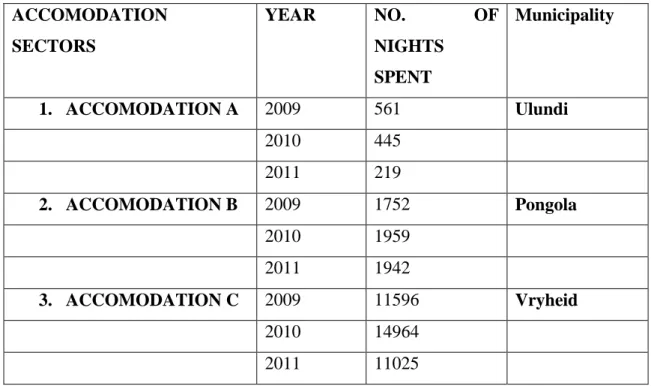
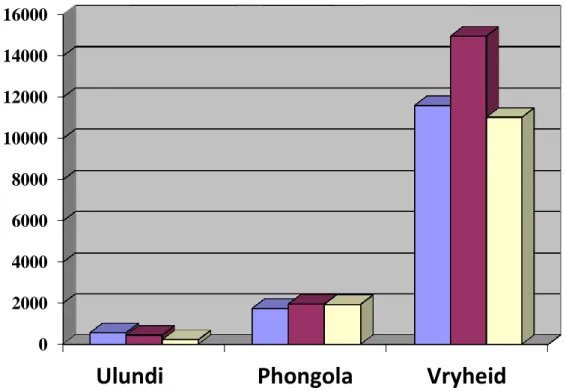
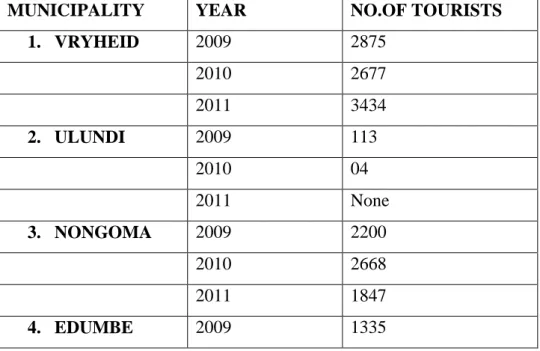
- THE STATUS OF TOURISM IN THE ZULULAND DISTRICT MUNICIPALITY
- ACCOMODATION C 2009 11596 Vryheid
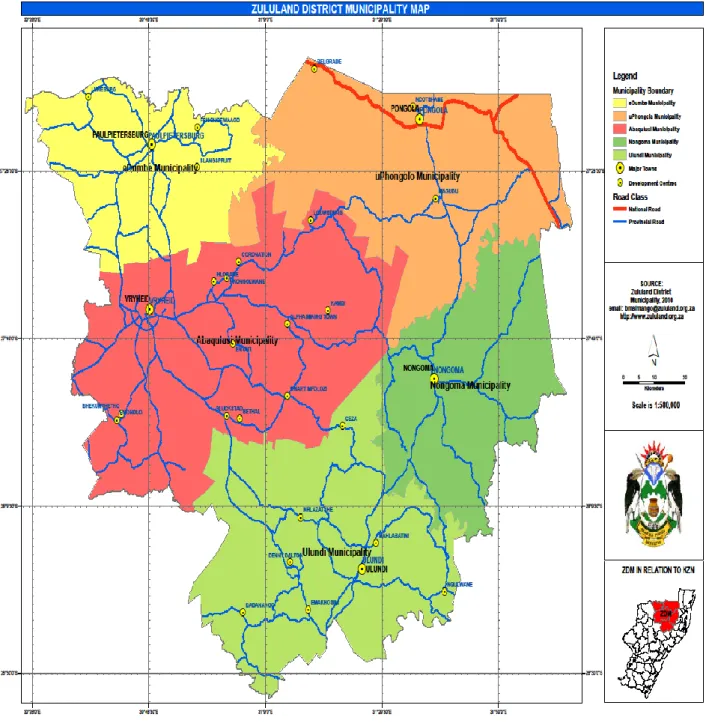
To discover the potential of heritage tourism as a driver of rural development in Zululand District Municipality. It shows the actual map location of the study area which is the Zululand District Municipality.
Ulundi Phongola Vryheid
CULTURAL TOURISM DEFINED
Smith indicated that "grand narratives" of the past have often been rejected because of their patriarchal and ethnocentric bias. Instead, the social history of the working class, female ethnic minorities and indigenous groups has gradually become the subject of considerable academic and public interest.

ROLE PLAYERS IN CULTURAL HERITAGE TOURISM
- Cultural heritage tourist
- The role of the communities
- The role of the government
- The nongovernmental organizations (NGOs)
- The private sector
Therefore, the private sector is expected to contribute to the development of cultural heritage tourism. The private sector plays a vital role in the development and promotion of cultural heritage tourism.
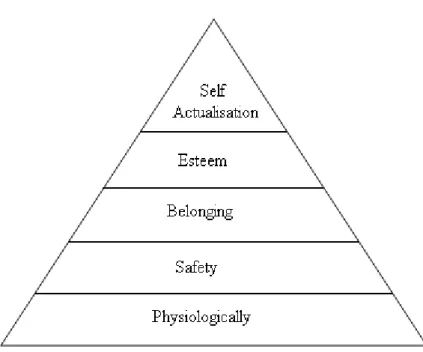
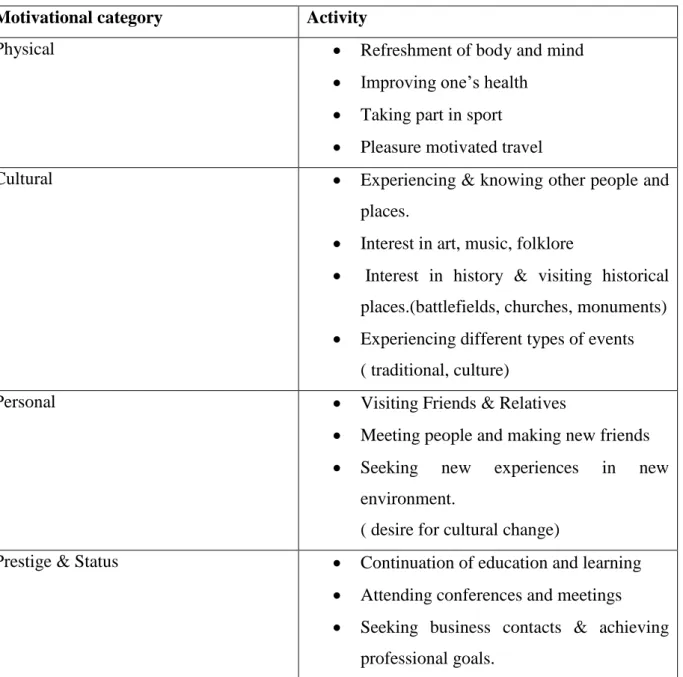
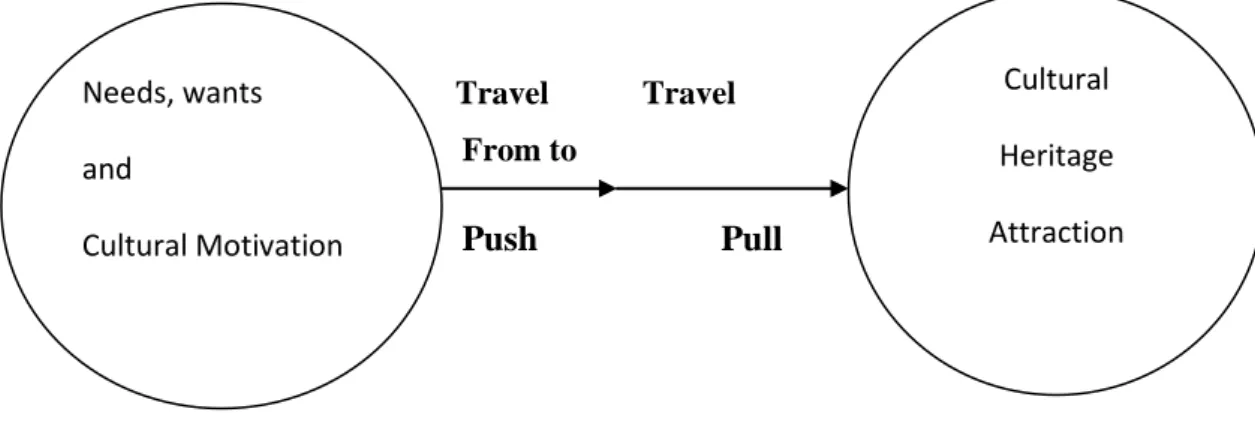
REASONS FOR TRAVELLING TO CULTURAL AND HERITAGE SITES Tourists travel because they want to satisfy their needs and because they are motivated to do
To help the community groups to organize, prepare them to implement heritage tourism. The above functions are provided by the NGOs to develop, propagate and facilitate the development of heritage tourism.
THE IMPACTS OF CULTURAL HERITAGE TOURISM
- The physical impact
- The socio-cultural impacts
- The Economic impacts
- The authenticificating of cultural heritage tourism
Impacts related to cultural heritage tourism are divided into physical or environmental, socio-cultural and economic. Most of the economic results of cultural heritage tourism are the same or similar to other forms of tourism.
RULES FOR SUSTAINING CULTURAL HERITAGE TOURISM
- Rule 1: Getting the values right
- Getting the sustainability principles right
- Getting the analytical methods right
For intergenerational equality, there should be dynamic efficiency in the allocation of resources or fairness in the treatment of future generations. Intragenerational justice, meaning fairness in the distribution of benefits or the occurrence of costs within the current generation. Such rules, if well respected in Zululand district, can help sustain the existing heritage tourism areas, this means rural areas will be developed and life improved.
THE HUMAN IMPACT ON CULTURAL HERITAGE TOURISM
There must be diversity, the recognition of the values that can be attributed to diversity, and the observance of precautionary measures. Interdependence, recognition of the fact that economic, ecological, social and cultural systems do not exist in isolation and therefore a holistic approach is needed. Adherence to the three golden rules is of great help in the formulation of cultural heritage tourism policy.
MANAGING CULTURAL HERITAGE RESOURCES
- The SAHRA fundamental principles of heritage conservation
- FORMS OF CULTURAL HERITAGE MANAGEMENT
- MANAGING CULTURAL HERITAGE SITES
Each generation has a moral responsibility to act as a trustee of the natural and cultural heritage for succeeding generations. Cultural heritage assets must be transformed into something that can be used by tourists. The focus should be quality and authenticity of cultural heritage products, clearly distinguished from other tourism resources.
CULTURAL HERITAGE TOURISM AND SUSTAINABILITY IN SOUTH AFRICA
This also fosters community pride as people work towards a common goal in establishing a thriving heritage tourism industry in South Africa. In addition, cultural heritage tourism requires management that ensures acceptable boundaries of use, promotes zoning and is participatory. Limits will vary depending on the type of tourism, and for cultural heritage tourism, access refers to the level.
BENEFITS OF CULTURAL HERITAGE TOURISM
Maintaining cultural heritage requires a community-based perspective, where the community that owns the culture collectively decides to what extent it is open to visitors. Tourist levels are less managed for culture, visitors must be taught to respect other sites and attractions. Benefits like these will only work within the Zululand District Municipality areas if they are authentic and run by people within the community who can ensure that the long term benefits of the community are maintained and the cultural heritage aspects are also respected.
TOURISM DEVELOPMENT AND COMMUNITY PARTICIPATION
Contribute to the urgency of necessary conditions in tourist destinations, which will make local people gain self-confidence and feel free from the evils of deprivation, ignorance and misery. Furthermore, participation can give the community an opportunity to voice their concerns and this gives the community pride and a sense of ownership of the culture and heritage. It helps them reclaim their cultural history and allows them to decide how it will be portrayed in wider society.
POLITICS AND THE DEVELOPMENT OF CULTURAL HERITAGE TOURISM
The government generally uses heritage tourism at the national level to promote political ideals to its own people, but also to foreign visitors or through the media to the entire world (Kim et al. 2007). One of the main purposes of government politicization of heritage tourism is to issue travel warnings, travel warnings or travel bans. Alerts are issued to warn citizens of potential risks (e.g. terrorism, kidnapping, natural disasters, crime and general instability) primarily related to travel to a particular destination. These warnings are sometimes used with political overtones to determine where people should travel and to retaliate against or pressure other countries to submit to the will of the state issuing the warning (Kim 2007).
RURAL DEVELOPMENT AND TOURISM
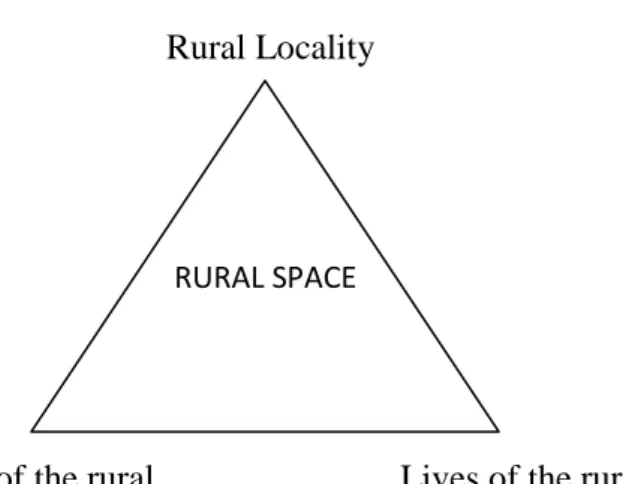
Historically, rural areas have provided society with fiber for clothing, stone and timber for construction. The main objective of rural development is to sustain economic growth and improve living conditions, bring rural areas up to national development standards and ensure that rural areas are attractive places to live and are able to contribute to the national economy. To make rural areas more productive and less vulnerable to natural disasters, poverty and exploitation.
CONCLUSION
Cultural heritage tourism has a potential to bring development to rural areas if well managed and sustained. The geographical information will help the reader understand the physical features and appreciate the cultural heritage sites and attractions within the study area. In this chapter, a description of the study area, including the historical background, the location, the topography, climatic conditions, the transport network, the tourism resources and cultural heritage sites of the area will be discussed.
THE BRIEF HISTORY OF THE ZULULAND DISTRICT MUNICIPALITY The Zululand is named after the inhabitants of the area, the Zulus. Zulu means heaven in the
The Zululand District Municipality consists largely of rural communities characterized mainly by poverty and underdevelopment. It is therefore essential to explore the geographical information of this study area at this stage.
THE LOCATION AND PHYSICAL PROFILE OF THE STUDY AREA
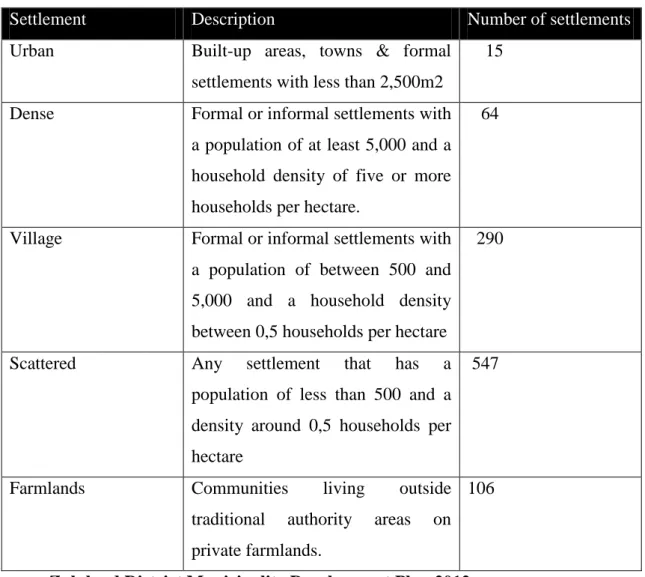
Village Formal or informal settlements with a population between 500 and 5,000 and a household density between 0.5 households per hectare. Land in the Zulu country primarily has the highest agricultural potential and latitude in the country. Corn, soybeans, wheat, groundnuts, sorghum, vegetables and subtropical fruits can be found in the Zululand district.
TOPOGRAPHY AND CLIMATIC CONDITIONS OF THE STUDY AREA The Zululand area forms part of the Phongolo, Mkuze and Umfolozi river catchments of the
THE TRANSPORT NETWORKS OF THE ZULULAND DISTRICT MUNICIPALITY
Zululand district is also home to Ulundi Mangosuthu Airport, which is currently under renovation. The P700 road connecting Ulundi to Umfolozi has recently been paved, this road has made tourist traffic easy and this route has shown the potential of economic growth that lies in tourism and agriculture in the Zululand district.
CULTURAL AND HERITAGE TOURISM ATTRACTIONS OF THE STUDY AREA
- Tourism routes in the Zululand District Municipality
- The battlefields and historical sites
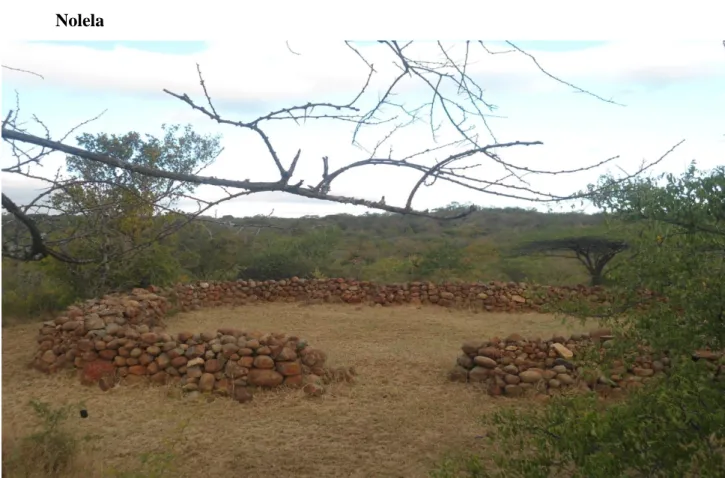
Another important landmark of historical importance is the Ondini Museum (see Figure 3.5). The Ondini Museum is built in the reconstructed royal residence of King Cetshwaya. The visit of tourists to the museum gives an insight into the traditional lifestyle of the Zulu people. On the site of the museum is a statue of King Cetshwaya, who became the king of the Zulu.
OTHER CULTURAL AND HERITAGE ATTRACTIONS OF THE STUDY AREA
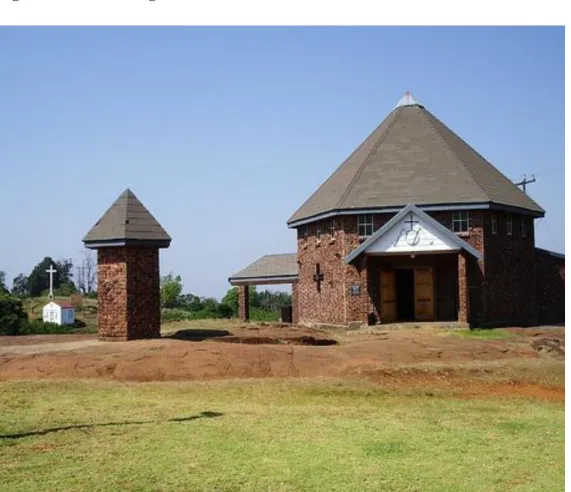
The sanctuary is in the heart of Kwa-Zulu Natal in the picturesque area of the Zulu Royal family. The local people live in the vicinity of the shrine and are themselves connected to the shrine through their work or through their practices with the Catholic faith. Vryheiddorp is the largest in the district; it was founded in 1884 by the Voortrekker settlers who were given land by King Dinuzulu.
The area is surrounded by rich natural attractions such as Hlobane Mountain used by the Zulus during their war against the British. Thirty kilometers away from the city of Vryheid is the heritage site of Ncome Blood River, where on December 16, 1838 a major confrontation took place between the Voortrekkers and the Zulus.
CONCLUSION
Because of the unique cultural heritage in Zululand District municipalities, there is potential for cultural heritage tourism. The answers are analyzed and interpreted in such a way that they give meaning to the objectives of the study. According to Magi (2010), analysis in research refers to the breakdown, categorization, classification and summarization of data in order to obtain answers to research questions.
RESTATEMENT OF THE OBJECTIVES AND HYPOTHESES
GENERAL RESPONSES TO THE QUESTIONNAIRES
Restating the objectives and hypotheses makes it easier for the researcher to refocus on what will be analyzed and interpreted in this chapter. The reason for this distribution of answers is that most of the newly built cultural heritage objects are located in the municipality of Ulundi. In order to understand the composition of the respondents, the questionnaire had a section related to demographic information which is presented below.
THE DEMOGRAPHIC INFORMATION
- Gender of respondents
- The Age of the respondents
- Level of education
- Distribution of Income
- Distribution by Race
It is also important to note that the number of females is more dominant even in the 2011/2012 Zululand District Municipality IDP. As shown in the employment section, the majority of 61% of respondents are unemployed, this has affected the income level of the community. The income status of Zululand District Municipality clearly shows that it consists of low income individuals.

IDENTIFICATION AND THE UNDERSTANDING OF CULTURAL HERITAGE TOURISM
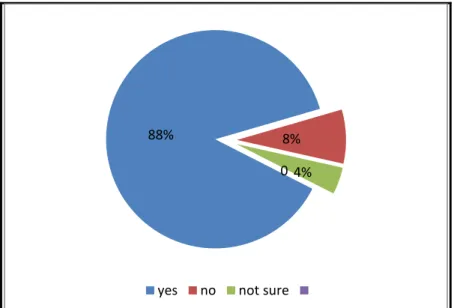
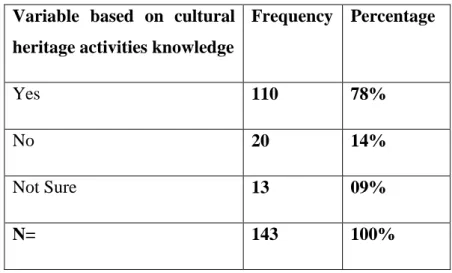
The analysis of the answers showed that the respondents understood the concept of cultural heritage tourism. This was a sign that the respondents were no longer in the dark about cultural heritage tourism. As shown in Figure 4.6 and Table 4.2, a significant majority (88%) of respondents understood what cultural heritage is.
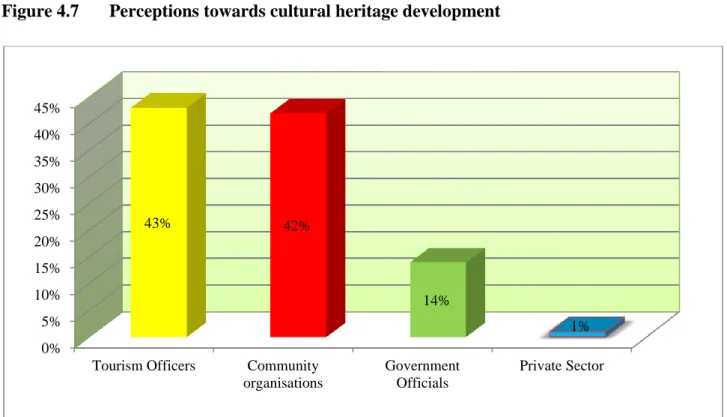
PERCEPTION OF RESPONDENTS TOWARDS CULTURAL HERITAGE TOURISM DEVELOPMENT
It was therefore important for this study to obtain the perceptions of local communities on the development of heritage tourism (Smith 2009). These results are an indication that society is aware of the development of heritage tourism and its benefits. Considering the responses, a majority of the community is positive towards the development of heritage tourism.
PERCEPTION OF RESPONDENTS TOWARDS THE PRESERVING AND CONSERVING OF CULTURAL HERITAGE TOURISM
This resulted in ninety percent (90%) of the community agreeing that cultural heritage tourism should be preserved, compared to 97% saying it should be preserved. A three percent (3%) said no to conservation compared to a (0%) indication for conservation of cultural heritage tourism. Proper management of cultural heritage resources is intended to maintain the integrity of the place.
LEVEL OF PARTICIPATION IN CULTURAL HERITAGE TOURISM ACTIVITIES
There are many factors that can limit meaningful community participation in heritage activities. The third objective of this study was to find out whether the community in Zululand District Municipality participates in heritage tourism activities. It is clear from figure 4.6 that society does not participate actively in cultural heritage activities.
STRATEGIES OF PROMOTING CULTURAL HERITAGE TOURISM
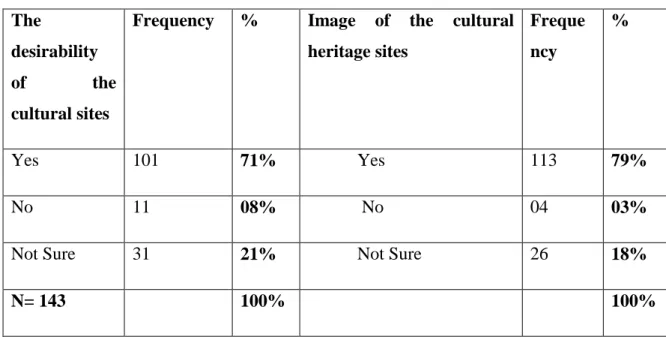
- The desirability of cultural heritage resources to tourists
- Cultural heritage promotion strategies
This section deals with various strategies used by the Zululand District Municipality to promote tourism in general and heritage tourism. A majority of 66% of respondents disagreed that enough has been done to promote cultural heritage tourism in Zululand district. Therefore the statement in the questionnaire saying that the Zululand District Municipality is not doing enough to promote cultural heritage tourism was supported by the respondents as correct.
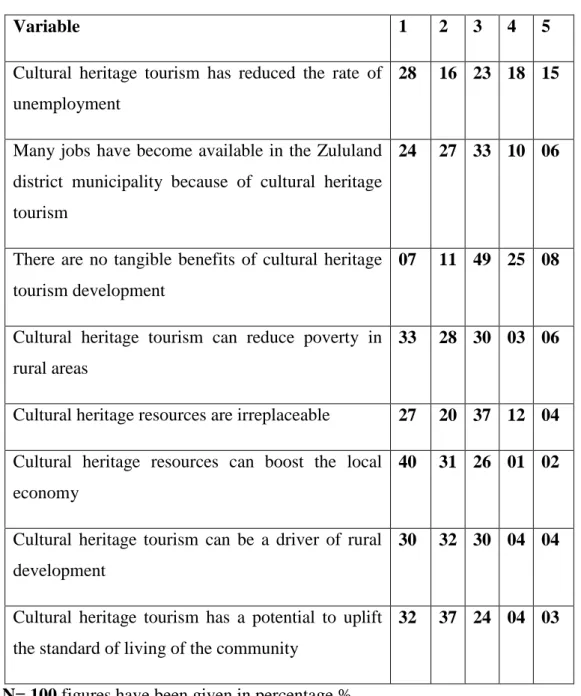
THE CONTRIBUTION OF CULTURAL HERITAGE TOURISM TOWARDS THE ECONOMY OF THE LOCAL COMMUNITY
Many jobs have become available in the Zululand District Municipality due to heritage tourism. Respondents indicated that they were reluctant; other respondents do not believe that cultural heritage tourism can bring change in their lives. The Zululand District Municipality is believed to have good potential for cultural heritage tourism due to the availability of cultural heritage resources.
CONCLUSION
In general, when talking to the respondents, they believed that cultural heritage tourism is a tool of economic development. Having said that, it means that hypothesis no5: is accepted when it is stated that cultural heritage tourism resources have a potential to uplift the economy in the communities of Zululand District Municipality. Recommendations also formed the basis for the future involvement of the community in cultural heritage tourism activities.
SUMMARY OF THE STUDY
This chapter concentrates on the findings that emerged from the analysis and interpretation of the data. There is a need to know that heritage tourism largely depends on the goodwill and cooperation of the host community. The physical framework of the study area in chapter 3 (three) gave a brief history and profile of the study area.
OBJECTIVES RELATED TO FINDINGS
The third objective was to assess the level of participation by the participants in cultural heritage tourism development. The fourth objective was to discover whether the Zululand District Municipality does have strategies to transform cultural heritage. Regarding the community's perception towards cultural heritage tourism development, it seems to be a positive response from the respondents.
RECOMMENDATIONS
Second: the researcher recommends that the Zululand District Municipality work closely with the community to preserve the available and identified resources that are cultural heritage resources; which would ensure that vandalization of these resources is avoided at all costs and participants will see the need to conserve and manage them well. The researcher recommends that the Zululand District Municipality review the availability of tourism offices for the community. Fifth: The researcher recommends that the Zululand District Municipality consider the tourism events that are celebrated every year and then start involving the community that they prioritize in the preparation of such events.
CONCLUSION
Zululand District Municipality is undoubtedly one of the best cultural heritage tourism destinations with potential. THE POTENTIAL OF CULTURAL HERITAGE TOURISM AS A DRIVER OF RURAL DEVELOPMENT IN ZULULAND DISTRICT MUNICIPALITY. Do you think the local community in your area should be educated about cultural heritage tourism?