To the young mothers of Mpumalanga Township, Hammarsdale, thank you for your precious time and welcoming me into your homes. To Anderson thank you for your loyalty and support in completing this study, it is greatly appreciated.
Background of the study
In South Africa, more than half of women have given birth before the age of 20, and studies have shown that fertility rates increase among teenage girls aged 15 to 19 and young women aged 20 to 24 (Kaufman et al., 2001 ). . South Africa is facing a growing epidemic of teenage pregnancy (Kirby, 2009; Panday et al., 2009).
Early childbearing
Focusing on teenage pregnancy leads to an understanding of the underlying dynamics of the effects of early childbearing on women. Furthermore, high rates of early birth among teenagers can in turn have drastic consequences for their socio-economic status.
Rationale for the study
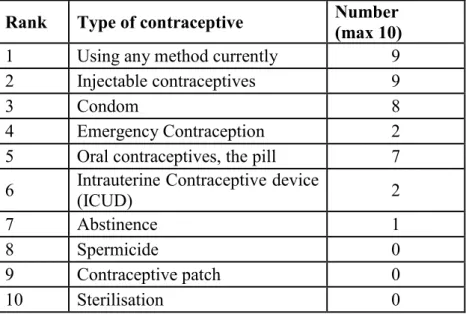
Most of the study participants claimed to be aware of pregnancy prevention methods. Apparently, most of the study participants continued their education when means permitted.
Theorectical framework
Organisation of chapters
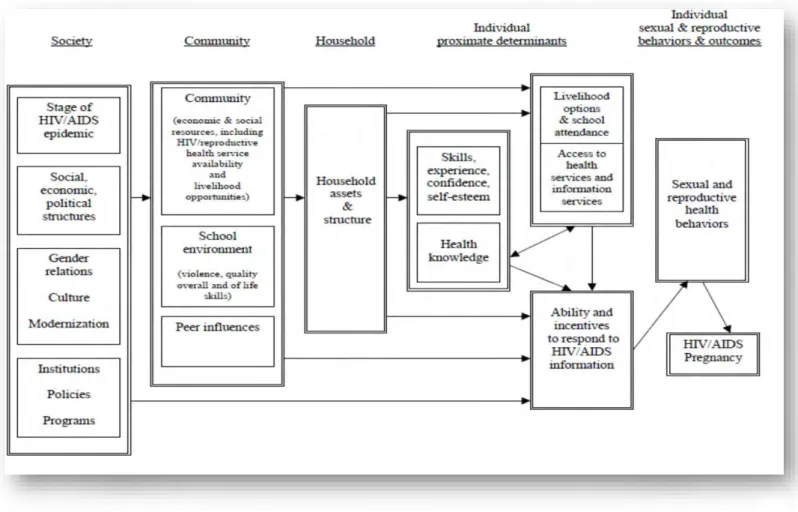
The first chapter provides a background and rationale of the study in great detail and also describes the conceptual framework. The fourth chapter summarizes the main findings of the interviews that were conducted with the women.
Introduction
Trends of fertility in South Africa
The fertility of the African population appears to be declining more slowly than that of other population groups. Research shows that differences in fertility rates between population groups worldwide are a persistent social problem (Makiwane, Palamuleni & Kalule-Sabiti, 2007; Seamark & Lings, 2004).
Age at first sexual debut
Furthermore, studies show that age differences between teenage girls and their partners inhibit girls' ability to negotiate safer sex (Manzini, 2001:49). Some studies show that the age at first sexual intercourse in teenagers is the same for pregnant and non-pregnant girls (Hockaday et al.
Role of education in delaying early childbearing
Manzini (2001) points out that sex education is important in schools to delay an early sexual debut that contributes to early pregnancy among young people. Studies have shown that sex education is imperative in the curriculum as it introduces the topic of sexuality, delays an early sexual debut and promotes safer sex.
Attitudes to early childbearing
Determinants of early childbearing
- Culture
- Parent-child-communication
- Marital status
- Place of Residence
- Socio-economic status
- Lack of edutainment in townships
- Family Structure
- Gender roles
- Peer influence
- Child support grant
- Sexually risky behaviour
- Planned pregnancy
A risk factor that was also identified by Biglan et al. 1998) is that young people experience risky behavior. Kaufman and others have found that childbearing increases in both areas (Kaufman et al., 2001).
Barriers to accessing contraceptives
Atitude towards contraceptive use
Inconsistent contraceptive use
These authors also indicate that significant progress has been made worldwide in increasing condom use for the prevention of pregnancy, STDs, and HIV/AIDS (Bearinger et al., 2007; Panday et al., 2009). Family planning services target older women who have a child, rather than sexually active girls who have not had a child (MacLoed, 1999; Bearinger et al., 2007).
Problems with health services
In the case of South Africa, Panday et al. 2009) found that approximately 66% of young women were pregnant in 2006 due to a lack of consistency in contraceptive use. Some nurses are uncomfortable providing contraceptives to them because they are too young and they are involved in adult activities (Wood et al., 1998; Nkwanyana, 2011).
Abortion
Young people who use contraceptives may want to keep this a secret from their parents and partners; they are particularly concerned that community members would find out that they are using contraceptives, which would lead to gossip and rumors (Grant & Hallman, 2006). Young women worry that they might be seen as “sleeping around with a lot of guys,” so they try to obtain birth control.
Consequences of early childbearing
Health
Young girls often choose an abortion because the pregnancy is not planned or desired. Healthcare providers and healthcare systems should emphasize pregnancy prevention (contraceptive methods) before young girls choose abortion.
Educational
UNFPA (2007) suggests that girls between the ages of 15 and 19 are more likely to die after pregnancy than those aged 20 to 24. Studies suggest that girls with limited information about the risks associated with unprotected sexual activity only discovered they were HIV positive during their antenatal care visits (WHO, 2007; Du Plessis, 2003).
Youth culture
Young women who engage in risky sexual behavior with multiple sexual partners are not only at risk of pregnancy, but also of infections. Studies have shown that sexual behavior is seen as the cornerstone of early childbearing in villages (Manzini, 2001; Mkhwanazi, 2010; Wood & Jewkes, 2001).
Role of fathers
They have a lot of power in decisions about the child and that undermines his ability to play a role as a father (Swartz et al., 2013:2). On the other hand, some boys and men refuse and deny fatherhood (Kaufman et al., 2010).
Summary
In some communities, grandparents raise the child as their own to avoid the shame of early childbearing.
Introduction
Study area
This infrastructural development has created employment opportunities for some of the young people in the local community. Health services are easy to access due to the availability of public transport, which is not very expensive.

Research design
Those women who were interested in participating in the study made appointments with the researcher to conduct interviews. Women who agreed to participate in the study were asked to sign an informed consent form.
Data analysis
Ethical considerations
After ethical approval for the study was obtained, the researcher met with the participants and explained the purpose of the study. The researcher first introduced himself, then explained the purpose of the study and answered any questions the participants had.
Limitations of the study
Participants were informed that their participation in the study was voluntary and that they could withdraw from the study at any time if they wished. In addition, participants were also informed that once the report was completed, the researcher would destroy the transcripts and audio tapes.
Summary
In the event that the interview had evoked troubling feelings or memories, participants were informed prior to the interview to be referred to the local clinic, Hlengisizwe Health Centre, for counselling. Ethical considerations were explained and the sensitivity of the study and the importance of not compromising the individual's identity were highlighted.
Introduction
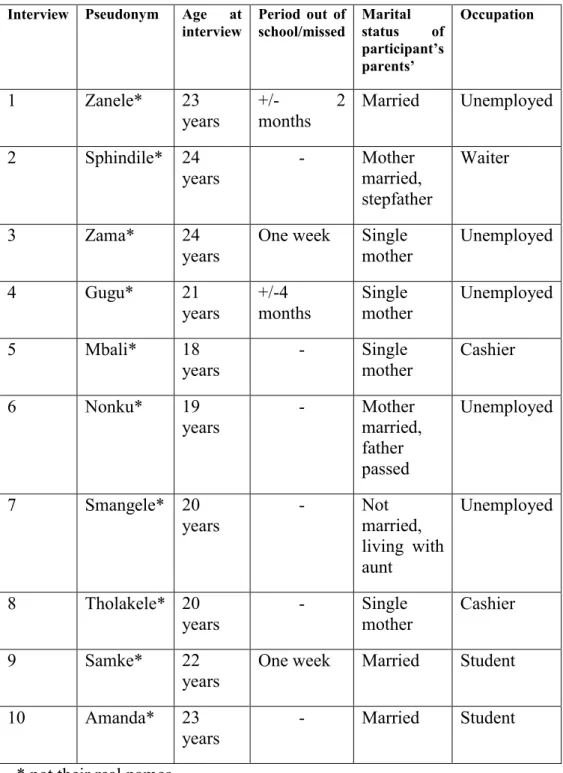
Demographic profile of the participants
One participant was forced to leave school due to the stigma associated with pregnancy. The women reported that girls who became pregnant often received a bad reputation at school. They told many of us who came for prenatal care that 'the young pregnant women are on this side and the rest are on the other side'.
Experiences of pregnancy: a distruption of life
Onset of sexual activity
Most participants indicated that they had not thought about the risk of pregnancy during intercourse. They had previously had unprotected intercourse and therefore believed they were not at risk of pregnancy.
Consequences of early pregnancy
If you are pregnant at a young age out of wedlock and still stay at home, that is a burden. It is better to get pregnant once you are married because it is the responsibility of both parents to raise a child.
Education
I would have achieved many things, such as my education, if I had not become pregnant” (Mbali, 18 years old). I should have focused on the positive things that wouldn't have held me back and wouldn't have led to me having a child.
Highest grade completed by participants
For some, it was seen as a way to lift themselves out of their socio-economic situation. She emphasized that the biggest challenge was when she had to leave school because of the negative attitudes towards pregnant girls at school.
Aspirations for the future
Marriage is important to me because even my mother had a child out of wedlock [she never married] and I also had a child out of wedlock. Six out of ten participants had a clear idea about their future, and four out of ten were not sure about their future.
Awareness of contraception
Perceptions of contraceptives
I don't really like injections because the body will fill up with fluid over time, which is not good, especially if I'm still young. It's a responsibility of how not to get pregnant, and it's not something I would take every day like a pill because I'm afraid of the side effects.
Sex for financial gain
Some girls are just "mosquitoes", they suck all the money from the men to buy expensive clothes, mobile phones, etc. "(Smangele, 19 years). Apparently, the participants pointed out that having multiple sex partners was a choice made by some girls.
Family reaction
It showed me that I am really wrong and that they are angry with me" (Tholakele, 20 years). Six participants explained that their parents loved them and that is why they were so disappointed in them.
Delayed pre-natal care visit
The young women were afraid to reveal their pregnancy because they were worried about the negative reaction of their families and communities. Participants revealed that they were afraid to announce their pregnancy due to fear of disappointment.
Partner communication
Support of the father of the child
A number of young people find that support from the child's father is crucial. The purpose of the study was to gain insight into early childbearing among young black women.
Perception on marriage
Communicaton about sexual and reproductive health matters
Parent-child-comunication
Attitudes of healthcare providers
Young women complained that during their antenatal visits, nurses often expressed their disgust and frustration with young, unmarried women who became pregnant. All women experienced stigmatization during antenatal visits at the local clinic during pregnancy.
HIV/AIDS and other STDs
We shouldn't be asked why we have sex; it's none of their business” (Nonku, 19). The first boyfriend I had, I thought was the father of my child, but people kept telling him it wasn't his child.
Abortion
Summary
Introduction
The survey also found that young women had many negative views about pregnancy prevention methods. Unemployment and employment opportunities remain a challenge for young women in general in the study.
Recommendations
Socio-economic disadvantage and unsafe sexual behavior of young women and men in South Africa. An overview of teenage pregnancy in South Africa – experiences of schooling, and knowledge and access to sexual and reproductive health services.
INTERVIEW SCHEDULE
I : INTERVIEW FORM (in English and isiZulu) SECTION A. 3.3 How is the relationship between you and the child's father currently? The interview will be kept strictly confidential and will only be accessible to members of the research team.
ETHICAL CLEARANCE APPROVAL
INFORMED CONSENT FORM
This project is supervised by Dr. Pranitha Maharaj at the School of Built Environment and Development Studies, University of KwaZulu-Natal. School of Built Environment and Development Studies, University of KwaZulu-Natal Howard College, Durban.