THE ROLE OF LEADERSHIP ON SERVICE DELIVERY IN SOUTH AFRICAN MUNICIPALITIES: A CASE OF GREATER GIYANI LOCAL MUNICIPALITY,
LIMPOPO PROVINCE
by
NHLAMULO MABUNDA
DISSERTATION
Submitted in fulfilment of the requirements for the degree of
MASTER OF ADMINISTRATION in
PUBLIC ADMINISTRATION in the
FACULTY OF MANAGEMENT AND LAW (School of Economics and Management)
at the
UNIVERSITY OF LIMPOPO South Africa
SUPERVISOR: DR KR CHAUKE
2022
i
DECLARATION
I, Nhlamulo Mabunda, hereby declare that this research titled “the role of leadership on service delivery in South African Municipalities, a case of Greater Giyani Local Municipality”, is my own work and has not been written by anyone and that it has not been previously submitted for any postgraduate qualification to another university. All the sources that I have quoted have been indicated and acknowledged by means of references. It is submitted in partial fulfilment of the requirement for the attainment of Master‟s Degree in Public Administration at the University of Limpopo, Turfloop Campus.
Signature……… Date...
ii
DEDICATION
I humbly dedicate this study to the Almighty God. I also dedicate this study to my late mother, my grandmother and my daughter.
iii
ACKNOWLEDGMENT
Education is indeed the key to success. I would like to express my sincere gratitude to the following people, for their outstanding support, tolerance and contribution to the completion of this research.
Thanks to Almighty God for making everything possible, the creator of heaven and earth, the guidance, grace, strength and the wisdom that he gave me and for proving all that I need to complete this research; without him I would not have been able to complete this research.
I would like to extend a word of gratitude to my supervisor, Dr Chauke, I appreciate your assistance, motivation and support.
Gratitude to Prof K.S Milondzo, for the support, motivation and planting in me the will to conquer and fight. You have always been there for me through thick and thin.
Thanks to Mr Ndou, Prof Sebola, Prof Lethoko, Mrs Rahlakgane, Mr Mabeba, Dr Selepe, Mr Shilangu, Ms Mamabolo and all lecturers at the Department of Public Administration.
A special applauds to my late mother, Misolwa Violet Mabunda, who always wanted to see me succeed in life, you were everything to me. I will forever be grateful for your love. Thank you for your love. I will make you proud. May your perfect soul continue to rest in peace.
I would also like to acknowledge all the ladies who are currently playing the mother role to me and my siblings, despite the passing of our mother.
Namely: Selina Rhulani Mathe, Suzan Mabunda, Wisani Mabunda and Nhlonipho Mudau.
iv
A special thanks to my two siblings Jeminah Mabunda and Ndzima Mabunda and all my Uncles and Cousins.
Faithful congregation of PPC, Pastor Malatjie and Pastor Mashaba, I thank you.
To my high school teachers and primary school teachers, I thank you for laying a solid foundation and your continuous words of encouragement as well as support, it pushes me to greater heights.
To the Greater Giyani Local Municipality, under Mopani District, I would like to say you did well by giving a black child the opportunity to become something valuable and worth noticing as you did through approving data collection.
My last gratitude has to be given to the University of Limpopo, Turfloop Campus, School of Economics and Management, Department of Public Administration for affording me with the opportunity to enrol and pursue a degree under your guidance and close supervision, for it was a great learning curve, thus I say thank you.
v
ABSTRACT
The local government is the first level of government closest to the people, and it is required under the 1996 Constitution of the Republic of South Africa to meet the needs of the people in their designated areas. Political and administrative leadership in the municipalities is entrusted with the responsibility of providing public services and managing government resources. Existing literature exhibits that municipal leaders possess certain characteristics that if effectively implemented, may effectively meet the needs of the people. With a distinct focus on Greater Giyani Local Municipality in Limpopo Province, the current study investigates the role of leadership in service delivery in South African municipalities. This study adopts
“theory triangulation” as the theoretical points of departure due to its utilisation of four leadership theories (Servant, Transformational, Situational & System leadership theories). Municipal leadership in the Greater Giyani is expected to serve the public by providing high-quality service to the communities.
To fulfil the purpose of this study, a mixed method research approach is adopted, which incorporates qualitative and quantitative methods. A questionnaire was used to collect quantitative data whereas interviews and document analysis were utilised to collect qualitative data. The collected data was then analysed through statistical package for social science. The findings of the study reveal that political and administrative leadership play a role in facilitating service delivery. However, there are also government issues that have to be considered in relation to service delivery, such as insufficient development training programs, and unqualified administrators.
Aspects such as lack of understanding and compliance, poor public participation, and lack of adherence to work ethics are found to be amongst factors which hamper service delivery. This study submits that policy makers and managers in the municipalities should be trained in managerial skills. Additionally, the municipal leadership should always adhere to policies related to work ethics and procurement processes. The study also concludes that policy makers and senior managers in the municipalities need to develop relevant policies and strategies to enhance the role of leadership in service delivery in the municipalities.
Key words: Leadership, Local Municipality, Service Delivery,
vi
LIST OF TABLES AND FIGURES
TABLES
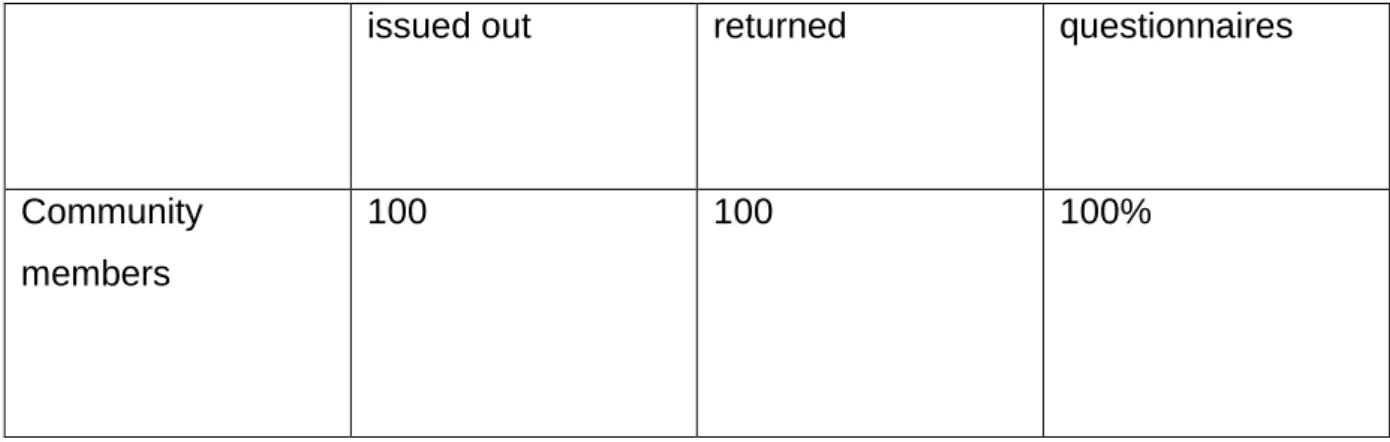
Table 1.1: Total number of the respondents... 87
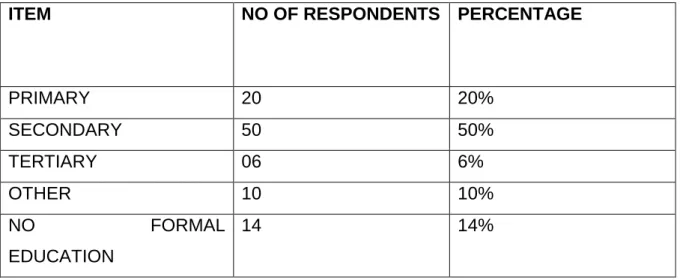
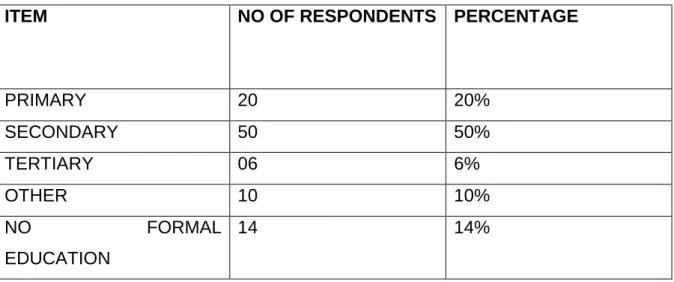
Table 1.2: Educational level of the respondents………...…..…….. 90
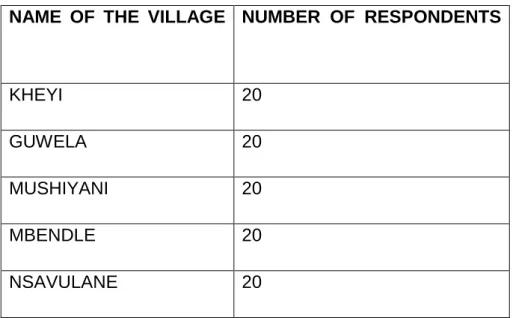
Table 1.3: Village where the respondents reside………...……..……. 91
Table 1.4: Position occupied by respondents………...…..….….. 103
Table 1.5: Educational level of the municipal officials... 106
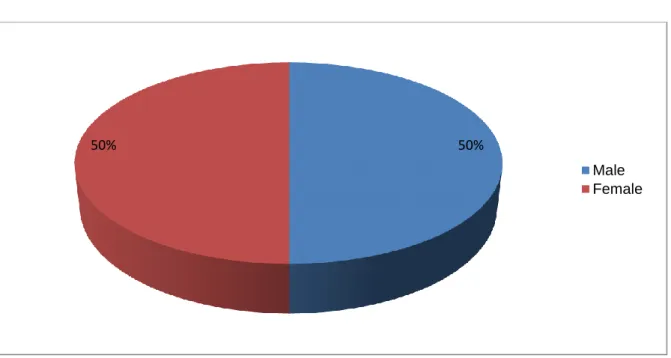
FIGURES Figure 1.1: Gender of the respondents... 88
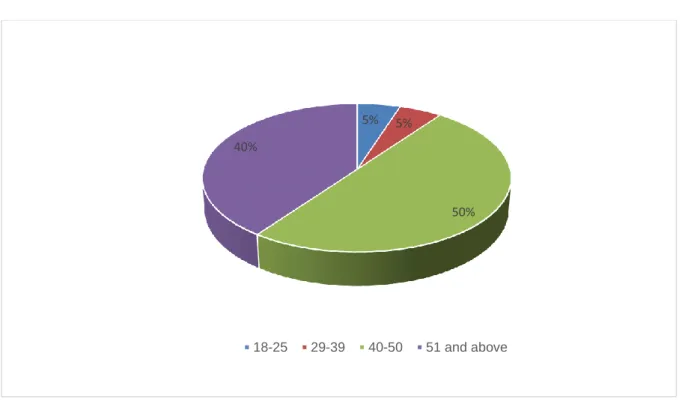
Figure 1.2: Age group of the respondents………..…..….……… 89
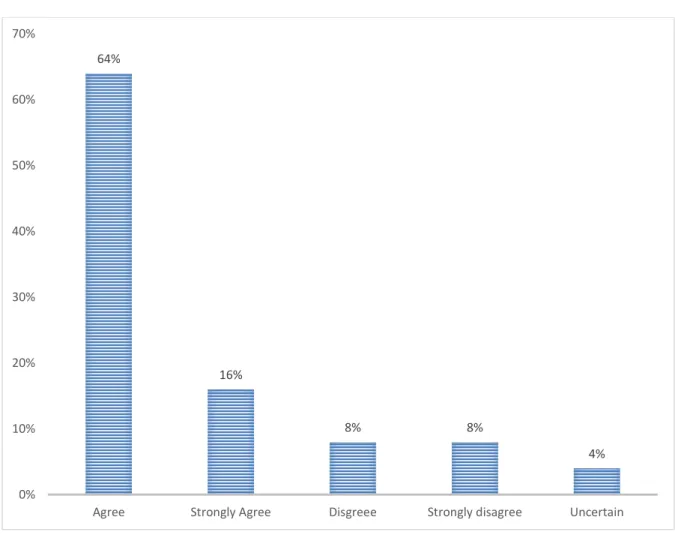
Figure 1.3: Poor leadership and service delivery……….…………. 92
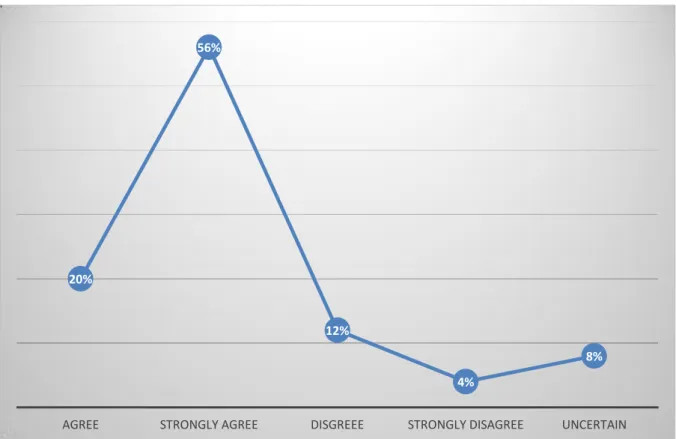
Figure 1.4: Managers, leadership traits and service delivery…….………… 93
Figure 1.5: Developmental training program, leadership and service delivery... 94
Figure 1.6: Budgetary constraints, leadership and service delivery…..…… 95
Figure 1.7: Municipal bylaws, leadership and service delivery…….…....…. 96
Figure 1.8: Procurement, leadership and service delivery………..…… 97
Figure 1.9: Redeployment, political parties, leadership and service delivery………. 98
Figure 1.10: Infrastructure, leadership and service delivery…………...……. 99
Figure 1.11: Community participation and service delivery... 100
Figure 1.12: Leadership style and service delivery………...….…. 101
Figure 1.13: Alternative strategies, leadership and service delivery... 102
Figure 1.14: Gender of the respondents……….…… 104
Figure 1.15: Age group of the respondents... 105
vii
TABLE OF CONTENTS
DECLARATION ... i
DEDICATION ... ii
ACKNOWLEDGMENT ... iii
ABSTRACT... v
LIST OF TABLES AND FIGURES ... vi
CHAPTER ONE: INTRODUCTION AND BACKGROUND TO THE STUDY ... 1
1.1. INTRODUCTION ... 1
1.2. PROBLEM STATEMENT ... 2
1.3. AIM AND OBJECTIVES OF THE STUDY ... 3
1.3.1. Aim of the Study ... 3
1.3.2. Objectives of the Study ... 3
1.4. RESEARCH QUESTIONS ... 4
1.5. DEFINITION OF CONCEPTS ... 4
1.6. LITERATURE REVIEW... 5
1.6.1. Theoretical Perspective ... 5
1.6.2. Empirical Literature ... 7
1.7. RESEARCH DESIGN AND METHODOLOGY ... 17
1.7.1. Research Design ... 17
1.7.2. Study Area ... 18
1.7.3. Target Population ... 19
1.7.4. Sampling Procedure and Size ... 19
1.7.5. Data Collection Instruments ... 20
1.7.6. Data Analysis ... 21
1.8. VALIDITY AND RELIABILITY ... 22
1.9. ETHICAL CONSIDERATION ... 22
1.9.1. Ensuring Permission is Obtained ... 22
viii
1.9.2. Inform Consent ... 22
1.9.3. Ensuring no harm to the Participant ... 23
1.9.4. Anonymity and Confidentiality ... 23
1.10. SIGNIFICANCE OF THE STUDY ... 23
1.11. CONCLUSION ... 23
CHAPTER TWO: THEORETICAL FRAMEWORK ... 24
2.1. INTRODUCTION ... 24
2.2. THE NOTION OF THEORY ... 26
2.3. THE ROLE OF THEORY IN SOCIAL SCIENCE ... 27
2.4. DESCRIPTION OF THE CONCEPT OF LEADERSHIP ... 28
2.5. THEORIES RELATED TO THE STUDY ... 30
2.5.1. Servant Leadership Theory ... 31
2.5.2. Transformational Leadership Theory ... 34
2.5.3. Situational Leadership Theory ... 35
2.5.4. System Leadership Theory ... 37
2.6. DIFFERENT TYPES OF LEADERSHIP STYLES ... 38
2.6.1. Personality Leadership Style ... 38
2.6.2. Charismatic Leadership Style ... 38
2.6.3. Autocratic Leadership Style ... 38
2.6.4. Laissez-fare Leadership Style ... 39
2.6.5. Democratic Leadership Style ... 39
2.6.6. Free Rein Leadership Style. ... 40
2.7. CONCLUSION ... 41
CHAPTER THREE: THE NATURE AND ROLE OF LEADERSHIP TRAITS ON SERVICE DELIVERY ... 41
3.1. INTRODUCTION ... 41
ix
3.2. LEADERSHIP AND ITS IMPLICATIONS TO SERVICE DELIVERY IN THE
MUNICIPALITIES ... 42
3.3. LEADERSHIP CHARACTERISTICS AND SKILLS ON SERVICE DELIVERY ... 44
3.4. THE OUTLINE OF THE SOUTH AFRICAN LOCAL GOVERNMENT STRUCTURE. ... 46
3.5. LOCAL GOVERNMENT IN SOUTH AFRICA: ITS OBJECTIVE AND DEVELOPMENTAL ROLE ... 48
3.6. SERVICE DELIVERY WITHIN SOUTH AFRICAN MUNICIPALITIES ... 49
3.6.1. The Local Government Service Delivery History in South Africa ... 51
3.6.2. The Principle of Service Delivery ... 51
3.6.3. Batho Pele Principles ... 53
3.7. INTERPRETATION OF GOOD GOVERNANCE IN RELATION TO SERVICE DELIVERY ... 55
3.8. THE NATURE OF LEADERSHIP ON SERVICE DELIVERY WITHIN MUNICIPALITIES ... 56
3.8.1. Political Leadership ... 57
3.8.2. Administrative Leadership ... 58
3.8.3. Principles for Selecting Councillors in the Municipalities ... 59
3.8.4. Municipal Service Provision under the Influence of Leadership ... 60
3.9. THE ROLE OF LEADERSHIP ON SERVICE DELIVERY IN THE MUNICIPALITIES ... 60
3.9.1. Political Role of the Councillors in the South African Municipalities ... 60
3.9.2. Administrative Role in the South African Municipalities ... 61
3.10. STATUTORY FRAMEWORK REGULATING LOCAL GOVERNMENT SPHERE IN SOUTH AFRICA ... 62
3.10.1. Constitution of the Republic of South Africa, 1996 ... 64
3.10.2. White Paper on Local Government, 1998 ... 65 3.10.3. Local Government: Municipal Structures Act, 1998 “(Act 117 of 1998) . 65
x
3.10.4. Local Government: Municipal Systems Act, 2000 (Act 32 of 2000) ... 66
“3.10.5. Local Government: Municipal Finance Management Act, 2003 (Act 56 of 2003) ... 67
3.10.6. Local Government Turnaround Strategy (LGTAS), 2009 ... 67
3.10.7. National Development Plan 2030 ... 68
3.10.8. King Report IV on Local Government ... 68
3.11. THE RELATIONSHIP BETWEEN POLITICAL AND ADMINISTRATIVE OPERATIONS WITHIN MUNICIPALITIES ... 69
3.12. THE CHALLENGES THAT HINDER THE ROLE OF LEADERSHIP ON SERICE DELIVERY WITHIN MUNICIPALITIES. ... 70
3.12.1. Political Interference in the Municipality's Administrative Process ... 71
3.12.2. Lack of Capacity ... 71
3.12.3. Corruption ... 72
3.12.4. Poor Governance ... 72
3.12.5. Lack of Supervision ... 73
3.12.6. Poor Public Participation ... 73
3.13. CONCLUSION ... 74
CHAPTER FOUR: RESEARCH DESIGN AND METHODOLOGY... 74
4.1. INTRODUCTION ... 74
4.2. RESEARCH DESIGN ... 75
4.2.1. Mixed Method Approach ... 76
4.3. SUMMARY OF THE STUDY AREA ... 77
4.4. TARGET POPULATION ... 77
4.5. SAMPLING ... 77
4.5.1. Non-probability Sampling ... 78
4.5.2. Probability Sampling ... 79
4.6. DATA COLLECTION INSTRUMENTS ... 79
4.6.1. Questionnaires ... 80
xi
4.6.2. Interviews ... 80
4.6.3. Document Analysis ... 81
4.7. DATA ANALYSIS ... 81
4.8. LIMITATIONS OF THE STUDY. ... 82
4.9. VALIDITY AND RELIABILITY ... 82
4.10. ETHICAL CONSIDERATION ... 83
4.10.1. Ensuring Permission is obtained ... 83
4.10.2. Inform Consent ... 83
4.10.3. Ensuring no harm to the Participants ... 83
4.10.4. Anonymity and Confidentiality ... 84
4.11. CONCLUSION ... 84
CHAPTER FIVE: PRESENTATION OF RESEARCH RESULTS, ANALYSIS AND INTERPRETATION ... 85
5.1. INTRODUCTION ... 85
5.2. RESEARCH FINDINGS ... 86
5.2.1. Data Collected Through Circulation of Questionnaires ... 86
5.2.3. Data Collected Through Semi-Structured Interviews ... 103
5.3. SYNTHESIS ... 111
5.4. CONCLUSION ... 112
CHAPTER SIX: SUMMARY, RECOMMENDATIONS AND CONCLUSION ... 113
6.1. INTRODUCTION ... 113
6.2. SUMMARY OF THE STUDY. ... 114
6.2.1. Chapter One ... 114
6.2.2. Chapter Two ... 114
6.2.3. Chapter Three ... 114
6.2.4. Chapter Four ... 115
6.2.5. Chapter Five ... 115
xii
6.2.6. Chapter Six ... 116
6.3. SUMMARY AND CONCLUSION OF THE FINDINGS ... 116
6.4. RECOMMENDATION OF THE STUDY ... 118
6.4.1. The Nature of Leadership on Service Delivery ... 118
6.4.2. The Role of Leadership on Service Delivery ... 119
6.4.3. The Challenges that hinder the Role of Leadership on Service Delivery 119 6.4.4. Strategies to enhance Service Delivery ... 119
6.5. RECOMMENDATION FOR FURTHER STUDY ... 120
6.6. CONCLUSION ... 120
REFERENCES ... 121
ANNEXURE A: CONSET FORM FOR PARTICIPANT ... 137
APPENDIX A ... 137
ANNEXURE B: QUESTIONNAIRES FOR COMMUNITY MEMBERS ... 138
APPENDIX: B ... 138
ANNEXURE C: INTERVIEW GUIDES FOR OFFICIALS ... 142
APPENDIX C ... 142
1
CHAPTER ONE: INTRODUCTION AND BACKGROUND TO THE STUDY
1.1. INTRODUCTION
The term service delivery is a common phrase and well-known phenomenon used globally to describe the distribution of basic needs and services, especially water and sanitation, housing, land, electricity, and infrastructure on which rural communities depend on, for their daily well-being (Dassah, 2012). Rural societies in South Africa are at risk due to the country's inadequacy in providing of essential services to its citizens. (Booysen, 2012). Further, the adoption and application of apartheid laws and regulations culminated inequitable access to the provision of basic services (Chikulo, 2003). In agreement, Van der Berg (2003) shows that access to services was racialised during the apartheid period, with whites dominating the enjoyment of access to public services while such services were scarce in black-dominated areas.
The leadership of apartheid in South Africa greatly favoured white people in service delivery to a large degree. (Chikulo, 2003). Additionally, Chikulo (2003) shows that the actions on the delivery of service were made with white people's interests in mind and did not develop the people‟s standard of living in the country‟s population as a whole.
Leadership is the mechanism by which a person controls a collection of people working together to accomplish a same objective (Northouse, 2009). Therefore, this description clarifies the significance that leadership plays in any organisation's success. Leadership involves individuals who hold positions of power within the government and, in most circumstances, such individuals hold offices by elections, appointment or through other wayward means (Gaines, 2012). Ward councillors who have been named to serve on the municipal council by political persuasions in order to have individuals vote for them during municipal elections are viewed as part of political leadership. (Nelson, 2004). Leadership is an integral aspect of all governance and government. Bad leadership leads to governmental failure in delivering services, and if the government is to succeed, strong leadership is needed (Gaines, 2012). In the long run, wise leadership secures stability (Gaines, 2012). The overall purpose of leadership in the municipalities is to build and display the
2
importance of communities. This is achieved by protecting the local jurisdictions' economic, environmental, and social health (Brookers, 2007).
Following the creation of local municipalities under the provisions of the 1996 Constitution of the Republic of South Africa (referred to hereinafter as the Constitution). The role of local government was redefined to be attentive to the country's needs. According to the Constitution to the Republic of South Africa's, local government is regarded as one of the government spheres that is closest to the people and operates to bring government to the grassroots in order to solve the problems that are related to their day-to-day life. Local municipalities are the service provision machine for the state that is realised through establishing municipalities (Nkhahle, 2015). According to (Nkhahle, 2015: 5), “It is a statutory requirement to provide services to communities in a sustainable manner”. This implies that municipal authorities had to provide services to the community on an ongoing basis without failure, but at the same time, services must be paid for in order to have adequate resources to hire workers and maintain the facilities intended to provide services. Nkuna and Nemutanzhela (2012) argue that leadership in municipalities should guarantee that the essential services are given to the citizens in their constituencies. Drawing from this, the current study investigates the role of leadership in delivery of services in the Local Municipality of Greater Giyani.
1.2. PROBLEM STATEMENT
Leadership is considered as crucial in South Africa for accelerating the delivery of basic services by improving the standard of living for the underprivileged. The inadequacy of leadership adversely affects the enhancement of basic service delivery in the municipalities. As its main purpose is to enhance citizens‟ livelihood, municipal leadership is required to perform an essential part. The provision of services in the local municipality sense is the delivery of municipal services such as public housing, infrastructure, water and sanitation systems, public transport, land and electricity, on which local people depend for their everyday lives. Local municipalities in South Africa are blamed for inadequate service provision, including Greater Giyani Local Municipality in Limpopo Province. Municipal authorities and bearers of government positions are often accused of reckless financial choices, leading to fruitless and unsustainable spending.
3
The current researcher has observed that residents of Greater Giyani were promised better service provision in the past years that never materialised. The communities within Greater Giyani still lack a proper supply of basic services. Leadership seems to be failing in its role because of the few difficulties, which have a negative influence on the distribution of essential services at the local government level. The communities take into consideration elements such as corruption, effective training, managerial skills, poor governance, and inappropriate spatial planning and other related issues within Greater Giyani as the main problem that hinders the role of municipal leadership on service delivery. It is this problem that seems to be discouraging most community members in the Greater Giyani to believe in the municipal‟s leadership. In some cases, lot of the top management have insufficient academic qualifications. Competencies in municipalities are not completely accessible or available. In reality, these deficiencies culminate in the questioning of leadership in the provision of services within municipalities. The local residents in the Greater Giyani Local Municipality has attempted to contact political leadership about issues that delay service delivery, but the leadership did not respond to residents' service delivery grievances and concerns. Given these fascinating facts, the local municipality of Greater Giyani was chosen as a case study to provide a clear insight into the role of leadership in South African municipalities in service delivery.
1.3. AIM AND OBJECTIVES OF THE STUDY 1.3.1. Aim of the Study
With a distinct focus on Greater Giyani Local Municipality, this study investigates the role of leadership on service delivery in South African municipalities.
1.3.2. Objectives of the Study
To achieve the broader goal of the study, the following interrelated research objectives are pursued:
To determine the nature of leadership on service delivery in the Greater Giyani Local Municipality.
To examine the role of leadership on service delivery in the Greater Giyani Local Municipality.
4
To identify challenges that hinder the role of leadership on service delivery in the Greater Giyani Local Municipality.
To suggest strategies which may enhance service delivery in the Greater Giyani Local Municipality?
1.4. RESEARCH QUESTIONS
What is the nature of leadership on service delivery in the South African Municipality?
What is the role of leadership on service delivery in the Greater Giyani Local Municipality?
What are the challenges that hider the role of leadership on service delivery in the Greater Giyani Local Municipality?
Which strategies may be used to enhance service delivery in the Greater Giyani Local Municipality?
1.5. DEFINITION OF CONCEPTS
Leadership
According to Newstrom and Bittel (2009:123), “leadership is the special skill of getting other people to follow and do willingly the things that the leader would want them to do”. This interpretation suggests that leaders must possess a variety of competencies, personality characteristics, and attitudes in order to compel others to perform specific tasks. Northouse (2007:34) “leadership is a mechanism by which an entity influences others to achieve the goal and direct the organisation in a way that makes it more cohesive and coherent”. Leadership in the municipalities provide information, knowledge, and methods to realise the municipal objectives (Drucker, 2008).
Service Delivery
Services delivery refers to the effective and efficient provision of basic services that a government should offer to its people (Zubane, 2011). In this study, service delivery includes services rendered by Greater Giyani Local Municipality to its constituents.
Such services include infrastructure, water, housing, public transport, land and electricity, which local communities depend on for their everyday existence.
5
Local Municipality
According to Craythorne (2006: 726), a municipality is “a corporate body that has specific roles and responsibility areas, a political structure, political office-bearers and a municipal manager, and has jurisdiction in a defined geographical area as determined by the Local Government”.
1.6. LITERATURE REVIEW
The literature review is very critical in every research study. Wellington, Bathmaker and Sikes (2005) indicates that a well-planned and comprehensive analysis of the available relevant and related literature is required for fruitful research.. Literature from different scholars is used in this study to provide insightful information into the role of leadership in the delivery of service. In the context of this study, the literature review is guided by the study's objectives. The dominant literature consulted includes Greenleaf (1998),Frick (1998), Gaines (2012), and others (see chapter two).
1.6.1. Theoretical Perspective
The current study adopts “theory triangulation” due to its adoption of multiple theories to address a single research problem. According to Angen (2000), “theory triangulation” involves adopting more than one theoretical perspective to examine a single research problem. In this study, the critical theoretical perspective taken navigate across four leadership theories, namely Servant Leadership theory (Greenleaf, 1998) Transformational Leadership theory (Burns, 1978), Situational Leadership theory (Peretomode, 2015) and System Leadership theory (Von Bertalanffy, 1950). In order to pursue the objectives of the study, the current researcher positions the Servant Leadership theory as the theoretical point of departure, followed by the three supporting theories.
According to Greenleaf (1998:47), Servant Leadership theory is a “multidimensional leadership theory that starts with a desire to serve, followed by intent to lead and develop others, to ultimately achieve a higher purpose objective to the benefit of individuals, organisation and society”. The main emphasis in Servant Leadership theory is on what effective leader is within their value, beliefs, motives, assumptions, traits and skills rather than on how they act (Frick, 1998). Servant Leadership guarantees that other high priority needs are being served; it is the willingness,
6
obligation and desire to serve the interests of other citizens (Greenleaf, 1998). A good example in this regard is of Nelson Mandela, the former South African president who spent 27 years in prison because he felt South African people were entitled to democracy. According to Servant Leadership theory, good leaders represent others and they become leaders of servitude. The leadership of servants focus more on the persons who are the followers (Gaines, 2012).
Local government leadership is a strategy that aims to promote both community development and strengthen the institution's quality and care through a blend of collaboration and community, personal engagement in decision-making, ethics and caring behaviour. Leadership in the municipalities is an essential aspect of the work environment and the wellbeing of the community (Gaines, 2012). Gaines (2012) further argues that for municipal leaders to be influential, they should possess some significant servant, transformational and situational leadership characteristics.
The current study also adopts Transformational Leadership theory (Burns, 1978).
This theory is adopted on the basis that transformation is what is needed in the municipalities to ensure better service delivery in communities, as advanced by the current researcher. The key point of the Transformational Leadership theory is that when leaders succeed in pushing their organisation in a new direction and producing drastically improved outcomes and results, such leaders are considered transformative (Kahn & Naidoo, 2011). According to Feinberg, Burke and Ostroff, (2005) collective intent, collective growth, and development are the subject of this Transformational Leadership theory. This theory is critical for understanding the significance of effective leadership. According to Kahn and Naidoo (2011), this type of leadership theory can move groups, organisations, even societies towards the pursuit of high collective purpose, mutual growth and development. In this study, this theory is adopted because municipalities have a duty to guarantee that fundamental services are given to individuals in their constituencies pursuant to the South African‟s Constitution, and this can only be delivered through effective leadership in the municipalities. The absence of effective leadership in the municipalities may lead to challenges and negative experiences in service delivery.
In addition, Situational Leadership theory (Peretomode, 2015) is adopted in order to focus on the leadership situations. Situations require different kind of leadership, and as such, an effective leader should be able to adjust to the needs of the community.
7
(Cherry, 2013). The current researcher postulates that leadership in the municipalities should determine the service that is needed in the communities.
According to Bell (2006: 185), a leader “should be able to assess the situation and ensure that the services are provided without failure; in this way, service delivery in the municipalities can be improved”. The situational leadership theory (Pretomode, 2015) demonstrates how a good leader analyses the situation, comes to a decision, and then employs the leadership approach that is best appropriate for the circumstances at hand. (Cherry, 2003). The grounds for adopting Situational Leadership theory is that it has the ability to make an effective contribution to how political and administrative leaders lead the community in their respective municipalities (Blanchard, Zigarmi & Halsey, 2013). Research evidence exhibits that leaders who adapt and study a situation are more likely to deal with the situation in a mutually benefiting way, provided there are matured enough professionally (Blanchard, Zigarmi & Halsey, 2013). The system theory (Von Bertalanffy, 1950) is used to determine how the relationship between the leaders in service delivery has improved the quality of service rendered by the municipality in their area of jurisdiction. The theory maintains that as a system, administrative and political leadership are supposed to work together in order to deliver the quality service to the citizens.
1.6.2. Empirical Literature
The purpose of the empirical literature in this study involved reviewing literature pertaining to political and administrative leadership as well as the provision of service in the South African municipalities, to explore the nature, the role and the challenges experienced concerning the service delivery aspect in the Greater Giyani Local Municipality. In the next section, the researcher addresses four themes as part of the empirical literature, “the nature of leadership on service delivery within municipalities”, the role of leadership on service delivery leadership in the municipalities, the challenges that hinder service delivery in the municipalities, “statutory and regulatory framework for political and administrative leadership interaction at the local municipalities”.
8
1.6.2.1. The nature of leadership on service delivery within municipalities
South African municipalities are experiencing barriers to leadership, particularly in the provision of services (World Bank, 2012). Brautigam and Knack (2004) suggest that there is a need to strengthen leadership so that it can play a significant role in the delivery of public services. In areas of local government, such as Greater Giyani Local Municipality, where there is possible lack of skilled leaders who can promote the delivery of basic services, leadership and service delivery problems are more apparent. Leadership is seen as the main variable on how to structure and develop municipalities (Bell, 2006). Institution, such as local municipalities, functions as a service delivery machine for the government. This means that leadership in the municipalities need to adapt and innovate to allow the change that will improve service delivery (Mpofu & Hlatswayo, 2015). There are main focal areas in which all- basic access service programs in the communities need to be maintained. At the local government election, when the electorate votes, they nominate a representative, somebody to guarantee that their interests are considered when decisions are made at meetings.
According to Charton (1993), leaders should translate intentions into action and sustain them. In addition, Charton (1993) attests that community leaders must always pay attention to the grasshoppers and adjust to the changing surroundings.
After local government elections, leaders should immediately consider training programs to recognise their obligations (Nkhahle, 2015). The outcomes of good training are great in the sense that there will be real and improved leaders who will recognise and inspire the government to do more for the benefit of the people (Nkhahle, 2015). There are two types of leadership in the local municipalities, with each responsible for specific role in the provision of services.
1.6.2.1.1. Political leadership
In general, political leaders are politicians who work in the municipal council to represent citizens who chose them (Cameron, 2003). It is also their duty to ensure that all problems relating to community well-being are decided in a way that benefit communities (Reddy, Sing & Moddley, 2004:78). Local citizens thus elect political leaders based on the perception that they can better represent certain interests that are considered important to the well-being of the communities (Paradza, Mokwena &
9
Richards, 2010). In their very existence, municipal councillors have a powerful instinct for leadership and these skills have to be constantly built to ensure that they can address the local government's challenges, opportunities, and threats (Silvester, 2013:4). The need for effective political leadership (Councillors) in municipalities to overcome evident issues and to positively effect on the efficiency of the provision of services cannot be overemphasized (Silvester, 2013). This is all about setting a good example, inspiring and empowering workers to perform as productive as they can.
According to Visser (2013: 21) political leadership in municipalities should “follow and promote values such as honesty, integrity, justice, openness and dedication to responsibility for one's acts, as well as willingness to tackle fraud and corruption”.
1.6.2.1.2.Administrative leadership
The ultimate execution of council‟s decisions is the responsibility of administrative leadership (Mthembu, 2012:14). According to the municipal hierarchy, the manager of the municipality and directors who are responsible for each service department leads the administration arm. These individuals are required to perform executive duties, guide officials and provide administrative guidance on the political system within the municipality in compliance with the local government legislations. To administer municipal affairs efficiently, administrative leadership should have appropriate expertise and skills (Ababio & Makgoba 2002:17). According to Thornhill (2010: 58), municipal officials should be “developed, provide service impartially, fairly and equitably”. In addition, Thornhill (2010) advises that administration leadership must be named on the basis of their knowledge and experience under the various role of the executive institution. Administrative leadership ensures that resources are utilised efficiently to sustain a major service delivery initiative, and staff members are professionally qualified to promote service delivery accordingly (Rakate, 2006).
1.6.2.2. The role of leadership on service delivery in the municipalities
According to Ciulla (2014), “leadership is not a person or a position but it is a complicated relationship between people, based on trust, obligation, commitment, emotion and a shared vision of the good.” Leadership can provide direction, motivate and link others to a common goal, requiring everyone to be accountable for achieving the common goal (Cronshaw, 2002:103). Further to this, political and administrative leadership have set positions in municipalities that they must perform
10
to ensure the municipality's success in providing communities with successful service (Cronshaw, 2002). With respect to Municipal Finance Management Act 56 of 2003 and Municipal System Act of 32 of 2000, the council is the chief executive of the municipality and that the administrative managers enforce the decision-making and decisions of the council. In order to execute the turnaround strategies, the municipality is dependent on leadership and is obliged to ensure that public concerns are minimised (Maccoby, 2009). In most cases, concerns are due to lack of service delivery in the communities.
Political and administrative leadership mainly plays a significant role in ensuring that the commitments of the government to society are converted into concrete initiatives (Denhard & Denhard, 2000). (Ibid, 2000) further stipulates that leadership is also central to the execution of government initiatives which cut through all layers of the government sphere. Leaders are required to respond to issues related to service delivery. To find out what the community need, leaders should do individual consultation with members of the community (Martin, 2014). Municipal leadership should consider peoples‟ needs and respond appropriately to those needs.
Communities should be given the ability to communicate what they need. The government could provide resources that are not urgently necessary by the people if communities are not involved (Ikejiaku, 2011). Previous studies shows that people in some sections of the Greater Giyani Local Municipality still requires basic services such as water; nevertheless, the government focuses on upgrading roads, which was necessary but not urgent (Mashele, 2010). This calls for performance, effectiveness and fairness as essentials for the delivery of services to communities, and leaders should ensure that this is considered in the provision of services (Cronshaw, 2002).
1.6.2.3. The challenges that hinder the role of leadership on service delivery in the municipalities
Government leadership is confronted with a variety of problems that have a detrimental effect on people's efficient delivery of services (Paraza, Mokwena &
Richards, 2010). There are various obstacles, and although some are common to all municipalities, some are special to some municipalities. Public representation, known as leadership, has genuine intent when they come to the municipal councillor.
11
When they come across the internal method, the difficulty they face is that it appears to confuse their plans and is most often viewed as a hindrance to the advancement of service delivery (Wesley, 1997).
1.6.2.3.1. Lack of capacity
As a local government institution, one of the major challenges faced by leadership on service delivery is a shortage of sufficient staff and incompetence of such staff to deliver the services efficiently and effectively (Mpehle, 2012). The lack of adequate expertise has contributed to inadequate personnel in many municipalities, with significant consequences for the delivery of services. Mpehle (2012:222) further attest that “one of the underlying causes of lack of service delivery by municipalities in South Africa is the inadequate human capacity”. Seventy-one (71) percent of public participants have a popular perception that municipal leadership, especially some in crucial responsibilities, are not placed just because of their knowledge, skills, qualifications, expertise and experience, but because of political affiliation and bias (Mpehle, 2012). Adherence to guidelines on minimum competency levels in the municipalities is one area that need to be improved to achieve successful local government and service delivery. The services are compromised due to the lack of capacity.
1.6.2.3.2. Corruption
Increases in corruption and unacceptably high crime levels by leadership in the municipalities are also being seen as service delivery failure in the municipalities (Hough, 2011). Elected government official‟s legislation rights for unlawful or illegal private benefit is also considered as corruption (Kramer, 1997). Despite the existence of a code of good behaviour, because of corruption and lack of integrity, most politicians in South Africa have lost their reputations (Kramer, 1997).
Craythorne (2003) “agrees that corruption is a personal degradation that appears in the use of unethical practices such as bribery, corruption and fraud”. Depending on how powerful a position the individual official occupies, the extent of corruption varies (Khan, 1997). According to Gray and Kaufman “(1998:7)”, “the dichotomy of political administration in South Africa has created public officials who are unethical to the degree that some grant government contracts or tenders for personal benefit to their friends and relatives, which demonstrates the utmost violation of ethics”. To
12
make matters worse, most municipalities have been unable to provide services efficiently because of corrupt politicians mishandling and exploiting public funds (Gray and Kaufmann, 1998:7). Government representatives implicated in unethical activities have rarely been suspended, and they were not obligated to surrender their accumulated wealth to the municipality.
1.6.2.3.3. Poor governance
Bad governance and lack of internal oversight are also seen as one of the main problems for failing to provide services in municipalities (Mpehle, 2012). Poor governance and delivery of services has resulted from political and administrative leadership (COGTA, 2009). South Africa's State of Local Government Overview Report (2009) shows that shortcomings hamper local government in governance and service delivery systems. Such difficulties include low transparency, poor distribution of information, political-administrative interface issues, and poor financial management. There is a violation of the legislative framework by the political leadership in the municipalities (The Research Unit of Parliament, 2009). These contribute towards contract disputes, which in turn, promote fraud in the municipalities and undermine the provision of service (Mpehle, 2012).
1.6.2.3.4. Lack of supervision
According to Nengwekhulu (2009:354), “the lack of oversight, performance improvement and control has the potential to undermine the fulfilment of municipal goals”. To ensure safe and successful implementation of the delivery of services and the efficient implementation of initiatives, supervision and monitoring are necessary (Smith, 2013). According to Nengwekhulu, (2009), municipal leadership's alleged continued lack of responsibility raises serious questions. In addition, Nengwekhulu (2009) argues that local leaders' actions frequently result in a conflict of interest. In addition, when they do not comply with the rules, no action is taken against senior officials to hold them liable.
1.6.2.3.5. Poor public participation
Lack of public participation is also one of the challenges affecting service delivery in the municipalities. Tsatsire “(2009:166)” states that public participation “is both a
13
Constitutional and legal requirement”. Eversole (2005:4) confirms that in order to resolve the issues of service delivery, government leadership must include people in defining problems with service provision and coming up with positive solutions.
Besides, if the public is involved in service delivery decisions, they become the watchdogs of service delivery and therefore, an abuse of power and corruption decreases (Eversole, 2005).
1.6.2.4. South African legislative and regulatory framework for political and administrative leadership engagement in the field of local government
Local government in South Africa shall be governed by the amount of subsequent local government legislation. Section 155 of the 1996 Constitution of the Republic of South Africa provides the basis for the formation of municipalities. The government must be faithful to the Constitution under section 41 of the Constitution, the country, including its citizens and the well-being of the citizens of the Republic should be guaranteed. Local Government: Municipal Systems Act, 2000 (Act 32 of 2000), Local Government: Municipal Finance Management Act, 2003 (Act 56 of 2003), Local Government: Municipal Structures Act, 1998 (Act 117 of 1998) and the 1998 White Paper on Local Government are central policy and legislative structure aimed at guiding local government in the execution of its constitutional mandate. According to Labuschagn (2012:97), “each of these Acts and policies focuses on different aspects of local government, such as, amongst others, the rights, duties, functions and powers of municipalities, community participation and integrated development planning”. (Williams, 2012: 17) claims that these policies and legislatives provide local authorities with a governance structure, defines policy decision-making processes, develops principles for governance structuring, and ensures that effective internal supervisory structures can be introduced at the municipal level. Therefore, the legal structure regulating the local government sphere in South Africa will be addressed to demonstrate its role in the political and administrative interface and interaction.
11.6.2.4.1. Constitution of the Republic of South Africa of 1996
“The Republic of South Africa (Act 108 of 1996) promotes the idea of developmental local government. The local government is in charge of the development process in
14
municipalities and in charge of municipal planning. Section 152(1) (b) specifies that one of the objects of local government is to ensure the provision of service to communities in a sustainable manner. The municipalities thus have a legal responsibility to provide public services. Local governments must seek to attain these objectives within their financial and administrative capacities, according to Section 152(2) of the 1996 Constitution of the Republic of South Africa. Providing basic utilities, such as electricity, water and sanitation, waste disposal, local health services, municipal public transport and municipal roads, are the most important tasks (Craythorne, 2006:7)”.
1.6.2.4.2. White Paper on Local Government, 1998
“White Paper on Local Government is unique; it does not deal with a sectorial policy, but with an entire sphere of government. It can almost be regarded as a mini- Constitution for local government, as it affects all South Africans. The 1998 White Paper acknowledges that local government is the government sector that interacts most closely with neighbourhoods and is responsible for delivering significant services to individuals. It is also in charged with ensuring community growth and development to increases engagement and transparency in the community (Boshoff, 2011). Therefore, the Local Government White Paper emphasises the need for local governments to concentrate on achieving development outcomes, such as the provision of infrastructure and services for families, the creation of residential areas, integrated communities, towns and rural areas, and the promotion of local economic development as well as the empowerment of the population. Both municipalities are obligated to perform these tasks, considering the wide gaps in their levels of capability.
1.6.2.4.3. Municipal Structures Act, 1998 “(Act 117 of 1998)
Since local government is considered to be the closest government sphere to the people, the core of all relevant legislation is to create ways to ensure that citizens have input into local municipal decisions. The purpose of this Act is to ensure that municipalities are created in accordance with the requirements for the categories and forms of municipalities. To specify the criteria for determining the categories of municipalities to be established in the area, to determine the types of municipalities that may be established in each category, ensure that duties and powers are
15
adequately divided among divisions of municipalities that internal processes, structures and office-bearers of municipalities are governed, and that appropriate electoral systems are created.
1.6.2.4.4. Municipal Systems Act, 2000 (Act 32 of 2000)
Chapter 2 of Local Government: The Municipal Systems Act, 2000 (Act 32 of 2000) describes the legal existence and sets out how to exercise and conduct municipal functions and responsibilities. In particular, this Legislation also sets out the local public administration structure, which includes a municipal working framework, guidelines for development planning and provision of services (including a partnership-based approach), staffing problems and performance management systems. “According to Craythorne (2006:152)” the Municipal Systems Act, 2000 (Act 32 of 2000) “places a duty on municipalities to implement the provisions of the Constitution by giving priority to the basic needs of the community and promoting its development”. The Municipal Systems Act Section 73(2) requires municipalities to provide fair and equitable services in a way that is conducive to the prudent economic, sustainable and efficient use of available resources. According to Boshoff (2011:63) Local Government: Municipal Systems Act, 2000 (Act 32 of 2000)
“provides for, among other things, the core principles and processes that are necessary to enable municipalities to move progressively towards the social and economic upliftment of local communities and to ensure general access to essential services that are affordable to all”.
1.6.2.4.5. Municipal Finance Management Act, 2003 (Act 56 of 2003)
The Local Government: Municipal Finance Management Act 2003 (Act 56 of 2003) was promulgated to secure sound and sustainable financial management in municipalities and determines that community involvement in the budgetary process in municipalities is compulsory. “One of the most critical goals of Municipal Finance Management Act, is to establish sound financial governance for each municipality, including the implementation of a comprehensive structure to explain and differentiate the roles of mayors, councillors and officials”. ““As such, any public action, especially the creation of the environment in which communities live, will have an economic impact (Meiring, 2001:130)””. ““The MFMA, read in accordance with the
16
Municipal Systems and Municipal Structures Acts, offers specific guidelines on the duties and responsibilities of councillors and officials””.
“For leaders to improve the role of leadership in the provision of services, they need to encourage the local communities to participate in decision-making (Mashele, 2010). These processes may be done through ward councillors and other community forums. Every process needs to be done within the principles and legal frameworks”. 1.6.2.4.6. “Local Government Turnaround Strategy (LGTAS), 2009
LGTAS was launched as a government action initiative and a blueprint for improved delivery of services aimed at responsive, transparent, reliable and effective local government. The State of Local Government Study (2009), which analysed all nine provinces, describes municipal problems, including weak governance and accountability, poor financial management, and the failure of some governments to provide basic municipal services (State of Local Government Report, 2009). Five areas of focus were established, namely service delivery, governance, financial management, the growth of infrastructure and the fight against corruption. The general goal was to regain the leadership's confidence in their municipalities.
1.6.2.4.7. “National Development Plan 2030
The National Development Plan 2030 is an important legal instrument that was implemented in 2013. The National Development Plan serves as a plan for South Africa to eliminate poverty and reduce inequality by 2030 through uniting South Africans, growing an inclusive economy, building capacities, enhancing the capabilities of the state and leaders working together to solve complex problems (National Development Plan 2012:1). The 2030 National Development Plan established issues that all three areas of government need to solve. The issues include high unemployment rates, poor quality education in schools for black people, poor quality of public service, high levels of corruption, and the public health system's failure to satisfy demand or maintain quality. The National Development Plan 2030 established, among others, the need to professionalise the civil service and attract highly skilled, dedication and commitment to a profession in the local government field.
17
1.6.2.4.8. King Report IV on Local Government
Reddy and Badal (2016:04) “key feature of the King IV report is the principles that refer to the governing body, which is the structure that has accountability for governance, leadership and performance”. Effective corporate governance and leadership are co-dependent have always been mutual dependent on each other, it is evident that the governing body's overall high-level leadership responsibility creates a golden thread throughout. Effective local government leadership is the kind of leadership that primarily embraces the inputs and contributions made by stakeholders. Consequently, participatory governance and multi-stakeholder arrangements are an essential part of the process. According to Baud and Dhanalakshmi (2007:134), the process of partnering helps the local government to
“provide services to the community effectively and specifically the basic needs of the community”.
1.7. “RESEARCH DESIGN AND METHODOLOGY
Research design and methodology comprises of several research approaches.
Researchers are free to select research techniques, methods and processes that best suit their needs. In this study, the current researcher uses the pragmatism paradigm. According to Howell (2005), a paradigm choice establishes the researcher's intent, motivation, and expectation. Pragmatism is not devoted to any one system of philosophy or reality. This method has always been seen as the model that offers the fundamental methodological basis for qualitative and quantitative study”. Mixed methods research approach helps the researcher to explore both qualitative and quantitative methods of mixing the study results. The research design of this study is discussed in detail below.
1.7.1. Research Design
In order to pursue the objectives of this study, the current researcher adopt a mixed- method approach, incorporating qualitative and quantitative research methods.
Mixed methods research is an approach to an inquiry involving collecting both quantitative and qualitative data, integrating the two forms of data, and using distinct designs, which may involve philosophical assumptions and theoretical frameworks (Creswel, 2009). The core assumption of this form of inquiry is that the combination
18
of qualitative and quantitative approaches provides a more complete understanding of a research problem than each approach alone. According to Creswell and Plano Clarke (2007), “mixed methods research is the kind of research wherein the researcher combines quantitative and qualitative techniques, in a single study or series of related studies during single or multiple phases within a pragmatic philosophical worldview (paradigm) and theoretical lenses that direct the plan for conducting the study. The current researcher employs a concurrent design within a mixed-method design in this study, which implies that both qualitative and quantitative data is collected. Through this model, the researcher gathers qualitative and quantitative data at the same time. Data is analysed separately, mixes the two databases by merging the results during interpretation. This approach is used to confirm, verify or corroborate findings. It is also used in one strategy with the abilities of another to solve a weakness.
1.7.2. Study Area
Giyani Local Municipality is situated in the Municipality of Mopani District in the province of Limpopo, South Africa. This municipality was created under the 1996 Constitution of the Republic of South Africa, Municipal Demarcation Act of 1998, and Section 12 notice issued in terms of Local Government: Municipal Structures Act of 1998 (Mashele 2015). The town of Giyani is located approximately 155km from Polokwane. Greater Giyani has 60 councillors and is divided into 30 wards. The 10 traditional authority areas comprise 91 villages, nevertheless, the current researcher concentrated only in ward 23, which consist of five (5) villages. The villages include Kheyi, Guwela, Mbendle, Mushiyani and Nsavulani. Giyani also has a diverse culture. The key language is Xitsonga, followed by Venda and Sotho. It has a population density of approximately 237 420 people (IDP, 2013/14).
Small-scale agriculture, such as maize, vegetables, tomatoes, beef, transport and retail production are economic activities which mostly take place in Greater Giyani Municipality. However, several factors are affecting negatively on the economic growth, such as geographical location distance to markets, shortage of skills, poor infrastructure, climatic conditions and diseases such as Human Immune Deficiency Virus and Malaria (Mawila, 2016). Most of the people around Giyani use buses and minibus taxes as a mode of transport to workplace and social activities. The
19
municipality has the potential to grow tourism and conservation because of established natural heritage sites throughout the district, mining, abandoned farming schemes, processing of natural products such as Mopani Worms and Marula Fruit.
1.7.3. Target Population”
Steyn, Smith, du Toit and Strasheim (2013:16) define a population as “the total group of person or universal collection of items or elements to which the study relates”. Gerrish and Lacey (2010:17) state that a “population is a full group of participants from which the researcher wants to generalise the findings of the study”.
The total group of people involved in this study is people residing in ward 23 under Greater Giyani Local Municipality and the municipal officials, including the municipal office-bearers in the Grater Giyani. However, the study's entire target population is 110 people, including 100 community members from the 5 villages in Ward 23 and 10 municipal officials. The villages include Kheyi, Guwela, Moshiyani, Mbendle, and Nsavulane.
1.7.4. Sampling Procedure and Size
A sample is considered by Levine, Stephan, Krehbiel and Berenson (2005) as part of the population chosen for analysis and the population as the totality of items under consideration. According to Fox and Bayat (2007:54), “sampling refers to the process by which elements are drawn from the population under study”. Further, Creswell and Plano Clark (2007) point out that the sample is part of the population from which the researcher gathers information. In respect of this study, purposive (non-probability) and random (probability) sampling techniques is used to collect data. The researcher purposively uses his judgemental knowledge to select a group of people he thinks can provide the required information. The purposive sampling strategy is used when participants are selected based on prior knowledge and information that can be conferred to the researcher. Therefore, purposive sampling is used in this study, specifically for qualitative data to get the relevant information from 10 municipal officials, where the use of face-to-face interviews is conducted from ward councillor, municipal councillors and municipal officials from Greater Giyani Local Municipality who are directly involved in service delivery.
20
Probability sampling involves some form of random selection in choosing the elements (Creswell, 2003)”. “This method of sampling requires a selection process in which each element of the population has the same and independent probability of being chosen”. Random sampling implies that it is used to reach a high number of respondents, where the use of a questionnaire is randomly distributed to the segmented population. A random sampling strategy is used in this study, specifically for quantitative information, is to generalise the research‟s findings the entire population. This study randomly selected 100 participants from ward 23, those who are involved in streets committee leadership, 20 participants from each village.
Gender equality is also considered in the study.
1.7.5. Data Collection Instruments
Data collection can be obtained through the usage of several techniques. In respect of this study, the current researcher uses primary data, which is data collected from participants and secondary data, which is data collected from journals, books, articles and legislative frameworks. Therefore, the researcher uses the following instruments to gather information for the completion of the study.
1.7.5.1. Questionnaires
The current researcher randomly distributed and administered 100 questionnaires, which include 20 per village in ward 23. A closed-ended questionnaire is distributed to the community members. The goal is to provide access to the role of leadership in the delivery of services within municipalities. The researcher ensured that the questionnaires are interpreted into two different languages for the people who cannot read English. The questionnaires ensure that the same questions are given to respondents.
1.7.5.2. Interviews
For this study, semi-structured interviews was conducted, in which the researcher uses purposive sampling to purposefully select the respondents who are assumed to be having relevant knowledge concerning the matter being investigated. Face to face interviews was conducted with 10 participants where the researcher set a meeting with them, which include administrative and political leadership in the Greater Giyani
21
Local Municipality. The interviews were queried to establish the validity and the significance of leadership and to find out the challenges faced by leadership on service delivery. As a data collection technique for this analysis, the researcher chose interviews because an interview helps participants to explore their interpretations of the environment in which they live and to convey from their point of view how they view situations.
1.7.5.3. Documentation Analysis
Documentation analysis is a set of documents that can get particular information for the study (Creswell, 2003). Academic books, research papers, articles and government-related documents are used as the secondary sources of information in this study. It is through these documents that perspectives in the role of leadership on service delivery is generated, to enable the researcher to understand the views of different scholars on the role of leadership in service provision and the techniques that can be used in South African municipalities to strengthen the role of leadership and improve service provision.
1.7.6. Data Analysis
Data analysis usually involves minimising the data obtained to manageable proportions and defining the data (Yin, 2009). Since the current study takes a mixed- method approach wherein two data analyses method are adopted, namely the qualitative data and quantitative analyses method. For quantitative data, the researcher uses descriptive statistics. This involved employing, graphs and pie charts, on the other hand, qualitative data is analysed with adherence to thematic system. The current researcher uses words and quotations to present the data.
When thematic codes analyse data, it is called thematic analysis. Therefore, this study takes note of the themes and numerical that emanates in discussion with the respondents and uses such in the analysis of responses given. Further, the study analyses both the findings from qualitative and qualitative to find consistency and inconsistency within the findings.
22 1.8. VALIDITY AND RELIABILITY
In research, validity and reliability are important because the study will serve as a source of knowledge in the near future for public administration professionals, scholars, students and researchers. To determine the validity and reliability of the study, questionnaire and interview questions are piloted to ensure that they are in line with the data address in the study's research problem statement, purpose and objective. Therefore, the research instrument is designed in a way that it is transparent and relevant to the study. A pilot test is a process of pre-testing the research instruments such as questionnaire or interview schedule. Pilot testing ensures that the structure of a questionnaires and interview questions are relevant to the study, easily understandable and it does not offend people and to avoid the situation where the information would be bias and misleading.
1.9. ETHICAL CONSIDERATION
Ethics in research aims to ensure that no one suffers adverse consequences from the research activities (Creswell, 2003). In conducting this study, the researcher is guided by the following ethical values namely: ensuring permission is obtained, informed consent, ensuring no harm to the participant, anonymity and confidentiality.
1.9.1. Ensuring Permission is obtained
The researcher applied for ethical clearance from the Turfloop Research and Ethics Committee (TREC) before engaging in the actual research to validate the study.
Further, approval is also requested from the municipal manager to conduct the research study in Greater Giyani Local Municipality, is granted in a form of a formal letter from the municipality.
1.9.2. Inform Consent
All participants in the proposed study are made aware about the purpose of the study prior to committing them to participate in the study. The duration that it will take to complete the study, all relevant activities and possible risks associated with their involvement is duly explained to them. Study‟s participants are given consent forms to sign and return to the researcher, as a formal mutual agreement.