Background--- Study Methodology and Approach--- Step 1 Survey Statement--- Step 2 Defining the Survey--- Survey Questions and Techniques--- Selection and Training of Enumerators--- Pilot Testing of the Questionnaire-- - Survey Layout and Sample Size--- Sample Weight/ Abundance--- Physical Chemical Composition --- 3.10 Actual Implementation of Research Study: Questionnaire. Waste Management and Characterization--- 3.10.1 Questionnaire Distribution--- 3.10.2 Sample Collection Sorting and Characterization--- 3.10.3 Personal Interviews and Desktop Research--- 3.10.4 Physical and Chemical Composition of Waste solid--- -.
LIST OF TABLES Table
Page
Kg/a/week Kg/cap/day Kg/cap/week Kg/esta/day Kg/esta/week Kg/hh/day Kg/hh/week LA. Kilogram per area per week Kilogram per inhabitant per day Kilogram per inhabitant per week Kilogram per plant per day Kilogram per plant per week Kilogram per household per day Kilogram per household per week Local authority.
ABSTRACT
LESOTHO'S ENVIRONMENTAL AND SOCIO ECONOMIC STATUS AND OBJECTIVES OF THE STUDY
- INTRODUCTION
- LOCATION
- CLIMATIC CONDITIONS 1
This background information is a prerequisite for a clear picture on issues related to solid waste management problems in the country, with a view to generating employment. January is the hottest month of the year, with average temperatures of over 20°C recorded in the lowlands (GOL, 1994).
Map 1.1: The Physical Features of Lesotho
Map 1.2: The Agro-Ecological Zones of Lesotho
- NATURAL RESOURCES ASSETS
- SOCIO-ECONOMIC AND POVERTY STATUS IN LESOTHO
- MAJOR ENVIRONMENTAL PROBLEMS
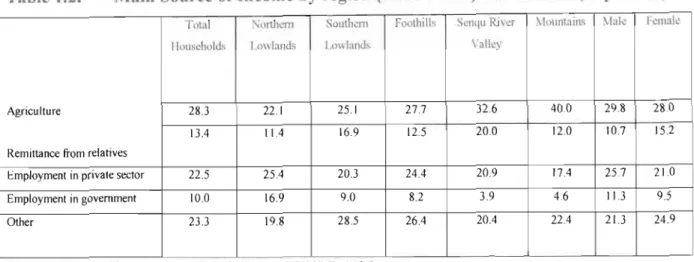
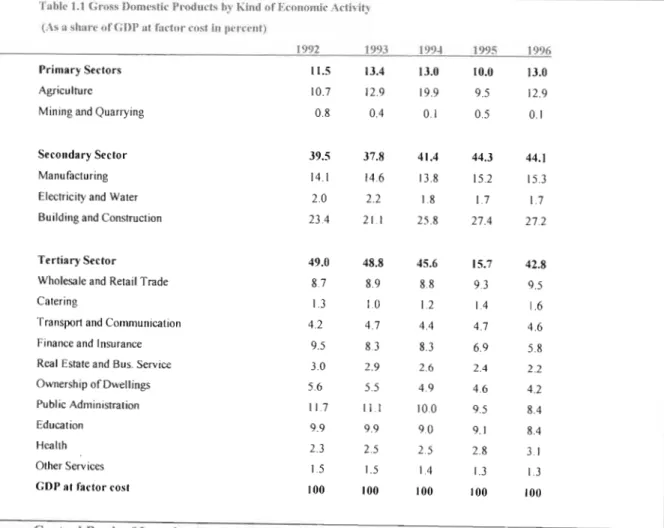
In all these policy documents, unemployment is listed as one of the most important causes of poverty in Lesotho. For example, Table 1.2 shows that agriculture contributes a large share of household income in Lesotho.
SOLID WASTE MANAGEMENT IN THE CONTEXT OF SUSTAINABLE DEVELOPMENT: LITERATURE REVIEW
- INTRODUCTION
- EVOLUTION OF WASTE MANAGEMENT THEORY AND SUSTAINABLE DEVELOPMENT CONCEPT SUSTAINABLE DEVELOPMENT CONCEPT
Snel defines solid waste (or waste) as any material, other than gaseous and liquid waste, which the holder discards, intends to discard, or is required to discard (Snel, 1997). The concept of solid waste management includes the flow streams of waste materials from generation to final disposal.
THE GLOBAL CONTEXT OF THE SOLID WASTE MANAGEMENT CONCEPT Global projections of human population growth have been made in many literatures. The
Similarly, a 1999 study of solid waste composition in the state of California showed that 35.6 million tons of municipal solid waste were generated. Further examples regarding the problem of solid waste disposal in developing countries can be mentioned.
THE AFRICAN REGIONAL CONTEXT OF SOLID WASTE MANAGEMENT In periods of rapid urbanization as observed in Africa, the urban populations grow extremely
Inadequate waste collection and disposal is a combined factor in the spread of gastrointestinal and parasitic diseases through contamination of drinking water and food. In the previous subsection, it is shown that considerations about handling solid waste are made on a national basis.
SOLID WASTE MANAGEMENT THROUGH ENTREPRENUERSHIP AND MICRO-ENTERPRISE APPROACH
As community waste management activities expand, the establishment of micro-enterprises to provide services on the periphery of larger cities may be worth considering. As community-based solid waste management fosters the spirit of entrepreneurship, it would be worthwhile to explore some success stories on the continent and in the region.
COMMUNITY - BASED SOLID WASTE MANAGEMENT IN AFRICA: LESSONS LEARNT
The state government sought the help of the private sector to solve its solid waste management problems. Closer to home (Lesotho), Botswana in the SADC region has achieved a relative success story in introducing sustainable solid waste management systems. As reported in the Daily News (June 8, 1993), Botswana realized that solid waste management was a serious problem, which was not the case.
They illustrate the point that the problems of. community-based solid waste management should not be overlooked. Durban Metropolitan City in South Africa has achieved a lot in terms of solid waste management in relation to job creation as shown in the paragraphs below. For example, several studies on community solid waste management have been conducted in the Durban area.
NATIONAL CONTEXT OF SOLID WASTE MANAGEMENT IN LESOTHO
Although solid waste management is covered in this policy, Lesotho still needs a specific policy on solid waste management. Provisions for waste management are set out in a number of separate pieces of legislation, regulations and laws (Witzsch, 1990), e.g. An additional problem with solid waste management in Lesotho is the lack of clearly defined roles of responsibility in waste management.
Another synopsis study of interest on this topic is by Seholoholo (1998) on waste management in one low-income and one high-income residential area in Maseru. In developing countries, community-based approach to solid waste management functions as a useful method of waste management. The concept of how entrepreneurship and micro-enterprises around solid waste management can be developed has already been further expanded in Section 2.4.

PROBLEM STATEMENT ON SOLID WASTE MANAGEMENT AND JUSTIFICATION OF THE STUDY JUSTIFICATION OF THE STUDY
A very important environmental consequence of the urbanization process in Maseru is ``the huge and ever-increasing amounts of solid waste, most of which remains uncollected and is dumped on vacant land or in riverbeds and dongas, resulting in a negative impact on the environment and human health'' Otieno, 1995). Poor quality and the low levels of solid waste collection and environmental protection are a cause for concern in Maseru and Maputsoe. The Maqalika Dam is the main source of drinking water for residents of Maseru, yet it is located below the slope of the landfill in Maseru (Plate 2.1).
The purpose of the umbrella National Environmental Policy is to ensure the protection and conservation of the environment with a view to achieving sustainable development for Lesotho. Therefore, one of its key objectives is to "ensure for all Basothos a high quality environment to improve their health and well-being".27 Therefore, the concept of proper solid waste management is a critical component of this objective. However, for a long time there have been many contradictions and conflicts between sectoral policies on institutional roles in the management of solid waste in the country.
LESOTHO
The findings of this study affect the management of this type of waste and its recycling and reuse activities. This study assesses the benefits of waste collection, the link between clean-up activities and the hardships faced by these scavengers, and. In particular, the important data and information would be the estimated approximate, final and heat values produced in the given amounts of waste in the study.
Lack of commitment of decision makers for waste management 0 mumclp The problem of waste management is further compounded by the fact that waste generation. To combat the risks in the poverty circle may require attacking the various points of the poverty circle as shown in Diagram 2.6 The environment, in the form of waste management activities provides an entry point to this process as long as these activities create places stable work. As already indicated, recycling and solid waste management through entrepreneurship and the formation of micro-enterprises would seal the success of the program.
INSTABILITY
OBJECTIVES OF THE STUDY
- Specific Research Objectives The specific objectives are
The research involved collecting data and information from residential, industrial, commercial establishments, institutional settings, recyclers and waste pickers to accelerate the achievement of the key objective of Lesotho's overarching environmental policy 31: “To ensure high quality for the whole of Basotho of the environment to improve their health and well-being".32 This would in turn help Lesotho achieve its goals of achieving the ethics of sustainable development as defined in section 2.1.5. The overall objective of the study is to generating data and information that could be useful for designing appropriate and sustainable solid waste management systems in Lesotho. The systems that would improve the delivery of solid waste management services and focused on community participation and job creation, thus contributing to economic growth and environmental and health benefits for the people of Lesotho.
31 Defined as a set of rules that affect how resources are allocated and who benefits from the allocation of resources; in other words, a set of government actions and statements aimed at improving the environment to achieve sustainability goals (ILO, 1992); or defined as a course of action taken to correct behavior or achieve a desired change (UNIDOIUNEP, 1998). To evaluate the economic benefits of solid waste collection activities and to determine the profitability of annual revenues of recycling companies, the monthly income of collectors (garbage collectors) and the number of jobs created in solid waste management activities as an informal sector. To find out the demographic characteristics of waste collectors (garbage collectors), their families and activities at the landfill.
ORGANISA TION OF THE THESIS
STUDY METHODOLOGY AND EXPERIMENTAL WORK
- BACKGROUND
- STUDY METHODOLOGY AND APPROACH
- STEP 1 SURVEY STATEMENT
- STEP 2 SURVEY DELINEATION
- SURVEY QUESTIONS AND TECHNIQUES
- SELECTING AND TRAINING THE ENUMERATORS
- PILOT TESTING THE QUESTIONNAIRE
- SURVEY LAYOUTS AND SAMPLE SIZE
- SAMPLE WEIGHT OR ABUNDANCE
- PHYSICAL AND CHEMICAL COMPOSITION
- ACTUAL IMPLEMENTATION OF THE RESEARCH STUDY: QUESTIONNAIRE ADMlNISTRA TION AND WASTE CHARACTERISATION
People's willingness to pay for improved services and affordability of options;. In this study, the research methodology adopted only approaches relevant to the realization of the objectives of this study, as highlighted in Section 2.8. A desk study of existing policies and environmental regulations relating to solid waste management and an assessment of their adequacy.
Why this research and study was initiated is focused on the main objective 1 of the study as outlined in Chapter 1. This was later checked and verified by the results of the responses of the households in the study. Establishing people's willingness to pay for the waste removal services and the affordability of paying for such services.
RESULTS, ANALYSIS AND DISCUSSIONS
- SOLID WASTE MANAGEMENT LEGAL FRAMEWORK AND POLICY REVIEW
- Legal Framework Review
- WASTE GENERATION AND THEIR FACTORS
- ANALYSIS OF HOUSEHOLD QUESTIONNAIRE RESPONSES
- COMMERCIAL AND INDUSTRIAL ESTABLISHMENTS WASTE
- FREQUENCY DISTRIBUTION OF WASTE GENERATED BY ESTABLISHMENTS
- Industries
- WASTE COMPOSITION COMPARISON BY COUNTRIES
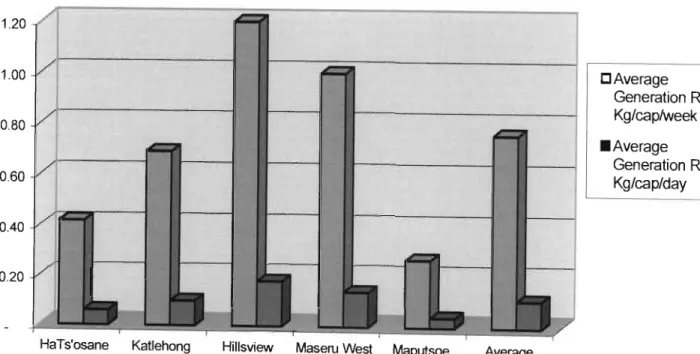
The factor of waste production as a function of the socio-economic status of a household would play an important role in this case. Feedback from the survey revealed that waste separation at source was very low. The quantities of waste are important for planning and designing the solid waste management system.
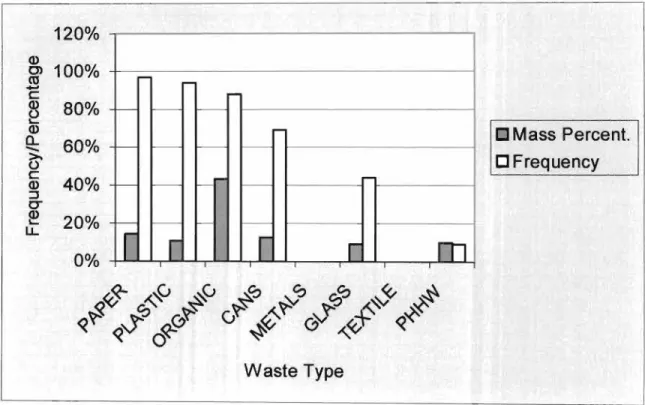
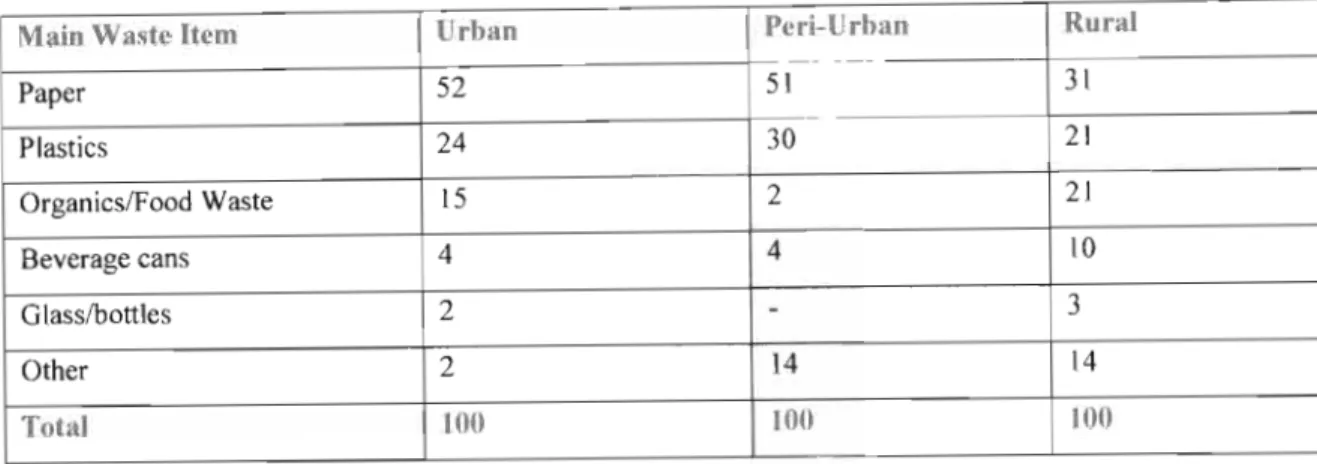
Offered waste collection 56 Willingness to pay for collection services 18 Establishment of waste collection Satellite delivery 9 points. The physical composition of waste in the investigated areas of Maseru and Maputsoe as shown in table 4.17 and fig.

I1ID (a) Bureau of Statistics, Maseru, Lesotho, while on companies it was obtained from the Ministry of Trade and Industry.
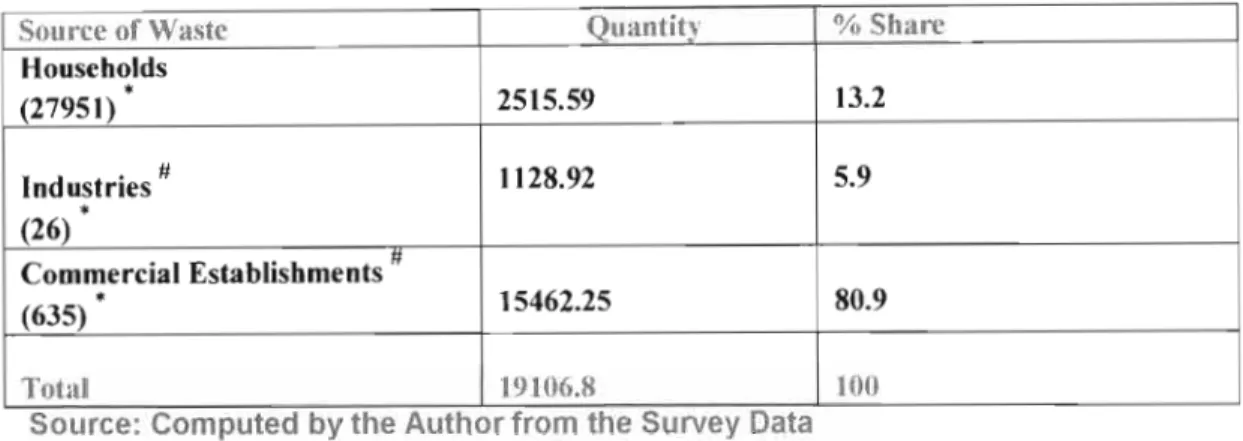
Estimated Generation on Solid Waste in Maputsoe (%/Annum)
As a summary of the waste generated per week in Maseru and Maputsoe, Maps 4.1, 4.2 and 4.3 give indicative values for these cities. It should be noted that the locations indicated on the maps are the estimated positions of these places and not the exact location according to the exact geographical scale of latitude and longitude. This summary adds value to the study by showing at a glance the estimated amounts of waste generated in specific areas of the surveyed cities and the estimated geographic and topographical location of these surveyed areas.
For example, the unlicensed dump site in HaTsosane is shown with its estimated geographical location in Maseru, and more importantly, the topography position of this site in relation to the Maqalika dam in Maseru, as shown by the contour lines.