It is hoped that this book will be found useful to the students of Sugar Technology Institutes as well as the technologists involved in the sugar industry. Final molasses : Mother liquor obtained from the last stage of boiling from which sugar can no longer be economically recovered in the process of sugar manufacture.
CONTENTS
Cane Quality 21—28 1. Composition of Cane 21
Reagents Used in Juice Clarification 92—97
- HISTORICAL
- PRESENT STATUS OF THE WORLD CANE SUGAR INDUSTRY
- SUGARCANE
- PROCESS OF MANUFACTURE OF SUGAR FROM SUGARCANE BRIEF OUTLINE
- PLACE OF SUGAR IN HUMAN LIFE
Indian Cane Sugar Industry Scenario—In India, sugarcane is cultivated on a large scale in vast areas of the subtropical and tropical belts of the country. Of the various organic acids, aconitic acid takes the largest share in the juice of normal sugarcane.
R. GERMANY MEXICO
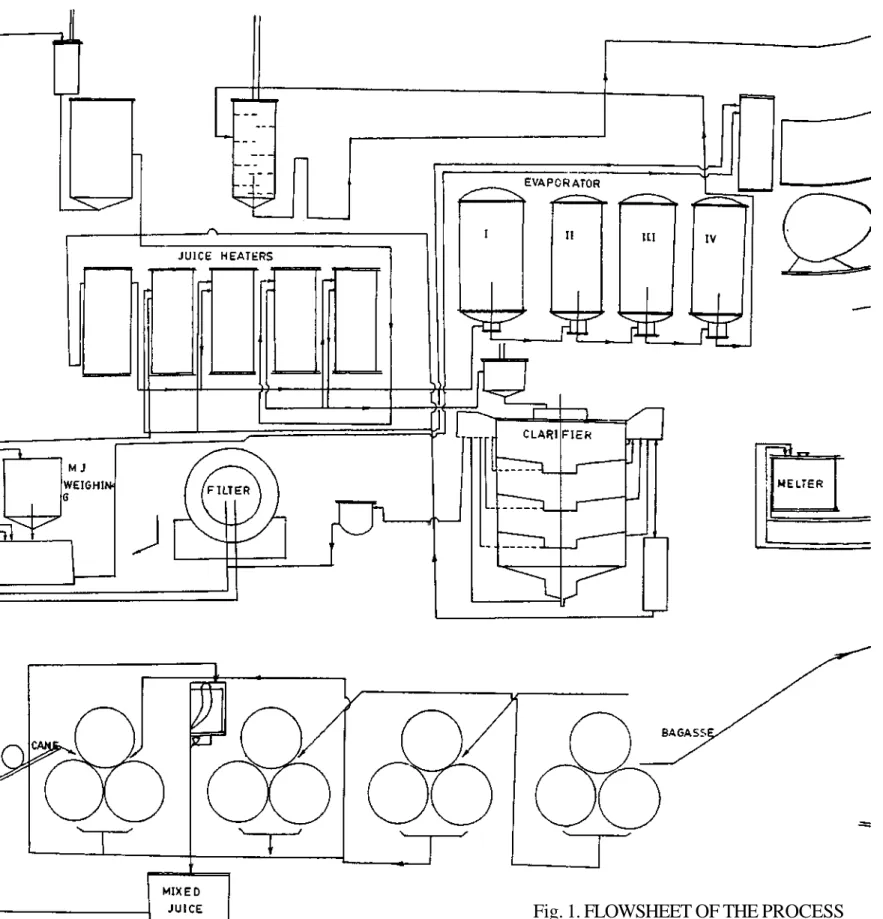
SUGAR MANOTACTURE
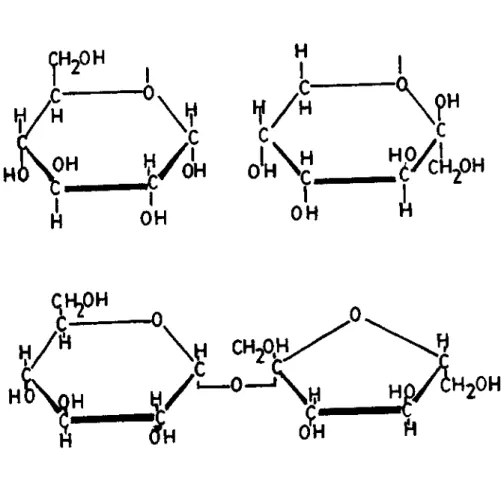
GLUCOSE FRUCTOSE
SUGARCANE FROM FIELD TO FACTORY
CANE QUALITY
- COMPOSITION OF CANE
- CANE QUALITY IN DIFFERENT REGIONS OF INDIA
- FIELD TO FACTORY
- QUALITY CONTROL
The content of mineral substances is maximum in the upper and growing parts of the sugarcane, while it tends to decrease in the lower internodes of the sugarcane. Post-harvest Deterioration – The problem of post-harvest deterioration of sugarcane has attracted the attention of technologists around the world.
CANE HARVESTING & SUPPLY
- MATURITY
- FORCING MATURITY
- CONDITIONS IN INDIA
- MATURITY WISE HARVESTING
- HARVESTING METHODS
The work carried out at the National Sugar Institute Kanpur has helped to develop the standard procedure for refractometric examination based on large-scale trials in various factories and has positively demonstrated the utility of carrying out harvesting in sequence to maturity.7 The procedure prepared by Sen, which formed the basis of this work is as under—. SUGAR CANE FROM FIELD TO FACTORY 31. For feeding plants with even greater capacity, i.e. today, the areas to be covered increase proportionally, and the activity centers can be spread far and wide and not necessarily contiguous. g) the dry waste and also any soil adhering to sugarcane must be removed.
MILLING
- CANE WEIGHMENT
- CANE CARRIERS AND CANE FEEDING
- CANE PREPARATION
- MAGNETIC IRON SEPARATOR
- MILLS
- OTHER ANCILLARY UNITS
- Juice Strainers
- PROCESS OF EXTRACTION
- MILL CAPACITIES
- MILL FEEDING
- ARCING OF ROLLERS
- FACTORS INFLUENCING EXTRACTION
- AUTOMATION
- MILL JUICE CHARACTERISTICS
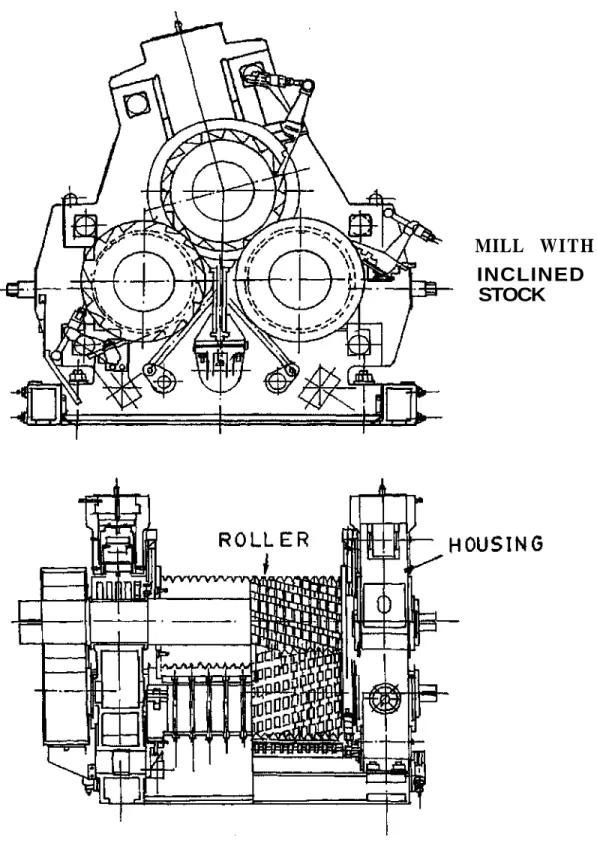
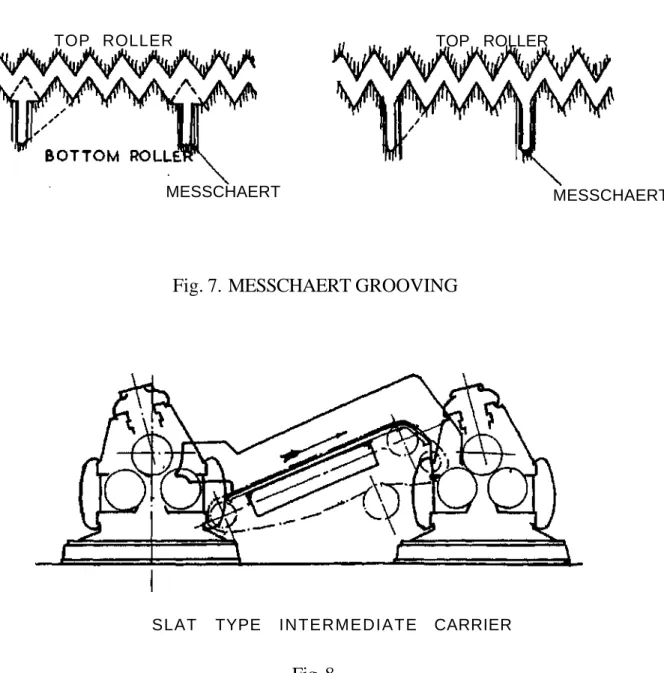
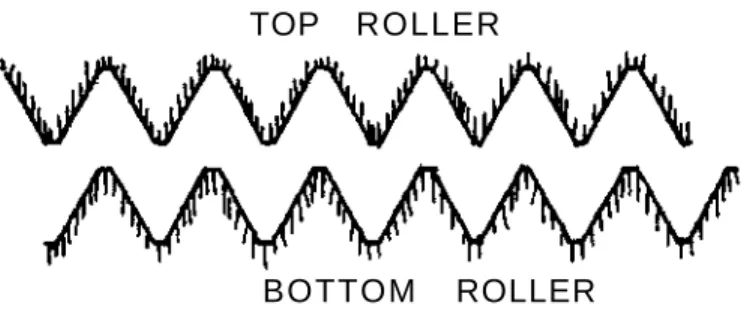
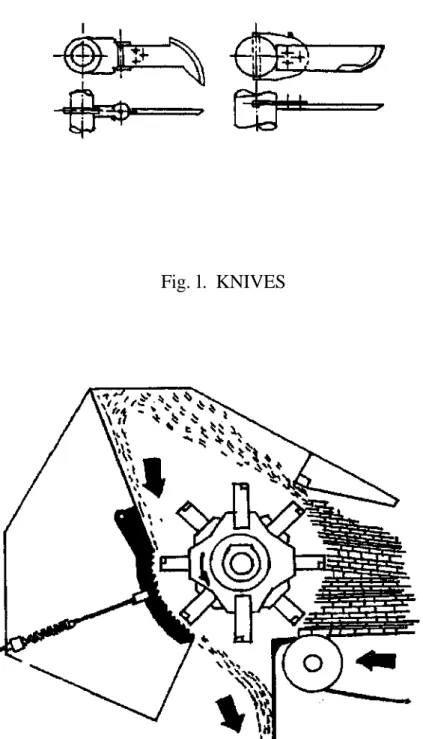
Cane kicker or equalizer - The cane kicker is installed on the holder to prevent excessive cane being fed to the cane leveler causing blockage of the leveler set. Roller grooves - The rollers have V-shaped grooves on the periphery of the shell, distributed over the entire length, so that the distance between adjacent grooves, the depth and the top angle of the grooves remain the same for a particular roller. Principles – The main concept underlying the practice of imbibition is to dilute the juice contained in bagasse before it is pressed into mill rolls in the second and subsequent mills.
Size of Mills - Specifications for Sugar Mills for Indian Industries issued by the Government of India specified the standard size of 765 x 1525 mm. for new sugar plants in the early sixties.
DIFFUSION
- PROCESS OF DIFFUSION
- TYPES OF DIFFUSERS
- DESCRIPTION OF DIFFERENT DESIGNS
- OPERATING CONDITIONS AND THEIR INFLUENCE ON SUCROSE EXTRACTION
- DEWATERING OF WET BAGASSE
- THIN JUICE TREATMENT
- INFLUENCE OF DIFFUSION ON EFFICIENCY AND RECOVERY
- LOSSES DUE TO STOPPAGE AND POOR SANITATION
- EXTRACTIVES AND NON-SUGAR INCREASE
- COMPARISON OF MILLING AND DIFFUSION
- PROBLEMS OF CAPACITY VARIATIONS
- FUTURE OF DIFFUSERS
Since the liquid from wet diffuser bagasse is essentially diluted juice of 2°-3° Bx. the juice from the dewatering mills is returned to the distributor. Cane and Bagasse Spreaders—The structure of sugarcane is heterogeneous in that the cane stalk consists of three parts, the outer hard bark, soft tissues and fibro-vascular bundles. Operation—The impeller receives bagasse through a chute by gravity, the flow being facilitated by spraying burning juice over the incoming bagasse.
Power—The power required of a diffuser station can be classified into three parts (i) power for the diffuser,. ii) power to drive conveyors and (iii) drive for pumps.
STANDARD COMPOUND IMBIBITION
MACERATION BATH
SILVER RING DIFFUSER
SATURN DIFFUSER
S.DIFFUSER
S.M. SCREEN
REAGENTS USED IN JUICE CLARIFICATION
- LIME
- SULPHUR
- PHOSPHATES
- MAGNESIA
- BENTONITE
- MISCELLANEOUS AGENTS USED IN SMALL QUANTITIES 7. SURFACE ACTIVE AGENTS
- FLOCCULANTS
- ENZYMES
- DIATOMACEOUS EARTH
Ca(OH)2 due to the easy penetration of water molecules into the atomic spaces. Factory-prepared milk of lime consists of a fine suspension of Ca(OH)2 in water in addition to the hydroxide in solution. Milk of Lime Tests - Milk of lime is tested for available CaO and the distribution of solid particles in the cream of lime.
Analytical control of lime quality along the above lines will be very helpful in making the process work.
CANE JUICE CLARIFICATION
- OBJECTS OF CLARIFICATION
- ESSENTIAL PREREQUISITES
- DEFECATION
- SOME CLARIFICATION SYSTEMS ADOPTED IN THE PAST, WHICH HAVE NOW BEEN ABANDONED ARE AS UNDER
- pH CONTROL
- REACTIONS IN LIME DEFECATION
- EFFECTS OF DEFECATION
- EQUIPMENT
Hot liming—According to this method, the cold juice is heated to 70°C before treatment with lime to raise the pH to 7.8; the treated juice is reheated to 103°C before being sent for subsidy. The clear juice from the clarifier or subsider is drawn continuously at the overflow and sent to the evaporator. f) The underflow or mud is sent for filtration to a vacuum filter. g). Investigations on feces carried out by D.P. Kulkarni in the Deccan Sugar Factory where juice was limed to pH 7.4 has shown that13:. a) the apparent purity increase of 0.8 was observed, while the sucrose purity increase was about 0.5 unit.
Baikow recommends adding baking soda for 3-4 hours. before closure to raise the pH i instead of lime to prevent color formation and loss of clarity. The purity of the clarifying juice remains practically unchanged with the addition of sodium ash, 18. f) Muddy filtrates from the filter are always returned to the receiving tank for weighed raw juice.
SULPHITATION PROCESS
INTRODUCTION
CHEMISTRY OF SULPHUR DIOXIDE
PREPARATION OF LIME SOLUTION
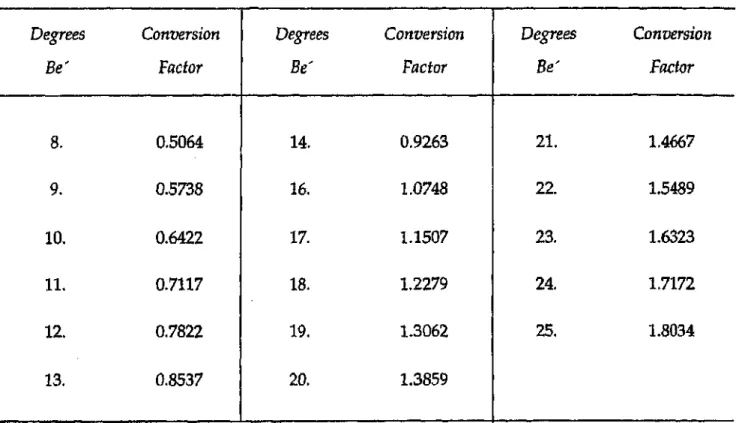
The solubility of lime in a sucrose solution decreases with temperature, as shown by the data in the following table for a 13% sucrose solution.11. The dispersion is determined by the lime quality and also by the freshness of the lime solution. A freshly prepared lime milk has a good dispersion, but after some time the small particles char into larger aggregates with reduced reactivity.
Another type of lime supply from the market can be in the form of quicklime powder separated by air flotation.
REACTIONS IN SULPHITATION
Therefore, it is necessary to maintain a pH that would facilitate maximum complete elimination of the CaS03 precipitate without destroying the reducing sugars. The reducing sugars must also be kept intact to achieve maximum sucrose crystallization at the final boil. Reducing sugars are more reactive than sucrose and, unlike the latter, are unstable at high pH.
During the decomposition of reducing sugars in alkaline conditions, lactic, gluconic, sugar and oxalic acids and other organic acids are formed, which in combination with lime form calcium salts.
S0 2 PREPARATION
When sulfur contains high impurities (> 0.1%), the mixer must be run, while for sulfur with a sulfur content of 99.9%, the mixer can be operated intermittently. Coolers - The hot S02 gas produced (300°C) must be sufficiently cooled and as a first step the top of the combustion chamber is cooled by cold flowing water which removes the heat from the burner. Scrubber - The SOz gas from the coolers enters the scrubber which is a cylindrical vessel fitted with a false bottom and filled with refractory bricks.
Other types of burners - the sulfur furnace, described earlier, operates at pressures higher than atmospheric, i.e.
LIME PREPARATION STATION
Temperature gauges shall be installed at the consisting of (a) sulfur stove (b) gas outlet of washer. The lime pipe size must be calculated based on a flow velocity of 1 m/sec. Lime must be diluted with hot condensate to the desired brix and a constant concentration maintained in the case of lime solution going to clarification station.
The lime pump must run continuously with the lime circulation from the lime metering device during mill operation.
SULPHITATION EQUIPMENT
SO2, distribution – The aim in designing S02 distribution should be to ensure maximum absorption of S02 and the existing designs can be classified as follows. i). Lime Metering—The lime should be introduced into the tank in the area of maximum circulation, preferably near the S02 gas inlet, without in any way disturbing the circulation of the juice. This side opening of the plug is in contact with the outlet of the lime milk vat.
In this regard, further precautions are essential. the reaction temperature is about 0.3 lower than the pH of the cooled juice.
EFFECTS OF SULPHITATION
CaO—The CaO content of the clarified juice is a function of (i) the initial CaO content of the raw juice, (ii) the organic acids present in the original juice, and (iii) the acids produced during the clarification process. The increase in CaO is attributed to the neutralization of the acids present in the juice by the formation of organic calcium acid salts that are not removed during clarification. In addition to the acids originally present in the juice, some acids are formed as a result. a) decomposition of reducing sugars and.
Sugars - Of the sugars, sucrose is not affected by the sulphitation process, while reducing sugars can be degraded in the absence of proper pH control or due to high contact with heat in the scrubber to a small extent.
COMPARISON OF DEFECATION WITH SULPHITATION
NEW TECHNIQUE OF JUICE CLARIFICATION
ADDITIONAL CHEMICALS USED
K Onna & Tamays 'Proc, Hawaiian Association of Sugar Technologists' 1979 p. Marches 'Principles of Sugar Technology' P. Douwes Dekker 'Principles of Sugar Technology' Vol. Douwes Dekker "Principles of Sugar Technology" Honiga p. also private communication, work at Phaltan Sugar Wks. Walks 'Principles of Sugar Technology' P. Vishwanathan, 'Proc ISSCT' XX Congress Brazil 1988. also organized by Laxmi Narayan KSN Rao, K. Acharya 'Proc Seminar on 'Sap Clarification Practices used in India with respect to planning and control system ' DSI & CEERI in Pune on.
Sugar Technologists Association of India se 1980 P.M. Sugar Tech Association of India se 1975 bl. CGM PerkG 'Rietsuikervervaardiging' p.56.
PART-IV
JUICE CLARIFICATION
DEVELOPMENT
2, PRINCIPLES
- PROCESS
- MIDDLE JUICE CARBONATION
- CARBONATION PHOSPHATATION 3
- EFFECTS OF CARBONATION ON JUICE COMPOSITION
- EQUIPMENT
- CARBONATION IN INDIAN INDUSTRY
- CAPACITIES
- PRECAUTIONS
In the second carbonation, the lowest CaO is targeted and to facilitate precipitation formation and good filtration for the removal of non-sugars, a certain minimum amount of CaO ie. per liter in filtered juice of first carbonation is retained. In the first carbonation the optimum pH is 10-10.5 while in the second carbonation juice pH comes down to 8-8.5. The retention of juice in the thickener was 1 hour. and the system proved to be suitable for the conditions of continuous operation.
This filter separates clear juice from thick mud in the filter elements covered with cloth when fed with other carbonation juice at constant low air volume.
OTHER CLARIFICATION PROCESSES
LION-EXCHANGE
- RESINS
- APPLICATION TO SUGAR MANUFACTURE
- WORK IN INDIA
- TALO DURA PROCESS
- SAHA JAIN PROCESS
- ELECTRICAL PROCESS
The cations are now bound in the resin matrix and release Na+ ions into the outflow. This serves a dual purpose viz. unwanted impurities are removed from the top and the resin sorted. d) the backwashing is followed by the passage of the regeneration solution from above for the regeneration of the resins. Resin Selection – Ion exchange resins remove electrically charged inorganic or organic components in aqueous solutions through the process of exchanging their ions. In all four types of resins, viz. strong and weak anions, strong and weak cation exchange resins.
The method of treating the syrup known as the Talodura process is described as under6—. The syrup from the evaporator is treated with lime and phosphoric acid - the precipitate is removed by floating using the aeration technique and special flocculant.
EQUIPMENT EMPLOYED IN CLARIFICATION
- JUICE WEIGHING
- LIME PREPARATION
- PHOSPHATE PREPARATION
- TREATMENT TANKS
- JUICE HEATERS
- CLARIFIER
- FILTERS
- PLATE TYPE HEAT EXCHANGER
Construction - Liquid tube heaters are cylindrical shells fitted with tube plates at both ends. The tube plates are provided with grooves across the tubes to separate the two heater end pieces into compartments. A few plants have reported using aluminum tubes for heating the crude liquid, but this has not gained popularity.5 The liquid velocity is about 1.8 to 2 meters per second. The mud is pumped into the press and it passes through the cloth and the insoluble precipitate, i.e. the cake, collects between the cloth and the frame.
Operation—The mud tank receives a mixture of mud and bagasse, which acts as a filter aid, and the drum, as it begins to rotate in the mud tank, sucks up the mud through the lower parts, which are immersed in the mud, under a low vacuum (250-300 mm). .
JUICE HEATER
SULPHUR FURNACE