What can ECEC settings teach us about skills for the 21st century?
Dan Cloney and Kellie Picker [email protected]
@dr_dan_c
• https://www.acer.org/au/research-conference
What are 21C skills anyway?
• What do we agree on?
– Includes both hard and soft skills
• Problem solving
• Interpersonal skills – Lifelong learning
• From childhood through to adult
• A role for ECEC!
– Lots of models and frameworks…
http://www.oecd.org/education/2030/learning-framework-2030.htm OECD Learning Framework 2030: Work-in-progress
http://www.lsce-mena.org
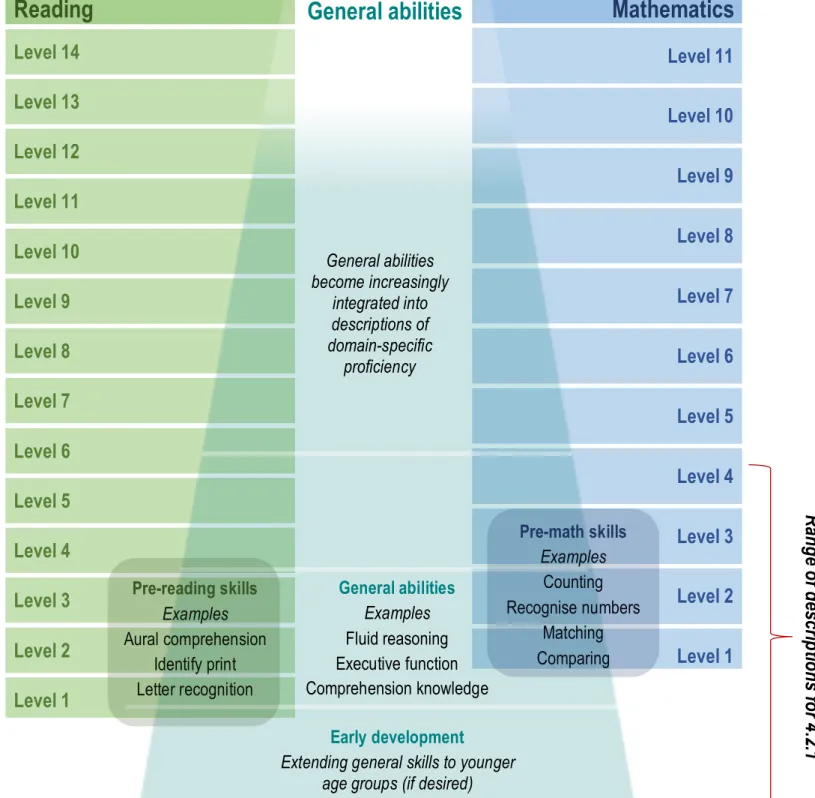
Figure 1: Framework for extension of UIS RS into early learning
Issues for consideration
The proposed approach is to provide as much flexibility as possible to ensure that many countries can report on learning for Indicator 4.2.1 whist maintaining a high level of quality and comparability. ACER- GEM recognises that there are many important issues to consider in any approach to the measurement of early learning, taking into account the needs of countries and the international assessment and reporting community, as well as children, families and early childhood development practitioners.
Some of these issues are outlined below.
Would it be better to have a single measure, used across all countries?
Using a common measure across all countries would provide the greatest consistency in 4.2.1 reporting – however, this is unlikely to occur in the near future.
The UIS RS and Data Alignment process will help to improve interim reporting, for as long as multiple measures are used.
This does not preclude the adoption of a common measure (the ECDI) by countries over time. It is hoped that reporting using the UIS RS will help to generate appetite Reading
Level 14 Level 13 Level 12 Level 11 Level 10 Level 9 Level 8 Level 7 Level 6 Level 5 Level 4 Level 3 Level 2 Level 1
Mathematics
Level 11 Level 10 Level 9 Level 8 Level 7 Level 6 Level 5 Level 4 Level 3 Level 2 Level 1
Early development
Extending general skills to younger age groups (if desired)
General abilities become increasingly
integrated into descriptions of domain-specific
proficiency
Range of descriptions for 4.2.1
Pre-reading skills Examples Aural comprehension
Identify print Letter recognition
Pre-math skills Examples
Counting Recognise numbers
Matching Comparing General abilities
Examples Fluid reasoning Executive function Comprehension knowledge
General abilities
Why do we care about social and emotional skills?
• Important in their own right – A core part of 21C skills
– Ability to function in a social world – Modifiable learning domain
• SE skills cause gains in other domains
– New Australian evidence shows ES 0.3 SD for SE skills (age 5) on NAPLAN scores (age 8)
– https://doi.org/10.3102/0013189X19848724
So, what are social and emotional skills?
• Social Interaction
– The capacity to relate to and establish relationships with others
• Social Responsibility
– The capacity to function within the school
environment and interact with groups of others in socially prescribed ways
• Transcending Social Difficulties
– Social self-regulation and social problem-solving capacities
• Other frameworks exist, eg, Collaborative for
Academic, Social, and Emotional Learning (CASEL):
https://doi.org/10.1375/ajse.33.2.141
http://www.oecd.org/education/ceri/study-on-social-and-emotional-skills-the-study.htm
ECEC and SE skills
• Play is essential to stimulate and integrate a wide range of children’s intellectual, physical, social and creative abilities. (VEYLDF)
• OUTCOME 1: IDENTITY
– …feeling included and secure in the social settings that are part of everyday life.
• OUTCOME 2: CONNECTED WITH AND CONTRIBUTE TO THEIR WORLD – being in groups and contributing to family and social life
• OUTCOME 3: STRONG SENSE OF WELLBEING – develop a range of social skills and dispositions.
• OUTCOME 4: CONFIDENT AND INVOLVED LEARNERS – http://bit.ly/outcome4
– contribute positively and effectively to other children’s learning.
• OUTCOME 5: CHILDREN ARE EFFECTIVE COMMUNICATORS
– innately social, creative and motivated to exchange ideas, thoughts, questions and feelings.
qualityECD Interactions
HLE
Child outcomes
Child traits, disposition, and prior developme-
nt
Family capital and resource
System and country context
Local community context
ECD policy and
structure
Child traits dispositionand
Source: Cloney, D. (2016)
Classroom Assessment Scoring System
• CLASS is A measure of process quality
• Teaching through interactions
• Applicable in multiple contexts
• Not reliant on particular curriculum or content
Emotional Support
1. Positive Climate 2. Negative Climate 3. Teacher Sensitivity 4. Regard for Child
Perspectives
Instructional Support
8. Concept
Development 9. Quality of
Feedback 10. Language
Modeling
Classroom Organization
5. Behavior Management 6. Productivity 7. Instructional
Learning Formats
1 2 3 4 5 6 7 Classroom Assessment Scoring System (3 domains)
Emotional Support Domain Classroom Organization Domain Instructional Support Domain Average CLASS Score - 3 Domains
Source: Tayler, C., Ishimine, K., Cloney, D., Cleveland, G., & Thorpe, K. (2013). The quality of early childhood education and care services in Australia. Australasian Journal of Early Childhood, 38 (2), 13-21.
Describing children’s SE learning
• How can educators measure SE skills and ability?
• See http://bit.ly/outcome4
• Example measures
– SDQ, SSIS, MELQO, Early ABLES
– see also EEF database http://bit.ly/ref_ec_measures
SDQ
Strengths and Difficulties Questionnaire P or T
For each item, please mark the box for Not True, Somewhat True or Certainly True. It would help us if you answered all items as best you can even if you are not absolutely certain. Please give your answers on the basis of the child's behaviour over the last six months or this school year.
Child's name ... Male/Female Date of birth...
Considerate of other people's feelings
□ □ □
Restless, overactive, cannot stay still for long
□ □ □
Often complains of headaches, stomach-aches or sickness
□ □ □
Shares readily with other children, for example toys, treats, pencils
□ □ □
Often loses temper
□ □ □
Rather solitary, prefers to play alone
□ □ □
Generally well behaved, usually does what adults request
□ □ □
Many worries or often seems worried
□ □ □
Helpful if someone is hurt, upset or feeling ill
□ □ □
Constantly fidgeting or squirming
□ □ □
Has at least one good friend
□ □ □
Often fights with other children or bullies them
□ □ □
Often unhappy, depressed or tearful
□ □ □
Generally liked by other children
□ □ □
Easily distracted, concentration wanders
□ □ □
Nervous or clingy in new situations, easily loses confidence
□ □ □
Kind to younger children
□ □ □
Often lies or cheats
□ □ □
Picked on or bullied by other children
□ □ □
Often volunteers to help others (parents, teachers, other children)
□ □ □
Thinks things out before acting
□ □ □
Steals from home, school or elsewhere
□ □ □
Gets along better with adults than with other children
□ □ □
Many fears, easily scared
□ □ □
Good attention span, sees work through to the end
□ □ □
Signature ...
Thank you very much for your help
Parent / Teacher / Other (Please specify):
Date ...
© Robert Goodman, 2005
4-10
Not True
Somewhat True
Certainly True
https://www.sdqinfo.com
SSIS
Never (0), Seldom (1), Often (2), and Almost Always (3)
https://www.pearsonassessments.com/
MELQO
24 21b
Say: What would you do to help her feel better? Has one idea to make child feel better (e.g., give a hug, find someone to help, offer toy; help child get up; say something nice; say sorry) This solution should seem reasonable to the tester based on cultural norms
Write in response:
21c
Prompt ONCE by saying, Is there anything else you would do? Has second idea to make child feel better (e.g., give a hug, find someone to help, offer toy; help child get up; say something nice; say sorry)
Write in response:
#22 Understanding Feelings Materials: None
STOP RULES: None
Instructions Correct
Answer
Appropriate Response (1) Inappropriate response (0) Child says I don’t know/ no response (99)
22a
Say: Now I’m going to ask you another question. Please tell me what makes you feel unhappy?
Names at least one reason for feeling sad (e.g., loses toy;
gets hurt; fight with other child) Write in response:
22b
Say: Now tell me what kinds of things make you feel happy?
Names at least one reason for feeling happy (e.g., allowed to go out and play; going on a trip; favorite food for
supper) Write in response:
At the end of the assessment, say: That is the end of my questions. Thank you very much for working so hard!
http://ecdmeasure.org
Early ABLES
• Example items from earlier study
https://www.education.vic.gov.au/school/teachers/learningneeds/Pages/ablesassessment.aspx http://www.arc-ots.com/earlyABLES/
3. Using conversational skills Option
The pupil does not typically display skills/behaviours at a beginning level 0 Focuses attention on a communicative partner, but does not converse 1 Contributes to the conversation only when prompted (e.g., answers the questions of
others) 2
Uses information supplied by others to maintain the flow of conversation (e.g., asks
questions relevant to the current conversational topic) 3
Draws on shared knowledge or knowledge about his/her partner to initiate and/or
maintain a conversation 4
Adjusts communication style and/or content to suit context and social expectations 5
Growth?
500 550 600 650
0.0 0.5 1.0 1.5 2.0 2.5
Time
Social and Emotional
500 550 600 650
0.0 0.5 1.0 1.5 2.0 2.5
Time
Maths
Growth?
350 360 370 380 390 400 410 420 430 440 450 460 470 480 490 500 510 520 530 540
24 36 48 60 72 84 96 108120132144156168180192204
Age in Months
W score
WJ-III Test
Applied Problems Brief Intellectual Ability Concept Formation Rapid Picture Naming Sound Awareness Understanding Directions Verbal Comprehension Visual Auditory Learning Visual Matching
What is the value added?
• A hard question to answer – do we have measures that can capture lifelong learning and growth in SE skills?
– Either children top-out by the time they are 5, …or – We need better measures.
• Equity is a big issue
– Quality is related to SES
Are we measuring the right things?
• SE skills appear through the ECEC and School curriculums
• We have some measures but they don’t capture the higher-order abilities
- A focus on managing stress, controlling impulses, internalising behaviours like withdrawing.
- But what about empathy, working in diverse
communities, negotiation, resolving conflict, goal setting and decision making?
- Can these things be measured through checklist about frequency of behaviours?
So what?
• Nearly all children attend ECEC – 3 year-old K roll out
• Public investment in ECEC is high
– For 0-2-year-olds, private investment is also high – Costs of ECEC are increasing (HILDA: childcare
costs up 145% in since 2002,)
• Need an effective and fair system
– Give all children the best start in life
– Quantify the value-add of the ECEC sector – Showcase the expertise of educators
– Facilitate clinical practice
Key links
• Mapping VEYLDF to F-10 curriculum – http://bit.ly/veyldf_f10
• Framework for 21C skills
– http://www.lsce-mena.org
• Relationship between social skills and academic achievement – https://doi.org/10.3102%2F0013189X19848724
• Assessing children as confident and involved learners – http://bit.ly/outcome4
• ACER LPs
– http://bit.ly/acer_lpe
• MELQO
– http://ecdmeasure.org
• EEF database
– http://bit.ly/ref_ec_measures